
Chapter 1: The Uncrowned Candidate - Prologue - Georgine
Notes:
(See the end of the chapter for notes.)
Chapter Text
The Feast Celebrating Spring
The Great Hall of Ehrenfest Castle shimmered in the glow of spring. Sunlight filtered through colored glass windows, painting the marble floors in divine hues of green and gold—the sacred colors of Flutrane, Goddess of Water and harbinger of spring. Wreaths of early blooms hung from polished pillars, perfuming the air with the scent of new beginnings. Musicians in the gallery played softly, plucked strings mimicking the ripple of thawed brooks.
Georgine sat at the front of the hall, dressed in her formal robes of green and yellow, the colors of Spring and of Ehrenfest. Her dark-blue hair was coiled into a single braid that went down to her mid back. Her dress was edged with pearls and green thread, her expression serene—at least to those who didn’t know better.
At the dais, Aub Adelbert Ehrenfest rose beside First Lady Veronica, his voice calm and smooth as it carried across the assembled nobility.
“By the guidance of Liebeskhilfe, and with the blessings of Flutrane, we are pleased to announce the future betrothal of our daughter Georgine to Aub Ahrensbach. Upon her graduation from the Royal Academy, she shall be wed.”
Polite applause followed, carefully measured. Some older nobles murmured to each other. Constanze, seated with her siblings, blinked rapidly in shock. Sylvester leaned back in his chair with a crooked grin, casting Georgine a glance as if to say, Can you believe this?
She did not return it.
Veronica, ever composed, wore a small, smug smile—like a spider watching a fly struggle. It was her doing. Georgine knew it. This was her grand plan to get her out of the duchy so that Sylvester would have no competition to inherit the Aub’s seat.
When the toasts concluded, Georgine dipped her head and exited the hall with practiced grace. Her retainers fell in beside her: Gloria, her poised and watchful attendant; Grausam, her quiet scholar; Sidonious, her stoic knight, along with the rest of her academy-aged retainers that would not be participating in socializing.
They passed under painted murals of the founding gods—Leidenschaft’s spear, Schutzaria’s shield, Flutrane’s flowing staff—but Georgine saw none of it. Her eyes were stormed over.
The moment they were clear of noble ears, she broke her silence. “I will not accept this.”
Sidonious’s jaw tightened. “Your will is ours.”
Grausam gave her a sidelong glance. “Then we must act swiftly, Lady Georgine.”
“Indeed.” Georgine looked around the room. After the announcement that was just made, she had to ensure that none of the retainers with her were acting as Veronica’s spies. After ensuring everyone here could be trusted. Georgine fell deep into thought. But her mind was chaotic. She needed to talk to someone about this. And a certain someone came directly to her mind.
With her mind now set on a plan, at least for now, she started giving orders.
“Sofia, Lucinda, return to my chambers and prepare them for tonight. Markus, return to the hall and keep gathering information. I want to figure out what exactly Chaosipher has planned. Grausam, Sidonius, and Gloria, come with me. The rest of you may have the rest of the night off.” And with that, Georgine turned and set a brisk pace out of the castle, ensuring that none of the servants nor castle attendants could catch a glimpse of where they were going.
“My Lady—“, started Grausam, but was silenced by a glare from Georgine. As they rounded a corner near one of the hidden exits of the castle, she reached down to the cage on her belt that held her highbeast stone, along with these three’s name stones.
Channeling mana into them, she gave them all an order: “Do not speak of what is to come to anyone unless I give my express permission.” With a stiff nod from all of them, she then took her highbeast feystone out of its cage, and shaped her highbeast. While she may not have been wearing her riding clothes, they were not going far, and Georgine wanted to move with the swiftness of Steiferise.
“We fly tonight,” Georgine said. “We’re going to the temple.”
The wind bit colder than expected, still clinging to the last edge of winter as Georgine soared above the noble district on her highbeast. Her retainers followed on their own, cloaks fluttering behind them like dark banners.
The castle was already distant, its ivory spires framed in moonlight. Below, the streets were quiet. Most of the nobles were still in the castle, enjoying the feast and socializing. It made for the perfect cover to fly beneath the shroud of Verbergen.
No patrols. No questions. Just silence and speed.
The temple loomed ahead—stone domes and towers marked by divine statues, each cradling their sacred instruments.
They landed softly in the temple courtyard, cloaks drawn tight against the chill. A gray shrine maiden spotted them and offered a stiff bow, startled but unsurprised.
“The library,” Georgine ordered. The girl nodded and darted ahead.
Within minutes, they reached the doors of the library. The inside smelled of ink and paper, the distant scent of wax from preserved scrolls and books. The shrine maiden led them to the library’s alcove—a smaller, isolated study chamber sealed off from the main stacks.
She peeked in first.
“My lady,” she said gently. “You have visitors.”
A soft rustle came from within.
A young girl was seated on a cushioned bench, a large tome open in her lap. Her small form was wrapped in blue noble robes, the hem lined with delicate embroidery. Her midnight blue hair fell in a loose cascade over one shoulder, and her golden eyes were sharp even in surprise.
She blinked once at the shrine maiden’s words, then looked up.
Georgine stepped forward, her voice low but clear.
“What you predicted has come to pass, Rozemyne.”
Notes:
Thank you for reading this fic. After reading so many good fanfics about my favorite series, I decided to write one of my own. This is my first time writing and posting something like this, so I appreciate your bearing with me. I hope you enjoy what I have planned :)
Chapter 2: Arc I - Shadows of Spring - Chapter 1 - The Pact in the Shadows
Summary:
With her future in Ehrenfest under siege, Georgine meets in secret with a most unlikely conspirator: the enigmatic, sharp-eyed Rozemyne. Beneath the flicker of lamplight in the temple's hidden library alcove, names are not the only things bound—quiet intentions crystallize into dangerous resolve. As old powers grow bolder and Veronica's influence deepens its hold, Georgine begins laying the groundwork for her survival… and a subtle counterstrike from within the temple walls. But forging a rebellion in silence comes at a cost, and not even allies speak all their truths.
Chapter Text
The Pact in the Shadows
The library’s alcove was still, save for the soft flicker of the lamp on the table. The walls, lined with rare manuscripts, loomed like silent witnesses. Georgine entered first, her steps silent on the polished stone. Her three namesworn retainers followed—Sidonious, ever alert; Gloria, calm and composed; and Grausam, already retrieving a tool from the inner fold of his scholar’s robe.
Without needing instruction, Grausam placed a small silver device on the low table at the center of the room. As his mana touched it, the tool pulsed with a gentle hum, and a thin blue wall of magic spread outward in a perfect circle, shimmering for a moment before fading into near-invisibility.
“A sound-blocking tool,” Georgine explained, glancing at Rozemyne. “No sound within can escape. Not even Ordoschnelli herself could carry a whisper past its edge.”
Rozemyne gave a slight nod and gestured to the cushions across from her. “Good. I prefer clarity when speaking of treason.”
Gloria and Sidonious remained standing, while Georgine seated herself without hesitation. Grausam took a knee beside the table, adjusting his robes as he quietly observed.
Rozemyne’s golden eyes were sharp and unreadable. Her midnight-blue hair, loosely tied, caught the lanternlight. The air around her crackled faintly with latent mana—subtle but unmistakable. She did not bother acknowledging Georgine’s retainers, and they, by training, offered no greetings in return. As an unbaptized noble, Rozemyne held no rank worth formal regard, but she made no apologies for the authority she carried.
“What you predicted has come to pass,” Georgine said, folding her hands in her lap.
Rozemyne tilted her head slightly. “The marriage?”
Georgine’s gaze sharpened. “The exile.”
For a moment, silence stretched. Then Rozemyne exhaled, a dry, bitter sound. “Ewigeliebe preserve us… Veronica has moved faster than I expected.”
“She always was fond of spring strikes,” Georgine said. “Swift and full of poison.”
Rozemyne’s lips twisted. “I assume you will not go quietly.”
“Not unless the world ends with Flutrane’s bloom,” Georgine replied, voice low.
Sidonious shifted behind her, ever watchful. Grausam opened a ledger in his lap but made no marks—only listened. Gloria’s eyes remained fixed on Rozemyne, searching.
The girl in blue shifted her weight. “The court is fracturing. Old power is consolidating behind Veronica, and your father no longer listens to reason.”
“My father has stopped listening to anything not sung by Veronica,” Georgine said coldly. “This is why I’ve come. We need to move.”
Rozemyne leaned forward, her eyes gleaming. “Then we are agreed. No more waiting.”
Georgine gave a small nod. “From this moment onward, we begin.”
The decision was made—but decisions alone did not topple regimes.
The four of them remained seated in the temple library’s secluded alcove, the air heavy with anticipation. Outside their thin blue dome of mana, the sacred stillness of the temple held fast: no bells, no footsteps, only the scent of old parchment and the distant flicker of candlelight. Within, the barrier hummed faintly, safeguarding their words as surely as Verbergen Himself might veil a dagger in the dark.
Grausam’s sound-shielding tool pulsed once, a rhythmic heartbeat in the quiet. No one spoke at first. Georgine rested one gloved hand on the table, her posture composed but tight with thought. Her retainers lingered in the background—alert, unreadable. And across from her sat Rozemyne, small and steady, studying her with unreadable intensity.
Then, at last, Rozemyne spoke, her voice low but unwavering. “The temple,” she said, “was never meant to be what it is now.”
Grausam’s brow arched. “A den of idleness and vice?”
Rozemyne nodded once. “It was designed to be a place of divine resonance. A place where noble mana elevated ritual, and ritual sustained the land. But generations of neglect, compounded by weak leadership, have reduced it to little more than a decaying echo of its purpose.”
Georgine exhaled through her nose. “And you would have me clean it.”
Rozemyne did not answer immediately. Instead, she looked past Georgine to the shadows cast on the far wall. “It will take someone with true authority to change what the temple was meant to be.”
That single sentence hung in the air like the stillness before a lightning strike.
Gloria stiffened. “Are you suggesting Lady Georgine take up blue robes and join the temple!?”
Rozemyne said nothing.
Sidonious took a step forward, jaw tight. “That would be political suicide.”
Grausam scoffed lightly. “No one would follow a bishop they believe was installed by trickery. The temple is a pit. Everyone knows that.”
Even Georgine tilted her head. “What, exactly, are you implying?”
Rozemyne looked at her at last. Not with the light-hearted cleverness of before, but with a seriousness that belied her youth.
“I only said what the temple needs,” she replied evenly. “How that comes to be is not my decision.”
Her evasiveness was obvious, deliberate. And that made it all the more unsettling.
Georgine frowned. “If you know something—”
“I know many things,” Rozemyne cut in, her voice soft as falling snow. “But I will not speak them yet.”
The retainers exchanged glances. Suspicion bristled in Sidonious’s stance, and Grausam’s expression soured with caution. But Georgine lifted her hand, and they fell still.
Rozemyne’s gaze softened as she looked to Georgine again. “The temple needs change. You may not be the cause of it. But you may yet be its vessel.”
Georgine stood silent for a moment, studying her.
“…I love my uncle,” she said at last. “For all his indulgences, he is not cruel. He sheltered me more than once, when Veronica turned cold. I would see him retire with dignity, if I can convince him that Veronica’s path leads only to ruin.”
Rozemyne gave a faint smile, as if that had been her hope all along.
“You’ll need to act quickly,” she murmured. “Before others whisper into his ear first.”
Georgine turned to her retainers. “We begin with quiet steps. Position, not power.”
Beneath the fading hum of the magic tool, something in the air had changed.
The true beginning had just taken root.
“The temple was once a sanctuary,” Rozemyne continued, her fingers absently brushing the embroidery at the edge of her robes. “A place where the divine flowed freely, and its stewards stood as intermediaries—not tools for political convenience.” Her golden eyes lifted to Georgine’s. “But it was warped. Twisted by those who saw it as nothing more than a cage for discarded bloodlines.”
Sidonious crossed his arms, the leather of his gloves creaking softly. “This is no secret. Nobles send the unwanted here. It’s always been that way.”
Rozemyne shook her head slowly. “Not always.”
A beat of silence passed beneath the dome.
Grausam’s brow furrowed, eyes narrowing slightly. “You speak of intent. As though you’ve seen the temple before it was... this.”
“I’ve read,” Rozemyne said simply. “Much.”
A half-truth, Georgine noted. She could tell by the flicker in Rozemyne’s gaze, the faint evasiveness curling at the corners of her mouth. That wasn’t just study—it was memory. Or something like it. But now was not the time to press.
“I don’t intend to reform the temple,” Georgine said coolly. “That’s a fool’s errand. I need its authority, not its doctrine.”
Rozemyne inclined her head, acknowledging the practicality. “And you may yet find the two more entwined than expected.”
Grausam activated another small tool, conjuring a narrow shimmer of light across a slate. “Lady Georgine,” he murmured, “you don’t seriously intend to take the High Bishop’s seat?”
Sidonious scoffed. “She’s a candidate for Aub. Not a priest.”
Georgine didn’t answer immediately. Her expression was still, the kind of stillness that masked careful calculation.
Rozemyne said nothing. But she did not deny it either.
That silence filled the alcove like smoke.
"You are suggesting that...,” Gloria said slowly, disbelief warring with suspicion in her voice. “You would have Lady Georgine take the robes herself?”
Rozemyne raised her chin. “It would take someone of actual authority to remake what the temple was meant to be. Someone who can inspire fear and respect in equal measure.”
“You’re asking her to throw herself into a pit,” Sidonious snapped, stepping forward. “The temple has been a rotting corpse for centuries.”
“And yet,” Rozemyne said, voice soft again, “you all sit in it now.”
That struck something. The silence turned sharp. It was Georgine who exhaled next, long and quiet.
“I don’t intend to rule from the temple,” she said. “But it may serve as a blade. A hidden one, cloaked in Verbergen’s name. My uncle holds that seat… and if I move against him, it will need to be with more than force.”
Rozemyne’s gaze softened, just slightly. “You care for him.”
Georgine’s jaw tensed. “He’s a fool. A coward. But he is still my uncle. And I’d rather give him a way out than drag him through the mud. If I can… convince him to move against his beloved sister instead of clinging to her—”
“Then he retires with his dignity,” Grausam finished, nodding.
“I’d prefer that,” Georgine murmured. “He deserves at least that much. Even if he let this place fester under Veronica’s shadow.”
Rozemyne leaned forward again, the fire in her golden eyes tempered with something older than her years. “Then you will need to play this carefully. A quiet change, not a declaration.”
“Your specialty, then,” Gloria muttered under her breath.
Rozemyne smiled faintly. “I am only the messenger.”
But behind her small frame and soft tone, Georgine could feel it: the certainty, the planning, the invisible thread that Rozemyne had been weaving all along. The girl knew more than she should, spoke like someone twice her own age, and hinted always at things left unsaid.
Georgine had no idea what kind of being she was dealing with.
But she did know this: Rozemyne was hers .
The shimmering dome of blue mana remained, a silent guardian around their secluded alcove. Beyond its veil, the temple hummed with quiet routine—an outward show of sanctity that masked its true reputation.
Rozemyne’s voice was low, edged with bitter clarity. “Most nobles care only for their own pleasures. They see the temple as little more than a place for flower offerings and... other indulgences. A den of depravity, not power.”
Georgine’s jaw tightened. “Then it has no respect, no real influence.”
Rozemyne shook her head slowly. “Not yet. But it could. The temple’s strength lies hidden beneath the surface. It’s a tool waiting for the right hand to wield it.”
Sidonious scoffed. “The Dedication Ceremony already passed this winter. The chalices are filled, and the nobles’ eyes are elsewhere—lost in their frivolity.”
“Exactly,” Rozemyne said, her golden eyes narrowing. “Flutrane’s blessings that were consecrated then will be carried out during Spring Prayer. It flows through unseen channels, touching only those who know where to look.”
Only Georgine grasped the weight of the hint, though she said nothing.
Georgine’s voice was quiet but fierce. “Chaosipher’s grip tightens every day. My father listens only to her whispers, and she drains the duchy dry like a trombe.”
Rozemyne’s gaze hardened. “The court’s web is tangled, but even Chaosipher’s threads can fray. The temple could become a place to gather in shadows, beyond the gaze of her spies.”
Georgine met Rozemyne’s eyes. “If the temple can offer a hidden refuge… then perhaps it is where I must stand.”
Rozemyne’s silence was answer enough—an unspoken challenge passed between them.
Outside, the temple stood still, a quiet façade unaware of the subtle revolution beginning within.
Chapter 3: Arc I - Shadows of Spring - Chapter 2 - The Quiet Deposition
Summary:
The temple has long stood as a symbol of decline—a place for the forgotten, the powerless, and the cast-off. But for Georgine, it becomes something else entirely.
As the political tide turns against her in Ehrenfest, she makes her first bold move: a silent coup cloaked in robes of white and gold. With her inner circle gathered in secrecy, plans are laid, garments are tailored, and the key of authority quietly changes hands. The old High Bishop steps aside without protest. The priests bow out of caution, not loyalty. But none can deny what has been set in motion.
The temple has a new master—and with it, a new future. Georgine claims her first throne not with fanfare, but with deliberate silence.
Chapter Text
The Quiet Deposition
Georgine’s private chambers were sealed tight—wards against eavesdropping humming faintly in the corners, the heavy velvet curtains drawn closed against the morning sun. Though it was barely past third bell, all of her retainers had gathered at her summons, forming a loose semicircle before her.
Grausam, Gloria, and Sidonious stood nearest as her namesworn, their postures already braced for the weight of what was to come. Further out, the others—Lucinda with her neat ledger at the ready, Sofia calm and ever-graceful, Markus sharply attentive—waited in silence. Not a single retainer was absent. Not one looked confused.
Georgine stepped forward from her desk and looked each of them in the eye. Her emerald gaze was hard as polished glass.
“You all heard what was announced at the Feast 3 days ago,” she began. “You know what that announcement meant. I will say this plainly, so none of you misunderstand. Veronica has made her move. I am to be married out and discarded.”
She gave the words space to settle. No one dared speak.
“I have no intention of going quietly.”
Gloria bowed her head. “As it should be, my lady.”
Georgine folded her hands before her. “Then you understand what I must do. The temple remains a place most nobles sneer at, a den of rot and humiliation...and yet it also holds power that has been left to decay. It is time that changed. I will become its axis. I will take the position of High Bishop and turn it into the foundation of my return.”
The room stirred. Only slightly—but enough.
“You mean to rule from within the temple?” asked Markus, brows furrowing.
“I mean to reclaim what is mine,” Georgine replied coldly. “The moment I become High Bishop, I gain independent authority under divine law. Enough to gather support, to meet in secrecy, and to build something greater than Veronica’s nest of spies.”
Gloria glanced to Grausam. “And Bezewanst?”
Georgine’s voice turned clipped. “Will be retired. Quietly. He will leave with his pride intact if I can help it. But he will leave.”
Grausam gave a single approving nod. “Then we must move swiftly. Does he know yet?”
“He suspects nothing. We will hold the ceremony before the week is out. The priests already trust my presence—Rozemyne ensured that long ago. As of this morning, the paperwork has been forged, and the priests will be notified shortly. His retirement will appear orderly.”
Lucinda flipped to a clean page in her notebook. “We’ll need to prepare new robes for the appointment ceremony. I’ll contact the seamstress discreetly.”
“See that you do,” Georgine said. “They must be tailored in the High Bishop’s colors—white and gold. I will not wear a borrowed robe.”
A few smirks flickered among the older retainers. It was a small thing, perhaps—but such details mattered. Especially when appearances would soon mask a revolution.
Sofia stepped forward, her voice light. “Should we inform the blue robes directly?”
Georgine shook her head. “Not yet. We will call them all together for the formal ceremony, and I will deliver the announcement myself—under divine blessing, and with witnesses. Until then, it must remain hidden.”
The room pulsed with quiet resolve. Her retainers were many things—ambitious, loyal, calculating—but in this moment, they were hers.
She looked to each of them again, then drew herself to her full height. “By Verbergen’s shroud and Duldsetzen’s patience, we shall move unseen. The temple shall become our sanctum. And from that sanctum, Ehrenfest shall be reborn.”
By the time the fourth bell rang through the castle the following day, a pair of discreet seamstresses had been led into Georgine’s private chambers by Lucinda. Both were women of middling age—trusted craftsmen with no noble affiliations and reputations for keeping secrets better than any sound-blocking tool. The kind of people whose names were never spoken above a whisper in noble salons.
The moment they were shown the design, the elder of the two blinked once, slowly. “High Bishop robes, my lady?”
“In white and gold,” Georgine replied. “Tailored to my form, not temple standard. I will wear them in public ceremony within the week.”
A long pause. Then, both seamstresses dropped into low bows.
“You’ll have them in time,” said the younger, her voice steady.
Georgine handed over a pouch heavy with coin—payment in full, with extra besides. “Speak of this to no one. Not even your apprentices. Should word leak, I will know the source.”
The elder seamstress weighed the pouch in her palm, then tucked it into her sleeve. “We speak only in thread, my lady.”
As Lucinda led them to an adjoining room to begin their work, Georgine exhaled and moved toward the tall window. The castle gardens below were half in bloom, pale green buds trembling under the sunlight—spring, still fragile, still new.
Behind her, Gloria folded the design notes and stored them away. “Everything proceeds as planned.”
“And the old robes?” Georgine asked without turning.
“Cleaned, pressed, and returned to the temple stores,” Gloria replied. “They’ll be used for the ceremony, of course.”
“Only once,” Georgine said. “Afterward, they go into storage. I want no part of Bezewanst’s castoffs.”
A brief silence followed. The chamber felt unusually warm for early spring, though it may have been the tension coiled in her shoulders.
“There is still time to reconsider,” Sidonious offered, gently. “Once the retirement is public, the role will be yours—irrevocably.”
Georgine looked over her shoulder. “I have no intention of retreating. This is a throne of stone, not velvet. I will sit on it.”
Grausam stepped forward, a tablet in hand. “The invitation has been issued. All blue robes, and their gray attendants, have been summoned to the temple assembly hall at the sixth bell in three days. We’ll hold the ceremony in the central sanctum. Nothing ostentatious—dignified, quiet.”
“Let it feel like a quiet wind turning a page,” Georgine said, half to herself. “That is how the end of a chapter should sound.”
“Shall we have the usual couriers deliver the message to Bezewanst?” Gloria asked.
“No.” Georgine turned fully. “He will be escorted by Grausam to the library. He will not return until the transition is complete. Let him imagine, for just a little while longer, that he still holds power.”
As her retainers bowed and turned to carry out her instructions, Georgine remained at the window, watching the light shift across the sky. Tomorrow, she would cast aside the title of favored daughter and take up something far heavier.
And for the first time, she would do it entirely on her own terms.
The main chapel of the temple had been swept and polished to a divine shine. Sunlight streamed through the arched windows, casting sacred hues of red, green, yellow, and blue from the colored glass. At the far end stood the stone altar, crowned by the seven divine instruments—each gleaming with reverent light.
Gray-robed attendants stood in neat rows along the walls, and blue-robed priests gathered closer to the altar, murmuring in quiet anticipation. Some whispered about the timing—why they’d been summoned so early in the season. Others glanced toward the empty central aisle, and others towards the altar with the divine instruments prescribed by the founding rituals.
“Has the High Priest been informed of this?” one blue priest muttered to another, their eyes drifting to the row of senior attendants. “This is highly irregular.”
All turned their attention to the front as Bezewanst entered through a side door.
He wore white ceremonial robes edged with blue, the fine embroidery now faded with time. Still, he carried himself with the stately rhythm of long-held authority. His golden bible key hung visibly around his neck.
With no flourish, he stepped to the altar and raised his hand.
“By the will of the gods and the light of Flutrane’s spring blessing,” he announced, voice rough but strong, “this temple welcomes a new priestess.”
A ripple of surprise moved through the blue robes. New priestesses were rare—especially noble-born ones.
The side doors opened again.
From the entryway emerged a figure in gleaming white and gold.
Whispers broke out at once. The newcomers’ robes were not the soft, unadorned linen of a gray shrine maiden, nor the rich blue of an ordinary priestess, but regal in cut and lined with embroidery too fine for anyone but nobility.
“She’s in white robes—”
“But she’s not gray caste—”
“Isn’t that the Archduke’s daughter—?”
Bezewanst gestured for silence. “Step forward, Lady Georgine.”
Georgine strode up the aisle, each step echoing in the hushed room. The sunlight caught the polished threadwork at her sleeves, marking her as noble even without her face being recognized. She moved with a measured grace, chin raised and eyes cool.
She reached the altar and knelt before it, hands clasped in solemn prayer. Behind her, several of the priests exchanged glances—uneasy, unsure. No High Bishop in recent memory had ever knelt like this.
“This is no ordinary priestess,” Bezewanst continued, keeping his gaze trained ahead. “By the guidance of the Supreme Couple and Eternal Five, I name Lady Georgine Tochter Ehrenfest as my successor.”
A wave of stunned silence rolled over the gathered crowd.
Without hesitation, Bezewanst stepped down from the altar’s side, removed the golden bible key from his neck, and held it out with both hands.
“The temple’s law resides in this key,” he said. “May it open not only the word of the gods, but the hearts of those in need of guidance.”
Georgine rose and accepted it with both hands, her fingers closing over the cold metal. A brief flash of mana sealed the transfer.
“I swear, before the Supreme Couple and Eternal Five,” she intoned, “to serve with order and sincerity, and to restore this temple to its rightful place as a house of worship and divine justice.”
No applause followed. Only murmurs. But the priests bowed their heads, and the gray-robed attendants sank to one knee. Whatever misgivings they held, none dared oppose a candidate of House Ehrenfest who bore the key of the High Bishop.
Bezewanst bowed shallowly, turned, and stepped away through the side corridor. His part was finished.
Georgine remained before the altar for a moment longer, her eyes scanning the seven instruments—her mind already moving beyond them.
Behind her, her retainers stood like shadows.
The temple was now hers.
The chapel slowly emptied as the blue-robed priests filed out, murmuring to one another with sidelong glances at the woman now standing before the altar. Grausam, Gloria, and Sidonious stepped closer, forming a quiet line of protection behind Georgine.
“Half of them had no idea what they just witnessed,” Grausam murmured.
Georgine’s gaze swept the remaining attendants—gray robes who lingered to clean the wax drips from the candles and sweep away fallen petals from Flutrane’s wreaths. Most kept their eyes low, shoulders hunched with practiced subservience. Among them, Georgine noted, were women. Many of them.
A corner of her mouth curled. “Interesting.”
Gloria stepped forward, whispering low. “Should I begin investigating which ones were in Lord Bezewanst’s personal service?”
“No,” Georgine replied smoothly. “I already know. They’re the ones who didn’t look at me at all.”
She turned and began walking, trailing one hand along the edge of the altar before stepping down to the central aisle. Her new white robes swayed gently with each step, the embroidery catching the ambient mana-light.
“Summon all temple personnel to the refectory after second bell tomorrow,” she said, addressing the air but expecting her retainers to act. “Everyone—gray robes, attendants, all assigned to this complex.”
Grausam nodded without questioning her intent.
Sidonious, however, shifted slightly. “You plan to reorganize the personnel this soon?”
Georgine gave him a glance. “They’ll expect change. Let’s not disappoint them.”
She exited the main chapel, her footfalls silent on the polished floor. Her thoughts spun like threads on Ventuchte’s loom.
Power would not come from ceremony alone. It had to be woven from opportunity and silence, drawn from Verbergen’s shadow and shielded by Schutzaria’s winds.
And what better start than reclaiming the very people her uncle once kept close?
Chapter 4: Arc I - Shadows of Spring - Chapter 3 - Prayers in Bloom
Summary:
As the thaw of spring creeps into Ehrenfest, Georgine dons her new High Bishop robes and begins reshaping the temple from within. Her first decree sets the tone: chalice blessings will no longer be bought or bartered—they will be distributed by divine law and noble rank. With Gloria recording each moment and Grausam watching in silence, the temple’s blue-robed clergy are left to wrestle with a new kind of authority: one rooted in order, not coin.
Joined by Rozemyne on the first leg of Spring Prayer, Georgine journeys across the central farmlands, bringing divine blessings to the soil—and quiet disquiet to the nobles who watch her from the shadows. But when the paths lead north to the duchy’s frostbitten edges, the politics grow colder still. In Haldenzel and Kirnberger, old families weigh her sincerity against the memory of Veronica’s grip.
With a chalice in one hand and quiet rebellion in the other, Georgine plants the seeds of something deeper than faith—alliances, born of shared purpose and buried grievances, waiting to bloom.
Chapter Text
Prayers in Bloom
It was several days later at third bell when Georgine gathered the blue-robed priests and priestesses into the High Bishop’s meeting chamber. The room, tucked deep within the temple’s noble wing, was quiet but tense—its long table lined with ornate chairs rarely filled at once. Candles flickered in tall sconces, their flames wavering as the priests settled into place.
Georgine stood at the head of the table, her new High Bishop robes immaculate, her bearing calm. Behind her, Gloria stood with a tablet in hand, recording each detail. Grausam leaned against the far wall, watching with his usual quiet intensity.
“I have reviewed the chalice allocations from this winter’s Dedication Ceremony,” Georgine began. “And going forward, distribution during Spring Prayer will follow the proper order—chalices shall be sent to their corresponding regions based on the rank of the governing Geibe.”
A ripple went through the room. One of the older priests raised a brow. “Lady Georgine, are you suggesting that we… deny some Geibes their usual share?”
Georgine’s gaze sharpened. “I am saying that we will return to how it was meant to be, before this place fell into Chaosipher’s shadow. Arch nobles will receive their full measure. Med nobles, less. Lay nobles, only what is owed.”
Another priestess narrowed her eyes. “But the former High Bishop often redistributed excess to those willing to… contribute.”
“I am not interested in how Bezewanst ensured his wine flowed,” Georgine said coolly. “That era has ended.”
One of the younger blue robes, eyes flicking to his colleagues, ventured cautiously: “This could cost us support. Some nobles—”
“—are not owed support,” Georgine interrupted, her tone final. “We do not serve coin. We serve the gods.”
Grausam spoke up for the first time, voice low. “The High Bishop speaks with authority. Let none forget—mana is sacred. It is not a bribe to trade.”
There was silence. Then slowly, one of the older priestesses nodded. “As Flutrane wills it… the land shall receive its due.”
Georgine gave a faint smile. “You will each be given your region’s chalice list this afternoon. Learn it well. Spring Prayer begins in five days.”
Gloria passed out prepared wax-sealed copies of the updated chalice routes.
As the priests filed out, murmuring behind sleeves and hands, Georgine turned to her retainers. “Ensure word of this meeting does not spread outside the temple. Not yet. We will let the blessings speak for themselves.”
Grausam’s lips twitched. “Verbergen would approve.”
The spring air was brisk as Georgine stepped out of the temple's rear gate, a fleet of carriages lined up before her. Each bore the crest of Ehrenfest and was accompanied by priests, attendants, and guards—all prepared for the start of Spring Prayer. Though the nobles had long scorned the temple as a den of debauchery, there was still power in the rites. And now, under her hand, Georgine intended to make that power respectable again.
Rozemyne stood nearby, dressed in her simpler blue robes. Beside her, Geduldh’s Chalice shimmered faintly with residual mana, secured in a padded case. The chalice would only be filled when a noble poured mana into it—and for now, that duty belonged to Georgine.
“You know the path we’ll take?” Georgine asked, stepping into her carriage.
Rozemyne gave a short nod. “The stops are the same as in previous years. I’ve reviewed the schedule.”
“Good,” Georgine said, gesturing for Rozemyne to follow her. “Ride with me.”
The carriages began to roll out, wheels clattering over cobblestones as they passed under the silent gaze of Verführenmeer’s statue. Once outside the noble quarter, they moved into farming villages nestled beyond the central walls—modest towns whose lifeblood was the divine mana brought by the chalices.
At each stop, the ritual unfolded with practiced efficiency. The local mayors or farming chiefs would kneel with wooden buckets at a sacred spring or well, flanked by gray priests. Georgine would raise Geduldh’s Chalice, pour in her mana, and murmur the traditional invocation to Flutrane.
“May the life within awaken the seeds of the soil. May the warmth of Leidenschaft and the patience of Geduldh grant fruit to the faithful.”
The mana poured into the bucket glowed faintly before dimming.
Rozemyne observed silently at first, but on their third stop, she finally spoke.
“You’re using Geduldh’s Chalice with confidence already. Your mana’s quite suited to it.”
“I’ve had a great deal of practice,” Georgine replied, only half smiling. “Though this is the first time I’ve done it on such a scale.”
“It is the will of the gods,” Rozemyne said lightly. “Those who serve with sincerity will be strengthened by it.”
Georgine turned her head slightly. “You believe that?”
Rozemyne’s golden eyes glinted. “Don’t you?”
Georgine gave a soft hum in lieu of a response, her gaze fixed ahead as they rolled into the next village.
For nearly two weeks, they continued in this manner. The farmers greeted Georgine with a mixture of reverence and confusion—some startled by her robes, others merely grateful for the blessings of spring. Wherever they went, Rozemyne said little but listened to every word spoken around them. Occasionally she took quiet notes in a slim book bound in pale blue leather.
At last, as the sun rose on the thirteenth day, Georgine summoned Rozemyne as her attendants packed up their camp near the final stop in the Central District.
“You’ve done more than enough,” Georgine said. “Return to the temple and take the chalice with you. My next stops will require a different kind of diplomacy.”
Rozemyne blinked. “You’re going into the provinces, then?”
“To just a few Geibes. Those that have been repressed by Chaosipher for too long,” Georgine confirmed. “Each has expressed... discontent at how little Flutrane has been flowing for the past few decades. I intend to fix that.”
Rozemyne glanced down at the chalice, then looked back up. “Then I’ll pray to Verbergen that you find no unwanted ears.”
Georgine smirked. “We’ll both need His favor.”
She watched as Rozemyne climbed into a waiting carriage, Geduldh’s Chalice cradled carefully beside her along with one of her gray priestess attendant, her gray-robed attendants in a following carriage. The girl gave a final nod, then disappeared down the road toward the temple.
Georgine turned to Gloria and Grausam. “Now,” she said, “let’s go make some allies.”
Haldenzel was cold. Bitterly so.
Despite it being well into spring elsewhere in the duchy, the wind that swept across the mountainous province was still sharp with winter’s edge. Frost clung stubbornly to the trees at the edge of the fields, and the tilled soil remained stiff and reluctant. As Georgine’s carriage rolled to a stop near the temple outpost, her retinue was already drawing their cloaks tighter.
Georgine stepped out first, flanked by Gloria and Sidonious, and followed by her attendants carrying small, sealed chalices filled during the Winter Dedication Ceremony. The symbols of Flutrane glimmered faintly on their metal lids—green-gold enamel gleaming against the stark grey of Haldenzel’s temple stone.
A figure approached from the stairs of the outpost chapel, his cloak lined with a fur mantle and his expression unreadable. Geibe Haldenzel. An arch-noble of considerable reputation, known for his efficiency and quiet loyalty to Leisegang. He was Elvira’s brother, and a man unlikely to show open favor to anyone aligned with Veronica.
His gaze landed on Georgine’s white and gold robes—and then lingered, wide with surprise.
"Lady Georgine. It seems that Dregarnuhr has woven our threads together on an unexpected day. May I pray for a blessing of this meeting, ordained by the flowing rivers of Flutrane?" He asked while bowing and crossing his arms.
"You may." Georgine answered with a small smile that would not reach her ears.
"May Lady Georgine be blessed." As he said those words, small green motes of light left from his ring and landed on his unexpected guest. He raised his head to look at her once more.
“You are... High Bishop now?” he said at last, voice low with surprise. “Forgive me, Lady Georgine. I had not heard the announcement.”
Georgine offered a faint smile. “The appointment has not been made public, Geibe Haldenzel. My induction was conducted with only the blue robes and their attendants present.”
“And yet here you are. In white.”
“And yet here I am,” she echoed, then inclined her head politely. “Come. Let us proceed with the ceremony. We can speak afterward.”
They ascended the platform together. Georgine took the central place at the altar—bare stone carved with the symbols of Flutrane, with a small basin prepared for the blessing. One by one, she passed the filled chalices to the Geibe. When he had them all, he could not suppress the wide-eyed fascination of actually receiving his full dues. He completed the ritual, then invited Georgine down to have tea at a nearby table.
“You’re braver than I expected,” he said quietly, still watching her with narrowed eyes. “Veronica’s daughter, cloaked in temple robes. Acting outside the castle’s gaze.”
“It is not bravery,” Georgine replied. “It is necessity.”
“I see.” His tone was cautious, probing. “I had wondered if the gods had turned you pious.”
Georgine gave a quiet chuckle. “Hardly. But I have come to understand the strategic value of the temple. It has structure, secrecy, and ritual that even Veronica cannot touch.”
“Even so... this is a surprise.”
She lowered her voice. “You know my mother’s nature better than most. Her rule tightens by the day, and now she seeks to use me as a pawn to cement alliances she no longer deserves. I will not allow that.”
Geibe Haldenzel was silent for a moment.
Then: “And what is it you intend to do, Lady Georgine?”
Georgine glanced over at the chalices she had just passed over.
“I intend,” she said, “to ensure that the blessings of the gods are distributed fairly—to the archduke’s loyal nobles, not merely those Veronica favors.”
A pause. His brows lifted, but he did not speak.
“And I would ask,” Georgine continued, “that you begin watching carefully. Things are beginning to shift.”
She stepped away from the altar, leaving him with his thoughts.
Kirnberger sat buried in snowdrifts.
Even this late into the season, the surrounding mountain ridges glittered white. The sky was grey and still. As Georgine’s carriage pulled into the province’s central estate, the snow-muffled silence made even the hoofbeats of their steeds feel distant.
Her white and gold High Bishop robes were not meant for cold weather. Even wrapped in a lined cloak, she felt the chill bite through. Sidonious stepped ahead of her, sweeping a path to the small shrine situated near the frozen fields. Gloria followed after Georgine, and gray robe priests carrying three of the remaining small chalices—symbols of Flutrane’s blessing to be shared with the ruling noble of the region.
As they approached, Geibe Kirnberger stood waiting on the steps of the stone structure, arms crossed. He was a large man, with auburn hair and a thick beard streaked with grey, wrapped in a cloak of coarse wool and leather. His sharp eyes narrowed at the sight of Georgine’s attire.
“Well,” he said after a moment, “I thought it a jest when I heard whispers. But it’s true. Lady Georgine, robed in white, wearing the temple’s colors.”
Georgine inclined her head slightly. “I had no intention of hiding it from you, Geibe Kirnberger.”
“Then what is this?” he asked, stepping forward. “A punishment? A threat? Or something else?”
“A maneuver,” she replied coolly. “One that grants me space to act—outside Veronica’s shadow.”
His lips pressed together. “And you think the temple will shield you?”
“No,” she said. “But I intend to shape it into something that can.”
That gave him pause.
"Let us conduct the ceremony, Geibe Kirnberger."
When the ceremony was completed, Georgine spoke again. “You are a man who prizes order, Geibe Kirnberger. And you know what Veronica’s reign is doing to our duchy. Her chaos spreads like a rot beneath the snow. I will not sit idle.”
He raised an eyebrow. “You speak treason openly?”
“I speak truth,” she said. “And I am not alone.”
He studied her for a long moment. “And what exactly do you want from me?”
“Watch. Listen. Begin separating yourself from her influence. And when the time comes, stand with me.”
“I see.” His voice was unreadable. “And what will happen if I don’t?”
Georgine gave a small smile. “Then when the duchy breaks beneath her weight, you will find yourself buried alongside her.”
For a moment, there was only wind—cutting and cold.
Then, Geibe Kirnberger nodded once.
“I will consider it.”
That was enough.
Georgine stepped down from the altar and gave a brief order to Gloria. Their work here was done.
Chapter 5: Arc I - Shadows of Spring - Chapter 4 - A Meal of Masks
Summary:
As the Archduke Conference looms, Georgine prepares for a private dinner at Ehrenfest Castle—one meant to appear familial but designed to corner her. Draped in unmarked green, she presents herself as a dutiful daughter of the duchy, all while maneuvering with the precision of a court veteran. Despite veiled barbs and pointed questions from Veronica, Georgine maintains her composure, letting her silence speak volumes. But behind the calm mask, she is already plotting.
Chapter Text
A Meal of Masks
It was just a week before the Archduke Conference.
Georgine stood before the full-length mirror in her temple chambers, examining the fall of her sleeves with a critical eye. The robe she wore tonight bore no mark of the High Bishop, nor any stitch of white or gold that might tether her to the temple. Instead, it was a gown of dignified emerald trimmed with subtle silver, a quiet nod to Ehrenfest and the season of Flutrane. It was stately, unassuming—perfectly unremarkable. And in court, the unremarkable was often the most dangerous.
Gloria moved silently behind her, adjusting Georgine’s braid with deft fingers. “You’ll be arriving just after fifth bell, as requested,” she said. “The dining hall is set. Lord Adelbert invited only the archducal family and a few close aides.”
“No doubt under Chaosipher’s direction,” Georgine murmured, watching the way her eyes stayed cold in the mirror. “She intends to corner me.”
Grausam approached from the side with a sheaf of neatly written reports. “Your visits to Haldenzel, Kirnberger, and the other Geibes were noted, but not openly challenged. I suspect those Geibes understand the wind is shifting—but none will declare loyalty until they know the storm’s direction.”
“They will have it soon enough,” Georgine replied, taking the parchment and scanning the summary. “Rozemyne returned Geduldh’s Chalice safely. The ceremonies in the other provinces were handled competently.”
“She also delivered a sealed missive to your desk,” Grausam added. “I didn’t break the seal, but the wax bore Flutrane’s crest.”
Georgine tucked the reports under her arm. “I’ll read it when I return.”
There was a brief knock at the outer door.
A gray-robed attendant peered in. “Lady Georgine, the seamstresses are here.”
“Send them in,” she replied, not turning from the mirror.
Three older women entered, each carrying garment bags and bolt cases. The head among them, her exclusive seamstress, bowed politely with arms crossed in front of her chest.
“We’ve brought your rush commission, Lady Georgine,” she said. “Final fittings will take less than half a bell.”
“Good,” Georgine said. “Your silence is expected—and rewarded.” She gestured to Gloria, who passed over a pouch heavy with coin. “The payment is up front, and includes hazard fees for... discretion.”
The seamstresses bowed more deeply at that.
As they began to adjust the lay of the fabric and pin the cuffs, Georgine’s mind wandered to the dinner ahead. A quiet, private gathering—just family. But there were no quiet things in the archducal house. Everything was seen. Everything meant something. And tonight, her appearance, her words, and even her silence would need to speak louder than her enemies.
Veronica would be watching for cracks.
Let her look, Georgine thought. Let her believe herself still in control. So long as the court bowed to her mask, she would not notice what was moving beneath it.
The private dining room of Ehrenfest Castle was far more intimate than the great hall, though no less ornate. Gilded candelabras flickered with gentle light, and the long table—normally reserved for archducal gatherings—was set with fine porcelain, delicate glassware, and gold-edged menus hand-inked by court calligraphers. The air carried the scent of spring herbs and honeyed wine, but beneath the fragrance lay a subtler bitterness—of posturing, unspoken jabs, and wary silences.
Georgine entered just after fifth bell, her steps light and measured. Gloria followed three paces behind, poised and silent in her attendant’s robes. Lucinda was already stationed near Georgine’s seat, having arrived early to conduct the standard checks: utensils glistened, wine shimmered, and plates were discreetly checked with the efficiency of one trained to expect poison.
After all, this was Veronica’s table.
Seated at the head was Aub Adelbert, his expression unreadable. Beside him sat Veronica in deep crimson robes, her silver-blond hair pinned beneath a translucent light green veil that caught the candlelight like bloodied thorns. Sylvester lounged across from Constanze, twirling a spoon absently in his hand.
“Daughter,” Adelbert greeted her as she approached, voice smooth but distant. “You are prompt.”
“I serve the duchy,” Georgine replied with a deep curtsy. “Time is one of its most precious offerings.”
Veronica’s eyes slid toward her, cold and curious. “Indeed. And yet I hear time is not your only offering of late.”
Georgine took her seat without flinching. “You’ve been listening to Ordneschnelli’s tunes, I presume.”
Sylvester coughed into his napkin—either a laugh or a warning. Constanze glanced nervously between them.
The meal began, course by course. A chilled spring soup of peas and herbs. Roast duck glazed in berry wine. Wild greens with pollen-dusted nuts. Conversation flowed in slow currents, largely inconsequential: border patrols in the west, a new batch of silkworms from Gerlach, a minor grain dispute among northern knights.
But Veronica rarely looked away from Georgine.
Between the third and fourth course, she set her utensils down with an elegant click .
“You’ve been spending much time in the temple,” she said lightly, voice smooth as glass. “Unusual, for one of your station.”
Georgine sipped her wine—carefully chosen and tested. “Spring is a season of devotion. The people of Ehrenfest deserve Flutrane’s blessings.”
“How noble of you,” Veronica murmured, resting her one hand on her cheek. “Though I must wonder... Will that nobility extend to stepping down from your other duties? A blue priestess, after all, should not cling to the courts.”
Adelbert’s brow furrowed faintly, but he said nothing.
Georgine smiled. “I have relinquished nothing,” she said. “Nor has Father suggested as much.”
“I imagine you’re quite busy, then. Such a weight to carry on those shoulders,” Veronica replied, her smile sharpening. “If only devotion were enough.”
The table fell quiet.
A moment later, servants returned bearing the final course—candied roots and berry compote arranged like spring blossoms.
Adelbert gestured faintly. “Enough,” he said. “This evening is for family. We’ll discuss policy later.”
But the words rang hollow.
Constanze blinked, lips parted in confusion. Sylvester leaned back with his usual crooked grin. Gloria, stationed behind Georgine, lowered her gaze to conceal a flicker of tension.
And Georgine herself? She sat in silence, unreadable behind a mask carved with Flutrane’s patience and Verbergen’s shadow.
Let them wonder.
Let them guess.
She would wear a priestess’s robe if it let her gut this duchy like a fish.
She could feel Verbergen’s shadow drawing close around her, the God of Concealment wrapping her intentions in silence.
Whatever they believed… they would not see what was coming.
The wine had been cleared, the desserts picked over. Night pressed against the windows of Ehrenfest Castle, and most of the attendants had been dismissed. Only the core of Veronica’s inner circle remained in the drawing room adjacent to the dining hall—those she trusted enough to speak freely to.
The door closed with a soft thud, and a thick silence settled over the room like a velvet shroud.
Veronica turned her back to the hearth, one hand resting on the arm of a low-backed chair. Her ruby-pinned hair caught the firelight, casting scarlet glints across her pale face. The gentle smile she had worn all evening was long gone.
“She is moving faster than expected,” she said.
A few nobles exchanged uncertain glances. The older ones said nothing, merely inclining their heads. Those newer to her circle shifted uneasily, trying not to meet her eyes.
“High Bishop,” she repeated, tasting the words with evident disdain. “A fine little disguise. But even a white robe cannot hide a snake’s fangs.”
“She entered the temple quietly,” one noble said cautiously. “There was no announcement.”
“She didn’t need one,” Veronica replied. “That girl wears her intentions like perfume. And now she’s cloaking herself in sanctity while walking freely among our vassals.” Her gaze sharpened. “We cannot allow that.”
A woman in deep green robes—an old guard from a minor noble house—cleared her throat. “Shall we begin counter-rumors? Spread the idea that she’s been punished, perhaps even… disinherited?”
Veronica’s thin smile returned. “Too obvious. And the duchy is not ready to believe I’ve lost control of her.”
She walked to the window, fingers trailing across the gilded frame.
“No. We do not deny her temple affiliation—we simply smother it. Quietly. Thoroughly. From this night onward, none of you are to speak of it. Not in letters. Not at tea. Not even in your dreams. Am I understood?”
The room murmured assent.
“If anyone asks,” she continued, “you may say Lady Georgine is recovering from an illness of the spirit. That she has taken to quiet meditation under the guidance of a tutor—perhaps one of the temple’s grayer, more harmless priests.”
A younger noble hesitated. “But surely someone will notice the shift in her retainers…”
“Then we deny that as well,” Veronica said flatly. “Claim they are on temporary leave. Make use of Verbergen’s name if you must. And should any noble from another duchy inquire directly, you defer to me. Understood?”
“Yes, Lady Veronica,” came the chorus.
She turned, lips curling in satisfaction.
“Good. Then let us see how long her little charade can last without wind in its wings. She may wear white, but I was the one who taught her to play with shadows.”
As the nobles bowed and filed out, one older retainer lingered.
“My lady,” he asked in a hushed voice, “what of the Ahrensbach engagement?”
Veronica’s smile flickered.
“We will handle that,” she said. “When the time comes.”
And in the flickering light of the hearth, the goddess Chaosipher wore a mortal’s face.
Chapter 6: Arc I - Shadows of Spring - Chapter 5 - The Archduke Conference
Summary:
The Annual Archduke Conference.
Whispers ripple through the halls of the Royal Academy, but they are nothing compared to the storm gathering behind closed doors. As Veronica prepares to cement Ehrenfest’s future in a powerful alliance with Ahrensbach, unexpected doubts begin to surface—and cracks begin to form. She has played this game for decades. She does not lose.
But when a single tea party unravels years of careful planning, Veronica finds herself fighting not only for power—but for the narrative itself. And in a world where image is everything, even the truth can be reshaped… if your will is strong enough.
Chapter Text
The Archduke Conference
The morning light filtering through the high windows of the Ehrenfest dormitory’s common room at the Royal Academy cast soft golden rays upon carved furniture and neatly arranged scrolls. Veronica, First Wife of the Archduke, sat draped in layers of crimson and gold, the finest Ahrensbach silk catching the sun like flame. A delicate cup of steaming tea rested in her hand, untouched.
Across from her, Adelbert, Archduke of Ehrenfest, stood near the reading table, reviewing a sheaf of parchment with increasing agitation. The firelight did not soften the sharpness of his features.
“There are two reports this morning,” he said grimly. “The first—from our own scholars—states that nobles in the Central District are still whispering. They’ve noticed our daughter’s presence in the temple... and they are beginning to speculate.”
Veronica’s fingers tightened around the handle of her cup.
“And the second?” she asked, voice clipped.
“Reports from outside the duchy. A few Academy-affiliated scholars from other mid and lower duchies are... unsettled. They’ve noticed a shift. Something about our duchy’s leadership feels off, they say. That the political tides are stirring strangely for a spring season.”
Veronica’s eyes narrowed into slits. “What utter nonsense. Scholars imagine ghosts when they lose control of their own papers. They are not trained to see what matters.”
Adelbert set the parchments down. “They are not wrong to wonder. The temple’s influence has been too visible.”
“No,” Veronica snapped, rising to her feet with the fluidity of someone born to command. “The temple has no influence. None worth speaking of. It is a place for forgotten names and expendable children. It has no bearing on noble politics. The moment nobles believe otherwise is the moment everything we’ve built begins to rot.”
Adelbert gave her a wary look. “Then you agree something must be done?”
“I agree,” Veronica said, voice low and deadly smooth, “that no one must learn the truth. No one must believe that Georgine is anything other than an obedient daughter being shaped into a proper wife. The High Bishop’s robes are nothing more than a childhood fancy. A phase.” Her lip curled. “I did not spend decades bringing Ehrenfest to heel just to have it all undone by a few nosey bookkeepers and loose-tongued barons.”
Adelbert hesitated, but said nothing.
“She will marry Ahrensbach. And she will do it with her head held high, untainted by this ridiculous temple nonsense.” Veronica turned away and walked toward the window, though her gaze was not fixed on the view. “The gods themselves owe me this. I have done more for Ehrenfest than any man who sat in that gilded chair.”
“You forget,” Adelbert said quietly, “that I sit in that chair now.”
A pause. Then Veronica gave a soft, patronizing laugh.
“You sit it, dearest. But I have never once let you fall from it.”
The silence between them stretched long and thin. Then Adelbert cleared his throat.
“The tea gathering with Ahrensbach is in three days, fourth bell. Lady Emerensia sent the invitation herself.”
Veronica’s face returned to calm. Regal. Invulnerable.
“As expected,” she said. “Lady Emerensia is a woman of refinement. She will not balk once she sees what we’ve prepared.”
“And if she does?”
“Then I will remind her that Ehrenfest has always been loyal—and that my daughter is a gift her duchy does not deserve.”
Adelbert didn’t respond.
Veronica returned to her seat, lifting her teacup once more, the steam now faint and fading.
“We will attend,” she said. “We will be dignified. And when we leave, there will be no more questions.”
She smiled faintly.
“There never are.”
Three days after their arrival, the Ahrensbach tea room within their dormitory was bathed in warm sunlight and scented with spice-infused pastries. The furniture gleamed with fresh polish, every cushion meticulously fluffed, the hospitality an unsubtle reminder of Ahrensbach’s wealth and refinement.
Veronica sat at the polished table beside her husband, Aub Adelbert Ehrenfest, adorned in emerald silks and Ahrensbach-cut refinements. Her expression was controlled, pleasant. Victory was near—she could taste it in the honeyed tea.
Across from them sat Aub Ahrensbach, a broad-shouldered man with light skin, trimmed blond hair, and an air of effortless power. At his side reclined his first wife, Lady Emerensia, her posture regal and her golden eyes cool with amusement.
“It is a pleasure to finally enjoy tea with Ehrenfest’s ruling couple,” Emerensia said lightly. “So much talk of trade and improvements lately. Your duchy is becoming quite the conversation piece.”
“We are honored to receive such attention,” Veronica said with practiced elegance. “Under Adelbert’s leadership, and with the guidance of Erwachlehren, we have made… considerable strides.”
“Your efforts have not gone unnoticed,” said Aub Ahrensbach, his voice deep and even. “Especially with regard to your daughter.”
Veronica inclined her head, carefully hiding her satisfaction. “Yes. Georgine has always had a keen mind and a noble heart. Ahrensbach would find no better match.”
A pause followed. A sip of tea. The faint sound of a distant bell.
Then Ahrensbach spoke again. “And yet, I am afraid that Jugereise has danced between us.”
The silence that followed was so sudden, so complete, it felt as though the entire room had fallen under the spell of Verbergen.
Veronica blinked once.
Adelbert leaned forward slowly. “I beg your pardon? I believe that Ordeschnelli played an off tune.”
Aub Ahrensbach folded his hands calmly. “The match was promising when first proposed. But your daughter has entered the temple, has she not?”
“It is a temporary station,” Veronica said quickly. “A youthful curiosity, nothing more. She’ll leave it behind soon enough.”
“She has been named High Bishop,” Emerensia said mildly, swirling her cup. “That is hardly a passing phase.”
Veronica’s voice dropped to a dangerous softness. “You would deny an alliance over such a trivial matter? The temple holds no true power.”
Ahrensbach’s gaze sharpened. “That is precisely why. A noble daughter of Ehrenfest, one so closely tied to the temple, suggests that your house lacks control over its bloodline. My duchy cannot afford to take on that kind of liability.”
Veronica’s spine stiffened. “Georgine is an archduke candidate.”
“An archduke candidate who now wears blue robes,” Emerensia said, her smile unchanging. “And walks among gray-robed commoners. The optics alone are unacceptable.”
Adelbert's hand curled faintly around his cup. “If you would allow us to correct—”
“There is no correcting what has already become public,” Ahrensbach said flatly. “I will not tie my house to a girl with one foot in the noble world and the other in a den of flower offerings.”
Veronica’s mouth pressed into a razor-thin line. The insult—couched in polite phrasing—was unmistakable.
Emerensia gave a small, final smile. “We hope Ehrenfest finds a match more suited to your needs.”
The conversation continued, but only in the shallow, meaningless way all failed negotiations do. Veronica smiled. She nodded. She lifted her teacup with perfect poise.
But inside her, flames were licking at her ribs.
She had just been humiliated—by her own allies .
The door to the Ehrenfest dormitory’s salon slammed shut.
Silence lingered for a breath too long.
Then porcelain exploded against the far wall.
“I made her! ” Veronica shrieked, her voice high and sharp. “I dragged that ungrateful little parasite into nobility! She should be kissing my feet, not draping herself in temple rags like some gray-frocked harlot!”
A second teacup flew, this time narrowly missing Adelbert. He didn’t flinch. He never did, not anymore.
Veronica’s mana bloomed out of her like poison. It didn’t shake the furniture. It didn’t flash or crackle. But it pressed —a suffocating pressure, like the air had thickened into syrup. The two scholars by the door instinctively dropped to one knee, trembling, sweat beading at their brows.
“Feystones!” she barked, her voice strangled by fury.
Two attendants scrambled—youths barely into autumn. One fumbled with his pouch, stones clinking together in his shaking hands. Veronica snatched a gem without looking, slammed it to her palm, and poured mana into it with a violent hiss.
The stone glowed, then turned to gold dust. She let the dust fall between her fingers onto the floor. “Another!” She demanded. And another feystone was placed into her hand, only for a moment later to turn to dust and fall to the floor. Veronica repeated this process once more before she could find the grace of Grammatur again.
Adelbert stood still as a statue, watching her with the weariness of a man long used to storms he could not outrun.
“She thinks this is a game,” Veronica spat. “Thinks she can hide behind Flutrane’s altar and call herself pious. She— she —dares humiliate me before Ahrensbach .”
She grabbed a silver candlestick and hurled it across the room. It struck a bookshelf with a dull thunk.
“She was supposed to be a credit to my name! A polished jewel, cut by my hand! But no—she wraps herself in shadows and filth, preaches like some second-rate zealot! To what end?! ”
Her gaze landed on a scholar who had the misfortune of meeting her eyes. He choked, gasping, his face going pale as her mana surged again.
Adelbert stepped in. “My wife,” he said softly. “Your stones.”
Another attendant offered more. She grabbed two at once and nearly crushed them in her grip.
Silence fell as she poured her fury into them. One, then the other, until both stones were full.
Her breathing slowed, shoulders rising and falling like a storm receding.
“Not a word of this leaves the dormitory,” she said at last, her voice icy with control. “I will not have the duchy’s name dragged through the muck because of her. ”
Adelbert gave a silent nod.
Veronica turned toward the hearth, her back straight, the glow of the fire reflecting in her eyes.
“She wants to build power in the shadows?” she murmured. “Then let her rot in them. I will see her temple of lies crumble to dust before the Archduke’s crown ever touches her hand.”
She smiled then—a cold, brittle thing that held no warmth.
“Let her pray to Verbergen. She forgets I am Gebotordung. And I discover what hides.”
The hall was filled with nobles from every corner of Yurgenschmidt—soft voices over fine tea, glances that carried more meaning than words. For Veronica, every word stung like a thorn, every pause a dagger wrapped in silk.
She sat upright on a plush chair in Ehrenfest’s reserved table, lips pursed, hands resting still over one another. Her gown, embroidered with Ahrensbach motifs, shimmered in the light. But she could feel it—the slippage. The rot beneath the polish.
Ehrenfest had never been strong. A low-ranking duchy with no bloodline ties to the royal family, little in the way of military renown, and not a single outside achievement to call their own in years. But Veronica had a plan— her plan.
A marriage with Ahrensbach. A proper duchy. Prestige. Influence.
She had nearly made it work.
Until Georgine ruined everything .
“She was supposed to be my triumph,” Veronica muttered under her breath, barely aware she had spoken aloud.
Adelbert, seated nearby, said nothing.
Reports had come in from their scholars that morning—two, to be precise.
The first confirmed what she had already feared: whispers within Ehrenfest’s own scholars. The nobles who’d returned early to their provinces for spring business had started murmuring about Georgine. They spoke of a ceremony. White robes. Mana flowing from sacred instruments. Her name being whispered in the same breath as the High Bishop.
The second report had come from outside. Nobles from other duchies had picked up the scent.
No direct accusations, of course. No noble dared be that blunt at the Archduke Conference. But the smiles had turned more pointed, the questions more curious.
“Lady Georgine has taken a deep interest in ritual, has she not?”
“How fascinating, to see such renewed devotion from Ehrenfest. Most duchies keep their children far from the temple.”
Veronica barely kept her smile intact.
Fools. All of them. Couldn’t they see she had nearly secured Ahrensbach’s favor? That they could have risen ?
“If it weren’t for those damnable Leisegangs,” she spat under her breath. “They poisoned her mind with talk of honor and ideals. Elvira and her kin have always meddled beyond their station.”
Adelbert said nothing. His silence was louder than a rebuke.
Veronica’s hand tightened in her lap. She didn’t notice the crinkle of crushed vellum beneath her hand until a scholar knelt, presenting a new slate.
“My lady,” he murmured. “Jossbrenner’s First Lady asked whether you’ll be attending the final banquet. Shall I reply—?”
Veronica’s mana surged.
The scholar choked and staggered back. Across the parlor, another dropped her pen.
Attendants rushed forward, panic in their eyes. Feystones were presented in a silk bag, and Veronica plunged her hand into the bag, golden light shimmering as the stones turned to dust beneath her fingers.
Breath after breath. Calm, coaxed by drained power.
“They will all pay for underestimating me,” she hissed. “I built this duchy from scrap. Me. Not that stammering man who sits the archducal chair, and certainly not some temple waif in white.”
Another feystone. Another dusting of gold.
“I gave Georgine the path to greatness. And now they call her a saint? A bishop? She’s not even baptized into the gods’ service!”
Adelbert finally looked up. His voice was hoarse.
“She is our daughter, Veronica.”
“She was ,” Veronica snapped. “And now she’s their creature. The temple’s. The Leisegangs’. Ahrensbach will never touch us now—and it’s because she turned her back on me. ”
There were no more words.
Only golden dust in the bag, and a silence heavy as divine judgment.
Chapter 7: Arc I - Shadows of Spring - Chapter 6 - The Path Beneath the Veil
Summary:
She was never meant to remain in Ehrenfest.
Georgine had been marked for exile—to marry into Ahrensbach and disappear. But plans shift, allegiances change, and sometimes the discarded pieces learn to cut deepest. In the aftermath of the Archduke Conference, she is cast from the castle… yet not stripped of her title. And not alone.
This is the moment everything turns: when loyalties crystallize, when prayers are offered without witness, when ambitions take root beneath sacred silence. As her retainers choose faith over fear and Rozemyne speaks of gods who answer in ways no noble expects, Georgine steps beyond the reach of courtly games and into something older, something deeper.
The path to power no longer runs through the castle.
It begins, instead, in the temple.
Notes:
(See the end of the chapter for notes.)
Chapter Text
The Path Beneath the Veil
The air inside the archducal meeting room was stiff with formality. The long windows admitted pale spring light, yet the warmth did not reach the table where Georgine sat straight-backed, hands folded in her lap. On either side of her stood Gloria and Sidonious, silent as statues.
Adelbert had summoned her upon their return from the Royal Academy. The Archduke Conference had concluded, and though she had not attended—as was custom for candidates yet to come of age—its aftermath was written plain on the faces before her.
Adelbert looked exhausted. The lines around his mouth had deepened. Veronica… was absent. By choice, no doubt. A mercy, perhaps.
He did not speak at first. He merely studied Georgine as if seeing her for the first time.
“You made quite the impression,” he finally said. “Even from afar.”
Georgine inclined her head. “I only acted in accordance with Flutrane’s teachings—and the duties I have accepted as High Bishop.”
There was a flicker of emotion in Adelbert’s eyes. Pride? Regret? She couldn’t tell.
“Ahrensbach refused the match,” he said at last, tone clipped. “They made their position abundantly clear: they will not entertain an engagement with a candidate affiliated with the temple.”
“I see,” Georgine said quietly. She had expected as much.
“They said it to my face, Georgine,” Adelbert added, voice tightening. “To Veronica’s. Before the assembled dukes. Do you understand what that means?”
“I do.”
“You've forced my hand.”
There it was.
Adelbert stood slowly. His gaze no longer held warmth, but neither did it brim with fury. It was tired. Like a ruler clinging to a sinking boat.
“You will remain at the temple indefinitely,” he said. “Your role there suits you, and you seem to command the respect of the priests.”
A pause.
“But you will not be stripped of your rank. You remain an Archduke Candidate of Ehrenfest.”
Gloria exhaled quietly through her nose.
Georgine rose, her expression serene. “Thank you, Father. I accept your decree.”
“No objections?” he asked, frowning.
“This is the path I have chosen,” she said. “It is only right that I walk it fully.”
Adelbert sat down again. “You have until Lindenshaft picks up his spear to move the rest of your belongings. That is all.”
She bowed.
When she turned to leave, she found the corridor outside already filling with familiar footsteps.
Markus. Lucinda. Sofia. Even the silent, precise Erika.
They had come of their own accord.
“You’ve heard?” Georgine asked.
Lucinda nodded. “We have.”
“We will not let you walk this path alone, Lady Georgine,” said Markus, placing a fist to his chest.
“I will follow you to the temple,” said Erika, soft but certain. “You gave me a future. I will protect yours.”
More voices echoed theirs. Her retainers—once divided between castle and temple, noble and commoner—now stood united.
Sidonious gave a sharp nod. “We are yours, now and always.”
Georgine’s heart beat hard in her chest. She straightened, her expression serene, but her voice rang clear.
“Then we go together. Call everyone to the temple five days from now.”
And with that, the future of Ehrenfest quietly shifted, one footstep at a time.
The High Bishop’s meeting room was quiet, its stone walls cool even under the warmth of Flutrane’s sun filtering through stained-glass windows. The lingering scent of incense curled around the pillars, clinging like a silent blessing.
Georgine stood near the window, clad in her newly tailored High Bishop robes—white embroidered with gold, a lion ---the heraldic symbol of Ehrenfest--- stitched in fine thread across her chest. Though she had worn more extravagant clothing in the castle, none had ever felt so heavy with meaning.
Before her stood all of her retainers—namesworn and regular, nobles and attendants alike—assembled in the sacred hall that now served as her base of power.
She looked out at them, her gaze sharp but not unkind. “This is not the life you signed up for.”
Silence fell. Even Sidonious, ever unflinching, looked uncertain.
“I remain an archduke candidate,” Georgine continued, voice calm and unwavering. “But I will no longer live in the castle, nor serve Veronica’s court. I have assumed the role of High Bishop. My path now lies within the temple.”
Gasps rippled through the group. Some exchanged uneasy glances. A few lowered their eyes in disbelief. One of the younger attendants bit their lip, clearly shaken.
“I will not force any of you to follow me,” she said. “If you wish to return to the castle, you may do so freely. You will not be punished. Nor will I forget your service to this point.”
For a long moment, no one moved. Then Gloria, ever composed, stepped forward and knelt.
“I am your shadow, Lady Georgine,” she said. “Where you walk, I walk.”
Grausam followed a heartbeat later, bowing with his hand over his heart. “There is no knowledge worth gaining that I would trade for the trust you have shown me.”
Sidonious gave no speech. He simply moved to stand beside Georgine, as if he had never considered doing otherwise.
One by one, retainers stepped forward, some with words, others with silence, until only a few remained behind. Gudrun, Rhiyarda’s daughter, bowed deeply.
“My lady, my family is sworn to the Archduke and bound to the castle. But I will pray for your success.”
Georgine nodded once, solemn. “Then go with my thanks.”
When it was done, the chamber had thinned—but the loyalty in the air was thicker than ever.
“Those of you who remain,” she said, voice carrying the weight of new purpose, “will be inducted into temple service. You will not wear priestly robes just yet, but you will be trained. The path ahead is unclear, but you have chosen to walk it beside me.”
She looked at each of them in turn, and something glimmered in her gaze—something sharp and bright, like ambition tempered with faith.
“We will change this duchy,” she whispered. “From within the temple. From the shadows.”
Outside, a bell rang softly in the distance, and the wind blew as the final breath of spring was changing into summer.
With a faint pulse of blue light, the feystone embedded in the wall flared in response to Georgine’s touch. Mana surged from her palm into the stone—measured, precise. The carved panel of the wall slid soundlessly aside, revealing an extravagant room with soft white crystals. No servant or attendant could follow without her explicit will, and even her retainers lacked access without a feystone filled with her mana.
Georgine led Rozemyne inside without a word. Behind them, the door sealed shut once more, muffling all traces of their presence.
The chamber they entered was quiet and cool. It was sparse and unadorned. Just a velvet-lined couch, a pair of high-backed chairs, and a small table with polished scrollwork legs. One wall held a sideboard of dark lacquer, its surface empty save for an untouched glass decanter. Opposite that stood a shelf of bound books—political theory, noble history, magical warfare. It has not had the chance for much use yet, but that would soon change.
Rozemyne stepped in with careful grace, her golden eyes sweeping over the furnishings. She took a seat on the couch without invitation. Georgine sat across from her, resting one hand on the armrest.
“I assume you’re not afraid,” Georgine said dryly. “This room has no witnesses, no guards, and no escape.”
“I assumed you would’ve killed me already if that were your aim,” Rozemyne replied. “But I’m still useful to you.”
Georgine chuckled once. “You learn quickly.”
A silence passed between them, deep and undisturbed. It was the kind of quiet only magic could ensure: this room, once locked, was cut off from the flow of mana outside. No spying tools could reach it. No magic instruments would resonate. It was silence made absolute.
“You’ve moved quickly,” Rozemyne said at last. “Most nobles would not risk this much in so short a time.”
“I’ve wasted enough years in idleness,” Georgine replied. “Veronica has the ear of my father, the loyalty of half the nobility, and the favor of the scholars. I have to build something new, or I’ll be cast aside.”
Rozemyne tilted her head. “You’ve chosen to build it here. In the temple.”
“If I must rule in a den of rot,” Georgine murmured, “then I will burn it clean from the inside out.”
Rozemyne gave a faint nod. “Then you see the potential.”
“I see the bones of something greater. But I want to know what you saw first.”
“The temple,” Rozemyne said slowly, “was never meant to be what it became. It was supposed to be a place where noble mana is offered to the gods—not to curry favor, but to nourish the land. A place where divine instruments resonate with sincerity, not politics.”
“You speak like a true zealot,” Georgine said, her eyes narrowing. “That’s concerning.”
Rozemyne met her gaze, unfazed. “I’m simply telling you what the temple could become—under the right guidance.”
A pause.
“Guidance,” Georgine echoed. “And you think I’m the one to give it.”
Rozemyne gave no answer. Her stillness was answer enough.
Georgine scoffed. “You’re too careful with your words.”
“And you’re too eager to hear them,” Rozemyne replied gently. “But if you must know... those who pour mana into the divine instruments, who genuinely pray to the gods—they begin to change. Slowly. But surely.”
“Change how?”
Rozemyne smiled faintly. “You’ll understand... if you continue.”
Georgine studied her in silence, then leaned back in her chair, expression unreadable.
“So. The instruments. The prayers. The gods. All real, then?”
Rozemyne rose. “More real than Veronica, at least.”
With that, she turned and made her way to the exit.
Rozemyne glanced back at Georgine, silently asking permission to leave. Georgine gave her a quick nod, and stood to let her out.
Georgine watched the girl vanish into the shadows of the corridor outside her chambers as the soft click of the hidden door closed, sealing the room once more. For a moment, she sat alone in the hush.
Then, with a long breath, she reached across the table and pulled one of the political treatises from the shelf. The path forward was uncharted. But it was hers to walk.
The inner sanctum of the temple was silent.
Not the quiet of empty corridors or hushed reverence—but the silence that lingered when no one else existed to hear it. No attendants. No retainers. No Rozemyne.
Georgine knelt before the altar, alone.
The great stone relief of the gods loomed above her—The God of Darkness with his cape, and the Goddess of Light and her crown in the center, Leidenschaft with his spear lowered in a defensive stance, Schutzaria with shield raised, and Flutrane with her staff all on one side, Ewigeliebe flanking them on the other side with his sword raised in protection of Geduldh on her knees, her chalice sitting on her lap. The seven divine instruments gleamed faintly in the dim candlelight, resting in a perfect arc across the altar. She had dismissed everyone. Locked the doors. Sealed the chamber with her own mana.
No one would disturb her here.
She had not changed into formal robes. She wore a simple temple gown of white, unadorned and plain. Her gloves had been removed and folded beside her, her hands resting on her thighs. Her braid was loosened, her expression bare.
She did not look like an archduke candidate now.
She did not look like the High Bishop.
Just a girl—on the cusp of adulthood, suspended between power and prayer.
Georgine closed her eyes.
What was it that Rozemyne had said?
"Those who pour mana into the divine instruments, who genuinely pray... begin to change."
Georgine had scoffed then. She had thought it superstition, spoken with that child’s strange calm. But now, with the candles flickering low, and the sound of her own breath the only company, the thought returned.
Cautiously, Georgine reached out.
Her fingers brushed the rim of Leidenschaft’s spear—cool, solid. A flicker of resistance passed through her palm. Then, nothing.
She moved to Flutrane’s staff. Her hand trembled slightly as she touched it.
This one responded.
A subtle hum—faint, like wind through early leaves.
Georgine drew in a slow breath. She placed her other hand against the base of the staff, closed her eyes again, and let her mana stir. She focused—not with ambition, not with calculation, but with something quieter.
Something like belief.
The mana left her fingers like water poured from a chalice—warm, steady, reverent. It sank into the divine instrument, vanishing without trace.
No words were spoken.
No great light filled the room.
But then, something shifted.
The air above the altar shimmered. A faint warmth gathered, and Georgine looked up just in time to see a soft golden glow rise from Flutrane’s staff, spiral upward into the air, and vanish through the ceiling like a wisp of spring mist.
A blessing.
Unbidden. Silent. Pure.
Georgine’s breath caught in her throat.
She had not meant to give one.
She had not even spoken a god’s name.
But the mana had gone, and the divine had responded.
Slowly, Georgine sat back, lowering her hands into her lap.
No one had seen it.
No one would know.
But in that moment, something inside her shifted. Something quiet, and terribly real.
Notes:
This is the conclusion of Arc I - Shadows of Spring. What a whirlwind of change, as befitting of Flutrane's season. What will happen as Lindenschaft raises his spear? How will Georgine navigate noble society from the temple? I will from now on probably post just 1 or maybe 2 chapters at a time. But if you enjoy this story, please leave a comment! If you have any predictions, I would love to read them. Thank you, and see you next time!
Chapter 8: Arc II - Seeds of Summer - Chapter 1 - Lessons of Summer
Chapter Text
Lessons of Summer
The morning sun streamed softly through the high windows of the High Bishop’s chambers, casting golden shafts across the polished floor. The air was heavy with the faint scent of parchment and jasmine—the kind Georgine had insisted on bringing in from the temple gardens herself, to push back the scent of age and dust that clung to this place like a curse.
Rozemyne sat cross-legged on the plush rug, her midnight blue hair spilling over her shoulders like a waterfall of silk. In her small hands, she held an ancient tome, its spine cracked but its pages meticulously preserved. Her golden eyes scanned the faded script with unerring focus.
Georgine leaned against her carved oak desk, one hand resting atop an inked ledger. The weight of her new responsibilities settled on her shoulders like a mantle—one she had taken up willingly, if not without cost. Teaching Rozemyne was no simple task. The girl absorbed knowledge like spring rains into parched soil, but her silences often said more than her questions.
“Do you understand why the gods are so important to nobles, Rozemyne?” Georgine asked softly, folding her arms.
Rozemyne looked up, thoughtful. “The gods… are the source of magic, yes? But more than that, they are the rules. The order that keeps the world balanced.”
“Exactly.” Georgine stepped closer, voice low and deliberate. “Nobles invoke the gods not only to access mana, but to justify their place in the world. They offer blessings, perform rituals, use their symbols in magic circles—not out of true devotion, but because the structure of faith keeps their dominance unchallenged.”
Rozemyne’s golden eyes narrowed. “Most nobles treat the temple as a tool. Or a prison for inconvenient blood.”
Georgine’s smile didn’t reach her eyes. “And yet here I stand—cast aside and cloaked in priestly white.”
She looked to the tome in Rozemyne’s lap, then back at the girl.
“The temple is quiet, but not powerless. Power can be hidden in scripture. In obedience. In ritual. We will not waste that.”
Rozemyne closed the book and stood. “Then we must learn the blessings. Angriff for strength. Steiferise for speed. Sehweit for vision. And so on. If we understand the pattern behind them… we can shape their use.”
Georgine blinked. The phrasing was too precise—almost practiced. For a moment, she saw something in Rozemyne’s gaze: not the spark of childish discovery, but the glint of memory. A knowing that had no place in a child.
“You are learning quickly,” Georgine said at last. “Soon, you will understand what it truly means to be a noble. And together, we will change the future.”
A knock interrupted them. Gloria stepped in with her usual poise, holding a scroll tied in green ribbon.
“Lady Georgine,” she said quietly, “the summer ceremonies approach. The first Baptism is in three days. The High Priest requests your preparations.”
Georgine accepted the scroll with a nod. Her eyes flicked back to Rozemyne.
“Then we begin immediately. You will learn not only divine names, but noble conduct. And what it means to stand beside me when the world is watching.”
Rozemyne smiled—sharp, but not unkind. “I am ready.”
Outside, the curtains stirred in the breeze, carrying the scent of sun-warmed stone and distant incense. Summer had come to the temple—and it would not pass quietly.
The first Fireday of summer dawned crisp and bright over the Temple of Ehrenfest. Outside, dozens of seven-year-old commoner children assembled, dressed in white robes edged with summer-blue trim and tied with matching sashes. Their minds bubbled with excitement and anxiety alike. Parents lined the courtyard beyond the doors, hushed with pride as their youngest prepared for entry into civic life.
Inside the grand hall, blue-robed priests and shrine maidens sat beside long wooden tables. Each displayed a set of ceremonial knives and blank silver citizenship medals. At the entrance, one priest raised a bell studded with colored stones. A clear chime rang out, and a wave of magic fell over the children: excited gasps became subdued whispers. The rite was beginning.
Children entered in orderly lines. Kneeling exactly as instructed, each extended a fingertip. With a practiced nick of the ritual knife, priests touched a drop of blood to a medal. The medal was immediately taken from the child—held by the blue clergy as both proof of baptism and their new status as citizens.
When the final child had registered, a hush fell. All eyes turned as the High Priest stepped forward and offered a single dignified nod. "The High Bishop shall now enter," he intoned. The side doors opened, and High Bishop Georgine entered in her pristine white robes, resplendent with gold embroidery. Her robe caught the candlelight; her silence held the room in awe.
She ascended the dais, passing the Seven Divine Instruments displayed behind the altar—silent, sacred witnesses. In her hands, she held the High Bishop’s Bible. With measured grace, she cleared her throat and began:
“In the beginning, Darkness reigned alone—boundless, eternal, silent. Then, from the void, emerged Light—and in their union, the gods were born.
They created four children:
Flutrane, Goddess of Water—her gentle tears brought life anew.
Leidenschaft, God of Fire—his flame ignited strength and abundance.
Schutzaria, Goddess of Wind—her breath carried seeds and guarded the harvest.
Geduldh, Goddess of Earth—her embrace fostered rest and resilience.
Then came Ewigeliebe, the God of Life. Upon first sight of Geduldh, they both fell in love and were married.
From Geduldh’s union with Ewigeliebe, the God of Life, came a love deep and timeless. Yet, in jealousy, Ewigeliebe froze Geduldh in ice.
The cycle broke—but harmony was restored:
Flutrane washed away frost and despair, bringing spring.
Leidenschaft rekindled warmth with his spear of flame, allowing life to grow in summer.
Schutzaria shielded the thaw with her steadfast winds, for safe harvests in autumn.
Though Ewigeliebe froze Geduldh again, he could never shatter the cycle the gods created. And thus, there is winter.
And so, the seasons turn—spring’s birth, summer’s blaze, autumn’s harvest, winter’s rest, and once more the wheel of time spins.”
She closed the Bible, her voice steady:
“Today, these children stand before the cycle the gods ordained. As Flutrane pours life, Leidenshaft strengthens the spirit, Schutzaria guards the path, and Geduldh guides perseverance—may you walk in the balance of the divine.
Her hand rose, mana rippling into her ring. Behind her, the Divine Instruments glimmered in response.
“In witness of the gods, let the new children of Ehrenfest be blessed.”
A soft, shimmering blue-gold glow passed over the children’s heads. That blessing, and that moment, belonged to Georgine alone.
She gently closed the Bible, laying it upon the altar. As ceremonial priests began guiding the children and their medals out, Georgine descended the dais and left the hall.
Outside, a muted cheer rose—faint, respectful, powerful.
It was still midday when Georgine returned to the quiet corridors of the Temple’s administrative building, stepping past carved statues of the Supreme Gods and the Eternal Five. The chapel behind her buzzed faintly with after-ceremony chatter, but she walked on in perfect silence, accompanied only by her gray robed temple attendants, and her namesworn—Sidonious, Gloria, and Grausam.
They gathered in the High Bishops chambers. Bezewanst might have had his fun here, but now, after several waschens, fresh furniture, brushed with cedar polish, sunlit through stained glass, Georgine could finally feel comfortable here. Scrolls stood neatly in holders, ledger tables arranged like miniature altars. It felt like control. It felt like peace away from Veronica. Then again, anywhere away from my mother can be considered peaceful, she thought.
Sidonious bowed. “Lady Georgine, the baptism went without incident. The priests reported elevated praise from attending families.”
Grausam unfolded a parchment. “I’ve logged medals pending. And I have the mana readings and arithmetic scores of the blue priests' tests from the other day.” He tapped names in different columns. “Here: candidates we can trust. Here: those retaining loyalty to Veronica’s interests.”
Gloria frowned quietly. “Some blue priests—especially those assigned to noble estates—have already begun discreet whisperings of discontent.”
Georgine marked an entry in red. “We must assess each. I want loyalty tested through small tasks. Rien no respect for grand gestures yet.
Her voice cooled as she said: “Assign those with the highest mana and scholarly consistency to assist in rituals and attendance at upcoming provincial events. The rest shall handle the mundane: paperwork, record maintenance, scribing.”
Sidonious nodded. “Shall I begin surveillance on the high-ranking priests rumored to lack faith in us?”
Her light smile offered reassurance—not comfort, but conviction. “Watch them, yes. But do not act unless provoked.”
Gloria leaned forward. “And the High Priest?”
At the mention of his title, the candles seemed to flicker. Georgine’s eyes darkened. “Let his permissions fool him. He presides over ceremony, but the soul of this Temple belongs to the High Bishop.” She paused. “I will speak to him soon.”
The group shifted to the better corner of the room, where a brass bell sat dormant. Georgine inhaled, then gathered herself.
“Begin cultivating talent—and loyalty—within the Temple’s ranks. This is your work: build slowly. Lay roots.”
As Sidonious and Gloria departed to relay orders, Georgine walked with Grausam into the hallway. Outside the study door, a pair of blue priests paused—bows deep, eyes watchful.
She watched them go, unnoticed by most, yet vital to her quietly shifting power.
A few days after the Summer Baptism, Georgine quietly summoned Volkhard—her interest piqued after the loyalty trial of blue priests. He arrived punctually at her private study, escorted through the temple’s administrative corridors. With the High Bishop's scholars and retainers present—Sidonious, Gloria, and Grausam—the atmosphere was respectful but taut.
Georgine sat behind a low oak desk, the afternoon light glinting off bronze scripture vessels. She looked up and spoke first:
“Volkhard—thank you for coming.”
Volkhard bowed deeply, cane in hand. His scarred cheek and missing sleeve spoke of past battles. He returned her gaze steadily.
"My Lady Georgine. May I pray for a blessing, ordained on this auspicious day blessed by Leidenschaft, God of Fire?"
A small smile played at Georgine's lip as she replied, "You may."
"Oh Leidenschaft, may the High Bishop Lady Georgine be blessed." When he finished speaking, a small blue light left the ring on his hand and wafted over to Georgine.
As she gestured Volkhard to take a seat, Gloria began preparing tea for Georgine and her guest. After she took the initial first sip, and Volkhard had taken one, she began. "There are not many from true nobility residing in the temple."
"No, there are not my lady. I believe I am the only one at present." His eyes narrowed, suspicion locked behind curiosity.
Georgine offered a faint smile. "I understand you were once a knight.”
He nodded quietly. “Member of the provincial Knight's Order—until I lost my arm.”
She leaned in. “And what led a knight to the temple after such loss?”
Volkhard inhaled slowly. “I married into a family in Kirnberger. My wife and I were out collecting ingredients in the forest when a feybeast ambushed us. I struck it down—but it took my arm…and my wife.”
He paused. “Her family blamed me. My own standing—once tied to hers—vanished. I found no place but here.”
Georgine folded her hands. “Yes. Born into a high mana mednoble family, but able to match a low mana archnoble lady. Losing the jump in status must have shattered more than an arm.”
Volkhard fixed her with unwavering eyes. “I traded my armor for purpose.”
Georgine considered. “Volkhard: would you be willing to train my entourage stationed here? We could use someone of experience, and with you having experience as a knight, and in temple ceremony, I think we can reach a new height together.”
He bowed again, voice steady. “If purpose backs the blade I train, yes. But I teach discipline first—not strength.”
A hush filled the room—a quiet alignment of respect, mutual need, and unspoken loyalty.
Georgine nodded. “Then we begin at second bell tomorrow in the courtyard. I’ll lodge you nearby. Discretion advised.”
Volkhard rose. “I will not fail you, High Bishop.”
As he departed, Georgine allowed herself a small nod of satisfaction. Sidonious exhaled, Gloria adjusted her robes, and Grausam blinked pensively.
She murmured softly:
“A blade that prays is sharper than one without purpose.”
Late afternoon light draped the temple’s upper courtyard in gold, long shadows stretching across polished stone. Georgine stood on the elevated veranda outside her private study, watching the last rays of sun catch the spires of the Temple’s towers and dome.
Inside the study, by contrast, Sidonious and Gloria quietly moved through routine: dusting scripture boxes, organizing scrolls. Grausam reexamined the parchment from their meeting with Volkhard, brushing a stray ink drop from his notes.
Georgine left the veranda and entered. As soon as the door closed behind her, the air shifted from ceremonial hush to tactical calm.
“Report,” she said without preamble.
Grausam looked up. “Volkhard has scheduled for cloak-side training with your named retainers at second bell tomorrow, as you know. I talked with him, and he has even agreed to train other blue robes, as long as they show discipline.”
Gloria nodded. “Took the assignment seriously. No hesitation—once he understood purpose.”
Sidonious stepped forward. “He bowed to you with proper noble etiquette—I’ve not seen him bow so deeply before.”
Georgine’s gaze softened for a moment, then sharpened. “He brings purpose where there was none. That is exactly what this Temple needs.” She paced slowly, thin shadows following her.
She paused at the window, staring out at the courtyard. “This place… it demands discipline. A temple that embraces empty expansion falls apart.”
Grausam added, “There are whispers—priestesses in the orphanage, gray robes underfunded. We have opportunity to extend our reach.”
Georgine turned, resolve settling like armor. “We will grow—but under control. Volkhard will not just train bodies; he will train responsibility. Our followers must be tools of the gods and of governance—loyal, capable, disciplined.”
She approached her desk and lifted the Bible to glance at its gilt spine.
“Each ceremony… each blessing… they lay a foundation. Now we build walls around it—walls of structure, loyalty, and faith.”
Gloria placed a hand on Georgine’s arm. “The Temple will shift under your guidance, Lady.”
Georgine looked at the gathered namesworn. “Not just shift. We will become the axis of power beneath Veronica’s notice. Keep everything measured. No threats. Quiet presence.”
She returned to the veranda and stepped outside again. The courtyard lanterns were lit now, glowing as twin watchfires over well-tended paths.
Alone, she placed her hand against the smooth stone balustrade and whispered, half-hearted prayer, half-command:
“May the gods bless this path we blaze—in fire, in faith, in silence.”
The wind came up—soft, patient—carrying the scent of incense and the faint echo of her true blessing from the baptism days before.
Chapter 9: Arc II - Seeds of Summer - Chapter 2 - Flames Beneath Still Water
Summary:
In the stillness of a hidden chamber, Georgine lays the groundwork for a Temple reborn—not as a relic, but as a weapon. As loyalty is tested and new blessings are forged, even the gods begin to stir beneath the summer sun. With each invocation, Georgine proves that ritual is not performance—it is power, and she will wield it with purpose.
Chapter Text
Flames Beneath Still Water
The walls of the hidden chamber were thick with silence, broken only by the flicker of the single enchanted lantern above. Its soft orange glow gleamed faintly off the burnished edges of the old table, casting long shadows across the deep blue of Georgine’s robes. Her gloved hands were folded neatly in her lap, posture regal even in private.
Around her stood the core of her namesworn: Sidonious, tall and composed in full knight’s uniform; Gloria, unflinching and cool-eyed in her attendant’s black and silver; and Grausam, thoughtful and precise as always, hands folded behind his back.
None spoke until the door sealed behind them with a pulse of mana.
“Report,” Georgine said simply.
Grausam bowed slightly. “The former attendants of Bezewanst are integrating. We have taken in five gray priests and four gray priestesses. Their skills range from recordkeeping to divine instrument maintenance. I’ve assigned each to Gloria’s oversight. She will ensure they are adequately trained to attend to an archduke candidate.”
“Good,” Georgine said. “Make sure they understand I do not tolerate incompetence—or nostalgia for the old order.”
“There’s some friction,” Gloria added, her voice clipped. “A few still cling to the notion that the temple was theirs to rule through Bezewanst’s favor. But they will either submit, or they will be replaced.”
Sidonious offered a short nod. “None of them pose a physical threat. But if you wish, I can assign a few extra guards to watch the temple dormitories.”
Georgine tilted her head slightly, considering. “Do it. Quietly.”
She rose from her seat and paced a slow circle around the room. The hidden chamber—cut into the very bones of the temple—was completely separate from the outside world; it was soundproof and utterly private. A place where mana could run wild if needed. A place for secrets.
“I do not intend for this temple to remain a den of brothels and beggars,” she said softly. “Not anymore. The nobles think they can ignore it. That it is separate. Below them. That mistake will be their undoing.”
Grausam’s brow furrowed. “You wish to make the temple…political again?”
Georgine turned to him. “Not political. Strategic.”
She met each of their gazes in turn. “This temple is insulated. It is quiet. People speak freely here. They pray. They whisper. The flow of mana and the flow of information are one and the same. With proper rituals, blessings, and offerings—we will have not just the ear of the gods, but the loyalty of nobles who crave power and protection.”
“And what of Veronica?” Gloria asked carefully. “She will not ignore this.”
“She’ll do worse than ignore it,” Georgine said, smiling faintly. “She’ll underestimate it.”
A long silence followed.
Then Grausam spoke. “I will begin compiling a list of trustworthy blue robes and priests. For potential inclusion in our…study sessions?”
Georgine nodded. “Yes. Focus on those most eager to serve, and least loyal to Chaosipher. We will begin with quiet instruction: theological lectures, ritual studies. The rest will come later.”
Sidonious looked up. “And if any speak of this outside the temple?”
Georgine’s smile thinned. “Then they’ll meet the gods sooner than expected.”
The summer sun beat gently down upon the temple’s inner courtyard, softened by enchantments woven into the high white stone walls. The paving stones were warm but not scorching, and the scent of flowering herbs wafted from carefully tended planters. A few gray priests moved quietly in the distance, minds on their duties.
In the shaded garden corner near the fountain, Georgine stood in the center of a ring drawn in chalk. Her cloak lay folded nearby, replaced by a sleeveless tunic and training skirt suited for movement. Beside her, Sidonious and Gloria moved in perfect sync, running through a practiced series of knight forms—each one ending with a gesture of mana control: thrusts, blessings, kneeling invocations. Volkhard keeping an eye on them following their movemnets.
On the opposite side of the ring sat Rozemyne on a stone bench, a thick book resting on her knees, her expression serene. Though still childlike in frame, her eyes followed Georgine with a calm, unwavering focus.
“I see what you meant,” Georgine said between breaths. Her brow shone with sweat, but her mana was moving—pulsing gently beneath her skin. “There is something different about invoking Angriff with one’s body instead of a stylized prayer.”
Rozemyne turned a page. “Most nobles offer prayer as a performance. What the gods desire is conviction. Movement is an extension of intent. The more you embody the meaning of a blessing, the more mana responds.”
Sidonious stepped forward. “Shall I summon the blessing again, Lady Georgine?”
“No,” Georgine said, catching her breath. “I want to attempt it alone.”
She knelt, one hand resting lightly on the hilt of a ceremonial blade she had borrowed from the temple armory. It was dulled and purely symbolic—used in ritual dances more than real combat—but it carried the old symbols of Angriff, God of War.
Georgine closed her eyes and centered her mana.
O Angriff, flame-born God of War,
He who leads in battle and triumph,
Lend me your strength to guard what must not fall.
A faint glow sparked at her fingers. Her mana stirred, slow but steady.
Sidonious looked at Rozemyne. “She’s never trained like this before. Is it truly the blessing making her stronger?”
Rozemyne didn’t answer directly. “A blessing is like a tool. But it cannot be misused. If the one giving it does not believe in its purpose, it vanishes like mist.”
The glow flickered—then bloomed. For a heartbeat, Georgine’s body shimmered with heatless flame, her mana wrapping around her like armor. Then it faded, leaving her gasping but triumphant.
“I felt it,” Georgine whispered. “Just for a moment.”
Rozemyne nodded, pleased. “That is how it begins.”
She closed her book gently. “You asked what good the temple could be. This is one answer. Magic born of sincerity. Authority born of belief. The gods do not favor Veronica’s ilk.”
Georgine smirked, standing and brushing dust from her knees. “Then let’s keep showing the gods that there are better nobles worth favoring.”
Volkhard stepped forward. “How can one tell the difference between self-enhancement, and self-blessing?”
Georgine turned to him. She was thinking about that very topic as she trained. And the answer had just come to her. “Devotion.”
The temple’s inner courtyard baked under the weight of summer. Heat shimmered off the pale stone tiles, the birds droning in waves beyond the walls. Silk banners fluttered in a sluggish wind—blue, orange, and yellow—bearing the sigils of Leidenschaft’s subordinates. Perfect for the summer season
Georgine stood at the center of the yard, her white-and-gold High Bishop robes catching the light like gilded armor. Her thick braid was pinned high to keep the heat from her neck, gloves removed to bare hands accustomed now to ritual more than etiquette. Volkhard stood a step behind and to the side of her, looking on in anticipation.
“Let us begin,” she said.
Sidonious stepped forward first, his training armor minimal but polished. His schtappe rested in his hand, glowing faintly in anticipation.
Georgine lifted her own schtappe and let her mana pulse through it.
“In the name of Leidenschaft, God of Fire,” she called, her voice cutting through the heat, “I summon Angriff, God of War. Grant your blessing to this knight.”
Blue light spiraled forth in radiant tendrils, coiling around Sidonious like a living flame. He gasped—not in pain, but in surprise—as power flooded his limbs. His stance widened, his shoulders steadied.
“Your movements,” Georgine prompted.
“Shwert.”
His schtappe shifted into a sword. He moved with sudden grace—each swing fluid, each step grounded. But after the fifth strike, he faltered.
“The blessing burns too hot,” he muttered, sweat beading on his brow.
Georgine’s eyes narrowed. “Then learn to master the heat, not fear it.”
From the shade, Rozemyne’s gaze sharpened, but she said nothing.
Next came Gloria. She stepped forward with silent precision, knives already strapped to her sides.
Georgine lifted her schtappe again.
“O Leidenschaft, radiant flame, I call upon Sehweit, God of Far Sight. Sharpen this servant’s vision.”
Blue light rippled over Gloria’s eyes like a veil of water. She blinked once—then turned to the distant targets at the far wall. With one motion, she drew and threw.
Thunk. Bullseye. Another. And another. Each blade found its mark within a finger’s breadth.
“I can see the wind shift,” Gloria whispered. “Even that.”
Georgine allowed herself a faint smile. “Distance does not dull precision. Remember that.”
Volkhard grunted in agreement beside her.
Grausam approached last, slate still tucked beneath his arm.
“Invoke a god of wisdom, my lady,” he said, bowing slightly. “Let us test scripture.”
Georgine didn’t hesitate.
“O Erwachlehren, God of Guidance, servant to Leidenschaft’s light—grant this one the wisdom buried deep.”
The blessing took longer to form. The glow spread slowly across Grausam’s brow, like ink bleeding into parchment. He winced.
“Something’s… resisting,” he murmured.
“Push through,” Georgine ordered. “Knowledge does not come to the hesitant.”
Then suddenly, clarity bloomed in his eyes.
“I remember… a forgotten set of calculations. A ditter formula I failed to solve in my third year.” He laughed, quietly awed. “It was always there.”
Georgine inclined her head. “Knowledge retrieved is no less precious than knowledge newly gained.”
"Impressive Lady Georgine." Said Volkhard. "There seems to be differences when using a schtappe to bestow blessings versus a ring, and unto oneself versus giving it to another."
From beneath the walkway, Rozemyne finally spoke.
“These are not empty rituals,” she said, voice soft but firm. “The gods of summer stir when called with purpose. They always have.”
Georgine turned. Rozemyne was watching the banners, not her.
She did not ask how the girl knew that.
Instead, she addressed her retainers.
“These blessings are not just formality. They are strength. Tools. Weapons. With precision and faith, they will become our foundation.”
She let the silence stretch.
“We are building something sacred—and something dangerous.”
The banners stirred above them, whispering secrets in the heat. And from somewhere beyond the courtyard, the temple bells rang low and slow, marking the hour.
Summer had begun in full, and with this knowledge, they would grow.
Chapter 10: Arc II - Seeds of Summer - Chapter 3 - The Path Ahead
Summary:
Under the blaze of summer, Georgine reshapes the temple into a crucible of strength—training loyalists not just in magic, but in meaning. As divine theory unfolds beside ritual practice, the power of true prayer begins to stir something ancient in both stone and soul. And when the Starbinding Ceremony ends in stunned reverence, it becomes clear: this High Bishop is not performing faith—she is weaponizing it.
Chapter Text
The Path Ahead
The summer sun burned bright over the Temple of Ehrenfest, casting crisp shadows across the inner courtyard. The stone tiles radiated warmth, and even the air shimmered faintly under the sun’s blaze—a blessing of Leidenschaft, some whispered. Georgine stood at the center of the courtyard, her hair pulled back and her white-and-gold High Bishop robes exchanged for a simplified tunic and trousers more suitable for training.
“Sidonious, Gloria—your mana flow is off. Again.”
At her command, both retainers stepped back into position, breathing steadily as they resumed the spell cycle. Around her, a dozen of her retainers—namesworn and loyalists alike—moved through coordinated forms, some wielding practice weapons imbued with small amounts of mana, others simply channeling spells through their hands and staves.
They were learning to differentiate between internal mana flow —the deliberate shaping of one’s mana for speed, strength, and endurance—and divine blessings, which called upon the power of the gods. A few retained habits from dueling and ditter matches. Georgine corrected those without hesitation.
“You are not knights in the arena,” she said coolly. “You are my blade and shield now. That means learning to fight on consecrated ground, in silence, and with control.”
Off to the side, Rozemyne sat cross-legged under a shaded colonnade, scribbling furiously in her small bound book. Every so often she glanced up, her golden eyes flicking from one fighter to another.
“You’re observing very closely,” Georgine called to her.
“I’m trying to understand the difference between invoking Angriff and using your own mana to enhance strength,” Rozemyne replied without looking up. “They produce similar effects, but I think the sensation is different, isn’t it?”
Georgine paused, considering the question. “Yes. Angriff’s blessing will cause your mana to surge outward—almost like heat flooding your limbs. Internal enhancement is steadier. More like pressure from within.”
Rozemyne nodded, writing this down. “Grausam says I’m not allowed to try it myself until I’ve completed the doctrine lessons.” She pouted slightly. “He’s very cautious.”
Georgine smirked. “As he should be.”
Nearby, Gloria released a wave of warmth from her hands, the flame dispersing too wide. Georgine stepped in and adjusted her arm.
“Focus,” she whispered. “Remember what Brennwärme grants—passion and intensity, yes—but it must be aimed . Do not let your feelings scatter your magic.”
Gloria swallowed and tried again, this time succeeding in directing the flame toward the training post without setting the ivy-covered walls on fire.
“Better.”
As the session wore on, Grausam approached with two water flasks. He passed one to Georgine.
“Your mana is clearer these days,” he said softly. “It’s more responsive. Sharper. The others have noticed.”
Georgine took a sip. “It’s from the rituals. They purify the flow—strip away the excess. Rozemyne said as much, though she speaks in riddles.”
Grausam’s brows lifted faintly. “And yet you believe her.”
“She has not been wrong yet.”
The chime of the fifth bell rang out from the central spire, and Georgine raised a hand. The training lines stopped. Sweat glistened on foreheads. Breathing came heavy. But no one complained.
“We will continue again tomorrow,” she said. “Keep practicing your chants and your control.”
As her retainers dispersed, Rozemyne stood and walked to her side. “I liked the part where you scolded Sidonious. He flinched like a little brother.”
“He is younger than me,” Georgine said, dry amusement in her voice.
“Do you think... if you trained like this under one of the summer gods, you’d get stronger blessings?” Rozemyne asked suddenly.
Georgine tilted her head. “Why?”
“Because each god is said to have an ideal state,” she replied. “What if that ideal is what allows you to carry more of their power?”
Georgine didn’t answer immediately. She turned her gaze upward, toward the cloudless summer sky.
Perhaps... there was more to divine strength than she’d thought.
Evening cast long golden streaks through the arched windows of the temple library, bathing its shelves in the quiet warmth of summer’s end. The air was thick with the scent of ink, aged parchment, and candle wax—faint traces of time and discipline.
Georgine sat at the long study table, posture poised, her eyes scanning a yellowed scroll lined with divine glyphs. Across from her, Rozemyne kicked her feet idly, her legs too short to reach the floor from her oversized chair. A candle flickered between them, throwing gentle shadows across open pages.
“The summer gods,” Georgine murmured, tapping a line of faded script, “are more diverse than I expected. Angriff and Vulcanift make sense—war and smithing are practical enough—but some of these...” She tilted the scroll. “Sehweit, the God of Far Sight? Glücklität, the God of Trial? What use are they?”
Rozemyne looked up from the thick tome in her lap, golden eyes gleaming with restrained amusement. “They’re not meant to be used like tools,” she said. “They shape blessings—and blessings shape people. Leidenschaft might give courage, but Glücklität teaches how to wield it after failure. And Sehweit grants clarity in the middle of chaos.”
Georgine gave her a sideways glance. “That sounds like the explanation of a priest.”
“Well, I am a priestess,” Rozemyne said matter-of-factly. “And you’re High Bishop . You should understand that the gods don’t act like nobles. Their power isn’t given out for vanity or self-congratulation.”
Georgine leaned back, folding her arms. “Then why do noble greetings invoke them?”
Rozemyne’s tone softened. “Because blessings are strongest when offered to others—when you call upon a god’s domain with intent, not arrogance. When a noble greets another in Leidenschaft’s name, they’re invoking strength in battle, yes—but they’re also lending their mana to that ideal.”
Georgine’s eyes narrowed. “So every greeting is a prayer?”
“Every sincere one,” Rozemyne said. “If you bless someone in Angriff’s name before a duel, or Vulcanift’s before forging a feystone, the gods respond through that connection. That’s what makes those words more than formality.”
Georgine glanced down at the scroll again, rereading the sequence of blessings. Suddenly, the ceremonial greetings used at tea parties and duels seemed less like hollow rituals and more like exchanges of mana and meaning.
“Interesting,” she murmured. “And in the temple—does that same principle apply to offerings made to the divine instruments?”
Rozemyne nodded. “Yes. The instruments are sacred not because they’re old, but because they’re attuned. When you pour mana into them with genuine prayer, it becomes more than just power. It becomes... communion.”
A brief silence followed. The candle crackled.
Georgine thought back to Spring Prayer. To the moment she had touched Geduldh’s Chalice and poured her mana into it. Something had responded. The sensation had been unlike anything she’d experienced before—calm, vast, and strangely humbling.
“I was told all my life that the gods were for commoners. Tools to keep them obedient and tame.” Her voice was quiet now. “I never thought there might be truth in their domains.”
Rozemyne didn’t respond immediately. Then she said, “They’re not tame, and they’re not tools. But they do listen—to those who speak the old way. To those who give instead of demand.”
Georgine looked up sharply.
Rozemyne was flipping through her tome again, no longer watching.
“I’m still not sure I believe you,” Georgine said.
“That’s fine,” Rozemyne said absently. “You will.”
The midsummer sun spilled through the temple’s western windows, golden and drowsy. In the private gardens behind the High Bishop’s chambers, a modest pavilion stood in the shade of fruiting trees. Cicadas sang overhead. Georgine reclined on a cushioned bench beneath the pavilion’s canopy, her outer robe draped loosely over her shoulders. A silver fan stirred the thick summer air.
Across from her sat Rozemyne, legs tucked neatly beneath her, peering curiously at a beetle crawling along the table leg.
“You’ve been asking many questions about noble weddings,” Georgine said, her tone light but wry. “Something on your mind, little shadow?”
Rozemyne tilted her head. “The Starbinding Ceremony is soon, right? I was reading about all the different kinds of bindings—love marriages, political ones, secondary spouses, male and female consorts. It’s a lot to keep track of.”
“It is,” Georgine agreed, folding her fan with a deliberate snap. “But in truth, most nobles only care about one kind: advantageous marriages.”
Rozemyne’s golden eyes blinked. “What kind of binding will you have, Lady Georgine?”
The question landed softly—but its weight settled deep.
Georgine looked away, toward the high garden wall where vines coiled lazily in the heat. “They tried to send me to Ahrensbach. Third wife. Decorative. Obedient. Disposable. A fine little offering from Ehrenfest to a duchy that sees us as provincial children.”
Rozemyne frowned. “You refused.”
“Of course I refused.” Her voice turned cold. “I will not be a gift to benefit Veronica. I will not bear heirs in another duchy’s name while she remains here draining ours dry like a trombe.”
Rozemyne’s hands tightened around her lap. “Then... you’ll marry someone here?”
Georgine shook her head. “There are no suitable men in Ehrenfest. None of proper rank. No Archduke Candidates at all, not since Sylvester.” A pause, then a knowing look. “That’s the trick of it. For me to be Aub, I must take a consort. Someone of the right bloodline... but who will not threaten my authority.”
Rozemyne blinked slowly. “So... someone from outside?”
“Yes. But they must marry into Ehrenfest . Not the other way around.”
Rozemyne considered this for a moment. “So a second son. Someone who won’t inherit elsewhere.”
“Precisely,” Georgine said, pleased. “Someone of rank, but not so much that they expect to rule.”
Rozemyne leaned forward, a thoughtful frown forming. “So a mid-ranked duchy?”
“That would be the easiest option,” Georgine admitted. “They gain prestige from binding to us, and we gain stability. But...” She trailed off, eyes narrowing faintly in thought.
“But?”
Rozemyne looked up, blinking.
Georgine smiled. “There is power in aiming higher.”
Rozemyne tilted her head. “Why not someone from one of the top duchies, then?”
Georgine gave her a slightly indulgent look. “Werkestock, Dunkelfelger, Klassenberg, Drewanchel,” she recited. “The top four. Werkestock and Klassenberg are prideful and distant. They would never offer someone who isn’t already bound in three political contracts.”
“And Dunkelfelger?”
Georgine hummed. “Martial. Loyal to the Zent. They value strength, tradition, and discipline above all. If I could earn their respect... perhaps.”
Rozemyne perked up slightly. “So that means Drewanchel is left.”
Georgine’s gaze sharpened slightly. “Meritocratic. A duchy ruled by talent. Of all the top four, Drewanchel might be the most... malleable. If one could demonstrate sufficient promise.”
Rozemyne looked thoughtful. “Could you?”
“I don’t know,” Georgine said honestly, eyes turning skyward. “But I’ll not be another pawn for Veronica to place on her board. Wherever I go, I will go on my own feet—and with my own blade.”
There was silence for a time, broken only by the distant drone of bees.
Then Rozemyne asked, softly, “So which will you choose?”
Georgine smiled faintly. “Let them wonder.”
The main chapel of the temple glowed with summer light, filtered through the stained glass behind the altar. The divine instruments rested in silence, untouched today—their presence a reminder of the gods’ watching gaze. Golden carpets led from the chapel doors up to the altar, where Georgine stood resplendent in her white-and-gold High Bishop’s robes.
Her hair was pinned up in coils and draped in a sheer veil, and the ring on her finger shimmered. Gray-robed attendants lined the walls, murmuring prayers. The blues standing in the front of the room, swinging their incense burners. Below them knelt sixteen commoner couples, heads bowed, dressed in their best seasonal garb.
Georgine lifted her hand.
“In the name of the Supreme Couple—Goddess of Light, God of Darkness—I ask that your gaze fall upon these unions,” she intoned, her voice clear and reverberating through the high dome. “May the trials of the coming seasons be met not alone, but as one. May your vows, made beneath this temple’s roof, find favor in the heavens.”
The gray-robes moved methodically. The first pair approached the altar and knelt.
Georgine’s eyes narrowed slightly as she extended her hand over them. Her mana stirred—swirling in her chest like a rising flame—and then she pushed it forward through her ring, shaping her intent.
The light responded.
From her hand burst a quiet glow—gold and black. Gold for the Goddess of Light. Black for the God of Darkness. The colors wove around the couples in a soft spiral before fading into them like a breath of wind. All the commoners gasped, their bodies trembling. The men clutched the women’s hands tighter, or moved an arm around them in protection.
Blessings, real ones.
Gasps rippled down the line of couples. It had been years—decades, possibly even longer—since anyone in the city had seen a noble’s blessing during a ceremony. And certainly not one sanctioned by both the God of Darkness and the Goddess of Light.
Each couple came forward in turn.
With every prayer, Georgine let her mana flow from her ring and hands, not too much—just enough to bind their vows and leave them trembling with awe. Her blessings were precise, measured. Efficient. But the final effect was unmistakable: by the third pair, one woman was weeping into her sleeves.
By the final pair, even the blue-robes were stunned into silence.
When the ceremony concluded, Georgine stepped back and folded her hands before the altar. She did not smile. She did not revel.
She merely bowed her head, and said the final words.
“Let it be known,” she declared, “that these unions are witnessed by the gods.”
As the couples turned to leave, their steps were halting—slow, reverent. One man turned back and dropped to a knee, bowing low.
“Thank you, High Bishop,” he murmured, voice choked. “May the Supreme Couple bless you as well.”
Georgine blinked. Then, after a beat, she inclined her head.
For the first time, the people of Ehrenfest saw the temple as sacred again.
As the last pair exited the chapel, the door closing gently behind them, the heavy silence of the space returned. The divine instruments glimmered softly in their alcoves, catching the light.
Georgine stood alone before the altar.
For a moment, she simply breathed—slow and even. The mana she had stirred still hummed faintly within her veins, like the lingering vibration of a struck bell. It wasn’t fatigue she felt. It was... resonance.
She looked down at her hand, still tingling with the remnants of the blessing. The ring’s ruby gem had returned to its usual sheen, its hunger sated for now.
That feeling…
It had been subtle, but unmistakable. Each time she had spoken the prayer aloud and shaped her mana with clear intent, she had felt something take shape inside her. Not just control, but clarity. As if something older than her—older than Veronica, older than the duchy—was watching, waiting, judging.
Not just performance. Not politics.
Power.
Not brute force, but a kind of strength that ran deeper. Like bedrock under snow.
She frowned slightly.
So this is what Rozemyne meant.
Georgine hadn’t forgotten the girl’s cryptic claim—that those who prayed sincerely, who gave mana in service of the gods, would find themselves... changed. Empowered. It had sounded like poetic nonsense at the time. But now?
Now she wasn’t so certain.
Her eyes drifted to the divine instruments. The chalice. The sword. The shield. The spear. The staff. The cloak, and the crown. So much of nobility's life revolved around scheming and status—but here, in this space untouched by Veronica’s claws, something else stirred.
A soft knock sounded at the chapel’s side door.
“High Bishop?” came Gloria’s gentle voice.
Georgine exhaled, smoothing her expression. “Enter.”
Gloria peeked in, her composure practiced, but her eyes wide with awe.
“They were all crying,” she said quietly. “The commoners. I don’t think they expected it to be real.”
Georgine’s voice was cool. “They will remember what it means to be blessed.”
Gloria bowed.
As they exited the chapel together, Georgine let one last glance linger on the altar. Her thoughts tightened into a single vow:
Let the nobles mock the temple if they must. Let Veronica sneer from her halls.
This place will become my sanctum. My stronghold. And from here... I will rebuild what they’ve allowed to rot.
Chapter 11: Arc II - Seeds of Summer - Chapter 4 - Between Fire and Stone
Summary:
The Starbinding Ceremony should have dazzled with divine power — but instead, it sputtered, hollow and cold, while Georgine’s commoner rites ignited the gods' blessings for all to see. As word spreads and noble houses begin to whisper, Georgine finds herself at the center of an awakening — not just of the temple’s power, but of something far older and more dangerous. With Drewanchel already reaching out and Rozemyne quietly guiding her from the shadows, Georgine begins to grasp the true weight of faith... and how it can be forged into a weapon.
Chapter Text
Between Fire and Stone
The morning sun spilled across the stone floor of the High Bishop’s office, catching the shimmer of fresh parchment and polished wood. Georgine sat with straight-backed grace behind her writing desk, clad in white and gold. Her robes, tailored only weeks prior, flowed around her like the cascading feathers of a divine dove. Her expression, however, was anything but serene.
Gloria entered first, flanked by Sidonious and Grausam. The latter carried a stack of wooden board written reports bound in a blue ribbon—the color of Leidenschaft, as was proper for summer’s documentation. Gloria bowed, then closed the door behind them with a quiet click .
“They performed the noble Starbinding Ceremony last night,” Grausam began without preamble. “As expected, it was conducted by the High Priest. Lady Veronica did not attend.”
Georgine didn’t flinch, but she steepled her fingers before her. “And the tone?”
“Cold,” Gloria said gently. “Formal. Sterile. There were no blessings.” She paused, searching Georgine’s face. “None, my lady. Not even from the betrothed couples.”
Sidonious stepped forward, arms crossed. “We received several discreet accounts from gray-robed attendants. They said the ritual was completed exactly as described in scripture, but no mana flowed. The prayers were mumbled, and the altar barely glowed.”
Georgine tilted her head slightly. “No mana...?”
“Not enough to rouse even a flicker from the Divine Couple’s altar,” Grausam said grimly. “A few gray helpers whispered that it felt… empty. They compared it to the commoner Starbinding you performed earlier yesterday.”
Gloria’s lips tightened. “They used the word miraculous , my lady. Several gray robes claim it was the first time they had seen a noble’s mana manifest as blessings.”
Georgine remained silent for a long moment, gazing at the tapestry behind her desk—Leidenschaft and his subordinates wreathed in summer fire. She could still see the gold and black light swirling above the altar, the stunned expressions on the commoners’ faces as their marriages were sealed with true blessings.
And then she thought of the castle: marble halls filled with hollow smiles, sterile chants, and nobles too arrogant or lazy to offer their mana with sincerity.
“I see,” she said at last.
Grausam placed a report down on the desk. “If I may, Lady Georgine… the temple is gaining attention. Slowly, but surely.”
Georgine’s golden eyes narrowed, her voice low. “Not the temple. Me.”
They all bowed at once.
“Yes, my lady.”
She tapped one slender finger against the desk. The difference between her ceremony and theirs could not be ignored forever. Nobles could scoff at the temple, but mana did not lie. The gods did not lie. Their power answered only with sincerity.
And Veronica had no sincerity left to offer.
“Keep monitoring noble correspondence,” Georgine said. “Especially from Haldenzel and Kirnberger. I want to know if they mention this disparity.”
“Yes, Lady Georgine,” Gloria replied.
Sidonious gave a firm nod. “Shall we begin additional guard rotations? If attention is turning our way…”
“Not yet,” Georgine replied smoothly. “Let them look. What they see is what I want them to see.”
The temple, long dismissed as a brothel in robes, had revealed a glimmer of its former sanctity under her hand.
It would become a weapon yet.
She walked through the halls of the temple. For once, Rozemyne was not holed up in the library. Wondering where she could be, she had one of her grays inquire with the gray priestess that was always accompanying the young girl. When the gray priestess came back that the young one came down with a fever, Georgine decided to take it upon herself to visit and give her a blessing to feel better.
When Georgine entered Rozemyne’s chamber, she was shocked at just how little there was in the common reception room. Just a chair, a low table with a cup of spiced fruit tea, and a cushioned bench where a quiet girl already waited.
Rozemyne, legs dangling above the floor, looked up from her book as Georgine entered. She closed the tome without a word.
“I heard you had a fever for the past few days. Should you not be in bed resting?” Georgine asked, placing her hands on her hips.
“My fever broke this morning. And what better way to ensure proper rest than to read a book?” Rozemyne answered, beaming with her cute little smile.
Georgine just sighed. “You heard the reports, I assume,” she said, seating herself opposite Rozemyne at her table. Her attendant began to prepare her a cup of tea.
Rozemyne nodded. “They say the gods did not answer.”
Georgine lifted the cup of tea to her lips and took a sip. It was good. “They didn’t.”
Rozemyne traced a finger around the rim. “But they answered you.”
Georgine gave a thin smile. “I suppose they did. Or perhaps commoners simply remember to pray with sincerity. Nobles have long forgotten.”
“Not all,” Rozemyne said softly.
Georgine raised an eyebrow.
Rozemyne didn’t elaborate. She simply took a slow sip.
There was silence, thick with thought.
“You once said,” Georgine began carefully, “that sincere prayer to the gods brings strength. That nobles who give mana to the divine instruments—not out of obligation, but reverence—grow stronger. Was that just temple lore… or something more?”
Rozemyne looked up, golden eyes unreadable. “Didn’t you feel it, when you poured your mana into the altar? When you prayed not as a noble, but as a soul?”
Georgine paused.
She had felt something. A warmth in her hands. A pulse in her chest. A clarity that sharpened the moment of her blessing. It had been nothing like political spells, or the cool burn of contract magic. It had been clean. Real.
“Yes,” she said. “I did.”
Rozemyne nodded once, as if confirming a suspicion. “Then that is your answer. You have taken the next step.”
“You knew this,” Georgine pressed. “Why?”
Rozemyne set her cup down. “Because the gods reward devotion. Not station. That truth is older than Veronica. Older than the duchy. Even older than Leisegang.” She looked up. “But it has been forgotten.”
Georgine leaned back in her chair, regarding the girl. “And you remembered.”
Rozemyne didn’t answer. She picked her cup back up and drank again in silence.
A long breath slipped from Georgine’s lips. “It’s strange. I never imagined I would learn so much from a child.”
“You aren’t the only one learning,” Rozemyne murmured. “You’re teaching me how nobles think, how power works. What marriage is for, and what it means to build alliances.”
Georgine gave a dry chuckle. “Then let us continue trading knowledge. We’ll both need it.”
“Especially,” Rozemyne added lightly, “if you want to become Aub.”
Georgine’s smile was slight but real. “Then I shall pray with sincerity… and wield it like a sword.”
The early evening sun slanted through the high windows of the High Bishop’s office, gilding the rim of a glass inkpot and the frame of a map detailing the duchy's provinces. Georgine sat at her desk in her white-and-gold robes, composing responses to the flood of temple documents that came with the end of the Starbinding season. Despite the measured scrape of her pen against parchment, her thoughts wandered.
Since the ceremonies, her name had been spoken with renewed interest—not just within Ehrenfest, but far beyond.
She could feel it, like distant birds shifting in the trees. Whispers. Curiosity.
The Starbinding had gone precisely as planned. She had spoken the names of the Supreme Couple—the God of Darkness and the Goddess of Light—and moved her mana as Rozemyne had taught her. What followed had stunned even her: the release of a black-and-gold blessing that shimmered like the horizon at dusk.
The commoners had gasped. Some had fallen to their knees. For a moment, the entire hall had stood still.
She had not planned for a spectacle, but the power had responded anyway.
And now, people were watching.
The door clicked, and Grausam entered. His quiet, steady presence was a comfort, even when bearing sealed scrolls with unfamiliar crests.
“This arrived moments ago,” he said, offering her a velvet-lined scroll case. “It bears the mark of Drewanchel. From a scholar writing on behalf of one of their adopted Archduke Candidates.”
Georgine accepted it with raised brows. “So soon?”
“I doubt they had to wait for reports,” Grausam said. “Word of a High Bishop calling blessings from the Supreme Couple spreads quickly—even if they were meant for commoners.”
Georgine broke the seal with her knife and unrolled the scroll. The Drewanchel script was elegant and deliberate, as though each stroke was meant to impress.
To the Honored High Bishop of Ehrenfest,
News of your recent Starbinding Ceremony has reached our ears—not merely in the dry style of formal reports, but in descriptions touched with awe. Few High Bishops have called down blessings from the Supreme Couple at a ceremony for commoners.
Our lord, an Archduke Candidate in House Drewanchel, was intrigued. As part of an ongoing examination into the link between divine rites and noble mana, he has instructed us to inquire: was the blessing a result of deliberate invocation, or did it manifest from sincerity alone?
We ask out of scholarly interest only, of course. Should you be willing to share your insights, our lord may extend further correspondence—or even invitation.
May Glücklität test you often, and find you worthy.
— Scholar Erkenbrand, on behalf of Lord , House Drewanchel
Georgine read the letter again, then once more, slower.
“They’re watching,” she murmured, setting the parchment down.
Grausam inclined his head. “Through official channels or informants, it matters little. The effect was noticed.”
“And they’re testing me,” Georgine said, tapping the scroll. “Not my ritual… my intent. Whether I simply followed rote instructions, or if I meant it.”
“You did mean it,” Grausam said softly.
Georgine looked at him, sharp-eyed. “I meant for it to succeed. That’s different than belief. Or perhaps… it isn’t. I don't know anymore.”
A pause stretched between them, broken only by the quiet tick of the clock above the bookshelf.
“Prepare a response,” she said finally. “Thank them for their interest. Offer polite reflection, no deep secrets. Not yet. But keep the door open.”
Grausam bowed. “As you will.”
As he turned to go, Georgine looked once more at the black ink of Drewanchel’s seal.
First came whispers. Then came letters. And if she played her hand right… next would come invitations.
Chapter 12: Arc II - Seeds of Summer - Chapter 5 -The Weight of Names
Summary:
Beneath the summer light in her chamber, Georgine teaches Rozemyne that succession isn’t born of birthright—it’s written, witnessed, and fiercely protected. Names become power, and as four new namesworn pledge their loyalty with glowing stones, Georgine’s silent foundation takes deadly form. In a hidden sanctum, her final prayer breaks ritual’s shell: a true divine blessing—not for spectacle, but for conviction—and the first tremor of a duchy reborn.
Notes:
(See the end of the chapter for notes.)
Chapter Text
The Weight of Names
The summer sun filtered through the high window of the High Bishop’s chambers, casting pale gold light upon the table where parchments lay in careful order. The air smelled faintly of ink, pressed wax, and roses from the courtyard below. In the corner, a small hourglass turned on its own, counting down the bell with methodical precision.
Georgine sat at her desk, posture perfect, a sharpened quill pen in hand. Across from her, perched with rapt attention, sat Rozemyne—legs tucked beneath her, a slate in her lap, golden eyes glimmering with interest.
“Tell me,” Georgine said, tapping the edge of a map. “What does it mean to be first in line for the Archducal seat?”
Rozemyne furrowed her brow. “It means your mana is strongest, you are the highest-ranking child, and… the succession has not been altered by the Archducal couple.”
A pause.
“Correct in theory,” Georgine said smoothly, “but succession is not merely determined by mana or order of birth. It is named into being. And names—” she touched the ledger in front of her “—are fragile things. They can be stolen, or erased, or whispered into irrelevance.”
Rozemyne looked down at her slate. “But… your name hasn’t been erased.”
“No,” Georgine agreed, tone cool. “Only buried.”
She set the pen aside, folding her hands.
“My name, Rozemyne, still rests in the foundations of the duchy—recognized as an Archduke Candidate. But what use is it if the current Archducal couple can bar me from court and arrange my future like I am a piece on their game board?”
Rozemyne’s fingers tightened around her slate. “You didn’t want to marry into Ahrensbach.”
“No,” Georgine said, voice soft but firm. “Because marrying into another duchy means abandoning your own. The moment I did, I would be theirs —my name forgotten in Ehrenfest except when they needed to blame someone.”
Rozemyne was silent for a long moment. Then, with surprising sharpness:
“If your name is forgotten, how will you take back the duchy?”
A flicker of something passed over Georgine’s face—amusement, perhaps, or approval. She leaned back in her chair.
“I won’t. Not alone. Succession requires more than blood. It demands witnesses, allies, and… memory. That’s why nobles write everything down. That’s why temples have ledgers. And that’s why I’m teaching you.”
Rozemyne blinked. “Because I’ll remember?”
“You already do,” Georgine said quietly. “More than you should.”
She rose, walking toward the bookshelf and plucking down a volume of Ehrenfest’s lineage. “Our family is not so large that a single seedling cannot grow into a new tree. You are young now, but you are watching and listening. That is the first step.”
Rozemyne stared at her. “Does that mean you’re going to claim the seat?”
Georgine turned slightly, her face half in shadow.
“I will not answer that, little bird.”
Silence fell between them.
Then Rozemyne asked, “Do names really hold that much power?”
Georgine turned the book so that its spine faced the child. “They hold everything. Power. Memory. Succession. A name once lost is rarely reclaimed. That is why we do not throw them away lightly.”
She gestured for Rozemyne to come forward. “Today, I will teach you how names are recorded in temple ledgers—who has the right to inscribe them, and who has the right to erase them.”
Rozemyne stood and padded over, wide-eyed.
As Georgine opened the book, she thought to herself, Let Veronica play her games in the castle. Let her orchestrate her schemes and illusions. I will carve my claim in ink and memory, with every child in this temple as my witness.
The chamber smelled of warm stone and old incense—faint reminders of prayers past. Sunlight streamed through the high, narrow windows, illuminating the intricate murals on the walls and casting long golden beams across the polished floor. At the center stood Georgine, robed in white and gold, her back straight, her eyes calm.
To her right stood Gloria, poised and serene, hands folded. Sidonious remained by the door, ever watchful. And near the altar, Grausam examined the ceremonial tablet as if ensuring every word etched into it remained unaltered. They were her namesworn—the first to give their loyalty not to Ehrenfest’s court, but to her alone.
And now, she was about to receive more.
A knock echoed softly through the chamber. At her nod, Grausam opened the door. Four retainers entered in silence: Sofia in her pearl-trimmed robe, Lucinda with her ever-measured grace, Markus still bearing the edge of court formality, and Derwin, the youngest of her knights, with quiet conviction in his stride.
All four knelt as one.
Lucinda bowed her head. “I offer my name, Lady Georgine. I will serve you not only in duty, but in loyalty and life.”
Sofia’s voice followed. “You have chosen to build something beyond Chaosipher’s decay. Let me help you do so.”
Markus looked up, shame and resolve mingling in his eyes. “I know I hesitated before. But I see clearly now. I will not turn away again.”
Derwin spoke last, direct as a knight should be. “I ask no glory—only to protect what you’re making.”
Georgine moved forward and accepted their name stones, one by one, from open palms. The crystals glowed faintly, etched with mana inscriptions that shimmered under the sunlight. Her expression remained composed, but her heart eased with every offering.
She placed the stones before the altar and lifted her hands. Mana flowed from her fingertips in gentle arcs, threads of warm gold spiraling into each stone. As her mana suffused them, the surface of each stone shimmered, then shifted—transformed into glowing white cocoons, soft as pearls and full of quiet power.
Gloria stepped forward, producing a velvet cloth. Georgine carefully gathered the cocooned stones and nestled them within the cloth’s folds. She opened the cage at her waist—where Grausam, Sidonious, and Gloria’s own name stones already rested—and placed the new cocoons gently alongside them.
Seven.
Her foundation was growing.
Seven she could trust. Seven she owned.
“I have taken your names,” she said, her voice low but firm. “And in turn, you are mine. Bound not to Ehrenfest, not to Veronica’s rotting court—but to me.”
There was a stillness in the room then, sacred and weighty.
She looked to her original three namesworn, each of them meeting her gaze with the subtle pride of those who had believed in her from the beginning. Then to the new four, who would now join them.
“You are no longer court-bound. You will live and work here in the temple. You will rise or fall with me.”
“Yes, Lady Georgine,” they echoed.
It was a quiet vow. But it was real.
And for the first time in many weeks, Georgine allowed herself a breath. A real one—steady, unguarded, unclouded by court masks.
She was not safe yet. But she was no longer alone.
The mana-sealed mural slid back with a soft glow as Georgine pressed her palm to the embedded feystone. A familiar hum resonated from the hidden wall in her private quarters, granting her and her guest entry to the hidden room—a secret known only to herself, her most trusted attendants, and the strange child who now stepped silently in behind her.
Rozemyne did not even blink as the entrance sealed behind them. She’d been here before.
“Tea has been prepared, my lady,” Gloria announced from behind, setting down a tray of fine porcelain cups and a delicate pot that steamed with aromatic blend. She placed it beside the velvet-seated table Georgine favored when planning or scheming—or sometimes, simply thinking.
Grausam remained outside the hidden chamber, as always. Sidonious, posted nearby, offered a sharp nod as Georgine dismissed them both with a flick of her wrist. The walls of the hidden room—thick with sound-nullifying stone and enchantment—needed no guards, but appearances mattered.
As Rozemyne settled on the small divan, her feet not quite reaching the floor, Georgine took the reading chair across from her. The glow crystals in the wall dimmed with a snap of her fingers, leaving only a warm, soft light around the table.
“I assume your tea preferences haven’t changed?” Georgine asked lightly, pouring for both of them.
“Thank you. Black with lemon is fine.”
They sipped in silence for a moment, the kind of quiet that only ever accompanied other nobles in positions of power. Georgine had grown accustomed to the strange calm that lingered around Rozemyne. No matter how young she looked, she never fidgeted. Never stammered.
“How are the instruments faring?” Rozemyne asked softly, as if they were discussing temple maintenance rather than relics of the gods.
Georgine’s brow lifted. “Responsive. Particularly Flutrane’s Staff and Geduldh’s Chalice.”
Rozemyne gave a slight smile, not quite secretive—just satisfied. “The Divine Instruments remember sincerity.”
Georgine tapped her teacup. “And how, exactly, does one give sincerity in a duchy that thrives on deception?”
“That’s the challenge, isn’t it?” Rozemyne replied, her eyes glittering like polished gold. “But those who persist, those who genuinely serve the gods… may find themselves rewarded in unexpected ways.”
Georgine narrowed her gaze. “Be specific.”
Rozemyne blinked once, innocently. “Have you ever heard of a schtappe becoming… more?”
There was a beat of stunned silence. Georgine stilled.
“That isn’t possible,” she said slowly.
Rozemyne tilted her head. “Isn’t it?”
She sipped her tea.
“Such things aren’t taught in the Academy,” Georgine murmured. “Not even in the scholar courses.”
Rozemyne didn’t reply. She simply took another sip of her tea and let the silence stretch. Then, at last:
“The gods choose what they accept. But devotion shapes mana… and mana shapes reality.”
It was maddening, how little she gave away—and how much she implied.
Georgine leaned back in her chair. “So you’re saying I could reshape reality if I simply pray hard enough?”
Rozemyne smiled, not condescending but enigmatic. “No. I’m saying that your mana will follow where your devotion leads. If that shapes reality… well. That’s your doing.”
Georgine scoffed lightly, but she didn’t entirely dismiss the idea. She had already felt the power that flowed when she offered mana at the altars. And she hadn’t imagined the warmth in Geduldh’s Chalice during Spring Prayer.
“Why are you telling me this?” Georgine asked.
“Because I want to see what you’ll do with it,” Rozemyne replied, her expression utterly calm. “You are building something new, are you not?”
Georgine’s lips curled into a faint smirk. “I suppose I am.”
Rozemyne set her cup down. “Then I’ll continue to help… in my own way.”
The moment lingered, a balance between challenge and alliance, between mystery and intent.
Georgine stood first, brushing invisible dust from her skirts.
“Your lessons are maddening,” she said, “but not useless.”
Rozemyne bobbed a polite nod. “High praise from someone almost in her autumn.”
Georgine allowed herself the smallest chuckle.
“Go on, then. I’ve had enough riddles for one night.”
The hidden wall shimmered once more, and Rozemyne stepped through without another word.
Only when the door closed behind her did Georgine allow herself to exhale slowly, alone in the flickering glow.
She drew her shtappe forth and stared at it.
Could it…?
No. Not yet.
But the possibility had been planted—and Georgine never let a seed go untended.
The temple’s night bells had long since rung.
The halls beyond the High Bishop’s chambers were quiet, lit only by mana-sustained glowcrystals. No gray-robes stirred. Her attendants were dismissed. Even Gloria, usually tireless, had bowed and retreated hours ago. But Georgine had not yet taken to her bed.
Instead, she stood alone before the seven divine instruments arrayed on the altar.
No priest. No attendants. No witnesses.
Only her.
The air in the prayer room was thick with mana and memory. The scent of incense from earlier lingered faintly—sweet and spiced, with undertones of warmed stone and polished wood. The silence was not emptiness. It was weight .
Georgine inhaled slowly and approached the altar.
Her ring glimmered in the low light—mana full, nearly brimming after a quiet day.
She had always thought this room a place of empty ritual. A backdrop for spectacle, nothing more. Even Flutrane’s Staff and Geduldh’s Chalice had been tools, beautiful and functional, but not meaningful .
Until Rozemyne’s voice had begun to chip away at her certainty.
“The Divine Instruments remember sincerity.”
“Your mana will follow where your devotion leads.”
Childish nonsense… except when it wasn’t.
Georgine’s gaze fell upon the statues of the Supreme Gods, bathed in soft glow.
She stepped forward and lifted her knee and raised both her hands towards the ceiling. She balanced herself—awkwardly at first. It wasn’t something she’d done before, not like this, without performance or purpose. Just… praying.
She didn’t speak at first.
Didn’t know what to say.
Then, softly:
“O Goddess of Light, who governs beginnings…
O God of Darkness, who governs endings…”
Her words echoed faintly in the empty space, hollow and unfamiliar.
But not untrue.
“I ask not for favor or spectacle. Only… guidance. I do not know what comes next. But I have chosen to serve. Not Veronica. Not Adelbert. Not the old ways. Only what will carry Ehrenfest into a future not bound by rot.”
She bowed her head and closed her eyes. The prayer took shape in her thoughts, not from memory, but from intention .
Let my mana reach those it should.
Let it strengthen my path.
Let it bless this foundation I am building.
Then, for the first time in her life, Georgine let her mana flow gently —not with control or calculation, but with clarity. It streamed through her ring, guided by the prayer in her heart rather than the scheming in her mind.
It poured into the instruments, winding between them, and rising—
—not wildly, not like a ritualized dedication, but upward, outward, like a tendril of golden-black smoke.
A blessing .
A real one.
Georgine’s breath caught in her throat. She kept her eyes closed.
Warmth pulsed once in the center of her chest. Not heat, but pressure—a certainty, a whisperless voice.
She opened her eyes and looked up.
The blessing had already dispersed. No sparkles. No lingering echo.
Only the faintest shimmer of gold and black mist as it dissolved into the sacred air.
She sat back on her heels, stunned.
“That was real,” she whispered to the stillness.
Not a performance. Not for show.
Hers.
For a moment, she didn’t think about Veronica, or the archducal seat, or strategy, or marriage alliances. Just the taste of truth still lingering in her magic.
She rose slowly, standing taller than she had before. Her expression was unreadable, but her eyes glinted with something new.
Conviction.
“If this is what it means to serve the gods,” Georgine said to herself, turning from the altar, “then let them bear witness as I reshape this duchy in their name.”
Notes:
Soooooo.......... Remember when I said I would only post maybe 1 or 2 chapters a day? I meant starting now hahaha. Yeah.... I have the whole story outlined, about a third of it written, and little self-control because I read all your wonderful comments and got excited. But either way, next chapter will be the end of Arc II - Seeds of Summer, and a special guest us going to be visiting the temple to see Georgine ;) Look forward to it!
Chapter 13: Arc II - Seeds of Summer - Chapter 6 - Whispers Beneath the Blessings
Summary:
As the Leidenschaft begins to lower his spear, the Georgine receives a special visitor at the temple.
Chapter Text
Whispers Beneath the Blessings
The scent of polished wood and faint incense lingered in the archive chamber as Sofia laid out a neat stack of parchment on the long, lacquered table. Morning sun filtered through the tall temple windows, catching motes of dust in its beams. Grausam stood nearby, reading a report with furrowed brows as Sidonious entered with more scrolls tucked beneath his arm.
“From the lower scholars again?” Grausam asked, not looking up.
Sidonious nodded, handing him the scrolls. “All reviewed twice. No code, no divine euphemisms, no tricks.”
“Good,” Sofia said crisply. “Even a whisper of divine protections and Veronica will gut us all.”
Grausam finally looked up. “She already suspects. We just haven’t given her an excuse—yet.”
He passed a report to Sofia, who scanned it, frowning. “More letters. Blue-robed priests from the Haldenzel, Reunwalt, and a few lesser domains. Their noble houses are requesting updates on future ceremonies.”
Grausam crossed his arms. “These are the ones currently serving in the temple, yes?”
“Yes,” Sofia confirmed. “Lady Georgine has not trusted any of them enough to share ritual responsibility. They are doing paperwork and inventory. Nothing magical.” Her expression tightened. “She has Grausam double-check everything. Occasionally the High Priest.”
Grausam grunted at the name. “He’s watching her just as much as she watches him.”
There was a pause, filled only by the soft rustle of parchment.
“But,” Sofia added, lowering her voice, “our lady’s retainers—the namesworn, I mean—we’ve all begun noticing something.” She placed her hand lightly over her heart. “Mana flow. It’s… easier. More fluid. Slight. But there.”
Grausam gave a slow nod. “I’ve felt it too. After the Summer Baptism, even simple spells require a hair less concentration. No divine protections, of course, but something has changed.”
“It’s from the instruments,” Sidonious murmured. “And the sincerity. She has us pour our mana into the real divine instruments each day, and we follow it with genuine prayer.”
Grausam turned back to the stack of letters. “Then the reports from these houses are more than idle gossip. They’ve sensed something in the wind. That’s why they’re starting to send word.” He tapped the names. “Mednoble families, most with Leisegang ties or neutral allegiance. Just enough distance from Veronica to grow bold.”
Sofia looked to him. “Shall we recommend investigating their households?”
“We already are,” Grausam said. “Lady Georgine asked me last night to begin background checks. Discreetly. These may be the roots of her faction.”
Sofia smiled faintly. “A blessing faction.”
Grausam raised a brow. “Careful. That sounds dangerously like a name.”
Before she could respond, Sidonious stepped forward, voice lowered. “Lady Georgine has sent out a tea invitation. To Elvira.”
Sofia blinked. “Elvira? Of the Leisegangs?”
“She accepted,” Sidonious confirmed, “after waiting several days. No effusive language. No retainer included. But she’s coming.”
Grausam allowed himself the briefest smile. “Then it begins.”
The sun was gentle in the temple courtyard, filtered through the lattice of summer-green trees that lined the enclosed garden. A table of dark polished wood had been placed on a stone platform beside the fountain—far from prying ears, yet open enough to show that this was not a secret meeting.
Georgine sat already, her posture perfect, her white-and-gold High Bishop robes softened by the blue accents of summer. A delicate parasol rested beside her chair. She had selected the tea herself—light, fragrant, and from Haldenzel's southern groves. The serving attendants were temple-trained and deeply vetted.
At the appointed fourth bell, Elvira entered.
She wore her noble robes in a deep summer blue, her green hair tied in buns on either side of her head with lace. Her every movement was precise, reserved—but not cold. Behind her was a single attendant, who was dismissed at the edge of the garden with a subtle gesture.
Georgine rose.
“Lady Georgine.” Elvira bowed with grace with arms crossed over her chest, but kept her eyes sharply level. “May I pray for a blessing in appreciation of this meeting, ordained by the vibrant summer rays of Leidenschaft the God of Fire?”
“You may.” Georgine answered.
“O Leidenschaft, my Lady Georgine be blessed.” After the final line, a small blue light left Elvira’s ring and floated towards Georgine.
They sat.
Porcelain cups clinked as tea was poured. Birds chirped from the trees, the fountain murmured, and the air seemed to settle between them like gossamer threads waiting to be woven.
“For many years, we’ve dwelled on opposite sides of a very large duchy,” Georgine said with a gentle smile. “It seems Dragnhur, the Goddess of Time, has decreed to intersect our threads at last.”
Elvira offered a small, polished smile. “Indeed. Ventuchte weaves where she must. Especially in such… turbulent times.”
Their eyes met—polite, measured, cautious.
“I’ve read your essays on noble education,” Georgine offered, sipping her tea. “They were circulated through the temple archives last winter. Your theory on structured creativity in magic lessons was particularly compelling.”
Elvira’s brow lifted slightly. “You read temple archives?”
“I live here now,” Georgine said simply. “There is little else to read.”
Silence. Not hostile. Assessing.
“Few of Veronica’s blood would admit such a thing,” Elvira said. “Fewer still would take the High Bishop’s seat.”
Georgine folded her hands around her cup. “I had little choice. Bezewanst’s removal left a vacuum. It needed to be filled by someone loyal to Ehrenfest.”
“You’ll forgive my caution,” Elvira replied. “Many believe that anything loyal to Veronica cannot also be loyal to Ehrenfest.”
Georgine smiled faintly. “You’ll forgive mine. Many believe that anything tied to the Leisegangs is loyal only to itself.”
They drank.
“I’ve heard,” Elvira began, setting her cup down, “that certain priests under your command have begun to pray sincerely. That blessings have manifested where none were expected.”
“Small miracles,” Georgine replied. “But yes. Mana flows differently when guided with intention. The gods seem to notice effort, if not yet virtue.”
“You sound almost like a believer,” Elvira noted.
“I sound like a woman who’s learned to survive,” Georgine returned. “And found unexpected truth along the way.”
A pause. Then Elvira gave the faintest nod.
“I have no wish to dance with Grammatur, Lady Georgine,” she said. “You are building something. Slowly. Quietly. And I would be remiss not to see it.”
“And I would be a fool not to seek out minds with the strength to recognize opportunity.”
Their gazes locked again. This time, it was not caution but calculation—two women in different robes, watching the same storm form.
Elvira placed her cup down with the barest clink.
“Then let us see what shape this blessing might take.”
The tea had long gone cold by the time Georgine returned to her High Bishop chambers. The soft rustle of her robes accompanied her footsteps across the mosaic floor, sunlight catching on the gold embroidery of her sleeves.
Her mood was measured, contemplative—Elvira’s words still echoing. The beginnings of an alliance, tentative but promising, shimmered like a spun thread in her mind. Not yet a rope, but something that could be woven stronger with time.
She entered her audience chamber and found Grausam waiting, his posture stiff and eyes slightly narrowed. At his side stood the High Priest, robed in solemn blue with his graying hair bound in the temple’s style.
“You wished to report?” Georgine asked coolly.
Grausam bowed. “There is a matter of some concern, Lady Georgine. Several letters have arrived from noble houses with blue-robed priests stationed here. Most inquire after your intentions and ask whether you will be granting more divine blessings for their provincial ceremonies. But…”
He hesitated, and Georgine gestured for him to continue.
“…none of them have received blessings. Not from the High Priest, and certainly not from their own house priests. Several noted, in particular, that the ceremonies lacked power—no light, no warmth. It has not gone unnoticed.”
Georgine raised an eyebrow and turned to the High Priest. “You conducted the noble Starbinding?”
“I did, Your Grace,” he said, voice low and thin. “As per tradition. The rites were spoken, the verses memorized. I followed them precisely.”
“And yet no blessings occurred.”
He bowed his head.
“There was no need,” he murmured. “They were only minor nobles. Not even archnobles this year. The gods would not waste their favor—”
“Do not presume to speak for the gods,” Georgine cut sharply.
The High Priest flinched, and even Grausam stiffened.
Georgine stood, letting her mana rise just slightly—enough for the hair on the men’s arms to lift, for the light of the chamber to seem too bright.
“Blessings do not arise from rank , but from sincerity ,” she said. “And I have seen the light with my own eyes. I have released it with my own hands.”
She stepped down from the raised platform.
“You conducted your rites like a puppet of Chaosipher,” she whispered coldly. “Stagnant. Empty. And worse—you tried to hide the results.”
Grausam said nothing, his expression unreadable.
The High Priest opened his mouth, as if to protest, then closed it again and bowed low.
“I will assign Gloria and Sidonious to review every noble ceremony held this summer,” Georgine continued. “If any of the noble houses inquire again, we will speak with them directly. And their priests will submit to verification before performing any further rites.”
Grausam gave a respectful nod.
“As you wish, Your Grace.”
The High Priest said nothing.
Georgine turned away, walking toward her personal rooms. Her voice was quiet, but final.
“You may go.”
The door clicked shut behind them, and Georgine exhaled—slowly. The walls here were thick, but not as thick as the hidden room.
She crossed to her desk, took out her notes, and wrote the names of four houses who had inquired.
She underlined two: Haldenzel and Reunwalt.
She drew a small circle around another: the house of the priest who had failed to offer even a flicker of light.
The sun dipped low in the summer sky, casting long golden rays through the High Bishop’s window. Georgine stood alone at the edge of the balcony, the temple gardens laid out below her in tidy geometric symmetry. Gray-robed attendants moved like quiet bees along the walkways, organizing dried offerings from the previous ceremonies.
The air still shimmered faintly with lingering mana from the recent rituals—barely visible to the untrained eye, but Georgine had begun to sense it now. A tingle in her fingertips. A current through her ring.
The summer had brought more than just heat. It had brought change.
“Lady Georgine,” came Gloria’s voice from the doorway. “Elvira has sent a note of thanks for the tea party. She says she looks forward to future conversations.”
Georgine smiled faintly. “Very good. Continue reviewing her genealogy for compatible pairings.”
“As you wish.”
Gloria retreated, and Georgine moved inside, toward her prayer room.
The hidden room remained untouched for now—quiet, sealed, and secure—but the small altar she kept in her public chambers had grown. Where once there had been a single offering bowl for Flutrane, now others had joined: Leidenschaft, Angriff, Vulcanift, and even Glücklität, the God of Trial. Each bore a fresh offering, as instructed by Rozemyne. Nothing grand—just dried flowers, polished stones, a handful of dyed grains—but each laid with intent.
She lit a single candle.
The flickering light warmed the mosaic of the Supreme Couple above the altar: the golden light of the Goddess of Light, the endless night of the God of Darkness. As she had during the Starbinding Ceremony, Georgine knelt and placed her hands over her ring.
It wasn’t how noble children were taught to pray. But it was what Rozemyne had shown her.
“Call their names. Mean it.”
So she did.
“May the Supreme Couple guide us. May your trials strengthen us. May your fire, your war, your growth, your wisdom shape this land anew…”
“Call their names. Mean it.”
Georgine looked around. She could not sense anyone else present. And no one else was in the room with her. When she confirmed she was truly and deeply alone, she whispered another prayer: “Oh God of Darkness that rules the endless sky. Oh Goddess of Light that serves by his side. Please grant unto me your blessing that I might bring prosperity to your garden.” Then, she spoke their Names, the ones only she would ever know. And she felt it.
Her mana rose—slowly at first, like breath pulled from deep within her. Then it gathered, forming at her hands in a soft glow of golden firelight and shadowed edges. Black and gold, twining upward.
She released it into the air.
The blessing spiraled upward and vanished through the open window, shimmering like dust on a summer wind.
A moment later, there was a knock at the door. “Enter,” said Georgine.
Grausam entered, carrying a sealed letter.
“It is from Kirnberger, Lady Georgine,” he said. “A personal missive. He… seems to have been impressed with your conduct during Spring Prayer. And he wishes to discuss a proposal over the winter.”
Georgine accepted the letter with deliberate grace. She turned it over in her hand, feeling the wax seal press into her thumb.
Her smile returned—wider this time. Warmer.
“Then let us begin preparing,” she said. “Autumn waits for no one.”
She looked to the window again, where the last golden light faded into dusk.
“Rozemyne,” she murmured, “you were right.”
The garden below rustled with wind, and a whisper of mana shimmered around the altar.
The seeds of summer were beginning to bloom.
Chapter 14: Arc III - Autumn's Promise - Chapter 1 - The Summer Fades
Summary:
As the hush of early autumn settles over the High Bishop’s study, Georgine consolidates her power through parchment, ritual, and whispered strategy—each sealed letter and ledger entry marking the slow expansion of her quiet dominion. With her namesworn pledged and allies like Elvira drawn into delicate negotiations over tea, the temple subtly shifts from sanctuary to center of influence—and nobles begin to wonder whose side they should choose. But while her scholars debate divine attunement and blue-robes toil under watchful eyes, Georgine knows the true battleground lies in memory and intent—and she intends to win it.
Chapter Text
The Summer Fades
The early autumn light poured in through the arched windows of the High Bishop’s study, bathing the golden wood and polished stone in soft amber. Outside, the trees rustled in a slow rhythm, their edges tinged with the earliest hints of autumn. Within, the quiet scratching of a pen and the muted shuffle of paper reigned.
Georgine sat at her desk, finishing the last report from the Coming-of-Age and Autumn Baptism ceremonies. A few wax-sealed envelopes lay stacked neatly beside her, each awaiting a targeted delivery. The order and calm in her study marked a sharp contrast from the chaos of spring.
Grausam stood nearby, reviewing a bound collection of copied texts. His tone was light, yet steady. “This one references the possibility of divine attunement increasing mana sensitivity, though it’s written in metaphor. No direct correlation yet.”
Georgine didn’t look up. “Another riddle, then.”
“Yes. Rozemyne’s guidance remains elusive—just clear enough to hint there is more to uncover, but never enough to see the full truth.” He gave a small, rueful smile. “She has a scholar’s mind and a noble’s mouth.”
“She has secrets,” Georgine said flatly, setting her pen aside. “But I can wait. She will speak more when she is ready, or when the gods demand it.”
There was a pause. The study was still, save for the gentle clink of porcelain as Gloria entered to refill the tea tray. She moved with trained efficiency, keeping her eyes lowered.
“The Blue robes and their gray attendants have begun basic scriptorium duties,” she offered as she poured. “The scholars you had oversee their training are reporting above-average discipline. No signs of sabotage.”
Georgine nodded in approval. “Good. We must build the temple from the inside out before we make any demands of those on the outside.”
She turned toward the window, watching as the light grew more slanted. Her eyes swept across the training yard beyond, where Sidonious was leading a few temple guards in coordination drills.
“Do they understand,” she murmured, “that what we are building is not just a sanctuary, but a second front? The castle is no longer our battlefield alone.”
Grausam stepped closer. “They are beginning to.”
Silence fell again, but this time it was comfortable. For a moment, Georgine allowed herself to savor it. The chaos of spring and summer had been suffocating—each step forward a gamble, each move contested. But now… now the temple was hers. And soon, with care and precision, the rest of Ehrenfest would follow.
She sipped her tea.
“We begin our expansion now that Shutzaria has taken up her shield.” she said softly. “Let the leaves fall with Veronica’s grip.”
The stone courtyard behind the temple's High Bishop’s wing was walled in by hedges and guarded on all sides by silence. It was not an official meeting space, but that was exactly why Georgine had chosen it. Her closest retainers knew to gather here at second bell, just after the light breakfast and before temple activity reached full momentum.
Grausam was already present, standing beneath a maple whose leaves were just beginning to burn crimson. Sidonious stood beside him, armored only in light leathers, an iron sword resting across his back. Gloria arrived moments later, flanked by Sofia, Lucinda, and Markus—none of them dressed in temple robes, but in noble civilian attire: muted golds and temple whites, marked subtly with Georgine’s personal crest.
“I thank you all for your punctuality,” Georgine said, descending the stone stairs with measured grace. Her white and gold High Bishop’s robes shimmered in the morning sun, but she wore no stole or crown today. This was not a ceremony—it was war council.
She gestured, and they all bowed. Then they began to speak, one by one.
“We have compiled a list of noble houses with priests or priestesses in the temple,” Markus began, handing her a scroll. “Several of them have made inquiries through formal missives—‘requests for clarification’ regarding your policies.”
Gloria sniffed. “Thinly veiled attempts to confirm rumors.”
Georgine scanned the names: Hasseburg, Bildein, Jägel… Not the great houses of Ehrenfest, but solid mednoble families. All curious. All uncertain.
“They will not act until they see which way the wind blows,” she murmured. “And we shall guide it.”
Sofia spoke next, holding up a small lacquered box. “Two families sent gifts, along with their letters. Tokens of goodwill. They seek your favor, Lady Georgine.”
That earned a rare smile. “A wise instinct.”
Grausam stepped forward then, his expression more serious. “There is another matter. Your gray robes—those assigned to scriptorium duty—are performing well. But I’ve had the High Priest assign a rotation of clerks to audit their work.” He hesitated. “The High Priest has asked questions. Politely. But frequently.”
Georgine’s eyes narrowed. “And do you believe he reports to Chaosipher?”
Grausam’s silence spoke for him.
“I see,” she said. “Then keep him close. Let him believe he is still in control.”
Sidonious crossed his arms. “If he tries anything—”
“We do not strike unless we must,” Georgine cut in firmly. “Let him think himself clever. A spider believes it has caught a fly until the wind lifts the whole web.”
She turned toward the small table Sofia had set up, where several sealed letters waited. “We begin moving pieces. Respond to the inquiring houses. Politely, and with the invitation of tea at the temple—sometime in autumn.”
Gloria tilted her head. “All of them?”
“Only the ones that can be bent. I want loyalty, not spies.”
There was a rustle of parchment, then Lucinda cleared her throat delicately. “Lady Georgine, the letter to Elvira has been delivered. She has accepted the invitation to tea. Three days hence.”
Georgine exhaled slowly. “Excellent. Then the root of our faction takes its first breath.”
The temple's private garden was no grand noble courtyard, but Georgine had spent the past two seasons reshaping it into something better than dignified: controlled. Trimmed hedges outlined a patio of sun-warmed stone. Gray-robed attendants flitted in and out, adjusting parasols, laying down silk cushions, and preparing a low table set with Ehrenfest’s finest summer fruits, brewed tea, and delicate cakes.
Georgine stood at the garden’s edge with Gloria and Sofia, her white robes catching the late summer sun. Her retainer’s nerves were masked by perfect posture—but Georgine could feel it.
“Elvira is cautious,” Sofia murmured.
“She is Leisegang,” Georgine replied softly. “But if she’s agreed to come again, it means she’s curious.”
They watched as the carriage arrived. Out stepped Elvira, dressed in a pale violet gown embroidered with fire lilies—deliberately elegant, but not ostentatious. She had brought no guards. Only one attendant followed her in.
“A bold move,” Georgine murmured, before stepping forward. “Lady Elvira, it seems that Dregarnuhr, the Goddess of Time, has deemed fit to cross our threads again.'
"Lady Georgine. May I pray for a blessing for this meeting, orchestrated by the fruitful days of Schutzaria, Goddess of Wind?" Elvira bowed with the polished grace of a court-born noblewoman.
"You may." Georgine answered.
"May Lady Georgine be blessed." Elvira finished the noble greetings.
"I thank you for accepting my invitation.” stated Georgine, motioning towards the set tea party.
“I was curious. The temple is not often the site of tea parties.” Elvira replied/
“No,” Georgine agreed, leading her toward the table. “But it is a place where the gods listen. I thought that fitting.”
They sat. The gray robes served them under the watchful eyes of Gloria and Elvira’s retainer. A tea of roasted nuts and cooling mint was poured.
“I’ve been watching your progress from afar,” Elvira began once formalities were complete. “The rumors of your... transition to the temple shocked more than a few.”
“I imagine so,” Georgine replied with a small smile. “But you’ve seen the state of our duchy, Elvira. Even before my exile, I knew that the power to change Ehrenfest would never come through the castle alone.”
Elvira raised an eyebrow. “And now you believe the temple holds that power?”
“No. But I believe faith can.” Georgine leaned forward, her voice low. She glanced over to Gloria, who stepped forward with a pair of sound-blocking magic tools.
"Lady Elvira, might we continue this conversation without the dance of Grammatur under the veil of Verbegen?" She asked innocently. At Elvira's cautious nod, Gloria passed one of the tools to Elvira's attendant to perform the standard poison check. When it was finished, and Georgine confirmed that Elvira was channeling mana into her tool, she continued.
“Tell me—have Haldenzel’s blue-robe priests ever returned from a Ritual with more mana than before?”
Elvira blinked. “What?”
“Mine have. Quietly. Repeatedly. Those who sincerely donate their mana and perform their duties to the divine instruments return stronger. Without compression”
Elvira was silent for a moment.
Then she said, “You speak as if you’ve confirmed it.”
“I wouldn’t be saying it aloud if I hadn’t.”
“And you wish to build something from this?”
“I wish to build a better Ehrenfest.” Georgine’s eyes glinted. “But I cannot do it alone. Your family is a pillar of the Leisegangs. You are Veronica’s opposite in more ways than one. And unlike her… you think ahead.”
There was a long pause. The breeze shifted the parasols.
“You are asking me to take your side in a war,” Elvira said, her voice soft.
Georgine didn’t blink. “Yes.”
Elvira sipped her tea. “Then give me time. I will not step lightly.”
“I would be insulted if you did,” Georgine said, her lips curving upward. “This war is one we must win correctly. Not merely quickly.”
"How many do you have that are loyal?"
"Not enough yet, but there are still things I can do as an Archduke Candidate."
That gave Elvira pause. "You have not been banished here and demoted?"
Georgine gave a smile that did not reach her ears. "Banished, yes. Demoted, no. The God of Darkness was able to resist the words of Chaosipher on this matter, at the very least." She took a sip of her tea.
"The Academy?" Her question was asked without even saying it. Who will be your adult attendant in the Academy?
"I am in need of one not in sworn to Chaosipher."
Elvira set her cup down. “Then allow me to begin act as your Anhaltung.”
Their eyes met.
“Of course.”
The temple archive was quiet save for the scratching of quills and the turning of aged pages. Rows of blue-robed priests hunched over ledgers, organizing the data of the duchy—tax receipts, mana contributions, chalice tallies, and ritual records. The faint smell of old ink and binding glue hung in the air, mingling with early autumn heat that the open windows could only half alleviate.
Georgine stood beside a thick column, half-shaded by its stone bulk. From here, she could see everything: the way quills hesitated at her passing, the sideways glances between priests, the low murmurs that stopped the moment her footfalls echoed too close.
“Lady Georgine,” came a polite voice behind her. Sidonious, her knight and quiet observer, approached with a slight bow. “The final chalice tallies have been recorded. The documentation is ready for your seal.”
“Grausam?” she asked without turning.
“Already inspecting them,” Sidonious replied. “He’s verifying that the documents match the mana ledgers from each province.”
Georgine gave a single nod and began walking. “And the High Priest?”
“He insisted on reviewing the copies personally. He cited tradition.”
Her lips curved upward in amusement. “Of course he did.”
They reached the back of the archive, where a private study room had been set aside for the High Priest. Inside, the man stood by a long table, leafing through a stack of documents with slow precision. His robes were impeccably pressed, and his hair tied in a modest temple knot. When Georgine entered, he did not kneel, but bowed low.
“Lady High Bishop,” he greeted.
She stepped inside and gestured for Sidonious to remain outside. The door shut with a soft thud.
“You’ve been very thorough,” she said, walking up beside him.
“I serve the gods, and now, you.” His voice was smooth—too smooth.
Georgine glanced at the pages. “These records show mana contributions across the duchy, matched to each blue robe who performed the ceremonies.”
“As they should,” the High Priest replied.
“And yet…” She picked up a page. “Some priests contributed more than their reported limits. Others underperformed. Why wasn’t this flagged before?”
He offered a serene smile. “It was not my place to question the sincerity of prayer, Lady High Bishop. Perhaps Flutrane blessed some and not others.”
“How convenient.” She let the silence stretch before continuing. “And the new priests? Have they adapted well to their roles?”
The High Priest’s eye twitched. “Some have… loyalty. Others seem far too taken with your person.”
Georgine let out a quiet laugh. “They are loyal to their oaths. As they should be.”
He bowed slightly. “Naturally. I was simply noting their passion. It would be prudent to remind them that the temple is for piety, not politics.”
Georgine let her mana pulse slightly—not enough to frighten, but enough to command attention. The High Priest stilled. Her voice dropped to a low whisper:
“If you want piety, High Priest, I suggest you start praying harder yourself. The gods are watching.”
A flicker of something—anger? fear?—flashed across his face before it was gone.
“I will reflect upon your words, Lady High Bishop.”
She turned to leave, but paused at the door.
“Oh, and one more thing: make sure the reports you give my scholars are accurate. My retainers have no patience for sloppiness.” Her smile was razor-thin. “Or lies.”
She left him in silence.
Outside, Sidonious waited with a raised eyebrow.
“Still loyal to Veronica,” Georgine muttered. “But not bold enough to show it openly. Keep eyes on him.”
Sidonious gave a wolfish grin. “With pleasure.”
Chapter 15: Arc III - Autumn's Promise - Chapter 2 - The Harvest Festival
Summary:
As the temple bells echo through the halls, Georgine lays out the Harvest Festival routes across the duchy—not merely to collect chalices, but to test loyalty and shape alliances in cautious eyes. With each clandestine gesture and invitation accepted, the temple ceases to be a sanctuary and begins to feel unmistakably like the front line.
Notes:
(See the end of the chapter for notes.)
Chapter Text
The Harvest Festival
Third bell had only just sounded when Georgine entered the temple’s largest conference chamber, her white-and-gold High Bishop robes rippling with her stride. The mana-thread embroidery shimmered faintly in the morning light, delicate patterns meant to invoke Schutzaria and the turning of the season. As she stepped inside, three dozen adult, blue-robed priests and priestesses rose from their benches and offered the temple greeting.
“May the divine will guide our work.”
“May it be so,” they chorused.
Georgine inclined her head, eyes skimming the room. The crowd was a mix of nobles from many families—some younger, some seasoned, none yet tested. There were still many in the temple beholden to the old order. And behind them stood a smaller group of apprentice blue-robes—too young to travel, but eager to learn. Her gaze lingered briefly on one or two familiar coats of arms stitched into robe hems: Veronica loyalists.
She did not smile.
Grausam stepped forward and unfurled a large, detailed map of Ehrenfest atop the central table. Red ink marked each province; blue and green pins indicated routes and rendezvous points. His voice was calm and measured as he spoke.
“These are the final assignments for the Harvest Festival. Each route ensures that the temple’s blue-robed priests will retrieve the chalices distributed during Spring Prayer from every province.”
There were murmurs of recognition. One priestess with auburn curls adjusted her glasses and muttered, “Haldenzel is always late with theirs...”
Georgine took her place at the head of the room and raised a hand. Silence fell.
“As you know,” she said, voice clear and formal, “the Harvest Festival is more than a collection of tithes. It is the return of the blessings we offered to Flutrane, filtered now through the fields and mountains, blessed by Anwachs and Elbberg in turn.”
She let the words hang for a breath, then continued.
“This year, reports suggest a marked improvement in the harvests of several provinces. I intend to verify this firsthand.”
A ripple of surprise. Georgine looked toward the map again, then gestured with a gloved hand.
“I will personally oversee the chalice retrieval in Reunwalt, Haldenzel, and Kirnberger. These routes are already accounted for.”
Several castle scholars, identifiable by their finer capes and clipped manners, exchanged glances. Some stood behind blue robes—clerks assigned by the Archducal Palace to ‘supervise’ the journey.
Georgine’s eyes narrowed slightly.
“I trust,” she said with a subtle edge, “that all scholars accompanying this journey understand their role. You are guests of the temple, present only to record. If any among you believe themselves above the gods, or act as mouthpieces for... other influences, I suggest you reconsider your choices. This year, I will be watching. Closely.”
Grausam stepped in smoothly. “Each retrieval team will be accompanied by one temple scribe and one palace scholar, and the chalices are to be returned with full ritual protocol. Deviations will be logged.”
“And consequences will follow,” Georgine added coolly. She turned her gaze to the blue robes. “Some of you are new to the temple’s deeper duties. This is your chance to prove your loyalty to the gods—and to Ehrenfest’s future.”
There were a few uncomfortable shuffles among the Veronica-aligned priests. One younger man—from a mednoble house from the looks of his robes—looked visibly pale.
Gloria stepped forward next and handed out wooden boards. “Your routes, your ritual order, and the blessing scripts,” she explained. “Lady Georgine has personally reviewed and annotated them.”
At the back of the room, Sidonious stood near a crate of tightly wrapped bundles—prepared documents for recording harvest yields, tithe receipts, and detailed mana measurements from each chalice.
“If any Geibe refuses the collection,” Sidonious said quietly, “document it. There are eyes everywhere this season.”
As the room dissolved into murmuring review, Georgine turned to Grausam with a private, satisfied nod.
“Have the teams depart on schedule,” she murmured. “And make sure someone stays behind to watch the High Priest.”
Grausam’s brow arched faintly, but he nodded. “As you wish.”
Outside, the morning wind rustled the temple banners. The gods were watching. And so, now, was Georgine.
The sky was overcast when Georgine’s carriage rolled into Reunwalt’s province chapel, a sleek building of white stone and lacquered wood, far more modest than the towering chapel in Ehrenfest’s central district. The air was sharp with the scent of damp earth and turned grain—signs that the Harvest Festival was well underway.
Georgine stepped down from her carriage in her ceremonial High Bishop robes, layered for warmth and festivity alike. The blue-robed priestess traveling with her scurried ahead, announcing her presence with a flourish of mana and words.
“High Bishop Georgine Tochter Ehrenfest, in service of the gods, comes to collect the chalices of Flutrane.”
Inside the small chapel’s main hall, villagers and gray-robed attendants bowed deeply as Georgine passed. At the altar stood Geibe Reunwalt, a broad-shouldered arch noble in muted fall tones, with hair like dried wheat and eyes the pale gray of a cloudy morning.
He offered a formal bow as Georgine approached. After they exchanged the formal noble greetings, he remarked “High Bishop. I wasn’t expecting someone of your stature to collect the chalices personally.”
“I would not entrust a task this sacred to intermediaries,” Georgine replied with an even smile, stepping up to the altar. “The blessings given in spring must be received with equal reverence in autumn. I am here to bear witness to the return of what was entrusted to Flutrane.”
The chalices—gold-rimmed and glowing faintly with divine light—were brought forth by a gray-robed temple boy. As Georgine laid her hands on them, she murmured a prayer to Schutzaria, the Goddess of Autumn. The warm flicker of mana gathered in her chest, then flowed outward into the vessel.
The glow dimmed. The blessing had been safely reclaimed. After the castle scholar took notes of all the tribute, they began preparing the teleportation circle.
“Your fields have prospered, Geibe Reunwalt,” she said quietly, handing the chalices to Gloria, who tucked them into a carefully warded trunk. “Your province yielded more than last year.”
Reunwalt’s gaze sharpened. “A surprise to us all. A good surprise—but... unexpected.”
Georgine met his eyes, holding them. “Is it, truly? You and I both know that mana flows when the gods are honored properly. Flutrane does not give without cause. You’ve fulfilled your side. And I will continue to fulfill mine.”
He tilted his head, thoughtful. “Many believe you’re merely a puppet in the temple. That you were cast aside.”
“And yet I stand here,” she replied, voice steel-wrapped silk, “collecting blessings. Leading priests. Walking with the people. Can Veronica claim the same?”
A slow smile spread across Reunwalt’s face.
“You always were sharper than most expected. Which is why—” he turned slightly and gestured behind him. A girl stepped forward: tall, pale-haired, and severe-eyed. “My oldest daughter. She will enter the Royal Academy this winter as a first-year. I had been considering who to entrust her to.”
Georgine’s brow rose just slightly.
“I would have her serve as your scholar, if you’ll have her.”
The silence was electric. Even Gloria shifted beside her. To offer one’s heir, in this form and at this timing—it was no small thing. It was a pledge, unspoken but unmistakable.
Georgine turned to the girl. “What is your name?”
“Alwina Tochter Reunwalt, High Bishop.” Her voice was steady.
Georgine smiled slightly. “Then I will see you at the Royal Academy. I expect great things.”
The girl bowed. “You shall have them.”
Georgine looked once more at Reunwalt. Their eyes met, and he nodded.
The faction was forming.
Meanwhile, the other blue priests that came with Georgine were finishing up the last of the commoner ceremonies.
The wind in Haldenzel was bitter, even this late in autumn. As Georgine stepped down from her carriage, her wool-lined High Bishop robes billowed around her like a storm cloud edged in gold. Behind her, her retainers and assigned priests filed out quickly and efficiently, bearing the sealed trunk for the return of the province’s chalices.
The chapel in Haldenzel was taller and grander than Reunwalt’s, framed by rows of vivid red-leaved trees and a wide courtyard where gray-robed attendants bustled about, preparing for the ritual. Georgine stepped up the stone stairs toward the main entrance, flanked by her retainers.
A priestess in blue waited at the doors. “High Bishop Georgine, welcome. The Geibe awaits inside.”
Inside, nobles and commoners of Haldenzel lined the sides of the hall, heads bowed. At the front stood Geibe Haldenzel—an arch noble with a hawkish expression and the same green hair as his sister, Elvira. The family resemblance was sharp.
He inclined his head as she approached. “High Bishop Georgine. It seems that Dregarnuhr, the Goddess of Time, as woven our threads together once again. May I pray for a blessing, ordained by the fruitful days of Schutzaria, the Goddess of Wind?”
"You may." Georgine replied.
"Oh Schutzaria, may Lady Georgine be blessed." After the noble greetings were finished, Georgine motioned with a hand towards the stage.
“Geibe Haldenzel,” she said with a calm nod. “Shall we begin?”
The ceremony proceeded like the ones Georgine had already performed across the duchy.
“Schutzaria, Goddess of Autumn,” she intoned, “guide us through this season of change. Accept our gratitude for the bounty received, and prepare us for the snows to come.”
The chalices dimmed. Its mana reclaimed, the harvest complete.
When the ceremony was finished and the nobles had departed, Geibe Haldenzel invited Georgine to a private tea in his audience salon—a quiet, austere room in a side wing of his estate—while the other blue robes again performed the baptism, coming of age, and starbinding ceremonies for the commoners of the province.
She took her seat gracefully, hands folding in her lap. After their attendants had poured the tea, and taken the customary first sip, he began.
“You’ve taken to the temple well,” he said dryly. “Some in the castle think you’ve vanished entirely.”
Georgine accepted the cup with a faint smile. “Let them. Silence is often more effective than a thousand words.”
He chuckled, then leaned forward. “You gave us a fair share of Flutrane’s blessing this spring. We’ve had a better harvest than we’ve seen in fifteen years. Coincidence?”
“I don’t believe in coincidences, Geibe,” Georgine said softly. “Only cause and effect.”
He exhaled slowly, staring into his teacup. “The Leisegangs are stirring. Elvira especially.”
“I expected as much. She’s... diligent.”
He looked at her sharply. “You’re Veronica’s daughter. And yet here you are, walking the path of the gods. Not for her. Never for her.”
“No,” she agreed, her voice sharp and cold. “Never for her.”
There was a silence, then he nodded to himself. “Elvira and I have always shared information. We don’t move unless we’re aligned. But I’ll say this: if she acts, so will I.”
Georgine inclined her head. “That’s all I needed to hear.”
He smiled again, this time with a trace of genuine amusement. “If you truly wish to change Ehrenfest… I may enjoy watching you do it.”
She took a sip of tea, hiding her smirk behind the rim of the cup.
"Ordoschnelli also has sung a tune from the castle," he continued, "That the young Flutrane as abandoned her Anhaltung before pursuing Erwachlehren neath the God of Darkness?"
As Georgine took another sip of tea, she confirmed that she indeed fired her head adult "attendant", spy as she was for her mother Veronica.
"If I may, my Lady, might I suggest a name to take her stead?"
The landscape changed as they approached the highlands. Trees thinned into craggy slopes, and fields of wheat gave way to orchards braced for winter. The Kirnberger estate loomed beyond the provincial temple—an old stronghold nestled in the bones of the mountain, surrounded by stone terraces and drying racks heavy with herbs and root vegetables.
Georgine’s retinue descended from their carriages in the central square; the priest team already moving to collect the chalices and perform the commoner ceremonies. The Harvest Festival ceremony here was quick and efficient, the nobles and commoners alike austere and matter of fact. Kirnberger had always been a military province—tough, direct, and rich in mana but not politics.
After the ritual concluded and mana was transferred from the chalices, Geibe Kirnberger invited Georgine to a modest stone chamber that overlooked the cliffs. It was cold even with the hearth blazing, but he didn’t seem to mind. Nor did Georgine, her posture perfectly composed.
“You performed that well,” Geibe Kirnberger said gruffly, taking a seat across from her. “More confident than Bezewanst ever was.”
“Bezewanst was never devout,” she replied. “Only convenient.”
“Hmph.” He looked her over. “You’re young. But I can see it now. You don’t kneel easily.”
“Not to those who don’t deserve it.”
He grunted in what might have been approval.
They sipped their tea in silence for a few moments. Then, without preamble, he said, “My daughter’s in her third year at the Academy. She’s not as brilliant as the Drewanchel brats, but she’s got guts. I’d see her knighted to someone who might actually shift this duchy upright.”
Georgine’s golden eyes narrowed slightly. “You’re offering her to me?”
“She’s yours if you want her. She won’t disappoint.”
Georgine considered. Kirnberger’s support was valuable—his family held military sway over much of the eastern border. To have a personal knight from his line would signal public support without requiring a formal declaration.
“We will have a tea party before the Academy term begins,” Georgine said. “Have her arrive in the capitol early and seek me in the temple.”
Kirnberger nodded once, as if they’d merely settled a grain shipment. “Very well.”
As she stood to take her leave, he added gruffly, “You’ve made a place for yourself, girl. Don’t waste it on petty temple squabbles. Do what Veronica never could.”
Georgine paused at the door, her smile thin and elegant. “I intend to.”
The sun had long since dipped behind the walls of Ehrenfest City by the time Georgine returned to the temple. Her Highbeast dissolved beneath her feet, and she stepped into the corridor with a rustle of her white and gold robes. A waiting attendant immediately began unfastening her cloak, while Sidonious wordlessly took up his post by her door.
Inside her office, the quiet was welcoming.
The Harvest Festival had taken three full weeks. Nearly all of the duchy’s chalices were returned. She could still feel the weight of ceremony clinging to her skin like smoke—the echo of prayers, the susurrus of laynobles bowing their heads, the cautious words of archnobles testing the waters.
Kirnberger’s promise lingered in her thoughts.
Three geibes.
Three provinces.
Three noble houses whose leaders had, in their own way, declared loyalty.
Haldenzel, through words veiled in praise of Elvira and a possible new attendant.
Reunwalt, through the gift of his daughter as a scholar.
Kirnberger, through the promise of his third-year daughter as a knight.
Each one a thread tightening the web she had been weaving since spring.
Grausam stepped into the room with a polite bow, carrying a fresh tray of letters. “Lady Elvira has responded to your invitation. She has accepted the date for your next tea party, five days hence.”
“Good,” Georgine said. “Make the preparations subtle. No temple staff involved. Just our people.”
He nodded, placing the rest of the correspondence on her desk. “Also, we’ve received three more letters from families with blue robes under your authority. They inquire—delicately—about your methods. They are beginning to notice how mana flows easier for those who serve you directly.”
Georgine tapped one gloved finger on the armrest of her chair. “Have any of them earned your trust?”
“Not yet,” he replied. “They are still under close observation.”
“Keep it that way. I won’t have any snakes slipping in.”
Georgine took a seat at her desk, and let out a quiet sigh, expelling the fatigue from her body as she did so. She gazed out the window toward the temple courtyard—quiet now, but alive with whispered shifts of power.
She leaned back, voice low. “We’ve gathered the harvest. Now we plant something new.”
Notes:
As of today, August 1, I have officially finished the chapter outlines for the rest of the fic. As it stands right now, I have a planned 191 chapters. That seems pretty solid, but I may add a few more to bring it to an even 200. We'll have to wait and see ;)
In honor of me finishing the entire outline, I felt like giving you all a chapter to read over the weekend. Hope you like what I'm cooking, as it's going to be tasty :P
A/N: Feb 12, 2026 - Going back and re-reading my old chapters, I realize that I was a sweet summer child. I posted this chapter 6.5 months ago (-ish), and I know for a fact that I started writing this story way back in May of last year, a whopping 9 months ago. I thought that I knew what I had planned, and as the story has evolved and gone on, I realize that while the original idea was just under 200 chapters spread over 13 arcs, it has now evolved to nearly 300 chapters spanning 15 arcs spread across multiple parts of the larger story. I am so thankful for everyone's encouraging comments here and on Discord, and when you get to the end of part 2, which is nearly where I am at currently writing, I'd encourage everyone to reminisce with me about how my writing and story have grown (hopefully for the better).
Chapter 16: Arc III - Autumn's Promise - Chapter 3 - Tea Among Thorns
Summary:
Georgine returns from the Harvest Festival counting her allies, her blessings. As she has tea with her most promising allies, she braces for the winds of change that will soon be coming.
Chapter Text
Tea Among Thorns
The tea room of the High Bishop’s chambers had never seen such refinement. Freshly scrubbed walls bore crisp banners of Ehrenfest ochre, and polished silver trays held autumn delicacies sourced from the castle kitchens. The tablecloth was seasonal gold, embroidered with Schutzaria’s crest, and each seat had been adjusted precisely according to noble etiquette.
Georgine stood near the hearth as the final preparations were made, dressed not in temple robes but a formal gown bearing Ehrenfest’s colors—more austere than her usual attire, yet no less elegant. She wore her Archduke Candidate cape pinned high at her shoulder, a silent reminder of her status even here in the temple.
The tea was a blend of roasted nuts and spiced plum, paired with delicate shortbread shaped like wind-blown leaves. The grays had practiced this service for days.
The door opened promptly at the appointed hour.
Elvira entered with grace to match the season. Her dress, modest yet clearly noble, featured the subdued crimson of Leisegang house on the sash tied at her waist.. Her hair was gathered into two tidy buns on the side of her head, and her expression was as still as a mirror.
“Lady Elvira,” Georgine greeted.
“Lady Georgine,” Elvira replied.
After the noble greetings were finished between them, Georgine gestured to the seat across from her. “I believe the temple is long overdue for the company of true nobility.”
Their words were light. Ceremonial. But beneath them simmered shared purpose.
They sat. Grays poured the tea in silence, then withdrew to the edges of the room. The first few sips passed in ritual pleasantries.
“To the turning of the season,” Georgine said.
“To the bounty of the gods,” Elvira returned. “And the strength to see the winter through.”
A plate of roasted chestnut cakes was passed between them.
“I hear this year’s harvest was particularly fine in Haldenzel,” Georgine offered lightly.
Elvira nodded. “My brother was quite pleased. He praised the chalices you brought—said it was the first time in decades that he felt the province was properly seen by the temple.”
“How kind of him,” Georgine said, swirling her tea. “The gods only bless those who offer sincerely.”
The edges of Elvira’s lips curled. “That is what the whispers say.” She took a long sip, eyes not leaving Georgine’s. “It seems sincerity is having... interesting effects.”
Georgine tilted her head. “Oh? I simply perform the duties asked of the High Bishop,” Georgine replied smoothly, “as they were always meant to be done. With humility. With respect.”
A silence settled between them—delicate, intentional.
Then Georgine gestured slightly, and one of her grays stepped forward with a small area-wide sound-blocking magic tool.
“Lady Elvira, may we dispense with the dance of Grammatur under the veil of Verbergen?” Georgine asked. Eliva gave a light nod.
The gray robe placed the magic tool on the middle of the table. With a quick movement, Georgine activated it. The moment it was, the woman retreated and all the servants turned quietly to face the wall.
Only then did Georgine lean in.
“Elvira,” she said softly, “what we speak of now cannot leave this room.”
Elvira did not flinch. “Of course. This is not the kind of thing that can survive careless tongues.”
Georgine nodded in appreciation. While she did not know Elvira very well personally, seeing as she graduated from the academy the year Georgine entered, after their tea parties this year, she felt she could trust her cousin about certain family discussions.
Georgine began. “The tunes that Ordoschnelli has been carrying on the winds have been… difficult to parse. Though most of it is false, those few kernels of truth make it Glucklitat’s trial to bring allies to my side in my fight against Chaosipher.”
There was a pause. Then Elvira asked, in a voice like silk sheathed around steel, “How do you bear it?”
Georgine’s eyes narrowed.
“My aunt. Your mother.”
A long breath. “As I must,” Georgine answered.
Elvira’s smile was brittle, edged. “The Leisegangs call her fire and poison both. It’s said no one in Ehrenfest has suffered more from her favor than her own blood.”
Georgine’s voice was low and precise. “To speak against the archducal family is treason.”
“Indeed. Which is why I do not speak,” Elvira replied coolly. “I merely observe. And I see that the temple has begun to bloom again. Just as she tried to choke the roots of every tree not of her planting.”
Georgine’s hands rested lightly around her teacup. “She has long believed that strength is what must be imposed, rather than cultivated.”
“A foolish notion,” Elvira said. “Strength must be inspired. Drawn out. Not beaten into shape.”
Georgine’s expression did not change, but her eyes gleamed. “Perhaps,” she said, “it is time someone demonstrated that.”
Another pause. The scent of spice hung in the air, and somewhere outside the window, a gust of wind shook the dry leaves.
Elvira reached into her sleeve and drew out a small, folded card.
“If I may soon introduce someone to you,” she said. “A woman of quiet instincts and sharp perception. She is my cousin, who until recently was serving as the Head Attendant of my late mother, the former Countess Haldenzel.”
Georgine accepted the card with a nod. “I look forward to meeting her. Those who walk with open eyes and steady feet are welcome in the temple.”
They smiled at each other. One, proud and ambitious; the other, poised and calculating. Two noblewomen bound by blood and ambition, seated across a thin veil of civility from an alliance that could shake the duchy.
And outside the chamber, the temple bell tolled a slow, solemn chime—marking not just the hour, but the beginning of a quiet rebellion.
The scent of dried herbs lingered faintly in the High Bishop’s office, mingling with ink and polished wood. Georgine had already removed her formal cape and hair braids from the tea party with Elvira and now sat at her desk reviewing documents Grausam had triaged earlier in the day.
A knock came at the door.
“Enter,” Georgine called, not looking up.
The door opened, and Sidonious stepped in, escorting a young girl in a pale green robe trimmed with silver thread—clearly fresh, unworn.
“My lady,” Sidonious said, “this is Walpurgis von Reunwalt. She arrived under escort not long ago.”
Walpurgis stepped forward and bowed in the perfectly practiced manner of a noble born to a house of steady, moderate standing. Her light brown hair was braided tightly back and pinned with only the simplest clip. Her expression was calm but reverent, and her eyes wide with cautious awe.
“I give my greetings, Lady Georgine,” she said, voice soft but unwavering. “I come on behalf of my father, Geibe Reunwalt, to offer my service as your scholar, should you deem me worthy.”
Georgine appraised her in a glance—sharp posture, even breathing, a head full of questions she was trying hard not to ask.
“You were told I would be in the temple,” Georgine said coolly.
“Yes, my lady,” Walpurgis replied. “But I was not told you would be meeting with Lady Elvira in the temple. I… I had not imagined such a noble lady would come here.”
A small, satisfied smile curved Georgine’s lips. “Indeed. This is a place of prayer, but also one of power. Elvira is wise enough to recognize that.”
Walpurgis hesitated. “Does this mean… the Leisegangs support you?”
“That,” Georgine replied, setting down her pen, “is for history to determine. For now, it means I have ears where I need them, and eyes where I must place my trust.” She gestured to a side table. “Sit. I will test you later. For now, observe.”
“Yes, Lady Georgine,” Walpurgis said quickly, moving to the side chair with restrained elegance.
Before another word could pass, the door clicked open again.
“Excuse me, Lady Georgine,” came Gloria’s voice, “but Lady Rozemyne is here. She says she brought the report you requested on the book donations from the Castle.”
Georgine nodded, her expression shifting subtly. “Send her in.”
As Gloria stepped aside, Rozemyne entered with a bundle of boards clasped in her arms and her usual serene gaze—just a little too knowing for someone so young.
Georgine straightened in her seat. “Walpurgis, take note,” she murmured, “this girl is the most dangerous being in this temple.”
Walpurgis blinked, stunned, and watched as the girl bowed with perfect grace.
Georgine opened her hidden room, and after Gloria brought in tea and sweets and left, she motioned for the young Rozemyne to enter now.
Rozemyne entered without a word, her small footsteps silent against the stone. The hidden room had been subtly rearranged since their last meeting—Georgine had swapped the deep purple settee for a sleeker white-and-silver chaise, a small change that allowed her to not even subconsciously think about the duchy she was almost married off to.
Rozemyne seated herself across from Georgine with the calm composure of a girl far beyond her years. Her hands folded neatly on her lap. “Your new scholar was quite observant,” she said. “I believe she will serve you well.”
“She is promising,” Georgine agreed, pouring the tea. “But still untested.”
Rozemyne accepted the cup with a polite nod. After Georgine took the customary first sip, Rozemyne eagerly followed. A small smile played on her lips. “The seeds you’ve planted have been harvested. The roles in your entourage are being filled after so many left at the end of spring.”
“I do not give such roles lightly,” Georgine said, voice smooth. “It was offered in gratitude—and in expectation.”
They sipped in silence for a time. The tea was a blend of mountain herbs and goldenberries—soothing on the throat, bracing on the mind.
Rozemyne broke the silence first. “The Harvest Festival went smoothly, I heard.”
“Exceptionally.” Georgine studied her. “The Geibes are pleased. Kirnberger especially. And Haldenzel’s harvest was the strongest in recent memory.”
Rozemyne tilted her head, innocent. “Do you think the blessings helped?”
Georgine smirked faintly. “That’s what they believe.”
The girl’s eyes sparkled, as though she were sitting on a secret she would not share. “Isn’t it remarkable?” she said softly. “How the right prayers, the right heart… can move mana in such a way.”
Georgine raised an eyebrow. “You’re speaking of the Wind’s domain now, I suppose.”
“Among others,” Rozemyne replied lightly. “The Wind guides travelers and thoughts. The Harvest comes from effort. But those who walk in sincerity may find their strength grows even without their noticing.”
It was vague—deliberately so.
Georgine leaned back. “Are you suggesting that one could gain power just from being… devout?”
Rozemyne’s smile was unreadable. “Some call it ‘divine favor.’ Others call it foolishness.” Her fingers traced the rim of her cup. “But perhaps the gods simply reward what they recognize.”
There was a silence.
Then Georgine said, “And if one offered enough mana…?”
Rozemyne shrugged, a touch too elegant for a girl her age. “Then perhaps their schtappe might change. Or their body. Or their mind.”
Georgine felt the words settle inside her like embers. Dangerous ideas—like everything Rozemyne ever said.
But she only responded, “A curious theory.”
“Of course,” Rozemyne said, rising, “it is only a theory.”
She bowed deeply.
“I shall return to my reading now, Lady Georgine. The wind favors those who prepare.”
Georgine remained seated as the girl left, eyes on the flickering lamplight. Then, slowly, she pulled a thin parchment from her desk drawer and began writing notes.
Dregarnuhr, Goddess of Time
Duldsetzen, Goddess of Endurance
Forsernte ,Goddess of Harvests
Grammaratur, Goddess of Language
Jugereise, Goddess of Separation
Kunstzeal, Goddess of Art
Mestionora, Goddess of Wisdom
Ordoschnelli, Goddess of Couriers
Steifebrise, Goddess of Gale
Wentuchte, Goddess of Weaving
Hallklang, Goddess of Echoes
Liedaria, Goddess of Song-air
All of these goddesses under Schutzaria, Goddess of Wind, the patron Deity of Ehrenfest
She whispered the names aloud—testing them on her tongue. The gods of autumn. The season of maturity, ripening, and power.
Perhaps, she mused, it was time to pray again.
The sun had long since dipped beneath the temple walls, casting warm orange shadows over the smooth stone floor. In the quiet stillness of her office, Georgine leaned back in her chair, hands folded over her lap as Gloria finished tidying the tea service. The sweet fragrance of bergamot and nutleaf lingered faintly in the air.
Grausam entered with his usual crispness, holding a set of sealed documents. “Reports from the provinces,” he said, bowing. “And a reply.”
Georgine accepted the missives and scanned the seals. Kirnberger. Reunwalt. Haldenzel. All expected.
Then her eyes fell on the final envelope—dark cream parchment, sealed with the twisted thorn sigil of the Leisegangs.
She opened it slowly.
Lady Georgine,
Thank you for the delightful conversation earlier. It was a rare comfort to find reason and elegance mingling in one so often maligned by court whispers. I remain cautious, as one must, but I look forward to our next tea.
In the meantime, I shall make inquiries as to the woman we discussed. You may find her… particularly suited to your needs.
—Elvira Linkberg
Georgine traced the curve of Elvira’s signature with one gloved fingertip. It was not a pledge. Not yet.
But it was more than approval.
It was the first thread of alliance.
“Set aside the reports for the morning,” she told Grausam. “I’ll answer them after temple matters are handled.”
“Yes, Lady Georgine.” He hesitated, then added in a low voice, “Your meeting today has stirred the gray-robes. They whisper that a noble lady has stepped into temple affairs.”
“They may whisper,” Georgine replied smoothly. “But only fools think nothing can bloom among thorns.”
Grausam inclined his head, satisfied. He departed without further comment.
Georgine stood slowly and strode through the temple to the prayer room. No lamps were lit tonight, nor any fragrance burners wisping. The altar stood magnificently in the front of the room, with the seven divine instruments resting atop. The faint light from the high, circular window cast moon-silver across the altar.
She stood before the Shield of Schutzaria—the Wind Goddess who governed this land—and knelt.
Not with pretense. Not with performance.
This time, she bowed her head.
“I offer my strength to guide this land,” she murmured. “May the winds of change favor those who walk with wisdom.”
She touched the stone with her ring, releasing a gentle pulse of mana. It shimmered across the altar in pale yellow light, then faded—absorbed by the Divine Instrument with no visible response.
But Georgine was no longer watching.
She turned, back straight, and left the room in silence.
Notes:
I added 2 goddesses for Wind Subordinates because 10/12 was bugging me.
Chapter 17: Arc III - Autumn's Promise - Chapter 4 - Heirs of the Land
Summary:
In a temple council chamber, under ambient wind light and shielded by enchantments, Georgine convenes her trusted retainers and blue‑robes to plan the Dedication Ritual in the winter—one she intends to perform without pretense or court interference but with stakes high enough to shape destiny.
When the Archducal summons arrives—polite, official, but unmistakable—it marks the turning of the seasons once more: the temple must hold its own legacy, and her name must survive the cold scrutiny waiting behind castle gates.
Notes:
Chapter 2 of 3 posted today
Chapter Text
Heirs of the Land
The scent of firewood drifted faintly through the open window, mingling with the sharp, dry bite of the changing air. From her balcony above the temple’s main garden, Georgine watched as the first of the provincial noble carriages rumbled through the city gates below. Liveried drivers sat stiff-backed atop well-maintained coaches bearing familiar family crests—Kirnberger, Reunwalt, Haldenzel, and the rest of the northern geibe provinces. Their banners snapped crisply in the wind.
The carriages did not slow near the temple. They wound instead toward the noble quarter, toward the castle’s guest estates—exactly as expected. Still, Georgine sipped her tea with a touch more deliberation, allowing herself a moment of quiet satisfaction.
“They’ve arrived a few days earlier than in past years,” Gloria noted from just inside the doorway, where she stood at attention. “Would you like the reports from our watchers in the central district?”
Georgine nodded once. “Only the summaries. Save the full details for tonight.”
Grausam stepped in behind Gloria, arms folded, expression tight. “The central estates are filling up, but the castle has been quiet. No formal summonings issued yet. Veronica appears to be lying in wait.”
“I don’t expect her to strike while the nobles are still arriving,” Georgine said smoothly. “She will wait until they are settled—and until the opportunity to humiliate me can make the greatest impact.”
Gloria gave a soft huff, clearly displeased. “If she even dares. You’ve gathered more strength this year than any time since your appointment. Kirnberger, Reunwalt, Haldenzel—they are walking into the city with full entourages. The rest of the nobility is beginning to notice.”
A faint smile touched Georgine’s lips. “And what of the castle’s responses to that shift?”
Grausam pulled a rolled parchment from his inner coat and offered it. “Whispers only. Adelbert has given no statements. The scholars are watching, but they no longer seem confident in how to act. Especially those closest to Veronica.”
Georgine did not take the paper. “Let them watch. Let them wonder what I’ve built beneath their notice.” She rose to her feet and moved to the edge of the balcony. From there, the spires of the noble district glimmered faintly in the afternoon light.
“It’s almost time,” she murmured. “The new year is coming. I intend to meet it on even footing.”
The wind picked up, rustling the high priest’s winter garden below. She could feel it in her ring—the faint tug of mana stirring as the season turned.
“Send word to my aides,” she said at last. “Tomorrow, I will convene all retainers. We begin preparations for the Dedication Ritual and my return to the Academy. The window is small, and we must make the most of it.”
Grausam bowed. “At once, Lady Georgine.”
As he departed, Georgine remained at the balcony’s edge, her eyes fixed on the horizon. The wind carried the scent of hearthfires and distant mana—faint echoes of the nobles returning from the provinces.
Her allies were coming home.
The room was lit not with grandeur, but with purpose.
Heavy curtains were drawn tight, sound-blocking tools humming faintly against the stone. The great meeting table of the High Bishop’s chambers had been repurposed for strategy rather than ceremony. Temple-blue accented with autumnal gold ran through the room’s decor, invoking Schutzaria’s blessings over wind, wisdom, and subtlety.
Georgine sat at the head, her expression unreadable, as her noble retainers—knights, scholars,attendants, and priests alike—took their seats. Her namesworn, Grausam, Sidonious, and Gloria, flanked her as always, while other long-serving retainers filled out the room. A few promising young blue priests and priestesses had also been summoned, several of whom had recently begun receiving extra tutelage from Gloria and the other senior nobles. At the other end of the table sat Volkhard, her most trusted blue robed priest.
Some eyes still darted nervously when Grausam unrolled the planning scrolls, but most wore determined expressions.
“I will be returning to the Royal Academy this winter,” Georgine said, her voice cool and confident. “That is public knowledge. However—what is not public knowledge, and must remain as such—is that I intend to briefly return to Ehrenfest in midwinter for the Dedication Ritual.”
Murmurs broke out. She raised a hand and silenced them at once.
“This ritual requires the High Bishop, the chalices, and—if done properly—an outpouring of mana that sustains the land until spring. The castle must not know this will occur until it has already been completed.”
Gloria rose to her feet. “The adult nobles among you will attend the Winter Socializing period. Your role will be to mislead and distract. Subtly begin spreading the idea that the temple is operating on minimal ceremonies this year, or that the High Priest is handling matters directly under instruction from Lady Georgine.”
A few of the older blue robes chuckled knowingly.
“I will also be assigning a trusted Blue Priest,” Georgine continued, “to closely observe the High Priest’s preparations this winter, particularly the rituals involving the chalices. If he deviates from expected procedure, I want it documented.” She nodded to Volkhard, who nodded back in return.
Grausam added, “We suspect the High Priest may be sending reports to Veronica. This is a precaution.”
At Grausam’s words, Volkhard stood and bowed deeply, expression solemn.
“And what of reentry to the duchy?” asked one of the scholars, brow furrowed. “Won’t the teleportation chamber be watched?”
“That,” Gloria said with a glint in her eye, “has already been handled. Lady Elvira has spoken discreetly with several Leisegang-affiliated guards who will be positioned near the teleportation gates. When the time comes, our return will go unnoticed.”
Georgine allowed a hint of satisfaction to show. “We are laying roots, not just here in the temple, but in the castle, and the noble quarter as well.”
A scholar leaned forward. “What of new priests and priestesses? Will the blue robes arriving from the provinces be integrated into your service?”
Georgine nodded. “Selectively. Those who show aptitude and sincerity will be taken into temple administration under my authority. I intend to train a new generation of blue robes—loyal to the gods first, and to our faction second.”
A quiet resolve settled in the room.
“Do your part well,” she said, rising to her feet, “and we will conduct the Dedication Ritual with such divine force that even the castle walls will remember it.”
Sidonious smirked. “Let’s see Veronica ignore that .”
It was early evening when the parchment arrived, carried by a messenger bearing the Archducal seal.
Georgine stood at her window, watching as the light outside faded into amber twilight. Snow was just beginning to gather along the rooftops of Ehrenfest City. From this height in the temple, she could see flickers of magic tools illuminating the streets below—signs of approaching winter and the preparations for year’s end.
Grausam entered quietly, the sealed envelope in hand.
“A missive from Aub Ehrenfest,” he said. “Urgent.”
Georgine accepted it without a word. The wax bore Adelbert’s crest—official, unmistakable. She broke the seal and read in silence.
You are hereby summoned to the castle in three days’ time. Present yourself for final confirmation of your winter duties before departing for the Royal Academy.
—Aub Ehrenfest
It was simple. Measured. But she knew its weight.
“They’ve decided to make their move,” she murmured, more to herself than to her retainers.
Grausam’s brow tightened. “Veronica?”
“Most likely,” she said. “But it may also be Adelbert himself. He’s been too quiet lately.” She folded the letter with care and handed it to Gloria. “Prepare formal robes for court presentation. A statement of strength—not extravagance.”
“Understood,” Gloria said, already moving toward the wardrobe ledger.
Sidonious, leaning casually against the doorframe, narrowed his eyes. “Do we travel light?”
“No,” Georgine replied. “We travel prepared .”
She turned toward the corner of her office, where her travel bag already sat—sealed with a protective magic tool, containing the tools she had grown used to carrying these past seasons. Her ring gleamed faintly on her finger, its feystone pulsing with calm mana.
“We are not the same people we were in spring,” she said. “Let the castle see what the temple has made of us.”
Chapter 18: Arc III - Autumn's Promise - Chapter 5 - The Rot Beneath the Snow
Summary:
As Schutzaria lowers her shield and Ewigeliebe's power takes hold of Ehrenfest, Veronica and Bonifatius each have a feeling. Of something... deeper. Something is coming
Chapter Text
The Rot Beneath the Snow
The incense was burning too slowly.
Veronica tapped her lacquered nails against the polished armrest of her personal receiving chair—no throne, not formally, but everyone who entered bent the knee all the same. The room was warm and silent save for the trembling voice of the scholar kneeling before her, who had clearly forgotten how to breathe.
“The latest correspondence from Haldenzel and Kirnberger, your grace,” he stammered, sweat beading on his brow despite the cold. “They contain… reports from certain blue-robed family members. They’ve returned from the Harvest Festival and—”
“Say it plainly,” Veronica snapped. “I’ve no patience for the simpering of cowards. What nonsense have the Leisegangs spun this time?”
The scholar bowed lower. “There is growing praise, Lady Veronica. For the High Bishop. She… her blessings are being spoken of with awe, particularly in the provinces. Several households have inquired whether they may send promising children to the temple to serve her directly.”
There was a moment of awful stillness.
Then, like a snapped bowstring, Veronica rose to her feet.
“ Send their children to the temple?! As if it were some noble academy?!” she shrieked, eyes blazing with fury. “To my daughter— my daughter , who defied her engagement, humiliated our house, and now plays dress-up with peasants and pretends to hear the gods whisper in her ear?!”
The scholar flinched as she stormed forward. Mana began to pour off her body in thick waves. Her narrowed gaze made him choke. Literally choke. The room shimmered faintly as colorless pressure bloomed around her.
“I—Lady Veronica—please—” the man rasped, collapsing forward onto his palms.
“You imbeciles dare speak of loyalty to that temple girl as though she has eclipsed my efforts?! I raised her. I brought the Ahrensbach customs that rescued this backwater duchy from squalor. And now she dares turn her back on that grace—on me —to lead a faction of barefoot Leisegang traitors?!”
Feystones clattered in a velvet pouch from one of her attendants. Without a word, Veronica plunged her hands inside. The stones glowed briefly before dissolving into golden dust.
Her breath slowed. Her spine straightened. She turned back toward the scholar, who was still coughing on the ground.
“From now on,” she said icily, “no blue robe transfers are to be approved without my explicit permission. Not one. And inform the High Priest that he is to take greater care overseeing the High Bishop’s conduct. That temple is my brother’s inheritance, and I will not have it polluted by false prophets.”
“Yes, Lady Veronica,” the man wheezed.
She stepped over him, back to her chair, and folded her robes with careful elegance. Her composure had returned—but her smile was glass.
“Elvira thinks she’s clever,” Veronica murmured to herself. “But she forgets her place. She forgets why her line was allowed to flourish after her father’s disgrace.”
One of her attendants leaned in and murmured, “Shall I prepare a list of potential rumors to spread before the social season?”
“Do it,” she said, the words like poison on a silver spoon. “And start with the claim that the Leisegangs have been bribing their blessings with illicit fey stones. Make them defend themselves.”
She looked out her window at the snow beginning to fall.
“This winter, I will prune this duchy to its roots.”
Steel and Instinct
The morning frost still clung to the outer walls, but Bonifatius paid it no mind.
He didn’t feel the cold. Not when his blood was running hot.
A soldier’s life had rhythm. Steel, sweat, training, repetition. The world made sense in the clang of metal and the crack of shields. But lately—even that rhythm had gone off-beat.
He tightened his fist and slammed it into the practice boulder.
CRACK.
A spiderweb of fractures laced outward. Dust sprayed like mist from the fissures. Another blow, and the entire boulder crumbled into powder , as though it had never been stone at all.
The knights in the yard froze , weapons half-drawn.
“Get back to it!” Bonifatius barked. “I told you to train—not gawk!”
The knights scrambled to obey.
He rolled his shoulders, irritated. He didn’t intentionally use enhancement anymore, not for things like this. His body was already so overflowing with years of honed mana control, so naturally reinforced with discipline and instinct, that even holding back meant shattering stone like parchment.
And still—he felt agitated .
That was the problem.
Bonifatius was not a man given to superstition. But his instincts—his hard-won gut sense, sharpened through war and strife—had started to growl.
Something was happening.
Not on the battlefield. Not in the castle, where Veronica’s screeching and Adelbert’s passivity made politics predictable. No—the disturbance was coming from the Temple.
He narrowed his eyes and stared toward the noble quarter, past the walls and spires of the city, to where the Temple’s silhouette peeked just over the rooftops.
He couldn’t explain it. But his mana knew.
There was a pressure building there. A shift in the wind. Not the kind brought by sword or shield—but something older , and deeper.
Mana. Blessings. Rituals.
“Hmph. Dangerous business,” he muttered.
He’d heard the reports. Georgine, the High Bishop now. Priests murmuring that old rituals were growing stronger. Ceremonies bringing results not seen in decades. It stank of noble foolishness—meddling with power they didn’t understand.
Bonifatius scoffed and walked to the next boulder.
Another strike.
BOOM. The rock split clean in two, one half flipping end over end before embedding itself halfway into the dirt. Cries of alarm followed. One knight actually dropped his spear.
“I said get back to it!” he roared. “Or I’ll use you as my next target!”
The knights scrambled again, limbs shaking. Bonifatius huffed.
He was too old for nonsense. But if this temple business got any worse, he might have to go knocking on that sacred gate himself.
Just to see what in Verbergen’s name was stirring.
Beneath the Turning Leaves
The leaves of the castle courtyard drifted down in gold and red, the branches whispering as the wind carried the last of autumn away. Within the Temple walls, the season’s prayers had been sung, the harvest collected, and the chalices returned to rest. One might have called it a peaceful ending.
But Ehrenfest was not at peace.
Its foundation, once silent and unmoving beneath Veronica’s grip, had begun to shift. Not in loud, cataclysmic cracks—but in slow, precise tremors.
In the shadowed halls of the Temple, Georgine , proud and pious in equal measure, had turned the ancient rites of her imprisonment into pillars of power. Where others saw isolation, she had found purpose . Her retainers no longer whispered uncertainty—they stood beside her as priests, namesworn and unwavering. Her scholars compiled reports. Her knights began drills. A faction was forming. One built not of rebellion, but devotion .
In the castle, Veronica raged behind closed doors. Her temper was legend, her paranoia worsening. Yet none dared act. Not when feystones burst to dust in her grip. Not when scholars scrambled to calm her with soothing half-truths. She believed the court still hers. That Ahrensbach still watched with favor. That her daughter’s actions were merely a fluke , not a threat.
And yet… the reports continued. Whispers of prayers answered. Of minor blessings blooming in the countryside. Of Reunwalt’s loyalty. Of Kirnberger’s interest. Of Haldenzel’s quiet shift.
Beyond their knowledge, fate had turned a page.
A child, only five years old, listened closely as her patron whispered to her about the gods. In her eyes, knowledge shimmered like the morning sun through stained glass. The Temple's mana pulsed faintly in time with her heartbeat, unnoticed.
In the Academy, nobles from far stronger duchies glanced toward Ehrenfest—not with respect, but with curiosity.
And in the Knight Order’s yard, a boulder turned to sand beneath the old general’s hand.
The silence before the storm was deafening.
Winter would soon arrive.
And with it,
the next move
.
Notes:
Hello all,
Thank you for reading my fic! This is the final chapter of my "seasonal trilogy" of Arcs planned. I originally was going to wait until later this week to post, but I have almost finished Arc IV, and these were all fairly short chapters, that it just felt right.
Look forward to the next chapter, which I have titled: "Interlogue - A Father's Charge", written in Adelbert's POV
Chapter 19: Arc IV - Winter's Mask - Interlogue: Adelbert - A Father’s Charge
Summary:
Winter’s approach brings more than snow to Ehrenfest. As Georgine thrives within the temple’s sanctum, Adelbert wrestles with shadows of loyalty and love, choosing to let her grow rather than bind her. When a silent summons finally arrives, father and daughter face the court’s scrutiny—knowing that this season’s true test will be won not by birthright, but by the power they both quietly wield.
Chapter Text
A Father’s Charge
Adelbert sat at his desk in the dim study, lamp-heat lingering in the ink’s glow as he scanned the afternoon audit reports. The parchment was mundane—tax balances, bleached economy breakdowns—but each line felt strained under his fatigue. The cost of war, diminished revenues, the constant shifting loyalties: it all weighed upon him. He set down his quill, pinned his gaze to the ledger, but found his mind drifting to the seasons behind them—summer blossoms hiding deep wounds.
Rising, he let fingers brush the backs of the documents before he crossed the room to the tall window. Outside, the courtyard lay silent under fresh snow. Roofs gleamed white. The pines bore the burden of cold, their boughs heavy with frost. The castle breathed hushed winter—stillness like a prayer, and a warning.
He turned back once, beckoning the aides in the hall to depart. Soft steps fell away as they left. Only Bonifatius and Irmhilde remained—quiet shadows amid the candlelight.
Bonifatius inclined his head once; Irmhilde’s expression remained inscrutable, her eyes distant. Adelbert drew in a slow breath, voice low.
“I’ve sent her to the temple for safety,” he began. “Not because it was easy, but because Veronica’s fury… it left no other choice.”
Bonifatius’s jaw tightened.
“She grows strong there,” the knight said as he began to pace.
Adelbert nodded. He could not argue.
He recalled the late spring: how Veronica's volatile temper escalated—with whispered threats, humiliating parlor jabs at Georgine’s ambition, sneers at her academic focus. The court gossiped. His daughter, capable and ambitious, found herself weakened—not by her own will but by virtue of her gender and her mother’s paranoia.
I thought the temple would be a refuge. A place to let her rebuild.
But the temple had not humbled Georgine. It had forged her.
Leaning on the sill, he stared into the drifting flakes, seeing something fierce in their quiet strength. She's fighting—for herself, for our family, in a way only she knows how.
He turned toward his companions. “She pushes forward—against politics, against parents. And I... I must allow it.” The weight of love twisted in his chest. So much love. So much fear for what she might become—but strangely less fear of what I might lose.
He traced a finger on the cold glass. If she flourishes—if she excels at the Academy—perhaps there is still a future… not as Aub Ehrenfest, but as something greater. He swallowed hard. So long as she is seen as worthy... maybe—even if she refuses the traditional path—someone with her gifts could still be honored, respected, and yes… loved.
Bonifatius nodded slowly, the firelight playing across his resolute face. Irmhilde’s tone remained even but gentle: “Then let her shine.”
He inclined his head, resolve hardening like winter’s ice. Let her shine—and let winter temper her into what Ehrenfest truly needs.
Silence re-settled. Adelbert watched the snow drift on, prayerful, hopeful, certain that his daughter wore a mask he could not fully pierce—but could still believe in.
Behind him, Bonifatius paced again—his boots pounding like war drums across the tile. “You’re making a mistake,” the knight growled, for what felt like the hundredth time. “Letting her attend the Academy again? After all that’s happened?”
Adelbert didn’t turn. “She is an Archduke Candidate. Her academic record is flawless. She has never once failed her duties.”
“She’s a storm with a noble’s smile,” Bonifatius spat. “You don’t see it because she bows and curtsies and calls you ‘Father.’ But she’s building something—quietly, carefully. And when it’s done…”
“She still bears my name,” Adelbert said.
That made Bonifatius pause. “So does Sylvester.”
Silence stretched between them, heavy as stone.
Across the chamber, Irmhilde stood near the hearth, wrapped in deep violet and gray. Her arms were folded, her expression unreadable. If Bonifatius was fire, Irmhilde was ice—still, sharp, and equally dangerous.
Adelbert finally turned, his robes whispering across the floor. “I am aware of the risks. But Ehrenfest cannot move forward if we smother our own heirs.”
“Ehrenfest cannot survive another power struggle,” Bonifatius replied. “Not again.”
Adelbert met his gaze. “Then we must ensure there is no struggle.”
A long pause followed.
“…You think she can win,” Bonifatius said at last.
“I think she must,” Adelbert answered. “If we are to survive what’s coming.”
Bonifatius grunted. “Then gods help us all.”
The old knight turned away. Irmhilde said nothing, but her eyes followed Adelbert as he stepped down from the dais and crossed the chamber.
It was time to speak to Georgine—before she departed for the Royal Academy once more.
This winter, the balance of power in Ehrenfest would either stabilize…
Or collapse entirely.
The smaller audience chamber, warmed by a hearth and golden sconces, was less formal than the throne room—but only slightly. The golden crest of Ehrenfest blazed across the back wall, and enchantments layered over the archducal seat repelled both dust and dirt with quiet efficiency.
Adelbert sat upon that seat, one hand resting on the armrest, as Georgine entered with practiced grace. Her winter cloak flowed behind her like a velvet shadow, and even indoors, her posture remained flawless. She bowed deeply—not like a supplicant, but a daughter confident in her worth.
“You summoned me, Father?”
“I did,” Adelbert said, nodding once. “You depart for the Royal Academy in a few days.”
“Yes,” she replied, straightening. “Preparations are complete. My attendants and retainers are accounted for.”
He gestured for her to approach. She did so, boots silent on polished stone. The closer she came, the more clearly he saw the change. Gone was the impatient girl who once snapped at lesser nobles. In her place stood a woman who wielded etiquette like a blade.
“The nobles are… curious,” Adelbert said at length. “About your conduct. About your year in the temple.”
“I remained within tradition,” she said smoothly. “I led ceremonies diligently, obeyed the High Priest, and ensured my retinue honored the duchy. No less than what is expected of an Archduke Candidate.”
“A careful answer,” he murmured.
Georgine tilted her head, the faintest curve of a smile on her lips. “I understand the value of caution, Father.”
Adelbert leaned forward slightly. “You are still my daughter. Still an Archduke Candidate of Ehrenfest. That status has not changed—regardless of where you serve.”
Her gaze flickered. “Then I am to attend the Academy as usual?”
“You are. You’ll serve as our representative, as before.” His voice lowered. “There will be whispers. Veronica will not approve. I expect you to rise above them.”
“I understand.”
Adelbert studied her for a long moment. “You are ambitious. That much is clear. But ambition can cut deep.”
“Only when wielded poorly.”
There was no arrogance in her tone—only a quiet conviction. That was what disturbed him.
“If you seek power,” he said, “you must earn it—through service, through sacrifice. Not division.”
Georgine lowered her gaze respectfully. “I will do what is necessary to uphold Ehrenfest’s future.”
“Then go to the Academy. Prove yourself—not through declarations, but through results.”
The air between them settled.
Adelbert finally leaned back. “You are dismissed.”
Georgine bowed once more and departed with the same measured calm. Her steps did not falter.
When the door shut behind her, Adelbert exhaled slowly.
“She reminds me too much of her mother,” he muttered.
But she wasn’t Veronica.
Not quite.
The Winter Feast had begun as all noble feasts did—with fine robes, tight ceremony, and the flickering light of magical flames glinting off silver goblets. But tonight, beneath the surface hum of conversation, a quiet unease lingered.
Adelbert could feel it. The hush that came not from reverence, but from uncertainty.
At the far end of the table, Georgine sat among the other Archduke Candidates, clad in deep violet trimmed with gold. Her bearing was composed, her gaze low as she sipped her wine. Curious glances flicked her way—some cautious, others scornful. Most of these nobles had not seen her in nearly a year.
Now she had returned. And she had just finished the Winter Baptism with aplomb. After all the young nobles had finished their debuts, everyone ventured to the grand feast hall.
As nobles started coming in and taking their seats, attendants and servants serving their first drinks, the hushed whispers and gossips continued to grow into a crescendo.
Adelbert rose from the head of the table and tapped his schtappe against his goblet. A clear chime rang out, silencing the room.
“I thank you all for gathering,” he said, his voice carrying with effortless command. “Tonight marks the first eve of winter. It is also the last night our children will dine with us before departing for another year at the Royal Academy.”
Several young nobles straightened in their seats. Others leaned forward, curious.
“This year, as every year, they carry our hopes. Our future. That includes our first-year students, who soon leave for their baptism in the halls of the Academy.”
Servants entered from the side doors, bearing trays of ochre cloaks and gleaming silver brooches—each one shaped like a stylized flame set into a disc of carved stone.
Adelbert stepped down from the dais and approached the line of waiting children. His expression was solemn as he handed each cloak and brooch to its recipient.
“Wear this with pride,” he said. “Study well. Make your family—and your duchy—proud.”
One by one, the students received their regalia.
After they had all secured their capes and brooches, Adelbert returned to the dais and raised his goblet again. “Let it be known: all students of Ehrenfest, regardless of the past, will be held to the same standard. They will be judged by their work.”
The silence that followed was heavy.
Across the tables, nobles exchanged looks.
Georgine remained still. She did not glance around, nor raise her brow. Her retainers sat beside her, all quiet, all alert.
Let them whisper, Adelbert thought grimly.
He raised his goblet higher. “Ehrenfest’s future is not built on tradition alone. It is built on talent. On dedication. And above all… on results...
To our students.”
The room echoed the toast— “To our students!”—and the feast resumed. But the murmurs did not fade.
Adelbert sat once more, turning his eyes towards his wife Veronica, wearing her noblewoman's smile, before being drawn again to his daughter.
Georgine cut her venison without haste. She did not look up. But he knew she had heard everything.
And she would answer them.
Not with words—
But with deeds.
The teleportation chamber beneath Ehrenfest Castle was old. Older than the stones that held it. Here, magic had been etched into the walls long before Adelbert’s time.
The floor glowed softly with a circle of light—layered sigils of the gods pulsing like breath. The air was sharp with mana and ancient cold.
Adelbert stood beside Bonifatius and Irmhilde, his hands folded behind his back. Around the chamber, armored knights stood silent at attention.
Georgine approached, her robe tailored in deep black of the Academy uniform. A few of her retainers followed bearing carefully wrapped instruments.
She bowed. “I am prepared to depart for the Royal Academy, Father.”
Adelbert studied her. She wore the mask of composure well. But beneath the silk, there was steel.
“You have served the Temple this year,” he said. “And I’ve read the reports. You carry yourself like a leader.”
“I carry myself as a daughter of Ehrenfest.”
Diplomatic. Too polished.
“The Academy is not the castle,” he warned. “Titles will not shield you. You will be judged by your conduct—and by where you’ve been.”
“Then I will ensure they remember where I stand now.”
That earned a grunt from Bonifatius. “Don’t let them rattle you,” he said. “And don’t give them an excuse to look down on us. The country will be watching.”
Georgine bowed more deeply. “I thank you, Uncle.”
Adelbert stepped forward as the magic surged higher. The light was rising now, enveloping the circle.
He hesitated only a breath before leaning close. “You are still my daughter,” he said quietly. “I have not forgotten that.”
A pause.
“And I expect results.”
Georgine met his eyes at last. “You will have them.”
The teleportation spell completed.
In a flare of black-golden light, Georgine and the last of her retinue vanished.
Only silence remained.
Bonifatius was the first to speak. “She’s not the same girl who left.”
“…She’s not a girl at all,” Irmhilde murmured.
Adelbert didn’t respond. His gaze lingered on the still-glowing sigils.
“…Not enough,” he whispered.
Oh Veronica, he thought, what will we do with her?
As the black and golden lights faded, he turned and started walking to his office. While he did not have his brother's killer instinct, he could tell, since before the speech he gave at the Gifting Ceremony, that something was going to happen. And it unnerved him.
Gods help us all, he thought with desperation as he sat at his desk and started working.
Chapter 20: Arc IV - Winter's Mask - Chapter 1 - Fractures in the Dormitory
Chapter Text
Fractures in the Dormitory
A soft hum filled the teleportation chamber beneath Ehrenfest Castle. The magic circle pulsed with light black and gold light ready to teleport its occupants to the Ehrenfest Dormitory.
Georgine stood atop the circle, still and regal. Her ochre cloak rested over a formal robe of deep black and subtle golden embroidery, embroidered with Ehrenfest’s crest. Her brooch shimmered with an embedded feystone. The faintest scent of winterberry clung to her gloves.
Standing a precise two steps behind her was Selberine of Haldenzel, her newly appointed adult attendant. The arch-noble woman was stoic and impassive, with dark hair pinned in a simple style and a forest-green sash marking her family’s lineage. Her every movement radiated seasoned discipline—twenty years of noble service condensed into quiet, watchful presence.
This would be their first journey together.
As she and her new adult attendant, one that she could fully trust would not be another spy for Veronica, she took one last look at those that were seeing her off. Of course her mother was not here, nor did Georgine necessarily want to hear her screech anymore. She looked to her father, Adelbert, and uncle Bonifatius, along with several of their retainers.
As the last of the luggage was being loaded, Adelbert spoke: “The Academy is not the castle,” he warned. “Titles will not shield you. You will be judged by your conduct—and by where you’ve been.”
A warning? Georgine thought. She bowed slightly to her father in acquiescence. “Then I will ensure they remember where I stand now.”
That earned a grunt from Bonifatius. “Don’t let them rattle you,” he said. “And don’t give them an excuse to look down on us. The country will be watching.”
Georgine bowed more deeply. “I thank you, Uncle.”
Adelbert stepped forward as the magic surged higher. The light was rising now, enveloping the circle.
He hesitated only a breath before leaning close. “You are still my daughter,” he said quietly. “I have not forgotten that.”
That gave Georgine pause.
“And I expect results.”
There it is... Georgine thought. It will be the day that Ewigeliebe shuns Geduldh when my father will cut the puppet's strings my mother has wrapped around him.
“You will have them," Georgine stated with finality. With that, she and her attendant stepped onto the circle.
The magic circle flared, and they were in the dormitory side of the teleportation circle.
“Stay two paces behind, and keep your eyes open,” Georgine murmured. “I want to know how the fifth years react.”
Selberine bowed her head slightly. “As you will, Lady Georgine.”
In the next heartbeat, the pair stood in the teleportation chamber beneath the Ehrenfest Dormitory. It was a quiet stone room with a familiar warmth in the air—slightly dusty, faintly scented of oil and wood. The walls held torch sconces, and the crest of Ehrenfest hung above the inner archway.
Waiting there were her most trusted fifth year retainers: Gloria and Grausam, dressed in winter Academy robes, cloaks fastened at their shoulders. Gloria immediately stepped forward and offered a deep, precise bow.
“Welcome to the dormitory, Lady Georgine,” she said. “We’ve secured your room and arranged your study salon on the third floor. The other fifth years arrived this morning. There has been no direct defiance, but some confusion... and silence.”
Georgine gave a satisfied hum as Selberine moved in step behind her. The mood was as expected.
“Then the stage is ours, for now,” Georgine replied. “I’ll speak to the fifth and sixth years this evening. We will begin this term as we intend to continue it.”
Grausam opened the door, and the small group moved through the inner hall. The dormitory was quiet—eerily so, given that two years’ worth of students now resided within. But then, Georgine supposed, they were waiting to see what kind of winter this would be.
She intended to show them.
Selberine’s gaze quietly moved across the structure of the dorm—marking its layout, assessing the hierarchy forming already. She was learning this young woman rapidly, and something about Georgine’s silence told her: the true games would begin very soon.
But for now, all was still.
Just snow on the roof, and ambition behind closed doors.
The dormitory common room was nearly silent. Only a few fifth- and sixth-year students had arrived so far, their voices muffled behind closed doors or carried quietly through the halls. It was still too early for dorm politics to flare openly, but tension hovered just beneath the surface.
Georgine sat alone on a plush seat in the corner of the main common room, one hand delicately cradling a teacup of warming fruit brew. The soft clink of porcelain was the only sound as she took a measured sip and set the cup down again.
Her poise was perfect, her back straight, her expression serene. But her eyes were sharp—watching.
Gloria stepped into the room and bowed. “Lady Georgine, your chambers are fully prepared. Would you like me to escort Lady Selberine now?”
“Yes,” Georgine said, not looking up from her tea. “Ensure she understands everything. I expect smooth operation even in my absence.”
“Understood.” Gloria turned to Selberine, who stood respectfully near the doorway. “If you would follow me, my lady.”
Selberine gave a crisp nod and followed without a word, her steps quiet against the tile as she left the common room. Georgine remained seated, letting the silence stretch around her like a cloak. The common room was usually a place for idle chatter and shared announcements. Today, it was her court.
Ten minutes passed. Fifteen.
When Gloria and Selberine returned, the latter’s composure had not shifted, though there was a faint gleam of evaluation in her eyes. She had seen the layout, inspected the keyed storage locks, checked the magic tools, reviewed the bath’s heat enchantments, and memorized the key locations. Gloria had done her duty well, and Selberine had absorbed it all.
Georgine stood and gestured toward the nearest side door. “Come. We’ll speak in the second meeting room.”
The three made their way through the hall. As expected, it was empty—most students had not yet arrived, and those who had were sticking to their own floors. A subtle kind of anticipation hung in the air, like the scent of snow just before it fell.
In the meeting room, the table was already set with fresh parchment and a warm magic lamp. Georgine took the seat at the head, her chair slightly elevated above the others.
The rest of her student retainers entered after, bowing as they joined the small council. They were already speaking in low tones when the door clicked shut behind them.
“Lady Georgine,” Grausam began, “the fifth-year knights and scholars have all returned from gathering except one. No incidents so far, but the Veronica loyalists have taken posts near the rear—”
“Expected,” Georgine interrupted smoothly. “They want to watch who goes where.”
Sidonious nodded. “Those closer to Leisegang have taken a wait and see approach. I believe they intend to avoid early confrontation, but… tensions will rise once the other years arrive.”
“Constanze,” Georgine said simply.
Selberine remained quiet, watching and listening as the internal order of the dorm unfolded before her. This was no mere hierarchy of beds and bath schedules—this was a contest for territory, for influence. It was subtle war, and her new mistress was already making her first moves.
“I want eyes on who visits whom,” Georgine continued. “Gloria, document all shared tea parties. Sidonious, maintain our security enchantments without being seen. Grausam, have someone prepare a brief for me by morning. I’ll be choosing my mediators for the younger years before they arrive.”
“And me?” Selberine asked smoothly.
Georgine gave a thoughtful nod. “You will manage access to my quarters and schedule. All retainers are to report to you before they bring anything to me directly. If anyone thinks to circumvent your authority… I expect you to make an example.”
Selberine’s face did not change, but something sharp glinted behind her eyes. “Understood.”
Georgine leaned back, satisfied. “The Fellowship Gathering will test us, and I intend to pass with grace. Let the dorm watch. Let them wonder.”
She stood, drawing her cloak tighter.
“Tomorrow, the fourth years return. We’ll see what pieces Constanze intends to move—and how.”
The following morning, the hum of the dorm’s teleportation chamber signaled the arrival of the fourth-year students.
Georgine was already seated in the common room with a second cup of tea, her posture impeccable and her expression unreadable. Her most trusted retainers had taken up relaxed but watchful positions around the chamber entrance—Grausam by the hallway, Gloria half-pretending to review the day’s itinerary. Sidonious leaned against the far wall, arms crossed casually but alert.
Selberine stood at Georgine’s back like a shadow, perfectly silent.
Light rippled through the teleportation door. The students began arriving. Starting with the lay nobles.
The first students stepped through—a trickle at first, blinking away the disorientation, and then more followed. Robes rustled. Cloaks were adjusted. Greetings were exchanged with varying degrees of enthusiasm.
Georgine watched them all.
Several students paused when they saw her sitting there, drinking tea in full view. Some gave her shallow bows; others hesitated, exchanging glances.
As the lay-, then med-, and finally archnobles came and gave their greetings before preparing their rooms, Georgine's thoughts turned.
Then the unmistakable presence of an archduke candidate swept into the room.
Constanze.
She was dressed in autumnal bronze and green, her features prim and polished, chin tilted just slightly too high. Her adult retainer followed in a neat step, loyal to the status quo.
“Sister,” Constanze said with a shallow curtsy. “How diligent of you to greet us.”
Georgine inclined her head only faintly. “It is my duty to manage the dorm. As the highest-ranking candidate here, I found it best to lead by example.”
Constanze’s lips twitched, but she didn’t reply.
Her gaze flicked toward Selberine, then Gloria, then the others. The moment was subtle, but unmistakable—an assessment, a sizing-up of who now surrounded her older sister.
“This is Selberine,” Georgine said coolly. “My adult attendant.”
“Oh?” Constanze folded her hands, smiling with practiced politeness. “That’s unusual. Mother seemed content with you only being tended to by our own generation.”
“I prefer competence to comfort,” Georgine replied with equal sweetness.
The tension shimmered between them, invisible and palpable.
Constanze’s smile didn’t fade, but her eyes hardened. She gave a small nod to her retainers, and together they passed through the common room, heading toward the girls’ stairwell without further exchange.
Only once she had vanished behind the curved marble banister did Georgine set down her cup.
“She’s testing the water,” Sidonious said under his breath. “Looking to see who bows first.”
“She’ll find that this year, it’s not her,” Georgine replied softly.
Selberine, still quiet, murmured, “She has presence… but not direction.”
“Correct,” Georgine said. “And that is where I win.”
The tea had been steeped, poured, and precisely sweetened. Everything on the table gleamed with the soft reflection of magical light: sugar crystals in a Haldenzel-cut bowl, cinnamon-dusted pastries from Norland, and a modest but tasteful cloth embroidered with green, gold, and violet. Georgine had chosen it deliberately—a color scheme just barely on the edge of acceptability, suggestive of unity between new growth, nobility, and the duchy itself.
Only five chairs had been set out. No more.
"Please, be seated," Georgine said warmly as her guests arrived. Her smile was serene, disarming—the sort meant to put young noblewomen off balance while seeming utterly harmless. "It has been far too long since we've had time to speak properly. I thought it best to begin the year on pleasant terms."
The girls sat with measured grace. Lady Idette, daughter of an old archnoble family, was the first to reply. She gave a practiced curtsy as she accepted her teacup. “We are grateful, Lady Georgine. It’s an honor to be included.”
Next was Dorothee of a minor Leisegang branch—nervous, but quietly attentive. Then came Livia, the heir of a family that had only recently ranked up from mednoble to archnoble. Her mother had once served in the castle’s inner court, and the rumors surrounding Veronica’s pressure to claim Livia’s parents as namesworn were no secret.
Last came Claudine, daughter of a prominent but cautious household. Her father had once been firmly entrenched in Veronica’s faction but had quietly withdrawn his most overt support after the last Archduke Conference.
They made pleasant conversation at first—how frigid the weather had been, whether the professors would repeat last year’s lecture rotations, the rumored expansion of the dorm hall. But Georgine guided the discussion with gentle pressure, leading it closer to what truly mattered.
“Will your families be attending this year’s Interduchy Tournament?” she asked, sipping her tea as if it were a polite aside.
"Mine will," Claudine said, voice carefully neutral. “My father believes it will be... informative.”
"Indeed. One always learns the most when watching from the stands," Georgine agreed. “Especially when the winds of change begin to stir.”
A beat of silence. Dorothee glanced at her plate. Idette offered a smile that didn’t reach her eyes.
“Change is dangerous without proper stewardship,” Idette said. “A noble should remain loyal to the family that raised them, should they not?”
“A lovely sentiment,” Georgine replied, tilting her head. “But I wonder: is loyalty to those who raised you greater than loyalty to the one who will preserve what you’ve built?”
The pause that followed was longer.
Selberine, quiet at the far wall, said nothing—but the subtle shift in her posture told Georgine she was listening closely.
“My family has no desire to interfere in duchy affairs,” Dorothee said quickly. “We’re content with our holdings. Politics is for those who... who seek more.”
Georgine gave her a kind look. “Then it would be wise to ensure that those who seek more are the sort of people you trust.”
No threat. No harshness.
Just truth.
Claudine set her teacup down with a muted clink. “You speak with confidence, Lady Georgine. As though your position is already secured.”
“I only speak as one who has returned from a year of contemplation,” Georgine said smoothly. “Some things become clear only when one is made to reflect.”
“Even the Temple can give clarity?” Idette’s tone held a hint of dry doubt.
Georgine laughed softly. “Especially the Temple. When you are freed from court distractions, the duchy’s priorities come into focus. Ehrenfest is changing. Those who cling to outdated loyalties may find themselves swept aside.”
Livia looked up, her voice quiet but steady. “And those whose parents are being... pressured? What becomes of them?”
A good question. Bravely phrased.
“You must decide what your future demands,” Georgine said gently. “A name sworn in fear is not a bond of loyalty—it is a chain. I would see our generation free of them.”
No one spoke for several seconds.
Then Claudine said, “And what do you ask for, if not names?”
Georgine rose from her chair, folding her hands. “Only clarity. When the moment comes, I would rather stand beside those who have chosen me freely, not those compelled to kneel.”
Her guests stood and curtsied, offering polite parting words. None lingered.
When the last footstep had faded down the corridor, Selberine moved to shut the door.
“Well?” Georgine asked softly.
“They’re rattled,” Selberine replied, eyes sharp. “Idette’s toeing the line. Dorothee will follow if Elvira calls her. Claudine’s testing the current. But Livia...”
“She’s the most cornered,” Georgine murmured. “And the most dangerous.”
“She may break.”
“Then we offer her a hand before she’s pushed.”
Georgine crossed to her desk and picked up the dormitory roster. She circled two names. “Begin with Dorothee and Livia. Quietly.”
“And the rest?”
Georgine’s eyes drifted toward the curtained window, where snow still clung to the stone beyond. “Their turn will come. One cannot deny spring forever.”
The academy’s great hall was alight with anticipation as students gathered for the Advancement Ceremony. Oaths had been taken, rosters checked—and now came the Chancellor’s speech, seasoned but familiar. His voice rose and fell as he cataloged course curricula, mastery expectations, and code of conduct. Most in the audience shuffled, exchanged bored glances, or rehearsed polite nods.
Georgine, seated with her cohort, folded her hands across her lap, listening with a scholar’s attention. Constanze scribbled notes beside her, while the retainers behind them sat statuesque—until the Chancellor cleared his throat.
“And, by decree of the Zent,” he announced, voice crisp, “the Divine Protections Ritual, previously reserved for sixth-year students, will now be a requirement beginning in third year—aligning with the timing of Schtappe acquisition introduced last term.”
An electric hush swept the hall. Conversations died mid-breath; pens stilled on parchment.
Georgine felt the shift in awareness around her. A ripple of reaction: surprise from third-years, anxious frowns from fourth, tight-lipped curiosity in fifth-years, and confident smiles from the sixth.
Georgine’s own pulse quickened—not from fear, but understanding. Her time in the Temple, in secret study with Rozemyne, now held new significance. She allowed herself a small, wry smile.
This could only amplify my advantage.
As the Chancellor concluded, glancing at a scroll, Georgine rose with everyone else. The grove-like columns echoed footfalls toward their respective gatherings. For all Archduke Candidates, they along with their retinues made their way to the Small Hall.
Passing through the portal, she inhaled deeply. Ahead lay the Fellowship Gathering—where duchies would be counted and alliances begin. But beneath it all, another contest had quietly begun: divine power, shifting to the younger students, poised now to reshape everything.
And Georgine intended to lead it.
Chapter 21: Arc IV - Winter's Mask - Chapter 2 - The Fellowship Gathering, Fifth Year
Summary:
The hall falls silent as Georgine and her retinue step into the circle of duchies, each bow and whispered greeting a careful play of devotion and political will. Every glance, every title, every promise is a signal: her temple-born strength is no longer hidden—and nobility will reckon with it.
Chapter Text
The Fellowship Gathering, Fifth Year
A hush rippled across the Small Hall as Ehrenfest, the 20th duchy, entered together. Georgine led, flanked by her sister Constanze, followed by Grausam, Gloria, and her three knights Sidonious, Derwin, and Markus, along with Constanze’s student retainers, all taking their places at the reserved table just ahead of the final few duchies.
All higher-ranked duchies were already seated: Werkestock, Dunkelfelger, Klassenburg, Drewanchel, Ahrensbach, and the rest of the duchies above Ehrenfest. A few lower-ranked contenders lingered near the rear, awaiting their moment.
As they settled, Grausam discretely passed Georgine a folded scroll listing the current archduke candidates as a refresher.
Georgine glanced at the Werkestock junior Archduke Candidate ahead—he gave Constanze a brief look, then flicked his gaze to her before looking away. The silent acknowledgment flickered in the air.
The royal overseer raised a hand, and a low mana hum filled the hall—the signal that introductions were about to begin. The candidates from Werkestock rose, and together approached the Royal Table. When they finished their greetings, they returned to their seats. Klassenburg’s candidates, as the second ranked duchy, then stood and moved to greet the royals, and then Dunkelfelger. After Dunkelfelger finished greeting Werkestock, it was Drewanchel’s turn. They rose in orderly fashion to greet the royals, followed by the first few duchies, then returned to their seats in turn. And on it went for the rest of the duchies, until at last…
A herald announced: “Ehrenfest the Twentieth.”
Georgine and Constanze rose, poised and composed, ready to step forward—but the greeting itself would come in the next stage.
Georgine straightened in her seat, tightened her grip on the scroll, and let her resolve strengthen:
This is the moment. They have summoned us—now we answer.
With that, the Fellowship Gathering proceeded, each duchy stepping into the spotlight in turn.
Georgine rose with composed dignity, Constanze beside her, and their retinue—Grausam, Gloria, Sidonious, Derwin, and Markus—fell seamlessly into formation. Their entrance silenced the assembly as they advanced, cloaks whispering across polished stone under the soft glow of mana‑charged chandeliers.
They halted just before the royal dais. Prince Traqueral, the Fifth Prince to the current Zent and this year's Royal Overseer, regarded them with expression measured and calm. Georgine paused, then knelt, crossing her arms and lowering her gaze. Her voice was steady and respectful:
“Your Highnesses, may I pray for a blessing in appreciation of this serendipitous meeting, ordained by the harsh judgment of Ewigeliebe, the God of Life?”
A silent moment stretched before the Prince inclined his head in approval.
“You may.”
Georgine raised mana through her ring. Pale white sparks drifted over the royal hands—an emblem of respect, subtle and ritualistic. Constanze mirrored the gesture with practiced precision beside her.
When the ritual concluded, Georgine rose and spoke with quiet pride:
“I am Georgine of Ehrenfest. My sister Constanze and I have come to learn how to serve the country—and the gods—as proper nobles.”
“I have heard, Lady Georgine, that you also have adopted the role of High Bishop. Is this true?”
At the words ‘High Bishop’, the rest of the hall fell into a stunned silence. Georgine gave a subtle noble’s smile as she confirmed. “I have indeed. I have taken over the role from my uncle this past spring. I am now serving my duchy both as an archduke candidate and High Bishop.”
Prince Traqueral's gaze sharpened at the title High Bishop. He regarded her for a moment before speaking with deliberate politeness:
“That is notable indeed. A noble in service to both duchy and divinity. May your duties be carried with honor, Lady Georgine.”
Georgine inclined in return, her posture unwavering.
“I will not disappoint, Your Highness.”
With that acknowledgment, the formal greeting concluded. Georgine and Constanze rose gracefully and turned toward the first duchy table, steeling themselves for the rounds to follow.
As Georgine and Constanze made their way through the hall, the murmurs of the assembled nobles gradually resumed. The formal greetings proceeded with measured decorum, each exchange a delicate dance of power and politeness.
Georgine approached the Werkestock table with Constanze by her side, the two moving with measured grace toward Lady Wilhelmina von Werkestock, a sixth-year archduke candidate already engaged to the Fourth Prince. Wilhelmina’s sharp eyes flicked toward Georgine’s modest approach but softened upon noting the earlier greeting Georgine had exchanged with Prince Traqueral.
“Once again, Dregarnuhr the Goddess of Time has woven our threads together and blessed us with a meeting, Lady Wilhelmina. May I pray for a blessing in appreciation of this serendipitous meeting, ordained by the harsh judgment of Ewigeliebe the God of Life?” Georgine asked.
“You may.”
“Oh Ewigeliebe, may Lady Wilhelmina be blessed.” When Georgine finished speaking, a white light floated over the Archduke candidate from Werkestock.
“Lady Georgine, Lady Constanze,” Wilhelmina greeted smoothly, inclining her head. “A pleasure to see you again.”
“Lady Wilhelmina,” Georgine replied with a slight nod, “the pleasure is mine. I trust your studies and duties at the Academy continue to suit you.”
Wilhelmina’s smile was practiced but genuine enough. “Indeed. The burden of being betrothed to the Fourth Prince is heavy but an honor I accept willingly. Though I must confess, the political dances here are almost as intricate as those in Werkestock.” She gave a small smile. “I have heard much about your esteemed position as High Bishop. It is rare to see such a noble of the cloth at these gatherings.” Her gaze lingered on Georgine, assessing.
“Indeed, it is uncommon. But I believe that faith and nobility are not mutually exclusive. The gods have seen fit to grant me both roles.” She allowed a faint smile to play on her lips.
“A unique perspective, to be sure. And how do you find the duties of the temple? I imagine they are quite demanding.” She leaned in slightly, her interest piqued.
“The duties are indeed demanding, but they are also fulfilling. Serving the gods and guiding the people is a responsibility I do not take lightly.” Her voice was steady, conveying both conviction and humility.
As their conversation flowed, Georgine’s gaze drifted slightly to the side, catching sight of a younger man sitting at the Werkestock table. His deep chestnut hair caught the light as he shifted his stance, eyes fixed intently on the side of Georgine where Constanze stood with quiet dignity among the attendees.
This was Elias von Werkestock, Wilhelmina’s younger brother and a fourth-year archduke candidate. Despite his youth, there was an unmistakable intensity in his gaze—a look of admiration, perhaps something closer to infatuation—as he watched Constanze with unguarded affection.
Georgine’s eyes met Elias’s for a brief moment, and he quickly looked away, cheeks flushing faintly but the longing remained clear.
Wilhelmina’s gaze flicked to her brother with a subtle warning, lips pressing into a thin line, but she said nothing aloud.
Returning her attention to Georgine, Wilhelmina continued, “It is refreshing to see the dedication from Ehrenfest, especially in these uncertain times. Your blessings research has piqued my interest—I hear the temple holds many secrets.”
Georgine smiled slightly, nodding. “I believe every secret uncovered brings us closer to stability.”
“Your dedication is commendable. Perhaps we could discuss matters of mutual interest over tea. There are many aspects of temple governance that I find intriguing.” She extended the invitation with a measured warmth.
“I would be delighted, Lady Wilhelmina. It is always beneficial to share knowledge and perspectives.” She accepted the offer, recognizing the potential for alliances and influence.
As they exchanged pleasantries, Georgine's mind raced with possibilities. Werkestock is a duchy of scholars and intellectuals. Its nobles were ripe for alliances. Georgine's position as High Bishop granted her a unique leverage—access to the temple's resources, influence over religious matters, and a direct connection to the divine.
Lady Wilhelmina, with her curiosity and subtle probing, could be an ally—or a rival. Georgine would need to tread carefully, balancing diplomacy with strategy. The coming tea would be an opportunity to gauge her intentions and perhaps forge a connection that could serve her interests in the complex web of noble politics.
Klassenburg’s table was unmistakable, a cluster of nobles marked by sharp eyes and even sharper tongues. Their crimson capes fluttered as Georgine and Constanze approached, the air thickening with quiet appraisal.
A tall, slender young woman rose to meet them, her auburn hair perfectly styled and eyes gleaming with a cool, appraising light. Lady Charlene von Klassenburg, sixth-year Archduke Candidate, greeted them with a smile that didn’t quite reach her eyes.
“Lady Georgine, Lady Constanze,” Charlene said smoothly, inclining her head with practiced grace. “How... interesting to see you both here this year.”
Georgine returned the bow, maintaining her composure. “Lady Charlene. It is good to see Klassenburg represented so well.”
Charlene’s smile deepened, though a faint edge crept into her voice. “I hear the temple was quite your home for the past year. Not the typical path for one with ambitions of the nobility, wouldn’t you agree?”
Georgine’s eyes flickered briefly, but her expression remained serene. “The temple offers unique lessons, Lady Charlene. Strength takes many forms.”
Charlene’s gaze sharpened, but she let the comment pass. “Indeed. Though some may find the temple... confining. One must wonder how it shapes one’s influence in noble circles.”
“Influence is earned,” Georgine replied evenly. “Regardless of the path taken.”
Charlene arched a brow, her smile now edged with polite warning. “Of course. I look forward to seeing how Ehrenfest’s renewed vigor unfolds this term. It will be... enlightening.”
With a final, measured nod, she stepped back, leaving the undercurrent of rivalry hanging in the air.
Georgine exchanged a glance with Constanze, whose expression was unreadable, before turning to continue their circuit.
The path from Klassenburg’s table to Dunkelfelger’s was a brief one, but Georgine’s mind remained alert, cataloguing every detail. Dunkelfelger stood third in rank, their blue-caped nobility radiating quiet confidence, yet Georgine sensed the careful restraint behind their polished manners.
At the table, a young man rose as they approached — Roland Sohn Dunkelfelger, a fifth-year Archduke Candidate, whose calm smile betrayed a practiced diplomacy. His dark hair was neatly kept, and the subtle gleam in his yellow eyes suggested a mind as sharp as his courtesy.
“Lady Georgine, Lady Constanze,” Roland greeted smoothly, inclining his head with respect. “It is an honor to welcome all of Ehrenfest's candidates back to the Academy gathering.”
“Lord Roland,” Georgine replied, matching his nod, “the honor is ours. Your reputation precedes you.”
Roland’s smile deepened slightly. “I hope it is a favorable one. The duties of a fifth-year Archduke Candidate weigh heavily, yet I am committed to serving my duchy with all diligence.”
Constanze stepped forward, eyes briefly meeting Roland’s. “Your younger brother, Werdekraft, is quite promising for his third year. I noticed him earlier.”
Roland’s expression softened, pride flickering beneath his composed demeanor. “Indeed. Werdekraft shows a keen mind, and his dedication is admirable. Our sister, too, has just begun her first year here — a bright future ahead.”
Georgine inclined her head to the younger siblings sitting modestly nearby, the sister shyly observing from the side, while Werdekraft offered a respectful nod.
“I look forward to learning alongside them,” Georgine said warmly. “May we all find strength in cooperation, even across duchies.”
Roland nodded, eyes steady. “As do I, Lady Georgine. Though I must admit, it is curious to see Ehrenfest taking such an active role this year.”
Georgine’s gaze was steady. “Our duchy faces challenges, but we intend to meet them head-on. The temple’s blessings and the strength of our people guide us.”
A slight pause hung between them, diplomacy carefully layered beneath the pleasantries.
“Perhaps, Lady Georgine, we might find opportunities to exchange knowledge,” Roland said with a subtle smile. “The sharing of wisdom is a powerful tool.”
“Agreed,” Georgine replied. “I welcome it.”
As the greeting drew to a close, Georgine caught a brief glance from Werdekraft, earnest and respectful, then the Dunkelfelger group shifted their attention to other arrivals.
With a final nod, Georgine and Constanze moved onward — the political dance continuing.
The Drewanchel table was a study in poised nobility, but the atmosphere was heavy with unspoken rivalry. As Georgine and Constanze approached, Valdric, the sixth-year Archduke Candidate and son of the Third Wife, rose with a courteous bow.
“Lady Georgine, Lady Constanze,” he greeted smoothly, a calm smile on his lips. “I trust your term is proceeding well.”
Georgine returned the bow with measured grace. “Thank you, Valdric. We have much to accomplish this year.”
Before she could say more, a cold voice cut through the quiet.
“Accomplish?” The fifth-year adopted candidate, Isolde, leaned forward, her eyes like ice as they fixed on Georgine without a flicker of warmth or respect.
“You still cling to the temple like it will save you,” Isolde said bluntly, her tone sharp and unyielding. “I doubt that’s the path to true nobility.”
Georgine met the gaze evenly, unflinching. “The temple gave me strength. It is no crutch.”
Isolde’s lips twisted into a disdainful sneer. “Strength? Or desperation? Some things never change.”
Valdric’s smile tightened but he intervened calmly. “Isolde, this is neither the time nor place.”
Isolde’s glare did not waver. “The truth rarely is.”
Georgine’s voice was steady, controlled. “My path is my own. I need no approval.”
Isolde gave one last, frosty look before turning away. “We’ll see how long that lasts.”
Valdric turned back to Georgine, voice low. “Do not mind her. Let your work speak.”
Georgine allowed a small, assured smile. “It will.”
They bowed and stepped away, the tension hanging thick in the air like a winter chill.
Georgine and Constanze approached the Ahrensbach delegation, a small group of stern-faced arch-nobles seated with an air of quiet superiority. At their head was Lord Reinhart, a tall man with silver-streaked dark hair and a gaze that held the faintest edge of disdain.
“Lady Georgine,” Reinhart greeted with a measured bow, his voice polite but carrying an unmistakable undercurrent of condescension. “We hear you have spent the last year in the temple. Quite the unusual path for one of Ehrenfest’s noble daughters.”
Georgine returned his bow with perfect grace, her eyes steady. “Indeed. It has been a year of many lessons.”
A cold smile touched Reinhart’s lips. “Surely, such service must have taken you far from suitable marriage prospects. One wonders how your family hopes to secure an alliance through you now.”
Her lips curved into a subtle, confident smile. “Lord Reinhart, I never sought to marry your Aub. My ambitions lie elsewhere.”
A flicker of surprise crossed Reinhart’s face, quickly masked by a thinly veiled scowl. “Ambition is commendable, Lady Georgine, but one must not forget the importance of duty.”
“Duty,” Georgine replied softly, “is precisely why I served where I was needed. I serve Ehrenfest, not old arrangements.”
Constanze stood silently beside her, the tension thick in the air.
Reinhart inclined his head, conceding the exchange with a cold nod. “We shall see how the future unfolds.”
Without further words, Georgine and Constanze stepped away, leaving the Ahrensbach delegation murmuring among themselves.
The Ahrensbach nobles exchanged quiet, wary looks as Georgine and Constanze stepped away, their thinly veiled dismissal only fueling Georgine’s quiet satisfaction. Let them sneer, she thought. Their underestimation is my advantage.
The remaining duchies sat waiting—silent, expectant, some with curious glances, others with barely concealed smirks. One by one, Georgine and Constanze made their rounds.
To Frenbeltag, the fifth-year female archduke candidate—her smile was polite but dripping with subtle mockery. “High Bishop, yes? Quite the detour from noble expectations.” Georgine met the gaze calmly. “Sometimes the unexpected path leads to the strongest footing.”
Hauchletzte’s delegation, led by a sharp-eyed fifth-year daughter of the First Wife, greeted them with icy politeness. The atmosphere was frosty, the disdain barely veiled. Georgine’s smile never faltered. Let them chill, she mused. Cold eyes make no difference to fire inside.
Gilessenmeyer’s absence of candidates was noted by all. The arch-nobles there offered cautious, veiled remarks about temple service and “unsuitable matchings,” but Georgine’s earlier retort echoed silently between them.
As the last duchies’ greetings passed with a chorus of polite yet patronizing tones, Georgine’s mind was clear and steady.
So many doubts, so many dismissals. Perfect. They see a High Bishop where I see a candidate rising beyond their reach. Let them underestimate me. That is how I will soar.
With a final nod to Constanze, Georgine turned from the circle of nobles and prepared for the next stage of the gathering—ready to make the moves none of them expected.
The heavy oak doors of the Ehrenfest Dormitory closed quietly behind them as Georgine, Gloria, Grausam, and her knights—Sidonious, Derwin, and Markus—returned from the Fellowship Gathering. The corridors were calm now, the bustle of the day fading into the evening hush.
Constanze lingered only briefly, then excused herself. “I will write the report for the family,” she said, nodding to her two female attendants. With a quiet smile, she headed upstairs, her footsteps light and purposeful.
Georgine turned to Gloria and Grausam. “Gather the others. The meeting will start in half a bell.”
“Right away, Lady Georgine,” Gloria replied, already moving toward the stairwell.
Grausam nodded and quickened his pace down the hall.
Within the allotted time, the study room was filled once more. All of Georgine's student retainers, from previous years and new recruits, were gathered together. The room smelled faintly of parchment and ink, the flicker of candlelight dancing across maps spread on the table.
Georgine stepped to the head of the table, her gaze steady.
“Let’s begin,” she said.
She outlined the day’s events with precision, her voice calm but resolute. Her scholars took notes, while her attendant Liora cross-referenced with her own observations.
“Werkestock remains the most formidable opponent, anchored by Wilhelmina’s engagement to the Fourth Prince,” Georgine reported. “Her younger brother watched Constanze with interest—something to monitor.”
She turned to the next point. “Dunkelfelger’s Roland was polite. The third year Werdekraft shows promise.” Georgine paused in thought. “Their first-year candidate was very shy in the face of her older two brothers. It was almost cute.”
Sofia glanced up as Georgine continued, “Klassenburg’s attitude was dismissive, mocking the time I spent in the temple. Drewanchel’s delegation was divisive. Valdric shows promise, but their adopted candidate, Isolde, was cold and unyielding. Ahrensbach mocked our connection to the temple, suggesting I am unworthy.”
A faint smile crossed Georgine’s lips. “Let them underestimate us. We will use their arrogance as fuel.”
Georgine’s retainers' eyes were sharp. “How shall we proceed this year?” asked Lucinda, her archscholar.
Georgine’s voice lowered, serious now. “We continue to build alliances quietly. We watch and learn. And we prepare.”
The scholars nodded, pens scratching quickly.
“Discretion is key. We have the advantage of surprise.”
She met each face in the room, her resolve unwavering.
“Our time will come.”
She paused, letting the weight of her words settle. “Let us see who understands who holds true power behind the titles, who fears change, and who craves it. This gathering was just the first act.”
Her gaze swept the room. “And we prepare. For the challenges, the betrayals, and the battles yet to come.”
A soft murmur of assent rippled through the room. Gloria’s steady voice broke the silence. “Our advantage lies in their arrogance. None suspect what we are capable of.”
Georgine’s lips curved into a small, almost imperceptible smile. Inside, a fierce fire kindled. This was not just a game of politics—it was a chance to reshape her world, to claim what was rightfully hers. They saw only the High Bishop, the girl who had retreated to the temple, who should be weak.
But she was no one’s pawn.
Her mind raced through possibilities—alliances to cultivate, information to gather, moves to make before the next gathering, the next confrontation.
“Our time will come,” she said quietly, voice unwavering.
“And when it does,” she added, voice barely above a whisper, “they will know that Ehrenfest never bowed. We rise—not just to survive, but to rule.”
The room fell silent, the candlelight flickering as if in approval. The path ahead was daunting, but for the first time in years, Georgine felt the weight of her destiny settle firmly on her shoulders—and she welcomed it.
Chapter 22: Arc IV - Winter's Mask - Chapter 3 - Grace over Stone
Summary:
Georgine's 5th year classes begin.
Notes:
(See the end of the chapter for notes.)
Chapter Text
Grace over Stone
The golden seal of Yurgenshmidt glimmered above the professor’s dais, framed by the soaring windows of the Royal Academy’s most prestigious hall. A hush had fallen over the fifth-year students, their inkstones prepared, their parchment crisp. Around the room, duchy banners fluttered faintly in a draftless stillness, arranged by the imperial register.
Georgine sat with her back straight and quill poised. Her uniform was immaculate, the violet mantle of Ehrenfest sweeping around her chair like water. Beside her, other candidates murmured to themselves—reviewing, recalling. But she waited.
At the front stood Lady Orlantia, a dignified elder from a lesser branch of the royal family. Her silver braid was coiled in a coronet and pinned beneath an accessory. Her eyes, keen and unwavering, swept the room.
“You are Archduke Candidates,” she said without preamble. “You will be expected to negotiate, contest, and protect your duchies' rights not only in word, but in law. Those who answer carelessly will find themselves unfit to inherit.”
A few students stiffened. Orlantia raised her voice.
“First question: State the legal precedent by which a lesser-ranking duchy may contest tribute demands from a superior-ranked one.”
A rustle of parchment. Quills scratched. Georgine’s hand moved smoothly, the answer flowing as though already written in her mind:
As established during the Era of Zent Ormand, a lesser duchy may file formal appeal to the Zent's court under the protections of the Twin Edicts of Restraint, provided the tribute in question exceeds twenty-five percent of annual mana flow or material wealth, as certified by verified registers.
She barely looked up before Orlantia continued.
“Second question: What penalty is incurred if tribute is withheld while awaiting judgment from the Zent’s court?”
More scribbling. A pause in the room as some students hesitated. Georgine did not.
The appeal is rendered void. The offending duchy is subject to fine, rank demotion, or replacement of its archducal house in the event of repeated violations.
A third question followed. Then a fourth. Interduchy marriage contracts, witness protections, the limits of ritual authority. The questions lasted just under half a bell. As the students began finishing, duchy by duchy, a representative from each brought them forward for the professors to review. Only a few Archduke Candidates and archnobles were called by name, having passed on this first day of class.
"Roland of Dunkelfelger passes."
"Isolde of Drewanchel passes."
When all the Ehrenfest students were finished, Georgine had Grausam gather all their parchments and hand them to the professors. After a brief time, what Georgine was expecting came: "All passing grades for Ehrenfest." Georgine smiled. Around the room, all the other students could be quietly heard whispering.
"No way."
"All of the Ehrenfest fifth years passed?"
"Even the laynobles?!"
When at last the bell tolled and Orlantia lowered her gaze, the remaining students put down their quills and their duchy representatives collected the tests to turn into the professors, then everyone began filing out of the room and back to their dormitories.
As Georgine stood and waited for her retainers to finish gathering all of their things together, she turned and caught a glance from across the room—Isolde of Drewanchel, pale and polished, her gaze cold.
There was no smirk. No words. Just a long, measured look from someone who had chosen to regard Georgine as beneath her.
Georgine returned the look with perfect poise, her face a flawless mask of serenity.
Let them believe what they liked.
In the corridor beyond the lecture hall, Gloria walked silently beside her for a few moments before exhaling through her nose.
“She looked at you like you’d tracked in snow.”
Georgine’s lips curved faintly. “Did she? I must have been too focused on my studies to notice.”
Her attendant glanced sidelong. “You’re not bothered?”
“I’m encouraged,” Georgine replied. “The moment they stop watching is when I climb the highest.”
They continued through the halls, ochre mantle trailing behind, her temple pendant gleaming like a seal of quiet authority.
Let them scoff. Let them whisper. The more the world dismisses me, and looks to the heights above, the more eyes would see me ascend.
The practice hall for Archduke Candidates was utterly still, its vast windows casting sunlight across rows of open-topped spell boxes. Each glowed faintly with imbued mana, their glass-like sides shimmering like polished gemstones. Within each rested bare foundations—dull earth, awaiting transformation.
At the far end of the room, standing atop a raised platform, was Lady Orlantia of the Royal Family. Her expression was composed, regal in the way only a member of a royal branch family could be. Only royals were allowed to instruct Archduke Candidates beginning in the third year, and Orlantia was the professor assigned to oversee this most sacred of teachings for this year's teachings.
“You have all been taught the process of duchy design,” she said, her voice serene and cool. “You are now fifth-years. Your task today is to begin applying that knowledge in earnest.”
She gestured toward the boxes.
“Today, you will dye your foundation and split your duchy into the appropriate Geibe-sections: a central governing district, and three surrounding quarters—one each for a count, viscount, and baron. Only then will you begin constructing the first district. The others will remain untouched for now. Begin.”
The air shimmered with mana as dozens of Schtappes were raised in unison. A light chorus of incantations echoed across the hall as students channeled power into their boxes, beginning the process of dyeing the foundational soil. Colors slowly blossomed into the earth—pale green, soft blue, wine red—each duchy manifesting its own ethos in miniature.
Many of the students worked at a comfortable pace, chatting quietly with those nearby. Some restarted their dyeing midway through, hoping to layer more meaning or depth into their mana. This was, after all, an early attempt at a lifetime of duchy stewardship. Better to take one’s time than to fail.
But Georgine of Ehrenfest moved differently.
Her Schtappe gleamed gold in the light as she extended it smoothly over her box. No hesitation. No chatter.
Mana surged down into the soil—layered, thick, but controlled with exacting precision. Her box began to glow with a warm amber hue as lines of light spread outward in concentric rings, carving out clean partitions in the soil’s mana structure. She dyed the entire foundation within moments, her compression training bearing elegant fruit. Then, without pause, she made the incisions necessary to divide her box into its four Geibe-sections, each delineated by a shimmering border of light.
She stepped back slightly.
Around her, silence began to ripple.
Some students looked over from their half-dyed boxes. Others nudged their neighbors. A murmur passed through the hall like wind through grain.
Georgine had completed her foundation split. In record time.
Lady Orlantia, who had been watching from the dais, raised a single eyebrow.
“Candidate Georgine,” she said.
Georgine inclined her head politely. “Yes, Lady Orlantia.”
“You will proceed ahead of the class. Begin constructing your central district. I will assign you an additional task afterward.”
“Yes, Lady Orlantia.”
She turned back to her model, now glowing faintly in four distinct segments. Concentrating, she lifted her Schtappe again and began drawing forth the form of her duchy’s heart.
Smooth white roads snaked across the center, linking her castle complex with a sprawling temple ringed in prayer gardens. Administrative buildings rose along broad avenues, framed by rows of workshops and housing. The layout was designed for beauty, but optimized for efficiency—layers of divine favor infused into the very structure.
It was a temple-state in miniature. A memory of the Temple District. A vision of future harmony.
When she finished, the district pulsed with calm light. Balanced. Functional. Elegant.
Lady Orlantia descended the platform and approached Georgine’s model.
“Good. Construct your geibe foundations.” Lady Orlantia said.
With a nod. Georgine began working on splitting her small pieces off her base foundation to place into the geibe spots. It was a delicate practice, as she could not shatter the foundation, or she would have to start over from the beginning.
A quick glance around the room told her that everyone was diligently working on their projects. No one would want to be overtaken by the 20th ranked duchy candidate, Georgine thought with a smirk.
When she finished building the geibe mansions that housed her split pieces of her foundation, only the top few duchy candidates were in the process of building their central district. Professor Orlantia noticed Georgine had stopped working and came over to check on her progress. With a smile and a nod to Georgine, she thought for a moment.
“You will now install functional teleportation platforms within your central district—linking your three geibe locations. Do so now.”
Several students gasped. One even dropped a feystone with a clatter. That level of spellcraft was normally saved for sixth years.
Georgine’s expression did not change.
She moved again—summoning three teleportation rings at her geibe junctions of her model duchy. Each one rose from the soil, etched with glowing glyphs. She extended her mana toward them in soft pulses, layering the necessary links.
Then she stepped back.
Lady Orlantia placed a glowing feystone onto the platform beside the castle.
In the blink of an eye, it vanished—and reappeared on the platform beside the count-sized geibe estate.
A brief, astonished silence followed.
Orlantia looked up. “Teleportation successful. Stable linkage. Minimal mana cost. Well done.”
The professor returned to the front without fanfare.
Georgine turned her head slightly. Across the hall, Roland of Dunkelfelger stared at her openly, his lips upturned in clear admiration. He caught her glance, then gave a sharp nod of acknowledgment—respectful and impressed.
Not far from him, Isolde of Drewanchel was building her central district, her brow furrowed. Her partitioning lines were flickering unevenly. Her lips were drawn in a thin, furious line.
Georgine turned away.
The bell chimed softly above, signaling the close of the class. Lady Orlantia gave a final nod of satisfaction as she surveyed the miniature duchy laid out before Georgine, its sections finely partitioned and pulsing with steady mana. The teleportation array continued to glow with residual power, the feystone still seated at its heart.
“You have completed your practical coursework for the Archduke Candidate course, Lady Georgine,” Orlantia said. “You may leave.”
“I thank you, Lady Orlantia,” Georgine replied with a graceful bow.
She gathered her things, smoothing her sleeves before stepping away from the practice dais. Her model would remain for assessment, but her work here was finished.
The others—many still fumbling through their Geibe splits or recalibrating dyes—barely spared her a glance. Some were too proud to look. Others simply too stunned. She walked past them without acknowledgment, poised and unhurried.
Selberine was waiting just beyond the threshold, as always—dignified and silent, her eyes sharp behind a veil of formal decorum.
“Well?” the attendant asked quietly as they turned down the marble hall.
“I passed,” Georgine murmured. “First to do so in the class.”
Selberine arched a brow. “You expected otherwise?”
“No,” Georgine said. “But I did expect Lady Orlantia to assign something else. She did not.”
She exhaled slowly through her nose, her lips faintly curved in thought.
“That concludes my practical coursework. I’ll have the rest of my written examinations completed by next week’s end. And then...” She trailed off, her gaze distant. “Then we begin the real work.”
Selberine hummed. “And what of the others?”
Georgine tilted her head. “Roland of Dunkelfelger was observant. Isolde of Drewanchel was slow and irritated. Both will remember this.”
“You intend to use that?”
Georgine’s eyes narrowed faintly. “Everything is a resource, Selberine. Especially pride.”
They passed beneath a hanging tapestry of Mestionora and continued toward the dormitory. Behind her, in that glass-walled chamber, the seeds of a duchy still shimmered under ethereal light—unseen by the outside world, but no less real.
Let them remain unaware.
For now.
She would build her duchy in miniature. Then, in time, she would build the real one.
And this time, no one would take it from her.
The sun had shifted by the time Georgine arrived at the music hall, trailing behind her attendant with Harspiel case in hand. The grand doors opened into a wide chamber of polished wood and stained glass. Golden light streamed through windowpanes shaped like the divine emblems of the Eternal Five, casting soft patterns on the floor. The air smelled faintly of beeswax and lacquered strings.
Today’s class was shared between the fifth-year Archduke Candidates and Archnobles. The room buzzed with familiar sounds: tuning strings, catching up after the break, the occasional melodic flourish from someone too eager to wait. The Archduke Candidates were clustered together at the front, while Archnobles sat behind in grouped circles.
Professor Erlene stood at the dais, serene and elegant. She wore robes of muted seafoam and gold, her hair swept into soft curls. A music professor from the Klassenburg, she was known for cultivating both divine artistry and noble grace.
“Good day to you all,” Erlene began, voice smooth as bow over string. “This year, as tradition dictates, we shall begin with group rehearsals for next year’s graduation suite. You have each been assigned a segment of the Grand Processional. Please retrieve your arrangements and find your groups.”
Scrolls rustled and chairs scraped as the class shifted. Georgine found her name inked beside three others and soon located her group: Karina of Lindenthal, a quiet, delicate girl already clutching her sheet music like a lifeline; Bertrand of Hauchletzte, overly confident and clearly eager to show off; and Marianne of Jossbrener, focused and analytical.
Their segment was a middle movement—subtle and slow at first, then swelling into an uplifted refrain meant to guide graduates across the hall to their futures. It demanded synchronization, balance, and restraint.
“Let’s try the first third,” Georgine said gently, nodding to Karina. “I’ll take the lower line. Marianne, you carry the melody?”
They nodded. Bertrand hummed under his breath, counting the rhythm.
As they played, the Harspiels melded into a warm, layered harmony. Marianne’s crisp technique kept the pace, while Georgine’s deft fingers wove in undertones that gave the whole piece structure and resonance. Bertrand, for all his flair, adjusted quickly to match. Even Karina’s trembling hands steadied by the second pass.
When they finished their section, Professor Erlene clapped once. “Very good, Group Nine. Your harmonies were clean, and your coordination was notably strong.”
Georgine bowed her head slightly, accepting the compliment with grace. They returned to their seats as the other groups performed in turn.
At last, Professor Erlene dismissed the Archnobles with a gentle wave of her hand. “Archduke Candidates, please remain. It is now time for your solo performances.”
The Archnobles filed out with polite murmurs. The room stilled. One by one, the Archduke Candidates took turns stepping forward—each offering their chosen pieces, some drawing from traditional folk tunes, others daring courtly dances or epic melodies drawn from scripture. A few were technically skilled, though emotionally flat.
When Georgine’s name was called, she rose without hesitation. Her footsteps were soft against the polished floor as she walked to the center, Harspiel in hand. She sat, adjusted the instrument across her lap, and placed her fingers against the strings.
She did not need sheet music.
Her composition began quietly: a delicate, searching motif that hovered like a question in the air. It told the story of Gedulh, Goddess of Earth, yearning to purify her husband Ewigeliebe of Chaossipher’s creeping shadow. A sacred longing underscored every note.
The melody grew richer, harmonies layering in unexpected intervals—uncertain but beautiful. She wove in Rozemyne’s influence subtly, the phrases echoing the Temple’s early morning hymns, but bent to her own deeper register. There was no bombast here—only control, yearning, and discipline.
At the climax, she sang a single phrase in reverent chant:
“Let my chains be devotion, my silence thy praise.”
A hush fell. Her final chord rang out like a bell. And then—
From the ring on her finger, a thread of red and white light spiraled upward, soft as breath. It shimmered once, then vanished.
Georgine lowered her hands slowly. Her eyes stung, but she did not cry—not truly. Only one tear had escaped. That was all.
The silence that followed was not awkward. It was reverent.
Professor Erlene stood from her chair. Her voice, when it came, was touched with quiet wonder.
“Lady Georgine of Ehrenfest. That was… divinely moving. The sincerity of your performance, and the resonance of your mana—both are marks of one touched by the gods.” She stepped forward and placed her hand over her heart. “I would be honored if you would attend the Music Professor’s Tea Party this season.”
Georgine rose and offered a graceful bow. “It would be my pleasure, Professor.”
“That was an original composition, was it not? What is the title of it?” Professor Erlene asked.
“‘The Garden’s Silent Prayer’,” said Georgine.
As she returned to her seat, she noted the expressions of the others. Roland of Dunkelfelger looked deeply impressed. Even Isolde of Drewanchel was silent, though her knuckles were white against her skirt.
After the class ended, Selberine was waiting just outside the hall. She took Georgine’s instrument with a nod, saying nothing at first.
As they walked back together, Georgine spoke softly, “Rozemyne helped me compose that. We finished it under the summer roses, in the Temple courtyard. I wasn’t sure if it was truly complete until today.”
Selberine’s gaze flicked toward her. “Then perhaps it was the gods who finished it for you.”
Georgine smiled faintly, her thoughts already on the blessing light and the silent beat of her heart.
Notes:
I have finished writing the rest of Arc IV, but in re-reading this chapter, I am thinking of going back and making some adjustments/edits as needed. We will see how it shakes out. In the end, expect a new chapter at least once a week. Or possibly more if you all ask for it :)
Thanks for reading. I can hardly wait to read your reactions to what will happen in the next few chapters.
Chapter 23: Arc IV - Winter's Mask - Chapter 4 - Whirl of Wind and Will
Summary:
Georgine completes the Dedication Whirl Class
Notes:
(See the end of the chapter for notes.)
Chapter Text
Whirl of Wind and Will
The flickering light of a single candle cast long shadows across the stone walls of Georgine's hidden room within her dormitory chambers. Nestled behind a tapestry depicting the founding of Ehrenfest, the chamber was a sanctuary from the prying eyes of the academy. Here, she could shed the mantle of nobility and commune with the divine in solitude.
Standing in the center of her room, Georgine closed her eyes and inhaled deeply. The weight of the upcoming Dedication-Whirling practicum pressed upon her, but she sought solace in her faith. She had already performed the required rituals, but this was different—this was personal.
Drawing mana from the depths of her being, she channeled it through her fingertips, weaving it into a prayer that transcended words. Her thoughts intertwined with the divine, a silent plea for guidance and strength. The air around her shimmered faintly, resonating with the purity of her intent.
As the prayer concluded, a subtle warmth enveloped her, and a faint glow emanated from her ring—a blessing, perhaps, or a mere reflection of her own devotion. She rose, her resolve solidified, ready to face the challenges ahead.
Just then, a soft chime echoed through the room. The magic communication tool flickered to life. Selberine's voice sounded, a mix of anticipation and urgency.
"Lady Georgine, it's time. The practicum begins shortly. Prepare yourself."
With a nod, Georgine acknowledged the message. She extinguished the candle and replaced the tapestry, concealing her sanctuary once more. Her attendants would be waiting. The day was about to unfold, and she would meet it head-on.
The vaulted atrium fell silent the moment Lady Orlantia stepped onto the dais. Stained glass filtered midday light onto polished stone, gilding each duchy’s emblem along the perimeter. Georgine stood among her fellow fifth-year candidates, untouched by ceremony yet already in the wind of it.
Her gaze drifted over the circles of students around her. Roland of Dunkelfelger stood with quiet confidence—not the brash posture of ambition, but the steady air of someone who intends to do the work. When she glanced at him, he nodded once: not condescending, just respectful. Friendly enough, if politically measured. She filed away the impression.
Then came Werkestock. Wilhelmina was an elegant statue of control, her posture immaculate even in rest. Next to her was her little brother Elias. Georgine noticed Constanze’s gaze lingered on him—no companion guard, no scholar, but the air said she was watching. Georgine didn’t need politeness there; she sensed calculated observation. A sister’s scrutiny, or a duchy’s?
Her eyes traveled on: Charlene of Klassenburg—solid, unsmiling. There was no theatrics in her quiet strength, only patience folded around discipline. She moved next to Valdric of Drewanchel: tall, courteous, his gaze locked ahead. But then she spotted Isolde. Isolde’s shoulders were rigid, hands clenched at her sides. She wasn’t angry—this early time made that impossible—but her presence felt like winter wind beneath layers of ritual. Georgine knew instinctively: she wouldn’t let this pass unnoticed.
Selberine, Gloria, Derwin, and Sidonious stood behind, trained faces betraying nothing—but Georgine felt their strength an anchor. She inhaled slowly and exhaled. Focus.
Lady Orlantia spoke again: “This is not a display. It is dedication. Prepare your focus. Soon, you will whirl.”
Georgine could taste the tension in the hall—the hum of mana held in still patterns, like charged glass waiting to shatter. Her palms rested lightly on her sides; her lips sealed in calm. There was no more time for rehearsal. This moment demanded everything she had.
She thought, Technique without devotion is hollow. Is that what Rozemyne hinted at when we studied divinity in the Temple this year? So, I’d know how to spin a prayer into a spin of mana?
No banners moved; no conversation stirred. Until Lady Orlantia signaled the first whirlers of the day—and then everything would shift.
Georgine closed her eyes and listened to the rhythm of her own breath. She felt the weight of everyone’s expectations. She felt her own duchy’s name around her—its low rank, its poverty of mana, its desperation to rise.
Then she felt something else: a commitment she had whispered in solitude, now wrapped in the anticipation of this moment. Let ambition meet discipline. Let ritual become statement. Let her presence be so undeniable that silence could no longer ignore her.
She opened her eyes.
This was no longer waiting. This was readiness.
Soft sunlight filtered through the academy’s wide windows, casting long, warm rays across the open practice floor. The sixth-year Archduke Candidates, dressed in their standard academy attire—simple tunics and boots—moved in unison as Lady Orlantia presided from the dais. Wordless, they formed a circle, each focused inward, hands empty, poised at chest height.
Georgine watched as the group began their synchronized dedication‑whirl. Seven figures blurred in motion—each weaving mana through graceful patterns, their bodies expressing prayer through movement alone.
Wilhelmina of Werkestock moved first. Her steps were stately, each pivot precise; her presence radiated composed elegance. Georgine felt a chill of admiration: here was control born of confidence.
Beside her, Charlene of Klassenburg brought a grounded strength. Her whirl was slower, deeper, rooted like the earth she symbolized. There was no flash, only deliberate grace—and that silent power struck Georgine with the weight of purpose.
Valdric of Drewanchel took his place next. His movements were polite and disciplined, combining both technique and restraint. He held each gesture in balance—never overextending, always honoring the ritual. Georgine noted his respect for form, a sharp contrast to Isolde’s aggressive ambition.
They all spun in harmony, never clashing, voices of motion echoing across the quiet hall. Around them, four other sixth years completed the circle—each weaving their own invocation into the collective dance. One harbored the flame of Frenbeltag’s pride; another the subtle dignity of a rising duchy; another carried the tension of unproven lineage. Georgine absorbed each as though charting constellations—studying speed, flow, intent.
Their pattern slowed, then ended in a heartbeat of stillness. Lady Orlantia’s soft tread across stone signaled closure. No applause—no sound—but the air settled as though everyone held their breath.
Georgine stood apart, observers with no dance but full measure of intent. She felt the breeze of their mana—a challenge and promise. The hush intake of breath spoke: Now it is your turn.
She lowered her eyes. This was no recital. It was the opening chord of something far larger.
The air inside the atrium felt heavier now, as though the shifting mana of the sixth years had saturated the space. They stepped away from their platform, leaving a reverent hush. Lady Orlantia’s calm voice rose again, the signal that Georgine had been waiting for:
“Fifth-year candidates, step forward.”
Georgine stepped into the open space, her posture unyielding. In that moment, she was no longer the girl who worshiped behind hidden tapestries—she was an archduke-in-training, bold enough to claim her place.
Roland of Dunkelfelger followed first. His movements were deliberate—each spin and turn measured, confident, a mirror of his steady mind. In rotation, his whirls were controlled arcs of mana, nothing extravagant, everything precise. The circle he formed was tight and consistent, a structure Georgine recognized: power rooted in unwavering discipline.
She watched, noting the balance in his flow, the gradual crescendo that held not a shred of excess. When Roland completed his dedication whirl, he stepped back, poised and discreet, nodding once at Lady Orlantia—nothing more, but enough.
Then came Isolde of Drewanchel. She spun next to Roland, her expression taut with cold ambition. Her movements were swift and compact, almost frantic—the technique polished, but lacking warmth. She ended perfectly balanced, but when she released her arms from position, her shoulders jerked as if something inside her did not settle.
Georgine inhaled sharply, her pulse aligning with the residual mana. She stepped forward as Honor’s call saved her from hesitation.
Silence sharpened. She raised her arms and began.
Her movement was deliberate and slow at first, establishing rhythm—a prayer woven into the rotation. She thought of the song she offered with Rozemyne, its sacred longing still echoing in her chest. Each whirl of mana became intentional devotion, building until the space around her pulsed with quiet intensity.
Her heart thrummed as she poured her prayer into each twist. Memory stepped in: the hidden altar, the candlelight, her whispered vow to the gods for strength. Openness filled her.
On the final rotation, she knelt, letting her mana dissipate with the movement—a bloom of blessing that glimmered like dawn. She drew in breath, offered one final silent invocation, and stood—a blessing of mana humming softly in her hands. Silence followed.
Then Lady Orlantia exhaled, stepping forward to inspect the space and the subtle mana bloom left behind. Georgine bowed deeply, gratitude and conviction in her posture.
A flicker of approval glinted in Lady Orlantia’s eyes. The goddess had listened.
Around her, the other fifth years—Roland, Isolde, and others—watched quietly. Some shifted in place, others closed their eyes, absorbing the momentum she left behind.
For the first time, Georgine felt the center of the stage without conceit—only purpose.
She stepped back into line, holding her breath and presence equally still. The trials continued, but for her, a signal had been sent: hers was not a presence to be overlooked.
The atrium held its breath. Lady Orlantia stepped forward, her robes swaying like calm water, and glanced down the line of fifth-year whirlers—Georgine among them.
She raised a hand. “The Dark God Graduation Dedication Whirler next year will be…” A pause, like a heartbeat’s length. “Roland of Dunkelfelger.”
The stone floor rang with polite applause as Roland bowed, steady and sincere. He stepped aside, relinquishing his staff while his eyes found Georgine’s—warm, congratulatory.
Orlantia continued: “For the Second Graduation Whirler: Isolde of Drewanchel, representing Schutzaria.”
A hush followed—tension flicked across the gathered. Isolde’s posture stiffened, but she accepted the honor with a tight nod. Georgine recognized the way Isolde’s jaw clenched: victory’s cost from a single technical point. Orlantia continued on, stating which Archduke Candidate would play with God or Goddess, who was named a back-up, and who would not receive honor. Until, at last, Orlantia came to Ehrenfest. She paused, significantly longer than before. The room itself seemed to hold its breath.
The silence stretched until Orlantia finally said, “Georgine of Ehrenfest, replacement whirler for Schutzaria.”
It felt as though her breath had been held and then released all at once. Murmurs rolled through the crowd—not cheers, not screams, but shifting energy.
Georgine inclined her head steeply, hiding the tremor she felt, steadied by years of poised control. She gripped her hands tightly, silent acknowledgment of the honor—and the reminder.
A reminder that her duchy’s rank had barred her from the principal role.
As applause died, Georgine allowed herself a quiet inward vow: This is only the beginning.
Nearby, Roland caught her gaze and winked—friendly, understanding. She gave a small, grateful nod.
Behind Isolde, Valdric of Drewanchel’s expression was unreadable but his eyes briefly flicked toward Georgine. A fragment of surprise, or respect—she couldn’t tell.
Lady Orlantia’s voice brought the moment to clarity. “All will now return to preparations. Your roles have been set. Continue with decorum—and dedication.”
Georgine stepped down from the dais, the world shifting beneath measured feet. She heard her attendants exhale behind her. She didn’t acknowledge them—her face still, her purpose defined.
Only later, when she reached the quiet sanctuary of her hidden study, would she allow herself to breathe. But already her thoughts raced: I will finish this year. Then I will finish the next. Then I will claim this duchy’s voice.
She touched her ochre cloak and smiled softly.
Let rank be my stepping-stone. Let every step speak of everything I can do.
The atrium buzzed with the aftermath of the Dedication-Whirling trials. Students exchanged congratulations and murmurs of approval, while attendants tidied the space. Georgine stood near the edge, her ochre cloak draped over her arm, resting lightly in her grasp. The weight of the weeks’ events settled upon her—finishing first in the Archduke Candidate Course, an invitation to the Music Professor's Tea Party, and now, a backup spot as a whirler.
She hadn't yet processed the significance of each achievement when a familiar presence approached. Roland of Dunkelfelger stepped into her line of sight, his expression warm yet measured.
"Lady Georgine," he greeted, his voice low enough to avoid drawing attention. "Your performance today was exceptional. First in the Archduke Candidate Course, an invitation to the Tea Party, and now this role as a backup whirler. It's clear your dedication knows no bounds."
Georgine inclined her head in acknowledgment. "Thank you, Lord Roland. Your words honor me."
Roland's gaze softened. "In a few days, would Dragnuhr be willing to spin our threads slowly over tea to discuss the upcoming performances and our shared responsibilities? My younger brother, Werdekraft, and sister, Annelise, would join us, of course. They are eager to meet you and hear your thoughts."
Georgine met his gaze steadily. "I would be honored to join. Let us have our attendants coordinate the details."
Roland's smile deepened. "Excellent. I will leave the arrangements to our attendants, then."
As he turned to leave, Georgine's attention was momentarily drawn to Valdric of Drewanchel, who was conversing with his peers nearby. Their eyes met briefly—a silent acknowledgment of shared purpose and unspoken rivalry.
Turning back to Roland, Georgine nodded. "Until then."
With that, Roland departed, leaving Georgine to contemplate the path ahead. The invitation was more than a mere social call; it was an opportunity to align herself with Dunkelfelger's influential figures, to learn, and to strategize. She would attend, of course, but she would also observe, listen, and plan.
As she stood there, her attendants approached, their presence a reminder of the support she had and the expectations placed upon her. She straightened, her resolve firming.
The game had begun.
When Georgine and her retainers were finished with dinner, she ordered them all to gather in a meeting room. They had much to debrief over what happened the day.
When everyone was seated, Georgine took a moment to look at them all, one by one. These were the few that had chosen to stay with her when she chose the role of High Bishop. These precious few Georgine knew would stick with her no matter how this winter ended. When her eyes landed on Grausam, her first true loyal namesworn and most loyal follower, she gave him a signal to report on what happened.
“It seems the invitation with Dunkelfelger is set,” he reported. “In five days. Lord Roland said Lord Werdekraft and Lady Annelise will be present.”
Georgine inclined her head. “Good. I want to speak with all three of them.”
Edric spoke up, voice smooth. “Backup to Schutzaria—a step forward. But we know the limit our rank still places on us.”
She let a cool smile ripple across her face. “Then I’ll ensure I don’t stay in anyone’s shadow.”
Liora’s eyes gleamed in the lantern light. “Your mana bloom today—it shook the hall. They won’t soon forget it.”
Georgine touched the polished wood of the desk. “They’ll remember more if I repeat it.”
Derwin mused, “So after the Music Tea Party, Dunkelfelger tea follows?”
“Exactly,” Georgine replied. “This isn’t social fluff—it’s groundwork.”
At that point, Sidonious hesitated, then said quietly, “I heard a Dunkelfelger Knight student mention… their women sometimes ‘sweep the leg’ in bride tasks. Pin the man, knife to throat, demand a task to complete for their acceptance.”
Georgine’s shoulders relaxed, and she let out a short, amused laugh—light enough for others to see. But inside, she tucked the detail away.
“Well,” she said softly, “as long as Roland isn’t planning to forcefully test me, I believe we’ll be fine.” She paused for a moment. “Or maybe I should practice sweeping your legs, Sidonious?” She asked teasingly.
Gloria stifled a small giggle. Even Selberine’s normally reserved expression flickered with the hint of a smile. Sidonious, even with his noble smile in place, could not hide the crimson that began to show on his ears.
Mariel cleared her throat, refocusing the group. “We prepare our talking points—cultural unity, academy roles, ritual collaboration.”
Georgine nodded, voice firm. “Yes. And after winter, we make our move.”
Hits of mana glowed softly in the lantern light as everyone responded with quiet resolve.
Selberine placed a hand on the parchment map of her term. “We’ll be ready.”
Georgine’s gaze flicked toward the map, then settled on her retainers. “Always.”
Notes:
Chapter 1 of 2 today
Chapter 24: Arc IV - Winter's Mask - Chapter 5 - Tea of Blades
Summary:
In a sunlit music salon, Georgine steps into a refined gathering, where crystal teacups and delicate pastries frame a quiet war of alliances and whispered politics. Across the room, Princess Elaine and her fellow professors observe as murmurings about succession thread beneath every polite greeting. With every soft sip and veiled remark, Georgine senses the currents of power—and she knows she intends to guide them.
Chapter Text
Tea of Blades
Sunlight filtered through latticed windows into the stately music salon reserved for this afternoon’s gathering. Crystal teacups and porcelain saucers shimmered on polished tables, each arranged with delicate pastries. At the center, the Music Professors, including the esteemed Princess Elaine, daughter to the Third Prince, presided under banners of the Seven Gods. Elaine was seated among them, as was a quietly watching lady from Ahrensbach.
Georgine entered with her retinue, led by Selberine alongside Gloria and Mariel carrying parchment and ink for recorded notes and sweets for the other guests. The air hummed with expectancy.
From the first syllable of greeting, Georgine was struck by the undercurrents—not open rivalry, but subtle politics. The professors offered a warm nod; Princess Elaine inclined her head politely. Yet in the corners of the salon, whispers quietly circled around discussions of succession beyond the Academy’s walls—echoes of tension Indigenous to the Sovereignty’s shifting court.
At a clustered teapot, Wilhelmina of Werkestock, shimmering like royalty, greeted Georgine. She extended a fine porcelain cup. “Lady Georgine, your dedication-whirl bloom was… truly exceptional.” Her tone was warm. “And Temple insights? I hear rumors of revelations…”
Georgine lowered her gaze slightly, carefully measured. “My time in the Temple yielded interesting things,” she said softly, her meaning veiled but firm. That reply held sincerity without revealing detail, and Wilhelmina’s eyes glowed with curiosity and respect.
Across the room, Charlene of Klassenburg watched from behind her teacup. She was quiet and unsmiling. When Georgine offered a greeting, Charlene inclined her head succinctly, lips pressed thin. No warmth. A polite dismissal rather than neglect—but Georgine registered every nuance.
From the professors, Professor Orlantia’s voice was gentle yet probing. “Lady Georgine, your bloom in dedication is… uncommon. Does the Temple teach such mana condensation?”
Georgine took a breath. “Only that devotion can refine intent,” she answered—soft, balanced, unyielding.
Throughout the gathering, nobles whispered echoes of Archduke Conference gossip. The imminent announcement of the Zent’s heir hovered like distant thunder. Some professors mused over how music and mana combine in ritual form—and below that, how the royal family may direct the next era. It all drifted across the salon in polished courtesy.
Their conversation pivoted naturally toward performance and ritual authority. Wilhelmina asked about Georgine’s future plans at Graduation. Georgine spoke lightly about melody and ritual, weaving hope into each phrase. Charlene’s lips tightened; she offered only perfunctory praise before returning to quiet solitude.
Georgine left the salon with measured footsteps, clutching her teacup, aware of the voices buzzing softly around her. She felt that Wilhelmina may become an ally or key witness, and that Charlene’s indifference could evolve into later friction.
Stepping out into an elegantly manicured garden courtyard, Georgine paused. Beneath the surface of polite music and tea, she perceived shifting alliances, whispering assumptions about succession and influence. She inhaled deeply.
They watch the Zent—but I will weave my name into his future.
The world she navigated was layered, but as long as she held her composure—and her ambition—she would shape the chords the rest were playing by.
Candlelight flickered off crystal sconces in Dunkelfelger’s student salon, softening cobalt-blue inlays on the walls. Plush cushions were placed around a low, polished wood table, already set with silver cups and delicate sweets. A feystone stand glowed quietly near the center, completing the ritual ambiance.
Georgine stepped inside flanked by Selberine, Gloria, and Mariel—her retinue poised but understated. Roland rose, welcoming them with graceful courtesy. He motioned to two younger figures just behind him: Werdekraft, attentive and earnest, and Irmingard, cool and observant.
They went through the formal noble greetings.
“I hoped we might continue our discussion from the last time,” Roland said, guiding them to seated cushions. “Please, join us.”
As Georgine settled, attendants silently refilled cups with fragrant tea. Conversation flowed in poised turns—talk of curricula structure, dedication whirling strategies, and ritual composition woven with academy scholarship.
Roland leaned forward with calm interest. “Lady Georgine, I understand you spent a year in the Temple. Your insights on ritual structure are rare. I’m curious—have you ever played Gewinnen ?”
Georgine raised an eyebrow, intrigue in her tone. “I have. Though you must forgive the unconventional scholar in me.”
Roland offered a wooden box carved with Dunkelfelger arms. “Shall we play? Five-stone match?”
She accepted. “With pleasure.”
Roland guided Georgine to a side table, discreet and well-appointed. He placed her feystone game set before her. “Just the two of us,” he said. “After the poison‑check and mana safeguard, of course.”
Georgine nodded, lifting a Scholar piece in each hand with practiced care before placing them on the board. The first turn was in her favor; strategy was already unfolding between them.
Roland countered with his Spear. “Your Temple year... it has given you more than ritual knowledge,” he said, voice steady. “There’s depth there—beyond ambition.”
Georgine replied immediately, sliding her Scholar forward. “More than a sequence of ceremonies,” she said smoothly. “The Temple taught me endurance. And on that note—why are your brother and sister here tonight?”
As her Scholar piece crossed the board, Roland replied thoughtfully, placing an Archer. “They’re not here for formality. Werdekraft is the heir—legally superior, as the son of the First Wife. I—though older—am born of the Second Wife.”
She watched him. “Your younger brother outranks you?”
“Yes,” he said, eyes focused. “But he will lead; I—eldest of the Second Wife—chose support instead of ambition.” He adjusted his gaze toward his brother, watching Georgine’s reaction carefully.
She mirrored the aria by capturing his Archer with her Scholar piece. “Such restraint is honorable,” she observed. “It reminds me of my own story. My younger brother Sylvester was born after me—though I was raised as the heir. Then my title was abruptly transferred to him. I was expected to support him—though he showed no clarity, no merit.”
He nodded slowly, and placed a Pawn on the board. “So, you would support someone like him only if he earned it.”
Georgine smiled, gentle yet firm, and advanced another piece. “Exactly. I was groomed to lead Ehrenfest. But leadership requires mind and will—not just fate and luck of birth.”
Roland paused, meeting her gaze, then returned the move: his Treasure shifting forward. “Then we are two similar souls—dedicated, not destined.”
Roland paused in his move, lifting his Treasure just past the edge of the board. Georgine met his eyes, steady and resolved.
“But since my brother has neither clarity nor vision,” she said, her voice firm, “I will save him by overcoming—and become Aub Ehrenfest myself.”
With that, she guided her Scholar to capture his Treasure. The feystone piece clicked into her control.
Roland exhaled—a soft breath of genuine admiration. “Remarkable.”
Georgine tucked her cloak tighter, but let a flicker of something starker than pride shine in her gaze.
Roland rose, folding the board with deliberate care. “Then let us walk this path with honor,” he said, offering his arm.
She rose in turn and accepted it. Under the watchful candles and the shifting weight of expectation, they walked back to the main gathering—a newly forged alliance echoing in every step.
Georgine accepted Roland’s arm with a measured nod. Candlelight danced across his cobalt sleeve as they padded softly toward the main table. Guards lingered, eyes alert and respectful—this was a house of protocol, after all.
In a breath, Georgine shifted. Her hand slid up Roland’s arm, grazing the leather trim before resting on his shoulder. His eyes lifted in surprise—just as her other hand flicked outward.
The movement was fluid: Georgine swept her leg forward under his legs. Roland’s breath caught as he crumpled into her, hands instinctively around her waist to steady them both.
The salon froze as they both fell to the floor, Georgine landing astride Roland as he was caught in what Rozemyne would call a [Processing Error].
She whispered “ Messer ,” and her schtappe—summoned mid-motion—transformed with a shimmer into a slender knife.
Guards stiffened. Irmingard gasped. Werdekraft leaned forward, tension sharpened.
Georgine pressed the blade gently—but unyieldingly—against Roland’s throat. The schtappe glowed faintly with mana, divine cold at his carotid.
“Roland Sohn Dunkelfelger,” she proclaimed, steady and resonant, “ I demand a Bride‑Task!”
The silence shattered. Flames trembled in the feystones. Guards moved in, swords half-drawn—but none dared act.
Roland narrowed his eyes, staring at Georgine with something... inexplicable. Roland’s voice was quiet, unwavering: “A thorny path indeed.”
Georgine slightly lifted her blade. The world exhaled. Candlelight reflected on polished floors as the salon adjusted to the new reality:
She had claimed him. And in that moment, power shifted.
Candlelight glimmered against the stunned faces of guards and attendants, their breaths held as Georgine and Roland faced one another in a charged silence.
Roland’s hand remained steady at his side as he spoke, voice strong and clear, cutting through the tension:
“Very well, Georgine Tochter Ehrenfest. If this is the path you have chosen—and you wish me to walk it with you—then you will need to show your strength. My task for you is a Bride‑Taking Ditter!”
His words echoed like a proclamation. Georgine’s heart raced—but her expression was calm, measured.
A true smile curved her lips—a moment of vindication, of readiness. “I accept.”
A collective exhale rippled through the room. Annelise’s gaze remained guarded, but she inclined her head. Werdekraft stepped in, offering a small but respectful bow. The guards eased, swords lowering.
Georgine motioned to her retainers to help lift her up from the ground and settle her dress.
Roland rose fully, dignity unshaken. He gestured toward the tea table. “After you’ve caught your breath, shall we schedule another tea—when neither of us is armed?”
Georgine returned his gesture with a courteous nod. “I look forward to it.”
Gloria approached them, smile soft, voice delicate. “Lady Georgine, perhaps we should withdraw and allow the salon to settle. I imagine they’ll be keen to discuss... their impressions,” she whispered to Georgine.
Georgine gave a thoughtful nod. “Yes. It is best we let their shock fade into rumor.”
Roland offered Georgine his arm—silent respect passing between them. They exited the salon side by side, with Roland’s parting glance filled with both challenge and admiration.
Notes:
This will mark the end of what I am deeming "Part 1" of Arc IV. There will still be more chapters in Arc IV, so don't worry ;)
I have also almost finished writing Arc V, but I am not quite ready to speed thru the rest of IV yet. Thanks for your patience!
Also: We've passed 50,000 words :) Yay!
Chapter 25: Arc IV - Winter's Mask - Chapter 6 - Theology’s Summit & Protections
Summary:
In the Royal Academy’s grand exam hall, anticipation hangs heavy as candidates from every duchy gather beneath the gods’ gaze. Old traditions give way to new reforms, testing not just knowledge but devotion, discipline, and the strength to stand among peers. When the final names are called, triumph and rivalry alike begin to take root—shaping bonds that will echo far beyond the classroom.
Notes:
(See the end of the chapter for notes.)
Chapter Text
Theology’s Summit & Protections
The Royal Academy's Exam Hall was a grand chamber, its high ceilings adorned with intricate carvings of the gods. Rows of desks were neatly arranged, each bearing the insignia of the various duchies. The air was thick with anticipation as students filed in, their footsteps echoing off the marble floors. The fifth- and sixth-year Archduke Candidates, distinguished by their noble attire, took their seats, their expressions a mix of determination and apprehension.
Recent reforms had altered the traditional curriculum. The acquisition of a schtappe, once a rite reserved for sixth-year students, had been moved to the third year. This change meant that both fifth- and sixth-year candidates were now required to undergo the same divine protection exam. To accommodate the varying paces of learning, med- and lay-nobles had been scheduled for a separate exam, ensuring that all students could participate without hindrance.
In the front rows sat the sixth-year students, their postures straight and composed. They were the cream of the crop, having honed their knowledge and skills over the years. Among them were Wilhelmina of Werkestock, Charlene of Klassenburg, and Valdric of Drewanchel. Their confident airs contrasted sharply with the fifth-year students seated behind them.
The fifth-year candidates, though eager, bore the marks of their recent immersion into the complexities of noble life. Their air was slightly less refined, and their expressions betrayed a nervous energy. They had not anticipated the exam to be so demanding. Isolde of Drewanchel, a sharp and ambitious student, sat near Georgine, her quill tapping against the desk in a rhythmic pattern that spoke more of anxiety than focus.
Georgine, however, remained serene. Her posture was impeccable, and her gaze steady. She had spent countless hours in the temple with Rozemyne, learning the intricacies of the gods and their domains. This knowledge, once a mere curiosity, had become a cornerstone of her identity. As the exam prompt was announced, she felt a surge of confidence. She was ready.
The assistant's voice broke through the murmurs of the room. "Archduke Candidates of fifth and sixth year—please name the Primary Seven, all of their subordinate gods, and the domains over which each presides."
The task was formidable, but Georgine had prepared for this moment. She closed her eyes briefly, recalling the afternoons spent in the temple, the soft glow of the feystones illuminating the sacred texts. She remembered Rozemyne's gentle voice as she recited the names of the gods, her reverence palpable.
Answachs, God of Growth and subordinate to Leidenschaft. Rozemyne often prayed to him, her petite stature a constant reminder of the need for growth. Georgine found this endearing, a testament to Rozemyne's humility and devotion.
Mestionora, Goddess of Wisdom and subordinate to Schutzaria. Rozemyne bore a striking resemblance to her, both in appearance and demeanor. It was a sweet irony that the goddess of wisdom had such a youthful and vibrant counterpart.
As Georgine's quill danced across the parchment, she named each deity and their subordinates with precision. Her handwriting was elegant, each stroke deliberate. The feystones hummed softly as her mana intertwined with the words, imbuing them with a divine resonance.
Around her, the room was filled with the sounds of scribbling quills and the occasional rustle of paper. Roland of Dunkelfelger sat a few rows ahead, his demeanor calm and collected. He wrote with a steady hand, his focus unwavering. Isolde's quill wavered slightly, betraying her inner turmoil.
Time seemed to stretch as the minutes passed. Georgine's mind remained clear, her thoughts aligned with the task at hand. She had always found solace in knowledge, and today was no different. The names of the gods flowed from her pen as if guided by an unseen force.
Finally, the assistant called time. The quills fell silent, and the room exhaled collectively. Scrolls were gathered, and students stood, stretching limbs stiff from the prolonged writing. The air was thick with anticipation as the professor prepared to announce the results.
One by one, the names of the successful candidates were read aloud. Wilhelmina of Werkestock. Charlene of Klassenburg. Valdric of Drewanchel. Isolde of Drewanchel. Roland of Dunkelfelger. The sixth-year students had all passed, their years of preparation culminating in this moment.
Then, a pause. The professor's voice rang out, clear and strong. "Ehrenfest: Lady Georgine, Lady Gloria, Lord Grausam, Lord Helmold..."
A murmur rippled through the hall. Even the sixth-year students turned to look, their expressions a mixture of surprise and admiration. Georgine stood tall, her heart swelling with pride. She had done it. She had proven herself.
Isolde's gaze met hers across the room, sharp and calculating. Georgine recognized the glint of rivalry in her eyes. This was only the beginning.
As the students filed out of the hall, Georgine felt a sense of accomplishment settle over her. She had faced the challenge head-on and emerged victorious. The path ahead was still uncertain, but for now, she allowed herself a moment of triumph.
The Ehrenfest Dormitory dining hall was quieter than usual at midday, the clatter of cutlery muted beneath the heavy weight of the morning’s results. Long tables were filled with familiar faces, but it was the absence of many that made the air feel thinner. Only those who had passed the written exam, along with Georgine’s apprentice guard knights whose shifts spared them for this meal, shared the meal together.
Her retainers—Gloria, Grausam, and Helmold—sat close at hand, each of them carrying the same quiet pride in their bearing. They had all passed, just as she expected. Georgine’s gaze lingered on them a moment longer, her lips curved in a private smile. Every one of her attendants who had spent the past year with her in the temple had succeeded, their efforts bearing fruit. Long afternoons spent reciting invocations, cataloging subordinate deities, and practicing formal prayers beneath the vaulted ceilings of the temple had prepared them with little effort.
It was more than simple knowledge. It was discipline, the habit of reverence, and the patient rhythm of repeated practice. Where others had faltered, Ehrenfest’s arch-nobles had flourished under her guidance. Their triumph was her own.
When the meal concluded, the group rose together and made their way to the Small Hall, where all candidates who had passed were to assemble. The chamber was lofty, though plainer than the grand exam hall, its walls lined with tall windows and its stone floor polished smooth by centuries of ceremonial use. Students clustered by duchy, their attendants hovering just beyond. Professors from several duchies were already waiting, their robes trailing as they moved briskly among the rows.
Georgine’s eyes swept across the gathered Archduke Candidates. Wilhelmina of Werkestock stood serene, her composure giving her an air of gentle authority. Charlene of Klassenburg radiated self-assurance, smiling faintly as though the ritual were but another stage for her elegance. Drewanchel’s Valdric was cool and efficient, every gesture measured. Roland of Dunkelfelger stood tall and commanding, the weight of his duchy’s martial pride hanging about him like a mantle. Isolde of Drewanchel held herself with deliberate poise, though her clenched jaw betrayed the strain beneath.
Georgine’s gaze returned to her own retinue. Compared to the others, Ehrenfest’s presence seemed modest—yet she could feel the weight of expectation gathering around her, quiet but steady, like a storm waiting to break.
At the professors’ signal, the room shifted. Each duchy was presented with a carved wooden board, etched with the words of the prayer to be used in the ritual. Professors handed them first to the highest-ranking candidates of each duchy, who would then lead their groups in memorizing.
When the Ehrenfest board was placed in her hands, Georgine ran her eyes across the lines. Her heart gave the faintest jolt of recognition. The words were not strange to her. They were nearly identical to the prayer she herself would be expected to lead for the Dedication Ritual once she returned home. The cadence, the invocations, the litany of names—it was the same current flowing beneath both traditions. She inhaled softly, the familiarity giving her confidence, as though the gods themselves had aligned her steps for this day.
The room fell into quiet murmurs as students bent over their boards, committing each phrase to memory. Candles flickered, their glow steady as lips moved in whispered repetition.
After a short span, Wilhelmina set her board aside and approached the professors. A Werkestock professor rose to accompany her, and together they vanished through the tall doorway into the ritual chamber. The door closed behind them.
Minutes later, they emerged again. Wilhelmina’s face was calm, unchanged, though her duchy’s attendants gathered close with subtle smiles.
One by one, the sixth-year candidates followed. Charlene stepped forward with her Klassenburg professor, then Valdric with Drewanchel’s. Each returned after some time, their features betraying little.
At last, the fifth years were called. Roland of Dunkelfelger strode forward first, his posture straight, his expression resolute. His presence filled the space even as the door closed behind him. When he returned, it was with the same quiet strength that defined him.
Then Isolde rose, her steps deliberate, her eyes sharp. Drewanchel’s professor followed her into the chamber, and the hall grew still once more.
Finally, the call rang clear:
“Ehrenfest: Lady Georgine.”
A ripple of attention spread through the gathered candidates. Georgine rose without hesitation, her expression the portrait of noble calm. She took a steadying breath, her fingers grazing the edge of the board once more, and stepped toward the door. Professor Hirschur fell in beside her, eyes alight with scholarly intensity.
The chamber door opened. Georgine crossed the threshold, the world of the hall fading behind her as the sacred quiet of the ritual chamber embraced her.
The ritual chamber was unlike any other room in the Academy. Soft, ethereal light pooled from unseen sources above, spilling across polished marble floors and casting long shadows that shifted like living things. The faint tang of incense hung in the air, sharp yet calming, and every breath carried with it the weight of countless prayers offered here across generations.
With measured steps, Georgine entered. Her gown whispered against the marble, the deep colors of Ehrenfest’s weaving catching and refracting the light. She held her chin high, her expression unflinching. This was no place for hesitation. The moment she crossed the threshold, she felt the stillness of the room seize upon her like a mantle—heavy, demanding reverence.
Her eyes traced the grandeur of the hall. The walls were carved with sweeping friezes, depictions of the gods in their might: Flutrane pouring water into the mortal realm, Leidenschaft wielding flame to banish shadow, Schutzaria spreading the winds of autumn, Geduldh raising mountains from the earth, and Ewigeliebe gifting the first breath of life. In the center, as though the entire hall revolved around it, lay the ritual circle.
A vast red carpet sprawled across the floor, its border embroidered with threads of gold that glimmered faintly in the ambient light. Inscribed into its heart was a massive circle of intricate sigils—the emblems of the Primary Seven, each one luminous even before the ritual began. Around them, like stars orbiting their sun, were dozens of lesser signs, the marks of the subordinate gods.
It was beautiful. And it was alive with waiting power.
Georgine advanced to the circle’s center and lowered herself gracefully to her knees. The carpet was soft beneath her hands as she placed them gently on her lap, her fingers brushing the smooth curve of the feystone pendant at her chest. The stone pulsed faintly in response, a quiet reminder of the mana within her.
She drew in a breath, filling her lungs with the charged air of the chamber. Then, in a clear and unwavering voice, she began:
“I am one who offers prayer and gratitude to the gods who have created the world. O mighty King and Queen of the endless skies, O mighty Eternal Five who rule the mortal realm, O Goddess of Water Flutrane, O God of Fire Leidenschaft, O Goddess of Wind Schutzaria, O Goddess of Earth Geduldh, O God of Life Ewigeliebe. We honor you who have blessed all beings with life and pray that we may be blessed further with your divine might.”
Her voice carried through the chamber, echoing softly from the high stone walls. As she named the Primary gods, their sigils flared to life beneath her knees, glowing gold and white. From each, a thin pillar of light shot upward, climbing steadily toward the unseen ceiling above.
Her lips curved into the faintest smile as she continued, now naming the subordinates. Memories threaded through her thoughts as she spoke: afternoons in the temple with Rozemyne, her hands small and steady as she copied the names of gods into neat lines.
One by one, she named them all.
For Darkness and Light: The King and Queen's direct subordinates, the heralds of order and righteousness. Their sigils flowed black and gold, almost directing the others that came next.
For Water: the goddesses who brought the flowing currents, who healed and renewed, who cleansed and transformed. As each was spoken, their sigils lit green, flaring outward in ripples that shimmered along the carpet.
For Fire: Leidenschaft’s stalwart companions, guardians of resolve, fury, and passion. Their marks burned bright blue, pulsing as though the very ground beneath her feet carried a heartbeat.
For Wind: Schutzaria’s attendants, the heralds of autumn, keepers of song and breath. Their sigils brightened with hues of pale yellow, gusts of unseen air stirring the hem of her gown.
For Life: Ewigeliebe’s companions, sustainers of vitality and continuity. Their sigils gleamed in radiant white, their light mingling with that of the others to form a kaleidoscope of divine colors.
When the last name left her lips, the chamber was no longer dim. It was alive with light. The red carpet blazed with twenty-two radiant sigils, encircling her like a crown of stars. The pillars rising from the Primary Seven stretched tall and sure, widening, brightening, until they pierced even the air above.
The statues at the chamber’s edges, carved of ivory and centuries old, began to move. Slowly, deliberately, they turned, as if bowing their heads in silent recognition. Then they stilled.
At the far end of the circle, where no path had stood before, a staircase unfurled—stone steps spiraling upward, luminous with divine radiance.
Professor Hirschur, standing just beyond the carpet, had been silent until now. Her eyes shone with undisguised scholarly delight, and her voice trembled only faintly as she spoke. “Ascend, Lady Georgine. Claim your place among the divinely protected.”
Georgine rose. Her knees left the glowing carpet, and the sigils pulsed once more in response. She drew in a steadying breath, set her shoulders back, and stepped onto the first stair. Each ascent felt heavier than the last, as though the weight of divine scrutiny pressed upon her—but she did not falter. Step by step, she climbed, until the ritual chamber below fell away and the world around her changed.
At the summit, she found herself in silence.
A courtyard stretched before her, vast and radiant in its simplicity. The stone beneath her feet was smooth and white as pearl, warm despite no visible sun. At the courtyard’s heart stood a single tree, its bark pale as bone, its leaves shimmering faintly with every unseen breeze. The branches reached skyward, a living spire, eternal and unmoving.
Georgine approached. Her hand came to rest against the bark. It was cool, yet alive, thrumming with the same divine resonance that filled the air around her. A sense of profound peace enveloped her, seeping into her bones, into her very soul. For a moment, she closed her eyes and simply breathed, connected utterly to the gods who had deigned to grant her their favor.
Here, in this quiet white courtyard, she was no longer merely Georgine of Ehrenfest. She was one who had been recognized, one bound now by the gods’ light.
The world of light and silence dissolved behind her as Georgine placed one hand upon the pale bark of the tree. A pathway revealed itself: the ivory staircase she had ascended now unfurled downward, beckoning her return. With composed breath, she turned and began her descent.
Step by deliberate step, she descended the radiant stair, her gown trailing behind her like a ribbon of deep color against the ivory glow. Though the air was heavy with lingering divinity, Georgine bore it with grace, her movements measured, her expression serene. When her foot touched the red carpet once more, the sigils dimmed gradually, folding back into silence.
Professor Hirschur, waiting beyond the circle, all but surged forward, her eyes wide and alight with unrestrained curiosity.
“Lady Georgine,” she said quickly, almost breathlessly. “What lies beyond the staircase? What did you experience in the realm above?”
Georgine regarded her calmly, a noble smile curving her lips. “It is a place of peace and reflection, Professor. A sanctuary where one may feel the gods’ presence most directly. No more, no less.”
Hirschur pressed her hands together, her scholarly hunger evident, but she nodded, forcing restraint. “Fascinating. Absolutely fascinating.”
Together, they turned from the glowing carpet. The last of the divine light guttered into stillness as they exited the ritual circle, their footsteps echoing softly in the vast chamber. The air was no longer so heavy, though the weight of what had occurred settled over Georgine like a mantle.
As they withdrew, the next phase began. Georgine’s retainers approached the circle with solemn expressions, each stepping forward in turn. These were her people, bound to her not only by duty but now by divine favor as well. She folded her hands before her, satisfied.
It was then that she sensed another presence drawing near. Turning slightly, she found Roland of Dunkelfelger approaching with purposeful strides. His bearing was confident, his expression respectful, though the spark in his gaze suggested intention beyond polite exchange.
“Lady Georgine,” he began, inclining his head. “Might I have a moment of your time?”
She offered a composed nod. “You may, Lord Roland.”
“I wish to extend an invitation,” he continued, his voice steady, rich with Dunkelfelger’s characteristic vigor. “A tea party, to discuss… the future.”
Georgine allowed the faintest curve of intrigue to touch her lips. “I would be honored. Next Earthday would be ideal. After that, I regret I will be unavailable—pressing matters at home demand my attention.”
Roland’s smile deepened, satisfied. “Understood. I will have my attendant send the formal invitation.”
Yet he did not depart at once. Instead, his eyes lingered, measuring her with that unmistakable Dunkelfelger intensity.
“Before I go,” he said, his tone quieting slightly, “may I ask—how many divine protections did you receive, Lady Georgine? I myself received protections from the Primary Seven, along with a few subordinates of Fire, for a total of 13," he said smugly.
The chamber seemed to still. Nearby students, though pretending focus on their prayers, tilted their heads ever so slightly, ears straining.
Georgine met his gaze evenly, then allowed herself a serene smile. “I received twenty-two divine protections from the subordinate gods. I am now omni-elemental.”
A faint murmur rippled across the chamber. Those listening exchanged startled glances, whispers trailing in their wake. Few could claim such breadth of blessing; fewer still would reveal it so openly.
Roland inclined his head once more, a flicker of admiration in his eyes. “Impressive. Truly, the gods have favored you.” With that, he withdrew, his footsteps sure as he melted back toward Dunkelfelger’s cluster of students.
The last of Georgine’s retainers completed their ritual, returning from the chamber with expressions of quiet triumph.
“Come,” Georgine said softly, her voice carrying authority without effort. “We return.”
Her attendants fell into step beside her, and together they left the ritual hall. The marble corridors beyond seemed almost mundane after the weight of divine light, but Georgine carried it still—within her heart, upon her shoulders. Each step toward the Ehrenfest Dormitory was steady, deliberate, the day’s revelations seared firmly into the minds of all who had borne witness.
Notes:
List of Protections that Georgine received:
1. Geduldh, Goddess of Earth2. Schutzaria, Goddess of Wind
3. Dregarnuhr, Goddess of Time
4. Duldsetzen, Goddess of Endurance
5. Mestionora, Goddess of Wisdom
6. Steifebrise, Goddess of Gales7. Flutrane, Goddess of Water
8. Heilschmerz, Goddess of Healing
9. Verdrenna, Goddess of Lightning
10. Blunfah, Goddess of Sprouts11. Leidenschaft, God of Fire
12. Erwachlehren, God of Guidance
13. Sheweit, God of Farsight
14. Angriff, God of War
15. Glucklitat, God of Trials16. God of Darkness
17. Chaosfliehe, God of Warding
18. Verdraeos, God of Deliverance19. Goddess of Light
20. Anhaltung, Goddess of Advice
21. Wiegenmilch, Goddess of Mercy (and Motherhood)22. Schlaftraum, God of Dreams
Chapter 26: Arc IV - Winter's Mask - Chapter 7 - Under the Watchful Hours
Summary:
In the Academy’s sunlit gardens, a carefully arranged tea becomes a meeting of minds and intentions. Between measured words and subtle gestures, alliances and strategies quietly take shape under the goddess’s watchful gaze. Elsewhere, hidden chambers of knowledge await, offering insight that could tip the balance of power for those daring enough to claim it.
Chapter Text
Under the Watchful Hours
The Academy gardens basked in a mellow spring light, the air tinged with the sweetness of flowering vines. At the grove’s center rose the Goddess of Time’s Gazebo, its marble columns twined with ivy, its arches carved with the goddess’s hourglass motif. The place was famed among students: to sit there together was to court, to whisper affections under the goddess’s blessing. Rumor clung to the gazebo like dew.
Roland of Dunkelfelger waited at its steps, posture perfect yet softened by the faintest smile when Georgine approached. A table had been set within—china gleaming, tea steaming—arrangements no mere accident. Her female retainers, trailing behind, shared furtive glances and muffled sighs.
“The Goddess of Time’s Gazebo…” Gloria breathed, her cheeks warm. “So romantic.”
Another pressed her fan to her lips, eyes bright with meaning. Georgine ignored them. This was not romance—it was negotiation.
Roland stepped forward, bowing with impeccable grace. “Lady Georgine. The goddess herself must be smiling on us today. I thank you for coming.” His words, though formal, carried a gentleness rare in Dunkelfelger speech.
“Lord Roland,” Georgine replied, voice smooth as glass. “Your invitation honors me.”
They entered together. Sunlight fell in golden shafts through the gazebo’s arches, pooling across the table where tea had been poured. Georgine settled with noble poise, her gown rustling faintly as she took the seat of honor. Her retainers withdrew to a polite distance, leaving them in a solitude broken only by birdsong and the trickle of a nearby fountain.
Their opening words were courtesies, mutual praise for the divine protection rituals and acknowledgments of each other’s strength and composure. But Roland’s gaze lingered a heartbeat too long, and the warmth in his tone softened what could have been stiff formality.
When the pleasantries ebbed, Georgine took a slow sip of tea before speaking. “Tell me, Lord Roland—did you know I was once nearly promised to Ahrensbach’s archduke?”
Roland’s composure faltered for the first time. His eyes narrowed, the faintest line of displeasure tightening at his jaw. “I had heard whispers. An ill-suited match.”
“Indeed.” Her voice carried a faint laugh, though her eyes remained sharp. “I was meant to serve as a chain, binding Ehrenfest to Ahrensbach’s interests. But I refused. Instead, I entered the temple of my own will.”
Roland leaned forward slightly, curiosity overtaking his irritation.
“In those marble halls, I gave offerings to the gods. I studied the scriptures, and in prayer I found… answers. Once, I even felt as though Mestionora herself guided me, though not directly. A thread of wisdom, passed down from a vessel the goddess favored.”
Her gaze drifted past Roland to the carvings of the hourglass above. “It is in the temple, I believe, that I was granted so many divine protections. Not through birthright alone, but through service. Through surrender.”
For a long moment, Roland regarded her, his expression softened by something unspoken—admiration, perhaps, or recognition. At last he nodded. “Then the gods themselves have marked you. It seems Ehrenfest has greater blessings than its rank would suggest.”
Georgine allowed a small smile. “Blessings perhaps, but blessings wasted under the hand that strangles them.”
She set down her cup, amber eyes sharpening. “My mother, Veronica, rules our house through spite and scheming. My father yields to her at every turn. My brother Sylvester—her darling—grows spoiled, puffed with illusions of greatness while lacking discipline. And so, it falls to me to shoulder the burdens they refuse to bear. I am penned in, criticized, denied at every step, yet I endure. For Ehrenfest is my Geduldh, and I cannot watch it wither.”
Her voice was steady, but conviction flared in every syllable.
Roland inclined his head. “Few nobles dare to speak with such honesty. It is… admirable. And it is no wonder Ehrenfest endures, with you as its shield.” His lips curved faintly. “But hear me clearly, Lady Georgine. At the Interduchy Tournament, before both our Aubs, we will seal a Spouse-Taking Ditter contract. Should you triumph, I will follow you to Ehrenfest as consort. But if you lose, you will become Dunkelfelger’s bride. And know this: I will not temper my hand. Ditter is sacred to us.”
The words fell heavy as stone. Georgine’s composure did not break, but unease twisted beneath her ribs. To lose would mean yielding Ehrenfest—the very duchy she longed to rule.
Roland allowed her a long silence to weigh his words. Then he leaned back, his gaze steady as steel. “No matter the outcome, you will secure Dunkelfelger’s might to strike down Chaocipher. And that, Lady Georgine, will save Ehrenfest—whether you rule it… or whether you guard it from afar.”
The promise lingered between them, sharp as a blade and warm as a vow.
They finished their tea with noble courtesies, but the gazebo felt changed, sanctified by more than just the goddess of time. Georgine sensed Roland’s admiration, carefully hidden beneath the mantle of duty. She ignored it outwardly, but inside, her thoughts quickened.
When they departed, Roland offered his arm. She accepted, every motion poised. Beyond the gazebo, her retainers waited, cheeks flushed with romantic delight.
“Lady Georgine,” Gloria whispered, near swooning, “the Goddess of Time herself must be guiding this fate.”
Georgine gave no answer. Her mind had already moved ahead—calculating, preparing, imagining what Ehrenfest must become to endure Dunkelfelger’s challenge.
At last, she turned to her attendants, voice ringing with purpose.
“We are going to the library.”
Twilight streamed through the library’s tall windows, dust particles dancing in the air as Georgine, her retainers, and the two shumil approached the central desk. Grausam had already dispatched a message via Ordonnanz , informing the librarians of her planned visit—a gesture befitting her status. Indeed, the three arch-librarians, each bearing the refined poise of their rank, rose as she drew near.
“Lady Ehrenfest,” the lead librarian greeted with a formal nod. “We are prepared, as requested by your steward.”
They escorted her to the registration counter. “Please register,” the professor Solange instructed, voice refined. “And the customary fee, of course.”
Georgine dipped her diplomatic hand in polite compliance. The librarians exchanged subtle looks, each sizing her as both scholar and candidate.
“Now that you are enrolled,” began the second librarian, “what brings Lady Ehrenfest to Mestionora's Sanctuary today?”
Georgine offered a poised smile. “I seek texts on mana rituals—particularly those rooted in temple rites or seasonal rites—to understand the change.”
The third librarian nodded gravely. “That knowledge resides in the Hidden Archive—reserved for Royalty and Archduke Candidates only. We’ll escort you there.”
The procession passed through the reading room. Schwartz and Weiss flanked the group, their golden eyes unblinking. A hush of awe passed through nearby students as the presence of such figures signaled grave importance.
The librarians stepped forward, placing each arch-librarian’s mana-key into distinct slots embedded in the wall. With a soft hum, the barrier lifted.
“Beyond this point,” the lead librarian intoned, “only archnoble-level mana can pass.”
He paused, eyeing Georgine’s entourage. “Retainers of lower rank—please remain here.”
Gloria and Helmold froze. Their eyes widened in surprise.
Next, Schwartz emitted a soft hum, approving. It shimmered and wheeled back toward Georgine. “Grausam… Sidonious,” the shumil announced—not out loud, but in meaning—indicating they could pass.
Grausam’s scholarly face went pale. Georgine suppressed a smile at the internal realization: They’ve compressed into the arch‑noble mana range.
Only Grausam, Sidonious, Sofia (a second attendant), Selberine, and Georgine stepped forward.
Selberine whispered, concern lacing her voice. “My lady, this leaves you understaffed. I fear we should return.”
Georgine paused, searching her retainers’ faces. Helmold’s steady gaze met hers. She nodded. “We’re pressing on. I won’t linger.”
Selberine fell silent but took a position beside her.
With grace and authority, Georgine entered. Schwartz and Weiss ushered them through the shifting barrier as the door closed behind with the echo of destiny.
At their lead, Georgine walked through the closed-stack hall, rich with the hush of centuries. Students bent over scrolls and books, unaware of the procession moving through dim beams of dust-lit air. A slew of soft humming echoed—and the wall slid open to reveal a descending ivory staircase.
After they descended, they came to a small reception chamber: a polished stone floor, glowing wall key-slots shaped in triplicate. Lucienne, Sabina, and Marianne each placed their mana-keys into the panel. Marianne gave a small bow. “Only Archduke Candidates may proceed. Your retainers may remain here.”
Georgine nodded. She took a fresh parchment from Grausam, folded it into her sash, then turned to her retainers.
“Thank you all. Stay here.”
Gloria, Grausam, Helmold, Selberine, and Sidonious bowed. Schwartz stepped forward, pressing against Georgine’s hand in a silent greeting. Weiss followed.
With composed determination, Georgine slipped through the archway ahead of the librarians. The stone door closed softly behind her, muffling the world above.
Georgine descended into the vault’s inner chamber, where ivory-lit corridors lifted silence with gravity. Schwartz and Weiss followed silently. Before she could take her first step, Schwartz cleared her throat—a soft but urgent murmur only Georgine could perceive.
“Georgine. Not enough mana. Not enough prayer.”
The words felt like a puzzle—part criticism, part prophecy. She inhaled deliberately. Of course mana I can compress… but what does prayer mean? Her eyes lifted to Schwartz’s calm vigilance as she considered possibilities. Temple rites... communal offering ceremonies... seasonal prayers...
She stepped forward and asked silently: “Show me.”
At her gesture, Schwartz advanced and guided her toward a section labeled “Divine Offerings of the Seasons.” The shelf glowed with quiet promise.
At the edge of the collection, Georgine found a singular ivory slate carved with symbols: a dais, an open stage flanked by blossoming vines, and beneath it all, the runes of Verdrenna, Goddess of Lightning/Thunder, among the subordinate names—the mark of spring’s herald.
Her breath caught. The tableau described a ritual where female mana-channeling participants offered prayers in choreographed ascent to invoke Verdrenna’s stormward grace—“Bring the power of Verdrenna against the waning dominion of Ewigeliebe.”
Georgine’s pulse sharpened: this wasn't a legend—it was an instruction steeped in creation magic, etched on ivory slates reserved for Archduke Candidates or past Zents. Her fingertips brushed over the delicate carvings, feeling the subtle hum of dormant resolute energy.
Gingerly, she memorized the runes and shapes, noting schematic instructions for stage layout, participant order, mana-release cadence, and blessing thresholds. This offered an explanation for her own efficiency—and a new path forward.
She surveyed a few other slates nearby: one depicted embroidered blessings tied to Flutrane and Geduldh ; another recorded ancient temple chants for first‑bloom ceremonies. She tucked these insights away mentally—knowing she would return.
Her mind expanded, testing a new purpose: bring this rite to Ehrenfest—to renew faith in the temple, rally silent worshippers, and restore divine vigor before woe descended.
Turning away, Georgine lifted her eyes to the dim corridor of ivory shelves. Schwartz paused beside her, still but expectant. Without hesitation, she moved to the exit.
Chapter 27: Arc IV - Winter's Mask - Chapter 8 - Dedication in White
Summary:
Through snow and silence, Georgine leads her loyal retainers back into Ehrenfest under the cover of night. In the temple’s hallowed halls, ancient rites stir with new power, reshaped by noble hands. Yet even as prayers rise to the gods, hidden truths and shifting loyalties begin to surface, demanding choices as sharp as steel.
Chapter Text
Dedication in White
Elvira’s magic letter unfolded, its golden bird dissolving into sparks. The message was clear: their people were in place, the servants properly rotated, Veronica’s spies occupied elsewhere. Georgine exhaled once, sharp and steady, and rose from her chair in the dormitory’s common room.
“It is time,” she said.
Her student retainers gathered in silence. Together, they crossed into the teleport hall of the Ehrenfest dormitory. For once, the chamber was not manned by Veronica’s loyalists but by neutral attendants—carefully arranged by Elvira’s hand. The blue crystals of the teleportation circles pulsed faintly, their glow throwing pale shadows across the walls.
“Three at a time,” Georgine instructed. “Grausam, Gloria, Sidonious—you first.”
One by one, her retainers stepped into the circles, swallowed by light. Groups followed in steady rhythm, the swirl of mana flaring and fading until at last Georgine stood alone. She pressed her palm to the glyph. A moment of vertigo seized her, then she emerged into Ehrenfest’s castle.
The hall was empty. No waiting attendants, no ceremonial greetings. Silence pressed heavy against the stone. It was late, and secrecy demanded shadows.
“This way,” Georgine murmured. Helmold opened the narrow servant’s passage, its wooden door nearly invisible against the wall. They slipped into the darkness, torches left unlit as they moved through twisting corridors and hidden stairwells. The air grew cooler with each descent, until at last they emerged through a postern gate into the night.
A mild blizzard swept the courtyard. Snow whipped across their faces, stinging cheeks and lashes. Beyond the castle walls, the noble quarter lay hushed beneath drifting white.
“Highbeasts,” Georgine commanded.
Her retainers drew their feystones, releasing threads of mana. In shimmering light, the familiars took form—an eagle, a fox, a scaled drake, a stallion of glassy ice. Georgine’s own beast unfurled with a sound like snapping wings, sleek and sharp.
“Fly high,” she warned. “Above the patrols. Let no one mark our passage.”
They mounted, their cloaks snapping in the wind. A pulse of mana, and the highbeasts surged upward, rising into the blizzard’s cover. Snow swallowed them whole, cloaking their shapes in drifting white. Below, lanterns glimmered faintly along the noble streets, guards pacing oblivious.
Minutes passed, the temple’s silhouette slowly emerging from the storm—a solemn mass of stone and spires. They descended in formation, wings folding and paws landing soundlessly upon the snow-blanketed courtyard.
The noble entrance opened at their approach. Gray-robed attendants hurried out, bracing against the cold, followed by Volkhard—the one-armed blue priest whose presence lent both authority and loyalty. He bowed deeply.
“Lady Georgine. All is prepared.”
“Good.” Her voice cut through the storm like steel. “Bring us inside.”
Within the temple’s shelter, warmth wrapped around them, faint incense curling through the air. The gray robes guided them swiftly into the great hall. Georgine turned to her retainers, her eyes burning bright with purpose.
“Begin your preparations. Tomorrow, we conduct the Dedication Ritual.”
The temple’s great Dedication Hall lay silent under its vaulted ceiling. Frigid drafts traced icy lines across the crystal floor, lighting the stained-glass windows in pale winter blues. Blue Priests stood in precise rows, robes crisp, breath steady in unison beneath flickering torchlight.
Georgine observed from the dais, wrapped in her Ceremonial white mantle trimmed in gold, the Ehrenfest Lion embroidered on her front. She kept her expression calm while cold anticipation hummed beneath her skin. The High Priest, a venerable elder robed in ceremonial blue, performed the opening invocation: the ancient words that anchored each dedication.
He softly called an end once the Blue Priests had poured out their mana: they filled several chalices, but only just. Their magic felt muted, diffused across them like pale embers. At the conclusion, the High Priest spoke: they had done what was expected. Then, one by one, the Blue Priests knelt, bowed, and left the chamber—leaving Georgine and her assembled nobles alone aside from the High Priest and Volkhard.
Fifteen of them remained: Georgine at the center, flanked by adult retainers—four elderly knights that remained when she entered the temple last spring—and her ten academy-aged retainers that she could withdraw from the academy. Each noble was silent, poised, and ready.
These few. They are all that remain for now. It will have to be enough. They’ve been with me during the set up of the game. Soon the ditter bell will ring. But first and foremost, we must cleanse the land of Veronica.
Georgine inhaled steadying breath and knelt beside the central red mana cloth—threaded with potent enchantments. She pressed her hands flat.
The prayer began:
“I am one who offers prayer and gratitude to the gods who have created the world. O mighty King and Queen of the endless skies, O mighty Eternal Five who rule the mortal realm, O Goddess of Water Flutrane, O God of Fire Leidenschaft, O Goddess of Wind Schutzaria, O Goddess of Earth Geduldh, O God of Life Ewigeliebe. We honor you who have blessed all beings with life, and pray that we may be blessed further with your divine might.”
Immediately, her retainers repeated the prayer. Mana surges beneath my palms, she thought as she felt the soft pulse travel into the cloth. This is power that regular Blue Priests cannot muster.
Beams of multicolored energy—crimson, azure, emerald—spun through the air into the altar chalice. Smaller cups around it glowed bright, richer than any output from temple-born priests. She felt the hum in the stone walls itself. Even the architecture shifts around true noble mana.
Her chant slowed; she modulated her schtappe, guiding the mana into a calibrated flow. Each of her retainers followed: hands pale, steadied by ceremony, eyes solemn. Chalices filled quickly, and still more remained unfilled—protocol demanded no one be deprived of work. She did not want to overshadow temple tradition.
After the final cup brimmed, she raised her head. The echo in the hall was nearly tangible. With quiet confidence, she said, “With full mana compression and schtappe, we briskly shorten this process. Still, to preserve ritual integrity and rightly involve the Blue Priests, it should continue for at least two more days.”
A silence followed, broken only by the distant drip of melting snow outside. The solemn promise that tradition must continue carried weight. She would not deprive temple function—no matter how swiftly she could.
Georgine descended from the dais, every movement deliberate. The chamber felt transformed—charged with authority. The High Priest’s earlier presence was absent, but tension lingered in his void.
Through lattice-work windows, she glimpsed corridors hushed in cold. Her group paused beneath an arch of carved vines. Winged seals traced mana symbols overhead, and torchlight danced in reflective frost.
Sofia, voice low, asked: “Should the Blues return tomorrow for more?”
“Yes,” Georgine answered. “They must complete their duties. We supplement but not replace.” I will respect tradition long enough to consolidate control.
The group moved on, walking back toward guest quarters and lodgings. Behind them, the doors closed softly, murmurs of temple apparatus drifting outward. Snow tapped the outer windows.
Georgine looked back—not at the departing priests, but at the open chalices still requiring filling. She placed a gloved hand over her heart cloth and whispered, Two more days. Then the function shifts—and the temple answers to me.
The night air carried mana residue through halls. Her retainers followed quietly, minds focused. The ritual had begun, and Georgine’s influence pulsed stronger with each noble mana offering. Tradition and power coexisted—just long enough to forge her path.
"Gloria." Georgine called for her attendant.
"Yes my lady?"
"Send an invitation for tea to Rozemyne. I wish to speak with her. Any time within the next few days will work."
"Of course." Gloria replied, then slipped into the corridor to find the girl, while the rest of her entourage moved to their temporary rooms that were set up for this brief time in the temple.
As Georgine reached her chambers and her attendants began doing their work, she sat at her desk and began her own. Georgine’s chambers were warm and sparsely lit—heavy tapestries muted the winter frost leaking in from the stone walls. She planned to remain in Ehrenfest for several days, and most of them were going to be for the Dedication Ritual. But if it was going to be over so soon, then she would need to rework some plans. She also needs to schedule a tea with Elvira and inform her of what is actually going on in the academy. The reports that she has been sending her father of course were full of empty news that told Veronica nothing, and she was going to keep it that way until the Interduchy Tournament, when Georgine would strike.
When Gloria returned, she entered and reported, "Young miss Rozemyne stated that she would be more than happy to see you for tea today, if you were free."
Georgine sat back and let out a small sigh. As young as she is, I suppose that it is excusable for an immediate tea party. When I get back in spring, we will increase her lessons so that next year, hopefully she can be baptized by someone trustworthy...
"Very well." Georgine looked to one of her grays. "Inform Lady Rozemyne that she can join me for tea next bell."
Servants got to work nearby. And by the time the next bell chimed, they were pouring tea into porcelain cups without wait. The table was simple but elegant: a delicate tea set, soft rising steam, and shelves of books neatly arranged along one side.
When Rozemyne entered, the little girl paused at the door and offered a graceful bow. “Your Grace.” The politeness was perfect—reserved yet earnest.
Georgine smiled gently and waved, dismissing the formalities. “You may skip that, Rozemyne. I know you are well-mannered. Since it is just the two of us I bid you come straight to tea.”
Rozemyne’s eyes brightened, and she lifted her chin a notch before seating herself. The attendants served steaming cups to each of them and sat respectfully at the edges of the chamber.
They began with light chatter: Georgine spoke of her retainers finishing the second day of dedication—how the chalices were filling faster thanks to their compressed noble mana, and how the High Priest still insisted they continue for at least two more days to preserve ritual integrity.
“How goes your time in the Academy?” Rozemyne asked with an innocent smile, which Georgine returned.
“It is going well, thank you.” Georgine responded. She then regaled her little protégée about the classes she took, the music tea party, and then the Dunkelfelger tea party, ending with how she secured a consort by demanding a bride task from Roland.
Rozemyne sipped quietly, then raised an eyebrow at a small detail. “That Dunkelfelger archduke candidate… offering a Groom‑Taking Ditter with no deadline—that is bold.”
Georgine chuckled softly. “It worked unexpectedly well.”
Rozemyne’s eyes widened, genuine surprise showing for the first time. She understands real risk… and the art of using it.
Georgine paused, then shifted tone as if leaping from one topic too large to another. “More intriguing—I found something in the Underground Library. A fragmentary outline of a Spring Summoning ritual. Pre‑Foundation of Ehrenfest, perhaps. I can’t tell much yet, but it describes a ceremony invoking the spring goddesses--.”
At mention of the library, Rozemyne leaned forward so eagerly her cup rattled. She interrupted, voice bright: “Tell me more about it—the books you saw, the conditions it described! What else is down there?” Her tone was more excited than intellectual in that moment—a child’s wonder mingling with a mystic’s thirst.
Georgine smiled faintly, shaking her head as she took another sip.
One moment she’s a strategic mind; the next, she is a curious child wanting bedtime stories.
“What I’ve read is incomplete,” Georgine said, choosing her words carefully. “But it mentions using female mana-wielders invoking a prayer to the spring goddesses to wash away the remnants of Ewigeliebe. It seems to need a special stage or platform, so I will be doing more research on it during Spring Prayer. ”
Rozemyne’s lips twitch into a deeper smile. “If you could master that—with compressed noble mana… it might be powerful—dangerously so.” She tapped the tablecloth lightly. “The temple would resist, of course, but… it could free dedication from the schedule.”
Georgine’s thought rose in clarity: She doesn’t order me—never. But her ideas sharpen mine.
They paused, the servants discreetly refreshing tea. The conversation turned to lighter topics—academy students, lessons, a rumor about a Drewanchel candidate’s gown change—but beneath flowed planning.
Rozemyne then spoke softly: “Magic is not only power. It is loyalty and hearts. You bind nobles through mana—but you must also bind hearts.”
Georgine nodded slowly. She is the exact opposite of Veronica. She binds those of her faction regardless of loyalty, out of fear.
Rozemyne continued, “If you offer Blue Priests mana efficiency through compression, but they feel controlled, they will resent you.” Her tone was gentle, advisory.
Georgine let the thought form—and then shelved it quietly. Compressing mana among the Blues risks changing social order. I’d need serious contracts and loyalty before risking such a shift. It’s not urgent yet—but maybe someday...
Georgine took a low sip, letting the fragrant tea settle. Across from her, Rozemyne—poised as ever—lifted her cup, eyes steady yet curious.
Georgine put a finger to her temple in thought and closed her eyes. “Teaching mana compression to select Blue Priests.” She said more to herself than to anyone else.
She could hear Rozemyne taking another sip of tea, waiting for what came next.
“But mana compression is only taught at the Academy. Even nobles must be invited carefully.” Georgine exhaled slowly and opened her eyes.
“The knowledge is very controlled.” Rozemyne said pensively.
“Yes,” Georgine acknowledged. “That’s why… if only certain priests—young, skilled, and most importantly, loyal—were taught… they could amplify the Dedication Ritual and spring mana delivery.” I must proceed with utmost caution.
Rozemyne considered before responding. “If you only ennoble those who prove themselves—through magic contracts or service or the like—they might serve without rebelling. But rumors will spread if Blue Robes gain compressed power equal to nobles.”
Georgine let that sink in. This is dangerous—flirting with social upheaval—but if Ehrenfest is to recover… perhaps careful risk is worth it.
Rozemyne tapped her cup delicately. “Mana compression isn’t just technique—it’s privilege. If used to empower the temple, you must bind their loyalty not only with magic, but with recognition.”
Georgine stirred her tea, pensive. “A union of mana and contract. But such an arrangement would risk scrutiny from the Aub, Veronica, the Knight Commander, and the High Priest.” Best to pigeonhole it as reform, not revolution.
They paused, the conversation turning outward. Rozemyne smiled faintly. “You think of people, not just plans. That is rare.”
Georgine inclined her head. Her words remind me of humanity, not only authority.
The talk drifted naturally back to the Spring Summoning ritual. Georgine leaned forward. “The fragments I saw in the library suggest the ritual is used to thaw winter snow—spring arrives earlier, plantations begin sooner, crop yields rise.”
Rozemyne’s eyes brightened again—innocent brilliance shining. “That could change lives… especially in provinces where spring arrives late. More food, less panic.” She hears implications, not just possibility.
Georgine paused, absorbing that depth. Even a child sees beyond the magic.
Rozemyne continued: “The temple still performs Spring Prayers each year, traveling to provinces to fill land with mana—the Dedication Ritual feeds into that. But this ritual could enhance it beyond tradition.”
She’s precise in her application.
Georgine nodded. “I must tread carefully. If word emerges I’m subverting temple rites—especially for spring—I will face opposition.”
Rozemyne looked at her with quiet encouragement. “Change begins with small steps. With control, loyalty, and results. Let the temple’s own harvest speak for your intent.”
Georgine’s shoulders relaxed. She guides, never commands—and yet steers me toward my core vision.
Rozemyne stood gracefully. “Thank you, Lady Georgine, for sharing your thoughts with me. I treasure hearing them.”
Georgine inclined her head with sincerity. “And thank you, Rozemyne, for offering counsel that balances ambition with caution.”
Rozemyne slipped toward the door. She paused, looking back—for less than a heartbeat—but her gaze said volumes: unspoken pact, loyal support.
When she left, Georgine remained seated, empty cup half-hidden by candlelight. Her insight sharpens my plan. I hold power—but with care.
Outside, snow whispered against the castle stones, and the wheels of ritual and politics turned in quiet alignment. Inside, Georgine allowed herself a moment of stillness—but only a moment. The next phase begins at dawn.
The knock was soft, respectful.
“Enter,” Georgine called.
Volkhard stepped inside, snow clinging to the shoulders of his blue robe. In his hand he carried a dark-bound ledger. He bowed, then laid it on the low table before her.
“My lady. The records you asked me to gather.”
Georgine broke the priest’s glyph with a flick of her schtappe. The book opened with a dry crack, the scent of vellum and ink rising faintly.
Names. Dozens of them. Children marked as Devouring. Each line noted an age, a buyer, a price. Feystones and coin listed in the margins. Transfers disguised as “sanctuary,” “service,” or “provision.” And at the bottom of every page—official approval, bearing the High Priest’s hand.
Georgine’s eyes narrowed, but her voice stayed level. “Explain.”
Volkhard bowed his head. “The temple has turned Devouring children into revenue. Nobles with fealty to Lady Veronica buy them in groups—sometimes whole families, when the symptoms are noticed early. The funds are divided: a portion to the temple coffers, the rest to her court. Veronica receives her cut directly.”
Georgine let her fingers hover above the page, absorbing each word.
“Which nobles?”
“The names recur, my lady—households already sworn to her. Knights, vassals, even a few lesser arch nobles. Their loyalty is sealed, and now their coffers swell with children who can be trained, bound, and molded.”
A chill threaded Georgine’s spine, though her face betrayed nothing. Devouring children meant mana. Mana meant soldiers. Veronica was not merely profiteering—she was gathering strength.
“She holds the First Lady’s seat. She already steers the Aub.” Georgine’s tone was quiet, dangerous. “Yet still she hoards this power, stockpiling hidden retainers. If one wished to build a private army… this is how it would begin.”
The words settled like frost across the chamber.
Volkhard inclined his head. “Yes, my lady. That is why the orphanage starves, why the Blues are weakened. The temple’s resources are drained to feed her scheme. She reaps both coin and loyalty.”
Georgine closed the ledger with deliberate calm. The weight of it was heavy in her hands—more than parchment, more than names. It was proof. A weapon.
At last she spoke. “Keep this safe. No copies. If revealed too soon, Ehrenfest will erupt—and she will paint me as the usurper. But if timed correctly…”
She let the thought trail, steel in her gaze.
The snow whispered against the window, muffled and endless. Georgine stood, one hand resting on the ledger. She felt its weight echo through her veins.
Veronica thinks she is building an army.
But armies can be broken.
And when the time comes, I will cut the spine from hers.
Georgine lingered by the window after Volkhard’s departure, the ledger resting on her desk like a coiled serpent. Beyond the glass, the courtyard was lost to snow. White upon white, drifting endlessly. A mantle of innocence, hiding the hard edges of stone beneath.
White.
The same color she had worn today in the Dedication Hall, mantle trimmed in gold, her every motion suffused with reverence. To the priests, to her retainers, she was a vision of noble piety—untouched, unsullied, a rightful daughter of Ehrenfest dedicating mana for the gods.
And yet, within her grasp now lay evidence soaked in corruption.
She pressed her palm against the ledger’s cover, eyes narrowing. “Veronica shrouds herself in authority, but beneath that veil she traffics children, buying their lives as though they were livestock. She dares to build her army in shadow while the land withers.”
The thought coiled, sharp and cold. If she revealed this now, it would strike like lightning. Veronica’s faction would burn, the temple with it. But so too would the duchy—Ehrenfest would fracture, perhaps fatally.
No. Not yet. She did not hold the authority to carry such a charge to the Archduke Conference. Not yet the standing to wield this openly.
Instead, she would be what Veronica was not.
A priestess robed in white.
A noble daughter cloaked in devotion.
A woman who could wait.
Georgine drew a steady breath, then slipped the ledger beneath a weighty circlet on her desk.
White on the outside, steel within.
Her lips curved, the faintest smile. “Let Veronica build her army of Devouring children. Let her believe herself secure. When the moment comes, I will bare the truth—and strip the white veil from her corruption.”
Snow hissed against the windowpane, endless, unyielding. Georgine turned from it at last, her steps quiet over the woven rugs. She extinguished the lamps one by one until only the faint glow of the brazier remained.
Tomorrow she would kneel again in the temple, wrapped in white, offering mana to the gods. Tomorrow her retainers would bow and chant and fill chalices as though the world remained untouched by greed.
But she would know better.
In her silence, she cradled a hidden blade sharper than any knight’s sword.
And when the ditter bell rang, when power shifted, when the time was right—she would strike, clothed still in white, and the duchy would see who truly bore the gods’ blessing.
Chapter 28: Arc IV - Winter's Mask - Chapter 9 - Elvira’s Counsel
Summary:
In the quiet of the temple, alliances are forged over tea and maps. Georgine wagers everything on a single Ditter—her claim, her title, even her future—while plotting a rebellion against Veronica’s shadow. One misstep could burn Ehrenfest to the ground. One careful move could change the duchy forever.
Notes:
1st chapter posted today
Chapter Text
Elvira’s Counsel
The scent of spiced tea drifted through the private salon adjoining the High Bishop’s chambers, mingling with the faint tang of ink and freshly oiled wood. Late afternoon light spilled through the latticework, catching on the snow that clung to the panes and scattering across the carved stone floor.
Georgine sat at the low table, posture impeccable, her white High Bishop’s robes pooled around her in neat folds. Their stark brightness looked almost austere in this domestic room; she had chosen them deliberately. White disarmed—cloaked ambition in sanctity. In the temple she was not an archduke candidate beset by succession disputes; she was a servant of the gods, above reproach.
The doors opened with a soft creak. Elvira and her attendant entered. Georgine rose to meet her cousin and confidante; after the customary greetings they moved to the table where sweets and steaming cups waited.
Once the preliminary pleasantries were past, Georgine signaled. Gloria stepped forward, changed the blend, and set a small silver device in the table’s center. At Georgine’s slight nod the attendant activated it: a pale shimmer spread, muting sound beyond the table.
“Lady Elvira,” Georgine said, “I would speak under the veil of Verbergen, if you do not object.”
Elvira inclined her head. “The castle has too many ears.” She settled into her chair, shedding her cloak, the Leisegang bride keen-eyed and steady across from the archduke’s daughter in white.
Georgine drew a breath, let the steam brush her face, and spoke plainly. “I intend to claim a consort from Dunkelfelger—through Groom-Taking Ditter.”
Elvira’s hand paused mid-lift. Her cup returned to the saucer with deliberate care. “I see. Terms are set, then?”
“They are agreed in challenge. The first son of Dunkelfelger’s second wife has accepted. If I win, he comes to Ehrenfest as my consort. If I lose, I am married into Dunkelfelger and my claim to succession is forfeit.”
Silence narrowed to the hiss of the brazier.
“You’re wagering everything,” Elvira said at last. “Title, faction, your very place here. One match decides whether you rise—or vanish.”
“Yes.” Georgine met her gaze without flinching.
Elvira’s brows drew together in calculation. “Dunkelfelger is no Ahrensbach. Taking a spouse from them alters the balance between duchies. To the court, it will appear as a declaration of war.”
“A declaration of independence,” Georgine countered, voice calm, edged. “Veronica intends to smother Ehrenfest beneath her children and namesworn. If I bind Dunkelfelger to our house, I sever that route in one stroke. She cannot outbid such strength without shedding her mask before the Archducal Conference.”
Elvira let her fingers drum once on the teacup rim. “Karstedt warned me you’d grown bold. I did not expect bold to mean reckless.”
“Is it reckless,” Georgine asked softly, “to seize the only weapon left? Or more reckless to wait years—until Sylvester buckles under duty and Veronica crowns herself in his stead?”
Elvira’s lips thinned. She made no reply.
“And if you stake everything on Ditter,” she asked, “what keeps Veronica from consolidating while you are absent? Who shields your allies when the duchy’s halls fall silent?”
“That is precisely why I summoned you,” Georgine said. “We have plotted a counterfaction since last spring. Whispers must give way to foundation. Whether I win or lose, we must build a wall she cannot breach.”
Elvira studied her a long moment, then inclined her head. “Speak plainly. What do you require of me?”
Georgine drew a rolled parchment from beneath her shawl and unrolled it with deliberate care. Fresh ink traced Ehrenfest’s houses: archducal, mednoble, and minor; allies, neutrals, and uncertain loyalties.
“I want Leisegang’s public endorsement,” she said. “Not merely men or coin—their name. If they speak, the duchy listens. Veronica has cowed them into silence for too long.”
Elvira’s brow rose. “They will demand guarantees.”
“Then I give them land in the south, long neglected. If they step forward, I’ll secure their influence in scholar and knightly appointments.”
Elvira tapped a southern district with one finger. “And Gerlach or Joisontak? You cut them off from trade routes their houses have guarded for generations. Resentment breeds betrayal.”
Georgine’s face remained composed. “Count Gerlach’s son sits in my retinue; he prefers ruin of his father to being a footnote. Joisontak has no stomach for defiance; they will bend once they read the wind.”
“You gamble not only with yourself,” Elvira murmured, “but with every house you touch.”
“I gamble for them,” Georgine replied.
Their gazes locked. Neither yielded.
At last Elvira sat back. “Very well. If you win Leisegang, most neutral houses will follow in their wake. But neutrality slips. You must offer more than land—promise seats at the Academy for their heirs beside your future children. Arrange marriages that tie them to your bloodline. That binds better than acreage.”
A faint smile curved Georgine’s lips. “And that is why I needed you. You see gaps I cannot afford to leave.”
Elvira’s expression did not soften. “Do not mistake counsel for indulgence. You build a pyre, Georgine. If it burns too hot, it may consume more than Veronica.”
The warning hung between them.
Georgine smoothed the parchment and folded her hands with composure. “If Ehrenfest is to endure, someone must take risk. Veronica already gathers Devouring children through her namesworn, buying them in the provinces. If she trains them to be instruments, we will face an army bound to her will. Shall I sit idle while she tightens that noose?”
Elvira’s jaw tightened. “And what, pray tell, could commoners with so little mana hope to accomplish?”
Georgine’s gaze sharpened. “Servants move unseen. What if they are placed in households to be unloosed in a crisis—loyalty engineered, ruin delivered from within? No noble looks twice at a gray-robed attendant.”
Elvira’s breath caught at the image. The color left her face.
“That is why we must begin now,” Georgine went on. “I have evidence. We only lack the right moment to corner her.”
Georgine laid the ledger flat between them, though the pages were no longer necessary; the facts had been spoken aloud already and sat heavy in the room. The lamplight made the white of her High Bishop robes seem almost luminous, a soft halo around the edge of her jaw. She had worn white the day of the Dedication not as self-comfort but as instrument: piety that hid a blade.
“Elvira,” she said, quiet, “listen to what I found.” She did not need to recite the entire list — the names, the ports of transfer, the coded marginalia — only to say it bluntly: “Veronica’s namesworn are buying Devouring commoners across the duchy. Purchased, moved, assigned to households under pretense. The temple ledger calls it ‘sanctuary’ or ‘provision.’ The money flows into accounts signed with the High Priest’s mark.”
Elvira’s hand went to her cup, fingers tightening. “If that is true—if she is gathering them in bulk—why not bring this straight to Bonifatius? He is the Knight Commander. He would see danger in such a thing.”
A small, cold smile touched Georgine’s lips. “Because while it is loathsome, it is not plainly illegal. They are purchased by private hands; the papers claim provision or guardianship. Bonifatius cannot move without the Aub’s command, and he will only bend to Veronica’s will.” She emphasized the pronoun like a knife. The room felt narrower for the point.
Elvira’s eyes narrowed. “So she skirts the law, and we—what? Sit and watch?” Her voice was the shape of fury held in a woman’s bones.
“No.” Georgine’s voice was smooth as the linen at her cuff. “We do not sit. We plan. We take what we can reach. The ledger gives us leverage; the fact it is technicality makes it easier to hide why certain names vanish from those lists.”
Elvira tipped her head. “You intend to seize the children herself? That would be treachery against the temple.”
“Not against the temple,” Georgine corrected. “Into the temple. Hear me out. Spring brings travel, thaw, the market chaos Veronica uses to hide her transfers. Many of these children are assigned to lesser houses or to retainers on the road. They are reachable — for a price, or with the right threat, or with a favor paid in coin. We use bribery, blackmail, offers of sanctuary where the namesworn are vulnerable. We drag them free of the chains while care is taken to avoid scandal.”
Elvira’s mouth tightened. “You would steal children under the cover of charity.”
“I would take them into the Temple’s custody,” Georgine said. “Put them under vows of protection. Teach them. Test their mana. Those with adequate ability — we ennoble selectively. We grant some a name and a seat in a Leisegang house, adopt them into families that will raise them properly. Do you not see the advantage?” Her fingers tapped once on the ledger’s edge. “Leisegang gains both numbers and loyalty. A handful of trained, ennobled Devouring can shift the percentage of nobles in the duchy over a generation. They owe their lives to us; they will not forget.”
Elvira’s breath came shallow. “You would use children to swell a faction’s ranks.”
“I would save futures,” Georgine replied. “Left to Veronica, they are fodder—sold for profit, ground into servitude, or worse, primed as weapons in households. In our care they become citizens, knights, priests — assets of a duchy rebuilt on merit, not inheritance and cruelty.”
For a long moment, neither spoke. Snow hissed faintly against the panes like a second presence in the room.
“If we do this,” Elvira said finally, voice small as a threshing, “we must be surgical. If one of those namesworn suspects an abduction, they will raise a howl and drag the Aub into the mire. We will be painted as thieves.”
“Which is why we act in the spring, when trade and travel mask movement,” Georgine said. “Which is why we take only those already compromised by Veronica’s papers — the trail is already dirty. Which is why we act through favors, through old debts, through quiet contracts. No single action must point back at us.”
Elvira’s eyes were blunt. “And Bonifatius?”
“He will not move, openly.” Georgine’s tone held no malice, only fact. “He answers to the Aub first. Until I can claim authority to command or until the Archducal Conference forces a line in the sand, he must appear loyal. This is not treason to state: he will only bend to Veronica’s will.”
Elvira’s face hardened at the confirmation. She drew a slow breath. “Then we must plan two tracks. One public and legitimate: build the counter-faction, draw nobles into a visible web of support, make Leisegang the heart of a new center. The other — secret: the Spring recoveries, the bribery of retainers, the quiet transfers into the Temple’s custody. Both must feed the same goal.”
“Yes.” Georgine folded her hands. “Publicly we court Leisegang and the neutrals; we promise them land, appointments, places at the Academy for their heirs. Privately we prepare Sylvester’s favor.” She watched Elvira’s face twitch at the name.
Elvira flinched, then nodded slowly. “The child grows too close to Veronica’s hand. If by misfortune you lose the Ditter—and you must consider the possibility—Sylvester must not be a puppet. We whisper him small comforts of autonomy now. We place tutors who show him gentler paths. We keep a few quiet hands near him.”
“And the Devouring?” Georgine asked.
“We bring them to the Temple,” Elvira said. “You take them in, train the promising, ennoble a few, and present the rest as wards of the House—used in service, yes, but publicly as charity, as a renewal of the temple’s vows.”
Georgine’s smile was a thin slice of light. “A boon to Leisegang, then. They gain youth, loyalty, manaworkers and—if we choose—future heirs. They will be grateful in ways coin cannot buy.”
Elvira’s mother’s worry did not leave her face. “You walk with fire at your feet. I will stand with you, but coldly. No rash moves. No exposure until the Tournament has sealed one fate or another. And if you fall—”
“You will stand in the gap,” Georgine finished. “You and those we secure now. I will bleed quietly, if I must, but I will not be broken.”
Elvira reached out and placed a hand over Georgine’s, the gesture more kin than counsel. “Then we do this carefully. Carefully for the children. Carefully for Leisegang. Carefully for you.”
Outside, the snow kept falling in white sheets, muffling sound. Inside, under the white mantle of the temple, the two women folded secrecy into plans and set their hands to the slow unwinding of Veronica’s skein.
Chapter 29: Arc IV - Winter's Mask - Chapter 10 - Return to the Academy
Summary:
The Academy’s winter halls are quiet, but Georgine’s thoughts are anything but still. With careful timing and deliberate steps, she begins to shape the currents that others cannot yet see. What looks like routine is the first ripple of something greater.
Notes:
Chapter 2 posted today
Chapter Text
Return to the Academy
The teleportation circle dimmed behind her, its lingering magic folding neatly away into silence. The air of the Academy dormitory was warmer than the temple’s sacred stillness, but Georgine didn’t notice. Her mind was already turning.
Selberine stood at her side, adjusting the edge of her cloak and brushing an invisible speck from Georgine’s shoulder.
“All quiet during your absence,” she murmured. “Walpurgis handled the reports with competence. No rumors leaked.”
“Good,” Georgine replied. “And the dorm?”
“Intact. No unauthorized entries. The students remained unaware of your travels.”
As expected. Her return had been carefully timed, just before the final teleportation window closed for the season. It gave the illusion that she’d spent the entire week in private reflection, much like many older archduke candidates did around the midpoint of winter.
Even her younger sister Constanze hadn’t pressed. Not that she would. The girl was quiet and careful, with a reserved temperament that reminded Georgine of herself at that age—before Veronica had sharpened her into something harder.
They ascended the stairs from the common room in silence, passing polished stone walls and quiet torch sconces casting soft light. The dormitory was still and mostly empty at this hour. Only the faint murmur of voices from the dorm rooms hinted that some students had stayed up late reviewing classwork.
At her private quarters, Selberine opened the door and slipped in first to check for anything amiss. Georgine waited precisely three breaths, then stepped inside when she received the all-clear nod, followed by Gloria and Sofia.
On her desk sat a neat stack of parchment and sealed letters, weighted by a silver paperweight shaped like a stylized tree. Walpurgis’s handwriting adorned the top report.
"Midyear classes resumed as scheduled. Three professors inquired about your lecture continuity in Elemental Foundations and Theology. I reiterated that you were undergoing ritual preparations and that coursework would resume without delay. Dormitory attendance remains within expected variance for the season. No disciplinary issues or breaches of decorum to report."
Georgine let out a quiet breath of approval. The girl had promise.
“Have her summoned for tomorrow morning,” Georgine said, slipping off her cloak. “I’ll want a verbal debrief.”
Selberine nodded and moved to the wardrobe to set the garment aside. “And the next steps?”
“The Interduchy Tournament begins in two weeks. That gives us just a few days to establish a clear sense of how the other duchies are posturing before putting our full force into preparations."
She took a seat at the writing desk and pulled a blank sheet from the bottom drawer. Her quill moved quickly, the ink flowing clean and dark.
"To the esteemed Lord Roland of Dunkelfelger,
I hope this letter finds you well as the Tournament draws near. Per our last discussion, I would like to formally request a private audience within the next several days to discuss terms and expectations for our mutual agreement. Please respond at your earliest convenience."
She signed it with her full name, affixed her seal, and handed it to Gloria. “Have this sent to the Dunkelfelger dormitory immediately.”
“Of course.”
Georgine rested her fingers on the smooth grain of the desk for a moment, thinking.
Five days.
That would be enough to convene a controlled tea party—a formal duchy gathering, a curated event, aimed at the mid-ranked duchies whose favor she needed. None of the upper duchies would come. But she didn’t want them, not yet. She wanted the soft-spoken watchers.
Zausengas, Lehmbruck, Trostwerk, and Neuhasen should be enough to see how the tides fair for now. Those who followed strength but hadn’t chosen their banner. They were the sixteenth through nineteenth ranked duchies. Perhaps she could also invite Immerdink, the fourteenth. There were no archduke candidates from the fifteenth…
She tapped her quill against the parchment, lips curving faintly.
In previous years, she had already cultivated these connections. Long before Ehrenfest’s decline had pushed them to twentieth, she had held study gatherings with these very duchies. Shared tables, shared notes, polite exchanges of favors. Enough to establish that Ehrenfest, or at least Georgine, was still worthy of their time. Even after the ranking slipped, the memory of those ties lingered. They would accept her invitations when they might scorn another’s.
“I’ll host a tea party in five days,” Georgine said aloud. “Only duchies ranked fourteen through nineteen. Send invitations discreetly—emphasize that it will be a small gathering to discuss current affairs in the Academy.”
Selberine smiled faintly. “You’ll be testing the waters.”
“I want to know which way the currents are shifting,” Georgine replied, her voice cool. “And I want them to feel the tide pulling before they know its source.”
The morning after her return, Georgine convened a quiet meeting in the study chamber adjoining her quarters. The long table there had been warded against eavesdropping since the first week of the term, and only her most trusted student retainers were permitted inside.
Walpurgis was the first to arrive, her posture crisp despite the bags under her eyes. Behind her followed Adalger, a sharp-eyed knight candidate from the Leisegang branch family, and Teresia, an apprentice archnoble from Reunwalt known for her flawless etiquette and calculated silences. All three were dressed in formal class robes and bowed deeply upon entry.
“Report,” Georgine said, motioning them to sit.
Walpurgis unrolled her parchment with a quick flick. “During your absence, several rumors circulated regarding your supposed seclusion. Nothing out of the ordinary—some assumed illness, others believed you were visiting the Sovereignty library under special permit. I did not confirm or deny either.”
“Good,” Georgine murmured.
“The Drewanchel candidate has been unusually quiet,” Teresia added. “She finished her lectures but canceled a study group. Some of the Werkestock candidates were speculating that her brother’s engagement to the Second Prince Waldifried’s daughter has shifted her internal strategy.”
Georgine raised an eyebrow. “And does anyone suspect I left the Academy?”
Adalger shook his head. “Not to my knowledge. Even if they had, the teleportation chambers are monitored. Only an Archduke family member with a formal escort could bypass that oversight without raising alarms.”
“Exactly,” she said, eyes narrowing slightly. “That is why only one guard rotated in with me. The fewer who know the truth, the less anyone can unravel the thread.”
She let the words linger.
“Now,” Georgine continued, tone sharpening, “I wish to host a small tea gathering in several days, exclusively for duchies ranked fourteen through nineteen. Your task will be to mingle discreetly and gather information. I want to know which duchies are looking for stronger allies, which are concerned about Sovereignty interference, and which might be swayed by talk of... spiritual resurgence.”
Walpurgis’s eyes lit with understanding. “You want to seed the narrative of religious strength.”
“And let it grow naturally, yes. I will show them that Ehrenfest has regained spiritual legitimacy through our dedication rituals. And then we let them wonder how deep that restoration goes.”
By midday, responses to her invitations began to trickle in.
Zausengas accepted with haste, as expected. They had close marriage ties with Ehrenfest and were only one above in rank. Trostwerk followed, then Immerdink, and soon the rest. All confirmations by evening.
It was more than enough.
Georgine was seated by her window as the last reply was delivered, the sunset casting a thin wash of orange across the desk. She held the sealed letter absently, watching the way the light refracted in the wax.
Then, almost without warning, her mind drifted—past the orderly desk and warm tea in her hand—back into cold stone and sharper voices.
Veronica’s voice was cold steel.
“Your brother may hold the title, but you will carry the burden. Stop crying. The gods have no use for weak heirs.”
Georgine remembered the chill of the punishment chair—how the wooden slats dug into her back when she slouched from exhaustion, how her mana was pulled through a divine stone to the point of collapse, simply to “toughen her spine.” She had been seven.
“Learn the names of every duchy by sunrise. Miss one, and I’ll take away your lunch until you remember it.”
She had memorized the entire noble directory within three days, lips trembling, stomach empty. Veronica had smiled then—not warmly, but like a jeweler pleased with a cut gem.
And it had not ended there.
Meals withheld for hesitation. Hours kneeling on stone for mispronouncing a god’s name. A slap across the face, not hard enough to bruise, but sharp enough to sting, whenever her voice wavered in prayer.
And always, the words that cut deeper than punishment.
“You were born to be used.”
“You are nothing without my hand guiding you.”
“You will thank me, one day, for making you strong.”
There were no tears in those memories. Only silence. A blank, practiced obedience that had earned her Veronica’s approval and nothing else.
Sylvester’s birth changed everything. In a single month, Georgine went from Veronica’s heir to a mere backup. She was told to smile and accept it. She did. On the outside.
Inside, she had begun building.
"You must be inevitable."
No. She would be unavoidable.
And this time, she would not be the blade—she would be the hand that held it.
Selberine entered quietly, bringing her back to the present. “All six duchies confirmed,” she said.
Georgine gave a slight nod. “Excellent. Begin preparations for the lounge. I want a setting that suggests we are all... students of the divine.”
Selberine quirked an eyebrow. “Religious motifs?”
“Subtle ones. Light floral arrangements in shades of gold and white. Silver serving trays with the Seven’s insignia etched faintly at the corners. Not enough to be gauche. Just enough for them to notice.”
Selberine bowed. “As you command.”
Left alone again, Georgine rose from her chair and stepped into her hidden room, her eyes drawn to the window, with stars beginning to prick the heavens above the Academy sky. Somewhere in Dunkelfelger’s dorm, Roland would soon be reading her message.
The pieces were in motion. The tea, the Tournament, the bride-taking contract… and the inevitable downfall of Veronica’s iron reign.
She gripped the edge of her desk.
Let her try to stop me, Georgine thought, and she’ll learn what she made me.
Chapter 30: Arc IV - Winter's Mask - Chapter 11 - The Mid-Ranked Tea
Summary:
Snow lies heavy outside the Academy, but inside the tea room, the air is warm with steam, porcelain, and quiet ambition. Georgine gathers the mid-ranked duchies for polite conversation, subtle tests, and a reminder that Ehrenfest still deserves a seat at the table.
Notes:
3rd chapter being posted today
Chapter Text
The Mid-Ranked Tea
The snow had yet to melt from the Academy’s gardens, but inside the Ehrenfest dormitory’s tea room, warmth seeped through the stone walls, heavy with steam from the samovars. Sunlight filtered through arched windows and shimmered against porcelain cups arranged in anticipation. Each seat had been placed precisely—no more than eight invitees, each from duchies ranked thirteen through twenty. Nobles on the fringe. Nobles that could be pulled in.
Georgine sat first, as host. Gloria, dressed immaculately in Ehrenfest’s winter-blue colors trimmed with silver, stood silently at her side, eyes lowered in perfect formality. Across the table, crystal bowls glittered with candied yurnero peel and crisp-baked sugarroot curls, sweets that whispered of both restraint and decadence.
This gathering had been selected with care, and scheduled exactly five days after her return to the Academy—just far enough for her name to stir curiosity again, and not so long that it dulled. Word had spread, as it always did: Georgine had disappeared for a week. She had missed no classes, yet returned with an air colder than the season. That she had once again spent time in the temple was whispered but never confirmed.
In truth, this was not her first tea with such duchies. In previous years, she had invited the mid-tier archduke candidates to small gatherings—study groups, informal readings, even discreet debates over history and magic. Those encounters had built recognition, a memory of Ehrenfest’s intelligence and poise that lingered. It was precisely this history that made them willing to accept an invitation from the twentieth-ranked duchy, from her personally.
The first guests arrived in pairs. The Archduke Candidate from Zausengas—a lean girl with a long face and narrow eyes—entered on her brother’s arm and immediately began surveying the decor as if calculating its cost. Behind them came the twins from Jossbrenner, impossibly young third years whose retainers whispered instructions even as the candidates bowed.
Georgine rose smoothly, greeting each with the formal nod due their rank. Though the duchies in attendance outranked Ehrenfest, she made sure that the inferiority of years prior had no place in the room.
By the time Imerdink’s candidate arrived, with a deep curtsy and too many accessories jangling at her wrists, Gloria was already pouring the first round of tea. Golden-red Ehrenfest blend, heavy with cloves and dried apple peel, steeped to the exact hue Georgine preferred.
Murmured greetings and courtly compliments flowed naturally. But even before the second cup was poured, the questions began.
“So... Lady Georgine,” said the Trostwerk girl lightly, adjusting the ends around her braids. “Forgive my boldness, but many of us have wondered. How is it that you retain such prestige when your... circumstances differ from the norm?”
A less practiced noble might have flinched at the phrase. Georgine offered a slight, practiced smile instead.
“You speak of my temple service,” she said, placing her cup down. “A fair question. I sought out the temple on my own. I was not sent there in disgrace, as rumor might suggest. I chose it for the access it grants to history, magic, and deeper traditions... some of which even the Sovereign Temple has not touched in centuries.”
One of the Jossbrenner twins blinked rapidly. “But... isn’t the temple for failed nobles? Or commoners with mana? That’s what we were taught.”
“Taught by those who fear what they do not understand,” Georgine replied softly, as if uttering a religious truth. “When I stood before the High Altar in the Hall of Offerings, the gods did not ask whether I was disgraced. They measured my devotion. My strength. My mana.”
She let it linger. Each archduke candidate present had completed the Divine Protections ritual by now. Some barely scraped by. None had dared step into the temple’s deeper chambers. None had felt the full weight of Schutzaria’s stormy silence or Mestionora’s whisper on their skin.
She smiled inwardly. They think the temple weak because they’ve never bowed to anything but an aub.
Imerdink’s candidate leaned forward. “Then is it true you performed a Dedication Ritual this winter? With your entire temple’s clergy?”
A hush fell. Even the clinking of sugar spoons paused.
Georgine took a careful sip before answering.
Well, it looks like the was a leak in information. Such a shame. I will have to look closely at Walpurgis. She gave the retainer in question a look (something about Grefichan smiling on her so she avoided her glance).
“It is true. But the specifics, I’m afraid, are under the purview of sacred confidentiality.” She tilted her head. “Would you demand the king reveal his divine protections? Or an aub the number of blessings upon their castle?”
“No, of course not,” the girl said hastily, flushing. “I meant no offense.”
“None taken. Curiosity is admirable—when tempered by discretion.”
Gloria refilled the cups silently. The air thickened with tension, but it was the right kind. Not suspicion—respect.
The Trostwerk girl, ever the tactician, steered the conversation. “Then might I ask what your plans are for the Interduchy Tournament? I believe it begins in just shy of a week, yes?”
Georgine allowed a flicker of a smile. “Indeed. We are preparing diligently. I will be blessing our apprentice knights, as temple tradition dictates. As for what follows... one must always keep some secrets for the battlefield.”
The Jossbrenner twins giggled at that, clearly enjoying the theatrics.
Georgine did not look up immediately when the doors opened again. She waited until murmurs quieted.
It was Gloria who stepped forward and announced, “Lady Isolde of Drewanchel, requests entry.”
So she came after all, Georgine thought, even as a flicker of heat coiled in her stomach. Last they’d met, Philomela had tried to slight her in the Archduke Candidate course—subtly, yes, but sharply enough that Georgine had remembered. She always remembered.
She rose. “Lady Isolde. How unexpected.”
Isolde stepped inside with the lazy confidence of one whose beauty was spoken of in rumors across three duchies. Golden curls piled in an artful crown, gown shimmering with imported thread from Sovereign.
“I heard you were hosting a tea,” she said, voice honeyed. “I simply couldn’t resist.”
Georgine gestured to a seat opposite her. “Then please—join us. I’m sure the others would be most interested in hearing about Drewanchel’s recent collaboration with the Sovereign Palace, wouldn’t we all?”
Several of the lower-ranked duchies glanced at each other, uncertain whether this was a jab or a genuine request. Georgine knew. That was the point.
Isolde seated herself gracefully, attendant behind her like a marble statue.
“I was surprised to hear that Ehrenfest was hosting,” she said, lifting her teacup. “We had assumed you would be... less social this year.”
A ripple of polite laughter stirred the table, but Georgine smiled only faintly.
“Assumptions are dangerous,” she replied. “They reflect the speaker more than the subject. Wouldn’t you agree?”
Isolde sipped without blinking. “And yet your presence stirs conversation. Temple service, after all, is rare for one of our station. Especially for someone so... ambitious.”
The word hung in the air like incense—sweet, cloying, venomous.
Georgine kept her expression neutral, but her mind drifted to memory. The nursery. A hand striking her face for forgetting the name of a noble ancestor. Veronica’s voice, cold and sharp as steel:
"If you ever want to rule, you must be flawless. Do you hear me, girl? Flawless. No second chances. No mistakes. A single crack and you are finished."
She had been six. The crack had come from a broken teacup hurled against the wall. Her jaw tensed, then she let out a measured breath and folded her hands in her lap.
“I do not hide my ambitions,” she said, calm and composed. “They are quite plain. But unlike some, I prefer to build them on discipline, knowledge, and divine favor, rather than inherited reputation.”
A few of the lower-ranked candidates tensed, glancing toward Isolde.
“The Academy teaches us many things—strategy, magic, etiquette,” Georgine continued. “But it fails to teach reverence. The Divine Protections ritual should have shown you that much. Did it not strike you as curious, how the gods responded to some with silence and others with strength?”
Zausengas’s heir furrowed her brow. “You’re saying... the temple gives you more favor with the gods?”
“I’m saying that the temple is closer to the gods than most nobles will ever be. That we stand on the threshold of something ancient—something forgotten by the Sovereign aristocracy in their pursuit of comfort.”
The Jossbrenner twins leaned forward, eyes wide. Even the Imerdink girl looked intrigued.
Isolde, to her credit, did not flinch. “And what do you propose? That we all abandon our duchies and take up the robes of blue priests?”
Georgine shook her head gently. “Hardly. That path is not for everyone. But for those with vision, with the willingness to reshape what has been broken, the temple holds more than answers. It holds opportunity.”
A pause hung heavy, full of unsaid questions.
“I do not seek to convert you,” she added softly. “But I invite you to reconsider what true power looks like. It is not the title you inherit. It is the future you build.”
And I will build mine from the ashes Veronica left behind, she thought, gripping the arm of her chair beneath the table.
Isolde stood, setting her cup aside. “Your words are... provocative. As always.”
Georgine rose in turn. “And your presence is... noted.”
A final exchange of polite smiles—the kind that meant nothing and everything.
As Isolde departed, her skirts brushing cold stone, Georgine resumed her seat. One by one, the remaining candidates returned to small talk. The tension drained slowly, replaced by cautious admiration. A few lingered longer than expected.
By the end of the gathering, Imerdink’s candidate had asked for another cup of tea, and the Jossbrenner twins whispered excitedly among themselves. No formal alliances had been made—but seeds had been planted.
Gloria leaned down as the last guest exited. “Shall I clear the table, Lady Georgine?”
“In a moment,” she murmured, watching the steam curl from her half-full cup. Outside, snow fell softly over the Academy roofs. Untouched.
That’s what they all want, she thought. A clean world. Safe. Stable. But they forget what it takes to make it so.
She had not forgotten. Not the lessons. Not the pain. Not the price.
Veronica taught me how to rule. But I will be the one to teach them how to lead.
Chapter 31: Arc IV - Winter's Mask - Chapter 12 - The Calm Before the Storm
Summary:
Snow blankets the Academy in deceptive stillness, muting every sound but not every intention. Behind locked doors, Georgine weighs reports, counts favors, and prepares for a meeting that may tilt the balance of noble alliances. The calm of winter is only a mask—underneath, ambition sharpens like a blade.
Chapter Text
The Calm Before the Storm
Snow pressed thick against the tall windows of the Ehrenfest dormitory, muting the morning light and muffling the sounds of Academy life beyond the walls. Inside one of the dorm’s private meeting rooms, warmth gathered around a central brazier, faintly scented with burning cedar.
Georgine sat at the head of the long walnut table, her posture flawless, her white gloves resting on a neatly stacked set of reports. Around her, every one of her student retainers had gathered—Selberine at her right, Gloria just behind, and Walpurgis with her notes and quills spread before her. The room carried the hush of expectation.
“The responses to your tea party have been largely favorable,” Walpurgis reported, her quill pausing as she consulted the final page. “We received informal commendations from Jossbrenner, Trostwerk, and Immerdink. Lehmbruck’s scholar noted that you presented yourself with ‘uncommon dignity for a temple noble.’” She gave a faint, derisive sniff, then quickly added, “Forgive me.”
Georgine betrayed no outward reaction, save for the faintest tightening of her jaw.
“And Drewanchel?” she asked.
Walpurgis hesitated. Selberine stepped in smoothly. “Their candidate, Isolde the Fourth, entered without invitation. She offered no proper greeting, interrupted you several times, and left before the final course was served. Since then, Drewanchel has been framing it as an intentional protest.”
The faint scrape of Georgine’s glove against the polished wood was her only reply for a long moment.
“So,” she said at last, voice as calm as the snow outside, “they’ve played their hand too early.”
Selberine inclined her head. “Unusual, isn’t it? That a duchy of Drewanchel’s standing would trouble itself to interfere in a gathering of mid-ranked houses.”
“Yes,” Georgine’s eyes narrowed, thoughtful. “Have our scholars begin inquiries at once. I want to know precisely what games Drewanchel is playing, and why they felt compelled to crash my table.”
Grausam dipped his quill and made the note, a spark of anticipation in his eyes.
Gloria entered then, carrying a silver tray with a sealed letter resting atop it. She approached with the grace of water flowing downhill. “From Dunkelfelger, Lady Georgine—the reply you requested.”
Georgine gestured, and Gloria extended the tray. Georgine broke the seal with careful fingers. She unfolded the heavy parchment and read the neat, uncompromising script:
Lady Georgine of Ehrenfest,
I accept your invitation to speak.
There is a gazebo in the east gardens, near the central building. I propose we meet there in three days’ time, midday.
Come with your terms prepared.
—Roland of Dunkelfelger
She folded the letter precisely in half and set it down before her.
“So,” Selberine said, dryly, “the gazebo again.”
A ripple of quiet smiles passed through the room. Her retainers exchanged glances, though none spoke. The knowing look in their eyes was unmistakable. Georgine allowed a small, imperceptible smile in return, but gave no further indication.
“Three days, then,” she said finally, her voice calm. “Ensure that day is left clear.”
“Yes, Lady Georgine,” Gloria replied, bowing as she collected the letter again.
Her thoughts already turned inward. The right feystone, the right infusion, the right prayers whispered under her breath—it would take all three days to prepare the charm properly. She would not announce it, not even to her namesworn yet. Some things were sharper when left unsaid.
A faint tension lingered in the room, one that her retainers seemed to sense. There would be more than discussion in that gazebo. Subtle glances passed between her retainers, each weighing the implications—but they kept their expressions carefully neutral, as a loyal retainer must.
The east gardens were muffled with fresh snow, the world hushed as if holding its breath. The gazebo stood in the midst of a frozen hedge maze, its domed roof powdered with white, the arches framed by ivy stiffened by frost. Yet the air inside was warmed by a subtle enchantment, comfortable enough to shed one’s cloak.
Roland was already there when Georgine arrived, tall and steady in his Dunkelfelger blues, his retainers arranging a small lacquered tea table. Every motion was precise, disciplined, efficient. Not a single leaf was out of place.
He bowed as she approached. “Lady Georgine. Welcome.”
Selberine stationed herself just outside the threshold, while Gloria set down Ehrenfest’s contribution: honeyed nut tarts laced with frost-resistant mana.
“Lord Roland,” Georgine said smoothly, relinquishing her cloak to Gloria. “A rendezvous in so well-known a place? The Academy will be buzzing.”
“Let them,” Roland replied. “I wanted us to meet where your title wouldn’t drown out your words.”
She stepped inside, acknowledging the subtle warmth that surrounded the space. Tea was poured, the first pleasantries exchanged, but both knew why they were here.
When the cups were nearly drained, Roland set his cup down, and with a more serious face than Georgine had ever seen on him, began the heart of their discussion. “You understand what this means. Spouse-Taking Ditter is no light thing. This is your final chance to choose a different path."
Georgine placed hers aside, folding her hands. “I understand perfectly. If you lose, you will be bound to Ehrenfest. Bound to me.”
“Yes,” Roland said without hesitation. “And if I win, you will come to Dunkelfelger. Not as a pawn, but as my partner.”
Her eyes lingered on him for a breath. The word partner clung to the air, tempting and dangerous.
“You speak plainly,” she said.
“I was raised to fight plainly,” he replied. “I’ve seen blood spilled for traditions that no longer serve us. I won’t waste my strength propping up rot. I’d rather build something new.”
For the first time, Georgine let her silence speak, the faintest lift of her brow betraying surprise—and recognition.
The moment stretched, heavy with meaning. Then, almost imperceptibly, she tilted her chin toward Gloria. The signal was subtle; a soft brush of her fingers along the edge of the table. Gloria stepped forward, carrying a small box of polished walnut.
Roland’s gaze flicked briefly to one of his attendants, a single tilt of his hand enough to summon a black-lacquered oak case bound with silver fittings.
Both gifts were placed side by side on the tea table. Neither reached for the other immediately. A quiet tension settled, as if the winter air itself had paused to watch. Both sets of attendants performed poison checks over the items before stepping back.
Roland moved first, sliding his gift toward her. He opened the box with practiced calm. Inside lay a bracelet of dark steel links, its center holding a single omni-elemental feystone, polished to brilliance. Its glow caught the winter light, shimmering with every hue of mana. A promise. A challenge. A claim.
She lifted her eyes to him. “A courtship gift.”
He inclined his head once. “A pledge.”
With a small smile, and without a word, she slid her box to him and opened it. Resting within was a slender chain of silver, set with a teardrop-shaped gem of pale yellow, infused over three nights with her own omni-elemental mana and bound by whispered prayer. A charm of protection—and of intention.
Roland’s brows lifted faintly, a flicker of respect—and something warmer—crossing his face as he accepted it.
Two gifts exchanged. Two gambles sealed.
Georgine slid the bracelet onto her wrist with serene precision, feeling the weight settle against her skin. Across from her, Roland fastened the chain around his own arm.
The symbolism was unmistakable.
At last, the tea was drained, and the attendants moved forward to gather the cups. Roland’s retainers stepped back, giving their master room. He turned toward her, eyes steady.
“Shall I escort you back to the Ehrenfest dormitory?” he asked.
Georgine’s gaze lingered on his arm, tempting, symbolic. She let the silence stretch, then gave a small, measured smile.
“Yes,” she said softly, stepping past him. “That would be lovely.”
She gathered her cloak from Gloria and wrapped it around her shoulders herself. “There is still much left unsaid. And much to be proven.”
Roland didn’t press. He merely nodded once, a flicker of respect in his eyes. She took his arm in stride, and together they began walking.
Behind them, retainers followed at a discreet distance, their expressions composed—but each bore that quiet knowing that only comes from witnessing the subtle beginnings of a bond few others understood.
By the time Georgine returned to the Ehrenfest dormitory, the sun was sinking behind the mountains, casting long amber shadows across the snowy courtyards. The calm was deceptive. Beneath routine studies and whispered gossip, a slow, taut tension had settled over the Academy, one that would not soon be relaxed.
In her hidden room, she dismissed her retainers with a nod. Alone, she allowed herself a single breath of vulnerability. The warmth from the gazebo lingered, yet she felt cold again—not from wind or snow, but from restraint.
She moved to her writing desk and lit a mana-lamp, the glow reflecting off her inkstone.
“Partner,” she whispered, echoing her words to Roland.
Not until the tournament was complete. Not until Dunkelfelger was hers—either as an ally or a prize. Not until Veronica was politically cornered. Not until Ehrenfest began to bend toward her rule.
So much depended on these final steps.
The tea party had set the tone. The temple’s strength was a whisper in the ears of nobles who had never even seen a shrine. Roland had shown interest. Elvira had begun to move. Even the Drewanchel girl had left rattled, off-balance.
But none of them had truly seen her yet.
She took up her pen and began drafting the final notices for her supporters. In three days’ time, she would issue the official ditter challenge. One match. One gamble. One chance to take the reins of her future.
Let them all watch.
Winter would soon end.
And spring would belong to her.
Notes:
This is the end of "part 2" of Arc IV. The remaining chapters are the Interduchy tournament and rest of the winter.
There are another 5 or so planned chapters, then a few Interlogues featuring a range of characters. After that will come Arc V, but as I am still in the middle of that, I want to get a little further ahead before I post the rest of Arc IV.
Thank you for staying with me so far, and look forward to the Interduchy Tourney!
Chapter 32: Arc IV - Winter's Mask - Chapter 13 - Clash of Winter’s Breath
Summary:
The tournament begins, but the real battle is in the unseen currents of influence. As knights clash and noble eyes watch, every decision—every movement—could tip the scales. In the delicate game of power, victory is measured not only in triumph, but in who controls the future before the first blade falls.
Notes:
1 of 4
Chapter Text
Clash of Winter’s Breath
The Ehrenfest dormitory buzzed with the taut energy of anticipation. Footsteps echoed against polished floors as apprentice scholars scurried from chamber to chamber, arms full of reference scrolls, thesis boards, and last-minute ink vials. In the kitchens, attendants briskly arranged trays of imported fruit, sweet jellies, and seasonal confections atop gilded serving carts. Even the mana-lamps along the corridor pulsed brighter than usual, fed by nervous hands and overeager preparations.
Georgine stood in the common room near the front entrance, her gaze sweeping across the organized chaos with practiced calm. Dressed in ceremonial deep yellow robes embroidered with indigo thread—Ehrenfest’s winter regalia that matched her hair—she radiated composed authority. Her retainers stood behind her in silent readiness.
“The hall must be spotless,” Georgine murmured, flicking her eyes toward a pile of unsorted cushions by the fireplace. “Even a misplaced ribbon can send the wrong message.”
“Yes, Lady Georgine,” came the chorus of hurried responses.
The door opened with a whoosh of winter air. Apprentice knights, armored in polished feystone with Ehrenfest’s crest emblazoned across their cloaks, filed in and formed ranks before her.
They stood tall—mostly. The younger ones trembled with nerves more than cold. She could feel the apprehension in their mana, sense the weight of expectation pressing down on shoulders still learning to bear it.
Georgine stepped forward. “Kneel.”
The knights dropped to one knee, heads bowed, mana glimmering faintly like frost in the air.
She raised both hands and spoke, her voice firm, low, and clear.
“Angriff, God of War and Courage, grant these brave protectors your blessing. Let their arms strike true, their legs move swiftly, and their hearts never falter. Let their shields defend what must be protected, and their resolve be worthy of your gaze.”
A soft pulse of blue radiated outward. Several knights gasped as divine mana settled across their skin, featherlight but unmistakable. The trembling ceased.
“You carry Ehrenfest’s pride into the field,” she said. “Return with victory. Or return with dignity. Nothing else.”
“Yes, Lady Georgine!”
She dismissed them with a nod, and they left in disciplined pairs, their armor now clinking with a confident rhythm.
Selberine stepped close. “The first wave of guests has passed through the teleportation circles. They’ll be arriving soon.”
Georgine inhaled slowly. “Then let us greet them properly.”
The Ehrenfest Tea Room was warm and richly appointed with polished wood, lush green velvet, and embroidery in shades of forest and twilight blue. Mana-lanterns glowed like captured stars, banishing the chill of winter beyond the warded windows.
Adelbert was the first of the archducal family to arrive, his robes pristine, his bearing clipped and formal. He had brought a small army of attendants and scholars. Bonifatius followed shortly after, laughing heartily as he helped his first wife into the room—a short, broad-shouldered woman with sharp eyes and the faintest smirk on her lips.
Then came Veronica.
The hall fell silent for a breath too long as the Lady of Ehrenfest stepped in, draped in red and silver, with a cloak that looked more regal than practical. Her expression was a sculpted mask of bored amusement.
Georgine dipped into a polite curtsey. “Welcome, Mother.”
Veronica’s eyes swept over her. “Have you been a good girl this winter, Georgine? Or did your temple playhouse get too cold?”
The subtle intake of breath from Irmhilde, who trailed behind, did not go unnoticed. Selberine stiffened at Georgine’s shoulder.
Before Georgine could reply, Adelbert stepped in smoothly. “Enough, Veronica. We’ll not waste this day on old spats.”
He raised a hand, directing the seating arrangements with all the dry disinterest of a man signing paperwork.
“Georgine, you’ll join me at the center table. Irmhilde and Constanze will share the right alcove. Veronica—”
“I’ll be visiting Ahrensbach,” Veronica interrupted, gliding past as though she owned the air itself. “It’s been far too long since I shared a conversation with people of… similar refinement.”
Adelbert didn’t argue. No one did.
Georgine’s eyes narrowed slightly, but she said nothing, merely stepping toward the main table. She and Adelbert settled in, their attendants adjusting cushions and pouring tea.
The tournament was minutes away.
Once Veronica departed with a rustle of haughty skirts and an entourage trailing her to the Ahrensbach table, a palpable sense of ease returned to the Ehrenfest tea area.
Georgine accepted a fresh cup of tea from Selberine, giving her attendant a subtle nod of thanks. She seated herself beside Adelbert at the central table, while Irmhilde and Constanze settled at their own, already deep in conversation with a few upper-year scholars.
The Ehrenfest tea room bustled with tension, couches and chairs drawn before the enchanted window that shimmered faintly with mana. The professors had explained earlier: each duchy’s window tethered directly to their gathering spot on the tournament field, showing the knights’ every move. Professors in the sky sent play-by-plays to each room, their booming voices echoing like heralds across the Academy.
Georgine sat with measured calm at the front, her eyes never straying from the window. Her retainers stood at respectful attention behind her, expressions schooled but alert. Today Ehrenfest had much to prove.
On the screen of magic, Ehrenfest’s knights formed a disciplined line before their marked clearing. Their task: subdue the horned, bear-like feybeast thrashing at the center and bind it as their treasure.
The clash was immediate and fierce. Shields locked, spears darted, spells lit the air.
“Ehrenfest engages!” a professor’s voice thundered from above. “Much improved coordination compared to previous years!”
Murmurs spread in the tea room. Even Adelbert shifted forward in his chair, brows lifting in faint surprise.
Irmhilde let out a quiet breath of satisfaction. “At last, training bears fruit.”
Bonifatius’s booming laugh filled the chamber. “That’s more like it! I was beginning to think this generation had forgotten how to fight.”
The feybeast let out a final roar before collapsing, bound in shimmering chains. Cheers rose both in the field and the tea room.
But the reprieve was brief.
“Lortzing and Sharfer move against Ehrenfest!” the professors announced. “Both lower in rank—this is their chance to climb!”
Gasps and whispers followed as banners appeared at the edges of Ehrenfest’s clearing.
Georgine’s lips curled in a faint smile. Predictable. The lesser always strike first at their peers, hoping for an easy prize.
The battle was a storm. Enemy knights surged in, blades and magic flashing. Ehrenfest’s line wavered—but held. Flanking maneuvers were countered with disciplined pushes; the treasure remained untouched.
“Ehrenfest repels Sharfer!”
“Lortzing falters—ah, their treasure has fallen! Elimination confirmed!”
The tea room erupted in astonishment. Two duchies, eliminated so soon, and by Ehrenfest of all places.
Irmhilde clasped her hands together. “Truly… they hold as one. I did not think I would live to see the day.”
Bonifatius barked another laugh. “Ha! That’s the Ehrenfest I know—break their teeth and send them running home. Just like old times!”
Adelbert said nothing, though his gaze lingered on the enchanted window with a shadowed intensity. He would not admit pride openly, not while uncertainty still lingered. But Georgine saw the shift in his posture—Ehrenfest had exceeded his expectations.
It was then the door opened, and Aub Dunkelfelger entered with his retinue. His presence filled the chamber like rolling thunder. His eyes swept the room before settling on Bonifatius with open delight.
“I heard Ehrenfest still breeds warriors,” he declared, voice like a war drum. “Watching your knights makes me wish we had crossed blades in the Academy. Tell me, Bonifatius—was it true you once broke a shrine mid-ditter?”
Bonifatius grinned, leaning back with pride. “Aye, and I’d do it again if the fools built it too close to the field!”
Laughter rippled through Dunkelfelger’s group. The atmosphere shifted—less tense, more charged with anticipation. Georgine’s eyes narrowed slightly. Aub Dunkelfelger was not reminiscing idly. He was steering the conversation, laying groundwork.
And when his words turned from knights to heirs, from the field to the marriage bed, Georgine knew precisely how to answer.
The true contest had yet to begin.
A profound stillness enveloped the Ehrenfest Tea Room as Aub Dunkelfelger rose and addressed the archducal crowd, his voice rich with unmistakable authority.
“I propose a Spouse‑Taking Ditter between our heirs—my son Roland and Lady Georgine. Let them battle, supported by their entourages, for the right to marry—and for who marries into which duchy.”
His words landed like steel. Around the room, silk rustled, scholars exchanged stunned glances, and the only steady gaze remained on Georgine, who sat motionless, lips pressed into a calm, unreadable line.
Adelbert, her father, opened his mouth—but no sound came.
Instead, Bonifatius, the knight commander and archducal brother known for seldom biting his tongue, leaned forward abruptly.
“Are you mad?” he barked, voice ringing in the silent hall. “You would wager your son’s future on a game?”
Aub Dunkelfelger inclined his head slightly. “If he stands silent, I’ll take that as consent, Adelbert.”
Adelbert’s jaw tightened, crimson blotching his cheeks. Yet no words formed.
Georgine’s eyes flicked ever so slightly toward Bonifatius, then settled into stillness. When she spoke, it was precise, her calm a contrast to the storm before her.
“This is not recklessness—it is strategy. If we do not forge our alliances now, others will. We seize the future on our terms—or let it slip beyond our control.”
A low murmur spread among the gathered nobles. Heads tilted. Pens hovered. No one looked away.
Aub Dunkelfelger nodded once. Roland stirred beside him, sliding forward with quiet composure.
“I accept those terms. I will face Lady Georgine, under the rules of Spouse‑Taking Ditter,” Roland said, his gaze steady.
Georgine rose to her feet, robes whispering. Her eyes passed briefly to her father—and then turned to the assembled archdukes.
“I agree. On conditions,” she announced.
She paused, then methodically outlined them:
“First: The match is between myself, Lady Georgine of Ehrenfest, and Lord Roland of Dunkelfelger, along with our student entourages, as is customary.”
A nod from the Dunkelfelger contingent signaled to keep going.
“Second, the loser shall marry into the winner’s duchy—as agreed between myself and Lord Roland beforehand.” As she said those words, she did not miss the raised eyebrow that Aub Dunkelfelger sent his son. Georgine suppressed a smile before she continued.
“Both candidates—and their future children—shall retain Archduke Candidate status regardless of marital outcome, preserving each line's political standing.” She included this line because even if she should lose, she could still ensure political standing within a new duchy. And be able to put pressure on Veronica through Dunkelfelger.
“And finally: Treasures. Each heir will defend a younger sibling—my brother Sylvester, a first-year in the upcoming term and your younger sister, Lord Roland—will stand within our bases as the treasures we must defend.”
Honestly, I could have done without that last point… Georgine had only included it at Roland’s behest. After what I have told him about Sylvester, I can guess that he wants to use this opportunity to teach him…
Bonifatius stiffened. “Treasure… your brother?”
“Precisely. His safety is my only real treasure,” Georgine replied, voice unwavering. Actually, the true treasure will be taking him out of Veronica’s clutches this year, but we will work on that back in Ehrenfest.
Roland met her gaze. He nodded. “Mirelle, my sister, will be a second-year next winter. I designate her as the treasure.”
The room drew a collective breath. No contestant had ever offered blood-bound stakes so personal.
Adelbert exhaled slowly, light returning to his eyes. He lifted a hand. “So be it,” he said, voice thin—but decisive.
Aub Dunkelfelger extended his arm, and an attendant laid a large parchment bound in bronze ribbon on the low signing pedestal. Two more aides brought out elegant ink offerings and placed cloth upon which the contract would rest.
Georgine and Roland stood, each summoning their schtappe.
Holding their schtappes aloft, they softly intoned:
“Stylo.”
The wands elongated into fine pens, glowing with runed mana. First, Aub Dunkelfelger scribbled his name using a steady rune-pen, then Adelbert, then Roland.
Finally, Georgine stepped forward. She dipped her schtappe-pen into silver‑ink, heart a metronome's steady tick, then signed her name with absolute certainty.
A hush fell heavier than war. The mana within the parchment glowed. Then, with a golden flash, the contract ignited.
Blaze bloomed across the inked surface—then vanished, leaving only dust drifting upward like ash on the wind.
The magical binding had sealed irrevocably.
Roland’s eyes found Georgine’s across the table. He let slip a slow, confident smile—then leaned in and winked.
The gesture rippled across the room. It was challenging, flirty and deliberate.
Georgine inclined her head neatly in return—no blush, only poise.
Bonifatius cleared his throat, his voice quiet but heavy. “Lady Georgine... you have achieved what no heir has dared for decades.”
She merely smiled back, collected her robes, and stepped away.
Georgine lowered herself back into her chair. Roland seated beside her with formal dignity. Aub Dunkelfelger remained silent, expression delayed.
Bonifatius stood and approached her quietly.
“You’ve rebalanced all of Ehrenfest’s cards in one bold sweep. And still you stay fearless for your kin.”
Georgine offered a quiet nod. No words needed.
Across the room, Adelbert met Irmhilde’s wounded gaze. Constanze held her breath, clutching her skirt with tiny fingers.
The subtle shifts were already settling.
Coordination sprang into motion: attendants cleared remnants, mana-lamps exhaled gentle warmth, scholars whispered the new narrative through parchment-bound excitement.
Georgine gathered her composure with regal calm, then offered Roland a faint, private smile.
He returned it, tight and soft.
They did not speak. Words were unnecessary; destiny had taken its course.
Chapter 33: Arc IV - Winter's Mask - Chapter 14 - Triumph and Revelation
Summary:
Amid the clamoring of rivals and the scrutiny of elders, one young heiress stands calm and unwavering. Every movement, every choice, every accolade becomes a statement: Ehrenfest is no longer to be dismissed.
Notes:
2 of 4
Chapter Text
Triumph and Revelation
The weight of the contract still seemed to hang in the air as Dunkelfelger’s contingent made their farewells. Aub Dunkelfelger stood like an immovable mountain, his booming voice cordial but edged with pride as he clasped Adelbert’s arm in parting. Roland lingered just a heartbeat longer than his father, his eyes glittering with boyish mischief as he gave Georgine another wink before stepping out. The corner of her mouth threatened to twitch upward, but she smoothed her expression into calm neutrality, her posture perfect as she inclined her head.
Only when the sound of their boots faded down the corridor did the Ehrenfest tea room truly exhale. Shoulders slumped, conversations rose in hushed tones, and a few knights let out breaths they had been holding since the contract was proposed. Even Adelbert, though stern as ever, rolled his shoulders as though shedding a burden.
Georgine sipped her cooled tea, letting the silence stretch just long enough for her presence to anchor the group again. So it is decided. The board has been reset, the first piece moved into place. Roland will not be easily swayed, but he is bound now. Bound to me.
The doors burst open with a clang, shattering her quiet satisfaction.
“Adelbert!” Veronica’s voice cut across the room, sharp as a knife. She swept inside like a storm in silks, her gaze darting from her husband to her sister-in-law and finally settling on Georgine with cold fury. “What in the name of the gods has transpired here? Do you imagine you can sign contracts of such magnitude without my counsel? Without mine?”
A hush fell. Several attendants lowered their eyes; one even paled visibly. Georgine remained perfectly still, her cup raised halfway to her lips. She lowered it with deliberate grace and placed it on its saucer. So the serpent shows her fangs at last.
Adelbert stood, his frown deepening. “Veronica—”
“Do not ‘Veronica’ me, husband!” Her voice rose to a shrill pitch. “You allow this… this girl to entangle herself with Dunkelfelger of all duchies, and you—” She jabbed a finger at Georgine, whose poise remained unshaken. “You presume to dictate the future of Ehrenfest without—”
A deep toll reverberated through the walls, low and commanding. Another followed, then another, echoing through the halls like the heartbeat of the Academy. The noise cut her rant cleanly in half, and every noble in the room froze instinctively.
“The bell,” murmured one of the attendants.
“Already?” Bonifatius rumbled, his booming voice oddly gentle in contrast to Veronica’s shrieking. “That will be the call for the awards.”
Veronica’s jaw snapped shut, her fury now caged by protocol. She turned sharply on her heel, silks swishing, though the twitch in her shoulders betrayed her barely suppressed rage.
Adelbert cleared his throat. “We must go. The awards ceremony is compulsory.” His gaze flicked to Georgine, and for a moment she thought he might reprimand her, but instead he only gestured to the door. “Come.”
Georgine rose with quiet dignity, smoothing her gown as she did. How fortunate. The gods themselves silence her tongue for now. Still, she will not forget. Nor forgive.
They filed into the corridor, the Ehrenfest delegation falling into line. The murmur of dozens of other duchies converging on the great hall reached them like a tide. Veronica stalked just ahead of Georgine, every line of her posture radiating affront. Adelbert marched in silence, as though weighed down by the storm within his household.
Georgine let her gaze drift over the others—Bonifatius walking with surprising lightness for a man of his age, Irmhilde whispering reassurances to a nervous attendant, knights glancing at one another with unease. And she, calm amid the turmoil, already felt the shape of the next victory pressing against her thoughts.
The awards will change everything. Let them see. Let them whisper. Ehrenfest will no longer be the duchy they dismiss with a sneer. Tonight, we begin anew.
The gathering hall was already filled when Ehrenfest’s party entered, the air thick with perfume and the buzz of speculation. Archduke candidates, scholars, attendants, and knights from every duchy stood arrayed in their formal uniforms, grouped according to banners. The high dais at the front was crowned with the royal crest, and beneath it sat the Zent himself, imposing in his gilded robes. Murmurs rolled through the chamber as the last contingents filed in and took their places.
Georgine stepped forward at the head of Ehrenfest’s students, every movement measured and serene. She let her eyes travel across the hall, not searching for anyone in particular but taking in the panorama of rivals and allies alike. The contrast was stark: Dunkelfelger, broad and confident as ever, radiating victory; Drewanchel’s contingent polished yet brittle, as though offended by even standing among the rest; and Ahrensbach, their eyes hollow, their pride fraying at the edges.
Each duchy shows its heart most clearly in defeat and triumph. Let us see what colors are revealed today.
A fanfare of horns silenced the room. The Zent rose, his voice carrying easily without need for amplification.
“The ditter matches are concluded,” he announced. “All duchies fought with valor. Today, we honor the efforts of your students, whose strength and strategies uphold the dignity of Yurgenschmidt.”
The room hushed further, anticipation curling in every noble’s chest.
“In first place,” the Zent declared, “Dunkelfelger.”
A roar of applause burst from their section, fists pounding against breastplates, voices raised in proud acclaim. Roland stood tall among them, the picture of satisfaction, though he did not seek Georgine’s gaze this time.
“In second, Werkestock.”
More measured applause, though it carried the weight of grudging respect. Their archduke candidate lifted her chin, attempting to project confidence despite being overshadowed.
“In third, Drewanchel.”
Their applause rang brittle, pride demanding they celebrate even as their lips thinned.
“In fourth, Klassenburg.”
A murmur of surprise ran through the hall—many had expected them to climb higher.
Then the Zent’s tone shifted. “Fifth place… Ehrenfest.”
For a heartbeat, silence. Then a ripple of gasps and whispers swept the chamber like wind across tall grass. Georgine felt the weight of every eye turning toward her and her fellow students.
There it is. The crack in their certainties. The first fracture in the chains that bind Ehrenfest to obscurity.
“And as recognition of their unexpected resilience,” the Zent continued, “a special commendation will be recorded in the Academy annals.”
Now the applause came—uneven, hesitant, but it came. Ehrenfest’s section clapped politely, but Bonifatius’s booming laugh rose above them all, shaking his broad shoulders.
“In sixth, Ahrensbach.”
The silence that followed was heavy, almost cruel. Ahrensbach’s delegation stiffened, jaws tight, their humiliation palpable. Veronica’s lips curved in a faint frown at their misfortune, though her eyes betrayed the sting of Ehrenfest surpassing them.
Georgine lowered her lashes to mask her expression. Yes. Even Ahrensbach falls behind us now. For all her maneuvering, Veronica must choke on that truth. And the others—how long before they whisper not of Ehrenfest’s weakness, but of its rise?
She let the hum of gossip wash over her, each fragment a measure of her duchy’s shifting reputation. The students’ heads bent together in disbelief, elders exchanged skeptical glances, and even Adelbert’s frown carried a trace of thoughtful calculation.
The Zent raised his hand for silence. “Ditter rankings are not the sole measure of excellence. We will now honor scholars and attendants, whose diligence strengthens every duchy.”
The crowd began to settle again, anticipation redirecting. Georgine’s heartbeat steadied, though her lips curved ever so slightly.
So it begins. The first step in remaking Ehrenfest. Let them gape and whisper; I will see that they never again look down upon us without remembering this day.
The Zent inclined his head, and a herald stepped forward to read from a long scroll.
“We begin with the scholar commendations,” the herald announced, his voice crisp and deliberate. “These students have distinguished themselves in their research and academic contributions to the Academy.”
One by one, names were called. A few belonged to Klassenburg and Drewanchel, earning polite applause. Then, to Georgine’s quiet satisfaction, an Ehrenfest scholar’s name rang out. The young man stepped forward, trembling slightly, but his bow was practiced and precise.
A stir swept the room. “Ehrenfest?” came the hushed question from several throats.
Bonifatius’s chuckle rolled like distant thunder. Adelbert’s brows drew together, but he nodded once in acknowledgment. Veronica pursed her lips, feigning disinterest even as her eyes narrowed.
Good. Let them see that Ehrenfest is not merely teeth and steel in the field. We have scholars who think, who create. Every honor chips away at their perception of us as dull and backward.
More names followed. Werkestock and Klassenburg again, then Dunkelfelger in force—half their section rose to accept commendations. Their booming pride filled the hall, though Georgine noticed a faint smirk from Roland when one of his scholars nearly tripped on the steps.
When the scholar awards concluded, the herald rolled the scroll and unrolled another. “We will now honor attendants who have displayed exceptional skill and diligence.”
A Drewanchel girl stepped forward first, radiant in her neat uniform. Then a Werkestock attendant, then Klassenburg. Finally—
“Gloria of Ehrenfest.”
Georgine’s heart gave a single warm beat as her attendant moved to the front, composure unshaken. Gloria bowed deeply, her posture graceful, and received her medal with a serene dignity that mirrored her mistress.
A murmur rippled again: Ehrenfest? Again?
Georgine allowed herself the faintest incline of her head when Gloria returned to stand behind her, medal gleaming at her collar. Their eyes met for a fleeting instant—attendant and mistress, perfectly aligned.
Loyal, reliable Gloria. I could not have chosen better. Let the world see that my household is already well-ordered, my people competent. A duchy is not raised by a single hand, but by those willing to build together.
The herald concluded, “Thus end the scholar and attendant awards.”
Applause filled the chamber, polite but tinged with surprise at Ehrenfest’s repeated presence among the names. The shift in atmosphere was tangible. What had begun as incredulity was shading into reluctant recognition.
Georgine kept her gaze lowered, concealing the flicker of satisfaction that warmed her chest. Step by step, stone by stone. This is how one builds a foundation strong enough to endure storms. Let Veronica rage and Adelbert hesitate—my course is set.
The herald raised his voice once more. “We will now proceed to the honor student awards, beginning with the sixth-year class.”
The hall stilled, anticipation rising like a held breath.
The herald unrolled a final scroll, its edges traced with gold thread. His voice took on a ceremonial gravity.
“We begin with the sixth-year class,” he announced.
Names were called in measured succession, each followed by applause. Klassenburg dominated, their students polished and confident. Dunkelfelger contributed several as well, their cheers echoing through the chamber. Drewanchel, Werkestock, and the others had their moments of pride. Each award carried prestige, and yet to Georgine’s ear it was little more than a prelude.
She folded her hands before her, expression serene, though inside her pulse quickened. Soon. Let them savor their triumphs now, for soon they will choke on mine.
The final sixth-year bowed and returned to her place. A pause fell, heavy with expectation.
“For the fifth-year class,” the herald declared, “the student ranked first overall…”
The silence was palpable. Dozens of gazes snapped toward Klassenburg and Drewanchel’s sections, nobles already murmuring names they expected.
“…Georgine of Ehrenfest.”
The hall erupted—not in cheers, but in gasps, sharp and disbelieving. It was as though the air itself had been struck.
Georgine rose with unhurried grace. She did not smile; she did not gloat. She only inclined her head, her every step toward the dais measured, the embodiment of poise. Her gown trailed softly behind her, whispering across the polished floor.
There it is. The shattering of their assumptions. Let every eye follow me, let every whisper carry my name. From this day, Ehrenfest will not be the same.
The Zent himself leaned forward as she ascended the steps. “Georgine of Ehrenfest,” he said, his voice resounding with rare warmth. “You have not only achieved first place overall but have also secured first in the Archduke Candidate Course. Such excellence brings honor not only to your family but to your entire duchy. Well done.”
He placed the medal around her neck himself. The weight was cool and solid, heavy with recognition.
Georgine bowed deeply. “Your praise humbles me, Your Majesty. May my efforts continue to glorify Yurgenschmidt.” Her voice rang clear, steady, echoing through the hushed chamber.
As she turned to face the assembly, she let her gaze sweep the crowd deliberately.
Adelbert’s face was carved in stone, brows knit in a frown, but he dipped his head in acknowledgment—a silent concession, if not approval.
Bonifatius laughed openly, his booming mirth shaking the air. “Ha! That’s my neice!” he crowed, unbothered by decorum. Nobles around him shifted uneasily, but none could deny his pride.
Veronica’s chin was lifted high, her lips pursed in feigned superiority. She clapped delicately, as though such an outcome had been expected all along, though the tightness around her eyes betrayed the truth.
Roland caught her gaze at last, his lips quirking into the faintest of winks, a spark of challenge and amusement dancing in his eyes.
Beyond them, Georgine noted Drewanchel’s archduke candidate stiff with outrage, Werkestock’s girl biting her lip, Klassenburg nobles whispering furiously among themselves. Some faces burned with envy, others with dawning respect.
Remember this sight. Remember my name on the Zent’s lips. When you next look to Ehrenfest, it will not be with derision, but with caution.
The applause swelled as she descended the steps, heart racing in her chest. Each clap, each reluctant cheer, was another stone laid in the foundation she was building. She returned to her place, sat smoothly, and folded her hands once more.
Her heart was steady now, her thoughts clear. This is not the culmination, but the beginning. Today I have shown them a glimpse of what Ehrenfest may become. Tomorrow, I will make it reality.
The herald’s voice resumed, announcing the next award, but Georgine scarcely heard. The storm of whispers still rolled through the hall, carrying her name on every tongue.
And for the first time, in the heart of the Academy, Ehrenfest was no longer the duchy forgotten at the bottom—and no one would dare forget again.
Chapter 34: Arc IV - Winter's Mask - Chapter 15 - A New Heir Proclaimed
Notes:
3 of 4
Chapter Text
A New Heir Proclaimed
The corridors of the Ehrenfest dormitory lay silent after the return from the awards ceremony. Students and attendants whispered in distant corners, their curiosity keen, but none dared linger near the meeting room where the archducal family now gathered. For once, no retainers were permitted entry—only blood sat around the long oaken table.
Candlelight flickered across their faces. Adelbert sat at the head, his expression drawn tight with restrained fury. Veronica was to his right, posture rigid, eyes flashing with indignation. On the left, Bonifatius leaned back in his chair, arms crossed, a grin still playing across his lips from the day’s spectacle. Constanze sat near him, hands folded demurely, watching with cautious eyes. And opposite Adelbert sat Georgine, straight-backed and unyielding, her new medals gleaming faintly in the wavering light.
The silence was thick, oppressive. Only the hearth’s crackle and the faint drip of melting snow outside the window broke it. Finally, Adelbert spoke, his voice low and iron-hard.
“Georgine. You will explain yourself. What transpired this winter? How did Ehrenfest leap from obscurity to recognition? And more importantly—” his gaze hardened, “—how did you bind Dunkelfelger into such a reckless contract?”
Constanze stiffened. Veronica inhaled sharply, ready to pounce, but Adelbert lifted a hand. His eyes never left Georgine.
All attention fell upon her. She let the quiet stretch a moment longer, her hands folded neatly on the table. Then she inclined her head, her voice calm and clear.
This is it. The reckoning. I will not falter.
“Very well, Father. If you demand an explanation, you shall have it. But hear it from me alone, for none of my retainers may stand here to corroborate what I say. You must take my word, and my deeds, as proof.”
Veronica scoffed. “Deeds? A child’s antics dressed in finery—”
“Enough,” Adelbert snapped, cutting her short. “Let her speak.”
Georgine’s lips curved faintly. She turned her gaze briefly to her mother before returning it to the aub.
You think me a child still, Veronica? Watch, then, and see how a child commands the board.
She straightened. “You wish to know what happened this winter? I studied. I drew from resources not in plain sight, from knowledge you discarded, and turned it into strength. When the time came, it was my blessings that ensured Ehrenfest’s success in ditter, just as it was my diligence that secured my place in the Academy.”
Her tone was measured, but beneath it her thoughts burned. Without me, they would have crumbled at the first charge.
“And when you, my parents, failed to secure a proper match for me—when you would have bartered me off as a third wife to a man old enough to be my father—” her voice cooled into steel, “—I found a match myself.”
The words landed like stones in still water. Ripples spread. Constanze’s eyes widened; Bonifatius’s grin widened into a laugh. Veronica’s face flushed crimson.
Adelbert’s expression stayed carved from granite.
Veronica slammed her hands flat on the table. “You dare? To throw venom at your own parents? Do you know how near I was to convincing Ahrensbach’s aub to take you into his house? You might have worn their crest, borne heirs under their banner. Instead—” she sneered, “—you return shackled to a Dunkelfelger scheme?”
Georgine tilted her head, her voice cool, polished.
“Do not mistake humiliation for glory. To be pawned off as a third wife to a man with grandchildren my age is not honor, Mother. It is disgrace. You would have had me vanish into their shadows, a broodmare’s duty my only worth. That is what you call success?”
Bonifatius chuckled, low and warm. “Ho! The girl has teeth. I almost pity the poor fool who thought to saddle her as a third wife. He’d have been eaten alive before his first supper.”
“Bonifatius!” Veronica spat. “Do not encourage this insolence!”
The old knight only laughed louder.
Georgine pressed on, voice steady. “Instead of marrying out, I found one willing to marry in. Roland von Dunkelfelger is a candidate in his own right, son of their aub. He does not seek to bury me in another duchy, but to bind his line to Ehrenfest. That, Mother, is not a chain but a prize. And I won it myself.”
The chamber tautened like a bowstring.
“Arrogant girl!” Veronica surged half to her feet, fury mottling her face. “Had you followed my guidance, you would be in Ahrensbach by summer, securing us allies far stronger than this mad gamble—”
“THAT IS ENOUGH!”
Adelbert’s roar shook the room. His fist struck the table, goblets rattling. Constanze flinched; even Bonifatius fell quiet.
Veronica froze, then sank slowly back into her chair.
Adelbert’s eyes blazed. At last they fixed on Georgine, pinning her in place. “You have played a dangerous game. But you are not wrong. Ehrenfest stands to gain in ways it never has before.”
He drew a slow breath. “Make no mistake. If a Dunkelfelger candidate enters this house, it will only be as consort to the heir. That is the only match their pride will allow. And—” he raised a hand as Veronica stirred, cutting her short—“you have signed a contract binding not only yourself but this duchy. Should Dunkelfelger triumph, you will go to them. Should you prevail… they will send one of theirs here.”
The chamber stilled. Georgine’s heart thudded once, heavy. She forced her face calm, though inside a spark kindled.
Adelbert leaned forward. “Since you sought this out, you alone will see it through. To the end. No matter which way it goes.”
Georgine met his gaze unflinchingly. “I will.”
Adelbert settled back. His voice, quieter now, carried the weight of a hammer.
“And if you are victorious… then before all of Ehrenfest, before Yurgensmidt, before this family and its knights, I will name you heir.”
The words struck like lightning. Shadows danced across the chamber, flickering with the candles’ flame.
Georgine allowed herself the faintest curve of her lips. She swept her gaze across the family as though surveying a chessboard.
Bonifatius barked a laugh. “Ha! That is the sort of girl our house should carry on. I like her teeth.”
Constanze’s hands tightened in her lap. Relief softened her features, though uncertainty lingered.
Veronica looked a coiled spring, her aristocratic mask strained, fury pressing through the cracks.
Adelbert’s gaze returned to Georgine. “Do you understand what this means? Every triumph and every failure rests with you. No one else can bear it.”
“I understand, Father,” Georgine said, posture unwavering. The board is set. Every obstacle is a stepping stone. Every snare, an opportunity.
Her voice took on the cadence of noble metaphor. “Then allow me to navigate this board, to move each piece with precision, until no square remains unclaimed and every hand raised against Ehrenfest is undone.”
A hush followed, her confidence unmistakable.
Adelbert inclined his head slowly, a faint smile ghosting at his mouth. “Very well. Then let it be so.”
Bonifatius clapped his hands together. “Ha! That’s excellent! Make them all remember Ehrenfest!”
Constanze exhaled softly, offering Georgine a small smile of solidarity.
Georgine straightened, folding her hands neatly once more. Firelight gleamed on her medals, weighty with recognition. Possibilities raced through her mind, each move calculated, but beneath the strategy thrummed exhilaration.
Watch, then. Watch as I claim each square until the board itself bears my seal.
She inclined her head slightly, the faintest whisper of a smile tugging at her lips. The storm in the room had shifted. Ehrenfest’s course was no longer subject to others.
It was hers to chart.
The candle flames flickered one last time as the family regarded her in silence, each digesting the weight of what had just transpired. And in that stillness, Georgine allowed herself the briefest moment of satisfaction: the game had begun, and she was already playing to win.
Chapter 35: Arc IV - Winter's Mask - Chapter 16 - Graduation & Return to Ehrenfest
Chapter Text
Graduation & Return to Ehrenfest
The morning sun filtered softly through the curtains of Georgine’s chambers, casting long bars of light across polished wood floors. The scent of lavender clung to the air, mingling with the sharper trace of ink and parchment — constant reminders of the hours she had poured into study, strategy, and preparation. Though today was not her graduation day, the weight of the occasion pressed firmly against her shoulders. It was a day of ceremony, of endings and beginnings, and she knew her every gesture would be observed, weighed, and remembered.
Her attendants moved with brisk efficiency, layering silk and wool, pinning her indigo hair with a circlet of gold, and fastening the heavy medallions that gleamed faintly against her robe. Georgine remained still, allowing their hands to work while her mind turned inward. The past year unfolded in her thoughts as if she were leafing through a well-annotated chronicle. She had conquered the Archducal Candidate course, claiming first-in-class honors the previous evening; she had orchestrated a music tea party so flawless that even Ehrenfest’s rivals had grudgingly admitted its success; and she had sparred with Roland von Dunkelfelger in a match that ended with him on his back and laughing, a moment that had seeded respect where mere formality could never have sufficed. These were not trifles. They were stones carefully laid along the path she intended to walk.
When she finally lifted her gaze to the mirror, the woman who stared back was not the uncertain girl who had first stepped into the Royal Academy’s dormitory years ago. The reflection was sharper now: eyes steady, chin lifted, her poise tempered by failure and triumph alike. She allowed herself the faintest smile, then suppressed it before her attendants could catch a glimpse. They adjusted the final fold of her robe and stepped back.
“Lady Georgine,” Selberine murmured, bowing low, “it is time.”
Georgine inclined her head and rose, every movement measured. Today would honor the graduates — but for her, it was also rehearsal, a test of composure before the wider political theater yet to come.
The common room of the dormitory was already alive with the hum of voices. Families had arrived through the teleportation circles, and the air was thick with the smell of warm bread and spiced tea. Proud parents embraced their children; attendants hurried about balancing trays of steaming cups; and even the youngest siblings stood wide-eyed, craning their necks to glimpse the older students who had survived the Academy’s rigors. The atmosphere was almost dizzying in its warmth.
Georgine descended the stair with calm dignity, her presence commanding immediate attention. Conversations faltered, eyes turned, and more than one parent whispered her name behind a hand. She acknowledged them with the faintest nods — gracious enough to satisfy courtesy, distant enough to maintain the space her rank demanded. She was not a graduate, yet her station as archduke candidate lent her prominence on this day. Even those who did not like her could not deny that Ehrenfest was different now, that its name carried weight again, and she was at the center of that transformation.
She paused near the hearth, letting the scene unfold before her like a tableau. Knights boasted quietly of their duels, scholars recounted the intricacies of their exams, and parents listened with shining eyes. It struck her that Ehrenfest’s youth were not merely finishing a year of schooling — they were beginning to believe in themselves. Their confidence shimmered tangibly in the air, as if the walls of the dormitory itself breathed a little easier. Georgine permitted herself a small smile. This, too, was part of her work: not only excelling herself, but kindling fire in others.
The graduates themselves formed the heart of the day’s glow. Young Lady Caldelra, who had struggled so bitterly in arithmetic during her second year, now held her chin high as she displayed the seal of her successful final examinations. Tiberius of the knight course clutched his sword at his hip with pride, his father’s hand resting on his shoulder in wordless acknowledgment. Two scholar graduates huddled together, recounting the finer points of their theses in rapid whispers, too elated to notice the bemusement of their parents. Each of them had their own story, their own hard-won achievement. Georgine studied their faces and memorized them, for these were not simply students — they were the young nobles who would soon fill Ehrenfest’s courts, its knight order, its research halls. She would need their loyalty as much as their skill.
By midmorning, the dormitory emptied as Ehrenfest made its way to the grand hall of the Royal Academy. Banners hung from every column, their colors vivid beneath the glow of enchanted lamps. The Sovereign High Bishop entered first, robed in white threaded with gold that shimmered faintly with divinity. At once the hall quieted, every whisper snuffed out like a candle flame.
“May the gods look with favor upon this year’s graduates,” the High Bishop intoned, his voice carrying effortlessly across the vast space. “May their hands serve, their hearts endure, and their oaths remain unbroken.”
Georgine bowed her head in unison with the assembly, but her eyes lifted almost immediately, sharp and watchful. She noted Ahrensbach’s delegation sitting stiff and expressionless; she noted Drewanchel, their smiles thin and brittle; and she noted Dunkelfelger, where Roland lounged among his fellows with an irreverent grin, his broad shoulders relaxed as if even the gods could not cow him. It was a small gesture, but she caught it. He was reminding her: their duel was not finished, their ditter not yet fought.
The ceremony unfolded in its solemn sequence. First came the music performance, a chorus of harps, flutes, and viols that swelled into a hymn so jubilant it lifted even the most cynical faces. Georgine listened with her expression carefully composed, recalling her own tea party where she had bent music into politics, turning melody into a net that bound her guests into allies. Music was never just art — it was persuasion, it was theater, it was power.
Then the sword dance began, performed by the top twenty sixth-year knights. Blades flashed in glittering arcs, their movements drilled to the precision of ritual. Georgine studied them with a strategist’s eye, noting who struck with true strength, who faltered in balance, who masked hesitation behind flourish. Ehrenfest’s knights did not falter. They held the line with steadiness that made her chest swell in quiet pride.
And then, the Dedication Whirl. Seven archduke candidates stepped into the circle, their robes gleaming as they spread across the floor. The music shifted to something more ancient, more sacred, and their steps followed intricate patterns woven to honor the gods. Georgine’s breath caught. It was impossible not to recall the winter’s dedication ritual, when divine protections had descended like snow upon her shoulders. She felt it even now — the sense that each turn, each sweep of the dancers’ arms, was more than performance. It was prayer turned flesh.
Her eyes tracked the figure who bore Schutzaria’s role, robes swirling as they moved with flawless precision. How she longed to stand in that place. She had been named as a back-up, permitted to rehearse but not chosen for the floor. That honor had stung at first — to come so close, yet remain only a shadow. But ambition, once denied, had sharpened into hunger. Next year, she vowed silently, she would not stand aside. She would dance in Schutzaria’s name, her steps carved into memory, her devotion carried by music and light. And in that moment, every duchy would see her — not only as Adelbert’s daughter, but as one chosen by the gods themselves.
The music swelled to a climax, the candidates drew together in a final unified pose, and the audience erupted into applause. For the graduates it was a triumph; for Georgine, it was a reminder of the dance yet to come.
The music of the Dedication Whirl faded into silence as the dancers drew into their final pose, robes settling like petals upon the marble floor. For a heartbeat the hall seemed suspended in reverent stillness. Then the Zent rose from the throne, his voice ringing through the chamber.
“You have passed the trial of Ewigeliebe. Today you have danced not only for yourselves, but in service to the gods who bind this land together. Go now to your dormitories, and prepare for the meal of celebration. This afternoon, you will return to receive your place among the nobility of Yurgenshmidt.”
A ripple of bows moved through the audience. Georgine lowered her head as expected, but her eyes lifted almost at once, scanning the Ehrenfest section. There was no Veronica. A subtle absence, yet sharper than any presence. She turned her gaze toward Adelbert, only to find him watching her already. He gave the smallest shake of his head — not here, not now. She inclined her chin in acknowledgment and said nothing.
The students of Ehrenfest returned swiftly to their dormitory. Pride buoyed the air, but the graduates scarcely paused to savor it. Their meal was hurried, laughter and congratulations jostling against the scrape of cutlery. Trays were emptied and set aside as they rose almost in unison, eager to change into their ceremonial robes. The common room filled with the rustle of cloth, the snap of clasps, the murmured reminders from attendants.
Georgine watched them go with a faint smile, her mind briefly slipping to the thought of next year. If she succeeded in passing Glücklitat’s trial, it would be Roland who came to escort her into the hall. She pictured his confident stride, the way he always held himself as if a challenge were waiting only a breath away. It would be a pairing not soon forgotten by any who saw it.
Soon the graduates returned, robed in colors that blazed with their duchy crests. Some gathered in the tea room to meet their escorts; others departed through the halls to collect theirs from rival duchies. The dormitory thrummed with anticipation, the final preparations of youth on the edge of adulthood.
When the call came, the families of the graduates and their escorts returned to the grand hall. The air thrummed with magic and expectation as the Zent once more took his place upon the dais.
“We welcome,” he declared, voice rising above the crowd, “the new nobles of Yurgenshmidt!”
The doors opened, and the graduates began their procession. First came Lady Wilhelmina of the highest-ranked duchy, gliding in spotless grace, the Fourth Prince himself as her escort. Nobles murmured appreciatively at the match.
Next entered Lady Charlene of Klassenburg, escorted by a young man Georgine did not recognize. His unfamiliar crest suggested ties far outside the circles Ehrenfest usually touched. Then came Lord Valric of Drewanchel, escorting the daughter of the Second Prince. The pair walked with deliberate elegance, the weight of their alliance almost visible in the air between them.
Georgine’s lips curved faintly. In another weave of Dregarnuhr’s threads, she might have sought Drewanchel’s hand herself — a duchy whose prestige might have washed clean Ahrensbach’s stain. Instead, fate had drawn her to Dunkelfelger’s Roland, a bond forged not in convenience but in contest. She accepted that with a strategist’s pragmatism and a woman’s private certainty that the gods had set her on the stronger path.
One by one the graduates followed, filling the hall in proud pairs. The final notes of music faded as the Zent raised his hands for silence. Closing words of solemnity followed, a reminder of duty and service, and then the Sovereign High Bishop stepped forward to deliver the blessing. His voice was rich, the cadence of ritual precise, but to Georgine it rang hollow. A commoner, barred from true divine protection, speaking words that could not stir the gods themselves. It was theater only — a pale imitation of what a true blessing might have been. She kept her face serene, but within she felt the sharp ache of wasted opportunity.
When the last words faded, the hall erupted into applause. The ceremony was concluded, the graduates now adults in full, and the tide of nobles turned back toward their dormitories. Corridors bustled with movement, voices overlapping in joy and relief. Amid the chaos of departures, Ehrenfest’s delegation pressed toward their teleport chambers. Parents prepared to return home, attendants loaded cases, and instructions crackled back and forth.
And in that confusion, Veronica and her retinue slipped back into the dormitory unseen. Georgine did not mark her return until much later, when the bustle had thinned and the last trunks had been set down.
Adelbert gathered the graduates in the common room, his presence silencing chatter at once. “You have brought honor to Ehrenfest,” he said, voice steady, “and I look forward to the service you will render as adults of our duchy. Do not forget what you have learned here.”
The words were brief, measured, but their weight pressed into the air. Pride tempered by expectation. Then his eyes turned to Georgine.
When the others had drifted away, he spoke quietly, low enough that only she could hear. “The dormitory will need order restored before the next term begins.”
“I will remain behind for several days,” Georgine assured him. “Everything will be set back as it should be.”
He studied her, then gave a single nod. Without further word, he turned to escort Veronica toward the teleport chamber, the attendants closing around them.
Georgine remained where she was, the quiet of the common room settling at last. She let her gaze sweep the empty chairs, the scattered remnants of celebration, the faint glow of mana lamps still burning low. A year had ended, but another — harder, sharper — now loomed ahead.
She drew a slow breath, steadying her pulse. Whether she herself stood in Ehrenfest’s future or not, she would do all in her power to shape it.
The storm would come. And she would meet it unflinching.
Notes:
With this, Arc IV - Winter's Mask, is done. I have a few Interlogues from a few different characters, but I am still thinking about who is going to get some spotlight time here (other than Roland). If anyone has any requests for one, drop a comment :) Thank you for reading my fic.
Also, as an author's note: I have officially decided to change the format of this fic into a multi-work series. I have almost finished writing Arc V, and have a few scenes written in Arc VI, and at the end of VI feels like a good spot to end a book. So, Part 2 of the series, dubbed "The Thorned Candidate", will premier when with current planned Arc VII. And then Part 3 will have the sequel ;) (I have A LOT to write)
Chapter 36: Arc IV - Winter's Mask - Interlogue: Roland
Summary:
Roland thinks back on the woman that is Lady Georgine.
Chapter Text
Roland
The clamor of Dunkelfelger’s training grounds drifted faintly through the high windows — the crash of weapons, the barked cadence of knights drilling in the winter chill. Roland set aside the whetstone he had been running along his blade, testing the edge with his thumb. A faint smile tugged at his lips.
Sharp. Ready.
But it was not tomorrow’s practice bout or the next ditter that filled his thoughts tonight. It was her.
Georgine of Ehrenfest.
Roland leaned back on the bench, bracing his elbows and gazing up at the massive beams above. If someone had told him three years ago that he would be engaged to a woman of the twentieth-ranked duchy, he would have laughed. Ehrenfest was nothing — a backwater with diluted bloodlines and little prestige. What worth could come from there?
That was how he had thought then — arrogant, careless, the typical son of Dunkelfelger.
And then she had surprised him.
The first time he truly noticed her was last year, when his mana-sensing awakened. He had prowled the academy’s corridors, testing his sharpened senses on anyone and everything. Most signatures blurred at the edges; even some archduke candidates left only faint traces without focus.
But Georgine — her mana cut through the fog like a banner in the wind. Bright, clear, undeniable.
From that day, he had watched her more closely. And she never faltered.
This year had driven the truth home.
First in class. Calm, deliberate. Rallying Ehrenfest’s students with composure while enduring sneers from stronger duchies. She played the academy’s game with the same precision Dunkelfelger played ditter.
And then came the moment that sealed it — the knife at his throat.
The memory lingered sharp: steel biting lightly against his skin, her eyes steady and cold. Most nobles would have balked at such audacity, let alone against him, a son of Dunkelfelger. She had not balked. She had won.
Since then, his respect had been absolute.
He laughed aloud, startling a squire polishing armor nearby. The boy froze, then hurried back to work. Roland smirked. Let them whisper. The truth was simple: Georgine Ehrenfest was remarkable.
And now she was his fiancée.
The thought stirred more than pride — it was excitement, hot and quick in his chest. This was no careful arrangement brokered by elders. This was a bond forged in contest, sealed by blades and will. That she had agreed to bind herself to him this way… it set his blood alight.
He wanted the next term to begin. Wanted to see her again, to stand beside her, to watch her brilliance sharpen further. The Spouse-Taking Ditter loomed, and anticipation thrummed through him like a war drum.
His hand strayed to the hilt of his sword. He could already feel the weight of it, hear the clash ahead.
And in that anticipation, memory stirred.
It had been just before the Interduchy Tournament, in Dunkelfelger’s great strategy hall. Maps covered the table, detailing formations, troop placements, and planned responses. The hall smelled of parchment, ink, and steel.
Aub Dunkelfelger stood at the head of the table, arms crossed, his presence filling the chamber as completely as the banners draped from the rafters. “Roland,” he said, his tone weighty. “You know what next year brings. You will graduate. That means it is time you name a fiancée.”
The words landed like a hammer. Roland had been expecting them, yet they still reverberated through him. He bowed his head in acknowledgment. “Yes, Father.”
But instead of dutifully listing the names of Dunkelfelger girls, as so many sons before him had done, Roland straightened, met his father’s eyes, and said:
“I already have someone in mind.”
That earned a raised brow. “Oh?”
Roland inhaled once, steadying himself. “Georgine. Of Ehrenfest.”
For a moment, silence. Then Aub Dunkelfelger barked a laugh that shook the table. “From the twentieth duchy? That scrap-heap of diluted lines? You jest, boy.”
Roland’s jaw tightened. “I do not jest.”
The laugh tapered off. His father studied him now, the weight of his gaze sharp and assessing. “Then tell me how this ‘Georgine of Ehrenfest’ seized your interest. Convince me she is not just another weakling clinging to higher branches.”
Roland told him.
He spoke of her mana signature, how it cut through the blur of others like steel through fog. He spoke of her composure, her strategy, her ability to carry herself with poise when others spat on her duchy’s name. He spoke of her victories in the classroom, first-in-class against every expectation.
And then, finally, he spoke of the knife.
The hall grew still at that part, his father’s lips pressing into a line.
“She put steel to your throat,” Aub Dunkelfelger repeated, slowly, as though weighing each word.
“Yes,” Roland said, voice firm. “And I lost.”
For the first time, disbelief flickered in his father’s stern eyes — quickly followed by something else. Interest.
“You lost.”
Roland inclined his head once. “And I swore I would never underestimate her again. That is why, when the moment came, I offered her the true challenge.”
Aub Dunkelfelger leaned forward, both palms pressing against the table. “And what did you choose?”
Roland’s mouth curved, sharp and certain. “A Groom-Taking Ditter.”
For a heartbeat, silence stretched taut. And then Aub Dunkelfelger roared with laughter, the sound booming through the hall. It was no longer derision — it was approval. The kind of laugh that marked satisfaction, pride, even a trace of surprise.
“That’s my son!” he thundered. “Not content with scraps or safe matches, but staking your fate in contest. Yes, yes! That is the Dunkelfelger spirit.”
The laughter ebbed, and his expression grew serious again. “But hear me, Roland. Do not mistake challenge for folly. The weak can surprise you, and Ehrenfest has already surprised us all by lasting this long. If you would bind yourself to this girl, then you had best treat her as a true opponent — and a true partner. Respect her steel, or you will find yourself cut by it.”
Roland bowed, heat sparking in his chest. “I already do, Father.”
“Good,” Aub Dunkelfelger rumbled, settling back. “Then fight with all you are. Win, and bring her here not as a prize, but as proof.”
That was the moment Roland knew — his father had accepted the path. Not approved in full, perhaps, but acknowledged it as worthy. And from that point on, the resolve in him had burned brighter than ever.
Roland’s grin sharpened as the memory faded. His father’s warning had been right — Ehrenfest’s “steel” was real. But he doubted even Aub Dunkelfelger had foreseen just how bright Georgine’s blade would gleam.
Most nobles treated marriage as a chain, an obligation. Roland had never thought of it differently. Until now. With Georgine, it was something else entirely: not a tether, but a challenge. A partnership honed in contest, sharpened by respect.
And respect, to Roland, was everything.
He rose, fastening his blade at his hip, and strode to the window. The winter night stretched vast and sharp, stars scattered like sparks across the heavens. Somewhere beneath them, Georgine was already shaping her duchy, turning weakness into strength, pushing back against shadows older than both of them.
He could feel it, as surely as he felt the steel at his side. He could almost feel it — the momentum building, the storm gathering. Ehrenfest was not the same weakling duchy it had been when he entered the academy. With Georgine at its helm, it was changing. Ehrenfest was rising.
Roland’s hand tightened on the hilt of his sword. And he would not be left behind.
The ditter ahead would be fierce. The years to come, fiercer still. But he welcomed it all.
Because ever since her knife pressed against his throat, Roland had known one truth with perfect clarity: Georgine Ehrenfest was worth following, worth fighting for, worth binding his fate to.
And he was eager — more eager than he had ever been — to see where that path would lead.
Chapter 37: Arc IV - Winter's Mask - Interlogue: Elvira
Summary:
A Brief glimpse into Elvira
Notes:
(See the end of the chapter for notes.)
Chapter Text
Elvira
The winter wind rattled faintly against the shutters, but inside the Ehrenfest estate the air was warm, perfumed with the faint scent of parchment and ink. Elvira set her quill aside and stretched her fingers, glancing over the neat rows of script she had just finished. Another report copied, another set of records prepared.
It was tedious work, but she did not mind. To write, to preserve knowledge — that was satisfying in its own quiet way. And besides, it gave her time to think.
Her thoughts, as they often did these days, turned toward Georgine.
Elvira was not blind to gossip. The winter letters arriving from the Royal Academy carried more than just grades and schedules. They carried whispers: Ehrenfest’s archduke candidate had claimed first in class. She had been seen side by side with Dunkelfelger’s son. She had secured, through some bold maneuver, a formal engagement with him.
Elvira’s lips curved faintly. That girl… no, that young woman now, was steadily becoming everything Veronica was not. Where her aunt’s presence smothered and commanded, Georgine’s drew others in, made them want to listen. Where Veronica was harsh, unyielding, brittle, Georgine was composed, deliberate, calculating. The difference between the two women could not be overstated.
And yet, Elvira had always known.
They did not speak of it — it was safer not to — but she was Georgine’s cousin. They shared blood, though one would hardly think so when comparing them to Veronica. Elvira had never seen herself in that woman, never felt kinship. But Georgine… Georgine she understood. She felt pride in her, even. Pride and perhaps a glimmer of envy.
She dipped her quill back into the ink, writing another tidy line before pausing, gaze softening with memory.
When Georgine had been younger, quieter, she had still carried that same look in her eyes — the look of someone who was planning three steps ahead. Elvira had noticed, even then, how carefully the girl studied those around her, how she weighed her words before speaking. It had made her seem distant to some, but Elvira had seen the promise in it.
And now, that promise was blossoming.
Georgine was not simply surviving under Veronica’s oppressive shadow. She was maneuvering, reshaping her position, preparing for something greater.
Elvira’s smile deepened as she remembered the phrasing of the last report: first in class.
That had caught her attention. Ehrenfest had long been dismissed as a middling duchy at best, derided as twentieth, the end of so many careless jokes. And yet here was Georgine, standing at the very top of the academy, ranked above every rival. It was no small feat. It was a declaration.
And the engagement with Dunkelfelger… Elvira’s eyes glinted as she laid her quill aside. That had been the most telling move of all. When she read the report from Georgine’s scholar on what actually happened, she had to suppress a giggle.
So that is the Ditter game you are playing, she thought to herself.
Ditter — the heartbeat of Dunkelfelger, the sport that shaped its nobles. To bind a son of that duchy through such terms was no coincidence. Georgine had stepped into their arena, taken their language, and turned it to her own advantage.
Elvira admired that boldness. It was a dangerous game, but it was also brilliant.
She thought of Veronica then — her cutting words, her narrow pride, her disdain for anyone who would not bend to her will. How many times had Elvira endured that sharp tongue herself? And yet… she found herself smiling again, because Georgine had never bowed beneath it. Where so many had broken or yielded, Georgine had quietly bided her time, and now she was striking.
It was almost poetic.
Elvira leaned back, folding her hands together, gaze resting on the neat stack of papers. Her own role, perhaps, was smaller, more domestic, more quiet. She managed records, ensured order, softened edges where she could. But if Georgine was preparing to play this grand game, to reshape Ehrenfest’s future… then Elvira knew her place as well.
She would lend support. Not openly, not where Veronica could see and turn her ire toward it. But quietly, steadily, she would make sure Georgine’s efforts had fertile ground to take root. She would bolster what she could, ease burdens where possible, and speak carefully in her favor when ears were open.
Because Georgine was more than just a clever girl from a struggling duchy. She was hope — hope that Ehrenfest might yet rise, that the suffocating grip of the past might finally be loosened.
Elvira closed her eyes briefly, picturing it: Georgine as Aub, her composure unshaken, her eyes steady, her husband from Dunkelfelger standing at her side. A duchy renewed under her leadership. It was not an impossible vision.
And if that future came to pass, Elvira would be proud to have even the smallest hand in it.
She exhaled, calm settling over her. Yes. Georgine was playing Ditter on a scale the duchy had never seen. It was bold. It was dangerous. It was exactly what Ehrenfest needed.
Opening her eyes once more, Elvira reached for her quill again, steadying her script. She would not say these thoughts aloud — not yet. But in the privacy of her heart, she whispered again, with warmth and conviction:
Very well, Georgine. I will support you.
Notes:
I had Roland, Elvira, Constanze, Isolde, Sylvester, and Wilhelmina POV interlogues written, but I think that I am just going to release only 1 more for now, and the rest will come later as a separate work. Mainly because I am not satisfied with the rest of them quite yet, and that's causing me to get hung up before completing Arc V.
I plan to release the first chapter of Arc V - Court of Thorns - "Interlogue - Veronica" either this coming weekend or next week, depending on if I get through my target goal.
If you want to reach out and discuss on discord, you can message me @WorldTreeTheory, or if you are part of the AoB community, I have a sub-thread there as well in the fanfic-spoilers thread
Chapter 38: Arc IV - Winter's Mask - Interlogue: Constanze
Summary:
A brief glimpse into the younger sister of Georgine...
Notes:
(See the end of the chapter for notes.)
Chapter Text
Constanze
The dormitory had grown quieter as winter deepened, the steady rhythm of lessons and drills replaced with evenings spent huddled near the fire. Constanze sat at the edge of the common room, embroidery frame balanced on her knees, though the needle had not moved in some time. Her gaze, as it often did, drifted toward her elder sister.
Georgine was seated near the head of the room, surrounded by her attendants and knights, calmly listening as Gloria read aloud the most recent letter from Ehrenfest. She did not raise her voice. She did not need to. With a glance or a soft word, she could redirect the conversation, guide it toward her purpose. And no one seemed to realize how much of the dialogue was moving at her pace.
Constanze’s fingers clenched briefly around her needle. She could never do that. She could not sit so still, speak so sparingly, and yet command everyone’s attention. That was Georgine’s strength — a quiet, unyielding presence that pressed even against Mother’s reach.
She lowered her eyes to her embroidery. It was only a simple flower pattern, her stitches uneven. How different she was from Georgine. She had not inherited her poise, her confidence, her strength. She could only stay in the background, smiling and nodding, avoiding the gaze of their mother when letters arrived in Veronica’s hand.
Constanze still remembered the last time she had been summoned to her mother’s side. Veronica’s voice was sharp and cutting, every word wrapped in expectation. “Do not embarrass our bloodline. Do not follow your sister’s path. She thinks herself clever, but her recklessness will ruin her yet.”
Constanze had bowed her head, murmured obedience, and fled as soon as she was dismissed. She did not have Georgine’s courage to stand tall under those words. She was weak, and she knew it.
But even so… she could see what Georgine was doing here, in the dormitory.
It was subtle. Ehrenfest had always been dismissed, ranked twentieth, sneered at by the higher duchies. But under Georgine’s hand, there was a new air in the dorm. She pressed the older students to study harder, to keep pace with their lessons. She encouraged the younger ones to rely on each other, to believe they were capable of more. And though no one spoke of it openly, Constanze knew that her sister was weaving something larger — a plan that reached far beyond these walls.
Constanze wished she could share in that strength. She wished she could take even a single step in open defiance of their mother. Instead, she found herself retreating again and again, hiding behind her smile.
Her thoughts drifted, unbidden, to Lord Elias of Werkestock. She had only met him briefly at a gathering last year — a polite bow, a brief exchange of words about music — but his kind smile had lingered in her heart. He had not treated her as insignificant, as so many others did. He had spoken to her as though her words mattered.
She pressed her embroidery frame to her chest, cheeks warming at the memory.
If she were braver, she would find a way to speak of it aloud. If she were more like Georgine, she would take her future into her own hands, shape it with deliberate steps. But she was not Georgine. She was Constanze — timid, hesitant, a shadow to her elder sister’s blazing presence.
Her gaze lifted once more across the room. Georgine was speaking softly to Gloria now, her expression calm but her eyes alight with determination. Whatever her sister planned, it was far greater than anything Constanze could imagine.
She swallowed. Perhaps… perhaps that was why she felt this longing, this wistfulness. She could not be Georgine, nor could she ever hope to match her strength. But she could dream of another path, one not bound by Veronica’s harsh expectations.
If only she had the courage. If only she had the strength to stand tall, to speak her heart, to choose her own future.
Her embroidery needle trembled in her hand, the flower’s half-finished petals blurred before her eyes.
If only…
Her thoughts returned again to Elias, to his smile, to the warmth she had felt in that fleeting moment. She imagined, just for an instant, a future where their stars might be joined together — a future where she could stand beside someone who saw her not as Veronica’s daughter or Georgine’s sister, but simply as herself.
Constanze exhaled softly, lowering her eyes once more to her work. Perhaps it was only a dream. But dreams, however fragile, were all she had to hold onto.
Her sister would fight against their mother. Georgine would carve her path, brilliant and unyielding. Constanze could only watch from the shadows, wishing she were stronger.
And yet, as she carefully set another stitch into the fabric, she allowed herself a quiet, wistful thought:
If only I had Georgine’s courage… perhaps then, Elias and I might share a future written in the stars.
Notes:
A quick little chapter before I start posting Arc V
Possibly later today....
Chapter 39: Arc V - Court of Thorns - Interlogue: Veronica - Pruning Ambition
Summary:
In the garden and the duchy alike, Veronica wields her influence like shears—trimming ambition, pruning obstinacy, and ensuring her son grows taller than any rival. Georgine may have lit a spark, but Ehrenfest will bloom under Veronica’s hand alone.
Notes:
2nd chapter posted today
Chapter Text
Pruning Ambition
The winter roses bloomed out of season, coaxed alive by heatstones buried beneath the soil. Their fragrance hung sweet in the crisp air as Veronica moved among them, shears glinting in her gloved hand. She paused before each stem, weighing which blossoms were worthy to remain and which must be cut away.
“A duchy is no different from a garden,” she said softly, her tone laced with satisfaction. “The strong must be nurtured, the crooked trimmed, and the weak removed before they spoil the whole bed.”
Her attendant inclined her head, but remained wisely silent.
Veronica bent, examining a rose whose petals were too many, its growth heavy and lopsided. “Georgine,” she murmured, clipping it cleanly at the base. “She was given every care, every lesson, and still she bent beneath them. Brittle. Fragile. She learned to bloom too quickly, and withered just as fast.”
She handed the discarded blossom to her attendant, who set it aside. A smile touched Veronica’s lips, cool and certain.
“But Sylvester…” Her gaze lifted to the pale sky, her expression softening in rare warmth. “He is different. My bright boy. He laughs, he charms, he draws eyes without effort. A rose that grows toward the sun without coaxing. With my hand to guide him, he will flourish far beyond Georgine’s reach.”
She reached for another stem, this one healthy but thorny, threatening to catch at its neighbors. The shears snapped again.
“Georgine thinks to root herself in the temple, of all places. Filthy halls, filled with commoners who should never touch mana. A candidate should know better. But no matter—her ambitions can be trimmed. Ehrenfest has no need of a duchess who cannot endure her own mother’s expectations.”
The thorny branch fell into the snow, dark against the white.
Veronica straightened and turned toward the vase filling with blossoms, arranging them with an artist’s care. Each bloom was perfect, each thorn removed. Just as Ehrenfest would be, once she was finished.
“Already Ahrensbach hesitates. One more letter, one more whisper of Georgine’s impropriety, and they will see reason. They will not risk binding themselves to a girl whose hands are stained with temple shame. They will side with Sylvester, as all wise allies must.”
The thought pleased her, and her voice warmed again as she added, “And why should they not? He is gracious where she is brittle, bright where she is cold. A future archduke should inspire devotion, not fear. My Sylvester will outshine her as naturally as the sun eclipses a candle flame.”
Her attendant held out the vase, now heavy with clipped roses. Veronica studied the careful arrangement, then plucked one last imperfect bloom and set it aside.
“Georgine is ambitious, yes. But ambition without grace only makes for thorns. I will see her trimmed back before she mars the family’s reputation. Sylvester will ascend, and with him Ehrenfest will bloom as I command. That is the way of things.”
The garden lay still around her, the air touched with frost, the roses standing in neat rows behind her. None would dare grow crooked again.
The crunch of boots on gravel pulled her attention from her thoughts. She turned, her expression already softened into maternal delight as a tall figure emerged from the path between the hedges.
“Mother,” Sylvester called, his voice rich with the easy charm that made courtiers laugh even before he reached them. His cloak hung open despite the chill, and a careless smile lit his face as though winter itself bent to him.
“My son,” Veronica said, handing off the shears to her attendant. She stepped forward, gathering him briefly into her arms, as if he were still a boy rather than a grown candidate. His warmth and energy made the roses pale by comparison.
“I heard you were here,” he said, glancing at the vases filled with blossoms. “Even in winter, you find a way to make things bloom. Father says you could bully the gods into giving us spring early if you wished.”
Veronica allowed a light laugh, touched his cheek, and smoothed a wrinkle from his collar. “Your father exaggerates. But you—you do not need coaxing. Wherever you stand, you brighten the room. That is your gift, Sylvester.”
He tilted his head in boyish amusement. “And Georgine? She would say my gift is laziness.”
“She would,” Veronica agreed calmly. “Because she does not understand. She mistakes the natural brilliance of the sun for arrogance, when all it does is shine.” Her tone sharpened slightly. “Do not trouble yourself with her judgments. She was given every opportunity, every lesson, and yet chose a crooked path. You are above such errors.”
Sylvester grinned, but there was a flicker of unease in his eyes—quickly hidden as he leaned against the marble balustrade. “She has her schemes, yes. But Georgine is clever. Sometimes too clever for her own good. You know she thinks I don’t notice.”
“She thinks herself clever, but her roots are shallow,” Veronica said firmly. She placed a hand on his arm, her grip both tender and possessive. “Listen to me, Sylvester. You are the true heir. All of Ehrenfest will see it soon enough. Leave Georgine to me—I will prune her ambitions before they take hold.”
Sylvester studied her face, then gave the easy laugh that smoothed over all doubts. “Very well. I leave the pruning to you, Mother. Just don’t cut too close—I’d rather keep the peace if I can.”
Veronica’s smile returned, serene and unyielding. “Peace will come once the garden is arranged properly. And when you stand as Aub Ehrenfest, there will be no thorns left to mar your reign.”
He kissed her cheek with a flourish, then bent to pluck a rose from the vase. “Then I shall trust my gardener,” he teased, tucking the bloom into his cloak. “Though I hope you’ll spare at least one flower for me to enjoy.”
“You will have every flower in Ehrenfest,” Veronica promised, her eyes shining with devotion.
As he strode back toward the castle, humming under his breath, Veronica watched him go. To her, he was the very image of a future archduke: radiant, beloved, untouchable. And Georgine—ambitious, brittle Georgine—would be trimmed and cast aside, like any stem that dared grow against her hand.
The Aub’s office smelled faintly of ink and lavender wax, the lamps already lit against the heavy dusk outside. Veronica sat rigidly in a carved chair, her fingers tapping once upon the armrest before stilling. Across from her, Adelbert leafed through the latest dossiers from the temple purge, but his gaze kept drifting toward the sealed letter that lay unopened between them.
“It spreads quickly,” he murmured. “This… contract with Dunkelfelger has turned every whisper into a bonfire. Georgine has made herself into a beacon.”
Veronica’s lips curved faintly, though her eyes remained hard. “Beacons can be extinguished, husband. And unlike the child thinks, she does not shine alone.” She folded her hands together, voice low but firm. “I have cultivated Sylvester for this moment. He need not match her discipline, her endless ambition—he has charm enough, strength enough, and with me to guide him, he will eclipse her entirely. Ehrenfest requires a hand of velvet, not steel.”
Adelbert exhaled through his nose, a weary sound. “You make it sound simple.”
“It is simple,” Veronica countered, rising to her feet. Her gown whispered over the stone floor as she paced behind his chair, hands brushing the high back like a queen circling her throne. “Georgine will be pruned as one trims a rosebush—cut back, her excess branches shaped to our design. She may blossom, yes, but never higher than I permit. And Sylvester, my dear boy, will stand radiant above her, the heir of Ehrenfest, adored by nobles who yearn for ease rather than lectures.”
Adelbert turned, watching her with a heaviness in his eyes that she ignored.
“The Dunkelfelger entanglement—” he began.
“—is an opportunity,” Veronica interrupted smoothly. “If they grow too fond of her, then Ahrensbach and Drewanchel will find reason to grow fond of us. Their envoys are already restless, hungry for new allies. If Ehrenfest is the battleground, then I will ensure Georgine never claims victory.”
She stopped pacing, resting one hand against the table, nails gleaming pale in the lamplight. For the first time she looked directly at her husband.
“You will not doubt me, Adelbert. Our son will not be overshadowed. I have shaped him for this, and I will see to it that Georgine learns her place.”
The silence lingered, thick as the waxy smoke curling from the lamps. At last, Adelbert sighed and closed the dossier. “Then let us pray your certainty does not blind you, Veronica.”
Her smile sharpened. “Faith is for priests. I prefer results.”
Later that night, when Adelbert had retreated to his chambers, Veronica lingered in the study alone. The lamps burned low, shadows long upon the floor. She drew the Dunkelfelger contract toward her, tapping it once with a manicured finger, and allowed herself a smile that no one else would see.
“Ambition without control is nothing but a wildfire,” she murmured. “And I will not permit my daughter to burn Ehrenfest.”
Her gaze lifted to the far wall, where a family portrait hung in muted oils: Adelbert stern, herself composed, Georgine stiff-backed and watchful, Sylvester laughing as though he had no cares in the world.
“My pillars are already set,” she whispered. “Sylvester’s charm will win the hearts that Georgine bruises. Foreign alliances will balance the scales against Dunkelfelger’s meddling. And I…” She touched the frame lightly, almost tenderly. “I will shape them both. I will prune Georgine and guide Sylvester, and when the season ends, Ehrenfest will flourish beneath my hand.”
The silence answered her with its weight. Veronica allowed her smile to linger, then extinguished the lamps one by one.
Chapter 40: Arc V - Court of Thorns - Chapter 1 - Reinstated in Bloom
Summary:
She had returned to Ehrenfest not as a girl, but as a force to be reckoned with. Every glance, every whisper, every polished step across the marble hall was a move in a game only she fully understood—and the players had no idea she was already ahead.
Chapter Text
Reinstated in Bloom
The spring sun filtered through the tall, arched windows of Ehrenfest’s Great Hall, casting warm light across polished wood and gleaming silver. The scent of freshly bloomed Haldenzel roses mingled with the rich aroma of roasted meats and delicate pastries, carried on a draft from the open balcony doors. Nobles murmured in clusters, exchanging pleasantries and discreet glances, their jeweled attire reflecting the midday brilliance like scattered sparks.
Georgine stepped onto the hall’s marble floor, her gown dyed in deep, muted tones that only she could have chosen to perfectly match the season and her stature. The threads of Haldenzel silk caught the light with every subtle movement, each fold and crease tailored with meticulous care. As she walked, her heels made a soft, deliberate tap on the stone, and the whisper of her skirts carried a quiet confidence that drew eyes.
The room paused, just for an instant, as if the banquet itself held its breath. A few heads turned; some nobles leaned slightly forward to murmur guesses about her appearance. Even those who had long dismissed Ehrenfest’s candidates had to acknowledge her presence. Not a single gesture betrayed haste or nerves. Georgine’s calm, precise movements told them all they needed to know: the girl who had entered the academy as a minor duchy’s unknown had returned as something far more formidable.
From her place near the dais, Adelbert rose. The murmurs of the room quieted immediately. His presence demanded attention: tall, composed, with the air of authority that marked the archduke’s office. He cleared his throat, and the clinking of silverware ceased as eyes turned to him.
“Honored guests,” Adelbert began, his voice carrying easily across the hall. “This spring marks not only the renewal of our lands and the bloom of the season but the culmination of the labors of those within our care. Among them, one has proven herself exceptional.” He paused, letting the weight of his gaze fall on Georgine. “Georgine Ehrenfest—First in Class, exemplary in both study and conduct, her musical performances unrivaled, and her diplomacy a model for all. She has secured her future in marriage with the House of Dunkelfelger, though her place following graduation shall remain a matter for her choice.”
The hall erupted into whispers and quiet exclamations. Some nobles leaned toward one another, their voices tinged with speculation. “To Dunkelfelger?” one muttered. “Is she to leave Ehrenfest entirely?” “Perhaps it is an escape from… complications,” another replied, a subtle nod toward Veronica’s faction across the hall.
Georgine’s posture remained flawless, yet internally, her mind cataloged each reaction. She noted which nobles’ gazes lingered with curiosity, which were calculating for advantage, and which simply displayed polite attention. This would be useful. Very useful.
She rose gracefully from her seat and stepped forward, allowing her skirts to trail lightly over the marble. Her voice, calm and measured, carried across the hall:
“Thank you, my father, for your gracious words,” she said, inclining her head to Adelbert. “I am honored to have earned recognition among the academy’s candidates, and I remain committed to my duties at the Temple. I will continue to serve as High Bishop while maintaining my status as Archduke Candidate, and I pledge to uphold both the spiritual and temporal well-being of Ehrenfest.”
A polite murmur rippled through the room. Nobles inclined their heads, some offering quiet applause. Georgine’s words were carefully balanced—publicly deferential, privately assertive. She acknowledged Adelbert’s support while reminding everyone present that her ambitions were neither extinguished nor frivolous.
From her vantage point near the dais, Veronica observed the exchange with a subtle tightening of her jaw. She gave a small, almost imperceptible nod toward Sylvester, seated nearby, who returned her glance with an easy, practiced charm.
“It seems,” Veronica said, stepping into the open space near the musicians’ platform, “that our young heir, Sylvester, wishes to mark this day in commemoration of his tenth year.”
All eyes turned as Sylvester rose and approached the Harpspiel, the polished wood gleaming under the hall’s light. He smiled broadly, the expression effortless, as though the instrument was an extension of himself. Georgine watched quietly, inwardly noting the unusual timing and flair of the performance. A dedication song on a feast celebrating her reinstatement was… unexpected.
He began to play. The melody was moderately challenging, precise, and elegant. Each note flowed with technical skill, yet carried a charm that invited admiration. The hall’s attention shifted naturally toward him, the rich tones filling the space, wrapping every noble and guest in the warm, confident rhythm of the music.
Georgine’s thoughts were measured, critical. This was not merely a child’s celebration; it was a calculated demonstration. Sylvester’s charm, his effortless skill, his radiance—each carefully designed to remind the room of the heir’s presence and capability. Veronica’s influence was evident, though she had cloaked it in familial pride. It was a ploy, subtle yet effective.
The room reacted accordingly. Veronica’s faction erupted into applause and cheers, some rising to their feet with extravagant enthusiasm. Their expressions beamed, each a reflection of cultivated allegiance. Nobles who had long hesitated, uncertain of which side to favor, nodded politely but remained silent. Those sympathetic to Georgine’s cause observed in quiet restraint, cataloging each gesture and reaction, weighing future alliances.
Georgine allowed herself the briefest of smiles, controlled and hidden behind the polite tilt of her chin. She knew the dance well. She had played it before, reading the currents of favor and disfavor as easily as she read a book. Each cheer and each whispered evaluation became data to be filed for future action.
As Sylvester concluded the final flourish, a muted but respectful applause arose from Georgine’s allies, enough to recognize his skill but restrained in comparison to the fanfare of Veronica’s faction. Georgine inclined her head in acknowledgment to him, not with envy or resentment, but with the calm certainty of one who knew the game and her place within it.
Her gaze swept over the hall, noting the subtle movements of nobles shifting their weight, adjusting their hands on fan or goblet, recalculating. Some of these people might become allies, others adversaries, and some would remain undecided—watchful, waiting for a more definitive sign of power to follow. Georgine cataloged all of it, mentally noting who had cheered too loudly and who had kept their attention carefully neutral.
She allowed a faint exhale, steady and deliberate, before returning her focus to the ongoing feast. Platters of roast pheasant, glazed vegetables, and golden breads were passed, the scent of herbs mingling with the sweetness of candied fruits on display. Georgine’s internal mind noted the social implications of each course: who served whom, which tables were receiving attention, which alliances could be inferred from seating arrangements. Even a feast was a stage, and she had learned to perform with equal skill off it.
Across the hall, Veronica’s expression remained serene, though her eyes flicked frequently to Georgine. Every so often, a tight line of her mouth betrayed irritation beneath the carefully constructed mask of composure. She had made her move with Sylvester’s performance, but Georgine had weathered it with measured grace. The battle of influence would continue, though the opening round had shown both sides’ strengths.
Georgine allowed her thoughts to drift inward briefly, considering her next steps. The Temple would remain her base of operations, quiet yet fortified, a place where plans could be set without interruption. She would continue to cultivate her allies among the nobility, quietly observing and influencing in ways that would not draw attention from Veronica’s watchful eyes. Each day would be a test, each interaction a negotiation, and each smile or polite nod a calculated move in a larger, unspoken game.
The hall’s energy shifted as nobles began whispering again, this time about the implications of her Dunkelfelger engagement. Some speculated she would leave Ehrenfest entirely; others saw the possibility that she might remain, wielding influence from within her own duchy while maintaining ties to her new husband’s domain. This uncertainty created opportunity: those ambitious enough could attach themselves to her household early, preparing for the shift of power that would follow her graduation. Georgine recognized a few such eyes, already calculating, already planning to ingratiate themselves.
The feast continued, and Georgine allowed herself a moment to breathe amid the movement and chatter. Her gaze drifted toward the balcony, where spring light highlighted the colors of her gown against the greenery beyond. She thought of the weeks and months ahead: careful planning, subtle maneuvering, and the ever-present watch of Veronica.
Above all, she reflected, she would endure. She had weathered greater storms and emerged stronger. Ehrenfest would see her vision take shape, and no amount of courtly spectacle or flattery would alter her resolve. Sylvester might charm the room, and Veronica might manipulate appearances, but Georgine had patience, foresight, and skill. Those would be the tools that truly shaped the future.
And as the banquet reached its midpoint, the nobles’ attention divided between the performances, the speeches, and the spread of food, Georgine allowed a single, subtle thought to settle at the forefront of her mind: the game had begun, but it was hers to control.
Notes:
As of Today. I have finished Arc V - Court of Thorns. So, here's a little treat for all of you: 3 chapters!
Believe it or not, these are actually the shortest chapters in this arc (not counting the Constanze Interlogue). The rest of them turned out pretty beefy (I try to keep it to around 2,000 words a chapter, the rest average a lot higher)
I will be releasing them likely only once/twice a week while I work on Arc VI, or I may dump them all at once like a mad man. Who knows? ;)
As always, thank you for reading my fic, and I hope you enjoy Georgine working to set up Ehrenfest for the future, with or without her...
Chapter 41: Arc V - Court of Thorns - Chapter 2 - The Threads of Loyalty
Summary:
In the cold, echoing halls of the temple, Georgine planted the smallest of seeds: belief. Knights, scholars, and attendants would follow her not because they must, but because they could see the purpose she offered. And sometimes, that was more powerful than any blade.
Chapter Text
The Threads of Loyalty
The assembly hall of Ehrenfest’s temple had never been built for warmth. It was a space meant to awe: a high-vaulted ceiling painted with fading murals of the gods, tall windows that let in the pale light of late winter, polished stone floors that reflected it all back like a mirror. The air itself seemed to echo, every cough or shuffle carrying farther than it ought.
At the front of the hall sat Georgine on the High Bishop’s chair, its lions carved from dark wood seeming to grin at the room. To one side sat the High Priest, thin and nervous, his hands folded so tightly in his lap that his knuckles whitened. Before them, a half-circle of blue-robed priests had gathered—Ehrenfest’s supposed elite within the temple.
Georgine let her eyes pass over each man in turn. She could read them like letters in a book: the ones who slouched in insolent ease, the ones whose eyes refused to meet hers, the few who stiffened with unease under her gaze. They were not many, these blue robes—Veronica’s long neglect of the temple had left it understaffed—but each was used to having their small privileges and perquisites. Now, they would have to reckon with her.
“I will remain in the temple,” Georgine began, her voice carrying clearly through the hall. She did not need to raise it; authority lay in steadiness, not in shouting. “As High Bishop, I am charged with preserving sanctity and order within these walls. As Archduke Candidate, I am bound by duty to uphold Ehrenfest’s honor. Both callings I will fulfill here, not merely from the castle.”
The statement struck like a pebble cast into still water. Ripples of murmurs traveled across the line of blue robes.
One priest, sharp-chinned and balding, stepped forward. He bowed, though only shallowly. “High Bishop, with the utmost respect, this… decision unsettles us. For many years the temple has managed its own affairs. Now your presence weighs upon us like—” He hesitated, searching for a word less dangerous than “burden.”
“Like a change,” another priest supplied, his tone dry. He was younger, with curling hair that he flicked back as though to remind her he still had it. “And already we feel the sting of that change. Privileges once dear to us have been stripped away.”
Georgine arched one brow. “Such as?”
A few of the priests shifted, exchanging glances. At last, the balding one cleared his throat. “The matter of flower offerings, High Bishop. We understand your prohibition, but…”
The younger priest smirked faintly. “It chills the spirit of the temple. There were attendants who once looked forward to their service. To be offered as a flower was an honor in its own way.”
Low chuckles rose from two or three throats, the kind of laughter men share when they think themselves clever and safe. The High Priest’s face tightened, his gaze dropping to the floor.
Ah. So that was where they dared to press her.
Georgine folded her hands atop the armrest of her chair, her posture regal, her expression mild. “A polite phrase, is it not? ‘Flower offerings.’ Sweet, fragrant, delicate. A lovely term for treating your attendants as toys for rutting. Tell me—do you think the gods are fooled by such euphemisms?”
The chuckles died at once. Several priests looked away, faces flushing. One or two stiffened as if ready to protest, but Georgine did not pause long enough to give them courage.
“I forbade such practices not out of whim, but because they defile this place. The temple is not a brothel draped in blue. If your bodies crave entertainments so desperately, Ehrenfest has an entire district below where coin may buy you what your vows cannot. Go there. Indulge as you please. At least the commoners will bargain willingly, rather than endure your compulsion under the guise of piety.”
The words fell like stones, hard and unyielding.
The silence that followed was thick, broken only by the faint crackle of braziers along the walls. Some priests stared at the floor. Others shifted their weight, uncomfortable but unwilling to speak. Georgine saw anger smolder in a few eyes, but none dared fan it into flame.
Inwardly, she recalled another conversation, months ago. Rozemyne—sharp-tongued for one so small—had made almost the same suggestion. If they must do such things, why not in the Lower City, where people choose such work? Georgine had scolded her then for impertinence. Yet now, standing here, she could not help but admit the child had been right.
Rozemyne’s insights always came from odd angles, but often they landed truer than the wisdom of men twice her age.
Georgine let the silence linger, savoring the way it pressed upon the priests like a weight. At last, she rose to her feet. The carved lions beneath her hands gleamed in the pale light.
“If there are no further protests,” she said, her tone calm but final, “then the matter is closed. The temple will no longer be a den of your indulgences. You will bend to this law, or you will break against it. Those are the only choices before you.”
Slowly, one by one, the priests inclined their heads. Some bowed deeply, others barely tipped their necks. None dared to defy her openly.
“Good,” Georgine said, voice crisp. “Now return to your duties. Pray as though the gods still watch.”
The line of blue robes broke, the men filing out in subdued silence. The younger priest with the curling hair looked back once, resentment flickering in his eyes, but even he said nothing.
When the doors shut behind the last of them, only the High Priest remained. He had gone pale, a bead of sweat clinging to his temple. “High Bishop,” he muttered, voice tight. “I must… review the ledgers. Yes, review the ledgers.” He half-bowed, then scurried away like a mouse escaping a cat.
Georgine stood alone in the cavernous hall. She breathed out slowly, letting the tension bleed from her shoulders. Victory, for now. The blue robes would seethe, but seething was safer than scheming—at least until she had gathered enough rope to hang them with their own accounts.
She turned, the hem of her robes whispering over the polished stone, and left the hall.
The council chamber in the temple had changed much in the past year. Once a cold, bare dormitory, it now bore the stamp of Georgine’s hand. Banners of Ehrenfest yellow and gold softened the walls, while polished tables gleamed with fresh wax. The air smelled faintly of ink and beeswax candles. It was not grand, but it was orderly—like the group assembled within.
Nearly twenty faces turned toward her as she entered, some adults, most academy-aged retainers. Knights stood stiff-backed in polished boots, attendants held their tablets close, scholars fidgeted with inksticks already eager to write. And among them, one man stood out: Volkhard, the one-armed blue robe. He was no official retainer, yet Georgine had come to rely on him more than most.
She sat at the head of the table, her gaze sweeping the chamber. “You are few in number compared to Veronica’s court,” she said, her voice calm but carrying. “But you are not weak. You are resourceful, loyal, and more powerful than you realize. It is not the size of the garden that matters, but the care with which it is tended. Together, we will make this temple flourish—and through it, Ehrenfest itself.”
A murmur of assent passed through the group.
She gestured to the scholars first. Their robes were plain, their fingers ink-stained, but their minds sharp. “You will begin a full audit of temple records. Every grain tithe, every bolt of cloth, every coin and gem that has passed through these halls in the last five years. Cross-check them against the merchant guild and village ledgers. If there is corruption, we will root it out.”
Grausam, her most trusted and namesworn scholar, raised his head. His eyes gleamed with curiosity. “That much we can do, Lady Georgine. But you also asked for access to the castle archives. May I ask—what do you hope to uncover there?”
Georgine folded her hands. “You know the name Eisenreich?”
He nodded slowly. “The Shield of the Zent. A relic of the old wars.”
“Not just a relic,” she said. “A force once equal to Dunkelfelger’s might. The Eisenreich were born of this duchy. If we are to stand against Dunkelfelger in ditter, we must learn from the strength that was once ours. Search for every scrap of record. How they trained, how they armed themselves, what blessings they sought. We cannot allow knowledge to rot while others hone their blades.”
Grausam’s lips curved in rare satisfaction. “As you command.”
Turning next to the attendants, Georgine met their expectant gazes. “You will continue your work in the salons. Observe who whispers for me, and who clings to Veronica. But you will also look to the Academy. Students about to enter their fourth, fifth, or final years are ripening into their families’ heirs. Some may be seeking escape from Veronica’s suffocating grasp. Approach with care. If their parents are namesworn, do not waste your breath. But for others… offer the promise of a future with me.”
Gloria, the sharp-eyed attendant who had been with her longest, inclined her head. “Subtle nets, cast wide. We will not spook the fish before they bite.”
A ripple of quiet laughter followed, easing the tension.
Finally, her gaze rested on the knights. Their spines straightened as her attention fell upon them. “Those of you not assigned to guard duty will dedicate mana to the divine instruments,” she ordered. “Leidenschaft’s spear. Ewigeliebe’s sword. Schutzaria’s shield. Tend them daily.”
One young woman, a student knight with cropped hair and an eager face, lifted her chin. “High Bishop, forgive me—but why us? Are not the priests the ones tasked with such duties?”
The knights murmured agreement. Georgine allowed the question, then inclined her head toward Volkhard.
“Perhaps you should explain.”
Volkhard stepped forward, his empty sleeve tucked neatly at his side. His voice was quiet, but carried conviction. “This winter, I devoted much of my mana to Leidenschaft’s spear. I expected nothing but fatigue. Instead… a circle formed in my mind. A blessing. And when I took my schtappe in hand, I knew, without doubt, that I could manifest the divine weapon itself.”
The words struck like a spark. Gasps ran through the chamber, knights glancing at one another with wide eyes.
“You mean…” the young knight breathed, “you could wield the spear?”
Volkhard nodded once. “Not merely wield. Answer its call. It is proof that the gods do not disdain us for our efforts. They reward them.”
Georgine let the murmurs swell before speaking again. “You see? The priests squandered their duties, and the gods turned their gaze elsewhere. But we—knights, scholars, attendants, myself—we serve with devotion and with discipline. That is the difference. If Volkhard alone can awaken such power, imagine what a cadre of knights might achieve together.”
The knights’ doubt was gone now, replaced with fierce anticipation. Fists met breastplates in silent pledges of devotion.
Georgine let the sight warm her for a heartbeat, then drew herself tall. “Remember this: Veronica gathers a crowd with her noise. But you—each of you—are my pillars. Together, we are few. But together, we are enough. By our hands the temple will be cleansed, by our efforts Ehrenfest will be strengthened, and by our faith the gods themselves will answer.”
Her words hung in the still air, weighty as iron.
One by one, her retainers bowed low, scholars clutching tablets, attendants smoothing skirts, knights clasping fists to chests. When they rose, it was with new fire in their eyes.
They filed out in orderly lines, murmuring plans already. Only Volkhard lingered, the faintest shadow of a smile on his scarred face.
“You speak well, Lady Georgine,” he said quietly. “But more than that, you make them believe.”
Georgine’s lips curved in answer. “Belief is a seed, Volkhard. It only grows when planted in fertile ground. They have long hungered for purpose. I merely gave it to them.”
He inclined his head. “And that, High Bishop, is why they will follow you farther than they know.”
At that, he bowed and left, leaving Georgine alone in the chamber once more. She closed her eyes briefly, drawing in a breath. Each piece was moving into place. Slowly, carefully, the game board shifted.
When she opened her eyes again, her gaze fell upon the banner of Ehrenfest draped across the far wall. She thought of Rozemyne, of the girl’s strange blend of innocence and insight. Already her wisdom had reshaped the temple. And with allies like these retainers—loyal, capable, willing—Georgine knew she would not only endure the battles to come.
She would win them.
The late afternoon sun spilled through the colored panes of the High Bishop’s office, throwing scattered patterns of crimson and gold across the polished wood. Georgine closed her ledger with a soft snap, signaling the end of her prior duties. Her attendants, accustomed to the rhythm of her days, drifted out in silence, leaving only the gentle hush of the temple air. A knock soon followed, lighter than the others.
“Come,” Georgine said, her tone softening as she leaned back in her chair.
The door opened, and in stepped Rozemyne—small, solemn, and dressed in the same immaculate white that always seemed to set her apart. She carried herself with the quiet gravity of someone far older than six winters, but her steps still had the hesitant shuffle of a child trying not to trip on long robes.
“You called for me, Lady Georgine?” Rozemyne asked, dipping into a formal bow.
Georgine gestured to the cushioned seat opposite her desk. “Yes. Sit. It has been some time since we spoke without interruption.”
Rozemyne perched on the chair, folding her hands neatly in her lap. There was always something eerie about the way she carried herself—so composed, so deliberate. Even the most promising archduke candidates struggled to keep such poise at her age.
“A year,” Georgine said after a pause, allowing warmth to thread her voice. “Do you remember? A year ago, you and I began this little partnership of ours. You, the abandoned child of the temple, and I, the archduke candidate set aside. And yet, together…” She let her smile sharpen ever so slightly. “…we have come far.”
Rozemyne’s lips curved in the faintest of smiles. “We have indeed, Lady Georgine. The temple runs more smoothly now. The gray robes obey without hesitation, the blue robes have… adjusted, and the divine instruments respond readily when handled with proper reverence. Your guidance has changed much.”
Georgine tilted her head, studying the girl. “Not only my guidance. You’ve given me more than a few ideas worth stealing.”
Rozemyne looked down at her lap, hiding her expression, though a faint flush crept over her cheeks. “I am glad I could be of service.”
For a long moment, silence filled the chamber. The shifting light painted Rozemyne’s hair in shades of bronze and honey, and Georgine found herself struck again by the oddity of her. A child, yes, but never quite childlike. A mystery left at the temple steps.
And mysteries were things Georgine could not resist unraveling.
“You will be six this summer,” she said suddenly. “That means next year, you will be of age to be baptized. A great milestone.”
Rozemyne’s eyes flicked up, wary but steady. “Yes, Lady Georgine.”
“And yet,” Georgine continued smoothly, “we have danced around one question for a year now. I have always been curious, but never pressed you. Today, I would like an honest answer.” She leaned forward slightly, resting her chin on her steepled fingers. “What noble family do you hail from, Rozemyne?”
The girl stilled, her shoulders tightening. For a moment, the expression that crossed her face was startlingly adult: a flicker of sorrow, quickly masked. She glanced toward the stained glass as though searching for escape in the colored light.
“I…” Her voice was quiet. “I do not know.”
Georgine’s brows rose. “You do not know?”
Rozemyne shook her head, and for once she looked very much a child. “As far as I am aware, I was simply… left here. The gray robes told me I was brought as an infant, and that is all I remember. There was no name, no crest, no noble family to claim me.”
Silence stretched again, heavier this time. Georgine studied her, weighing truth against performance. Rozemyne’s face, usually unreadable, carried a muted grief that no child could fabricate so flawlessly.
Interesting.
Georgine reclined in her chair, tapping one manicured nail against the armrest. “Then we must think carefully,” she murmured. “A baptism without a family is… troublesome. The duchy frowns upon nameless children, yet I cannot allow someone of your talent to slip into obscurity.”
Unbidden, one name came to mind: Elvira. Keen, adaptable, and less shackled to Veronica’s games than most of the upper houses. Elvira might understand the value of a child like Rozemyne. She could shape her, protect her.
The thought lingered like a seed, though Georgine pushed it aside for now. Too soon, too dangerous.
Rozemyne broke the silence first, her voice softer, almost hesitant. “Lady Georgine… may I ask a favor?”
Georgine arched a brow. “A favor?”
“Yes.” Rozemyne’s hands tightened in her lap, knuckles whitening. “This spring, when you go out for the Spring Prayers… may I accompany you? I wish to witness the rituals. To see the offerings given to the gods, to hear the songs rise over the fields.” Her eyes shone, brighter now, touched with an almost desperate longing.
For once, Georgine had no immediate suspicion. This wasn’t a ploy, wasn’t calculation. It was yearning, raw and unguarded.
She let out a soft breath, a smile curving her lips. “If that is what you wish, then yes. You may come. The Spring Prayers are arduous, but perhaps the experience will serve you well.”
Rozemyne’s face lit with quiet joy, and Georgine found herself unexpectedly warmed by it.
So strange, this child. So strange, and yet… indispensable. Georgine’s gaze softened, tracing the gentle rise and fall of Rozemyne’s small shoulders as she adjusted the hem of her robe. For all her precocity, for all the veiled wisdom in those wide eyes, there was still the unmistakable weight of youth—of a life yet only partially lived. And yet Georgine knew that in many ways, Rozemyne had already seen more, learned more, than most grown nobles ever would.
“You know,” Georgine said carefully, lowering her voice so only Rozemyne could hear, “the Spring Prayer will be long. And it is no small thing for you to come with me. You must promise to stay close and follow instructions.”
Rozemyne’s eyes sparkled at the word promise, and she nodded solemnly. “I will. I want to see the Goddesses. I want to understand… everything.”
Georgine allowed a faint smile. “Everything,” she echoed, letting the word linger. “That is a lot for someone so small.”
Rozemyne’s gaze dropped briefly, shyness breaking through, before she looked up again with quiet determination. “I am small, yes. But I am not weak. Not if I am with you.”
Georgine’s chest tightened at the simplicity and sincerity of the statement. Loyalty born of trust—pure, untested, and unwavering—was rare in Ehrenfest, rarer still in someone so young.
“And what is it you hope to do with all this knowledge?” Georgine asked, testing the waters.
Rozemyne’s gaze lifted, her voice earnest and unwavering. “I want to save Ehrenfest. With books and blessings.”
Georgine chuckled softly, the sound low and knowing, but a shiver ran along her spine. Naïve words, yes… but what if they carried weight far beyond what anyone expected? Could this child, with her faith and her curiosity, truly tip the scales one day?
“Suppose your family—if you have one—came forward,” Georgine continued, probing gently. “What would you do then?”
Rozemyne hesitated, small fingers twisting the edge of her sleeve. “I… I will serve where the gods place me,” she replied after a moment, her tone calm, measured. “I will do what I am asked, and I will trust them.”
Georgine nodded slowly. The answer reassured her and made her wary at the same time. Faith could stabilize, but it could also blind. The child’s resolve was admirable, yet fragile—like ice that might hold… or shatter under pressure.
The silence hung heavy for a moment, the air thick with unspoken questions and cautious anticipation. Then Rozemyne’s voice, soft and perceptive, broke the tension. “Have you ever felt like you don’t belong?”
The question struck Georgine unexpectedly. She paused, then chose her words carefully. “Often,” she admitted. “Even here, in my own duchy, I have been treated as an outsider. Trusted by few, doubted by many. It is… lonely.”
Rozemyne tilted her head, eyes wide, her understanding evident even in her small frame. “I feel the same,” she murmured. “Even among those who care for me, I sometimes wonder if I truly belong.”
A strange warmth bloomed in Georgine’s chest. The shared sense of isolation, mirrored in this small, bright girl, offered something rare: recognition, connection, understanding. For all her strategic mind, her careful calculations, her battles of influence, this child provided a reminder that she was not entirely alone.
Georgine leaned back slightly, allowing herself to breathe, and regarded Rozemyne with a mixture of curiosity and cautious affection. Still a mystery, still unpredictable—but already indispensable.
“So,” Georgine said quietly, a small smile tugging at her lips, “you will come with me to Spring Prayer?”
Rozemyne nodded eagerly. “Yes. I want to see it all.”
“And you will follow my lead?” Georgine added, testing once more.
“I will,” Rozemyne replied without hesitation, her voice steady and certain.
Georgine allowed herself one last, lingering look at the child, the faintest sense of foreboding prickling at her thoughts. The year ahead would be difficult, full of unseen challenges and careful maneuvering, yet somehow, in this moment, with Rozemyne beside her, it felt… lighter.
The girl mirrored her own loneliness, yet offered a fragile, shining hope. And for the first time in a long while, Georgine realized that she had someone in Ehrenfest who made her feel less alone.
The temple’s high ceilings echoed softly with the quiet, steady rhythm of their shared breathing. Outside, the world remained a place of politics, intrigue, and duty—but within these walls, Georgine felt the thread of connection tighten. Rozemyne was a mystery, yes, but also a steadfast companion, a reminder that even in the most calculating plans, the heart could find an ally.
And with that thought, Georgine allowed herself to plan again, quietly, deliberately—ready to face whatever the coming year would bring, with this child at her side.
The weight of those words settled over Georgine in a way that neither command nor strategy ever had. She felt a tug at her chest, a reminder that beneath all the politics, all the plans and plots, there remained a human truth: loyalty born of trust could be stronger than any schtappe, sharper than any blade.
“You are fearless,” Georgine said softly, almost a whisper. “Perhaps more than I am willing to admit. That is… fortunate.”
Rozemyne tilted her head, the faintest smile curving her lips. “And you are careful,” she said. “You think of everything, of everyone. I think that is why you can lead… and why I trust you.”
Georgine felt a lump rise in her throat. She cleared it quickly, straightening her posture, though her hands itched to smooth Rozemyne’s hair back from her face. “Trust is earned,” she said carefully, her voice both teacherly and personal. “And you… you have earned mine more times than I can count.”
Rozemyne’s expression softened, and she took a small step closer. “I want to keep earning it,” she said. “I want to see the Spring Goddesses with you. I want to help… however I can.”
A quiet stillness fell between them. Outside, the temple grounds were bathed in a pale winter light, frost sparkling on the carved stones and the bare branches. The chill could not touch the warmth of understanding that passed in that moment, the silent acknowledgment of their shared purpose and the bond that had grown, unspoken but undeniable, over the past year.
Chapter 42: Arc V - Court of Thorns - Chapter 3 - Provincial Perception
Summary:
Each route assigned, each priest placed, was a move on a board unseen by most. Excellence would be rewarded; failure sifted out. Through discipline, oversight, and subtle guidance, Georgine began reshaping the loyalties of both the faithful and the unclaimed, bending the province to her vision before the first seed even took root.
Chapter Text
Provincial Perception
The great hall of the temple rang with muted tension as the Blue Robes assembled. There were close to fifty of them—men and women, adults with lined faces and academy-aged youths alike—arrayed in ordered rows before Georgine. They shifted restlessly, robes rustling, a low buzz of whispered speculation hanging in the air.
At the head of the chamber sat Georgine, poised upon the elevated chair that marked her rank as Archduke Candidate. Gloria stood behind her, impassive as a carved statue, while the High Priest lingered at the side with a carefully neutral expression. A long table before Georgine was covered in neat stacks of parchment, each sheet marked with names of provinces and their village clusters.
Georgine raised her hand. The murmuring stopped as if snuffed out by a gust of wind.
“Spring Prayer approaches,” she began, her tone clipped but carrying. “The gods demand their offerings, and Ehrenfest expects its priests to serve with devotion. Today, we will assign the routes.”
Her eyes swept over the crowd. She saw the familiar hunger there—some priests eager for recognition, others desperate to avoid the harsh labor of travel. Still others measured their chances of favor in every glance. Georgine had spent months studying them. Already, she had her list of promising candidates: young, unbound to Veronica, ambitious enough to be useful but still malleable.
She gestured to Gloria, who unrolled a parchment. “Each province must receive its blessings. From this year forward, the assignments will follow a new standard: those priests who serve a province during Spring Prayer will also serve that province during the Harvest Festival.”
A ripple of discontent moved instantly through the hall. Several priests stiffened, exchanging uneasy looks. A few whispered audibly, voices edged with complaint. One man stepped forward, his tone brittle with protest.
“Lady Georgine—surely that cannot be fair. If one priest must carry both the burden of Spring and Harvest, what of those of us who will have nothing left? Will we simply be shut out from festival duties in the Central District?”
A chorus of voices joined him, indignation bubbling up. The words “unjust” and “favoritism” floated through the crowd.
Georgine let them vent for a moment. She folded her hands in her lap, serene as a marble statue, before inclining her head with icy calm. “If you fear being shut out, then prove yourselves worthy. I will personally take responsibility for the Central District and the provinces under my charge, as is proper for an Archduke Candidate. But hear this—” her voice sharpened, slicing through the mutters like a blade “—those who perform with excellence during Spring Prayer will be granted the right to oversee the Harvest Festival in the Central District. In my stead.”
The uproar quieted in an instant. Faces that had been twisted in complaint shifted, eyes widening, backs stiffening. The very prospect—the chance to preside over the Central District’s greatest ritual—was enough to turn resentment into naked ambition.
“Excellence will be rewarded,” Georgine continued, her smile thin but not unkind. “The gods favor diligence. Those who falter will remain in the provinces. Those who excel will rise.”
The priests bowed their heads, murmuring agreement. Some looked chastened, others reinvigorated, their eyes burning with a new determination. Exactly the reaction she intended.
One by one, she began assigning routes. Names and provinces matched with careful precision: two priests to each Geibe’s territory, balancing youth with experience, loyalty with ambition. Her voice did not falter as she read, her choices landing with the weight of inevitability.
“…and to Illgner, Albrecht and Sabina. To Griebel, Matthias and Dorothea. To Garduhn…”
With each assignment, she marked the parchment, the ink strokes precise and final. Occasionally, she let her gaze linger on a promising candidate—a sharp-eyed youth with steady composure, a woman whose eagerness had not yet curdled into desperation. Those would be worth watching.
When the last pair was named, she set her quill aside. “Your duties are clear. Serve the gods faithfully. Serve Ehrenfest faithfully. And remember—Spring and Harvest are now twined together. How you act this season will echo in the next.”
The Blue Robes bowed low, voices raised in unison. “As you command, Lady Georgine.”
She dismissed them with a flick of her hand. Robes swished, sandals scuffed across the polished floor, and soon the hall emptied, the murmurs fading down the corridors.
Only then did Georgine lean back, exhaling softly. “Grausam,” she said, her voice still carrying the weight of command.
The purple-haired scholar stepped forward, kneeling just off to the side of the table. “My lady.”
“You will spread word among my scholars,” Georgine said, her tone low, confidential. “Certain pairs of priests are to be accompanied. Quietly. Discreetly. The priests need not know their shadows are anything but scribes recording harvest yields.”
Grausam’s head tilted, eyes narrowing with understanding. “And their true purpose?”
Georgine’s lips curved into the faintest smile. “To secure the goods.”
A loaded silence hung between them, the meaning clear. Children of the Devouring—unclaimed, vulnerable, and therefore dangerous—would be guided into the temple’s keeping. Away from Veronica’s greedy hands.
Grausam pressed his fist to his chest, bowing low. “It will be done.”
Georgine’s gaze lingered on the empty doorway where the priests had departed. Already she could envision the shifting lines of loyalty, the budding rivalries, the ambition she had stoked. A dangerous game, yes. But Ehrenfest’s future would not be decided by hesitation.
“See that it is,” she murmured.
The clatter of carriage wheels echoed against the cobbled road as the Spring Prayer procession wound its way northward. Fifty priests had departed the temple courtyard days before, their robes gleaming in the sun, their carriages laden with ritual implements and offerings. But now, Georgine’s sharp eyes noted, the column was thinner.
The trees lining the road swayed in the cool spring wind, scattering pale blossoms over the lacquered roofs of the carriages. The air smelled faintly of fresh growth and incense from the morning’s rite, yet beneath the sweetness lay a quiet tension that never quite left Georgine’s chest.
She sat in the lead carriage, Gloria at her side, Rozemyne opposite her with legs dangling, a book half-hidden in her lap. Every so often the child looked out the window, wide eyes following the passing villages, their thatched roofs like clusters of brown mushrooms nestled in the greening fields.
“Lady Georgine,” Rozemyne said suddenly, her voice breaking the silence. “Were there not more carriages when we left?”
Georgine’s spine stiffened, though she did not allow her expression to betray anything. Even a six-year-old’s innocent observation could be dangerous if repeated carelessly.
She set aside the parchment she had been reviewing and gave Rozemyne a thin smile. “Your eyes are sharp, Rozemyne. Yes—our number has lessened.”
The girl tilted her head, waiting.
Georgine folded her hands in her lap, tone carefully measured. “Some children with the Devouring were entrusted to us along the route. Their presence in the hands of certain nobles was… precarious. I judged it better to bring them into the temple where they may be safeguarded. Their carriages left ours quietly, to make their way back under the watch of my scholars.”
Rozemyne’s small fingers tightened on the edge of her book, her eyes wide not with fear, but with something gentler—relief. “You saved them,” she breathed.
Saved. The word sat oddly on Georgine’s tongue. She inclined her head slightly, not correcting her.
Rozemyne leaned closer, her young voice low but urgent. “Then they won’t be taken advantage of anymore? They’ll be safe, and given books, and blessings, and food?”
Her idealism stung—too bright, too unguarded. Georgine forced her smile to remain steady. “That is the intention.”
Outside, the line of carriages moved steadily forward, the creak of wheels and the rhythmic clop of horses filling the silence. Georgine’s mind, however, was far from tranquil.
Inwardly, she thought: Safety, yes. But safety has conditions. Those children may yet serve a higher purpose. With training, compression, and loyalty sworn, they could be reshaped into strength for Ehrenfest. My strength.
She glanced out the window, noting the fading silhouette of a smaller carriage in the distance, a scholar’s banner fluttering from its roof. Already, the first of her “secured goods” was being delivered to the temple’s hidden halls.
Rozemyne’s voice pulled her back. “It must be lonely, though,” the child said softly, “to be taken from one home and given another.”
Georgine’s gaze flicked to her. The girl’s eyes were lowered now, staring at her folded hands. For a fleeting moment, Georgine felt the weight of that wistfulness—the loneliness Rozemyne carried but rarely named.
She chose not to answer directly. “Loneliness can be endured if it leads to greater purpose. The gods see sacrifice, and they reward it.”
Rozemyne nodded obediently, but Georgine did not miss the shadow that lingered in her expression.
The caravan jolted as the road narrowed between two ridges. Georgine’s mind turned inward again, to calculations, to contingencies. It was not enough to simply shelter the Devouring children. She needed loyalty—sworn, unbreakable loyalty. Blue priests who compressed their mana to bursting could one day possibly rival arch nobles. If molded early enough, some might even return to noble society with proper guidance.
A hidden faction. A new generation of allies—rooted not in Veronica’s poisonous influence, but in Georgine’s vision.
She tapped her fingers against her knee, gaze steady. The first step would be impression. These young priests needed to prove themselves to the Geibes during Spring Prayer, to show they could be more than shadows in the temple. Georgine would see to it that their rituals were precise, their blessings impressive, their dignity undeniable. If they succeeded, the Geibes would whisper, Perhaps Georgine is not merely a candidate. Perhaps she is the future.
And if they failed… well, failure was its own sieve.
Rozemyne’s small voice tugged her back again. “Lady Georgine,” she said, peering up at her with solemn curiosity. “Why does it feel… so quiet this year? Last spring there were so many more voices in the evenings, so much more bustle. Now it feels like… something’s missing.”
Her gaze was searching, as though she could see through the lacquered walls of the carriage, into the absences that lined their procession.
Georgine let a silence linger, cool and deliberate, before she answered. “The quiet you feel, Rozemyne, is simply change. Change unsettles the air. But in time, it will settle again, and you will see the order beneath it.”
The girl frowned faintly, but nodded, her small shoulders relaxing. She turned back to her book, though Georgine noticed her gaze did not linger on the page.
The road stretched ahead, winding deeper into the provinces. Villages awaited blessings, farmers awaited prayers, Geibes awaited the proper displays of divine favor. Outwardly, the journey seemed serene—songs at each stop, incense curling from censers, the warmth of spring slowly conquering the chill of winter.
But beneath the veneer of ritual, Georgine felt it: the stillness of a pond just before a stone is cast into its depths. Too smooth, too calm. Suspicious.
She folded her hands again, the faintest edge of a smile tugging at her lips. “We will see how long this quiet lasts.”
The road to Reunwalt was half-mud, half-ice, the first hesitant fingers of spring clawing at the land. Patches of slush spread across the fields, soaking the hems of the farmers’ work clothes. Children clutching wilted blossoms waited in the muck, their feet bare, their eyes wide with a mingling of reverence and desperation.
Georgine stepped down from her carriage with the composure of a woman untouched by mud or cold. Her attendants swept forward, setting her shoes upon a clean board as the bells rang in greeting. She offered the prescribed prayers, the blessings flowing with steady grace, though her eyes never ceased roving. There was no stage here—only a hastily swept square and a table dressed in linen. The offerings were neatly arranged, but the ritual lacked the sense of rooted tradition she had expected.
They moved on.
The next province was harsher still. Here, drifts of snow clung stubbornly to the ditches, and the main street was narrowed to a single path of trampled ice. Smoke from countless hearths clouded the air, and icicles dangled from every eave like serrated knives. Farmers bent their backs in weary bows, their faces hollowed by a too-long winter. Georgine’s voice rang clear in the frigid air as she blessed their fields and their families, but again, when she searched, there was no proper stage. Just a patch of ground swept free of snow, candles guttering in the wind.
Her unease grew.
By the third province, it was less thaw than winter entire. Snow blanketed the fields, and the river groaned beneath its ice. A farmer fell to his knees before her, pressing his forehead to the ground until the frozen crust cut his skin. His plea was simple, desperate: “Let the seed live this year, High Bishop. Let the gods warm our soil.”
Georgine placed her hand above him and spoke the ritual words, voice resonant and calm. Yet as she raised her gaze, she saw only a crude wooden platform patched with mismatched planks—something cobbled together for her visit, not a structure rooted in generations.
A hollow space opened in her chest. The tablet in the Academy archives had spoken with such clarity about the stage of the Spring-summoning ritual: a circle of white stone, etched with divine patterns, set for the gods themselves to descend. Where had it gone? Why had these people let it slip into forgetfulness?
The procession pressed on northward, the cold deepening with every mile. The carriages lurched across roads narrowed to treacherous trails, their wheels groaning in protest. Her guards dismounted to lead the way, cutting paths through snowdrifts. The wind here was sharp enough to bite skin, carrying with it the smell of frozen pine and distant mountains.
Georgine remained composed, though inwardly her anxiety coiled tight. If Haldenzel failed her, then perhaps the knowledge truly had been lost—and with it, a vital key to power.
At last, the road crested a ridge, and the valley of Haldenzel spread before them. The village roofs lay buried in snow, only the black tips of chimneys breaking through the white. The people did not greet them in the open square. Instead, her caravan was guided through gates into the great winter mansion, a sprawling stone structure built to shelter all through the season’s cruelty. The walls groaned with the heat of dozens of hearths, and inside, the air was thick with warmth, spice, and human presence.
Georgine removed her cloak with measured grace, though her eyes darted at once to the heart of the hall. And there she saw it:
A stage of white stone, untouched by the centuries, rose in perfect symmetry from the floor of the central chamber. Its surface gleamed with faint luminescence, the carvings etched so cleanly they seemed freshly cut. Even surrounded by the bustle of peasants and priests, the structure felt holy, eternal. A breath she had not realized she was holding escaped her. At last.
Geibe Haldenzel approached, a broad-shouldered man whose cloak smelled faintly of smoke and pine. His bow was deep, his tone warm but reverent. “Lady Georgine. Once more, Haldenzel gives thanks for your blessings. The land has hungered long, and tonight, with your aid, we will call the spring.”
She inclined her head, her lips curving with practiced serenity. “It pleases me to see such faithful preservation of the gods’ traditions.”
He smiled, pride flaring in his weathered face. “We hold fast what others forget. Here, the old ways endure.” He gestured toward the stage. “Tonight, we shall conduct the summoning as it was always meant to be. Afterwards, there will be a feast worthy of the gods themselves—a celebration not only of the season, but of last year’s plenty. For the first time in memory, we received the full measure of our dues. That is thanks to you, Lady Georgine, and to the blessings you have bestowed.”
The hall stirred with murmurs of assent, voices low but fervent. Farmers clasped hands, wives clutched children close, all eyes upon her with mingled awe and gratitude.
Georgine let their devotion wash over her, though she remained still as stone. Outwardly, she accepted their praise with poise. Inwardly, her mind sharpened like a blade. Tonight, at last, she would see the ritual in its truest form. Tonight, she would know whether Ehrenfest had forgotten its strength—or whether she, Georgine, would be the one to restore it.
Chapter 43: Arc V - Court of Thorns - Chapter 4 - The Spring-Summoning
Summary:
In a northern duchy gripped by winter’s chill, an ancient ritual promises renewal—but its power comes at a price. As blessings fall and loyalties shift, one young priestess must navigate devotion, ambition, and the delicate balance of influence.
Notes:
(See the end of the chapter for notes.)
Chapter Text
The Spring-Summoning
The ceremonial hall of Haldenzel’s winter mansion was a cavern of stone and light, high windows frosted white against the night beyond. Candles flickered in wrought-iron sconces, their glow catching on embroidered banners and polished wood. The stage at the far end gleamed faintly with carved runes, still and silent for now, but thrumming just enough that Georgine could feel them in her bones. She took her place at the center, her white ceremonial robes swaying with each measured step.
The townsfolk and laynobles pressed close behind the railings, breaths fogging in the cold, eyes fixed on the stage. To them, this was not just prayer — it was survival, the promise of thaw and harvest.
When the rites concluded, Count Haldenzel stepped forward once more, clasping Georgine’s hands briefly between his own. “Your presence will be remembered for generations,” he said in a voice just shy of reverence.
Then the atmosphere shifted — musicians struck up with lutes and flutes, and servants hurried to lay out the feast. Long tables groaned under roasted venison, whole fish gleaming with herbs, sugared roots, baskets of steaming bread, and wines from Haldenzel’s private cellars.
Conversation blossomed. Nobles congratulated one another on enduring another winter, priests discussed the routes still ahead, and commoners ate with gusto, the tension of hunger momentarily forgotten. Georgine dined with measured grace, engaging in light conversation with the Count and his lady.
At one point, Count Haldenzel glanced toward Rozemyne, who was nibbling a sugared pastry with rapt delight. “The small blue priestess,” he said in a lower tone to Georgine. “She is… unusually young, is she not? I cannot recall such a child taking part before.”
Georgine inclined her head, smile poised. “A gift of the gods, entrusted to the temple,” she said smoothly. “She is earnest in her devotion, and her presence stirs the faithful. Nothing more.” She let the words settle, neither denying nor inviting further speculation. The Count accepted her answer with a thoughtful nod and changed the subject.
As the courses wound down, voices began to rise again — not in chatter this time, but in song. One by one, the men of Haldenzel stood, their voices weaving into a deep, resonant chant. The hymn spoke of thawing rivers, of earth cracking open under the green rivers of Flutrane, of sowing seed into soil made ready by divine hand. Georgine’s spine tingled. She had read these words before, etched into the Archive’s brittle tablet. To hear them alive, vibrating in the hall, was something else entirely.
When the song ended, applause and cheers filled the room. Georgine waited, then leaned toward the Count with a gleam in her eye. “That melody… it is preserved in the Academy’s Archive. But there, it is written as a song for women, not men. A ritual of summoning, to be performed with prayer.” She let the implication hang, before adding with a faint smile: “If your noble ladies would lend their voices tonight, I would be honored to guide them.”
The Count studied her, weighing ambition against tradition, before giving a single grave nod. “If you will lead in prayer, Lady Georgine, they will sing.”
His signal summoned the noblewomen, who gathered in soft-rustling clusters, their silks and satins shining under the chandeliers. Some looked skeptical, others curious, but all eager to stand close to Georgine — to be seen standing beside her, part of whatever vision she conjured.
The stage, silent since the initial rites, seemed to quiver with anticipation. Georgine lifted her hands, and the hall fell still once more.
The hall hushed as Georgine mounted the stage, the noblewomen fanning out behind her in a crescent. Silks rustled, jewels caught candlelight, and nervous glances darted between them — curiosity and calculation mingled in every pair of eyes. None had expected to stand here tonight, shoulder to shoulder with their Archduke Candidate, their voices offered in a rite older than memory. Yet none would refuse. To refuse Georgine was to risk being forgotten.
Rozemyne was perched on a lower step, small hands folded primly, gaze bright as though she already knew something wonderful was about to unfold. Georgine caught her eye for the briefest moment. Strange, how even now the child seemed both participant and witness, as though some greater current moved her along.
Georgine raised her arms. “Let us entreat the spring goddesses to take their places,” she called, her voice ringing. “Let our voices open the way.”
The women began to sing. At first, hesitantly, their tones thin against the vaulted roof. Then the harmonies strengthened, weaving together until the hall seemed to vibrate. Georgine guided them, her own voice steady, rich, carrying the ritual’s cadence.
The song climbed, verse by verse, speaking of maidens in green and gold, of rivers breaking ice, of warmth spilling down from the heavens. Mana laced every word — Georgine could feel it leaving her body, drawn inexorably toward the carved runes beneath their feet.
And then the stage itself answered.
A soft glow rose from the stone, faint green lines tracing old patterns. Gasps rippled through the hall. With every chorus, the glow sharpened, rising higher, until a full circle blazed above them, turning like a wheel. Its light painted every face emerald, every gown a shimmering field of spring.
The noblewomen sang louder, emboldened. Georgine pushed more mana into her prayer, heart hammering at the intensity of it. The circle pulsed in rhythm with their voices, faster and brighter, until it spilled radiance like a fountain.
And then—burst.
The circle shattered into a rain of blessings, droplets of green fire scattering like stars. They fell upon the nobles, the commoners, the food laid out for feast, even the cold stone of the hall. Everywhere the light touched, it sank in — leaving plants fresher, candles burning cleaner, faces slack with awe.
The silence after was deafening. For a moment, no one dared breathe.
Then came the collapse.
One of the laynoble women sagged against her neighbor. Then another. A mednoble stumbled forward, catching herself on the stage rail. Within seconds, nearly half the women on stage slumped or swayed, drained of their strength. Husbands and attendants rushed forward, calling names in alarm.
“Fetch potions!” Count Haldenzel’s voice thundered across the hall. “Bring the best we have!”
Servants scrambled, opening locked chests and producing vials of luminous liquid. Men hurried to press them to their wives’ lips, coaxing them to swallow. Groans filled the silence where song had been moments before.
Even the archnoble women, usually so composed, leaned heavily on one another, their faces pale. Georgine herself swayed, catching the edge of the altar to steady her balance. A thin film of sweat cooled at her hairline, her lungs burning as if she had run a race. She masked it quickly, straightening with her head high, but inwardly she knew she had poured more mana into this than she had planned.
Count Haldenzel ascended the stage, face taut with worry but eyes gleaming with something like reverence. “Never… never have we seen such a working,” he murmured, almost to himself. He turned sharply to his steward. “Ensure every woman is cared for. Spare no expense.”
The hall bustled with recovery. Nobles lowered their wives onto cushions, servants uncorked potion after potion. Slowly, color returned to faces. Groans softened to weak laughter, as if to say they would endure, they had survived the touch of divinity.
Georgine, still catching her breath, swept her gaze over the crowd. Awe. Fear. Gratitude. Suspicion. It was all there, mirrored back at her in a hundred expressions. Exactly what she wanted — and yet, the sheer hunger of the ritual, the cost it demanded, sent a prickle down her spine.
She smoothed her sleeves, gathering dignity like armor. “Let this be a sign,” she declared, voice carrying despite the fatigue. “The spring goddesses have answered, and Haldenzel will prosper.”
The cheer that followed was ragged but genuine, bolstered by relief. Still, Georgine noticed how hands clutched each other tighter, how eyes lingered on the green blessings that still shimmered faintly on the stone. This ritual would be remembered — and so would she.
When the stage finally cleared, Georgine allowed herself to be guided down by Gloria and Selberine. Her legs felt heavier than she would admit. Rozemyne trailed close behind, her face glowing with wonder rather than weariness.
“So beautiful,” the child whispered to no one in particular. “Like the gods themselves smiling.”
Georgine’s lips curved, though her chest still ached from the drain. “Yes,” she murmured, already calculating what this display might buy her. “Beautiful, and more besides.”
The hall was still abuzz long after the last of the noblewomen had been escorted down from the stage. Conversation wove through the room in hushed tones, punctuated by the clink of potion vials being set aside, the occasional relieved sob, and the steady rhythm of servants clearing platters to make space for blankets and cushions. What was meant to be a feast had become a vigil of recovery, yet no one dared complain. The awe from the ritual still hung in the air like smoke.
Georgine allowed herself to be led to a high-backed chair by Gloria and Selberine. She sank into it with practiced grace, masking the tremor in her hands as simple fatigue. Her eyes scanned the room. Everywhere she looked, nobles glanced back at her, admiration and apprehension written plainly on their faces. She had seized their attention, their respect — perhaps even their fear. That alone made the aching hollowness in her core worthwhile.
Rozemyne pressed close to her side, small fingers tugging at her sleeve. “Lady Georgine… that was the most beautiful blessing I’ve ever seen.” Her golden eyes shimmered with wonder, wholly untouched by exhaustion. “The green light — it felt warm, like the snow was melting inside my chest.”
Georgine’s lips softened into a smile despite herself. The girl’s guileless admiration cut through the fog of calculation gathering in her mind. “You are too poetic for one so small,” she said, brushing Rozemyne’s hair aside. “But yes… it was beautiful.”
Gloria leaned close, murmuring in Georgine’s ear. “The Geibe and his lady approach.”
Count Haldenzel and his wife bowed low, though their eyes lingered with the intensity of those who had glimpsed something beyond understanding. “Lady Georgine,” the count said, voice roughened with emotion. “What you have wrought tonight will be spoken of for generations. My people… my land…” He trailed off, words failing him.
Georgine inclined her head modestly. “It was not my power alone, but the prayer of all gathered here.”
“Even so,” he pressed, taking her hands between his own, “this ritual — I do not recall it from our records. What was it? What did we just witness?”
A delicate question, edged with hunger. Georgine’s thoughts flickered to the Academy archives, the fragments of ritual she had pieced together, the dangerous potential hidden in those dusty lines. No one here needed to know how incomplete her knowledge still was.
“It is a supplication,” she said smoothly, her tone veiled. “A prayer to the spring goddesses, entreating them to wash away Ewigeliebe’s lingering frost and awaken the land. It is an old custom, seldom performed. I merely… chose to revive it.”
The Geibe’s eyes shone, but he did not press further. He and his wife exchanged a glance that spoke volumes: awe, gratitude, and perhaps the recognition that some mysteries were better left untouched.
Georgine shifted the conversation. “The mana expended was considerable. See that the affected women are provided with proper nourishment alongside their potions. Recovery will take days, perhaps longer. Do not allow their families to grow resentful.”
“Of course,” he said at once, bowing deeply. “No expense will be spared.”
The moment stretched, his reverence almost cloying. Georgine allowed him to linger before gently disengaging her hands. “I thank you for your hospitality, Count Haldenzel. But I must rest. The gods demand much of their servants, and tonight they demanded greatly.”
He inclined his head once more. “Then rest, Lady Georgine. Tomorrow you shall see the land reborn.”
As the couple withdrew, Rozemyne stifled a yawn beside her, her small body swaying like a reed. Georgine chuckled softly. “Gloria, see her to bed before she topples where she stands.”
Rozemyne looked up, blinking sleepily. “Will you come too, Lady Georgine?”
“Later, little one. There are still matters I must discuss with our hosts.”
The child nodded, half-asleep already, and allowed Gloria to guide her away. Georgine watched them go, a curious warmth threading through her fatigue.
Selberine busied herself with tidying Georgine’s sleeves, whispering, “You carried yourself magnificently, my lady. They will not forget this night.”
“No,” Georgine murmured, gaze drifting back toward the still-glowing runes etched into the stage. “Nor will I.”
For as draining as it was, she could not shake the image of the circle bursting into light, of blessings raining down like a divine coronation. Power had poured through her veins, through her words, through the women beside her. And for a fleeting instant, she had felt untouchable.
But only for an instant.
Now came the price. Her body ached, her mana pool felt hollowed, and yet her mind churned. What if this ritual could be controlled, refined? What if it could be repeated — not once, but every year? What if Ehrenfest could be made to bloom under her hands, even as Veronica squandered its future?
She rose from her chair, straightening her shoulders despite the heaviness in her limbs. “Come, Selberine. Enough ceremony for one night.”
As she left the hall, the whispers followed her. Praise, speculation, envy. All threads in a web she was weaving tighter with every step.
The chamber was cold, lit by thin shafts of candlelight that flickered along the stone walls.
Georgine sat at a desk far too tall for her, her feet dangling uselessly above the floor. The quill in her hand felt enormous, slick with sweat. Ink stained her fingers and dripped onto the parchment below.
Her letters sprawled unevenly across the page, the careful curves collapsing into jagged scratches. She bit her lip and tried again, her tiny hand shaking as she forced the quill to obey.
Behind her, the click of heels echoed.
“You will write it until it is perfect,” Veronica’s voice cut through the silence. Cold. Precise. Unforgiving.
“Yes, Mother.” Georgine’s voice was small, almost swallowed by the chamber’s vastness.
“Recite.”
The girl swallowed, eyes blurring as she stared at the parchment. She drew a breath and tried to remember the sacred words drilled into her hours ago. “In Ewigeliebe’s radiance, we—”
“Wrong.” The word landed sharper than a slap.
Georgine flinched, pen blotting ink across the parchment. She snatched a fresh sheet, fingers trembling.
“You will not disgrace me with hesitation,” Veronica continued, her shadow falling long across the desk. “Again.”
Georgine forced her aching fingers to grip the quill once more. She wrote each word, slower this time, the sharp strokes digging into the parchment. Her small hand cramped, muscles locking, but she dared not stop.
Minutes stretched into hours.
By the time she reached the final line, her fingers had split. Tiny beads of red welled across her knuckles where the quill had rubbed her skin raw. A drop fell onto the parchment, smearing the holy text.
“No!” Georgine gasped, horrified, trying to blot it away with her sleeve.
Veronica’s eyes narrowed. “Unacceptable.” She reached down, seizing Georgine’s hand. The girl cried out as her mother turned it over, inspecting the split skin with clinical detachment. Then, with a flick of her fingers, Veronica murmured a healing spell. The worst of the wounds sealed, the pain dulled.
“There. You may continue.”
Georgine’s heart sank. She had hoped the lesson might end. Instead, the healed hand was thrust back toward the parchment, the quill pressed once more into her grasp.
“Again.”
Her small shoulders shook. She wanted to beg, to cry, but the look in Veronica’s eyes froze the words in her throat. She bent over the parchment once more, tears dripping silently onto the page as she wrote.
Letter after letter. Line after line. Until the words danced before her vision, until her arms ached and her body sagged with exhaustion.
Her lips moved soundlessly as she recited the sacred passage, voice hoarse from hours of repetition. “In Ewigeliebe’s radiance, we… we are purified. In the… the—”
The last syllable caught, slipping away like water through her fingers. She gasped for breath, but the words would not come.
“Pathetic,” Veronica said, the single word colder than the storm raging outside the fortress walls. “Do you think an heir can falter? Do you think weakness will be excused?”
Georgine’s vision blurred with fresh tears. She wanted so desperately to please, to earn even a sliver of approval. Her tiny hand shook as she forced the quill back to the parchment.
The ink bled across the page, mingling with fresh streaks of red as her skin split open once again.
The chamber spun.
She could not stop. She could not stop.
The words tangled, the page swam with black and red, her mother’s shadow loomed larger, her voice rising—
A crack of thunder split the dream apart.
Georgine bolted upright in her bed, breath ragged, hand clutching her throat. For a moment, the chamber swam with ghostly afterimages: her mother’s face, the stone floor, the sting of humiliation. Then the lightning flared outside, illuminating rich curtains and familiar furnishings. She was not in Veronica’s study. She was in Haldenzel, in her guest chamber.
“My lady?”
The voice came soft but urgent. Sofia, her attendant and knight, rose from the cot by the door. Her dark hair was braided tight, her blade always within arm’s reach. She crossed to the bedside swiftly, eyes scanning Georgine with soldierly precision. “Is something wrong?”
Georgine forced her breathing steady, though her heart still pounded. “No,” she said, smoothing her night-robe as though that could erase the tremor in her hands. “Merely startled by the storm.”
Sofia studied her a heartbeat longer, then inclined her head. “As you say.” She returned to her station, though her posture remained watchful.
Another thunderclap rolled across the mountains, deep and resonant. A heartbeat later, came a knock at the door.
Sofia tensed, hand on her sword, before crossing the chamber. She cracked the door open, exchanged a hushed word, then turned back. “It is Lady Rozemyne, my lady.”
Georgine blinked, surprise cutting through her lingering dread. “At this hour?”
“She insists,” Sofia murmured.
Georgine hesitated — then nodded. “Let her in.”
The door opened wider, and in slipped Rozemyne, barefoot, hair tousled from tossing in bed. She clutched a blanket around her shoulders like a cape, eyes wide and shimmering in the stormlight.
“Lady Georgine…” Her voice trembled, pitched against the thunder. “I could not sleep.”
Georgine softened despite herself. She gestured toward the bed. “The storm unsettles you?”
Rozemyne nodded gravely, as though confessing a great weakness. “Every time it rumbles, it feels like the walls might break. I tried to close my eyes, but the noises keep finding me.” She hesitated, then looked up, pleading. “May I… sleep here? Just for tonight?”
For a moment, Georgine’s first instinct was to rebuke her — to remind her of propriety, of the dignity expected of an archduke candidate. But the words withered before they left her lips. Rozemyne’s small hands clutched the blanket tighter, her eyes glistening with both fear and hope. And in the back of Georgine’s mind still echoed Veronica’s voice: Pathetic.
Her throat tightened. She could not send the child away. Not tonight.
“Very well,” Georgine said at last, her tone softer than she intended. She lifted a hand, beckoning. “Come.”
Rozemyne’s face lit with relief. She hurried across the chamber, the hem of her nightgown brushing the carpet, and scrambled onto the bed with all the graceless eagerness of a child who had forgotten etiquette in the face of comfort. She nestled close, tucking herself beneath Georgine’s arm as if she belonged there.
Georgine let out a breath she had not realized she was holding. The warmth of the little body pressed against her side was startling, almost disarming. Rozemyne smelled faintly of ink and herbs, of the potions she had been handling earlier in the evening.
“Thank you,” Rozemyne whispered, already beginning to relax. Another rumble of thunder rolled through the night, but this time she only flinched a little, curling closer.
Georgine smoothed a hand down her hair, fingers gentle. “Sleep, Rozemyne. The storm cannot reach you here.”
The words felt foreign in her mouth — not orders, not corrections, but comfort freely given. Perhaps that was why they lingered, resonating more deeply than she expected.
Outside, the storm raged on. Lightning flashed, illuminating snowmelt cascading from the roofs, torrents rushing down mountain passes. The winter’s grip was breaking, its chill driven away by rain and thunder.
Within the chamber, Georgine’s heartbeat slowed. The nightmare’s claws loosened, Veronica’s shadow retreating into memory. Beside her, Rozemyne’s breathing evened into the steady rhythm of sleep.
Georgine closed her eyes at last, surrendering to rest. And as the storm washed the mountains clean, it seemed also to scour away the bitter ache within her chest.
For the first time in many years, she did not dream of Veronica.
The first rays of sunlight pierced the horizon like slender golden blades, striking the thawed earth of Haldenzel. The once-frozen fields glimmered under a thin mist that curled from the soil, the warmth of the sun softening the last stubborn patches of snow. Birds, long silent through the chill of winter, sang tentatively from frost-lined branches. The smell of wet earth and fresh growth filled the morning air—a promise of life renewed.
Georgine rose from her bed in the guest chamber of the winter mansion, still feeling the lingering pulse of the previous night’s ritual. Even in sleep, she had been conscious of the currents of mana still trembling faintly in the walls, a residual echo of her own blessing that had rained down over Haldenzel and its people. Rozemyne stirred beside her, eyes wide as the light spilled over her face, and for a moment, Georgine allowed herself the rare luxury of observing the child in stillness.
The courtyard beyond the mansion was alive with activity. Servants carried bundles of provisions, knights mounted their steeds, and attendants checked harnesses and wagons. Yet all movement seemed to slow as the Geibe family emerged. Haldenzel himself approached, his posture solemn, his usually calm expression replaced by something raw and vulnerable. His wife and household nobles followed, eyes reflecting the awe of a land freshly returned from winter’s harsh grip.
Georgine stepped onto the terrace to meet them, her robes brushing softly over the polished stone floor. The Geibe bowed deeply, then, to her surprise and awe, sank to one knee before her. The sudden gesture, an act of both reverence and gratitude, sent a quiet ripple through her attendants.
“My lady Georgine,” Haldenzel said, his voice thick with emotion, quivering as though it were not fully his own. “The gods have answered you… and so have we. Last year, you poured mana into our chalices. This year, you brought spring to Haldenzel. You gave us not merely growth, but life itself. And we are forever in your debt.”
He lowered his forehead to her hands, a gesture of both humility and absolute loyalty. The world seemed to narrow to that one motion, the gentle pressure of calloused knuckles against her own. Georgine felt the weight of the moment: a public and unambiguous pledge of allegiance from a powerful Geibe, who alone held sway over the northernmost province of the duchy.
She inclines slightly, voice firm but warm. “Rise, Geibe Haldenzel. The gods have guided this blessing, and it is their favor that touches this land. Yet if you see me as their vessel, then know that Haldenzel shall not be betrayed. Your loyalty will be honored, and your people protected.”
As he slowly rose, a few tears escaping the corners of his eyes, Georgine allowed herself a faint smile. She straightened her back, adjusting the folds of her robes to convey both dignity and calm. Her glance fell briefly on Rozemyne, who watched the exchange with wide, reverent eyes. The child’s innocence illuminated the moment, a quiet reminder of why Georgine wielded her power so carefully: not for vanity, but for stewardship.
“From this day forward, Haldenzel will follow your guidance, my lady,” Haldenzel said once he regained composure, now speaking with the steady certainty of one who had passed through the crucible of both storm and awe. “In all matters, Haldenzel shall answer your call.”
A murmur ran through the gathered noble household and attendants. Heads bowed, hands folded, a collective acknowledgment of the bond formed overnight. Even the household knights, usually so impassive, stiffened slightly, recognizing that allegiance had shifted in both spirit and action.
Rozemyne whispered from Georgine’s side, almost shyly, “It’s… like in the stories, Lady Georgine. The gods bless those who trust them.”
Georgine allowed herself a private smile. “Yes, Rozemyne. And sometimes, we must act as the instruments of that blessing, even when the world doubts it.” She leaned down slightly, her voice low enough for only the child to hear. “You have seen how faith can move even the hardest hearts. Remember that.”
The warmth of the morning was tempered by the gravity of the political gain. This open acknowledgment from Haldenzel would ripple through the duchy like a quiet but unmistakable trumpet. Other Geibes, and perhaps even more cautious Geibes allied with Veronica, would take note. Loyalties were fragile, and the north had now signaled clearly: Georgine’s wisdom and power were recognized—and feared.
As her gaze swept over the land, still misted in thawing snow, Georgine’s mind was already calculating next steps. Which provinces would be most receptive to her continued influence? Which priests and retainers could she cultivate to expand her network? And how would Veronica respond when she discovered the public affirmation of loyalty that Georgine had secured?
Rozemyne tugged gently at her sleeve, breaking her reverie. “Lady Georgine, can we stay a little longer? The fields… they look so happy.”
Georgine’s lips curved in a gentle smile. “Yes, Rozemyne. Let’s watch them for a moment. But remember—growth must be guided, or it will not flourish as it should. The same applies to people.”
As the morning sun climbed, reflecting off the now-clear earth, Georgine felt the rare satisfaction of a plan executed perfectly. Yet even in this triumph, a tiny prickle of foreboding remained at the edges of her awareness. Victory was never permanent, and in Ehrenfest, ambition always demanded vigilance.
But for this morning, at least, Haldenzel’s loyalty was hers—and with it, the northernmost province of the duchy. A single bow, a single kneeling Geibe, and the chessboard had shifted once more in her favor.
The preparations for departure were well underway. Carriages were being readied, packs checked, and horses brushed to a glossy sheen. The air was crisp, carrying the scent of melted snow and early spring, but the lingering dampness made the movements of servants and knights brisk and careful. Georgine observed it all from the terrace of the Haldenzel winter mansion, her arms crossed lightly, her cloak brushing the stone beneath her. Rozemyne ran about nearby, gathering stray feathers and peering curiously at the snow-melt puddles reflecting the morning sun.
“Lady Georgine,” one of the attendants reported, bowing as he handed her a travel cloak, “the carriages are prepared, and the knights await your command.”
“Good,” Georgine replied, her voice calm but measured. Her gaze lingered over the Haldenzel estate one last time, committing to memory the newly thawed fields and the rows of green shoots that had begun to brave the sun. “Rozemyne, are you ready?”
The child nodded eagerly, cheeks flushed from the cold, her small hands gripping her shawl. Georgine allowed herself a faint smile, brushing a stray lock of hair behind Rozemyne’s ear.
Then a subtle shift in the air caught her attention. A soft whirring sound, barely audible, seemed to sweep along the terrace. The birds in the trees flinched and scattered. Knights instinctively raised their hands, and servants instinctively stepped aside. From the sky above, a tiny white shape descended with purpose. Its feathers gleamed almost impossibly bright in the morning light.
An ordonnanz.
The small magical bird landed lightly on Georgine’s extended arm, balancing with elegant precision. Its eyes glimmered with the faint luster of crystal, and as all those nearby mirrored her gesture—hands outstretched to receive—the ordonnanz gave a single, clear chirp.
“Lady Georgine,” it repeated, voice perfectly intelligible despite its birdlike form, “a message for you. A message for you. A message for you.”
Georgine inclined her head, listening intently as the magical bird repeated the message thrice, its delicate wings fluttering with a soft hum that seemed to carry both authority and urgency:
“Lady Georgine, Grausam reports from the castle: Veronica has secured backing from Ahrensbach. Details are unclear. Exercise extreme caution. She may be planning countermoves that threaten your position. Trust your retainers, but be vigilant.”
As the final repetition ended, the ordonnanz’s form shimmered briefly before crystallizing into a small, glowing feystone. It clinked lightly against Georgine’s gloves, its message now fixed and unchangeable.
A hush fell across the terrace. Even the morning birds had paused. Rozemyne’s eyes were wide, but Georgine maintained her composure, carefully masking the ripple of concern that ran through her.
She tucked the feystone into the folds of her cloak and gave a measured nod. “Thank you,” she said softly, to no one in particular, though everyone present understood the weight of the moment.
Her attendants and knights looked to her, the question clear in their expressions: What now, my lady?
Georgine drew a slow breath. “We proceed as planned,” she said. Her voice carried both authority and calm, though inside, her mind raced. Veronica’s machinations had been expected, but the swiftness and subtlety of her gaining external support—Ahrensbach, of all powers—was troubling. The chessboard had shifted again, and new moves would be required.
Rozemyne, standing close, tugged gently at her sleeve. “Lady Georgine… is something wrong?”
Georgine crouched slightly, bringing herself down to the child’s level, her hands resting lightly on Rozemyne’s shoulders. “Not wrong,” she murmured, “but we must always be aware of what is happening beyond our sight. Sometimes, even a victory can hide the seeds of a challenge yet to come.”
Rozemyne nodded solemnly, as if she understood perfectly, and Georgine allowed herself a fleeting smile. Even the smallest of allies could bolster courage in the face of uncertainty.
“Send word to the scholars and knights,” Georgine instructed her attendants, her voice regaining its usual steady cadence. “We proceed to the next province as planned. Keep an eye on the roads and the skies. I will have Grausam confirm all reports before we arrive.”
As the carriages were readied and the horses led into place, the feystone rested against Georgine’s chest, warm with residual magic. Its presence was a reminder that even small instruments could carry tremendous influence, and that vigilance was as essential as courage.
The ordonnanz, now crystallized into its feystone form, glimmered faintly, a silent testament to the invisible threads of communication and intelligence that could turn the tides of political conflict. For Georgine, the morning’s triumph—the Spring Prayer, the loyalty of Haldenzel—was already tempered with the knowledge that Veronica’s reach was extending farther than anticipated.
She settled herself into the carriage, Rozemyne safely beside her, and signaled for departure. The sunlight glinted on the horses’ harnesses and the polished wood of the carriage, and for a fleeting moment, everything seemed calm. Yet in her mind, the gears of strategy were already turning, planning for contingencies, weighing the implications of Ahrensbach’s involvement, and preparing for the inevitable confrontation that lay ahead.
The duchy stretched out before them, thawed but still fragile, alive with promise and shadowed by unseen challenges. Georgine leaned back, hands folded over the feystone, and allowed herself a single thought: Let them come. I am ready.
Notes:
I just finished writing a VERY heart stopping ditter. Hoo boy... In celebration of that, here is the spring summoning chapter :)
Chapter 44: Arc V - Court of Thorns - Chapter 5 - Sabotage and Sacrilege
Summary:
When the roads grow dangerous and whispers of betrayal echo through the temple halls, Georgine must face challenges that test both her faith and her cunning. Allies and enemies alike conceal their intentions—but the gods watch, and so does she.
Chapter Text
Sabotage and Sacrilege
The road curved through low hills still stubborn with snow, pale drifts clinging in the shadows of bare trees. Winter’s claws had not yet loosened, despite the calendar declaring spring. Carriage wheels crunched over frosted mud, and the breath of the horses steamed white in the chill.
Georgine sat in the heart of the caravan, her carriage steady and quiet despite the uneven road. Across from her, Rozemyne had a book open on her knees, lips faintly moving in silent recitation. The girl looked utterly absorbed, as though the cramped carriage and the clatter outside did not exist.
Georgine studied her for a moment. A curious creature, this child—fragile as glass, yet full of an odd serenity. Then a shift in the air tugged Georgine’s attention outward. The birdsong had ceased. The hush that followed made the hair along her arms prickle.
Sofia, the knight seated nearest the window, noticed as well. Her gauntleted hand brushed the hilt of her sword. “My lady,” she murmured, low enough not to disturb Rozemyne, “the woods have gone silent.”
Georgine nodded once. “Be ready.”
The words had scarcely left her lips when wagons appeared ahead, rolling along at a sluggish pace. Their canvas tops sagged, and the men handling the reins lifted casual hands as if to give way.
One of Georgine’s mounted knights spurred forward, raising his arm in return. The caravan slowed to pass the “merchants.”
It was then that the wagons jolted sharply aside, splitting apart like jaws opening. Canvas flaps flew back. From within leapt figures with weapons already drawn—men whose bodies glowed faintly with the unstable aura of Devouring. Their eyes were wild, whites bloodshot, veins bulging under strain.
“AMBUSH!” bellowed the lead knight.
The cry fractured the air, and chaos exploded.
The first volley of spells arced from the wagons, fire and wind slamming into the caravan. A supply cart burst into splinters, goods scattering across the road. Horses screamed, rearing in panic.
Attendants shrieked as the attackers charged in a ragged wave. Crude steel met the gleam of knightly blades. The forest echoed with the clash of metal, the crackle of spells, and the guttural roars of men burning through mana recklessly.
Georgine rose in the carriage, steady even as the world lurched around her. “Form ranks!” she snapped to her knights, though they hardly needed the command.
Then came the blast.
A spell detonated near the wheels, the impact tossing the carriage sideways. Georgine had only a heartbeat to snatch Rozemyne by the arm before the world turned over. Wood splintered. The carriage toppled into the ditch with a deafening crash.
Her shoulder struck the packed earth, and for a moment her vision blurred. She dragged herself upright, skirts heavy with mud. Rozemyne coughed beside her, clutching her book even as tears pricked her eyes.
Attendants scrambled, trying to form a protective wall around them, but the line was breaking. One knight fell under a spray of fire. Another staggered back with a jagged wound to the thigh. The Devouring soldiers pressed harder, froth at their lips, their desperation terrifying in its single-mindedness.
A man with a notched blade broke through the defense, charging toward Georgine and Rozemyne with a mad howl.
Georgine’s schtappe bloomed into her hand at once, but before she could speak, another explosion tore the ground behind them, knocking everyone sprawling again. The air filled with dirt and smoke. Georgine’s ears rang, her head pounding.
Through the haze, she saw him. One attacker, lean and hollow-eyed, sprinting toward them. His weapon gleamed with condensed mana, wild and unstable. Rozemyne whimpered, shrinking against her side.
For one chilling instant, Georgine knew he would reach them.
Her lips moved before her fear could choke her.
“Schutzaria, goddess of protection, I beseech you—form the shield that guards the helpless, turn aside the hands of the wicked!”
Her schtappe pulsed with yellow light, a magic circle blooming in the mud around them. In a rush of power, an enormous translucent shield rose, curving overhead like a dome. The Devouring soldier slammed into it with a snarl, weapon sparking against the barrier. He struck again and again, each blow rebounding with thunderous cracks that lit the nightmarish scene in flashes of light.
The shield did not yield.
With a final frustrated howl, the man was hurled backward by his own rebound, crumpling in the mud.
The battlefield froze for the span of a breath. All eyes—knights, attendants, even the Devouring attackers—had turned to the radiant yellow barrier protecting Georgine and the child at her side.
“Now!” Sofia roared. The knights surged forward in a counterattack. Steel sang, spells cut the air, and the disorganized enemy wavered.
What followed was bloody and brutal. Knights cut down the unstable soldiers with merciless precision. Spells crackled, bodies fell, and soon the air reeked of blood and burned flesh.
At last, silence. Only the groans of the dying and the ragged breaths of the survivors remained.
Georgine lowered her schtappe. The shield dissolved into sparks that drifted into the gray sky, leaving only the churned mud and the broken dead behind.
Rozemyne clung to her skirts, trembling. But her wide eyes shone not with terror alone, but wonder. “Lady Georgine,” she whispered, “that was… Schutzaria’s blessing. You really… called her?”
Georgine brushed dirt from her cheek, voice cool despite the racing of her heart. “Yes. And you will remember this lesson: the gods protect those who honor them with true prayer.”
Rozemyne nodded, hugging her book close even though its pages were now streaked with mud.
The knights regrouped swiftly, dragging corpses aside, collecting feystones from the fallen. Attendants gathered what supplies they could from the wreckage. The cost had been sharp, but they were alive.
Georgine stood in the churned road, surveying the carnage. This was no random banditry. These Devouring commoners had been supplied, directed, unleashed with one goal: her.
Her lips thinned. Veronica.
“Collect the bodies,” she ordered at last. “We will take what proof we can. Then we move to the next village. This road is no longer safe.”
The knights bowed and obeyed.
Georgine cast one last look at Rozemyne, who was watching her with solemn, curious eyes. So fragile, and yet so unflinching. A mirror, perhaps, of her own childhood.
They want me afraid, Georgine thought coldly. But they will learn I do not break.
By the time the battered caravan reached the next village, dusk had set the sky ablaze in streaks of orange and violet. Smoke curled from chimneys, the smell of woodfire thick in the air. Farmers and children paused in their chores as the train of mud-streaked knights, shattered wagons, and weary attendants clattered into the square.
The mayor, a stout man with wisps of gray hair at his temples, hurried forward, bowing low. His eyes flicked over the splintered carts and bloodied soldiers, his face paling.
“My lady Georgine! We… we did not expect—”
“Spare me the pleasantries,” Georgine cut him off, her voice sharp. She descended from her carriage, skirts torn at the hem, mud drying along her sleeves. “We were ambushed upon the road. See to my knights first. They bleed for Ehrenfest.”
At her command, the villagers rushed to obey. Doors opened, straw pallets were dragged out, and a steady stream of basin water and rough cloths appeared. The injured knights allowed themselves to be tended, though most bristled at commoner hands.
Rozemyne clung to Georgine’s side, her small hand hidden in the folds of the older woman’s gown. The girl had grown quiet after the shield fell, her wide eyes taking in everything as though committing it to memory.
The mayor cleared his throat nervously. “Bandits, my lady?”
“No.” Georgine’s tone made the word final. “Devouring commoners, armed and unleashed. This was no chance raid. Someone sent them.”
The mayor’s lips worked soundlessly before he bowed again, more deeply. Fear radiated from him as plainly as the smoke from the chimneys.
Georgine let him stew in that fear. If Veronica’s hand was behind this, then let the rumor run wild: that to touch Georgine was to draw divine wrath. She intended to turn this ambush into a lesson.
Inside the mayor’s house—a cramped timber hall with smoke-darkened beams—she convened her retainers. Maps and supply ledgers were spread across the long table, their corners weighed down with stones. Candles guttered in the draft.
Selberine stood at the head, one arm bound in a sling, but her gaze as fierce as ever. “We lost three gray robe attendants, and nearly half the baggage,” she reported. “Seven more are wounded, along with Sidonius, though stable. The Devouring scum left nothing but feystones behind.”
Another retainer, Hemold, slammed a fist into the table. “They aimed for you, Lady Georgine. Their formation ignored the supply line, ignored the baggage train—they struck straight for your carriage. Whoever sent them knew our route.”
A murmur rippled through the room. Spies. Treachery. The words hung unsaid, but everyone thought them.
Georgine let silence stretch before she spoke. “Then carry this message with you: they failed.”
Her retainers straightened, eyes on her.
“I stand before you unbroken. I called upon Schutzaria and she answered, raising a shield no blade could pierce. Rozemyne witnessed it with her own eyes. Let the duchy whisper of that, not of failure.”
Rozemyne shifted slightly under the weight of so many gazes, but Georgine placed a firm hand on her shoulder. “This child has seen what faith and prayer bring. She will remember it long after the rest of you have gone gray. And so will Ehrenfest.”
For a moment, the tension eased. Knights nodded. Attendants murmured assent. Even Hemold’s clenched jaw loosened.
But later, when the council was dismissed and the house had grown quiet, Georgine lingered by the hearth. The firelight etched her face in sharp relief, shadows deepening the lines of fatigue.
Gloria entered quietly, a cup of steaming broth in her good hand. “For you, my lady.”
Georgine accepted it, sipping slowly. The warmth eased the tightness in her chest, though not the storm in her mind.
“You suspect Veronica,” Gloria said, low, not a question.
Georgine’s gaze hardened. “Who else would train Devouring commoners, arm them, and unleash them on my road? She wishes to paint me as weak. To show the duchy that I cannot travel without being hounded.”
Her retainer’s lips curled. “Then let her choke on the opposite. Already the men whisper that the goddess herself raised a shield for you. We can spread that tale further, if you permit.”
A faint smile touched Georgine’s mouth. “Do it. Turn her poison into my wine.”
Rozemyne, who had been drowsing by the fire with her book in her lap, stirred at that moment. “Lady Georgine?” she murmured sleepily.
“Yes, child?”
“Will… will the Devouring men come again?”
Her voice was so small, and for the briefest instant Georgine felt the weight of what she had dragged this child into. The road was no place for one so frail, yet the temple would not shield her from Veronica’s schemes either.
Georgine crouched, meeting Rozemyne’s eyes levelly. “They may try, little one. But know this: the gods guard those who call to them. You are under my protection, and I do not break.”
Rozemyne nodded solemnly, her small fingers tightening around the book she hugged to her chest.
Sofia watched silently from the doorway. The flicker of pride in her eyes was subtle but unmistakable.
Outside, the village went about its uneasy night. Dogs barked, a baby wailed, and men whispered of blood spilled on the road. But in the mayor’s house, under the gaze of goddess and fire, Georgine laid her plans. She would not simply endure Veronica’s blows—she would turn each strike into a stone in the foundation of her own power.
Two days had passed since the ambush. Two days of interrogations, coded ledgers pried apart, ritual tools examined piece by piece, and frightened attendants spilling fragments of rumor. Her scholars in the capital had worked with ruthless speed, funneling their findings back to her hand. Now, the temple gathered.
The great hall smelled of beeswax and incense, as it always did, but today the air hung heavy with unease. Blue robes lined the benches—men and women of noble blood, some composed, others visibly shaken. The High Priest sat rigid near the front, hands folded over his staff, though the sheen of sweat on his brow betrayed him.
At the dais, Georgine stood beneath the mural of the Supreme Couple and Eternal Five, clad in full vestments of the High Bishop. Gloria, quill poised, prepared to record the proceedings. Volkhard loomed at her other side, a mountain of dark velvet and steel, his gloved hand resting on the pommel of a sword. His eyes swept the assembly like a blade. More than one priest flinched under his gaze.
Georgine raised her hand, and silence fell.
“Let the record show,” Gloria intoned, “that High Bishop Georgine Ehrenfest presides over this extraordinary convocation, called in response to the sacrilege committed upon the spring prayer procession.”
A ripple of unease passed through the benches.
Georgine’s voice rang cold and clear. “I was attacked upon the road by Devouring soldiers disguised as merchants. They came armed, trained, and intent on bloodshed. This was no mere banditry, but premeditated sacrilege against the gods and their chosen servants. And it was enabled by negligence—or worse—from within this temple.”
Murmurs broke out, swiftly silenced when Volkhard’s glare swept the chamber.
“My scholars have concluded their initial inquiries,” Georgine continued. “The evidence is plain. Two priests—Luthar and Marquen—were assigned to oversee preparations in the province where the ambush occurred. They did not attend their posts. Their quarters contained tampered ritual tools and records of illicit correspondence. They stand implicated in the gravest betrayal imaginable.”
At her signal, the doors opened. Knights marched the two priests forward, wrists bound in restraints. Their robes hung in disarray, and their eyes darted like cornered animals.
“Luthar. Marquen,” Georgine said, her tone a scalpel’s edge. “You are charged with dereliction of duty, sabotage of the gods’ rituals, and complicity in sacrilege against the temple of Ehrenfest. How do you answer?”
“My lady—please, mercy!” Luthar collapsed, forehead to the floor. “We—we were misled! We never meant—”
“It was the High Priest’s order!” Marquen blurted suddenly, eyes wild. “He told us to hold back, to keep away from the village. We thought—”
Gasps erupted. The High Priest shot to his feet, face pale, staff trembling in his grip. “Lies!” he barked, voice cracking. “High Bishop, I gave no such command. These men slander to save their skins—”
“Silence.” Georgine’s single word froze him mid-protest. Her gaze slid toward him, cool and unreadable. “You will have your chance to answer, High Priest. For now, you will sit.”
He sank back onto the bench, knuckles white around his staff. His eyes, however, never left the accused.
Georgine’s attention returned to the bound priests. “Who gave you the order? Speak plainly.”
“They will kill us if we—” Luthar’s voice broke as Volkhard took one deliberate step forward, the scrape of his boot echoing like thunder.
“You stand here because you already chose betrayal,” Georgine said softly, dangerously. “The only question left is whether you face judgment as conspirators or as cowards.”
Luthar sobbed. Marquen trembled, lips moving soundlessly. Neither gave a further name.
Georgine’s heel struck the stone floor—once, twice. The sound reverberated like a verdict. “The normal sentence for such betrayal is death. The gods brook no treachery against their chosen. To assail a High Bishop and Archduke Candidate is to strike at the very heart of Ehrenfest.”
The words hung heavy. Even the faintest cough died away.
Then Luthar broke again. “Mercy, High Bishop! Spare us, and we will speak truth!”
Gasps rippled anew. Marquen muttered a curse, but lifted his head, desperation flickering in his eyes.
Georgine inclined her head ever so slightly. “Speak.”
“It was not us who gave the orders,” Luthar babbled. “We were told to feign sickness, to let the rites falter, to draw suspicion away from higher hands. The one who directed us—” His voice cracked. “It was the High Priest himself!”
The hall erupted. Shocked cries, furious denials, frantic whispers cascaded from every bench. Georgine raised her hand, and silence slammed back down like a door again.
Her gaze turned slowly, deliberately, to the High Priest. He sat frozen, face blanched of all color. For a heartbeat he tried to sneer, to summon authority—but the shifting eyes of his allies and the tightening grips of the knights betrayed how little ground he had left.
Volkhard stepped forward, voice low but cutting. “You have been named, High Priest. Do you deny it?”
The man stammered something about slander, but his words faltered. Two knights advanced, boots echoing harshly in the stillness.
Georgine did not raise her voice. “By your own subordinates’ testimony, and by the evidence gathered, you are found guilty of sacrilege and conspiracy. In my authority as High Bishop and Archduke Candidate, I order your immediate arrest.”
The knights seized him by the arms. He thrashed once, pitifully, before being dragged bodily from the bench. Blue robes stared wide-eyed as the highest authority among them—until now—was hauled down the central aisle like a criminal.
“Take him to the castle prison,” Georgine commanded. Her voice did not rise, yet carried to every corner of the hall. “He will face trial before the gods and the Archducal Clan both.”
The doors slammed behind the struggling priest. The chamber was left in stunned silence.
Georgine rose to her feet, sweeping her gaze over the assembly. “The gods see all. Deception lasts but a season before it rots. Those who plotted against me sought to undermine the very foundation of this temple. Their reward is disgrace.”
She let the weight of her words sink in. Then, briskly: “We will move to the courtyard. All blue robes will assemble. Knights—bring Luthar and Marquen. Guards—see that the courtyard is secured.”
The benches scraped as the priests filed out, their movements hushed, eyes wide with fear.
Georgine leaned toward a waiting gray-robed attendant. Her voice was low, a thread of silk. “Fetch Ewigeliebe’s sword. Discreetly.”
The priest bowed, pale, and hurried away.
Georgine straightened, hands resting lightly on her staff, her gaze unreadable. The hall emptied under her watchful eyes, leaving behind only the lingering sense of inevitability.
Tonight, the temple would learn the price of betrayal.
The courtyard of the temple had never been so silent.
Twilight had draped its veil across the sky, pale blue deepening into shadow, and torches flared along the perimeter. Their smoke curled upward in thin columns, as though carrying whispered prayers to the gods. Blue-robed priests and priestesses crowded the space, their faces pale and tight with unease. Gray-robed attendants stood behind them, rigid as posts, their eyes darting between the dais and the bound men kneeling at its base.
Georgine stepped forward, her vestments whispering against the stone. She held her tool in both hands, the silver filigree at its crown catching firelight with every movement. Behind her stood Volkhard, his one hand on his sword hilt, his expression unreadable but his presence radiating pressure.
The traitors knelt with glowing restraints at their wrists. Luthar’s lips moved in frantic prayer, eyes darting wildly across the gathered crowd as if searching for someone—anyone—to intervene. Marquen stared downward, his whole frame trembling, sweat dripping steadily from his brow to the cold flagstones.
Georgine raised her staff. Every cough, every whisper, died.
“Two days ago,” her voice carried through the courtyard like a bell toll, “our procession was attacked. Devouring soldiers in merchant’s guise ambushed us upon the road. Blood was spilled. The prayers owed to Geduldh and her children were nearly silenced.”
The crowd shifted uneasily, memories of the ambush having spread already through rumor and frightened servants.
“These men,” she continued, her gaze turning cold as winter ice upon the kneeling priests, “stand guilty of orchestrating that sacrilege. Their dereliction of duty, their sabotage of sacred tools, their collusion with blasphemers—each is an offense that cuts at the heart of the gods’ order. For such crimes, the sentence is death.”
Gasps rippled through the assembly.
Georgine let the weight of her words hang before speaking again, softer but with cutting clarity. “And yet, the gods are merciful. They do not bar the penitent from ascending to the Heavenly Heights. To be cleansed swiftly is a gift—one denied to those who die steeped in lies.”
She gestured. The gray-robed attendant, pale and stiff with terror, stepped forward. In his arms he bore a long case of lacquered black wood. With trembling hands, he opened it and lifted forth Ewigeliebe’s sword.
The blade gleamed like a shard of frozen starlight, its edge limned with faint divine radiance. Even untouched, the air around it hummed with sacred power. Several of the blue robes flinched back, some dropping to their knees instinctively as though the gods themselves stood present.
Georgine did not touch the weapon. Instead, she turned, meeting Volkhard’s eyes. Her voice cut through the hushed courtyard.
“Cleanse Geduldh of this filth.”
Volkhard stiffened, his jaw tightening. For a heartbeat, his hesitation showed—the flicker of a man weighing the gravity of cutting down ordained clergy. But Georgine’s gaze was unwavering, cold and expectant. He bowed his head once.
“As you command.”
The gray-robed attendant all but thrust the sword into his waiting hands, retreating quickly with a bow so deep it seemed to scrape the ground.
Volkhard hefted the sacred weapon. The glow intensified as he whispered a brief prayer beneath his breath, too soft for any but Georgine to hear. His shoulders squared.
Luthar broke first. “Mercy! High Bishop, please, mercy!” His voice cracked into a sob. He collapsed fully, pressing his forehead to the stone. “I repent! I—I will atone, I swear! Do not—”
“This is mercy,” Georgine cut in, her tone like the snap of frost. “You are not barred from the Heavenly Heights.”
Marquen let out a strangled cry, writhing against his restraints. “No! No, no! I—I can still serve! I was only—”
Georgine raised her head slightly, silencing him. Her eyes, hard and glacial, never wavered.
With a final nod from her, Volkhard stepped forward. His boots rang against the flagstones, each step echoing in the courtyard’s charged silence. He positioned himself behind the kneeling men.
The sword rose.
For a breathless instant, torchlight glittered along its edge like dawn breaking over snow.
Then it fell.
A single, clean stroke. Two lives severed in one motion. The bodies slumped forward, lifeless, as the divine glow of the blade dimmed to a cold gleam once more.
A horrified murmur rippled through the crowd—choked gasps, sharp cries, some stifled sobs. Yet no one moved. No one dared.
Volkhard lowered the blade, breathing slow, controlled. His face betrayed nothing as he wiped the edge on the hem of one traitor’s robe, then lifted it once more in silent salute before stepping back.
Georgine’s gaze swept across the assembly. Her voice rang cold and steady:
“Let this stand as testimony. Those who betray the gods, the temple, or the archducal house will find no shelter. If any here harbor thoughts of rebellion, of plotting harm against me or mine, know this—what mercy was shown tonight will not be repeated.”
The silence that followed was deeper than any prayer. Heads bowed. Some shook. The weight of fear pressed on every heart present.
Georgine turned. Her heels clicked against the stone with each deliberate step. When she reached the courtyard’s edge, she lifted one hand, and an Ordonnanz feystone was placed in her cupped lightly palm by Grausam.
She summoned her schtappe, pressed mana into it, and her voice carried, low but resonant, shaping the message.
“Aunt Irmhilde, this is Georgine. I have something interesting that I need to discuss with you.”
The bird’s wings fluttered once, then it shot upward, vanishing into the night sky.
Georgine lowered her hand. Without looking back at the corpses cooling on the stone, she passed through the temple’s doors, her silhouette framed in torchlight until the shadows swallowed her whole.
Notes:
I am about 1/3 way through the writing of Arc VI, but after writing the ditter chapters, I am going back and reviewing all of Arc V. Assume that more will be posted next week. Until then, I hope you enjoyed these chapters :)
Chapter 45: Arc V - Court of Thorns - Chapter 6 - Trial by Fire
Summary:
Some fires purify. Others devour. In the aftermath of betrayal, Georgine must learn which kind burns within her—and whether she can wield it without consuming herself in the process.
Notes:
1 of 2 today
Chapter Text
Trial by Fire
Georgine sat in silence as the heavy oak doors of the receiving chamber swung shut behind her. The chamber was one of the castle’s more austere rooms, reserved for moments when the Archducal family wished to confer without the pomp of audience halls. The high windows admitted only muted daylight, filtered through thick drapes, leaving the room cloaked in cool shadows. A single brazier smoldered at the far end, casting the air with the faint tang of resinous smoke.
Irmhilde sat across from her at the low table, her posture as severe as the chamber itself. Her dark auburn hair, threaded now with silver, was coiled tightly in a matronly braid, and the heavy chain of office resting at her neck marked her as the most senior archduke candidate present in Ehrenfest while Adelbert and the others remained at the Archduke Conference. Irmhilde’s gaze was cool, steady, the kind that could sift through excuses with a single look.
“High Bishop,” she said, voice clipped. “You requested this audience on urgent terms. I trust the matter warrants such haste.”
Georgine inclined her head, controlling her breathing as she had been taught since childhood. Irmhilde’s tone always carried an edge that tested one’s composure. “It does, Aunt. I regret disturbing you, but the incident on my Spring Prayer route cannot be ignored. I was attacked by armed commoners—Devouring carriers disguised as merchants. Their assault was coordinated, well-armed, and aimed directly at me and my attendants.”
Irmhilde’s brows furrowed only slightly, but her fingers tightened around the cup she held. “You survived unscathed?”
“My knights dealt with the attackers,” Georgine said, then allowed herself the smallest emphasis: “But their desperation was… peculiar. One attempted to strike me and a young child directly. I was forced to invoke Schutzaria’s shield to protect us. It was no mere banditry.”
That earned her a long, measured silence. Irmhilde’s eyes did not leave her, as though weighing the full measure of the claim. “You believe this was deliberate, then?”
“I am certain of it,” Georgine replied, letting her voice carry the chill of conviction. “And my suspicions fall within the temple. The evidence I have gathered,” Georgine let the words settle, then continued, crisp and deliberate. “Two priests were implicated—Luthar and Marquen. They confessed to withholding preparations and tampering with sacred implements. For that crime, they have already met judgment.”
“You executed them.” Irmhilde’s voice carried no shock, only confirmation.
“I did,” Georgine replied evenly. “By both my station as High Bishop and my blood as an archduke candidate, it was my right. And it was necessary. The temple had to see justice enacted swiftly, or fear would have rotted the roots further.”
A flicker of approval crossed Irmhilde’s expression, quickly gone. “Then why summon me, if the guilty have already been punished?”
Georgine leaned forward slightly, lowering her voice. “Because those two were pawns. They admitted as much before the end. The one who directed them is the High Priest.”
The weight of the chamber seemed to thicken as Irmhilde set her cup down with deliberate care. “You came to me with this not simply to report. Speak plainly, child. What is it you seek?”
Georgine did not hesitate. “The mind-reading tool. With it, we could uncover the truth in moments. If we probe the High Priest’s memories, we will know who commanded this scheme. I would not ask if I did not believe the threat grave.”
Irmhilde’s gaze sharpened. “You presume much.”
Georgine pressed forward, her words deliberate but edged with urgency. “The attackers nearly succeeded in killing an archduke candidate. If this had happened on foreign soil, it could have provoked interduchy conflict. We cannot afford restraint. If the High Priest is guilty, we need proof that no one can dispute.”
The silence that followed felt like ice creeping through Georgine’s chest. Irmhilde’s expression remained unreadable as she folded her hands in her lap.
“The tool you request,” she said at last, “is not for my hand to grant. It is an Aub’s prerogative alone. Even were your father present, it would not be deployed lightly. Such invasive instruments are wielded only when the full weight of the duchy’s law demands it.”
Georgine stiffened. She had known, deep down, that this would be the answer. Still, hearing it spoken aloud grated against her pride. “So we are to wait until the conspirators vanish or strike again?”
“You are to abide by the limits of your station,” Irmhilde said coolly. “You are Archduke Candidate, yes, but not Aub. The line must hold. You tread dangerously close to overreach, Georgine. Remember that.”
Her nails bit into her palms beneath the table. She kept her eyes steady, her tone calm, though anger clawed at the edges of her restraint. “I remember. But I will not stand idle while enemies within our temple plot my death. If we cannot use the tool, then we must pursue another path. A public trial, perhaps—let the truth drag them into the light where all must see.”
Irmhilde’s lips thinned. “A trial carries risk. If your accusations are not grounded, you will appear rash. That will please your enemies more than any failed ambush.”
“Then I will ground them,” Georgine replied firmly. “I will gather testimony, evidence of their duplicity. If nothing else, their dealings with Devouring carriers will suffice to discredit them. And should they confess—” She let the sentence hang, pregnant with implication.
For the first time, Irmhilde’s gaze softened, though only slightly. There was something like weariness in her eyes, the look of a woman who had lived long enough to see ambition and ruin intertwined too many times. “You speak with conviction, Georgine. But conviction alone does not make one right.”
“Perhaps not,” Georgine allowed, inclining her head. “But silence makes one complicit. I will not be complicit.”
The brazier popped, scattering sparks into the smoky air. Irmhilde leaned back, studying her niece for a long, tense moment. Finally, she spoke: “Very well. I will preside if you proceed with this trial. That will lend legitimacy enough to quiet your detractors, for the moment. But be warned—should you stumble, your enemies will not hesitate to use this against you.”
The words were meant as caution, but Georgine received them like a benediction. Irmhilde had given her what she needed: a public platform. The rest would be her burden to bear.
“I understand,” she said softly. “And I am grateful for your support, Aunt. Truly.”
“Do not mistake my support for indulgence,” Irmhilde replied. “I stand only for the dignity of our duchy. Remember that when you next speak of restraint.”
Georgine rose, offering the formal bow of an archduke candidate to her senior. “Then I shall endeavor not to shame Ehrenfest. That much, I swear.”
Irmhilde inclined her head in dismissal. “See that you keep your word.”
As Georgine turned and strode toward the heavy doors, her pulse hammered in her ears. She had known the mind-reading tool would be denied. Still, hearing the refusal only solidified the anger coiling in her chest. Veronica’s shadow lurked over all of this—she could almost feel her mother’s smirk in the back of her mind.
But if Veronica thought this setback would halt her, she was gravely mistaken.
A public trial would do more than expose the High Priest. It would show all of Ehrenfest that Georgine could not be cowed, that she could stand in judgment even when the deck was stacked against her. And if Veronica had truly orchestrated this through her pawns in the temple, then Georgine would strike them down, one by one, until only the heart of the serpent remained.
The chamber doors closed behind her with a resonant thud.
Georgine did not flinch. She would not falter.
Only then did Georgine’s mask slip, her lips tightening into a line. She had asked, as expected, and been refused, as expected. Irmhilde was no ally—yet. Neutral, cautious, a wall that neither helped nor hindered. But walls could be scaled.
The High Priest would stand trial. He would confess. And if she played her hand carefully, he would lead her closer to the one she truly sought.
Veronica.
Georgine’s eyes narrowed, glinting with steel in the firelight.
The great hall of Ehrenfest Castle had been prepared with austere precision for the trial. No banners hung, no flowers softened the walls, only cold stone and the iron weight of judgment. A semicircle of nobles filled the benches, every notable family sending a representative. Scholars with wax tablets lined one side, quills poised to record every word. Opposite them stood the knights, armored and silent, their halberds gleaming in the torchlight.
Georgine entered with her entourage, every step measured. Volkhard followed at her shoulder, his jaw taut. She could feel the stares prickling her skin—curiosity, admiration, hostility—but she did not falter.
At the high dais, Lady Irmhilde already sat in the presiding chair. Her bearing was calm, her expression unreadable, the faint silver in her hair catching the light. She was the most senior Archduke Candidate in Ehrenfest with Adelbert, Veronica, and Bonifatius absent. Neutrality was her shield, and today she wore it well. To her left, Constanze clasped her hands tightly in her lap; to her right, Sylvester shifted, his eyes darting nervously around the hall.
The chamber doors groaned open. Two knights dragged in the High Priest, shackled hand and foot. His once-pristine blue robes were torn and scorched from his failed flight, his eyes sunken but still burning with pride. A murmur rippled through the gathered nobles—so this was the man bold enough to order an attack on an Archduke Candidate.
Irmhilde raised her hand, and silence fell. “This tribunal is convened in the name of Ehrenfest. I, Lady Irmhilde, preside. Georgine, Archduke Candidate and High Bishop, you stand as plaintiff. Present your charge.”
Georgine stepped forward, her voice ringing clear in the vaulted chamber.
“Yes Lady Irmhilde. If we are to cleanse Ehrenfest of corruption, we must begin where the rot took root.” She looked towards the High Priest with a smile that did not reach her eyes.
“High Priest Archibald, you are accused of high treason: conspiracy with outside forces, corruption of your holy office, and the attempted assassination of an Archduke Candidate while on Spring Prayer. You stand accused not only of betraying the temple, but of endangering the duchy itself.”
The High Priest raised his chin, though his chains clinked with the movement. “Lies spun by a child intoxicated with her own authority. I served the gods faithfully—”
“Enough.” Georgine cut him off, her tone like a blade. She gestured, and Grausam stepped forward with a ledger. “We uncovered your dealings through ledgers seized from two blue priests in your province. Both confessed under interrogation that they acted on your orders. Their testimony and this record of payments made to Devouring commoners form proof of your crime.”
The nobles leaned forward as the scholar read aloud the damning entries—dates, sums, names, all neatly inked. The High Priest’s face paled, but still he sneered.
“Even if I ordered it,” he spat, “I was but an instrument. I acted under compulsion—”
The hall erupted in whispers. Georgine narrowed her eyes, seizing the moment. “Compulsion? Speak plainly. Who commanded you to set assassins upon me?”
The High Priest’s mouth worked soundlessly for a moment, as though caught between relief and terror. His gaze darted across the room, landing briefly on Sylvester, then Constanze, then—was it Irmhilde? Sweat beaded at his brow.
“I… was commanded…” His voice broke. “Commanded by—”
He never finished.
A blinding light burst from his chest, golden and searing. Flames erupted, licking up his arms, racing across his body in an instant. The sound was not the roar of ordinary fire, but a low, resonant hum, like the chords of a celestial harp. The nobles recoiled, cries of alarm echoing off the stone walls. The scholars scrambled back, tablets clattering.
The High Priest screamed as the divine fire consumed him. His body convulsed, chains rattling, before collapsing to his knees. Golden light poured from his mouth and eyes, brilliant and terrible, until his form dissolved to ash, scattered like dust before the gods. The hum deepened, then cut off, leaving only silence and the acrid tang of burnt air.
Constanze covered her mouth with both hands. Sylvester’s eyes were wide, horrified. Even Irmhilde’s mask of composure cracked for a heartbeat, her brows lifting before smoothing again.
What? Georgine thought. But...
The nobles murmured:
“The wrath of the gods…”
“He broke a contract…”
“To be burned so utterly—what oath did he swear?”
Georgine stood rigid, nails digging into her palms. She knew better. This was no spontaneous wrath, but the price of a golden contract. The High Priest had been bound, his silence ensured by a hand far more cunning—Veronica’s hand. Her mother had stolen the truth from her just as surely as if she had slit the man’s throat herself.
Irhmilde rose, her voice cutting through the murmurs. “The accused has been judged by the gods themselves. The tribunal is concluded. Scholars, record what has transpired: the High Priest confessed to commanding the attack, then perished under divine judgment. Knights, clear the chamber.”
The crowd slowly dispersed, nobles buzzing with speculation. Some cast sidelong looks at Georgine—admiration at her resolve, pity at her loss of evidence, suspicion at the temple’s corruption. None dared speak directly, not yet.
Volkhard stepped close, his voice low. “My lady… are you well?”
“I am fine,” Georgine said, though her throat was tight. She forced her expression into serenity, even as fury churned in her chest. She had almost had Veronica’s name. Almost. But the fire had devoured her one lead, leaving her with nothing but ashes.
Irmhilde descended the dais last. Her cool gaze lingered on Georgine for a moment—assessing, perhaps weighing, but revealing nothing. With a nod to the knights, she departed. Constanze followed quickly, still pale, while Sylvester lingered, looking at Georgine as though half-afraid, half-awed, before scurrying after his cousin.
At last, Georgine turned and walked from the hall, every inch of her posture regal. She could not let them see her seethe. Only once the doors closed behind her did she allow her hand to tighten around her fist, knuckles white.
So be it, she thought bitterly. I misstepped. But I will endure. And next time, I will not falter.
The audience hall of Ehrenfest Castle was not meant for haste, yet that afternoon it thrummed with it. Servants hurried to arrange chairs, stewards rushed to distribute reports, and knights opened the heavy doors for the arriving delegation.
Adelbert strode in first, his mantle still bearing the creases of travel. His expression was thunder, dark and dangerous, as though the stones themselves might tremble beneath his feet. Veronica followed at his side, resplendent in emerald and gold, her smile radiant and utterly at odds with the fury blazing behind her eyes. Bonifatius brought up the rear, his great frame filling the doorway, his booming voice already demanding details from startled attendants.
The news of the High Priest’s sudden trial, and death, had reached the Archduke Conference by messenger not an bell after the trial concluded. The delegation had cut their business short, leaving other dukes puzzled at their abrupt departure. Now, barely returned, they demanded answers.
Georgine stood waiting at the base of the dais, her posture impeccable despite the storm bearing down upon her. Irmhilde sat composed nearby, Constanze pale beside her, and Sylvester fidgeting as though the floor itself burned. Volkhard stood at Georgine’s back, silent, a wall of steel.
Adelbert’s gaze swept the chamber, settling on Georgine like a hammer. “What is this I hear? A trial held in our absence, an execution that turned to ash before judgment could be rendered?” His voice cracked like a whip.
Georgine inclined her head. “Father, I convened the tribunal under Lady Irmhilde’s oversight. The evidence against the High Priest was overwhelming. I sought only to safeguard Ehrenfest.”
“Safeguard—!” Adelbert’s hand clenched the air as though seizing the word. “You dare speak of safeguarding when you overstep the authority of your Aub?”
Veronica’s voice flowed like honey, though her eyes glittered like glass. “Husband, perhaps we should hear her account in full before passing judgment. I am certain Georgine meant only to serve Ehrenfest, even if she… lacked prudence.”
Adelbert gave a curt nod, though the muscle in his jaw twitched. “Very well. Speak, Georgine. From the beginning.”
The gathering shifted to a smaller council chamber adjoining the hall. Here the walls closed in, lined with tapestries of Ehrenfest’s crest, the air thick with expectation. Scholars and knights lingered at the edges, quills ready, halberds steady.
Georgine recounted everything with cool precision: the ambush during Spring Prayer, the seized ledgers, the confessions of Luthar and Marquen, the High Priest’s arrest. She spoke of the tribunal, of his stammered confession, and at last of the divine fire that consumed him before he could name the one who commanded him.
Silence followed her words, heavy as stone.
It was Sylvester who broke it, blurting without thought, “That must have been a magic contract! He tried to name whoever bound him, and the punishment triggered.”
The chamber stirred.
Veronica turned immediately, her expression blooming into delight. She caught Sylvester’s chin in her jeweled hand, patting his cheek with maternal pride. “Oh, my clever son! You see through riddles that confound your elders. Such wit, such insight. Truly, you are the heir Ehrenfest needs.”
Sylvester flushed, enjoying the praise.
Georgine’s teeth pressed together behind her serene smile. She felt the sting of the words as if Veronica had struck her across the face. Clever, perceptive, perfect heir—every syllable a dagger aimed not at Sylvester, but at her.
Veronica turned at last toward Georgine, her tone softening to a veneer of concern. “And you, my dear daughter… how frightening it must have been. Ambushed, then confronted with such spectacle. You have borne a trial well beyond your years.” She reached out as though to clasp Georgine’s hand, but her smile carried the faintest edge. “Next time, perhaps you will remember not to shoulder such burdens alone.”
The words, framed as sympathy, dripped dismissal.
Adelbert struck then, his voice iron. “Georgine. You acted without sanction. You are underage, not yet permitted to wield authority in matters of life and death. To presume the role of judge, jury, and executioner—do you comprehend the gravity of your arrogance?”
“I acted because inaction would have endangered Ehrenfest,” Georgine replied evenly. “The High Priest plotted against me, against our temple. Would you have had me sit idle, waiting for his knife to strike again?”
But Adelbert was unmoved. He leaned forward, eyes hard. “You forget yourself, Georgine. You are not Aub. You are not head of this house. Within a year, we may not even know what duchy you will belong to. Do not overstep.”
The words landed heavier than a blow.
Bonifatius rumbled his agreement, though his voice carried a note of concern beneath the gruffness. “Your father is right, girl. You are fierce, but reckless. Charging into trials and executions without a steady hand to guide you—that path leads to ruin. Better to temper yourself now, lest your fire burn out too soon.”
Constanze shifted uncomfortably, her lips pressed thin. Irmhilde remained composed, but her eyes lingered on Georgine with quiet calculation, as though weighing her worth anew.
Georgine bowed her head, every muscle straining to hold back the fury rising in her chest. They dismissed her. They scolded her as though she were still a child fumbling with her first schtappe. Worse—they paraded Sylvester as heir-apparent, clever and bright, while her own initiative was branded arrogance.
Inside, rage roared.
But outwardly, she bent. “I understand, Father. I will reflect on my misjudgment.”
Adelbert gave a sharp nod, satisfied. Veronica stroked Sylvester’s hair as though the matter were already closed. Bonifatius crossed his arms, his heavy sigh filling the chamber.
Only Georgine knew that this rebuke, this humiliation, was fuel. Each word of dismissal stoked the fire within her, the same fire that would soon drive her to the temple’s shrine, pouring mana into Schutzaria’s shield until her prayer carved itself into power.
For now, she endured. For now, she bowed her head.
But the reckoning would come.
The temple was silent. The echoes of the day’s disaster still rang in Georgine’s ears, but here, among marble pillars and the hushed scent of sanctified oil, the weight of her failure pressed down in suffocating solitude. She had endured the trial, endured the sneers in her family’s eyes, endured Adelbert’s cruel reminder that she might soon belong to another duchy entirely.
Humiliation had never burned so deeply.
Her footsteps carried her not to her chambers, but to the sanctuary. The great statue of Schutzaria loomed before her, bathed in moonlight spilling through the high arched windows. Gold and green glass filtered that light into a shifting pattern across the goddess’s carved robes, as though even the heavens mocked Georgine’s turmoil.
She did not kneel. Not at first. She strode directly to the altar and slammed her palm down against the shield's cold center stone. Mana surged from her in great, uncontrolled waves, flooding into the shield held by the statue of the Goddess. The wards flared as if straining against her will.
“Patience,” she spat, her voice a broken whisper. “Patience, when I am mocked like a child. Patience, when the truth dies screaming in fire before my eyes. Patience, when she—” Georgine bit the words off, refusing to name Veronica here. “Duldsetzen, Goddess of Endurance, of Schutzaria's Exalted Twelve, if you truly reign over strength in waiting, then hear me now. Grant me the will to endure this insult until the day I can tear down my enemies with my own hands.”
Mana poured and poured. The circle of Schutzaria’s shield beneath her feet glowed blindingly bright, the air thrumming as if on the edge of rupture. Sweat slicked her skin, her chest heaving, but she refused to relent. She would not retreat, not here, not now.
Her humiliation needed an outlet, and if the gods offered nothing else, then they would take her mana until she bled dry.
The shield began to change. The outer line of feystones began to shine, one after another. Lines in the magic circle thickened, folding inward upon themselves. It was no longer merely an array to contain her excess. Something older, deeper, stirred beneath her consciousness, answering the flood she could not restrain.
Pain lanced through her skull—searing, exquisite—as a new pattern branded itself into her mind. It was not learned. It was revealed, as if it had slumbered within her since birth, waiting for the moment her rage and devotion collided.
Georgine staggered back, clutching her temple, her breath sharp and ragged. Yet she could see it—every stroke of the foreign glyphs, every intersection of mana flow. Instinct told her what it meant. How it worked.
Her hand found her schtappe as though of its own accord. The crystalline shaft flared alive with green light. She raised it before her, steady despite the trembling of her limbs.
“Getilt,” she whispered.
Mana leapt outward, not into the crude rectangle shield taught to every apprentice knight, but into something wholly different. A disc of light bloomed in her grasp, swelling into a replica of Schutzaria’s divine shield itself. Its surface shimmered with interlocking hexagonal facets, mana layered upon mana in a stability she had never achieved before.
It pulsed, alive, weightless yet unyielding in her hand.
Georgine’s breath caught. For a long, suspended moment, she simply stared at the thing she had called forth. The divine shield was not an image, nor a mere projection of mana. It was a weapon of faith and fury, born from the convergence of her failure and her unbroken will.
Her lips curved—slowly, dangerously—into a smile. The first true smile since her humiliation before the family.
“This is it,” she murmured, running her fingers across the glowing facets. “Not a symbol. A promise.”
The trial had robbed her of her one chance to expose Veronica openly. The Archduke’s scolding had sought to reduce her to a pawn, disposable and temporary. But here, in the silence of the sanctuary, Georgine had found something neither Veronica nor Adelbert nor even the gods themselves could take away: a weapon of her own making.
Her mana poured again, but now with control. The shield flexed in her grip, absorbing, expanding, reforming in ways no ordinary spellwork could manage. She angled it before herself, tested its weight, and then dismissed it with a thought. The lingering hum of power against her skin thrilled her more than any applause at court ever had.
A ditter was coming. The nobles whispered it already, the test that would determine who among the archduke candidates could secure alliances and prestige for Ehrenfest. She had intended to rely on strategy, cunning, perhaps even the support of the gods in prayer. But now—
Now she could enter that battlefield wielding a gift no rival could match.
Her humiliation, her rage, her desperation—these had not broken her. They had sharpened her.
Georgine sank at last to her knees before Schutzaria’s statue, bowing her head. Yet her prayer was no longer frantic or bitter.
“Goddess of Endurance,” she said, her voice steady and low, “I understand. Waiting is not weakness. It is the tempering fire. When the time comes, I will endure no longer. I will strike. And when I do, the whole duchy will know whom the gods truly favor.”
The sanctuary was still again. The only sound was her breath, the only light the faint afterglow of her shield, still etched behind her eyelids.
She rose, straightened her robes, and lifted her chin high. For the first time that day, Georgine did not feel the weight of defeat. She felt the stirrings of triumph.
The trial might have failed. Veronica might have escaped unscathed. Adelbert might have reminded her of her uncertain future. But the battlefield was coming, and she would be ready.
Her smile lingered as she whispered once more into the sacred air, “This shield… this training… will turn the ditter into my battlefield.”
Chapter 46: Arc V - Court of Thorns - Interlogue: Irmhilde - The Weight of Ashes
Summary:
Smoke fades, but its scent lingers. In the quiet aftermath of the trial, Irmhilde faces the cost of ambition—and the impossible task of holding a duchy together with ash-stained hands.
Chapter Text
The Weight of Ashes
The incense still clung to her sleeves.
Even hours after the hearing had ended, the scent of burnt resin and sanctified wax followed Irmhilde through the corridors of the guest manor. The temple bells had fallen silent, yet the echoes of that trial—the shouting, the panic, the unbearable heat—lingered in her ears like a fever dream. She had thought herself long past surprise, long past the capacity to feel anything sharper than weary disappointment. But today… today had proven otherwise.
She reached the end of the hall and stopped by the narrow window overlooking the temple district. Smoke no longer rose from its spires, yet the image refused to leave her: the High Priest’s robes igniting, the blue-robed acolytes shrieking, Georgine frozen mid-step with her schtappe drawn and her arguments half-formed.
All of it—ruined in an instant.
She closed her eyes, remembering how Georgine’s voice had carried in the hall before the chaos began. Confident. Sharp. Brilliant, even.
“If we are to cleanse Ehrenfest of corruption, we must begin where the rot took root.”
That was what she had said. And for a fleeting moment, Irmhilde had believed it might be possible—that this niece of hers might finally do what no one else had dared.
But the gods, it seemed, had a cruel sense of humor.
A quiet knock came at the door. One of her attendants entered, offering a cup of hot wine. Irmhilde took it without looking, murmuring her thanks. The warmth did little to ease the tightness in her chest.
“She meant well,” the attendant offered softly.
“I know,” Irmhilde replied. “But good intentions have never spared anyone from consequence.”
She moved to her desk and set the cup aside, staring down at the letters already waiting for her: one from the Knight Commander’s office, one from the chancellery, and one bearing the Aub’s seal. Each would demand an account of today’s events. Each would expect her, the so-called voice of balance, to find words that would neither condemn nor absolve.
Irmhilde sighed.
Georgine’s plan had been daring—impeccably structured, even—but it had been a plan born of anger, not patience. She had wanted to expose Veronica’s spies in the temple, to lay bare the rot in the clergy before the gathered archdukes’ envoys. And when she’d come to Irmhilde, asking permission to use the mind-reading tool, Irmhilde had almost agreed. Almost. But the law was clear: only the Aub could authorize its use, and Adelbert had been too cautious—too afraid—to grant it.
So Georgine had gambled on spectacle instead of sanction.
And when the High Priest burst into flame before the truth could be extracted, the trial became not a victory, but a warning. Ehrenfest’s enemies would whisper that its Archduke candidates fought like children in the streets, burning their own priests for pride. Veronica, of course, would ensure those whispers spread. Already, Irmhilde could imagine the woman’s voice—sweet as syrup, poisonous beneath.
“My poor daughter tried so hard. Such a shame she lacked restraint.”
Irmhilde exhaled through her nose. She had no illusions about her sister-in-law’s nature. Veronica’s grip on power was built on vanity and manipulation; her beauty and charm had hidden her cruelty for decades. But even knowing that, Irmhilde could not bring herself to throw her weight behind Georgine. Not yet. Not when Georgine’s fire still burned so hot that it threatened to consume her along with her enemies.
The duchy needed balance, not more flames.
Her gaze drifted once more toward the temple spire, now a dark silhouette against the fading sky. She could still sense Georgine there—alone, furious, perhaps even ashamed.
That, more than anything, pained her. Because she could see it—the potential for greatness, the spark of an Aub who might one day restore Ehrenfest’s dignity.
But that spark was still wild. Untamed.
“She will learn,” Irmhilde whispered, more to herself than to the room. “Either by grace or by loss, she will learn.”
The attendant bowed silently and withdrew. Irmhilde remained by the window, watching as the first evening stars emerged over the city. Tomorrow, the Archduke Conference would resume, and the other duchies would gossip about Ehrenfest’s latest scandal. The neutral faction would tighten its ranks, trying to hold the line between the Ahrensbach loyalists and the Leisegang reformists.
And she—forever the mediator—would play her part.
But as she turned away at last, Irmhilde found herself whispering a small prayer—not to Leidenschaft, the god of ambition, but to Flutrane, the goddess of water and renewal.
That the ashes of this day might yet nurture something worth growing.
Notes:
Y'all get 2 chapters today because I was mad all weekend that I was *this* close to 100,000 words published, but I wasn't ready to release the trial chapter yet.
So anyways... YAY!!! We made it to 100,000 words :)
As always, thank you for reading and your support.
Chapter 47: Arc V - Court of Thorns - Chapter 7 - Foundations of Power
Summary:
Brick by brick, oath by oath, a foundation is laid. Allies are chosen, positions secured, and the temple begins to change its shape—no longer a relic, but the heart of something stronger. In silence, power gathers its voice.
Chapter Text
Foundations of Power
The temple’s great hall smelled faintly of wax and incense, the ever-present perfume of sacred duty. Torches flared against marble pillars, their light catching on the gilded lines of the Divine Platform. Georgine sat upon the High Bishop’s throne in full regalia, her white robes trailing down the steps like spilled moonlight. The Ehrenfest Lion Crest embroidered across the front of her robes, a subtle reminder to all present that this was no mere ceremony, but the sealing of authority.
A murmur rippled through the gathered blue robes and the handful of noble-born gray robes admitted to watch. At the center stood Volkhard, posture sharp, his features schooled into that calm dignity which had once marked him as a noble before his fall. The years had taken some of the arrogance from him, yet his voice, when he swore his oaths, carried the confidence of a man accustomed to command.
“Before the Gods who oversee this realm, I, Volkhard, swear to serve as High Priest of Ehrenfest,” he declared, pressing his palm against the Crown of Light upon the altar. A soft flare of gold answered him, acknowledgment of his contract with the divine.
Gasps whispered from the benches. The aura of the crown had been unmistakable, radiant proof that his vow was genuine. No contract like this could be broken without the offender’s body being torn apart from within by the wrath of mana itself.
Georgine rose, spreading her arms in benediction. “From this day forth, Volkhard shall serve as High Priest. He is to administer the temple’s daily rites, train our novices, and ensure order within these walls. The burden is great—but the Gods reward endurance.”
She spoke with formal clarity, yet beneath her words hummed a deep satisfaction. This was no ordinary appointment. By raising Volkhard, she was reshaping the temple into a fortress of her own making. The blue robes glanced among themselves, some wary, others inspired. For years, the High Priest’s chair had been a rotating seat filled by compliant blues. Now it was a bastion.
When the ritual ended, Volkhard bowed low, then climbed the steps to kneel before her. His voice was softer now, pitched for her alone. “High Bishop, you grant me more than I deserve. I will not squander this chance.”
Georgine studied him for a moment. The lines at the corners of his eyes spoke of a man who had known both humiliation and hard resolve. Perfect. He would not betray her—his survival depended upon this post as much as hers.
“I expect nothing less,” she murmured, allowing him to take her hand in his, and bring it to his forehead in the ultimate form of gratitude, before she dismissed him to take up his mantle.
The courtly order dissolved into smaller conversations. Attendants dispersed, gray robes shuffling to reset the chairs. Some blue robes lingered, offering congratulations with carefully neutral smiles. Georgine’s gaze tracked each one, weighing loyalties and doubts.
It was then that Rozemyne slipped in from the side entrance, quiet as a drifting feather. Her eyes were bright, her expression curious—always curious. She paused at the edge of the crowd, absorbing everything with a child’s sharp perception.
Georgine beckoned her closer. The girl moved quickly, kneeling beside her with a grace that would soon outshine any born noble child.
“You saw it,” Georgine said softly.
Rozemyne nodded. “The golden light. It means the Gods heard him.”
“It means,” Georgine corrected gently, “that the temple has gained new strength. Volkhard will hold order while I turn my eyes to what lies beyond these walls. The winter ditter approaches, and Ehrenfest must not falter.”
Rozemyne’s lips pressed into a line of determination. “Then we must gather more people. The right ones.”
Georgine allowed herself the faintest smile. Always forward-thinking. Already, the girl grasped that strength was not only in books or prayers, but in the web of retainers one could weave. Good. I have been teaching her well.
“Indeed,” Georgine said. Her voice carried just enough for a few nearby attendants to hear. “The time comes to expand my household. Those who would serve Ehrenfest must prove themselves worthy—by loyalty, by skill, and by their willingness to endure the burdens of mana.”
A subtle stir passed through the hall. That single announcement, dropped like a seed into tilled earth, would grow quickly. Nobles hungry for influence, desperate lesser branches, ambitious students—all would take note.
Georgine leaned back, letting her robes settle around her like snowdrifts. The temple was no longer Veronica’s backwater punishment hall. It was a citadel in the making. And with Volkhard at her side, she had secured the keystone.
She dismissed the assembly as twilight crept through the tall windows. When at last the hall emptied, silence rushed in like a tide. Georgine descended the steps, trailing a hand across the altar where Volkhard had sworn. The Crown of Light still glimmered faintly.
Unbreakable, she thought, her eyes narrowing. Unlike the fleeting loyalties of courtiers. This bond cannot be twisted by rumor or broken by whispers. The temple will stand, and I will stand at its heart.
Rozemyne lingered at the base of the dais, watching her. “Lady Georgine… will the other nobles accept this?”
“Some will,” Georgine answered. “Others will mutter. Veronica will hiss, no doubt. But what matters is not their tongues—it is who holds the power to shape what comes next. Today, we gained ground. Tomorrow, we seize more.”
Rozemyne seemed to drink in those words, her small hands tightening around the hem of her dress. “Then I’ll help you.”
For the first time that day, Georgine’s smile was not measured or political. It was simply real.
“You already do.”
The audience chamber was hushed but heavy, the air thick with the musk of ink, parchment, and the faint scent of nervously applied perfume. For weeks, the work of screening applicants had consumed every spare hour of her scholars and attendants. Grausam, Lucinda, and Walpurgis had read through mountains of petitions until their eyes ached. Ruprecht and Caline, her two remaining adult scholars, had cross-checked every noble’s lineage, factional ties, and records of service. Even Gloria and Mariel had spent late nights arranging timetables, copying reports, and chasing down loose ends. Now, after a full season of labor, the fruit of their effort stood waiting beyond the carved wooden doors.
“First applicant,” Georgine said, her tone clipped but resonant.
The guards opened the door, and an archnoble knight stepped in, bowing low. He was in his late twenties, with shoulders like a fortress wall and a scar along one cheek that he had not bothered to hide. His name was Elliott von Stein, from an old but minor branch-ducal line.
“You seek a place among my guard,” Georgine said coolly. “Tell me why.”
His voice was deep and steady. “I have served ten years in the knight’s order. My loyalty to Ehrenfest is unshaken. But in you, Lady Georgine, I see the one who will carry us into strength. The knight’s order fights where it is told. I would rather defend the hand that guides it.”
A bold statement. His eyes did not waver. Georgine let silence stretch, gauging whether he would flinch under scrutiny. He did not. At last she nodded. “Service to me means service to the temple as well. You will wear the blue and offer mana as required.”
Elliott inclined his head. “So be it. I have mana enough to fight and to serve.”
She gestured dismissal. He backed away with soldier’s precision.
Next came a mednoble knight, lean and wiry, with the restless energy of one who had seen too little opportunity. His name: Alard, third son of an unremarkable house. He spoke of skirmishes on the duchy’s borders, of drill and discipline. His tone carried the faintest whiff of desperation — a man who knew that without patronage, his prospects dwindled with every passing year.
“You wish to tie yourself to me, rather than to a count or viscount?” Georgine asked.
Alard straightened. “Because you act, Lady Georgine, while others only posture. A commander who takes the field is worth ten who only stand behind walls.”
Clever. He was hungry, yes, but hunger had its uses. She noted him for further consideration.
The third knight to appear was younger, a pale-haired archnoble with eyes like polished ice. Luitwin. He had the bearing of one raised on discipline, though his words were few. “I am trained in aerial maneuver and fast pursuit. My family has long provided hunters for the duchy’s borders. I would serve you.”
He was concise, perhaps too much so, but competence often came wrapped in quiet.
The knights concluded, and the scholars followed.
An archnoble woman of middle years, Melisande, swept into the chamber with her nose slightly elevated. She was sharp-eyed, her hair streaked with silver. Her record showed long service in an archducal library before Veronica had displaced her non-supporters.
“You would serve as scholar under me?” Georgine asked.
Melisande inclined her head, lips thin. “Knowledge belongs where it can be used, Lady Georgine. And I find in you a mind willing to use it.”
Georgine hid her satisfaction. A scholar who had survived Veronica’s purges would carry both scars and secrets. “Your loyalty will be proven in service,” she said.
Then came the mednoble scholar: Ruprecht had warned her of his sharp memory. Ernst, his name, a man with ink-stained fingers and an eager tilt to his voice. He spoke passionately of temple records, of the chaos left by priests who treated documents as burdens rather than treasures.
“I would bring order, Lady Georgine,” he said, leaning forward almost too far. “Where chaos reigns, corruption breeds. I would be your hand against it.”
His enthusiasm bordered on overeager, but Georgine recognized potential. Let the seasoned Melisande temper his fire.
Finally, the attendant. A woman in her early thirties, Lucilla, archnoble by birth, carrying herself with quiet elegance. She knelt with practiced grace, offering not bold promises but measured devotion. “I will watch, I will listen, and I will ensure you are never left unattended,” she said softly. “A lady requires shadows as well as shields.”
Georgine regarded her carefully. Attendants were more than servants; they were eyes, ears, hands. This one radiated steadiness — a balm against the fevered ambition of others.
One by one they departed, leaving the chamber quiet again. Georgine steepled her fingers, glancing at the scholars arrayed at her sides.
“Six among two dozen,” she murmured. “The rest lacked spine or sense.”
Lucinda’s quill scratched. “But these six…”
“Yes.” Georgine’s lips curved faintly. “These six may yet serve the foundation I am laying. Knights with hunger, scholars with fire, and an attendant who will never falter. They will do.”
She leaned back, the weight of the moment pressing into her bones. A season’s worth of scrutiny had distilled down to these few faces. Not many, but enough. Enough to begin.
The following day, the audience chamber was quieter, but not lighter. Instead of seasoned adults with etched lines of service and survival, the applicants today were still in the first flush of youth — academy-aged nobles, their apprentice uniforms pressed to perfection, their posture stiff with the effort of proving themselves worthy.
Georgine studied the slate of names once more. Nearly three dozen had applied, but her scholars had cut it to fifteen after exhaustive review. Hours upon hours of interviews, discreet questions, and genealogy checks had gone into this. Her attendants had carried wooden boards back and forth until their fingers ached. Grausam alone had read so many family records that he had muttered the names in his sleep, as she was told by Sidonius.
All that remained was her judgment.
“First applicant,” she said.
The doors opened to reveal a fourth-year knight apprentice, a boy of average height but broad-shouldered, with the faint swagger of someone who had tasted victory on the practice fields. His name was Dietmar. He bowed low, his voice firm but a shade too eager.
“Lady Georgine,” he said, “your defense during Spring Prayer inspired me. To stand against betrayal with such strength — I wish to learn under you.”
Georgine’s gaze swept over him. He was bold enough to speak of inspiration, but would he remain steady when faced with danger greater than drills and duels? “You understand,” she said coolly, “that serving under me is no mere training ground. You will wear blue, you will give mana, and you will be marked as mine. Is this your will?”
Dietmar hesitated for the briefest heartbeat, then bowed again. “Yes, Lady Georgine. My will does not waver.”
She dismissed him with a nod, leaving him to sweat his way back through the doors.
Next came another fourth-year knight apprentice, this one a girl named Serilda. She was tall for her age, with sharp eyes and hair braided tightly back. Where Dietmar had spoken with youthful flourish, Serilda’s words were clipped, precise. “I am training for spear and shield formations. My family has always supplied knights. I would serve your command.”
“Why me?” Georgine asked, letting the question hang.
Serilda’s chin lifted. “Because you act. The duchy speaks of you. I would rather tie my fate to a leader who makes waves than to one who hides in their wake.”
Practical. Ambitious. She would need careful watching, but ambition sharpened properly could become loyalty.
Two more knight apprentices followed — a fifth-year archnoble boy, Hans, solid and dependable if unremarkable, and a fifth-year mednoble girl, Katrin, whose calm gaze and fluid bow spoke of confidence beyond her station. Georgine recognized in her the polish of one who had already fought to prove herself in a family with too many siblings. Both accepted her terms without hesitation.
Then came the last knight applicant — the one who stood out even in parchment reports.
“Tiberius von Amsel,” the herald announced.
A sixth-year archnoble entered, taller than most grown men, his steps measured and deliberate. A sheathed manablade rested at his hip, its presence heavy as a statement of capability and lineage. He bowed with perfect form, his voice deep, steady, commanding without arrogance.
“Lady Georgine,” he said, “I come not to seek a place, but to offer my service. The Academy has taught me what it can. A true battlefield is where a knight is tempered. I believe your banner will see such fields before long.”
Georgine felt the faintest prickle at the back of her neck. Here was no child seeking protection or patronage. Here was a knight already forged, who had chosen her. That choice carried weight.
“You know the cost,” she said softly. “Blue robes. Mana offerings. A bond that will not be forgotten when you leave the Academy.”
Tiberius inclined his head. “I am prepared.”
She dismissed him, but her mind lingered on his words long after the doors closed behind him.
The knight apprentices concluded, the scholars entered.
First, a second-year mednoble boy named Ulric, nervous but sharp-eyed. He spoke of his love for numbers and archives, his eagerness to be of use where others saw drudgery. His voice shook, but his conviction did not.
Next came a fourth-year archnoble girl, Cordele, self-assured and eloquent. She detailed her studies in magical theory and her skill in managing correspondence. “A scholar’s work,” she said, “is to give clarity to power. I would give clarity to yours.”
The fifth-year was another girl, Brigitte, mednoble-born but striking in her poise. She had a quiet confidence that suggested long practice at being overlooked — and quietly excelling all the same.
Georgine approved. Scholars who thrived in shadows often proved the most valuable.
Last came the attendants.
The first, an archnoble girl named Helena, entering her third year. She was composed, graceful, her bow precise to the angle. “My family believes service to you will secure Ehrenfest’s future,” she said simply. “I believe it too.”
The second was a mednoble girl, Margaret, also third-year. She lacked Helena’s polish but radiated earnestness, her words tripping over themselves as she pledged her willingness to serve with every breath in her body.
Attendants could be polished with time. Earnest loyalty was harder to shape — but often more enduring.
One by one, the students departed, leaving Georgine once more with her scholars and attendants.
Fifteen hopefuls had passed through her chamber. Five knights, three scholars, two attendants — ten in all had shown the balance of skill, ambition, and resolve she required.
“Not many,” murmured Walpurgis, scratching quick notes.
“Not few,” Georgine replied, her lips curving. “Every retainer is a stone in my foundation. Stones must be chosen with care, not gathered by weight.”
Her scholars bowed, quills scratching once more as they finalized names. Georgine leaned back, allowing herself a breath. This, too, was battle. Not with blades, but with choices.
And the choices she had made today would march beside her into whatever storm awaited.
The hall was empty at last. No nervous voices. No bowing figures. Only the faint scratching of quills as blue robes and scholars completed their ledgers, and the hushed murmurs of attendants gathering discarded boards and parchments into neat stacks.
Georgine sat very still, hands folded upon her desk, letting the silence settle. Interviews were not swordplay, but they left her weary all the same. A duel tested skill in moments. This had tested patience, discernment, and the ability to see through layers of presentation.
“Lady Georgine,” Lucinda ventured, bowing slightly with a fresh slate in hand. “We have compiled the summaries of both adult and academy candidates. Would you review?”
Georgine inclined her head. The slate passed into her hands, cool and smooth. Names etched in neat rows stared up at her. Some she crossed out without hesitation. Others she traced with the tip of her finger, letting the memory of their words and posture replay in her mind.
Three adult knights had sworn their service — solid men with years already behind them. Two adult scholars had offered their pens and their patience. And a single adult attendant, a woman of quiet dignity, had bowed low and pledged to be her shadow.
From the younger generation, ten remained. Five knights, bold and varied. Three scholars, sharp in different ways. Two attendants, earnest and untested.
A season’s worth of work distilled into these names.
“Grausam,” she said, not looking up, “how many applicants did we receive in all?”
“Counting both groups, nearly six dozen, my lady.” His voice was raw with fatigue, though reverent.
“And how many now stand?”
“Sixteen, my lady.”
Six dozen had applied. Less than a quarter had passed muster. Georgine allowed herself the faintest curl of her lips. Selective, yes — but better to hold a smaller core of loyal, capable retainers than to surround herself with a bloated circle of mediocrity. Like my dearest mother.
She rose from her chair, skirts whispering against the stone floor. Her attendants instinctively stepped back, giving her space. One by one she read the names aloud, her voice steady, resonant in the high chamber.
“Knight Dietmar. Knight Serilda. Knight Hans. Knight Katrin. Knight Tiberius.”
Her knights — her steel.
“Scholar Ulric. Scholar Cordele. Scholar Brigitte.”
Her quills — her memory and her voice.
“Attendant Helena. Attendant Margaret.”
Her shadows — her hands.
Then the adults. “Knight Elliott, Knight Alard, Knight Luitwin. Scholar Melisande, Scholar Ruprecht. Attendant Lucilla.”
Each name spoken bound them tighter to her than any ink could. Names were promises.
When she finished, the echoes lingered. Georgine allowed the silence to swell before lowering her eyes to her scholars. “Send notices at once. Those chosen will be summoned for oath-taking at week’s end. The rest are to be thanked for their interest and dismissed with grace. No whispers of rejection are to follow them.”
“As you command, Lady Georgine,” Grausam said, bowing low.
Her attendants swept into motion, parchment rustling, wax seals prepared. It was routine — but beneath that routine, the mood was taut, like a bowstring drawn. Every person in the chamber felt the gravity of what had been decided.
For Georgine herself, the weight was sharper still.
These names, these faces — they would be at her side when the duchy turned turbulent again, as it surely would. They would be the ones to carry messages, to guard her back, to stand in the line of fire when others aimed for her throat. Each chosen retainer was another stone in the foundation she was laying.
But stones were not the whole of a fortress. Not yet.
She returned to her seat, steepling her fingers. “Tell me,” she asked idly, “what did you make of Tiberius?”
Lucinda glanced up, surprised. “Strong. Experienced. Perhaps too experienced for one still in the Academy. He will draw eyes, my lady. Some favorable, some not.”
“Exactly,” Georgine murmured. She remembered the weight of his manablade, the quiet certainty in his voice. A knight who sought her banner for what it promised, not for what it presently held. Dangerous — but also priceless.
Her thoughts shifted, unbidden, to Veronica. To the way her mother cultivated retainers like gardeners cultivate flowers, pruning and reshaping them until they served as extensions of her will. Cold, efficient, merciless.
No. Georgine would not mirror that entirely. But she would not ignore its lesson, either.
“My retainers must not only serve me,” she said aloud, though the words were as much for herself as for her scholars. “They must embody the future I am building. Each chosen is not only strength for today, but a seed for tomorrow. See to it they are reminded of this when they come.”
Her attendants bowed. Quills scratched anew.
The chamber quieted again. Georgine leaned back, exhaling a long, slow breath. A season’s work concluded. Sixteen names secured. It was a beginning — no more, no less.
Yet in her chest, the faint heat of satisfaction stirred.
She imagined them gathered in formation, knights aligned, scholars poised with ink, attendants ready at her side. A retinue not yet large, but loyal, sharpened, deliberate.
Her foundation. Her fortress. Her future.
When the storm came — and she knew it would — these would be the ones who stood between her and ruin.
The lamps in the High Bishop’s office burned low, their glass chimneys glowing faintly as the day’s noise dwindled into silence. Scrolls of candidate reports were stacked neatly upon one side of the table, the ink on them barely dry from the day’s final interviews. Georgine leaned back in her chair, fingers steepled, her mind still working through lists of names and bloodlines. The decisions had been made, yes, but their weight lingered.
It was in that quiet that Rozemyne slipped into the room. The girl’s steps were soft, her presence careful, but her eyes held a determined gleam. She carried no books for once, only her own nervous energy.
“Lady Georgine?” she asked, hesitating just inside the doorway.
“Come in, Rozemyne,” Georgine replied, her voice calm but weary. “It has been a long day of assessments. If you have something to say, say it directly.”
Rozemyne walked closer, clasping her hands before her. “I do. It’s about the Devouring children. The ones we brought back from Spring Prayer.”
Georgine tilted her head. “Go on.”
Rozemyne drew a breath, steadying herself. “They need more than just storage. More than being hidden away. I think… we should give them robes. A new color, to mark them as something different. Not blue, not gray, but… green.”
Georgine’s brows rose, just slightly, as she brought her head forward to look Rozemyne in the eyes. “Green?”
“Yes.” Rozemyne’s voice gained a little strength as she spoke. “Green is the color of Flutrane, Goddess of Spring. Of change, and renewal, and growth. Isn’t that exactly what these children are? They don’t fit into the noble world, or the commoner world, not as they are. But if we give them something of their own — a place, a color — they could belong.”
Georgine regarded her ward in silence for a long moment. The symbolic sense was there, she could not deny it. Yet symbolism alone would never stand in Ehrenfest’s court.
“And what,” Georgine asked slowly, “would you have them be? A color alone does not make a station. Nobles will not bow to sentiment. If you want me to introduce this to the temple, it must be more than a pretty thought.”
Rozemyne bit her lip. “They could… serve with their mana. Isn’t that why we collected them in the first place? The temple needs offerings. They could help fill that need. They could also do labor — cleaning, carrying, tending. Work for their place, while also giving mana.”
Georgine tapped her fingers against the tabletop. “So. A robe for those who both labor and give mana. That much is acceptable. But the nobility will not tolerate blurring of lines. Gray robes are already servants — menials, of no consequence. If these children are made to stand beside them, their mana will be devalued. If they are placed above them, nobles will sneer at the arrogance. What makes them distinct enough to matter?”
Rozemyne hesitated, her mind racing. “Maybe… two kinds?” she offered. “Some of them could stay in the temple, serve there fully. Others might stay with their families in the city, come to donate mana when it’s needed. Both would wear green, but different shades. That way they wouldn’t all be treated the same, and people would know who lived here and who didn’t.”
Georgine’s eyes sharpened. Now that has teeth.
“Two kinds of green,” she repeated. “One for the temple-dwellers, one for the commuters. The first bound more tightly, the second less so. That would establish clear hierarchy. Dark green for those who live under the temple’s roof, bright green for those who only come to serve.”
Rozemyne nodded eagerly, encouraged by Georgine’s shift in tone. “Yes! That’s what I mean. The temple needs hands, and they need homes. This way, they can belong somewhere, without being erased.”
“Belonging,” Georgine murmured, considering the word. “Yes… but they must also be controlled. These are Devouring children, Rozemyne. Their mana makes them dangerous, and nobles will see them as a threat unless we build safeguards.”
Rozemyne frowned. “Safeguards?”
“Contracts, loyalty oaths, obedience enforced. The bright green, who live with their families, will need to swear binding promises when they offload mana — not to misuse it, not to turn it against their betters. And the dark green, who live here… they must be treated as dependents of the temple, entirely within its walls, lest the nobility cry contamination. They will be fed, clothed, trained, but also watched.”
Rozemyne shifted uncomfortably but did not object. She knew Georgine was right: nobles would never accept these children unless their fears were smothered first.
“And one more thing,” Georgine added, leaning forward. “Their usefulness must be emphasized. These children are not charity. They are resources, meant to strengthen the temple, not weaken it. Every robe of green must earn their keep through mana and labor both. That is how the nobility will come to accept them — not as equals, not as rivals, but as tools.”
Rozemyne’s lips pressed into a thin line. She disliked the word tools, but she was too practical to argue it. “So long as they are cared for,” she said softly. “So long as they are given a chance.”
“They will be,” Georgine said. Her tone was iron. “But on our terms, not theirs.”
For a while, silence hung between them. The idea had been born, shaped, hardened. Rozemyne looked at her, uncertain. “So… you think it could work?”
Georgine’s gaze was steady, her expression unreadable. “I think it is promising. Symbolically resonant, politically malleable, and administratively useful. But it must be refined. I will not risk introducing something half-formed, not when Veronica waits for any weakness. I will think on it.”
Rozemyne exhaled, some tension leaving her shoulders. “That’s all I ask.”
Georgine allowed herself the faintest of smiles. Her ward’s heart was soft, but her instincts had struck something vital. Green robes. A two-tiered system. A way to bind the Devouring to the temple without ceding noble ground. It was, perhaps, the beginning of a solution.
She looked back to the stacks of reports, then to Rozemyne. “Go to bed, child. You have planted your seed. I will see if it can grow.”
Rozemyne curtsied lightly, relief shining in her eyes, and departed.
When the door closed, Georgine sat alone in the dim room, her fingers brushing across the tabletop. Dark green, bright green. Contracts, oaths, obligations. She could already see it taking form in her mind — a structure that might outlast even Veronica’s machinations.
For the first time that day, Georgine felt anticipation stir beneath her ribs. This idea was not mercy. It was power.
Notes:
After going back and forth with the single or double version of the green robes, I decided to go with the double version. This will make more sense later in the story.
Chapter 48: Arc V - Court of Thorns - Chapter 8 - The Orphan Inheritance
Summary:
Change rarely begins with kindness alone. Within the temple’s marble walls, compassion becomes policy, and necessity becomes law. New colors rise among the robes—but every order built on mercy must learn how to wield it.
Chapter Text
The Orphan Inheritance
The late-afternoon sun cast long shadows across the temple’s council chamber, the air cool and still, carrying only the faint scent of ink and vellum. Georgine sat at the head of the polished table, a row of clerical ledgers stacked neatly at her side. Around her gathered the people she trusted most within these walls: Volkhard, newly installed as High Priest, standing tall and grave at her right; Grausam and Lucinda, her sharp-eyed student scholars; Walpurgis, calm and meticulous; and the two senior adult scholars who had weathered many a political storm before choosing her banner. A pair of knights lingered by the door, their positions at the ready, while Gloria and Mariel stood behind Georgine’s chair, silent attendants, but alert.
The chamber had the atmosphere of judgment—measured words, keen observation, an undercurrent of tension. This was no ordinary discussion. This was foundation-laying.
Volkhard began, his deep voice cutting through the stillness. “The situation cannot be ignored, Lady Georgine. Reports continue to come in from the outlying provinces. Dozens upon dozens of Devouring children, some abandoned, others hidden by desperate families. We are straining the temple’s capacity to house them. Even with careful rationing, we cannot take them all in.”
He laid a hand on the ledger before him, the tally of lives far too long. “Without intervention, they will die. Or worse—be taken in by those who would exploit them.”
Georgine inclined her head, her expression cool and composed though her mind churned with Veronica’s sabotage and the blood on her hands. “We will not allow wasted potential to become another tool for our enemies. If we cannot expand capacity, we must expand structure.”
Her gaze swept the chamber. “That is why we must create something new: the Green Robes.”
A ripple of unease passed through the room. Grausam adjusted his spectacles, Lucinda leaned forward with furrowed brow, and even one of the older scholars allowed a faint crease to mar her usually impassive face.
“Green, milady?” Lucinda asked cautiously.
“Yes.” Georgine’s voice was steady, deliberate. “Green for Flutrane, Goddess of Spring and change. These robes will signify a new order within the temple—a place for the Devouring children. But within them, two tiers must exist.”
She lifted a quill and sketched quickly on the margin of a ledger: two interlocking circles, one lighter, one darker.
“Bright Green will be for the older children and commoners already working trades within the city. They will continue their livelihoods, but on appointed days, they will come here to offload mana into the divine instruments. In return, they will pay a modest tithe to the temple from their wages. This makes them contributors rather than parasites.”
“Dark Green,” she continued, “will be for those who cannot support themselves. They will live here, work here, and sustain themselves through labor and mana donations. Room and board will be their recompense. They will owe their survival directly to the temple.”
Grausam’s quill scratched as he transcribed her words, but his voice carried doubt. “Milady, forgive me, but will the nobility not balk at this? To formalize commoner presence within our sacred hierarchy—”
“—is to invite whispers of contamination,” finished one of the elder scholars, her mouth pursed.
Georgine allowed the protests, then leaned forward, her amber eyes cold fire. “Which is why structure is paramount. Blue remains supreme. Green beneath them, split between bright and dark. Gray at the bottom. The nobles will see order, hierarchy, and measurable returns. Not chaos. Not contamination. Structure is what shields us.”
Lucinda bit her lip. “And loyalty? How do we prevent infiltration, or worse—treachery?”
Here, Volkhard interjected. “The answer is vigilance. Records, schedules, and monitoring. Bright Greens must report their wages and attend regular temple appointments. Dark Greens will be under direct supervision, their work and mana offerings documented. Any who fail or resist will lose their place.”
Georgine gave a faint nod. “Precisely. We will make it clear: this is privilege, not entitlement. As for the youngest… children under six with significant mana may, in rare cases, be considered for noble adoption. But only after careful examination. Only if they meet the requirements. That decision will rest with me.”
There was silence, heavy but thoughtful. Quills scratched, attendants shifted, and the weight of the proposal settled into the bones of the chamber.
Finally, the older male scholar raised a hand. “Milady, if this succeeds, the temple becomes more than a relic. It becomes indispensable. A sanctuary for power, as well as faith.”
Georgine’s lips curved into a thin smile. “That is my intent.”
She let them sit with the vision before shifting the topic. “And now to another matter: the blue robes.”
A flicker of unease passed across the table.
“We know Veronica’s eyes watch every parchment in the castle,” Georgine said smoothly. “Any contract bound by ink risks interception. I will not leave myself exposed. Instead, I will bind the blues who remain loyal through oath to the Goddess of Light’s Crown. A vow spoken before the divine, invisible to Veronica’s petty spies. Those who accept will be taught a compression method, to strengthen their mana and their worth. Those who refuse will be sidelined. Quietly.”
A murmur of approval rippled through her retainers. Even the elder scholars, cautious by nature, inclined their heads. It was elegant, unassailable.
For a long moment, the chamber was silent save for the faint tick of a clock. Then Volkhard placed his hand over his chest and bowed. “You have turned chaos into structure, Lady Georgine. This is no mere solution—it is legacy.”
Georgine straightened, gathering the ledgers into a neat stack. “So it shall be recorded, then. The Green Robes will be established. Bright and Dark. The Blues bound by the Crown. Order where there was disorder.”
Her gaze flickered toward the door, and her tone softened just slightly. “As for Rozemyne… she is too young for councils such as these. But her compassion for children is genuine, and it must be given shape. She will serve as Orphanage Director. She will not govern policy—but she will watch over them. Care for them. Be their beacon. In that role, she will grow. And in time, her light will reflect on us all.”
The council bowed as one.
Georgine rose, her robes whispering against the marble floor. Her hand lingered over the green circles sketched in the ledger, bright and dark, distinct yet joined. A symbol of what she was building here: not compromise, not chaos, but controlled change.
“Let us prepare,” she said, her voice steady with conviction. “The next season will be ours.”
The following morning air was crisp, carrying the lingering scent of thawing snow and early spring blossoms from the temple gardens. Carriages creaked as they rolled into the temple courtyard, their wheels leaving faint tracks in the matted stones. Georgine stood at the steps of the central hall, Rozemyne beside her, as the first of the Devouring children began to emerge. Ages ranged from toddlers barely able to walk, to teenagers with wary, calculating eyes. Each had been secured during Spring Prayer, separated from the chaos of the lower city and all the provinces, and brought here under Georgine’s authority.
Rozemyne immediately bent down to greet the youngest, whispering reassurances, gently lifting trembling hands and brushing away strands of mud-streaked hair. “It’s safe here,” she murmured, soft as a lullaby. “You don’t need to be afraid.” The toddlers clung instinctively, some hiding behind older siblings, others peering out curiously at the tall stone walls of the temple.
Georgine’s gaze swept the courtyard, taking in the scene with a careful balance of pride and solemnity. These were not just children; they were an opportunity. Some would be trained, some would become laborers offering mana to the temple’s divine instruments, but each one had potential. She had arranged for a tiered placement: younger children under careful supervision, while older teenagers would be paired with more experienced attendants or scholars to guide their integration into temple life.
“Let them form small groups,” Georgine instructed, her voice calm yet carrying the authority of the High Bishop. “Make sure no one wanders unsupervised. Rozemyne, accompany the youngest, please.” Rozemyne gave a small nod, her face lighting with a mixture of excitement and concern. She had always had a soft spot for children, and the Devouring ones, despite their rough beginnings, sparked the same instinct to nurture.
Attendants and adult scholars moved quickly to organize the newcomers. Gloria, Mariel, and Selberine kept track of names and ages, while Grausam, Lucinda, and Walpurgis—Georgine’s student scholars—cross-referenced the records that had been painstakingly collected over the past season. Every scrap of information mattered: temperament, abilities, and any signs of mana aptitude. Even among those who had been considered “troublesome” in the lower city, there were glimmers of promise.
The courtyard slowly filled with the sounds of whispered introductions, tentative laughter, and occasional frightened cries. One small boy, barely four years old, clutched Rozemyne’s hand so tightly that she had to bend nearly double to maintain eye contact. “You’re safe now,” Rozemyne assured him, her voice soft but firm. “I’ll help you learn, and the temple will keep you.”
Georgine observed silently. Every movement was deliberate; every child’s placement in the courtyard had been calculated to avoid fights, reduce fear, and encourage trust. She had seen the results of poor organization before, during her early months in the temple, and she would not repeat those mistakes. Even the older teenagers, those with sharper edges and wary glances, were kept at a respectful distance from the toddlers, under the watch of veteran attendants.
As the last carriage rolled in, bringing a handful of teenagers who had already shown aptitude for learning or physical labor, Georgine’s mind began calculating possibilities. Some could be trained as future green-robed mana donors, living within the temple’s walls. Others, capable and clever enough, might commute from the lower city, maintaining connections with their workshops while still offering their contributions. These would form the bright green tier, and the boarders, living fully within the temple, would become the dark green tier.
Rozemyne moved to Georgine’s side again, her hand lightly brushing Georgine’s arm. “Do you think they’ll adjust quickly?” she asked, concern softening her features.
Georgine’s eyes softened for just a moment before returning to the meticulous scanning of the courtyard. “Some will,” she said. “Some will take longer. But they are all capable. And they have reason to trust the temple now. That is a start.”
She gestured toward a few of the older teenagers, who had begun to cluster together in small, tense groups. “Assign mentors,” she said. “Let them learn by example first. No sudden demands, no surprises. They must understand their new role slowly.”
Rozemyne nodded, and together they moved among the children, introducing themselves, offering gentle words of encouragement, and observing reactions. A small girl, about four years old, shyly offered a clumsy bow. Rozemyne took her hand and guided her toward the sheltered courtyard steps, whispering praise for the gesture. Georgine watched, noting how the girl’s eyes brightened with each kind word, how she straightened her posture just slightly. These small moments were the first seeds of loyalty, she knew, and loyalty was essential if these children were to become true assets of the temple.
By mid-morning, the children had been paired with mentors and attendants, and the courtyard hummed with a tentative sense of order. Some older teenagers were already being directed toward the practice rooms and workshop spaces for basic labor and mana-offering instruction. Georgine observed silently, allowing Rozemyne to handle the small, frightened children, while she focused on logistics.
A bell rang, and the courtyard fell momentarily silent. Georgine stepped forward, her presence commanding attention. “Today is only the beginning,” she announced, her voice steady and warm. “You are all safe. You have a place here. Your work will serve the gods, and it will serve each of you. Respect this opportunity, and the temple will support you in all ways it can.”
Heads turned, eyes brightened, and for some, fear turned to cautious curiosity. Rozemyne gave a small, encouraging smile to each of the children she passed, reinforcing Georgine’s words.
Finally, Georgine turned to the gathered attendants and scholars. “Record everything,” she instructed. “Every response, every aptitude, every skill. We will revisit these assessments weekly. This is not only about safety; it is about potential. We must understand each child completely if we are to integrate them successfully.”
Gloria, Mariel, Selberine, Grausam, Lucinda, and Walpurgis all nodded, moving efficiently to document notes, observations, and any peculiar talents. Georgine allowed herself a moment of quiet satisfaction. The foundation was laid: the children were safe, organized, and ready to begin their new roles. The seeds of the green robes were planted, though the full structure of the plan was yet to be realized.
Rozemyne approached again, leaning close so only Georgine could hear. “Do you think… they’ll ever feel like this is really home?” she asked quietly, concern lacing her words.
Georgine considered the question for a moment. “Home is something we build,” she said finally. “Not just with walls or roofs, but with trust, guidance, and purpose. They will come to know this place as home—but only if we remain consistent. And we will remain consistent.”
As the sun climbed higher, casting bright shafts of light across the courtyard, Georgine allowed herself a brief, rare smile. The children may have arrived frightened, uncertain, and wary, but by the end of the morning, there was already a shift. Small glimmers of trust and curiosity shone in their eyes, and in her mind, the blueprint for the future—bright green and dark green, loyal, capable, and integrated into the temple’s life—took its first form.
It was only the beginning, but Georgine knew this season’s work would bear fruit. And with Rozemyne by her side, patient, empathetic, and steadfast, she would ensure that every child in this courtyard would one day have a place, a role, and a future within the temple she had fought to shape.
By midday, the temple’s administrative chambers were humming with a quieter, more purposeful energy than the morning chaos in the courtyard. Georgine had moved inside, taking a seat at her large oaken desk, where ledgers, charts, and records detailing each of the Devouring children were meticulously laid out. Rozemyne hovered nearby, occasionally consulting her notes, while Gloria and Mariel prepared tea and ensured that every bit of information Georgine might need was at hand.
Georgine’s mind was already turning toward the next step. The green robes, while an essential initiative, were not the only consideration. Among the children who had been brought in during Spring Prayer, a handful showed extraordinary promise: quick minds, natural mana aptitude, or leadership qualities even at their tender ages. Some of these children could, with proper care and opportunity, be introduced into the lower ranks of nobility. The prospect was delicate—such a move would inspire allies but provoke cautious skepticism or even outright resistance among more conservative members of the aristocracy.
Rozemyne leaned closer, whispering, “You really think some of them could become nobles?”
Georgine gave a measured nod. “If we guide them carefully. If they demonstrate loyalty and capability. The temple can provide their foundation, but families must be willing to adopt or sponsor them. It is not a guarantee, but it is an opportunity.”
She rose and moved to the map pinned against the wall, gesturing to houses in the noble district and nearby duchy territories. “We must identify households willing to take these children in, particularly those who recognize talent when they see it—or who wish to foster loyalty to the temple and its work. Placement is everything. Those who will become boarders as dark green robes will remain fully under our supervision. Those living outside the temple—bright green—can bridge connections while contributing mana.”
Rozemyne’s eyes brightened. “So the bright green ones could learn both in the temple and with a family? They’d be… sort of ambassadors?”
“Precisely,” Georgine said. “They will learn obedience, skill, and loyalty, but they will also develop social understanding, connections, and the means to survive and thrive in noble society. The dark green boarders provide stability within the temple; the bright green commuters provide reach.”
Gloria stepped forward, carefully balancing a tray of tea. “Shall I bring in the initial lists for adoption consideration?”
“Yes,” Georgine replied. She gestured for Rozemyne to join her at the desk. “We need to evaluate each child carefully. Potential for mana contribution, temperament, adaptability, and—most importantly—loyalty.”
The first folder contained the names of four promising children, all aged between three and six, showing both high mana output and quick comprehension during their morning exercises. Georgine and Rozemyne pored over their assessments, noting where the temple had already observed aptitude or resilience.
“These two,” Georgine said, tapping on a pair of siblings, “would thrive if placed with an adoptive family. They’re too clever to remain solely in a labor role. Their energy and intelligence would serve well under guidance, and they would strengthen the temple’s connections among minor noble families.”
Rozemyne hesitated. “But… what if the family doesn’t care for them? Or worse, mistreats them?”
Georgine’s expression tightened slightly, the shadow of worry crossing her features for a brief instant. “We will only recommend those households with proven reliability, or those whose motivations align with our goals. Some risk will always exist, but it must be calculated. The alternative—leaving them in the streets or solely within temple walls—is a risk to their survival and to the temple’s long-term plans.”
They moved through the list systematically. Rozemyne read aloud each child’s strengths and weaknesses, while Georgine considered potential matches among families sympathetic to the temple or eager to adopt capable children. Names of minor archnobles, mednobles, and even a few influential laynoble families were under consideration.
“The next step,” Georgine explained, “is communication with these households. Carefully, discreetly. We cannot make announcements yet; whispers of favor toward these children will ignite jealousy or resistance. Each placement must be controlled and deliberate.”
Rozemyne nodded, her worry tempered by understanding. “And those who are not ready for adoption?”
“They all become part of the green robes,” Georgine said. “Boarders or commuters, depending on their adaptability. All will contribute mana, all will learn discipline. Those we elevate to nobility will be exceptional, and they will remember the temple’s hand in their fortunes.”
Rozemyne leaned back slightly, a shadow of concern in her eyes. “And if people—Veronica, or other nobles—whisper that we’re… meddling with bloodlines?”
Georgine’s gaze hardened. “Let them whisper. Those who are loyal and wise will see opportunity; those who are petty will be irrelevant. The important thing is that we set the foundations carefully. The temple’s authority protects these children, but we cannot allow sentiment alone to guide us. Planning and precision are everything.”
They spent the next hour reviewing the remaining names, mapping out where each child might best be placed. Rozemyne suggested a few alternate matches based on personality, temper, and past interactions. Georgine weighed each suggestion, asking probing questions about loyalty, potential, and capacity for mana contribution.
“Notice this one,” Rozemyne said finally, pointing to a twelve-year-old with bright eyes and a cautious demeanor. “He seems small, weak at first, but when he concentrated in the mana exercises this morning, he produced far more than the others of his age. I think he could be an excellent bridge if placed as a commuter.”
Georgine leaned over, studying the notes. “I agree. And he seems cautious enough that he will observe and learn from his environment. That is exactly the kind of mind we want shaping the bridge between temple and city life."
Rozemyne’s lips curved into a small smile. “And this one,” she said, pointing to a quiet girl, “she could be a boarder. She has patience and discipline—traits that will make her an excellent dark green.”
“Yes,” Georgine said. Her tone was approving but deliberate. “We will need to supervise closely, but her temperament will strengthen the internal stability of the green robes.”
Rozemyne shifted in her chair, then hesitated. “Do you think… the others will understand this plan? That it’s for protection and growth, not favoritism?”
Georgine paused. She tapped her fingers on the desk. “Some will question it. Some will whisper. But as long as the rules are clear, the benefits are visible, and the hierarchy remains respected, the plan will endure. It will take time for society to accept the temple shaping children’s futures, but it will happen. Every foundation requires patience.”
Rozemyne nodded slowly, the weight of responsibility clear in her expression. “It feels… heavy, doesn’t it?”
“Yes,” Georgine said quietly, almost to herself. “But necessary. If we fail to act carefully, these children will be left vulnerable, and the temple will lose influence. If we succeed… we will ensure that talent is cultivated, loyalty is built, and the temple’s reach extends in ways others cannot anticipate.”
Rozemyne reached for Georgine’s hand instinctively. “Then we’ll do it together?”
Georgine allowed herself a brief, faint smile. “Together. Every step, carefully, deliberately. And we will ensure that no one can harm them or the temple’s interests.”
The afternoon light fell across the office, glancing off ledgers and maps, casting long shadows. Georgine and Rozemyne returned to the lists, continuing their meticulous work, cross-referencing households with children’s potential, and noting the sequence in which placements should be proposed. Every detail mattered. Timing, temperament, and alliances would decide the success of the plan, and the temple’s authority rested upon those decisions.
By the time the sun had begun to dip below the temple walls, their plans were complete for the day: a carefully curated list of adoptees, boarders, and commuters, each with assigned mentors, attendants, and preliminary training schedules. Georgine allowed herself one small indulgence: a brief glance at Rozemyne, proud and determined, ready to advocate for the children alongside her.
“We have laid the first stones,” Georgine said softly. “But the path is long. We must monitor them, adjust as necessary, and maintain the integrity of the plan.”
Rozemyne nodded, her gaze serious but bright. “I understand. And I’ll help wherever I can.”
Georgine’s expression softened slightly, though her mind was already moving to the next steps. “Good. Then let us ensure that each child is not only protected, but strengthened, skilled, and loyal. In doing so, we safeguard the temple, its future, and the light of those who cannot yet protect themselves.”
And with that, the two young girls returned to the ledgers, the soft scratch of quills and the quiet murmur of strategy filling the room. The seeds for the green robes, for adoption into noble households, and for the careful cultivation of the Devouring children had been planted. It was meticulous, deliberate work, but Georgine knew that the foundation they were laying now would determine the success of everything yet to come.
Notes:
Eh, I'm not really happy with this chapter, but it needs to set up my future plans, I am done dawdling and trying to fix it. If anyone else wants to give it a shot, send me a message on discord
Chapter 49: Arc V - Court of Thorns - Chapter 9 - Training & Toolcraft
Summary:
What begins as training becomes transformation. New tactics, new tools, and a vision that blurs the line between faith and strategy—Ehrenfest will never fight the same way again.
Notes:
3rd chapter posted today
Chapter Text
Training & Toolcraft
The morning sun slanted low across Ehrenfest’s gates as Georgine’s small procession rolled southward in carriages. Nobles never walked through the Lower City on foot—such would be unthinkable, beneath their station—so the wheels rattled over cobbles until the roads grew wide and earthen, framed by fields and the looming shadow of the commoner forest.
Georgine sat opposite Volkhard, her hands resting neatly on her lap, gaze flicking toward the green expanse ahead. The forest was no noble hunting ground, but the place where commoners taught their children to gather herbs, hunt shumils, and chase off small feybeasts. More than once, she had heard it said that a child who could not face the forest would starve in winter. That made it a perfect training ground.
“My lady, are you certain this is wise?” asked one of her knights in a low voice. “It is… unorthodox.”
Georgine’s lips curved faintly. “Precisely why we will not be watched here. My mother would never deign to send her spies beyond the walls. The Lower City she understands. This place? She considers it beneath her notice.”
The carriage rocked as they slowed. Ahead, a clearing spread wide between thickets, chosen earlier by her green-robed priests. They stood waiting with baskets and poles, dressed in dark green robes that marked them as temple boarders. A few bright-green commuters had come as well, lending their knowledge of which herbs were safe to touch, which burrows housed feybeasts, and which streams were drinkable.
When the doors opened, gray-robed attendants moved quickly to lay out cloths, cushions, and refreshment trays for the noble retinue. The knights disembarked next, stretching as though relieved to be out of the carriages, though their eyes swept the tree line with wary attention.
Georgine descended last, her skirt caught neatly in Volkhard’s hand as he offered support. She inhaled, savoring the damp green smell of earth and pine. This was no manicured noble garden, no stage for ceremony—it was raw ground, and here she would shape the strength she needed.
“Form ranks,” she said lightly, her tone carrying authority without edge. “We begin with sparring drills. The temple’s greens will remain nearby for guidance, should the forest present… surprises.”
One of the children—perhaps no older than ten, a green-robe boarder with the Devouring—watched the nobles with wide eyes. “It’s normal to hunt little feybeasts here,” he whispered to a companion, though Georgine caught the words. “My brother used to chase them for pocket money.”
The nobles looked askance, some amused, others faintly disdainful. Georgine, however, tucked the line away like a polished gem. Normal for commoner children, yet novel for knights trained only within Ehrenfest’s walls. Yes—this forest would do.
They reached a clearing ringed with old oaks. Scholars quickly chalked wide circles into the dirt, marking sparring grounds. Apprentices stretched their arms; the clatter of wooden practice swords filled the air. The green robes scattered to the edges, some gathering herbs from the undergrowth, others unpacking food.
Georgine shed her cloak and drew her schtappe, shifting it into a slender practice sword with a ripple of mana.
“Pairs!” she commanded, her voice carrying with trained authority. “You will not win the ditter by fighting alone. Coordination is your strength. One shields, the other strikes. Then reverse.”
Knights scrambled to obey, pairing quickly. The clearing rang with the crack of wood striking wood, the shuffle of boots in dirt. Apprentices strained against one another, testing grips, balance, rhythm. Georgine stalked the edge like a hawk, correcting footwork with a tap of her schtappe sword, barking an order when someone overextended.
Then, without warning, she strode into the circle and pointed her blade at the nearest pair: Markus and Sofia.
“You. Switch with me.”
Sofia swallowed hard but obeyed. Georgine faced her partner, Markus, with sweat already streaking his brow.
“Defend,” she ordered.
She lunged. The youth brought his practice sword up in time, but Georgine’s strike carried both precision and weight, forcing him back. She pressed, feinting high before sweeping low, then twisting to break his guard entirely. He stumbled, weapon flying.
Georgine halted the blow a hair’s breadth from his throat.
“Too rigid,” she said coolly. “You defend against the weapon, not the wielder. Again.”
The boy retrieved his sword and reset his stance, this time eyes locked not on her blade but her shoulders. The next exchange lasted longer, though she still broke him down, striking his side with a sharp crack.
Around the circle, knights watched with wide eyes. Some flushed with determination. Others swallowed, suddenly aware how far their Archduke Candidate stood above them in sheer force of will.
Rozemyne sat cross-legged on a rock at the clearing’s edge, chin cupped in her hands. At six years old she was far too small for sparring, but her gaze was sharp, almost calculating.
“You keep clumping together,” she piped up suddenly as two apprentices collided mid-drill. “If the enemy surrounds you, you’ll trip over each other. Why not spread out? And if you had banners or horn calls, you could trick them into chasing the wrong group.”
Several knights paused, startled. One muttered, half-laughing, “Horn calls? That’s for hunts, not battle.”
Georgine raised a hand, silencing the chuckle. “Try it.”
The apprentices blinked at her, then scrambled to obey. One knight tore a strip from his practice tunic to serve as a banner. Another mimicked a hunting call with cupped hands. On Georgine’s signal, they fanned wider across the clearing, one group breaking away with the makeshift banner. The other circled silently, striking from the flank.
The result was clumsy — the banner caught on a bush, the horn-call cracked halfway — but the effect was undeniable. The “enemy” pair spun toward the wrong group and were quickly overwhelmed.
The knights exchanged looks, half-embarrassed, half-impressed. Rozemyne beamed.
Georgine allowed herself the faintest smile. “Innovation does not come from dismissing an idea as childish. Remember that. Again.”
The drills stretched through the afternoon. Sweat plastered hair to brows, and bruises bloomed across arms and shins. Scholars scribbled furiously on their tablets, recording which maneuvers flowed well, which faltered. The green robes lined the clearing with bundles of herbs, watching wide-eyed as the nobles sparred.
It was during one such bout — Georgine herself locked against two apprentices at once — that she felt it: the prickling weight of eyes not her own. She pivoted, feinting left and letting her blade knock both boys aside, and her gaze snapped to the tree line.
A shadow moved there, half-hidden, the glint of a writing tablet catching the sun.
“Hold!” Georgine barked. The sparring froze.
Two knights lunged toward the undergrowth. Branches cracked as a figure in a drab cloak bolted, clutching the tablet to his chest. For an instant his hood fell back, revealing a young man’s face contorted with panic.
“After him!”
The knights crashed into the trees, but the young man darted through the underbrush with desperate speed. Within moments, only the rustle of leaves remained.
The apprentices returned, faces flushed with frustration. “He escaped, Lady Georgine.”
Georgine only dusted dirt from her gloves, face serene. A small smile touched her lips, faint but unmistakable.
“Let them watch,” she said. Her voice cut through the clearing, cold and commanding. “I have nothing here to hide — only to show.”
Her knights shifted uneasily, but she met their gazes one by one, unflinching.
“If our enemies whisper, let them whisper of our strength. If they carry tales, let those tales be of discipline and unity. We will not cower in shadows. Train harder. Fight sharper. That is how we answer.”
A ripple passed through the clearing. Backs straightened. Wooden blades lifted with renewed purpose. Even the green-robed children, clutching their herb bundles, stood taller.
Georgine raised her schtappe once more, voice ringing: “Pairs! Again!”
The clearing filled with the sounds of battle once more — but now it carried the rhythm of resolve, steady and unbroken.
As the sun sank lower, painting the treetops with fire, Georgine watched her retinue sweat and strain, her gaze unwavering. Veronica’s shadow might stretch even beyond the walls, but here in the forest, under her command, she felt the stirrings of a power no whisper could undo.
And when they returned to the temple, with dirt on their boots and purpose in their eyes, the fires of the workshop were already lit, waiting for the next step in their preparations.
The temple workshop was thick with the scents of resin, herbs, and faintly acrid smoke when Georgine arrived. The day’s training had left her retinue sweating and sore, but her scholars—those who had stayed behind—had been no less busy. Rows of glass vessels simmered with colored liquid, and brass fittings clinked as apprentices shifted them from one table to another.
The hum of restrained mana filled the air.
“Lady Georgine,” said one of her adult scholars, Ruprecht, bowing deeply. His gloves were stained green from dye and his face bore a sheen of heat. “We have prepared several prototypes as requested. Some simple enough to be made in batches, others… temperamental.”
Georgine gestured for him to rise. “Then show me. I wish to see what Ehrenfest’s wit can provide.”
Rozemyne trailed at her side, wide-eyed as she peered at the bubbling apparatus. Though she was dressed neatly in her blue robes, her braid had come loose in the day’s bustle, giving her the air of a curious child sneaking into places adults normally barred.
The scholar led them to a table where several small spheres lay in a neat row. Each was no larger than a child’s fist, carved with faint glyphs.
“This is the simplest,” the scholar explained, lifting one sphere with a gloved hand. “When supplied with a small pulse of mana, it flashes light bright enough to dazzle for several breaths. A hunter might use it to scare beasts. We thought it might blind a knight long enough to break formation.”
He pressed the glyph. The orb blazed white, harsh as noonday sun. Rozemyne squeaked and covered her eyes.
“Effective,” Georgine murmured, satisfied. “Knights trained to fight in sunlight will not expect blindness in shade.”
The scholar set down the spent orb and picked up another, this one etched with deeper runes. “This variant bursts with a loud crack. The force is small—enough to sting, not injure—but the sound may startle a beast… or distract a soldier.”
He demonstrated, tossing it into an empty bucket at the far end of the hall. It detonated with a sharp pop, echoing off the stone walls. Several apprentices jumped despite themselves.
Rozemyne clapped her hands, delight shining through her wince. “It’s like [firecrackers]!" She gave a small chuckle. "That would scatter chickens in the city. Knights too, maybe.”
The third object was not truly a sphere, but a small vial capped in brass. “This,” said the scholar, his tone more cautious, “is more dangerous. A vapor that induces sleep when inhaled. It lingers for several breaths before dispersing. We tested it on shumils.”
He unstoppered the vial briefly, releasing a faint, sweet smell before capping it again. A nearby shumil, caught in a cage, slumped into stillness.
Rozemyne gasped. “It’s like… like a lullaby in a bottle!”
Georgine’s eyes narrowed with interest. “Better. A lullaby one can throw.” She let her mind race ahead to ditter fields and scrambling knights. If her squad could scatter such vials into enemy strongholds, victory would follow like water down a channel.
Rozemyne, brimming with excitement, tugged at Georgine’s sleeve. “What about other tricks? Could we make, um, exploding spices? Like ground-up fire pepper that bursts into the air and makes your eyes sting? That way the enemy can’t see!”
The scholars exchanged surprised glances, but Georgine only nodded.
“Go on,” she urged.
“And… and sticky sap!” Rozemyne’s hands spread wide as if already flinging some. “The kind that makes your hands all gummed up when you climb trees. What if you threw a jar and it splattered, and then the knights who stepped in it got stuck?”
Another scholar, already scribbling notes, muttered, “Resin blends… yes, perhaps.”
Rozemyne’s eyes were shining now. “And—what if you had smoke that smells awful? So bad the enemy can’t stop gagging, and you can sneak past?”
Laughter rippled among the apprentices, but Georgine lifted her hand, silencing them. Her expression was sharp, calculating. “Write all of this down,” she commanded. “Every suggestion. Our enemies will not expect Ehrenfest to fight with such tools. If victory requires unorthodoxy, then we shall provide it.”
The scholars bent themselves to parchment, recording the little girl’s chatter with the gravity of scripture.
Rozemyne turned to Georgine, half nervous, half proud. “Do you… do you think they’ll really make them?”
Georgine knelt, bringing herself to Rozemyne’s height. “My dear, they will attempt everything. Some ideas may fail. Some may succeed. But know this: you have helped to arm Ehrenfest. That is no small thing.”
Rozemyne flushed, ducking her head, but Georgine could see how her shoulders straightened with the weight of responsibility. Yes—small though she was, this child would grow into an asset unlike any other.
Georgine rose and addressed the room. “Continue refining these devices. Produce them in numbers we can train with. We will test them in the field. Ehrenfest shall no longer trail behind the great duchies; we will surprise them, unsettle them, and in time… surpass them.”
Her words echoed against stone and glass. The apprentices bowed, voices overlapping in assent.
As Georgine turned to leave, Rozemyne skipped a step to follow, still bubbling with ideas. Georgine allowed herself a thin smile. Let Veronica whisper all she pleased in the salons and parlors of Ehrenfest. In the temple’s shadowed halls, in the hands of scholars and children alike, I am forging something new—an arsenal that would one day silence every voice raised against her.
The courtyard hummed with anticipation, torchlight glinting against drawn schtappes. Georgine’s knights stood in a semicircle, sweat still clinging to them from sparring drills, but with a different kind of tension in their eyes now: awe, fear, determination. They had practiced their swordsmanship, honed their strikes and formations, but this was different. Tonight, they would reach for the divine.
“Begin,” Georgine commanded, her voice calm yet heavy with expectation.
Elliott stepped forward first. His schtappe gleamed as he poured mana into it, chanting the words for Ewigeliebe’s Sword. A shimmer of light burst forth, a magnificent blade forming in his hand. For a heartbeat it looked perfect—holy, gleaming, terrible in its majesty.
Then, as he lifted it into a guard stance, the blade flickered. Sweat poured down his brow, muscles trembling. He managed two sluggish swings before the weapon dissolved in his grip, leaving him gasping for breath.
The others murmured, unsettled.
“Next,” Georgine said, her tone betraying neither surprise nor disappointment.
Katrin inhaled deeply, whispering the invocation for Schutzaria’s Shield. Mana poured from her schtappe, shaping into a shimmering disk. She raised it in front of her chest, bracing. One of her comrades struck the shield with a blunted training sword—once, twice. Both blows landed with hollow clangs before the shield disintegrated, leaving her staggered and pale.
Another knight tried the same. This time the shield lasted just long enough to stop two strikes before vanishing like smoke.
The spear-bearers fared slightly better. One by one, they invoked Leidenschaft’s weapon, the air humming as slender shafts of light hardened into deadly points. A few thrusts, quick and sharp, carried conviction. But within a minute, their weapons dimmed, faltered, and faded.
Panting filled the courtyard. The scent of mana burn—ozone and sweat—hung heavy in the night air.
Georgine remained silent, watching as each retainer attempted and failed. Where their weapons flickered, hers would not. When their shields shattered, hers would endure. She let them all try, their limits laid bare under torchlight.
Finally, she stepped forward.
Her schtappe pulsed warm in her grip as she whispered the chant for Leidenschaft’s spear. Power surged, brilliant and fierce, and the weapon emerged without hesitation—a shaft of golden-white, its edge gleaming with lethal purpose. She gave it a single, testing spin, and the air whistled with its passage.
Not a flicker. Not a falter.
She pressed forward into drills, thrust after thrust, sweeping arcs that cut invisible foes. Minutes passed. Still the weapon burned steady in her hand, unwavering. The knights stared, some with admiration, others with despair, all with the certainty that she was moving at a level utterly beyond them.
At last, she lowered the spear, grounding its butt on the stone floor. “You see the truth for yourselves. Archduke Candidates alone possess the mana to wield these freely. That means, for now, I am the only one among us who can rely on them for extended combat.”
No one argued. The courtyard was silent but for their heavy breathing.
“But,” Georgine continued, her gaze sharp, “your efforts were not wasted. You can summon them. That alone has value. A fleeting shield can save a life in the right moment. A spear, even for a minute, can decide a battle. You will not wield these as your constant arms—but as bursts of divine intervention. Together, that will suffice.”
A few heads lifted, determination rekindled.
Volkhard stepped forward, still pale from his own failed attempt at the shield. “My lady, if I may… you asked earlier about knights wielding both shield and weapon at once. Normally, we are taught in the fourth-year curriculum to ‘split’ the schtappe. It requires envisioning two distinct forms at once, one in each hand. Difficult, and draining.”
Georgine’s brow arched. “Is that so?”
She lifted her schtappe again, considering its weight. Splitting it… shaping not just one image, but two.
Without another word, she focused inward. Her schtappe shimmered in her right hand, thinning, stretching into Leidenschaft’s spear once more. Then, she extended her left hand, mana gathering like water behind a dam.
Her attendants gasped as light bled from her palm, coalescing into a second schtappe. Before shock could settle, Georgine’s voice rang out in calm invocation:
“Schutzaria, Goddess of wind, grant me a shield to protect me from harm. Getielt.”
The new schtappe flared, reshaping, hardening into a gleaming disk. Schutzaria’s Shield.
For a long moment, silence reigned. Georgine stood, spear in her right hand, shield in her left, the glow of divine instruments bathing her in holy light. The air thrummed with mana, steady and fierce, neither weapon faltering in the least.
A pair of blue-robed priests crossing the courtyard stopped in their tracks. Eyes widened. One dropped to a knee in reverence, voice trembling. “It is as though the Goddess Herself walks among us. The incarnation of Schutzaria…”
The other bowed low, whispering fervent agreement. “Never have I seen such grace.”
Her knights and scholars exchanged glances, murmurs spreading like fire. Awe, disbelief, devotion. They saw not just their leader, but something greater—something untouchable.
Georgine let the moment linger. The weight of the spear and shield was perfect in her grip, balanced as though made for her hands alone. Power thrummed through her veins, intoxicating, commanding.
This is what it means to lead, she thought. Not merely to speak, not merely to command—but to embody the divine itself. Veronica can whisper all she wishes. Let her try to erode me with words, while I show my followers miracles.
At last, she dismissed the weapons, twin bursts of light fading into the twilight. She stood tall, chin lifted, letting her retainers see not fatigue, but composure.
“Remember this well,” she said softly, her voice carrying, nonetheless. “I will wield what you cannot. That is my burden, and my privilege. But your role is no less vital. Shields, spears, even fleeting ones—when called upon together, they will be the difference between victory and defeat.”
Her gaze swept them, pinning each with unshakable certainty. “And when I march with spear and shield in hand, you will not be following a woman. You will be following Ehrenfest’s storm.”
Her words hung heavy, searing into memory. Around her, heads bowed—not merely in respect, but in reverence.
And as the last echoes faded into the night, Georgine allowed herself the smallest of smiles.
If the temple is my fortress, she thought, then I will be its living shield. Let the duchies see and let Veronica tremble.
Chapter 50: Arc V - Court of Thorns - Chapter 10 - Council in the Quiet
Summary:
Whispers are weapons, and silence their counterstroke. When Georgine calls Elvira to the temple, the war for Ehrenfest’s reputation begins—not in battlefields, but in words.
Notes:
4th chapter posted today
Chapter Text
Council in the Quiet
The High Bishop’s chambers were hushed in the late afternoon, a hush too heavy to be natural. Velvet screens softened the light spilling from tall windows, catching dust motes in a haze of gold. Incense burned low in a bronze dish, the faint curl of smoke masking the ordinary smell of parchment and ink. At the center of the room, a low table gleamed, its polished surface already set with porcelain cups and a silver tea service.
Elvira entered with the measured steps of one who had long ago mastered salon etiquette. Her dress was subdued for summer, pale violet with a sheen of embroidery at the cuffs, her hair fastened in jeweled pins. She carried herself with the composure of a noblewoman used to being watched, though here there were no eyes upon her but Georgine’s.
“Lady Elvira,” Georgine greeted, rising just enough from her seat to extend both hands in welcome. Her voice carried neither temple austerity nor archducal hauteur, but something in between—measured warmth tempered with caution. “Your presence honors these halls.”
“And your invitation honors me,” Elvira replied, dipping into a graceful curtsey. She took her place opposite Georgine as attendants stepped forward, pouring fragrant amber tea into the waiting cups. A plate of honey biscuits was placed between them, the quiet clink of porcelain echoing too loudly in the chamber.
For a few moments, they observed the forms: a sip, a compliment on the blend, a polite remark about the weather, which had turned hot and heavy with midsummer’s weight. But when the attendants had finished and bowed themselves out, Georgine did not move to begin. Instead, she reached beneath the table and produced a small, golden disc etched with runes.
She pressed it to the floor between them. A faint hum spread outward, like a whisper of bees in the distance. The air itself seemed to thicken, and the chamber fell into a silence so absolute that Elvira blinked.
“A sound-blocking tool,” Georgine explained, her hands folding once more atop the table. “I prefer to err on the side of caution. My mother’s ears have grown long over the years, and I would not feed them with carelessness.”
Elvira inclined her head. “Prudent.”
The mask of politeness slipped from both women at once, like a pair of gloves set aside before work. Georgine’s smile thinned, eyes sharpening, while Elvira straightened, her lips pressing into the kind of line one made before dealing with a difficult opponent—or an indispensable ally.
“It seems your reforms in the temple are drawing attention,” Elvira said, her voice low but steady. “Even from the salons of the Upper City, one hears talk of green robes and adopted commoner children. A matter Veronica has wasted no time framing as… unsightly.”
“She would,” Georgine murmured, setting her cup down with a click. Her expression did not waver, but the weight in her eyes darkened. “To her, anything that strengthens me must be called defilement. The more vital it is, the more venom she pours into it.”
The words hung in the humming air between them. Elvira studied Georgine, noting the calm control with which she acknowledged the insult but did not rise to it. A dangerous woman, she thought—not because she flared, but because she did not.
“And yet you called me here,” Elvira said at last, fingers brushing the rim of her cup. “I assume not only to exchange laments.”
Georgine’s lips curved, faintly amused. “Indeed not. I do not waste tea—or allies—on laments.” She leaned slightly forward, her voice turning lower, more intimate. “I called you here because I require more than silence from the salons. I require an echo. A counterbalance.”
Elvira tilted her head, testing the words. “An echo against Veronica’s whispers?”
“Just so.” Georgine lifted her cup, the porcelain delicate between her fingers. “You know as well as I how her influence festers among the older nobles. They cling to the dignity of the past, mistaking rot for strength. If she convinces them that the temple is filth, then every step I take there will be smeared before I lift my foot.”
Her gaze sharpened, and for a moment the hum of the sound-blocking tool seemed louder, as though pressing the weight of her intent directly into Elvira’s chest.
“I need someone who understands the salons. Who understands Veronica’s tongue—and how to cut it from her mouth without drawing blood.”
Elvira’s lips parted, but she did not answer at once. She sipped her tea instead, letting the bitterness linger as her mind turned. This was no light matter. To take Georgine’s side so openly—even subtly—meant opposing Veronica. But then, had she not already been opposing Veronica in her heart, if not yet in deed?
Her eyes flicked up to Georgine’s face. The woman’s poise was absolute. Her calm was not weakness; it was the calm of steel held at perfect temper, unshaken by fire or water.
“You called me here to ask if I will lend my voice,” Elvira said finally. “But I suspect you already know my answer.”
Georgine smiled, small and knowing. “I know only that you have the clarity to see what Veronica would make of Ehrenfest if left unchecked.”
Elvira set down her cup with deliberate grace. “Then I will lend my voice. Not in thunder, but in quiet, persistent streams. Veronica is loud, but she is not overly clever. One need only feed the right roots to drown her noise.”
For the first time, Georgine’s smile warmed into something genuine. She raised her cup in a quiet toast. “To quiet streams.”
Elvira mirrored her. “To quiet streams.”
They drank, the sound-blocking hum filling the silence between them like a second pulse. The chamber seemed smaller now, more intimate, as though the very air bore witness to the pact that had been made.
When their cups were lowered, Georgine leaned back, eyes thoughtful. “Then let us speak plainly, Lady Elvira. Veronica has loosed her whispers. How shall we unbind them?”
The sound-blocking hum still lingered softly beyond the screens, muting the distant echoes of the temple corridors. Georgine poured herself another cup of tea, the amber liquid catching the glow of the brazier light. Elvira watched quietly, letting Georgine set the pace.
Georgine folded her hands over the table, eyes sharp. “Let me speak plainly. Veronica’s campaign is not a mere irritation. It is a directed strategy—not to halt me, but to poison my reputation. She does not attack my deeds; she attacks me, the idea that I might thrive beyond her control.”
Elvira’s eyes narrowed. “She cannot assail every move, but she can assail your very self. She will speak of contamination, overreach, and the dilution of noble lineage. She will make your strength seem hubris through whispers.”
“Yes,” Georgine murmured. “Her whispers take root in fear—the memory of lost prestige. She wants the nobles to believe the temple is a cesspool, that those who walk its halls are stained before they serve.” She sipped her tea, then set the cup down with deliberate calm. “We must counter not with defiance, but with narrative. We must reframe what she calls contamination as purification. Give the green robes meaning beyond labor—they are living examples of salvation, rebirth of Ehrenfest’s lost bloodlines.”
Elvira leaned forward. “And you would have me weave that with salons and quiet gatherings? I can plant seeds of that narrative among the noble circles.”
Georgine inclined her head. “Precisely. Your words must be subtle, but carry weight. Let them speak of ‘temple renewal,’ ‘healing our land,’ ‘protecting the divine future.’ Tie the green robes to spring, rebirth, growth—not as threats, but as blessings.”
Elvira’s lips curved into a small smile. “Spring is safe. Renovation is safer than revolution. Let the green robes appear as the next season’s promise, not as tempests.”
“Yes,” Georgine said, eyes flicking to the walls lined with scrolls and ledgers. “And when nobles speak of contamination, we speak of sacred duty. When they question adoption, we point to children saved, talent nurtured, mana restored. We frame it so that their silence becomes complicity.”
Elvira considered, nodding slowly. “And the whispers will meet the weight of narrative. Hall by hall, salon by salon, I can carry your story. But I will need careful cues—and you will need me discreet.”
“Discreet, yes,” Georgine agreed. “Speak in quiet corners, praise in passing, plant ideas so they blossom unseen. The best counter is not the loudest, but the most enduring.”
A hush settled between them. Then Elvira spoke, her voice softer. “There is something else, Georgine. Sylvester. You intend for him to play a role in the ditter—your torch, your champion. But his proximity to Veronica is dangerous. You cannot risk her influence.”
Georgine’s expression sharpened. “Exactly. I will not let her wrap her tendrils around him unchecked. I intend to speak with him privately, to show him the temple, the green robes, our strength. He must understand why loyalty outweighs sentiment.”
Elvira nodded. “I can help. I will remove him, for a time, from Veronica’s sway. Bring him here, unseen, so he may see. And I will be careful—no one must suspect.”
Georgine allowed herself a faint, controlled smile. “Good. That will be necessary. The war Veronica wages is not only of words. She understands leverage, alliances, whispers. We must counter her where she believes she rules.”
The High Bishop’s chambers were quiet now, the tea cups cleared, and the last of the attendants dismissed under the steady hum of the sound-blocking wards. The flicker of candlelight danced across tapestries, giving the room a calm intimacy that belied the weight of the conversation.
Georgine moved to the window; hands folded over the sill. Outside, the temple gardens stretched darkly, dotted with lanterns that shimmered faintly against the encroaching night. She did not need to speak immediately—the silence between her and Elvira was not empty, but deliberate, a quiet space for thought.
Finally, Elvira broke it. “You think ahead, as always, High Bishop. Not just the ditter, not just the green robes. You think of the lines Veronica cannot see.”
Georgine allowed herself a small, approving smile. “And you see them. That is why you are here, Elvira. Not as a servant, but as a partner.”
The word hung between them, delicate yet powerful. Partner. Not subordinate. Not casual confidante. A trusted hand in the shaping of Ehrenfest’s future.
Elvira inclined her head, eyes steady. “Then we must formalize our understanding. Not a contract of words on parchment—those can be intercepted, as you well know—but a pact of strategy. Quiet, precise, and indivisible.”
Georgine’s gaze sharpened. “And that includes Sylvester. I must have the freedom to guide him, to test him, away from Veronica. If she senses it, she will interfere.”
Elvira’s lips pressed into a line of agreement. “I will shield him, discreetly. Provide plausible pretexts. Your instructions, your plan, remain hidden in plain sight. You do not need to ask if I can, only trust that I will.”
Georgine felt the tension in her shoulders ease slightly. “Good. Then we begin with whispers—not of rumor, but of counter-narratives. I want the nobility to see these reforms as divine mandate, not my personal whim. And for the rest, the ditter will show our knights, our scholars, our retainers as disciplined and capable. No weak link. No betrayal.”
Elvira allowed herself a small nod. “Every act must speak louder than words. We will seed confidence quietly, like streams hidden under stone, until it flows into every corner of the duchy.”
The two women shared a brief glance. In that look, years of shared understanding passed—the knowledge that the battles ahead would not be fought with swords alone, but with patience, perception, and precision.
Georgine turned from the window, moving closer to the hearth. Candlelight reflected in her eyes as she lowered her voice. “There is another matter. A child. Still in Wiegenmilch’s embrace. Will not sprout until the next time Leidenschaft raises his spear.”
Elvira’s eyes flickered with understanding. Though she had not met this child, she knew the weight of what Georgine implied—an unbaptized heir, a seed of power and influence yet to be nurtured. “And you wish me to protect this child?”
“Not merely protect,” Georgine corrected. “To provide cover. To ensure that the child may grow strong and unshaken by outside schemes. Veronica will eventually notice, but not until the time is ripe. By then, the child will be safe in family and temple alike.”
Elvira’s hand brushed lightly over the table, thoughtful. “Then the shield is yours. My actions, my discretion, belong to this pact. The child, Sylvester, your green robes—they are all threads we weave together. Quietly, invisibly, until they form the tapestry you require.”
Georgine allowed herself a satisfied nod. “Precisely. And once the ditter comes, once the whispers of my reforms spread, the foundation will be set. My retainers, my knights, my scholars—they will all act in unison. Nothing will surprise me.”
Elvira leaned back, her voice calm, confident. “We must also prepare for mistakes. For unpredictability. The world is never so kind as to wait for perfect planning.”
Georgine’s lips curved slightly. “Mistakes are inevitable. That is why we plan contingencies. That is why our whispers are subtle, our shields hidden until the moment of need. That is why we act before Veronica sees.”
A soft knock at the door reminded them that the temple always had its duties, its watchful eyes. Georgine ignored it, the shield of the sound-blocking ward holding firm. This chamber, this conversation, was theirs alone.
When at last the moment of pause passed, Georgine stepped closer to Elvira. “You have proven yourself already, in insight and discretion. Sylvester, the child, the green robes—they all have a guardian in you. And now…” Her voice softened, almost a whisper, “we have a partnership that may bend the course of this duchy.”
Elvira allowed herself a small smile. “A partnership, indeed. Quiet, precise, and indivisible.”
Georgine finally looked back to the window, watching the lanterns glimmer. She felt the foundation settle, strong and unseen. Her plans were not yet in motion, but the bedrock was laid.
And in the quiet of the chamber, two minds worked as one, preparing for the coming tides of challenge and opportunity.
Evening had settled over the temple, the corridors hushed except for the occasional flicker of lamp light against the pale stone walls. Georgine sat behind her desk in her private chamber, reviewing the last of the day’s administrative notes, when Gloria knocked softly.
“Lady Georgine,” she said, inclining her head, “Rozemyne is ready. Should I bring her in?”
“Yes. And the tea, please,” Georgine replied. Gloria curtsied and left, the faint clatter of porcelain fading down the hallway. A few minutes later, Rozemyne’s small voice called from the corridor: “Lady Georgine?”
“Come in, Rozemyne,” Georgine said, standing as the child entered. She motioned toward the side door, slightly recessed in shadow. “I would like to have our conversation in the hidden room. Privacy is important for this.”
Rozemyne’s brow furrowed, hesitant. “The… hidden room?”
“Yes,” Georgine smiled gently, walking beside her. “There’s nothing to fear. Come with me.”
The secret chamber smelled faintly of parchment and beeswax. A single lamp cast a warm pool of light over the table where tea had been set. Rozemyne’s eyes widened as she took in the quiet, protected space.
Georgine gestured to a chair. “Sit, Rozemyne. I have something important to discuss with you.”
Rozemyne perched on the edge of the chair, her hands twisted in her lap. Her eyes, wide and unsure, kept flicking to Georgine.
“You’ve grown so much this season,” Georgine began, her voice calm, “and you’ve been very brave. But bravery alone does not shield you from the dangers that surround us.”
Rozemyne’s lip trembled. “I… I don’t want to be apart from you, Lady Georgine,” she whispered, her voice cracking. “I don’t want to go anywhere else.”
Georgine reached over, lifting Rozemyne’s hand gently. “You will not be alone. I am still your guardian, and you will remain in the temple, where you belong.”
As the relief showed itself on the young girl's face, Georgine felt her heart tighten around what she had to say next.
"But you cannot remain in the temple forever. You are much too valuable. That is why I am thinking of having you baptized and adopted by a close ally of mine."
Rozemyne shook her head, tears forming. “But… baptism. Adoption. It means leaving you. What if I can’t stay with you?”
Georgine set the kettle down, moving closer. She wrapped her arms around Rozemyne, pulling the child into a warm embrace. Rozemyne buried her face in Georgine’s chest, the tears soaking through her sleeves.
“I will never abandon you,” Georgine whispered, stroking her hair. “But there are other protections you need, layers that even I cannot provide alone. That is why I have considered baptism into Elvira’s household. It will bind you to the branch archducal bloodline, giving you legitimacy and safety. The moment you step into noble society, there will be forces who wish to manipulate or harm you. This will shield you from them.”
Rozemyne’s hiccuped sobs made her pause. “But… Bonifatius… I’ve heard stories. They say he’s strong, and scary… How could he protect me?”
Georgine allowed herself a brief smile. “Yes, he is strong — far stronger than anyone you know. But that strength is for those he loves. You will see that even the most formidable hearts have tenderness, especially for a little granddaughter. And he will adore you. I promise you that.”
Rozemyne sniffled, drawing back slightly. “Really? He… he would care for me?”
“Truly,” Georgine assured her. “He may seem frightening from afar, but his protection is fierce. You will be safe.”
Rozemyne’s lips quivered, uncertainty still present, but the tension in her body eased. “I… I think I understand,” she murmured, though the tears continued to streak down her cheeks.
Georgine released her embrace but kept her hands on Rozemyne’s shoulders. “You are not being sent away. You are being given a shield, a foundation, and legitimacy. Nothing I have done — nothing I will do — will separate you from my care. You are still my responsibility, now and always.”
Rozemyne blinked up at her, sniffing and wiping her cheeks. “I… I want to be brave like you.”
“You already are,” Georgine said, voice soft but steady. “And being brave does not mean standing alone. It means knowing when to accept protection, when to allow others to help. Baptism and adoption will not take me away from you — it will strengthen both of us.”
Rozemyne nodded slowly, the tension in her small frame finally easing. “Then… I will think about it,” she whispered, determination threading through her voice.
Georgine’s lips curved in a satisfied, gentle smile. “That is my Rozemyne. You have courage in your heart, and wisdom in your mind. You will thrive, I promise you.”
Rozemyne rose to leave, glancing back at Georgine once more. “Thank you, Lady Georgine,” she said softly.
“Go, rest,” Georgine instructed, watching her step out into the quiet corridors. “You have done enough for one day.”
Once the door latched, Georgine let her hands fall on the table, a thoughtful look settling over her face. Baptism into Elvira’s household would do more than protect Rozemyne. It would cement her position within the archducal family, giving her legitimacy and shielding her from whispers and schemes. Even Veronica could not hope to undermine that without creating a scandal.
Yes, this was a foundation worth laying.
Georgine rose, walking to the window where the city lights flickered against the night. In the temple below, the divine instruments gleamed faintly in their sanctuaries, fed by mana she had gathered and ordered. Soon, Rozemyne would have the same unseen protections, tied not to magic alone but to blood and loyalty.
“If the temple is my fortress,” Georgine whispered, watching the corridor where Rozemyne had disappeared, “then Rozemyne will be its beacon. And no shadow of Veronica will dim her light.”
Chapter 51: Arc V - Court of Thorns - Chapter 11 - Tools and Tensions
Summary:
The line between mastery and disaster is thinner than ever. In the heat of training, a shadow moves unseen, and Georgine learns that vigilance is not a virtue—it’s survival.
Notes:
First chapter posted today
In honor of almost finishing Arc VI, I am posting the rest of Arc V today :)
(See the end of the chapter for more notes.)
Chapter Text
Tools and Tensions
The summer sun hung low but fierce over the temple grounds, casting long shadows from the spires and treetops across the training field. Georgine stood at the edge, spear in hand, eyes scanning the assembled knights and their tools. Today was not ordinary practice—these were not mere wooden swords or dummy strikes. Every knight carried implements imbued with magic, carefully crafted by her scholars and temple attendants. Flashes of light, tiny detonations, harmless but pungent gas, and sticky sap vials—each was designed to simulate battlefield hazards while teaching control, coordination, and trust.
“Line up!” Georgine called, her voice firm, carrying across the field. “Remember: these tools obey your intent, not the other way around. Misuse them, and the consequences are yours.”
The knights moved into formation, their movements precise and practiced. Even now, the younger apprentices stole glances at the older knights for reassurance. Georgine’s presence alone lent weight to every word, every command. She was not here merely to supervise; she was here to observe, evaluate, and ensure that every knight understood the gravity of wielding these new instruments.
The first exercise began with light spheres. Each knight extended back a hand, holding a small magic tool shimmering mana that pulsed with illumination. One by one, they tossed the spheres to each other, timing arcs, angles, and distances with careful precision. The spheres flared brightly at impact but produced no more than a harmless flash. Georgine circled the formation, noting which knights hesitated and which anticipated movement intuitively. Coordination, she knew, was more important than raw strength.
Next came the mini-detonations. Each sphere emitted a pop on impact, meant to simulate an explosive hazard without risk of real injury. A few miscalculations sent bursts closer to unintended targets, causing flinches and startled murmurs, but the knights quickly adapted. Georgine’s eyes caught each mistake and calculated what they had learned from it. Trust in one another and in the tools was everything; one lapse, and the lesson could become a tragedy.
Gas release exercises followed. Tiny clouds of sleep-inducing vapors and pungent irritants were discharged at stationary targets, testing timing and precision. One young knight inhaled a trace by accident, coughing violently. Georgine moved instantly, casting a small dispelling circle over him, neutralizing the lingering effects. She fixed him with a steady gaze. “You must remain aware at all times. Even harmless exercises require full attention.”
Finally, the sticky sap. Each knight coated a target or a partner’s limbs in the translucent adhesive. A few stumbled as their own movements caught them in the sap’s trail, and suppressed laughter rippled through the field. Georgine allowed a faint smile but remained strict. “Amuse yourselves only with discipline,” she said, her voice cutting through the hum of training.
It was during the final exercise that the danger became real.
Tiberius, the sixth-year knight known for both his skill and impetuousness, hurled a detonator skyward to simulate a long-range arc. His eyes followed it with calculated care—until the sphere veered slightly off course. Georgine saw it before anyone else could react. The detonator spun higher, faster, than intended, and with a shuddering pulse, exploded in midair.
The explosion was louder than any “pop” practiced before, sending a shockwave that rattled shields and tossed dust into the air. Sparks flew in every direction, and the heat caused a few scattered panic flinches. Knights braced themselves, snapping their instruments into defensive postures.
Georgine remained calm, though her eyes narrowed. “Stay focused! No one step forward until we assess!”
The smoke cleared. Several wooden practice shields bore scorch marks, and one apprentice’s robes had singed slightly, but no one was seriously injured. A collective exhale rippled through the group. Tiberius, pale and trembling, dropped to one knee. “I—I misjudged the height,” he admitted.
The smoke from the misfired detonator still lingered in the air, curling in slow, gray spirals across the training field. Knights wiped sweat from their brows, reassessing their grips on weapons and tools. The tension from the earlier explosion had not yet faded; even the younger apprentices moved with exaggerated care, as if a single misstep could summon another catastrophe. Georgine, however, remained still, her eyes fixed on the remnants of the device that had nearly spiraled out of control.
She knelt beside the charred fragments, examining the scorched earth and the remnants of Tiberius’s misfired circle. At first glance, it appeared to be a simple miscalculation—a slight misjudgment of trajectory and force. But Georgine’s trained eyes caught something else, subtle and precise: the glyphs in the magic circle did not align properly. One sigil was rotated just enough to alter the trajectory, and a faint trace of additional energy lingered along its edges, too deliberate to be accidental.
Her breath slowed, and her mind raced. “This isn’t a mistake,” she murmured under her breath. The detonation had been amplified beyond the intended range not because of clumsy hands or an overzealous toss, but because someone had intentionally tampered with the circle. The realization struck her sharply: there was a traitor, a spy, or perhaps even more than one, still present within the temple grounds.
Georgine rose smoothly, concealing the unease she felt. She allowed the knights to gather their tools, her eyes sweeping over each of them in turn. No one showed any outward sign of knowing what had happened; they had no idea that they had been mere inches from a device designed to injure, perhaps even kill. To reveal the truth now would be to sow fear unnecessarily. Discipline, she reminded herself. Vigilance. Strategy.
Walking along the field’s perimeter, she traced the edges of the smoke-kissed ground with her eyes, taking note of footprints, discarded vials, and the faint trails of mana left behind by the explosion. Everything was a clue: the angle of the throw, the placement of the detonator, the residues left in the soil. Each tiny detail spoke volumes to her trained mind.
Her thoughts returned to the glyphs. “Who would have the skill to do this?” she whispered, more to herself than anyone else. It was not a novice’s error—this required knowledge of magical theory, experience with toolcraft, and, most importantly, awareness of how the field exercises would unfold. It could only be someone intimately familiar with her knights’ routines and the tools themselves.
A cold knot of realization formed in her stomach. If she was correct, then the person responsible had likely been watching for weeks, perhaps longer. Their goal had been clear: test boundaries, sow distrust, or worse, strike at her directly under the guise of training. Georgine’s mind raced through her recent interactions, the screenings of candidates, the movement of scholars and attendants, and even the knights’ own behavior. Anyone could be under scrutiny.
Yet she could not act rashly. Drawing attention to her suspicion might alert the saboteur. They could slip further into the shadows, or, worse, retaliate before she had a chance to respond. Georgine inhaled slowly, letting the weight of her responsibility settle into her shoulders. She would handle this quietly, deliberately. Observation first, confrontation later.
Returning to the central circle, she crouched once more, tracing the lines with her fingertip. The glyphs shimmered faintly, lingering traces of mana refusing to dissipate entirely. Using a subtle probing spell, she analyzed the energy left behind. The interference had been precise—an external addition meant to misdirect the original flow, but imperfectly masked. Whoever had done this wanted it to appear accidental, but had underestimated the clarity of her perception.
Georgine straightened, scanning the field again. The knights busied themselves with packing tools, some comparing notes on the exercises. Their voices carried the casual hum of students, yet Georgine could sense the undercurrent of tension, even if they did not yet understand why. She needed to maintain the facade of calm. Panic or suspicion could undermine not only morale but also the loyalty she was carefully nurturing.
Her mind returned to practical measures. She needed a way to monitor the temple grounds, the scholars, and her knights without revealing that she suspected someone among them. Containment, observation, subtle tracking—she would need to set a series of quiet checks: monitoring practice schedules, analyzing mana flows in tools before and after use, and perhaps introducing controlled variables into exercises to see how participants reacted.
She allowed herself a small, inward nod of resolve. This was not the first challenge she had faced, and it would not be the last. Training her knights, managing the tools, overseeing her scholars and retainers—it was all part of the web she spun. The presence of a hidden saboteur was a threat, yes, but one she could manage with patience, intelligence, and the discipline she had honed over years.
Georgine’s eyes swept the field one last time before she called the knights together. “Remember today’s lesson,” she said, her tone even but carrying the weight of authority. “Control and attention are paramount. Every tool, every movement, every decision has consequences. Reflect on what you’ve learned and apply it rigorously tomorrow. And trust each other—your skill, your loyalty, and your awareness will keep you and those around you safe.”
The knights nodded, none aware of the invisible danger that had passed among them. Tiberius, still chastened by his misfire, straightened his posture, muscles taut with renewed focus. Georgine’s gaze softened slightly as she allowed the knights to disperse, leaving only herself amid the aftermath of the field exercises.
She crouched again, inspecting the scorched glyphs one final time. She could almost feel the presence that had interfered—the careful hand, the deliberate placement. Whoever it was, they had left a trace, and Georgine intended to follow it. Quietly, without alarm, without revealing the stakes too soon.
Her mind began planning contingencies: modified drills, discrete surveillance, subtle tests of loyalty and attentiveness. The saboteur would be identified, but only on her terms. She would not give them the satisfaction of discovery, not yet.
As the sun dipped lower, casting long shadows across the field, Georgine allowed herself a brief moment of stillness. The danger had been contained, for now. The knights were unharmed, the tools accounted for, and her observations would feed into a plan to root out the intruder.
She rose, brushing dust from her robes. The field was quiet again, almost serene, but Georgine knew better. Shadows lingered, unseen hands moved in silence, and a traitor remained in the temple. That knowledge sharpened her mind, focused her resolve. Vigilance was no longer a suggestion—it was a necessity.
And with that understanding, she turned toward the temple, already considering the subtle modifications she would implement in the days to come.
The acrid scent of scorched earth still lingered in the air as Georgine stepped lightly across the training field, her boots crunching on the dry grass. The knights were still at their drills, reshaping magic tools into flashes of light, bursts of sound, and ribbons of sticky sap. Their faces glowed with exertion, sweat dripping down brows, but none suspected the near disaster that had just passed. A few off-duty guard knights patrolled the perimeter, their eyes scanning for trouble even as their wards practiced, ensuring that no one strayed too far.
Georgine’s noble attendants, Gloria and Mariel, flanked her as always, keeping a silent watch over both her and the training, while Ruprecht, one of her remaining adult scholars, jotted down notes on the tool exercises. Among them moved Caline, the other original adult scholar, seemingly absorbed in the drills, checking measurements and annotating minor details. Yet her gaze was sharper than it appeared, scanning the faint runes left in the soil where the last explosion had detonated more violently than intended.
“High Bishop,” Caline called quietly, kneeling beside a slightly scorched patch of earth, “I believe there’s something you’ll want to see.” Her tone was carefully neutral, scholarly, devoid of alarm, but Georgine’s eyes narrowed as she followed her hand.
On the ground, a glyph etched to stabilize the explosive tool had been subtly misaligned. At first glance, it seemed like a minor error—something a knight might have overlooked during practice. But Georgine’s instincts, honed through years of careful observation and careful handling of magical energy, immediately picked up the faint trace of deliberate interference. The pattern of residual mana was inconsistent with casual mistakes, too precise in its misplacement to be accidental.
“Walk me through it,” Georgine said softly, crouching beside Caline while keeping her attendants poised for any sudden movement from the surrounding knights. She traced the edge of the glyph with a finger, feeling the off rhythm of the residual energy.
She explained in a calm, controlled voice, “The circle’s boundary lines should maintain an even flux. Here, see? The glyph’s curvature is uneven, and the anchoring points are displaced by two degrees from standard. Ordinarily, it would destabilize the tool only slightly—but given the explosive charge, even a small deviation could have been catastrophic.”
Georgine’s mind raced, cataloging the implications without letting panic touch her voice. She glanced toward the knights, whose drills continued unabated. If they knew the true extent of what had occurred, the resulting fear would disrupt not only the training but their trust in her leadership. She turned back to Caline, careful not to betray the storm of suspicion forming in her mind.
“And the residue here,” Georgine murmured, pointing to a faint shimmer in the dirt, “this energy signature… it’s not from any knight currently practicing. Nor is it from the tool itself. It’s too deliberate, too precise. Whoever did this knew exactly what the consequences could be.”
Caline inclined her head, hiding any expression that might reveal her duplicity. “It is a curious anomaly. If unaddressed, the next attempt might have caused serious injury.”
Georgine’s chest tightened. Her eyes swept across the field, measuring the distance and potential hazards, noting which knights had been close enough to be harmed. Then she realized the perfect cover of the situation: Caline, the very scholar who had “discovered” the tampering, had presented it to her first. The traitor had inserted themselves into the chain of observation, ensuring that suspicion would not fall on them.
Georgine rose slowly, letting the weight of her gaze settle on "her" scholar. Nothing in Caline’s calm posture or serene expression betrayed the danger lurking beneath. The scholar had been with her since before the first days of her tenure as High Bishop, had screened the candidates this past spring, and had never given Georgine cause to doubt her loyalty—until now.
Gloria leaned closer, whispering, “High Bishop… are we to assume this was intentional?”
“Possibly,” Georgine replied in the same quiet tone she had been using, keeping her voice calm but resolute. “But we will not act rashly. We cannot let the knights know there is a potential traitor. If panic spreads, the training falls apart—and that’s exactly what our enemy would want.”
Mariel adjusted her stance, eyes flicking to the knights in the distance. “We continue as normal, then? Let Caline—”
“—assist in monitoring,” Georgine interrupted. “She’s… already positioned to watch. We observe, we gather, and we prepare. That is all.” She let the words linger, weighing them like a shield over the situation.
Georgine’s mind was already mapping contingencies: who might be at risk, how to monitor Caline subtly, and how to secure the tools and glyphs so that any further tampering would be immediately noticeable. She made mental notes of energy flux patterns, training distances, and which knights could safely wield the experimental tools without causing injury to themselves or others.
“This is why discretion is paramount,” she murmured, almost to herself. “We cannot confront the traitor directly yet. Doing so would expose our knights, compromise training, and alert any spies in the temple that their actions are being watched.”
The sun climbed higher, casting long shadows across the field as Georgine continued her inspection, tracing each glyph and checking the integrity of the energy circles left behind. Her attendants moved like shadows around her, keeping silent watch, while Caline appeared engrossed in her notes, hiding the satisfaction of her misdirection behind scholarly diligence.
Georgine exhaled slowly, steadying her pulse. The field remained calm; the knights continued their exercises, oblivious to the near disaster that had been averted. Yet the quiet tension in her chest reminded her that the threat was still present. Whoever had tampered with the glyphs had intimate knowledge of her operations and her routines. The traitor was cunning, patient, and dangerously close.
“And when the time comes,” she thought, her eyes narrowing as she studied Caline from the corner of her gaze, “the revelation will be… unforgettable. But for now, we wait. Watch. Protect. And ensure no harm comes to those who trust in me, knowingly or not.”
Georgine finally stood upright, letting her gaze sweep across the field one last time. She nodded slightly to caline, acknowledging her role in presenting the anomaly without revealing the depth of her suspicion. The scholar accepted the nod, expression impassive, betraying nothing.
“Return to your positions,” Georgine said to Gloria and Mariel, her voice calm, but carrying the authority of someone accustomed to command. “Observe, but do not interfere. The knights continue their drills as scheduled. All tools remain in use—under my supervision. Any further irregularities, you notify me immediately.”
As her attendants moved to their designated observation points, Georgine allowed herself a small, private shiver of awareness. One of her closest allies was hiding a deadly intent beneath a mask of loyalty. And yet, she could not act openly. Not yet.
Her mind cataloged the possibilities, planned contingencies, and traced subtle protective measures. The field remained alive with the sounds of training—the clatter of wooden poles, the whoosh of magical flashes, the faint pop of sap and smoke—but beneath the surface, a silent battle of awareness had begun.
Georgine’s eyes lingered on Caline one last time before turning back to the drills. The traitor had been identified, even if the world did not yet know it. And Georgine would be ready when the time came.
The storm rolled in over the temple that night, low clouds thick and swollen, muting the moonlight until the halls were little more than shadows. Georgine lay in her chambers, the gray-green curtains drawn, yet the rumble of distant thunder penetrated even the thick walls. The night felt alive, not with sleep, but with lessons waiting in every shadow.
She had insisted that her attendants withdraw after the evening tea, granting her solitude with only the faint murmur of the storm outside. Gloria had set up the area-wide sound-blocking ward, its faint shimmer a protective curtain over the chamber, leaving only Georgine to hear the voice of her own conscience—and, if it chose, a certain intrusion.
It began with a crack, sharp and sudden, echoing through the stone corridors. Thunder, she told herself. Nothing more. Yet her heart jumped, and a memory flared: the explosion earlier that afternoon. The tool misfired into the sky, detonating far beyond its intended range, scattering fragments, sending everyone diving.
And then the voice came. Soft, insidious.
“You missed it.”
Georgine’s eyes snapped open in the darkness, the storm outside mirroring the turmoil inside. The voice was impossibly calm, almost patient, but every word carved into her mind like a scalpel. “Do you not see? A single flaw, a single oversight, and disaster follows.”
Her pulse raced. She sat upright in the bed, listening to the rain beating against the windows. “Who’s there?” she demanded, but only the wind answered.
“Do you believe luck will save you?”
Her chest tightened. Georgine recognized it instantly—the voice, the cold precision—it was Veronica. Not in body, not yet, but in spirit, in memory, in the intangible mark of her enemy’s presence. The lesson was clear: every misstep counted. Every miscalculation could be used against her, twisted, magnified, turned into ruin.
She rose, bare feet pressing into the cold stone floor. The room shimmered slightly as mana leaked from her in nervous currents, even in sleep, as though the goddess of endurance herself were testing her. Georgine clenched her fists, grounding herself. She thought back to the explosion on the field, the tampered glyphs, the subtle sabotage she had been lucky enough to notice before anyone was hurt.
“You call yourself careful, but you are still blind,” the voice whispered. “You believe your knights safe, your tools secure, your attention divided—but one error, and everything collapses.”
Her breathing grew rapid. Every corner of the chamber seemed to darken, shadows thickening and twisting as though alive. Georgine’s mind raced through the day’s events. Each knight’s practice with the new tools, the flashes, the small detonations, the sticky sap that could ensnare a foot, the gas that could put an inhaler to sleep—all of it had risk built into it, yes, but she had accounted for every margin. Or had she?
A sudden sharp image—the exploding tool, the fragments flying higher than intended—struck her as though it were happening again. She could hear the faint crackle of energy, the hiss of overheated mana. And then, the voice again, mocking, almost coaxing:
“You call yourself vigilant. But vigilance is useless if you cannot see the error before it’s too late.”
Georgine’s hands tightened around the edge of her desk. The thought struck her harder than the storm outside: what if her attentiveness failed next time? What if Caline—or someone like her—acted beyond her immediate observation? One mistake could undo months of preparation, years of careful building.
Her heartbeat thundered. Georgine dropped to the floor, kneeling, hands pressed to the stone, whispering a prayer to Sehweit and Duldsetzen for clarity and endurance. Yet the voice continued, persistent and sharp:
“You are not infallible. And I am watching, always.”
The vision shifted, the storm’s light flashing through the windows in eerie synchrony with her thoughts. A table of magical tools appeared in her mind’s eye, each one a potential weapon if wielded incorrectly. She saw the shield, the spear, the sword—the divine instruments, the newly-trained knights, all lined up like pieces on a board. And there, in her mind, a misalignment. A moment she had not accounted for.
“See what you have ignored. Feel what you have overlooked. You cannot afford hesitation.”
Georgine’s stomach twisted. She felt herself shiver, her mana rising involuntarily, spilling over into her surroundings. Her own aura, tempered and restrained in waking hours, now roiled in response to the lesson. She realized the full force of that day’s near-disaster—not the explosion itself, but the potential consequences, the threads that could unravel if not observed.
The thunder cracked again, louder, closer, and the image of the misfired tool flared brightly in her mind. She felt it strike, the fragments scattering, the potential for ruin. The lesson Veronica pressed upon her was uncomfortably clear: failure to perceive even a single detail, a single flaw in preparation, could spell catastrophe.
Georgine rose slowly, pacing the chamber in the flickering light of the storm. Her voice, almost a whisper, repeated the truth she had to internalize: “Observe. Anticipate. Prevent. Always.”
“And yet, you are mortal. You cannot see all, cannot prevent all. You are fallible.” The voice lingered, then softened, almost coaxingly: “Learn this, and perhaps you will survive what comes.”
Her pulse slowed as she absorbed the message. It was not a mere threat—it was instruction, cruel but precise. The storm outside seemed to still slightly, as if waiting for her acknowledgment. Georgine bent over the window ledge, the cold stone grounding her. Each crack of lightning seemed to echo the lesson: errors were fatal. Vigilance was survival. The tools she wielded, the knights she trained, the plans she laid—all could falter with a single oversight.
She thought of Sylvester and Rozemyne, of the green-robed children, of knights who relied on her guidance. Each depended on her seeing the unseen, acting before disaster could strike. The lesson was bitter: she could never let her guard drop, could never assume she had foreseen everything. And worst of all, some betrayals might come from those she trusted most.
Her hands flexed, preparing to summon mana, to stabilize, to create, to defend. The image of the misfired tool transformed in her mind into a blueprint, a pattern of vigilance: how to prevent it, how to predict it, how to correct it before it could hurt anyone. The lesson, though delivered with fear, was invaluable.
“Remember this night. Remember what you cannot see,” the voice said softly, almost as though leaving her with a parting gift.
The storm waned slowly, the clouds peeling back to reveal the faint silver of dawn. Georgine stood at the window, eyes fixed on the temple gardens bathed in the first light. She felt her body relax for the first time in hours, her mind still alert, still racing, but sharper, more precise. She understood now: vigilance was not a choice. It was a discipline. And every action she took, from training knights to guiding children, must honor that discipline.
She turned from the window and moved to her desk, opening her journals and laying out sketches of tools, patterns of glyphs, and protocols for observation. Every margin and note now carried the weight of the night’s lesson. Errors could not be ignored, trust could not be assumed blindly, and preparation was never complete.
Georgine whispered to herself, a quiet vow in the dim light, “I will catch the mistakes. I will see the flaws. I will protect them all.”
Outside, the temple awakened to a new day, unaware of the private trial of vigilance that had taken place in its high bishop’s chambers. Georgine, alone in the quiet after the storm, carried the lesson of the night into every decision she would make from this moment forward. Every tool, every knight, every child under her care became part of a living network of observation and preparation—a shield against catastrophe, a barrier to betrayal.
And deep in the recesses of her mind, the echo remained: the reminder that mistakes, no matter how small, could kill.
Notes:
Again, after waffling around and trying to rewrite it a few times, I am going with this...
Chapter 52: Arc V - Court of Thorns - Interlogue: Selberine - Whimsy on Wings
Summary:
A child’s question, a moment’s whimsy — and the future changes shape. Beneath the golden calm of late summer, innovation stirs where no one expected it, and Georgine learns that even the smallest ideas can alter the course of power.
Chapter Text
Whimsy on Wings
The late-summer sun fell warm upon the temple’s practice lawn, throwing long shadows across the grass where Lady Georgine’s golden lioness crouched. Its sleek form glimmered as if woven of sunlight and mana, every line taut with strength.
Selberine had seen highbeasts before, of course. Every noble had one. But none radiated command quite like her lady’s. Even after only a year in Georgine’s service, Selberine had learned to recognize how much her mistress poured into that form: ambition, dignity, the relentless will to press forward. It was not simply a lioness. It was a herald of destiny.
She clasped her hands at her waist and stood with the other attendants, the picture of proper composure, though a flutter of pride stirred beneath her calm. One year ago, she had hesitated when asked to leave Haldenzel’s safety for Ehrenfest’s fractious court. Now she could scarcely imagine being anywhere else. To serve under Georgine was to witness history taking shape. A young woman forging a faction against her own mother, gathering allies province by province, always with the possibility that she might not even remain in the duchy next year — and yet never faltering.
Selberine’s lips curved faintly. She takes the reins of fate itself as if it were no more difficult than training a steed.
The lioness lowered itself obediently at Georgine’s gesture. The gathered attendants and guard knights watched as their mistress explained the proper mounting posture, her voice cool and commanding, when a small, high voice broke in:
“Why is it shaped like that?”
The interruption came from the smallest figure on the lawn: Rozemyne, the child Georgine has been caring for since before Selberine came into her service.
Selberine turned her head, startled. The girl’s blue robes looked a size too large, her hair pinned neatly but with strands already escaping, as though decorum itself had given up on her. And yet, her clear gaze fixed on the lioness without fear or hesitation.
“Because I willed it so,” Georgine replied smoothly. “Each highbeast takes the form its creator envisions most clearly. For me, a lioness—swift, strong, a creature of command.”
Rozemyne frowned slightly, tilting her head. “But why ride on top of it? Why not ride inside it, like a carriage?”
Selberine nearly dropped her fan. Inside? The other attendants exchanged glances, half stifled gasps. Such an idea was absurd — heretical, almost. A highbeast was for riding upon. That was as fixed as the sunrise.
Even Georgine’s poise wavered for the space of a heartbeat. Then her smile curved, cool and unreadable. “Inside it, you say?”
“Yes.” Rozemyne clasped her hands, earnest and bright. “If it’s your mana, it doesn’t need to be shaped like a beast at all. It could be a box with wings. Then you wouldn’t need special riding clothes or risk falling. And you could carry books. So many books. Perfectly safe.”
Selberine’s breath caught. She wanted to laugh at the audacity — a child overturning centuries of common sense with nothing more than curiosity — but some treacherous part of her wondered: What if…?
“An amusing thought,” Georgine said at last. Her eyes glittered, betraying not amusement but calculation. “Let us test it.”
Mana shimmered as she placed her hand upon the lioness’s mane. The golden form wavered, edges softening, mane smoothing, as if her ironclad image strained against a new shape. For a breathless instant, Selberine saw it: not a lioness, but the outline of something broader, boxlike, suggestion of walls where haunches had been.
Gasps broke from the attendants. Selberine’s heart pounded in her ears.
Then the image snapped back. The lioness shook herself with a low growl before dissolving into its feystone form, falling silent at Georgine’s belt.
Her mistress’s shoulders rose and fell once with a quiet breath. But her smile — calm, unshaken — never faltered. “As you see. It is possible to alter the form, but… not easily. It requires unlearning long-trained images. A feat demanding time and discipline.”
Rozemyne only nodded, as though she had proven her point. “But it can be done.”
“Yes,” Georgine said softly. “It can.”
A murmur spread through the attendants.
“Imagine — no more wasted time changing into riding gear.”
“We could travel straight from court without ruining hems.”
“And think of luggage! One could bring half the wardrobe.”
Selberine pressed her lips together to hide her smile. Trust noble ladies to glimpse world-shattering innovation and think first of skirts and trunks. And yet, she too felt the thrill. If such a change could be mastered… travel, safety, efficiency — everything might shift.
She looked back at Rozemyne. The girl was humming softly to herself, eyes dreamy, as though already picturing her impossible “box with wings.” Precocious indeed. And dangerous, in her own small way.
Selberine’s gaze returned to her mistress. Georgine’s eyes had narrowed in thought, her expression still serene but sharper now, calculating. She would seize this, Selberine knew. She seized everything, weaving whimsy into weapon, turning accidents into advantage.
“One day,” Selberine thought, “all of Ehrenfest will see her as I do — the woman who tames even fate.”
Georgine lifted her chin, voice carrying once more with steady authority. “That will be enough for today. Dismissed. There is… much to consider.”
The attendants bowed deeply. Georgine swept from the garden, light flashing on her hair, and the world seemed smaller in her absence.
Selberine lingered a moment longer, watching Rozemyne skip toward the scriptorium, her little steps careless, leaving ripples in their wake. A year ago, Selberine could not have imagined herself here, drawn into this tide of change. Yet now she knew with certainty: she stood in the orbit of one who would remake the duchy — perhaps even the empire.
And perhaps, just perhaps, with the help of a precocious child’s impossible questions.
Notes:
Small little snippet, but Georgine will basically have 2 versions of a highbeast now. One standard version for riding ON, and another for riding IN. Will be useful for transportation during the Harvest Festival :)
Chapter 53: Arc V - Court of Thorns - Interlogue: Veronica - Under Observation
Summary:
The art of power is not in motion, but in stillness. While others act, Veronica watches — and in her gaze, every triumph becomes another piece on the board.
Chapter Text
Under Observation
Veronica reclined in her crimson-cushioned chair, fingers lightly drumming the polished oak desk before her. Sunlight streamed through the tall windows, catching the pearls along her collar and scattering faint prisms across the room. She allowed herself a slow, deliberate exhale, savoring the quiet before the report.
“Enter,” she said, voice crisp and commanding, leaving no room for hesitation.
Caline glided in with measured steps, every motion controlled, every gesture betraying nothing of the tension she carried. Her eyes briefly flicked to the floor in a careful bow, though she maintained her composure.
“Lady Veronica,” Caline said, her tone soft yet precise. “I bring news from Lady Georgine’s training exercises.”
Veronica’s lips curved into a thin, knowing smile. “Speak, then.”
The scholar inclined her head, voice steady. “The knights conducted drills with the new tools today. One device—supplied by your Ladyship—detonated more forcefully than anticipated. Lady Georgine herself was unharmed. None of her retainers suffered serious injury. However, the blast exceeded the intended parameters; had it landed differently, the consequences could have been fatal.”
Veronica’s chest lifted in a subtle, controlled breath. Ah… my foolish daughter. So certain of her skill, yet so unaware of the forces poised around her. Lucky, today, that the world conspired in her favor—but luck is a commodity she cannot rely upon.
She allowed a thin, predatory smile to brush her lips. “Fortunate, perhaps, but informative. How does she appear afterward?”
Caline’s voice remained measured. “Composed, Lady Veronica. Her attention remained on the exercises and her retainers. She did not falter, nor display undue distress beyond ordinary concern for her knights’ performance.”
Veronica leaned back, letting her gaze drift toward the sunlit window. Composure. That is what makes her so infuriating. So very certain that she can control the world around her. But she is mortal, and even the most disciplined mortal is vulnerable.
She tapped a fingertip lightly against the desk, savoring the thought of the blast’s potential. The device had been supplied for a purpose: to wound, perhaps even incapacitate. The miscalculation—the unintended power—was an unexpected bonus. Had it landed perfectly…
A faint chuckle escaped her lips. Patience, Veronica. Every misstep, every moment of overconfidence, will serve you. Georgine will learn that every choice carries consequence—and you will be there to catalog it.
Caline continued, “The other retainers have expressed minor unease regarding the integration of commoners as Green Robes. They question Lady Georgine’s judgment, but no one openly challenges her, and they continue their duties diligently.”
Veronica’s gaze sharpened. “Let them wonder, let them whisper. The illusion of control is far more effective than its reality. My daughter believes herself clever. Let her indulge that belief—it will serve me.”
Caline’s brow lifted subtly, sensing the satisfaction in her mistress’s tone. “Lady Georgine herself seems unaware of the deviation. She maintained her instructions and continued the drills, ensuring coordination and safety among her knights.”
Veronica’s lips pressed into a thin line, her eyes narrowing. “Ah… composure again. Infuriating. But not unexpected. Her skill has grown, yes, but skill alone is not enough. It is the missteps she does not see that will define the outcomes—and I will ensure I am always poised to exploit them.”
Caline’s voice was careful, almost reverent. “The device’s blast, though stronger than anticipated, reinforces her reliance on her retainers’ loyalty. Her decisions were guided by caution, yet she did not detect the tool’s inherent danger.”
Veronica let the words linger in her mind, savoring the imagined possibilities. Her reliance is her weakness. Every bond she forms, every moment she places trust in another—each is a thread I can manipulate.
“And the source of the device?” Veronica asked, her tone deceptively casual, masking the precision of her inquiry.
The name sworn inclined her head. “As ordered, I have kept that the tool was supplied by your Ladyship, for training purposes, under Verbergen's shroud. Its properties performed as designed within the expected margin of error.”
Veronica smiled, faintly, to herself. Yes… a certain Drewanchel noble. How amusing that such a small gift might yield such peril. But for now, Georgine remains unscathed, unaware of the hands guiding her fate.
She shifted slightly in her chair, eyes glinting with purpose. “And Georgine? Her reaction to this… minor failure of precision?”
Caline remained composed. “She remained focused. Her strategy did not falter. She adjusted her training accordingly, ensuring safety without revealing any distress to the knights.”
Veronica tapped her fingers against the desk, savoring the sharp rhythm. Focused. Composed. Clever, yet so blind. If only she could see the strings already wound around her. Every decision cataloged, every trust noted. Soon… soon she will understand what it means to act under observation.
“And Elvira?” Veronica asked, voice lowering slightly. “Any sign of her attempting to approach my daughter directly this season?”
Caline responded with subtle emphasis. “She has begun consultations within the capital. While her intentions remain ambiguous, her interest in Lady Georgine appears deliberate. She may seek a private audience.”
Veronica’s eyes flicked toward the window, watching the rooftops of the city. Then we shall act. If another moves, we will move first. Every player has a place—either in our grasp or in our path.
She leaned forward, voice firm and decisive. “The faction will convene in three weeks, during the Hunting Tournament. Every position must be reviewed, every loyalty reaffirmed. Should any maneuver threaten my interests—or Georgine’s unearned influence—precautionary measures will be employed.”
The other woman inclined her head. “Yes, Lady Veronica. I will remain within her circle, observing and reporting as instructed. Every action, alliance, and conversation will be noted, and anomalies reported immediately.”
Veronica allowed herself a faint, satisfied smile. Even her triumphs, her careful preparation, are within my reach. Her skill cannot protect her from the inevitability of observation.
She let her gaze linger on the sunlit streets below. My foolish daughter, she moves through the world believing herself untouchable. Yet every breath, every calculated step, is shadowed by my hand. And when the time comes, her mistakes will be mine to exploit.
“Good,” she murmured, almost to herself. “Let her dig, Georgine. Let her believe herself clever. I will wait, and when the moment arrives… I will strike.”
Her name sworn bowed, retreating silently from the room, leaving Veronica alone with the sunlight and the meticulous designs of her mind.
Veronica rose from her chair, smoothing her gown as she moved toward the window. Fingers lightly pressed against the sill, she gazed over Ehrenfest, the city and duchy unfolding beneath her. Yes… the game is set. My daughter plays, unaware of the stakes. And if she stumbles—oh, if she stumbles—the world will remember that it was my hand that shaped her path.
Her lips curved in a faint, predatory smile. Let her continue. The mistakes will come. And when they do, I will be ready.
Notes:
Originally, this was going to be a Caline POV, but that was boring, so you get 2 Veronica Interlogues this arc for the price of 1! Yay :)
Chapter 54: Arc V - Court of Thorns - Chapter 12 - Tea with a Little Brother
Summary:
A tea party is never just tea when Georgine hosts it. Over sweets and smiles, a lesson in leadership takes root—one that will shape Ehrenfest’s future far more than anyone realizes.
Chapter Text
Tea with a Little Brother
The small receiving salon had been arranged with all the care Elvira could muster. Autumn sunlight spilled through the tall windows, softened by gauzy curtains, casting a warm glow across the table where steaming cups and carefully arranged sweets waited. Georgine sat poised, her hands folded gracefully in her lap, though her mind ticked through each step ahead as though it were a tactical drill.
This tea party was not mere sibling pleasantry. It was another battlefield.
The door opened with a scrape of hinges, and in bounced Sylvester. Ten years old now—taller, lankier, though still round-cheeked—he gave only the briefest nod to the attendants before bounding to the chair across from Georgine. His green eyes glittered with excitement, though the faint scuff of mud on his boots betrayed that Karstedt had dragged him through some vigorous exercise beforehand.
“Sister!” he said, grinning. “Karstedt said I’d be late if I didn’t hurry, so I ran.” He flopped into the chair without ceremony, earning a scandalized look from one of Georgine’s attendants.
Georgine smoothed the lines of her gown with one measured breath, concealing the tug of fondness that rose despite herself. “You made it on time. That is what matters.”
Sylvester leaned forward eagerly. “So, why did you want to meet? Mother says you’ve been… doing strange things in the temple. She says you’ve been making the priests do tricks for you.”
There it was. Veronica’s poison, fresh and unquestioned.
Georgine’s lips curved into the faintest smile. “Does she now? Well, I suppose from Mother’s view it may seem strange. But what I have been doing, Sylvester, is the kind of work an Aub must do: strengthening Ehrenfest, protecting our people, and preparing for the challenges that lie ahead.”
He blinked, trying to fit the idea together. “Protecting them? By making priests?”
“By training priests. And knights. And nobles too,” Georgine said smoothly, pouring his tea as though they spoke of nothing remarkable. “Think of it this way. When Father or Uncle fight, do they go alone?”
“Of course not,” Sylvester said at once. “They take the knights with them.”
“Exactly,” Georgine replied, sliding the cup across. “And when you are Aub one day, you will need more than your own mana and sword. You will need people who are loyal, skilled, and able to stand beside you.”
Sylvester straightened a little, puffing his chest out at the thought. “Like knights, but… for the temple too?”
“Precisely,” Georgine said, allowing just enough warmth to encourage him. “I am building something that will outlast me, Sylvester. Something you could inherit. But it requires discretion. Not everyone understands yet. If you were to speak carelessly—especially to Mother—it could spoil everything.”
His brow furrowed, the grin fading as he weighed her words. “So… it’s secret?”
“It is important,” Georgine corrected gently. “Some things must be kept close until the right moment. That is what leaders do—they guard their plans until the time is right.” She reached for one of the sugared biscuits and placed it before him like a token. “If you can do that, you will already be practicing the kind of discipline an Aub needs.”
Sylvester hesitated, then picked up the biscuit and nibbled, as though sealing a pact with his bite. His voice dropped to a conspiratorial whisper. “I can keep a secret, Sister. I won’t tell Mother.”
Georgine inclined her head, hiding the victorious flicker of satisfaction that coursed through her. “Good. Because soon, there will be a very important contest. A Ditter match unlike any you’ve seen.”
Sylvester’s eyes lit instantly. “Ditter?! You mean I can play?!”
“You can participate,” Georgine said, careful with the phrasing. She let his excitement bubble rather than correcting his assumption. “But only if you prove you can keep quiet until the time comes. This contest will decide Ehrenfest’s strength. If you chatter to Mother, she may try to stop it—and then you would miss your chance entirely.”
Sylvester’s fingers drummed the table, energy barely contained. “I won’t tell. I promise! Just… tell me when, and I’ll be ready!”
Georgine reached across and patted his hand, her expression serene, though inside she was already turning the gears of strategy. So easily steered. So eager to please. Mother has wrapped him in her stories for too long—but if I cloak my designs in the right colors, he will carry them with pride.
Aloud, she said, “That is what I wished to hear, Sylvester. Now—let us enjoy this tea. You have done well to come, and I have much to tell you about how great leaders prepare.”
The boy sat straighter, his grin wide again. And as the conversation drifted toward knights and contests, sweets and stories, Georgine allowed herself a moment of satisfaction. The tea was only beginning, but already, the first stone of her foundation was set.
Georgine let the first sips of tea pass in silence, allowing Sylvester’s excitement to soften into restlessness. He tapped his fingers on the rim of his cup, eyes darting between the pastries and her composed expression, clearly waiting for her to begin.
Instead, Georgine tilted her head as if she were simply a sister catching up. “Tell me, Sylvester, how are your lessons progressing? I imagine Mother keeps you busy.”
That was all the prompting he needed. He leaned forward eagerly, nearly upsetting the cup. “Mother says I’m doing well—better than most at my age. She says I’ll be ready to outshine even you if I keep at it.”
Georgine hid her reaction behind the faintest sip of tea. So Veronica sharpens him with comparisons to me. How predictable.
“And what do you think?” she asked lightly.
Sylvester grinned. “I think it’s true. Mother says you take too many risks, that you play dangerous games with nobles who don’t like us. She says you’ll end up hurting the family if you’re not careful. But… I don’t think you mean to hurt anyone, Sister. Do you?”
There it was—the shadow of suspicion Veronica had sewn into him. His eyes were wide, earnest, searching hers for an answer he wasn’t sure he wanted.
Georgine set her cup down with deliberate care. “I see. So Mother thinks me reckless.” Her voice held no offense, only quiet amusement. “And you? You wish to know whether that is true?”
Sylvester nodded quickly, hands clutched in his lap now.
“Then let me ask you something,” Georgine said, leaning forward. “When knights train, what do they do?”
“They fight,” Sylvester replied at once.
“Do they fight with blunted blades or sharpened ones?”
He hesitated. “…Blunted ones, for training.”
“And why is that?”
“So they don’t hurt each other.”
“Exactly,” Georgine said softly. “They take risks, but they are controlled risks. The knights could train without blades at all, but would they be ready for real battle?”
Sylvester shook his head slowly.
“In the same way,” she continued, “I cannot prepare Ehrenfest without stepping into challenges that may look dangerous. To Mother, who prefers safety, it may seem reckless. But to me, it is training—blunted blades for the duchy, so that when the real battle comes, we are prepared.”
Sylvester’s brows knit together, considering. “So you’re not… trying to cause trouble?”
Georgine let herself smile at him, gentle as a caress. “On the contrary, little brother. Everything I do is for Ehrenfest—and for you. When you inherit, you must have a duchy strong enough to bear your weight. I will see to that.”
The boy shifted, shoulders loosening as if a knot inside him had begun to untangle. “But Mother said you let commoners into the temple. She said that’s shameful.”
Ah, another thorn. Georgine folded her hands. “Yes, I have allowed certain talented commoners into service. Do you know why?”
He shook his head.
“Because Ehrenfest is not as rich in mana as some other duchies,” she explained, her tone measured and patient. “If we do not find ways to make use of every ounce of strength, we will fall behind. I would rather teach loyalty to those with potential than waste what Ehrenfest has been given. Tell me, does that sound shameful to you?”
Sylvester’s lips pressed together, uncertain. But then he shook his head. “No. It sounds… smart. Like making sure all the knights fight together.”
“Exactly,” Georgine said, and this time her smile warmed with genuine approval. “And one day, you will see it as your duty to make use of every resource Ehrenfest has, no matter how small. That is what an Aub does.”
His eyes widened again, but this time not with suspicion. They gleamed with the light of a boy catching a glimpse of greatness. “So you’re… making things stronger for me?”
“For you, and for everyone who will depend on you,” Georgine said. “But yes, Sylvester. Most of all, for you.”
His chest swelled with pride, and though a shadow of doubt lingered, it was already shifting, bending, reshaped into something she could use. Georgine took another slow sip of tea, satisfied. Veronica’s words had planted unease in him—but unease was fertile soil. With the right guidance, it would grow into loyalty, into trust.
And all she had to do was keep planting.
Georgine let the quiet stretch, giving Sylvester time to bask in his little burst of pride. When she finally set her cup down, her tone shifted, lower and conspiratorial.
“There is something else, Sylvester,” she said. “Something important. But you must promise me you will not tell anyone—not even Mother.”
His head jerked up, eyes bright with curiosity. “Not even Mother?”
She tilted her head, smiling faintly. “Especially not Mother. This is something she would not understand yet. But you, my clever little brother… I think you can.”
Sylvester straightened at once, puffing up with importance. “I can! I won’t say a word.”
“Swear it?” Georgine pressed.
“I swear!” he declared, placing a hand over his chest as though he were a knight pledging fealty. His eyes shone, eager for the trust she dangled before him.
Satisfied, Georgine leaned a little closer, her voice dropping. “There is to be a ditter match.”
Sylvester gasped. “Really? Between who?”
“Between myself and another duchy’s candidate,” she explained smoothly. “A great contest, the kind sung about in stories. But this one is not only for glory. It is for the future of Ehrenfest.”
Sylvester’s mouth formed a small “o.” His hands clenched and unclenched as if he already wanted to summon his high beast and take the skies. “That’s amazing, Sister! What kind of ditter? Treasure-stealing? Or defense?”
“Treasure-stealing,” Georgine said, allowing just a trace of thrill to color her voice. “But with special terms. Each side will choose a ‘treasure’ to protect. If the treasure is taken, that side loses.”
Sylvester bounced in his seat. “That sounds incredible! Who’s the treasure? Is it you? Or one of your attendants?”
Here Georgine’s eyes softened, her smile blooming like a secret shared. “It will be you, Sylvester.”
He froze. “M-me?”
“You,” she repeated, her tone coaxing, reassuring. “Because you are precious. Because you are the future of Ehrenfest. Who else could better symbolize the strength of our duchy than its next Aub?”
Sylvester’s cheeks flushed red. “But—but I’m only ten.”
“All the better,” Georgine said, reaching across the table to touch his hand lightly. “Even at ten, you are valuable enough that other duchies would fight to claim you. That is what this match will prove: that Ehrenfest can defend what matters most.”
He swallowed hard, torn between fear and a swelling pride. “And… I get to be part of it?”
“Yes,” Georgine said softly. “You will not fight directly—that would be too dangerous. But you will be there, watching, learning. You will see how I and our knights protect you, how Ehrenfest holds the line against all who would challenge us.”
His breath came quick, excitement warring with nerves. “And… and I can’t tell Mother?”
“Not yet,” Georgine said, her tone grave. “She would worry, and perhaps forbid it. But this is what must be done for Ehrenfest’s future. Do you understand?”
Sylvester nodded fiercely. “I understand! I won’t say a word, I promise.”
“Good boy,” Georgine murmured, patting his hand once before withdrawing. She let her expression soften, as if she were giving him a gift. “One day, when you are Aub, you will have to make decisions like this—hard ones, secret ones. Consider this your first lesson in leadership.”
Sylvester glowed at the words, his chest swelling as though she had knighted him. “I’ll be ready, Sister. I’ll watch everything and learn it all!”
“That is what I hoped to hear,” Georgine said, her voice velvet-smooth. She reclined slightly, sipping her tea once more, but inside she noted the shift with satisfaction. Veronica’s claws had sunk deep into the boy—but already, Georgine was blunting them, reshaping him, bending his loyalty toward her.
If she could win Sylvester’s trust now, while he was still malleable, then when the time came, he would not only be her treasure in the ditter—he would be her ally against Veronica herself.
And all it had taken was one promise.
Georgine let Sylvester’s excitement bounce around the tea table for a time. His legs swung beneath his chair, his eyes bright with imagined glory, already picturing himself at the center of some grand match. She indulged him, smiling faintly, then set down her cup with deliberate calm.
“Now, Sylvester,” she said gently, “there is something you must learn if you are to take part—even as the treasure. Strength alone is never enough. What matters more is foresight.”
He blinked, puzzled. “Foresight?”
“The ability to think ahead,” Georgine explained. “To see what might happen before it does. Do you play strategy games with your tutors?”
Sylvester frowned in thought. “Sometimes. Board games. But I just move the pieces wherever looks best.”
“Ah,” Georgine said, plucking a spoon and sugar cube from the tea tray. She set them on the table between them. “Here you are,” she tapped the sugar cube, “and here is your opponent.” She nudged the spoon closer. “If you only look at this moment, you may think yourself safe. But if your opponent moves like this—” she pushed the spoon forward, “you would be caught.”
Sylvester leaned forward, eyes narrowing.
“But if you’ve already thought ahead,” Georgine continued, slipping a napkin between the two, “you can block the move before it happens. That is foresight: not reacting, but preparing.”
His mouth formed a little “o” again. Then his face brightened. “Like when I sneak cookies! If I leave crumbs, Rhiyardra catches me. But if I brush them away first, no one knows!”
Georgine’s laugh was low and warm. “Precisely. You see? You’ve practiced foresight without even realizing it.”
He giggled at the thought, puffing his chest with pride. “So ditter is like… a giant cookie game?”
“In a manner of speaking,” Georgine said smoothly. “But the consequences are greater. One who thinks ahead wins not just a round, but the whole contest.”
Sylvester nodded so hard his hair bounced. He looked solemn now, as if her words were law itself.
She allowed the moment to settle, then spoke more softly. “Every child learns differently. Some are taught to follow without question. Others are taught to observe, to imagine, to weigh every choice.”
His head tilted. “Which one am I?”
Georgine reached across the table, brushing a crumb from his sleeve with sisterly affection. “That depends on what you choose to become.”
Inside, her thoughts shifted, weaving comparisons she dared not voice. Rozemyne has been given the tools to imagine and reason, even in her fragile state. Sylvester, poor boy, is being raised to admire and obey, not to question. But he could be guided—gently, playfully—into seeing beyond the next move. He is still malleable.
Aloud, she said only, “Remember this, Sylvester: rules are not only for games. They shape life itself. The one who sees beyond the next move—he is the one who triumphs.”
His little hands clenched into fists, as though seizing invisible glory. “Then I’ll be that person, Sister! I’ll change the whole duchy!”
Georgine smiled, letting just enough warmth touch her face to make the boy glow. “I believe you will.”
And as Sylvester basked in her approval, Georgine’s mind was already working two steps ahead. Veronica wants him as a pawn. But pawns, when guided carefully, can become far more than what they begin as.
Georgine leaned back in her chair, watching her little brother’s enthusiasm burn like a flame. If left untended, it would consume itself quickly. Better to shape it—feed it, but with purpose.
“Would you like to see what we’re preparing?” she asked, voice pitched low, conspiratorial.
Sylvester’s eyes widened. “Really? I can help?”
“You may,” Georgine said, her smile just secretive enough to draw him closer. She flicked her schtappe into her hand, its form shifting with a quiet shimmer. A flick of her wrist released a small burst of light, no larger than a candle flame, that spun above the table.
Sylvester gasped. “That’s amazing!”
“Not amazing, just useful,” Georgine corrected. She guided the spark with a fingertip until it hovered above his teacup. “A little light at the right moment can blind an opponent—or signal an ally. Small tools can turn the tide if you know when to use them.”
He leaned so far forward she worried he’d topple off his chair. “I could do that too?”
“With training,” Georgine said, her tone patient. She shifted the spark into a brief flash, then snuffed it with a gesture. “But first, you must learn how to think in concert with others. Ditter is not about charging alone—it is about moving as one.”
Sylvester’s brows knit. “Like knights?”
“Yes,” she said, pleased by his grasp. “Or like… hm.” She glanced around, then tapped the teapot and cups. “If you are the teapot, strong and full, then your attendants are cups, carrying what you give them. If one tips too soon—” she nudged a cup until tea sloshed over the saucer, “—the whole service falters.”
He giggled at the sight but nodded earnestly. “So I have to pour carefully?”
“Exactly. Carefully, and with trust. You must know which cup can hold steady, and which might spill. That is how one leads, even in play.”
Sylvester puffed his chest, clearly pleased with his newfound “role.”
Georgine let the lesson sink in, then softened her voice. “When the time comes, you will not be alone. I will be there. Bonifatius, too. And if you listen, if you trust, you will shine—not because of brute strength, but because of cleverness.”
His eyes sparkled. “Cleverness like you, Sister!”
Her smile widened, indulgent but calculated. “If you wish to be clever, you must first learn to listen, Sylvester. That is the first step.”
He nodded vigorously, committing himself to her words with the absolute loyalty only a child could muster.
Georgine sipped her tea, letting her expression remain calm. Good. He feels included, important. If he believes himself a piece of the game, he will guard his role fiercely. And if he trusts me more than he questions Mother’s whispers, then I have already won.
Aloud, she said, “When you keep my little secrets, Sylvester, I will teach you more. One by one. Would you like that?”
“Yes!” he exclaimed, so loudly the servants by the wall stiffened. He lowered his voice sheepishly. “Yes, Sister. I’ll keep everything safe.”
“Good boy,” Georgine murmured, reaching across to pat his hand. “That is how one begins.”
Georgine leaned forward, her expression softening. “Sylvester, do you know what the most important trait for a leader is?”
He tilted his head, lips pursing as though repeating one of Veronica’s lessons. “Strength? Or… no, maybe obedience. Mother always says obedience.”
Georgine’s smile didn’t waver, though she noted the word with distaste. Obedience. That is what she is grooming him for—obedience to her, not the duchy.
“Those are useful, yes,” Georgine said smoothly, “but not the most important. The true key, my little brother, is loyalty.”
Sylvester blinked. “Loyalty?”
“Loyalty,” Georgine echoed firmly. “A duchy thrives because its people trust their lord. Knights, scholars, attendants—all must know their Aub keeps them safe. And in return, they guard him, even when others whisper lies.”
He fidgeted with his teacup, processing. “So… it’s like a promise?”
“Exactly,” Georgine said warmly. “A promise that no matter what storms come, you do not abandon those who trust you.” She paused, then added, “And sometimes that promise means keeping secrets safe until the right moment.”
Sylvester’s head jerked up, eyes round. “Like the game!”
“Yes,” she agreed, careful to couch it in his language. “Like the game. If you blurt out a plan too soon, the other players know what you will do. But if you keep it quiet, if you guard it here—” she tapped his chest lightly, “—then you can surprise everyone at the right time.”
He brightened instantly, beaming with the thrill of conspiracy. “I can do that! I can keep secrets.”
Georgine allowed herself a small chuckle. “I believe you. But remember, Sylvester—secrets are not toys. They are responsibilities. If you treat them carelessly, they can hurt people.”
His smile faltered just enough to show he understood the weight. “So… I have to be careful. Like with the cups.”
“Precisely,” she said. Good. He connects it back. He is listening.
She leaned closer, lowering her voice to a near-whisper. “This is what I ask of you: when Mother says things about me, I want you to listen, but also to think. Does what she say sound like what you know of me, or like what others want you to believe?”
Sylvester’s small hands tightened on his knees. His gaze darted downward, uncertain.
“Do not worry,” Georgine added quickly, gentle reassurance in her tone. “I am not asking you to fight her or disobey her. I am asking you to think for yourself. That is the kind of strength the next Aub needs—independent thought within loyalty.”
He hesitated only a moment before nodding, quick and eager. “I can do that, Sister. I can think for myself.”
“Good.” She let her approval linger in her eyes, letting him bask in it. He craves praise as much as he craves guidance. Mother fills him with rules, but not confidence. That void is mine to fill.
Sylvester leaned forward, whispering back as though sharing something precious. “I won’t tell Mother about the game. Or the cups. Or the flashes. It’ll be our secret.”
Georgine touched his hand again, firm but gentle. “That is all I ask. You and I—we will guard these things together. And when the time comes, you will play your role perfectly.”
He sat straighter, the picture of childish pride. “Like a real knight!”
“Like a true leader,” she corrected softly, though she let him keep his knightly fantasy.
He is so very easy to shape. All he needs is patience, steady guidance, and a hand that does not crush him under demands. He will never even realize he is being guided. By the time he questions, the path will already be set beneath his feet.
Aloud, she said only, “You have done well today, Sylvester. Very well.”
Sylvester’s grin returned, dazzling in its innocence. “Thank you, Sister! I’ll keep everything safe, I promise.”
Georgine allowed herself a small, satisfied smile as she reached to refill his cup. “Then we are agreed. And that, my dear brother, is the beginning of trust.”
She watched him beam under her praise, a boy utterly certain that the duchy’s path would one day rest in his hands. But Georgine knew better. If fortune aligned as she intended, it would be her name, not Sylvester’s, inscribed in the annals of Ehrenfest. His role would not vanish, of course—it would merely shift.
The duchy will need a strong knight commander when I sit as Aub, she mused, eyes sliding briefly to Karstedt at his station nearby. And Sylvester has the heart, the eagerness, the hunger for approval. With the right polish, he could stand in his uncle’s shadow and carry the sword that guards my reign.
Her gaze returned to Sylvester, still babbling about knights and secrets, blissfully unaware that his sister was already writing his future.
The final sip of tea left a faint sweetness on Georgine’s tongue, and she set down her cup with deliberate calm. Across from her, Sylvester wriggled in his seat, bright-eyed and fidgeting with the edge of the tablecloth, clearly brimming with excitement. The warmth of the room, coupled with the golden light of mid-autumn filtering through the latticed windows, seemed to hold the world still for a brief moment—a fragile pause before the wheels of duty and strategy spun again.
“Remember, Sylvester,” Georgine said, inclining her head slightly, “you are to follow Karstedt’s instructions closely. He will guide you for today’s tasks, and it is important that you do exactly as he says.”
“Yes, Sister!” Sylvester chirped, straightening in his chair, eager to demonstrate that he understood.
“But,” she added with a subtle lift of her brow, leaning forward slightly, “I also want you to pay attention. Observe everything carefully. Nothing you notice is too small to matter. And quietly, when you can, let me know what you see. Do you think you can do that?”
His eyes widened further, his lips parting in surprise. “I… I can! I’ll watch very carefully and tell you everything, but only to you!”
“Good,” she said, her smile light and encouraging, masking the heavier purpose beneath. Let him believe this is a game. Let him feel important. He doesn’t need to understand the role he’s already stepping into.
Sylvester nodded with the solemnity of one making a secret vow. “I promise, Sister. I’ll only tell you. I won’t tell Mother!”
Georgine allowed herself a small, approving nod. “Excellent. That is exactly the sort of discretion that matters. Being observant and careful doesn’t just keep you safe—it protects those around you too.”
Karstedt, who had been standing quietly just outside the tea room, gave a slight bow and inclined his head toward Sylvester. “Lady Georgine, if we may?” he asked in a measured tone.
Sylvester leapt from his chair, nearly knocking it over in his eagerness. “Yes, Karstedt! I’m ready!”
Georgine allowed her eyes to linger on him, studying the child with the gentle scrutiny of a strategist. She let a tiny smile curl at the corner of her lips. For now, he believes he is merely helping, observing… participating. Perfect.
“Good,” she said, rising to her feet gracefully. “Remember, Sylvester: follow his guidance. Ask questions only when necessary. Keep your observations to yourself unless you are sure it is safe to report them to me. And above all…” She leaned down slightly, lowering her voice into a whisper, “trust your instincts. Your role may seem small, but it matters more than you realize.”
Sylvester’s chest puffed with pride. “I understand! I’ll do my very best!”
Karstedt held out his arm, and Sylvester grasped it eagerly, practically bouncing with the thrill of being entrusted with importance. Georgine stepped back, allowing the two to pass, but kept her eyes on them as they moved down the corridor.
He has no idea, she thought, watching his bright, unguarded expression. Everything I’ve taught him today is shaping him for what’s to come. And if I stay in Ehrenfest, he may well become the kind of leader I can trust to support what I build here. If not… he will still be ready to follow my lead elsewhere. Everything is on track.
Karstedt inclined his head once more, silently acknowledging her observation, and led Sylvester away from the room. The boy’s excitement radiated through the quiet halls, but Georgine did not flinch. She knew the careful balance had been struck: he felt important, empowered, and trusted, but entirely unaware of the true weight of his position.
Once the door had closed behind them, she exhaled, smoothing her hands over the folds of her skirt. The room felt emptier now, the echo of Sylvester’s enthusiasm replaced by the quiet, deliberate ticking of time and strategy. Every lesson had landed exactly where she intended, every impression carefully cultivated.
Turning toward the window, Georgine allowed herself a final, brief moment to observe the gardens outside, where the leaves had begun to turn deep amber and gold. The season was moving steadily toward winter, and soon the chill would set across the duchy. She could almost feel the coming months pressing forward—the Ditter, the temple’s machinations, the subtle moves of allies and adversaries alike.
But for now, she let herself linger on a single comforting thought: Sylvester’s trust. His eagerness, his innocence, his willingness to follow guidance—all of it meant that, even in the event she lost the Ditter and was forced to retreat to Dunkelfelger, her plans had a steadfast foothold in the duchy. And if she won, as she fully intended, he would be prepared for the role she envisioned for him—whether as a protector, an observer, or a rising leader in the Ehrenfest order.
She cast one last glance toward the corridor Sylvester had disappeared down, noting Karstedt’s calm vigilance. Yes, she thought, a faint, almost imperceptible smile tugging at her lips. Everything is as it should be.
Georgine straightened fully, her mind already shifting forward, back to the temple and the larger duties that awaited her, ready to move seamlessly into the next stage of her plans.
A soft fluttering drew Georgine’s attention. From the window of the room, a small Ordannanz spiraled through the air and landed lightly on her wrist. Its beak opened with a click, and Volkhard’s voice filled the chamber.
“High Bishop. Correspondence from the knight’s order. A trombe has been sighted in a southern territory. The temple’s assistance is requested for land blessing and restoration.”
It repeated the message twice more as Georgine’s eyes narrowed slightly, taking in the message.
After it turned back into a feystone, she tapped it with her schtappe to manifest it again, and replied, “Understood. I will be at the temple immediately. Prepare for my arrival.”
Notes:
No Harvest Festival Chapters this time, but they will be coming later in the form of Interlogues from Georgine's retainers and allies in a separate spin-off
Chapter 55: Arc V - Court of Thorns - Chapter 13 - Trombe Subjugation & Blessings
Summary:
Autumn brings more than harvest. Beneath the twilight sky, Ehrenfest bleeds, and its High Bishop takes to the field. Faith, politics, and fury converge as the gods bear silent witness to the making of a leader.
Notes:
5th chapter posted today
"This is where the Climax Begins!" - Ainz Ooal Gown, Overlord Anime, Season 1, Episode 13
Chapter Text
Trombe Subjugation & Blessings
The temple gates stood open in the chill of late autumn, braziers burning to ward off the encroaching dusk. Georgine’s highbeast touched down first, the elegant creature lowering so she could step smoothly onto the cobbled courtyard. A half-circle of her entourage followed close behind, women in driveable highbeasts folding wings with practiced ease while her knights dismounted with the crisp efficiency of trained retainers.
Volkhard was waiting at the temple entrance, gray-robed attendants at his back. The man’s expression was taut, a strain betraying that the news he carried was not welcome. He bowed deeply, voice cutting through the cold air.
“High Bishop, thank Ehrenfest you came swiftly. The trombe appeared in Leisegang two days past, but it was only sighted late yesterday when its growth became too obvious to ignore. The Knight’s Order dispatched a suppression force immediately, but…” He trailed off as he straightened, his grave eyes speaking louder than words.
Georgine did not press him yet. Instead, she swept inside, her steps brisk across the marble. Her entourage flanked her in silence, high-heeled boots clicking against stone. Volkhard fell into pace beside her, continuing the report as they walked the familiar corridor toward her chambers.
“The trombe’s spread was faster than anticipated. The harvest season drew most of the province’s manpower to the fields, and the late start has left the knights stretched thin. The suppression force was undermanned, and though reinforcements are en route, the trombe has already claimed several lives.”
The words landed heavily. A trombe, this late in the year, was disaster enough. One left unchecked could drain a swath of farmland, blackening soil and dooming entire harvests.
By the time they reached the High Bishop’s chambers, Georgine had already decided her course. Her attendants swept inside ahead of her, preparing garments and hot water. She raised her arms, and the practiced hands of her noble retainers unfastened her cloak, setting aside the heavy autumn dress.
“Bring me the ceremonial vestments,” she said, her voice calm but edged with steel.
Layers of white and blue silk, embroidered with golden thread, were presented to her. As each was fitted in turn, Georgine spoke crisply, giving orders with the same steadiness she might use for arranging flowers or court schedules.
“Send word to the gray robes: Flutrane’s Staff is to be retrieved from the Prayer Hall immediately. Handle it with care, and meet us at the main courtyard within the quarter bell.”
One attendant curtsied and fled to obey.
Her mirror reflected a composed figure: white silk cascading like snow, blue mantle gleaming with sacred embroidery. Yet beneath the serene mask, Georgine’s thoughts burned.
Too thin a force, too late in the season… and already lives lost. Adelbert’s neglect reaches even here. I will not allow Ehrenfest to crumble under his weak hand.
Volkhard lingered just inside the chamber, gaze fixed upon Georgine as she returned. Her headpiece was settled and her mantle clasped at her shoulders. “High Bishop,” he said carefully, “this will drain you gravely. The staff’s power is mighty, but the ritual demands much even from a vessel of your strength. Shall I send for additional potion stores?”
“You shall,” Georgine replied without hesitation. “And ensure that the best are brought, not whatever dregs the apothecaries have left from summer’s campaigns. If this trombe is as dire as you claim, then I will need strength enough to see the work finished.
“Gather everyone,” Georgine commanded, her gaze sweeping the chamber. “We depart for Leisegang at once. This duchy cannot afford hesitation.”
Her entourage bowed deeply, the room alive with rustling silk and the scrape of armored boots. Within moments, the High Bishop of Ehrenfest was ready to depart—vested in authority, armed with divine will, and resolved to bend catastrophe to her command.
The temple courtyard glowed with the last gold of the afternoon sun, long shadows stretching between columns as Georgine strode out. Around her, retainers summoned highbeasts with practiced precision: stags with antlers of light, winged steeds pawing at the air, and carriages for those who required steadier passage. Her own lioness emerged in a shimmer of white-gold, crouching low before unfurling its radiant wings.
Flutrane’s Staff was brought forward in its velvet wrappings, the gray-robed priests bowing deeply as they presented it. Georgine took it in her hands, the sacred tool warm with stored power.
“Mount,” she commanded. Her voice carried over the clamor like a bell. In one sweep of motion, her entourage was airborne, rising above the temple roofs and circling into formation. Georgine followed, the lioness surging upward with a beat of radiant wings.
The city stretched beneath them, rooftops dwindling into shadow as they climbed. Fields lay bare, stripped from harvest, while beyond them the black smear of corrupted land already marred the horizon like a wound.
Georgine raised her schtappe, brought out a feystone, passed mana into it, and a tiny bird of light formed—an ordonnanz. She pressed her message into it with crisp precision.
“Bonifatius. This is Georgine. I depart with my entourage and Flutrane’s Staff to Leisegang at once. Expect us before the next bell.”
The bird of light darted away, a streak across the approaching twilight sky.
For a time, the steady rush of wind and the beating of wings filled the silence. Then, just as the spires of Ehrenfest Castle faded behind them, a second ordonnanz streaked into view, fluttering uncertainly until it landed on Georgine’s wrist.
Bonifatius’s gruff voice spilled forth as the bird opened its beak:
“Georgine. Foolish timing, but… good. We need the temple’s aid. The knights are bleeding, and morale worse. Move swiftly. And for once, keep yourself out of the vanguard. We cannot afford to lose both our High Bishop and our knights.”
The message ended with a rough crackle, as though the man had snapped the spell in haste.
Around Georgine, her knights exchanged worried glances. Even through the clipped words, Bonifatius’s distress was clear.
Georgine’s jaw tightened. So. It is worse than Volkhard dared to say. For Bonifatius to sound strained… the order must truly be at its limits.
She let the silence linger a moment longer, giving her entourage time to absorb the weight of the reply. Then, firmly, she spoke:
“You heard him. The Knight’s Order is faltering. That means our duty weighs heavier. We will not falter. We will not shame this duchy before the gods. Do you understand?”
“Yes, Lady Georgine!” her retainers chorused, voices rising against the wind.
Satisfied, she looked ahead. For half a bell the world remained deceptively calm. The patchwork of fields, freshly turned for spring, gleamed with promise. The breeze was crisp with the scent of tilled earth and the faint sweetness of budding trees. Behind them, Ehrenfest’s walls glowed like a ring of fire in the sun.
Then, as they cleared the Central District’s reach, the horizon shifted.
The black smear on the horizon was spreading, jagged and pulsing faintly with malignant mana. From this distance, it was already larger than the temple square—by the time they arrived, it could have devoured twice that.
Her lioness beat its wings harder, pulling her to the fore of the formation. Cloak streaming behind her, staff heavy in her grip, Georgine led Ehrenfest’s sacred procession into the heart of danger.
The closer they drew, the worse the air tasted—thick with the iron tang of spilled blood, acrid with burnt sap and torn earth. A sharp wind carried the stench to them, and several attendants covered their mouths.
Georgine did not flinch. She narrowed her eyes, focusing on the corrupted land below.
Ehrenfest rots while Adelbert dithers in comfort. If I must bear the mantle of both High Bishop and Aub to preserve this land, then so be it. Let this field be my proof—Ehrenfest needs me more than it ever needed him.
The lioness growled beneath her, wings driving them down toward the battle. Flames flickered faintly at the edges of the corrupted ground, torches in the hands of retreating knights. Beyond, the silhouette of the trombe writhed upward like a giant claw tearing out of the earth.
Georgine lifted her staff high. “Form on me! Prepare for descent!”
The order snapped her retainers back to focus. Wings flared wide as the company swept downward, plunging into the chaos waiting below.
Twilight spread across the sky like a wound healing, violet fading into gold at the edges of the horizon. From the back of her lioness highbeast, Georgine gazed down upon the battlefield. What should have been orderly ranks of Ehrenfest knights was instead a ragged scattering—barely a handful still fighting at the trombe’s base, others fleeing, more already fallen. The great black trunk lashed its branches wildly, draining mana from every living thing it struck.
So few… how did it come to this? Where is the order? Where are the numbers?
But she pushed the thought aside. Questions could come later—when the duchy was not on the edge of humiliation. Right now, Ehrenfest needed its High Bishop.
She raised Flutrane’s Staff high above her head. Its jewel, cut deep and flawless, caught the last light of the sun and turned it into brilliance. “Knights of Ehrenfest, to me!”
At once, wings turned skyward. Highbeasts—hawks, lions, gryphons, and stags—wheeled through drifting smoke. Knights rose from the chaos below, battered and bloodied, until a wide circle formed around her in the air. Dozens of eyes locked on hers, some wide with awe, others dulled by exhaustion, all waiting—hoping.
The staff pulsed. Her ring flashed. A pull tugged deep in her chest as the first threads of mana unraveled from her core, twisting into radiant filaments. They coiled upward, eager for words.
Georgine’s voice carried across the twilight, sharpened by ritual clarity:
“Oh Verdraeos, God of Deliverance, of the God of Darkness’s Exalted Twelve—grant your mercy to these knights who stand as shields for the land!”
Black motes of light unfurled, pouring down over the gathered order. Shoulders eased, pain dulled; knights straightened in their saddles as if the weight of despair had slipped from them.
Her grip tightened on the staff. The first prayer was always easiest—what came after would tax her. Still, she pressed on.
“Angriff, God of War, of the God of Fire Leidenschaft’s Exalted Twelve—lend your fury and strength to the blades that defend Ehrenfest!”
Blue flares burst outward, searing arcs that traced their weapons in fire. Georgine felt her mana drain faster now, her core aching, but the effect was immediate. Knights lifted their swords with fresh vigor, axes gleaming as if hunger for battle had been reborn in them.
Her chest constricted; still she forced her voice steady.
“Greifechan, Goddess of Luck, of the Goddess of Water Flutrane’s Exalted Twelve—turn the fates toward victory and guide their hands unerring!”
Emerald motes scattered, thousands of them, drifting like snow across armor and shields. She saw an archer’s hand tremble, then steady as he drew. In her mind’s eye, she imagined arrows flying straight, blows landing true.
Her breath caught; her vision blurred. Just one more…
“Steifebrise, Goddess of Gales, of the Goddess Schutzaria’s Exalted Twelve—fill their wings with swiftness, that no blow may reach them unguarded!”
Shining yellow light exploded outward like a rushing gale, whistling as if the very wind bent to her call. Highbeasts surged as though set free from a tether, wings sharper, speed doubled.
And then the sky stilled.
For one breathless moment, the knights hovered around her in a circle of multicolored light—black, blue, green, and yellow raining down upon them. They no longer looked like scattered remnants of a failing order, but like a host out of legend: exalted by gods, armored in radiance, chosen to protect Ehrenfest.
Georgine sagged against her highbeast, sweat trickling down her temple. Her chest ached with the loss of so much mana, but she kept her spine straight. She would not show weakness—not now, not when every pair of eyes was fixed on her. This is what they must remember. Not a sister pushed aside, but a High Bishop who brings victory.
The hush stretched. She saw awe, gratitude, even something like fear flickering across their faces. Then Bonifatius’s roar shattered it:
“Quit gawking, you fools! Reform your ranks! Tear that weed apart!”
The knights startled, then snapped into motion. Highbeasts dove in disciplined formation, wings cutting like blades.
Georgine’s hand trembled as she lowered the staff. Tiberius was at her side in an instant, steadying her arm with quiet discretion. She accepted the help, though she masked it with a sip of a rejuvenation potion. The bitter liquid burned down her throat, restoring just enough that her vision cleared.
Already she saw the change her blessings had wrought:
—A knight who had faltered now steadied his shield against a crushing branch, bracing with strength he had not had moments before.
—An archer loosed three arrows in quick succession, each biting deep into the trombe’s thick bark.
—A wounded rider, pale as death moments before, now laughed aloud as he spurred his highbeast to rejoin the fray.
Hope—her hope—ran through them all now.
Georgine lowered her eyes briefly, hiding a smile. This is what Ehrenfest should see. A leader who can turn despair into triumph. A duchy bound together by faith, discipline, and my hand guiding it.
She lifted her staff again, ready to give what support she could while the knights pressed their attack.
The tide of battle was turning.
The trombe was a mountain of living wood, towering over the scorched clearing like some ancient sentinel turned berserker. Its bark pulsed with mana-rich veins, black as obsidian, and its vast canopy spread wider than the central plaza of Ehrenfest. Each branch writhed like the tentacle of a great beast, cracking through the air with the sound of whips breaking the sky. Every lash left devastation—shattered shields, broken highbeasts, and knights tumbling into the ruin below. The stench of resin, smoke, and blood hung heavy, making each breath burn.
Even after a full day of fighting, the fey-tree had only grown more frenzied, drunk on the mana it had ripped from the soil. Where lesser trombe could be felled in bells, this one stood almost untouched, a blight fueled by Chaosipher’s corruption.
Georgine hovered in the twilight sky, her mantle flaring in the wind, ring glowing with the fading glimmers of her prayers. Around her, her own entourage circled, wings of their highbeasts nearly brushing as they formed a protective shield. And beneath them, the tide of battle shifted.
The knights of Ehrenfest—who had been ground down by exhaustion and despair—now struck with renewed vigor.
Blessed light shone faintly on them: azure streaks of Angriff burned along the edges of blades; black sparks of Verdraeos glimmered on shields; bright green glow from Greifechan danced at bowstrings; solid yellow motes of Steifebrise rode the wind in every swing of spear and halberd. Each god’s protection clung to them, tangible as the armor on their bodies.
Their blades bit deeper, their arrows flew truer, their steps grew lighter. Where before the trombe had swatted them away like gnats, now they hacked through whipping branches, severing them in bursts of sap and shrieks. Cheers rang out across the battlefield, ragged but fierce, and for the first time in hours it seemed possible—the impossible fey-tree could be brought down.
But victory was never so simple.
Georgine’s eyes narrowed. Below the trampling chaos, the ground stirred. Roots the size of serpents convulsed in the blackened soil, writhing upward like groping fingers. The trombe was questing again—hungering for fresh mana. Its countless tendrils turned toward her aura like moths drawn to flame, sensing the wellspring of power that was hers. And not only roots: along the lower trunk, new growth sprouted in grotesque bursts, birthing fresh branches that whipped toward the forward knights.
Her stomach sank. If they reached her line, the slaughter would begin anew.
“Formation!” Georgine’s voice cut sharp through the din. Her personal knights folded inward, circling tight, their highbeasts’ wings beating in unison as they became a living wall around her. Her schtappe flared as she raised it high.
“O Great God of Darkness, King of the Endless skies,” she cried, her voice steady even as power surged hot through her veins. “Grant your blessing unto these warriors who stand against corruption!”
The world seemed to inhale. Then darkness spilled from her, cold and heavy, rolling outward in a tide. It washed over her knights first, clinging to their weapons in a sheen of black fire, before streaking to the front lines like ink across parchment.
Swords burned with abyssal light, spears shimmered with shadows, even the shafts of arrows smoked with power. The knights dove in unison, their cries echoing through the gloaming as they met the questing roots head-on.
The first cut cleaved a root clean through; the thing shrieked like a wounded animal as its sap burned black. More fell, hacked to pieces before they could entangle fresh prey. Where once fallen knights had been sucked dry, their mana consumed in heartbeats, now the corruption faltered. Georgine’s prayer had broken the trombe’s greedy grasp.
The battle surged again.
Whips of black mana streaked through the canopy, bursting in showers of embers upon contact. Arrows glinted as they sank into weakened bark, shafts of light exploding on impact. Wind cleaved low branches like scythes, while spears thrust upward with punishing force. The trombe staggered, shrieking in a voice that rattled the marrow of bones.
But the fey-tree was not without its own frenzy. With a groan that split the air, it lashed its great limbs wider, faster, harder. Branches thicker than castle gates scythed through the sky, swatting a half-dozen highbeasts from the air in one sweep. Another smashed into the earth, sending up a plume of dirt and shattering stone like thrown glass. Even with Georgine’s blessings, the order was bloodied anew, the field littered with broken forms.
“Hold the line!” Bonifatius’s voice bellowed above all others, a thunderclap of command. The old general’s great axe gleamed with building power as he carved a path forward, cutting through branches like stalks of grass. “Every man to his post! Don’t yield now!”
Georgine’s pulse hammered. They were pressing closer, but the trombe was wild, desperate. The sky grew darker by the moment, twilight slipping into a blood-red dusk.
Then it came—the strike.
A massive branch, thicker than a tower, tore free from the canopy and swung low, faster than the eye could follow. It wasn’t aimed at the front line. It was aimed at her.
Georgine's breath froze. Too fast. Her highbeast jerked backward, but she knew in her bones it would not be enough—
Steel screamed.
Tiberius streaked past in a blur, his manablade blazing with the darkness Georgine herself had called down. In one motion, he cut through the branch. The severed limb split with a thunderclap, crashing into the earth below and sending a quake through the clearing.
“You will not touch her!” Tiberius snarled, his voice raw, his blade dripping sparks of black fire. He wheeled his highbeast back into formation, eyes locked forward.
Georgine’s heart lurched in her chest, but before she could answer, Bonifatius’s roar split the air again.
“Clear back! All of you!”
The command rang like divine judgment. The knights peeled away at once, wings beating hard as they scattered, leaving the old general alone above the battlefield.
Bonifatius rose higher, higher still, until the twilight silhouetted his great frame. His axe gleamed black, the runes along its head swallowing the last light of day. He poured into it all the darkness he commanded, all the strength that decades of service had forged. The very air shivered, thick with pressure.
Then, with a roar that shook the marrow of every soul present, Bonifatius brought the axe down.
A crescent of black fire split the sky. It carved downward, searing through the air, and struck the trunk of the trombe dead center.
For a heartbeat, all was still. The fey-tree froze mid-motion, its countless limbs clawing toward heaven.
Then came the change.
The black bark dulled, as though a shadow had been lifted. Color drained away, turning to pale gray, then white. Cracks spiderwebbed across the surface with the sound of shattering glass. Leaves shriveled in an instant, curling into dust. The vast trunk groaned, then sagged inward.
The trombe collapsed.
Its enormous body caved in on itself, splitting into fragments that disintegrated even as they fell. The ash was fine, pale, soft as snow, and it billowed upward in a storm as the last remnants of the fey-tree dissolved into nothing.
The battlefield fell silent.
Knights hovered in stunned quiet, weapons lowered, eyes wide as they watched the ruin drift away on the evening wind. The air itself seemed emptied, scrubbed clean of the corruption that had blighted it. Only the crater remained—a wasteland of blackened soil where once had stood the monster that had nearly consumed them all.
The trombe was gone.
The air was thick with the acrid tang of ash and scorched earth. Twilight’s last glimmers struck the battlefield at an angle that made every shattered limb, every broken shield, every charred highbeast seem to stretch into grotesque shapes across the blackened clearing. Silence pressed against the ears, broken only by the occasional crackle of dying branches and the soft groans of exhausted knights pulling themselves upright.
Georgine hovered just above the devastated field, highbeast wings beating slowly as she surveyed the destruction. The trombe was gone, reduced to pale gray ash drifting in gentle swirls, yet the land felt hollow, empty, drained of vitality. Even the air seemed to hold a weight now, oppressive in its stillness.
“Fall back to me,” she commanded, voice carrying over the plain. Her knights obeyed, forming a loose semi-circle around her. Their breaths came in ragged pulls, sweat matting hair and staining armor. Despite the blessings she had poured into them, many bore marks of brutal combat: torn mail, scorched tunics, and bruised flesh.
Bonifatius came forward, cloak catching the last slant of sunlight, his face grim but steady. “The trombe is done, Lady Georgine. But… you see what I see, yes?” He gestured toward the perimeter of the battlefield, where scorched trees and blackened soil traced the monster’s path of destruction.
Georgine’s gaze swept the field, noting where roots had splintered masonry and the low branches had gouged furrows in the earth. Knights were fewer than expected. Much fewer. “How many of your order fell?” she asked cautiously, already knowing the answer would sting.
“Too many,” Bonifatius said, voice low but steady. “I requested reinforcements at dawn, yet only a fraction arrived. Because this was Leisegang, I suspect Veronica may have played a role. I do not think it’s simply indifference. Withholding reinforcements here serves two purposes: it drains Leisegang even more, and it ensures your temple must expend more resources during the healing ritual. She is… calculating.”
Georgine’s eyes narrowed, a quiet heat of anger simmering beneath her calm exterior. Of course… she would want to test both the knights and my power in one fell swoop. She met Bonifatius’ gaze steadily. “And yet, you pressed forward. You and your men performed admirably,” she said, her voice firm but measured.
Bonifatius inclined his head, a flicker of pride crossing his features despite the devastation. “Lady Georgine, we knew what was at stake. Even in reduced numbers, your blessings made the difference. Without you, the losses would have been catastrophic. And now…” He glanced at the battered clearing, his voice dropping. “…now the land itself cries out for your intervention.”
Georgine’s hands tightened around the reins of her highbeast, the familiar feel grounding her. Flutrane’s Staff rested at her side, never leaving her person, the feystone humming softly as if in anticipation. “Then we do not waste a moment. The land must be restored before any further suffering occurs,” she said. Her gaze swept the remaining knights, measuring exhaustion against determination.
Bonifatius studied her carefully, then continued. “Georgine… I would not presume to lecture, but you must be aware that Veronica’s calculation goes deeper than the battlefield. By straining your temple’s resources, she hopes to reveal weaknesses, to make even your allies question the efficiency of this order. She will not rest until the costs outweigh the gains—yet here, you still prevail.”
Georgine allowed a thin, resolute smile to curve her lips, though the tension never left her eyes. “Let her try. Every step she takes, I will be prepared. Every plan she sets in motion will be countered—not with reckless force, but with precise control and decisive action.”
The blackened battlefield stretched before them, jagged and silent, a harsh testament to both destruction and resilience. The knights hovered around her, breaths heavy, but their loyalty unshaken. Georgine gave a slight nod. “Hold your positions. Soon, we restore this land. And when we do, we show that the true strength of Ehrenfest lies not only in weapons or blessings—but in the care we give to those we protect.”
Even as the twilight deepened, the subtle hum of Flutrane’s Staff promised renewal, a lifeline amid devastation. And as Bonifatius inclined his head in quiet agreement, Georgine allowed herself the briefest flicker of hope: that together, they could turn this blackened earth back to life.
As twilight deepened, the battlefield lay in eerie silence, the remnants of the trombe reduced to pale ash. Georgine stood at the center, her highbeast kneeling beside her, the Staff of Flutrane secured at her side. The air was thick with the scent of scorched earth and the weight of unspoken grief.
Raising her arms, she began the ancient chant, her voice steady and clear:
"O Goddess of Water Flutrane, bringer of healing and change,
O twelve goddesses who serve by her side.
Please hear my prayer and lend me your divine strength.
Grant me the power to heal your sister, the Goddess of the Earth Geduldh,
Who has been wounded by those who serve evil."
Her words resonated through the stillness, a plea to the heavens. As she chanted, she struck the end of the staff to the earth. Her mana surged, a torrent of energy that poured into the staff and radiated outward, enveloping the land.
The ground trembled slightly, then began to stir. Grass sprouted in vibrant green patches, flowers bloomed in a riot of colors, and even the skeletal remains of trees began to show signs of life, their branches twitching as if awakening from a long slumber. The transformation was not complete—saplings did not yet stand tall, and the land was still marred by the scars of battle—but the promise of renewal was undeniable.
Georgine's breath came in shallow gasps as she poured every ounce of her being into the ritual. Her connection to the land, to the gods, and to her people was a lifeline she could not sever. This was her duty, her calling, and she would see it through.
As the last echoes of her chant faded, she lowered herself, her body trembling with exhaustion. The staff hummed softly at her side, its glow dimming as the ritual concluded. The land, though not fully restored, now pulsed with a nascent vitality, a testament to her devotion.
Bonifatius approached, his expression one of awe and pride. "Fine work, Lady Georgine. Fine work indeed."
He placed a hand on her shoulder, his voice low. "Your strength and faith have healed not just the land, but the hearts of those who witnessed it."
As they prepared to depart, Georgine overheard her uncle muttering to himself. "When I get back to the castle, I'm going to have a word with the Aub and his wife."
The sky finally faded to black as the sun set, the first stars twinkling in the vast expanse above. The chapter closed on this solemn note, the promise of healing hanging in the air, and the weight of political machinations looming on the horizon.
Chapter 56: Arc V - Court of Thorns - Chapter 14 - Ascending Influence
Summary:
The miracle was only the beginning. In the aftermath of divine favor, alliances shift, tempers ignite, and a single act of faith becomes the spark that threatens to reshape Ehrenfest’s balance of power.
Notes:
6th chapter posted today
Chapter Text
Ascending Influence
The night air cut sharp and cold against her cheeks as Georgine guided her highbeast higher, its wings beating steadily through the dark. Below them, the healed plains glowed faintly in the moonlight — long ribbons of green threading through what had been ash and ruin only hours ago. Even from this height, the faint shimmer of restored mana could be seen flowing through the land like veins of starlight.
It was a beautiful sight.
And a terrifying one.
So this is what true divine favor looks like, she thought, still feeling the tremor of power in her veins. The memory of her prayer lingered in the rhythm of her heartbeat — the surge of mana, the burst of light, the way grass had sprouted in the wake of her exhaustion. She had fallen to her knees, and when she rose again, the world had changed.
Behind her, knights rode their highbeasts in disciplined formation, silent and subdued. They were men and women who had just witnessed a miracle, and not one of them dared to speak of it yet. The sound of wings and wind filled the void between them — punctuated by the occasional glint of a torch, or the flash of armor catching moonlight.
Bonifatius flew a short distance ahead, his beast a massive, muscular shape of shadow and flame. He had said little since the ritual. But his silence was heavy — every line of his body taut with restrained fury. Even from behind, Georgine could feel it radiating off him like heat.
Halfway to the capital, he abruptly raised his hand.
His beast halted midair with a beat of its wings, and the entire formation stuttered to a stop.
“Bonifatius?” Georgine called out, her voice snatched by the wind.
He didn’t answer her. Instead, his schtappe appeared in his hand with a flash of red light. A glowing orb formed at its tip as he took out a feystone and tapped it. It then unfurled into the sleek shape of an Ordonnanz — a fiery bird that circled him once before perching on his gauntlet.
His voice was deep and cutting as steel.
“Adelbert, this is Bonifatius. We have something urgent to discuss. Meet me in the council chamber — immediately.”
The Ordonnanz launched into the air, wings burning golden as it streaked toward the distant castle like a comet.
Gasps rippled through the knights behind them. Even Georgine stiffened.
To call upon the Archduke so bluntly — without formal phrasing, without a moment’s deference — was a breach of noble etiquette so profound it bordered on sacrilege. Even a temple blue robe knew better.
But she said nothing. She could see the glint of Bonifatius’s jaw in the moonlight, the fury carved into his silhouette. Whatever had formed in his mind since the battle, it was not something she wished to temper.
She exhaled, steadying herself. So this is what it looks like when the lions of Ehrenfest bare their fangs.
They resumed the flight in silence. No one dared fall behind.
As they neared the capital, the lights of Ehrenfest shimmered faintly beneath them — thousands of lamps flickering in the streets, the castle’s towers rising like dark spears into the night sky. From this distance, the duchy looked almost peaceful. But Georgine could feel the rot beneath it, the quiet tension that had long poisoned its core. Veronica’s shadow still stretched over every hall, every servant, every order given and rescinded.
And yet — perhaps not for much longer.
She adjusted her grip on the reins, guiding her highbeast lower as they approached the landing platforms. The wind picked up, tugging her hair free from its clasp, and she let it go — a rare moment of unguarded freedom.
Bonifatius landed first, dismounting in one smooth, soldierly motion. His attendants rushed forward, but he waved them off with a sharp gesture. Georgine followed suit, her beast dissolving into motes of light as her boots touched the polished stone. In a single graceful move, she placed its feystone in the cage on her belt, barely breathing. Waiting for what came next.
For a moment, uncle and niece simply stood there — both silent, both staring toward the castle.
Then Bonifatius turned to her, his eyes like twin embers.
“You did fine work today, Georgine. The best I’ve seen since my prime. But it shouldn’t have been needed.”
She inclined her head. “Because the reinforcements should have been sent?”
His lip curled. “Aye. And I intend to learn why they weren’t.”
Without another word, he strode toward the keep, the echo of his boots sharp and echoing against the marble. Georgine fell into step behind him, her attendants following at a cautious distance. The great bronze doors opened before them, spilling warm candlelight into the chill night air.
She glanced back once — at the oh so faint, glowing horizon, where the healed lands shimmered faintly green even in the darkness.
The gods have shown their favor, she thought. Now it is time the people did too.
And as she entered the castle behind Bonifatius, she could almost feel the weight of destiny tightening around her shoulders — the calm before the storm yet to come.
The heavy doors of the council chamber opened with a groan that echoed through the hall like thunder.
Bonifatius didn’t wait for the heralds. He strode straight through, each step ringing with the weight of command. The torches along the wall flared at the gust of cold air that followed him in, their flames bending low as if in deference.
Georgine followed close behind, her pale robes whispering against the marble. Her attendants stopped at the doorway, uncertain whether they should even cross the threshold. They had never seen Bonifatius in such a state.
The council chamber was already occupied.
Adelbert stood at the head of the table, still in his aub’s regalia — a man who always looked the part, but rarely acted it. His face was drawn and pale, eyes darting nervously between the arrivals. And beside him, like a serpent coiled in silk, sat Veronica, draped in dark violet, jewels glinting at her wrists and throat.
Her smile was small and sharp. “Well,” she said, voice honeyed and cold. “I wondered what kind of commotion would summon the knights’ commander back at this hour. Tell me, brother-in-law, what disaster compels you to barge in unannounced?”
Bonifatius stopped at the opposite end of the long table, bracing both hands against the polished wood.
“A disaster,” he said evenly, “that your neglect very nearly made catastrophic.”
The air in the room stilled.
Even Adelbert flinched.
Veronica’s smile tightened. “Careful, Bonifatius. I’ll not have you flinging wild accusations—”
“Accusations?” His voice cracked like a whip. “When I called for reinforcements this morning, none arrived! We lost good knights, Ehrenfest’s knights, because someone decided Leisegang wasn’t worth saving!”
He straightened, eyes blazing beneath his heavy brow. “And don’t you dare tell me it was happenstance. I’ve been in the Order long enough to recognize the touch of politics when it strangles the front lines!”
Adelbert opened his mouth, but no sound came out. He looked between his brother and his wife like a man standing between two storms.
Georgine stood silently behind Bonifatius, her gaze steady. She had seen her uncle’s temper before — at training grounds, on the battlefield — but never turned inward toward his own blood. There was something magnificent about it, raw and ancient, like watching a fortress finally break its silence after years of siege.
Veronica’s laughter sliced through the tension, brittle and false.
“You overestimate my influence, dear brother-in-law. Reinforcements are dispatched at the Aub’s order, not mine. Perhaps if the Knight’s Order hadn’t squandered its forces chasing after weeds, there would be men enough to go around.”
Bonifatius slammed a hand down hard enough to rattle the tableware.
“That weed was a trombe the size of a chapel! It consumed half a valley before we stopped it — and only because my niece here bled herself nearly dry healing the land your scheming allowed to wither!”
He turned, gesturing toward Georgine with something close to reverence.
“She prayed to the gods and gave us a miracle, Veronica. She did more for Ehrenfest in one bell than this council has done all season.”
Georgine inclined her head slightly, though she said nothing. Her uncle’s fury burned bright enough for both of them.
Adelbert finally found his voice. “Brother, please—this isn’t the place—”
“It damn well is the place!” Bonifatius barked. “Because I’m done watching you let that viper whisper you into cowardice. You bend to her whims, and this duchy suffers for it.”
The silence that followed was electric. Veronica’s eyes flashed, her lips curling into a snarl that stripped away all pretense of civility. “How dare you—!”
But Bonifatius overrode her, his tone dropping to something low and resonant — the voice that once commanded whole battalions.
“I’ll say this plain. From tonight forward, you will have my full support, Georgine. The Knight’s Order stands with you. Ehrenfest needs strength, not spite, and I’ll see it restored even if I have to drag this duchy out of the mud myself.”
Gasps rippled from the attendants lining the walls.
Adelbert froze, color draining from his face. Veronica’s eyes went wide with outrage — the kind that borders on panic.
“You can’t be serious!” she snapped. “You would side with her? That girl who defies every order, who lowers herself to temple filth, who dares—”
“Enough!” Bonifatius’s shout shook the chandeliers. “She is the future of this duchy whether you like it or not.”
Veronica’s fury spilled into shrill laughter. “Future? You’re mad, all of you! You think a girl who hides behind prayers and temple robes can outmatch Sylvester? The boy carries my bloodline, the Archduke’s heir by law!”
At that, Georgine finally spoke — calm, but her words laced with iron.
“And yet he lacks the will to lead, the faith to act, and the loyalty to protect his land when it calls. Tell me, Lady Veronica — does your ‘bloodline’ mean anything if it breeds weakness? And what of ME? I carry that bloodline as well!”
The room went still again.
Even Bonifatius’s brows rose slightly, a grin flickering at the corner of his mouth.
Veronica trembled with rage. “You insolent—!”
But before she could finish, Adelbert slammed his staff onto the floor. The sound cracked through the chamber like a shot.
“Enough! All of you!”
The sudden force in his voice startled even Bonifatius. For a moment, the air pulsed with mana — not strength, but weariness masquerading as authority.
Adelbert’s shoulders sagged. “Bonifatius… Georgine…” He looked between them, his expression torn. “You demand I choose between family and order. Between tradition and ambition. But Ehrenfest is fragile, and I will not break it over infighting.”
Bonifatius scoffed. “You broke it the moment you let her lead you by the nose.”
Adelbert ignored him, eyes locking on Georgine. “You say you can bring life back to this duchy? Prove it. As I said back in winter: if you can defeat Dunkelfelger at the next academy term… if you can best them in Ditter, then—” He drew in a long, trembling breath. “Then I will recognize you as my heir.”
A stunned silence followed.
Veronica gaped at him, horror overtaking her fury. “You cannot be serious—!”
Bonifatius gave a sharp, satisfied laugh. “Good enough for me.”
He turned on his heel, cloak swirling behind him. “You heard him, Georgine. We’ve got work to do.”
“Brother—” Adelbert began, but Bonifatius was already at the door.
He paused just long enough to look back over his shoulder. “I’m done talking, Brother. Next time you’ll see the results.” His gaze softened — slightly — as it met Georgine’s. “Come, girl. You’ve got a duchy to save.”
Georgine bowed her head to her father. “As you command, my lord commander.”
Then she turned and followed Bonifatius out, her attendants hastening after her. The doors closed behind them with a heavy, echoing thud.
Inside, Veronica’s scream of fury echoed long after they were gone.
Dawn had barely begun to break over Ehrenfest’s castle when the first echoes of steel rang through the courtyard.
The air was cold and sharp, the mist still clinging to the flagstones as a dozen knights sparred under the pale light of morning. Training usually began at second bell. Today, Bonifatius had them assembled before first.
When Georgine arrived, cloaked in the white and gold of her temple robes, every head turned. The weight of the previous night still hung in the air — rumors had spread like wildfire. Some whispered that the Knight’s Commander had defied the Aub. Others that the Lady Georgine had challenged Dunkelfelger itself. All agreed on one point: something had changed.
Bonifatius stood in the center of the grounds, arms crossed, his expression carved from granite.
“About time,” he said, though there was the faintest curl of approval in his voice. “I half-expected you to be dragged back to your father’s office before sunrise.”
Georgine inclined her head, graceful even under the stares of dozens of armored men. “My attendants objected,” she said, “but I reminded them that duty begins before the sun does.”
That earned a low chuckle from Bonifatius. “Ha! Spoken like a soldier, not a schemer. Good. We’ll need that.”
He gestured for her to step forward. “You and I are going to remind this duchy what strength looks like.”
The knights parted, murmuring among themselves. Some bowed; others simply watched, curiosity and respect warring in their expressions.
Georgine felt the tension coiling under her skin — the same kind she’d known before a prayer or a duel. Except now, her audience was not gods or scholars. It was soldiers who measured worth in grit and skill, not words or lineage.
Bonifatius barked orders. “Tiberius! Set up the practice wards. We’re testing control, not destruction.”
The young knight saluted and jogged off to the perimeter, inscribing glowing circles into the ground.
He gestured her forward. The ring of knights shifted to make space. Murmurs rippled through the line — respectful, uncertain, curious.
Georgine’s steps were steady. She could feel their gazes like a physical weight — some skeptical, some admiring. Let them look, she thought. They’ll remember.
Then Bonifatius turned back to Georgine, lowering his voice just enough that only she could hear.
“You saw what the Order is now. Half-trained men, half-hearted leadership. That trombe nearly devoured half a province, and the Aub would’ve done nothing if not for you. If Ehrenfest’s going to stand a chance against Dunkelfelger, we’ll need more than hope.”
Georgine folded her hands before her. “Then train me, Uncle. Train me to win.”
He studied her for a long moment. The pride in his eyes was unmistakable, though he hid it behind his gruffness.
“Good. You’ve got the fire. But we’ll forge it into something sharper than pride.”
With a flick of his schtappe, his axe materialized — massive, black as the night sky, crackling faintly with mana. The knights instinctively stepped back, recognizing the challenge in the air.
“You’ve learned plenty of tricks in the Academy and at that Temple,” Bonifatius said. “Show me one that isn’t just for display.”
Georgine’s schtappe formed in her hand, the tip gleaming gold. “As you wish.”
She raised her schtappe, whispering a prayer that reverberated like music through her mana.
“Getilt.”
In a flash of radiant yellow, the Shield of Schutzaria manifested before her — translucent as glass, shimmering with layered magical runes.
Bonifatius’s eyebrows shot up. “So the rumors were true. You can call the divine armaments themselves.”
He gave no further warning before swinging. The axe tore through the air, crackling with mana, and crashed against her shield. The impact detonated in a gale of wind, scattering leaves and dust. The shield held.
Bonifatius roared and swung again, heavier, faster. Each blow sent shockwaves rippling through the courtyard. Knights stumbled back, shielding their faces as gusts of raw power burst outward with every strike.
And still, Georgine stood her ground. Her shield pulsed with radiant light, absorbing blow after blow until the air thrummed with divine resonance. When she finally countered, she thrust her shield forward — the shield’s wind bursting outward in a concussive blast that forced even Bonifatius to take a step back.
Silence fell.
Bonifatius grunted, impressed despite himself. “Hmph. You learned something useful, at least.”
He raised his axe again, its edge flaring with light. “Now — block this.”
The air split with the sound of his swing. The mana wave tore across the training ground like a physical wind, crashing into Georgine’s shield arm. The impact shuddered through her bones. Sparks danced across the shield’s surface, mana bleeding at the seams — but it held.
When the energy finally dissipated, the wind barrier dissolved into mist. Georgine’s chest heaved once, twice.
Then she straightened, unshaken.
Bonifatius lowered his weapon, a grin tugging at the corner of his mouth. “Well, I’ll be damned. You’ve got sturdier mana than half the Order. Maybe there’s hope for this duchy yet.”
A few knights actually cheered. Tiberius murmured something that sounded suspiciously like “High Bishop’s tougher than she looks.”
Georgine only smiled faintly. “My faith is my shield. The gods do not fail those who serve their purpose.”
“Ha!” Bonifatius barked out a laugh. “Then let’s see if the gods can help you swing steel as well as you pray.”
Georgine exhaled, dispelling the shield with a shimmer of light. Her expression softened into something serene, confident.
“Of course not. A shield is only one side of devotion.”
She closed her eyes, gathering mana again. “Lanze.”
Fire burst from her schtappe — spiraling, forming into a brilliant spear of Leidenschaft, golden and humming with divine fervor. Its tip burned with steady intensity rather than wild heat, the mark of mastery.
Bonifatius’s grin widened. “Now we’re talking.”
Bonifatius motioned for her to take a stance. “Remember this, girl. A duchy isn’t led by clever words or holy light. It’s led by those who can fight — and those who can make others believe they can.”
He lunged first. Georgine met his charge, their weapons clashing in a storm of sparks. Each strike rang with divine resonance — light and darkness colliding, flame against void. The knights circled, transfixed, as the air rippled with mana bursts, the ground fracturing where their feet struck.
Bonifatius feinted, swinging low. Georgine pivoted, her spear slicing through the air in a perfect arc that caught his axe haft and twisted it aside. For an instant, their eyes met — respect between predator and pupil.
Their weapons met with a sharp clang, the sound echoing through the courtyard. Bonifatius pressed the attack, and Georgine parried again and again — her footing unsteady at first, then surer. The rhythm of combat, the give and take of force, began to settle in her muscles.
Then Bonifatius broke the clash, lowering his weapon. “Enough. If I keep going, I’ll forget you’re my niece.”
Georgine took a step back, lowering her spear. Her breathing was even, calm — though her mana shimmered faintly around her like the afterglow of sunlight through stained glass.
“I appreciate your restraint,” she said lightly. “Schutzaria might forgive a bruise or two, but Leidenschaft is far less patient.”
That earned a booming laugh. “Ha! You’ve got spirit. And a little bite, too — good.”
The knights were murmuring again — not in doubt now, but in awe. Georgine could hear the whispers: Blessed by the gods. As strong as the Commander himself.
“You’ve got instinct. Not bad for someone who spends half her time praying and the other half plotting.”
Georgine lowered the spear and bowed lightly. “I find the two disciplines share more in common than most realize.”
He laughed again — a deep, genuine sound this time. “By the gods, I might actually start liking you.”
As the knights resumed their drills, Bonifatius turned to address them all. His voice carried across the courtyard like a battle horn.
“You see this girl? She’s going to lead Ehrenfest against Dunkelfelger. So you’ll treat her not as a lady, not as a priestess, but as your future commander. Train her as you’d train yourselves — and may the gods help any man who holds back.”
The declaration hung in the morning air, met first with stunned silence, then with the unified thump of fists striking breastplates.
“Yes, Commander!”
Bonifatius nodded, satisfied, then looked back to Georgine. His gaze softened — only slightly.
“You’ve got the makings of something this duchy hasn’t seen in years. But don’t think for a moment you’re finished. This was a test of will, not war.”
Georgine inclined her head. “Then let me keep learning. The next time Dunkelfelger’s son sees me, I’ll make sure he remembers the name Ehrenfest.”
Bonifatius smirked, the pride in his eyes unmistakable. “That’s the spirit.” He rested the axe against his shoulder. “We start again at dawn tomorrow. Bring your shield, your spear, and that stubborn pride. You’ll need all three. You wanted to lead, girl? Now’s your chance. Don’t make me regret it.”
Georgine met his gaze steadily, heart pounding, and answered with quiet conviction.
“I won’t. By the will of the gods — and for Ehrenfest — I’ll prove it.”
The rising sun caught her at that moment, gleaming off her schtappe like a blade drawn from fire. The knights looked on, and in that brief flare of light, it wasn’t hard to imagine her standing not as High Bishop or candidate — but as Aub Ehrenfest.
Chapter 57: Arc V - Court of Thorns - Interlogue: Bonifatius - Bonifatius’s Accord
Summary:
He’s lived by the sword, fought for honor, and watched the duchy decay behind its walls. This time, Bonifatius won’t wait for permission to act.
Chapter Text
Bonifatius’s Accord
The argument reached him before he even turned the corner.
“You coddle her too much!” Veronica’s voice was sharp enough to pierce stone. “Every time she stumbles, you run to excuse her failures! It’s no wonder she dares to stand against me!”
Bonifatius slowed his stride, pausing just shy of the council chamber door. Through the narrow crack of light beneath it, he could see shadows shifting — Veronica’s pacing figure, the smaller one of Sylvester, uncertain and shrinking under her words.
“M-Mother, I only meant—”
“You meant to humiliate this family! Praising her, after all she’s done!”
The old knight grunted low in his throat. So, the boy had tried to defend Georgine. Brave enough, perhaps. Foolish still.
He eased the door open just enough to watch, unseen.
Veronica stood before the great hearth like a queen before her throne, her crimson gown flickering in the firelight. Her voice dripped venom as she continued,
“You think that display at the training grounds means she’s fit to lead? Hah! All she’s done is flaunt temple magic and confuse the lower ranks! The Order follows her because she parades her blessings like trophies.”
Sylvester’s shoulders hunched. “She saved lives, Mother. The knights saw it—so did Father.”
That made Veronica whirl. “Your father sees what I allow him to see!” she hissed. “Without my guidance, that man would let our lineage be swallowed by her scheming.”
Bonifatius’s jaw tightened. The woman’s arrogance knew no ceiling. He’d spent a lifetime biting his tongue for his brother’s sake, but by Leidenschaft, his patience was wearing thin.
Veronica pressed on, pacing in quick circles. “She’ll ruin us with that temple nonsense. Mark me, Sylvester—Dunkelfelger will regret ever tying themselves to her! Once I open proper channels with Drewanchel and Ahrensbach, we’ll have allies who know how to deal with ambition.”
Bonifatius’s eyes narrowed.
So that’s her plan. Align with those vipers behind our backs…
His pulse drummed in his ears.
When Sylvester spoke again, his voice was a fragile whisper.
“But… she’s my sister.”
Veronica stopped short. For a heartbeat, silence reigned. Then she turned her head just enough for him to glimpse the curve of her smile — a cold, knowing thing.
“Not for long, my dear. Once she fails her duel with Dunkelfelger, your father will have no choice but to disown her. She’s already dug her own grave.”
Bonifatius had heard enough. He shoved the door open with one hand; the wood slammed against the wall with a thunderous crack.
Both heads turned — Sylvester startled, Veronica livid.
“Uncle!” Sylvester gasped.
“How dare you barge in uninvited!” Veronica snapped. “This is a family matter—”
“A family matter, aye,” Bonifatius growled, stepping forward until his shadow swallowed the hearth light. “One that’s gone rotten because you can’t tell loyalty from leeching.”
He looked from mother to son, his voice carrying the weight of command.
“I watched that girl call upon the gods themselves and heal land that your neglect left black as tar. I saw her raise knights who’d already given up hope. She carries Ehrenfest’s weight with both strength and mercy — more than I can say for most seated in this castle.”
Veronica’s face flushed red with rage. “You overstep yourself, Bonifatius! You’ve no authority to—”
“Authority?” His laughter was low, dangerous. “I’ve earned more of it on the battlefield than you’ll ever hold at a tea table.”
Sylvester tried to interject, trembling. “Please—both of you—”
Bonifatius laid a heavy hand on the boy’s shoulder, steadying him. His tone softened — just barely.
“You’re too soft, lad. You’ve let her whisper in your ear so long you’ve forgotten what it means to think for yourself. But you can remember. You saw your sister’s strength. Don’t let anyone twist it into shame.”
Then his gaze cut back to Veronica — cold as steel.
“If I hear you’ve reached out to Ahrensbach or Drewanchel behind your husband’s back, I’ll take it as treason against the duchy. You think you can play games with those snakes? You’ll choke on their poison first.”
Veronica’s lips parted, but no words came. Her hands trembled, whether with fury or fear he could not tell.
Satisfied, Bonifatius turned toward the door.
“Adelbert may be too blinded by comfort to act,” he said, voice like thunder. “But I’m not. From this day forward, I’m backing Georgine. I’ll see her trained, armed, and ready to lead — and anyone who stands in her way had better pray Schutzaria’s mercy covers them, because mine won’t.”
He pushed the door open and strode into the hall, his boots echoing against the marble.
Behind him, Veronica’s voice finally cracked the silence — faint but venomous.
“You’ll regret this, Bonifatius… She’ll drag this duchy into ruin.”
He didn’t slow.
“Then I’ll rebuild it from the ashes,” he muttered, more to himself than anyone else. “Better ashes than rot.”
And as the doors slammed shut behind him, the fire in the hearth sputtered — a long hiss, as though even the flames themselves were tired of her poison.
Notes:
Me: *sneezes*
Also me: *releases 7 chapters in one day so I can post the rest of the fic because I had massive amounts of inspiration and NEED everyone to see this*
Thus, this wraps up Arc V - Court of Thorns. I will be posting the first chapter of Arc VI - Winds of Schutzaria, probably next week.
Btw, in case anyone was wondering: Arc I was about 40 Word pages long, Arc II was 47, Arc III only 33, Arc IV a massive 155, Arc V 161, and Arc VI, that I re-wrote some of and am now only prepared with the first HALF, is CURRENTLY 150 pages. And it's only half done in "final draft" form. Hoo boy....Side note: The Ditter is 3 chapters long, 40-ish pages worth, and approx. 20,000 words alone.
Last thing: THE STORY IS NOT GOING TO BE OVER AFTER ARC VI!!!! There will be a MASSIVE change, and I feel that with that change, the fic needs to be reflected. Hence why I am making this story into a series. If you have read all this so far, then Thank you so so so much for your support, and I will see you next time with Chapter 1 of Arc VI - Winds of Shutzaria - Interlogue: Sylvester
Chapter 58: Arc VI - Winds of Schutzaria - Interlogue: Sylvester
Summary:
He came seeking comfort, but found conviction instead. Between firelight and falling snow, a boy learns what it means to carry a name worth defending.
Chapter Text
Ashes of Accord
“But… she’s my sister.”
Sylvester’s voice was a fragile whisper, yet it carried a weight that made Veronica stop mid-step. For a heartbeat, silence fell over the chamber. Then she turned her head just enough for him to glimpse the curve of her smile — cold, knowing, and merciless.
“Not for long, my dear. Once she fails her duel with Dunkelfelger, your father will have no choice but to disown her. She’s already dug her own grave.”
Sylvester’s stomach dropped. He had never truly feared his mother before, but the chill in her eyes made the hairs on his neck stand on end. And yet, somewhere beneath that fear, a quiet defiance stirred. Georgine… she was stronger than he had realized, and somehow, even now, she inspired him.
Before he could gather more thought, a crash of wood against stone startled him — Bonifatius had shoved the door open with one hand, the chamber suddenly alive with shadow and authority.
“Uncle!” Sylvester gasped.
“How dare you barge in uninvited!” Veronica snapped, turning fully, crimson gown fluttering. "This is a family matter-"
“A family matter, aye,” Bonifatius growled, stepping forward until his shadow swallowed the hearthlight. “One that’s gone rotten because you can’t tell loyalty from leeching.”
He looked from mother to son, his voice carrying the weight of command.
“I watched that girl call upon the gods themselves and heal land that your neglect left black as tar. I saw her raise knights who had already given up hope. She carries Ehrenfest’s weight with both strength and mercy — more than I can say for most seated in this castle.”
Veronica’s face flushed red. “You overstep yourself, Bonifatius! You have no authority to—”
“Authority?” His laughter was low, dangerous. “I’ve earned more of it on the battlefield than you’ll ever hold at a tea table.”
Sylvester’s throat tightened. He wanted to speak, to defend his mother, but the words caught in his chest. Instead, he listened, absorbing the certainty radiating from his uncle, and felt the smallest flicker of pride for Georgine.
“Please—both of you—” he tried again, trembling.
Bonifatius’s hand fell on his shoulder, firm and steady. “You’re too soft, lad. You’ve let her whisper in your ear so long, you’ve forgotten what it means to think for yourself. But you can remember. You saw your sister’s strength. Don’t let anyone twist it into shame.”
The next words from Bonifatius cut back to Veronica, cold as steel. “If I hear you’ve reached out to Ahrensbach or Drewanchel behind your husband’s back, I’ll take it as treason against the duchy. You think you can play games with those snakes? You’ll choke on their poison first.”
Veronica’s lips parted, but no words came. This was the first time that Sylvester could remember when his mother had nothing to say.
Satisfied, Bonifatius turned to the door. “Adelbert may be too blinded by comfort to act, but I’m not. From this day forward, I’m backing Georgine. I’ll see her trained, armed, and ready to lead—and anyone who stands in her way had better pray Schutzaria’s mercy covers them, because mine won’t.”
He strode out, boots echoing against the marble. Veronica’s faint, venomous voice cracked after him. “You’ll regret this, Bonifatius… She’ll drag this duchy into ruin.”
Sylvester swallowed hard, his pulse hammering. The firelight flickered across the walls as the chamber quieted, the tension hanging like smoke in the air. Veronica, finally, turned to him.
“You will remember this, Sylvester,” she said, her voice low, dangerous, a shadow of her former rage. “Your sister is walking a blade’s edge. Keep her from falling—or you will bear the blame.”
Before he could respond, she swept from the room, leaving Sylvester alone. The silence was oppressive, but it gave him space to think, to weigh the words of both his mother and his uncle.
For the first time, he understood the storm Georgine stood at the center of. And for the first time, he knew he wanted to be more than a bystander.
Alone in the chamber, Sylvester clenched his fists, eyes fixed on the darkened hearth. Whatever came next, he would be ready.
Snow began to fall lightly outside, drifting against the castle windows, silent heralds of a winter yet to come.
Sylvester shivered, though not from the cold. The echo of his mother’s words still clung to him, sharp and unyielding. But… she’s my sister. His thoughts replayed in a loop, each repetition heavier than the last.
“I want to see Uncle Bonifatius,” he said quietly, his voice catching.
Karstedt’s gaze flicked at him, concern flickering behind the usual stoic mask. “Are you certain, my lord? It’s late, and the castle—”
“I need clarity,” Sylvester interrupted. “And guidance.”
The knight gave a slow nod, understanding more than he let on. With a fluid motion, Karstedt took his highbeast stone from his cage and summoned the powerful creature rising with a smooth lift of its wings. Sylvester mounted on his own, feeling the familiar pulse of its mana beat beneath him. In moments, they were airborne, the castle shrinking below, lights winking like distant stars against the snowy landscape.
The cold night air whipped against his cheeks, but he barely noticed. His mind was elsewhere, replaying memories he had thought he would never need again.
The tea with Georgine from this past autumn came to him first—the quiet room, the careful placement of cups, and her words, steady and unwavering: “Strength must serve something greater than pride.”
He remembered the gentle curve of her smile, so different from his mother’s cutting smirks. There was warmth in it, sincerity, a clarity of purpose that could not be feigned.
He thought of the temple purification she led, how she had blessed the knights, raising them from despair. How she had stood unbowed before Veronica’s scrutiny, commanding not with fear, but with quiet authority.
Kartstedt broke his reverie with a low murmur. “You saw it too, didn’t you? The difference between them.”
Sylvester nodded silently, swallowing hard. He had. He had seen it all. And it terrified him, the contrast so stark that it made every lesson his mother had ever taught him feel hollow somehow.
He gripped the reins tighter, feeling the wind tug at his cloak, but also a strange sense of purpose settling into his chest. He would not falter. He would not let his sister’s strength go unrecognized, unprotected.
The snowy city passed below them, rooftops gleaming silver under the moonlight. Pines and frost-lined streets stretched into the distance, the world hushed beneath the blanket of winter. Ahead, the lamplights of Bonifatius’s estate glimmered like a hearth waiting to warm a weary traveler.
Sylvester inhaled deeply. The cold stung, but he welcomed it. It reminded him that the night was never empty; it carried guidance, reflection, and the chance to set one’s course before the dawn.
“Steady now,” Kartstedt murmured, as the highbeast began its descent, wings slicing through the crisp air. “Soon, we will be there.”
Sylvester only nodded, eyes fixed on the glowing estate ahead. He was ready to face what awaited him.
The heavy oak door to Bonifatius’s study creaked as Sylvester pushed it open, and a rich scent of aged leather, iron, and old parchment greeted him. Firelight flickered against the walls, casting long shadows that danced across the rows of books and weapon racks. In the armchair before the hearth sat Bonifatius, his broad frame relaxed but tense in thought, eyes fixed on the glowing embers as if they held secrets about the duchy’s future. His sword rested against the wall, untouched, though it gleamed faintly in the firelight—a quiet sentinel for the evening.
“So the little lion comes seeking warmth, eh?” Bonifatius’s voice rumbled, cutting the silence without turning from the flames. An eyebrow lifted as he finally met Sylvester’s gaze.
Sylvester swallowed, feeling the weight of the room and the unspoken authority radiating from his uncle. Kartstedt, standing at the threshold, inclined his head and quietly excused himself, leaving the young lord alone with the veteran knight. The door closed with a soft click, and the fire’s warmth seemed to fill the space between them.
“Uncle…” Sylvester’s voice trembled despite himself. He hesitated, then blurted out, “Why… why do you side with her? With Georgine?”
Bonifatius leaned back slightly, the chair groaning under his weight. A low chuckle escaped him, not mocking, but deep and knowing. “Because she’s the only one still fighting for this land instead of her pride,” he said. He gestured vaguely at the fire, as if the dancing flames themselves were evidence of the trials and victories yet to come. “Your mother, Sylvester… ambition turned sour. It eats at her like fire at dry wood. And your father—well, he is a man who fears conflict more than decay. He wants peace, at any cost. Sometimes, that cost is ruin.”
Sylvester’s shoulders slumped, the tension from the previous confrontation still tight in his chest. He thought of Veronica’s sharp eyes, her every word like a blade honed to cut him down, and he felt a flicker of the fear he had carried down the corridors of the castle. He shivered slightly in the firelight, the night air from the ride to Bonifatius’s manor still clinging to his cloak.
Bonifatius’s gaze softened, the corners of his eyes crinkling. “Your sister… she reminds me of your grandmother,” he said, voice low, almost reverent. “Strong, but not cruel. Determined, but measured. Pray she remains so. The weight she carries—Ehrenfest, the knights, the temple—it is far heavier than any armor, sword, or title can shield her from. But she is capable, and she has heart. That is rarer than any magic, rarer than any blade.”
Sylvester found himself leaning forward without realizing it, drawn to the warmth and clarity in his uncle’s words. “I… I was afraid tonight,” he admitted quietly, almost ashamed to hear himself say it aloud. “Of… of Mother. I’ve never… she’s never spoken to me like that before. It felt… dangerous.”
Bonifatius’s hand came to rest on the boy’s shoulder, firm and grounding. His eyes softened as he nodded. “Good. Fear keeps fools alive—but courage turns it into strength. You’ll need both at the Academy. Remember, Sylvester, strength without guidance is nothing more than a blunt instrument. But a mind tempered by fear and tempered by courage… that is a shield.”
Sylvester swallowed, considering the words. His thoughts drifted to Georgine again: her composure in the temple purge, her calm command of knights under duress, her quiet strength at the tea party a few days past. And he realized, in that instant, how fragile yet vital courage could be, not just in battle, but in life.
Bonifatius studied him, the fire reflecting gold in his eyes. “Do you understand what you’ve witnessed tonight? Not just your sister, but the cracks in the foundation of this duchy?”
Sylvester nodded slowly. “I think… I understand. Mother… she’s not leading Ehrenfest. And Father… he’s too soft. But… Georgine… she’s… she’s different. She carries more than any of them can see.”
Bonifatius gave a small, approving grunt. “Exactly. And now, Sylvester, your place is not to weigh her down, but to be her shield. Not blindly, not without thought, but as someone who can protect and support her decisions. The Academy will test her… test you. You cannot falter. You cannot hesitate. And when others doubt, you will have to remember why she fights, and what she fights for. Only then will your own strength have meaning.”
The fire crackled, sending a tiny shower of sparks onto the hearthstone, and for a moment the room was silent except for that quiet popping. Sylvester felt the weight of it all—the responsibility, the danger, the promise. The future of Ehrenfest was not just a story told by the old or the proud—it would be written in the courage of those willing to fight for what mattered.
Bonifatius’s eyes narrowed thoughtfully. “Do not mistake loyalty for blind obedience. Question. Observe. Think. Act. But always act with honor. That is how you will grow stronger than your fear.”
Sylvester drew in a slow breath, letting the warmth of the room, the fire, and his uncle’s words settle into him. He felt the first hints of resolve coiling in his chest. Perhaps he could face the Academy with purpose. Perhaps he could be more than a passive son, more than a frightened boy. Perhaps he could be a true shield for his sister.
Outside, the first flakes of snow began to fall, drifting softly past the study windows. Sylvester watched them for a long moment, the cold beauty of winter mirrored in his thoughts. The world was vast, dangerous, and often cruel—but tonight, he had found clarity. And with that, he turned his gaze back to Bonifatius, ready to learn, ready to act, and quietly determined to follow the path laid before him
Sylvester remained seated in the study for a long moment after Bonifatius returned to his contemplation, the warmth of the fire doing little to thaw the tension coiled in his chest. He had entered seeking guidance, but what he found was responsibility—the weight of it, pressing not just on him, but on the shoulders of his sister, Georgine, and the future of Ehrenfest itself.
He clenched his fists lightly, feeling the pangs of fear that still lingered after the confrontation with his mother, but also the budding determination that his uncle had planted in him. Fear, he reminded himself, was not weakness. Courage, tempered by thought and loyalty, was strength. And he would wield that strength in service to Georgine.
“Uncle…” he began, hesitant, then firming his resolve, “I… I understand now. At the Academy… I won’t be a burden. I won’t just follow. I’ll… I’ll be her shield. For her, and for Ehrenfest.”
Bonifatius looked up, his eyes catching the firelight again, and allowed a small, approving nod. “Good. That is exactly what I expect of you. But remember, Sylvester… being a shield does not mean standing apart from the fight. It means knowing when to step forward, when to step back, and when to let the world see the strength you carry. Protect her, yes, but also think for yourself. Your mind, your intuition—both must be as sharp as any blade you wield.”
Sylvester swallowed, considering those words. The weight of choice, of responsibility, of loyalty, was immense, but it no longer felt paralyzing. It felt purposeful. It felt like the first step toward the man he wanted to become—someone who could stand with Georgine, not behind her, but alongside, as an equal in vigilance and resolve.
The fire hissed softly, a crackling accompaniment to his thoughts. Outside, the first flakes of snow fell heavier now, drifting down past the study windows. The world beyond Bonifatius’s walls was quiet and cold, but also full of potential, of challenges waiting to be met. Sylvester imagined the Academy, the Archduke Candidates, the coming tests of skill and spirit. He imagined Georgine, ever unbowed, leading her path with wisdom and strength. And he vowed silently that he would meet whatever came with courage and clarity.
Karstedt’s quiet return to the room broke the reverie. “Shall we prepare to retire for the evening, Lord Sylvester?” the knight asked, bowing slightly.
Sylvester shook his head, letting his gaze linger on the fire a final moment. “Not yet,” he said softly. “I need a few more minutes.” His thoughts were not on sleep or rest, but on preparation—mental, emotional, and spiritual. He would need every ounce of focus for what the Academy had in store, and every lesson from tonight’s confrontation would be his shield.
He rose slowly, moving closer to the window. The snow fell in silent sheets over the estate, glittering faintly in the moonlight. He breathed deeply, tasting the cold, crisp air. This night, this moment, marked the end of one chapter and the beginning of another. Georgine had already proven herself. He would prove himself, in turn.
“Tomorrow,” he whispered to himself, “I will not falter. I will not fail. I will be her shield.”
And as the snow drifted down, covering the darkened ground in a blanket of white, Sylvester felt, for the first time in many months, a quiet certainty. The future of Ehrenfest—and his place within it—would be shaped not by fear or indecision, but by courage, loyalty, and the strength to protect those he loved.
With one final glance at the fire, he turned away, ready to follow the path Bonifatius had set before him. Outside, the snow continued to fall, each flake a silent herald of the trials and victories yet to come.
Chapter 59: Arc VI - Winds of Schutzaria - Chapter 1 - Winter’s Eve
Summary:
Winter returns to the Royal Academy, and with it, Ehrenfest’s heirs. For Georgine, it is a season not of rest, but of resolve — for even in peace, she must lead.
Chapter Text
Winter’s Eve
The air in the teleportation chamber was colder than the snow outside.
Frost webbed along the polished marble floor, glittering faintly in the morning light that filtered through the crystalline dome overhead. Even the mana lamps burned pale and thin, as though wary of the silence pressing in from every wall.
Georgine stood at the center of the circle, hands folded neatly before her. Her breath came out in faint white clouds that shimmered for only a moment before vanishing. The chill did not bother her — she had long since learned that Ehrenfest’s winters were as political as they were seasonal. What bit was not the frost on her skin, but the gaze of her mother.
Veronica stood among the gathered retainers, her crimson sleeves sharp as fresh blood against the white stone. She said nothing, but the curve of her mouth carried every unspoken warning.
Do not fail.
Behind her, Adelbert kept his usual diplomatic half-smile, eyes darting nervously between them. He had not spoken to Georgine directly since Bonifatius’s outburst. Irmhilde offered a faint nod, a silent gesture of sympathy — but that was all the support her aunt could risk.
Bonifatius, standing a few paces back, looked as though he would have said something if not for the setting. Instead, his arms were crossed and his jaw set, his approval wordless but firm. When their eyes met, she caught a flicker of something like pride — tempered by concern.
“Is everything ready?” Adelbert finally asked, breaking the heavy stillness.
“It is, Father,” she replied, her tone even, her magic circle glowing faintly beneath her boots.
Her attendants waited behind her, each laden with travel cases and crystal tablets inscribed with sigils. The scents of ink and mana oil hung faintly in the air — familiar comforts amid the cold.
Then Sylvester stepped forward.
He looked smaller somehow, wrapped in the thick mantle of his formal cloak. The ochre of Ehrenfest seemed too heavy on his shoulders. He bowed his head politely, eyes fixed on the glowing circle rather than her face.
“May your studies bear fruit,” he murmured, almost too quietly to hear.
Georgine softened — not visibly, but inwardly. He’s trying, she thought. Good. She inclined her head in return, keeping her voice formal.
“And may your courage bear the same, when it’s your turn to follow.”
Veronica’s fan snapped shut. “We waste daylight,” she said curtly. “Proceed.”
Georgine turned her gaze back to the sigil beneath her feet. The light from it began to pulse — slow, deliberate, alive. She felt the resonance hum up through her soles and spine, the familiar pull of distance folding upon itself.
The world blurred.
In the space between one breath and the next, the teleportation chamber dissolved into white light — and the cold of Ehrenfest Castle became the sharper, purer chill of the Royal Academy’s winter air.
The teleportation chamber of the Royal Academy smelled faintly of ozone and wax — sterile, unfamiliar, unwelcoming. Georgine stepped from the circle with the quiet grace of habit, her boots whispering against the polished stone.
It was always the same each year — that instant of disorientation, the sense of being severed from Ehrenfest and dropped into neutral ground. Yet this time, something in her chest felt heavier. The duel with Dunkelfelger loomed over her like a shadow even here, in the safe, measured air of the Academy.
Tiberius awaited her by the door, armored in formal knight attire, helm tucked beneath one arm.
“Lady Georgine,” he said, bowing low. “Your arrival was flawless. The dormitory has been prepared, and Lady Gloria was seen ensuring your chamber’s readiness earlier.”
“Good,” Georgine replied. “We’ll head there directly.”
They moved through the quiet corridor, their footsteps echoing faintly. She could tell that every other duchy’s dormitory already glowed with soft light — laughter, chatter, the early bustle of new arrivals. Ehrenfest’s, by contrast, stood still as a tomb beneath a veil of snow.
Inside, the hearths had been lit in anticipation, but the air still carried the chill of long vacancy. The portraits of former generations watched her as she passed — a silent, spectral council.
Gloria appeared at the top of the stairs, curtseying neatly. “Welcome back, my lady. Your rooms are in order. The kitchen staff have begun warming the common hall. Shall I summon tea?”
“Later,” Georgine said, unfastening her cloak. “For now, I would walk.”
She crossed the silent hall, brushing her fingers along the carved banister. Every year, the dormitory seemed larger when empty — a hollow shell waiting to be filled. This year, it felt less like waiting and more like holding its breath.
By the next evening, the faint sounds of arrival began.
The fifth-years came — Sofia among them, efficient and quiet, her knight’s uniform freshly pressed. Behind her, Sidonious followed, bringing a faint air of steadiness with him. They offered formal greetings, but the tension in their eyes betrayed shared unease.
And with her sister Constanze, also came the whispers that Georgine could just barely hear.
“Will Lady Veronica attend the tournament this year?”
“They say Lady Georgine faces Dunkelfelger’s second heir himself…”
She caught fragments, let them wash over her, and said nothing. Rumors, after all, were like snow — best allowed to settle undisturbed until the weight broke weaker branches.
By the third day, the fourth-years arrived. The dormitory filled with polite chatter, footsteps, and cautious laughter — but all of it hushed when Georgine entered a room. She was too aware of every bowed head, every nervous glance. To them, she was not just a senior. She was the daughter who’d challenged Dunkelfelger’s pride, the woman whose family war simmered behind closed doors.
And yet, she moved among them with unshaken poise, asking after studies, health, and temple assignments. Her presence itself became discipline.
On the fourth day, the third-years arrived, trailing snowflakes and apprehension. One of them, a bright-eyed mednoble girl, curtsied low and stammered out, “My lady, it’s an honor to meet you again. My brother says… says you’re blessed by Angriff himself.”
Georgine only smiled faintly. “Angriff blesses courage, not titles. Tell your brother to train with that in mind.”
The girl flushed crimson and bobbed her head. “Y-yes, my lady!”
By the time the second-years arrived, the dormitory was alive with warmth again — laughter over shared tea, footsteps down the halls — but beneath it all lingered something brittle. The air carried unspoken anticipation. The duel with Dunkelfelger was no longer rumor; it was inevitability.
Every conversation seemed to end the same way:
“When the first-years arrive, what will Lady Georgine do?”
Georgine heard it, every time. And every time, she only smiled, serene and unreadable.
She stood by the dormitory window that evening, watching snow fall in the courtyard. Somewhere beyond the white haze lay Ehrenfest, her father’s castle, her mother’s poison words still echoing in memory.
Tomorrow, Sylvester would arrive. Veronica’s golden child — the boy the duchy whispered would inherit everything she was fighting for.
Her reflection stared back at her from the glass: calm eyes, poised expression, the faintest flicker of challenge in her smile.
Then let them watch, she thought. Let them all see that Ehrenfest stands united — or at least appears to.
The snow thickened, veiling the world in silence.
And as the dormitory lights dimmed one by one, the only sound was the steady pulse of mana in her veins — the rhythm of resolve that would carry her through the storm to come.
The fifth morning dawned bright and bitter. Frost webbed across the dormitory windows, catching the sunlight like spun glass. The Ehrenfest crest over the entry hall glowed faintly with mana, its enchantments stirring for the day’s arrivals.
The entire dormitory was tense. Servants hurried along the corridors in perfect silence, arms laden with sweet breads, hot cider, and porcelain cups. Adult attendants whispered instructions to one another, ensuring the treats were plated just so. Every movement bore the anxious precision of soldiers before inspection.
By long custom, the youngest students always arrived last. One by one, each first-year would appear in the teleportation chamber according to rank — first the laynobles, then the mednobles, then the archnobles — until finally, the Archduke Candidate himself stepped through the light.
Georgine sat at the center of the dining hall, waiting.
Her gown was the deep blue of winter twilight, trimmed in gold thread. The mana stones woven into her sleeves shimmered faintly whenever she breathed, catching the light from the magic circle at her feet. Around her, the eldest students — sixth- and fifth-years — lined the walls in orderly silence. Their stiff expressions betrayed what their words dared not: anticipation laced with dread.
At her side, Gloria inclined her head. “Lady Georgine, the first-year laynobles have begun arriving. Shall I escort them to the dining hall?”
“Have the attendants do so,” Georgine replied, her tone calm and measured. “The little ones will be hungry. Let them eat first; they have endured a long journey.”
“As you wish.”
The teleportation circle flared — a quiet hum of magic that made the chandeliers quiver. A young girl appeared, wide-eyed and pale, clutching a bundle of luggage. A few gasps echoed, then a gentle murmur of welcome. The process repeated again and again: flickers of light, dazed children stumbling into the world of nobility, guided quickly toward warmth and sweets.
By midmorning, the last of the mednobles had arrived. The archnobles followed: sons and daughters of major houses, each greeted by a poised smile and a few carefully chosen words from Georgine. She had mastered this dance — gracious, distant, impeccable — until the very air in the chamber seemed to flow according to her will.
Only one remained.
The atmosphere in the room grew taut as a bowstring. Even the younger students sensed it, pausing mid-step or clutching their cups tighter. Gloria drew a quiet breath beside her lady.
"It's time." Georgine signaled to her attendants as she rose from her seat and started walking to the teleportation chamber. They arrived no later than a few minutes after the final archnoble first year teleported over, with the lights from the circle dim from the previous teleport.
Then, with a low hum, the circle lit again. And a flashing glow of black and gold filled the room.
When the glow faded, a boy stood there — tall for his age, posture trained into perfection. His hair, indigo brightened by strands of blue, caught the lamplight like polished amethyst. His eyes — green as cut emeralds — swept the hall once before fixing on the figure at its center.
“Sister,” said Sylvester Sohn Ehrenfest, voice warm and easy. “I hope I haven’t kept you waiting.”
The silence that followed was sharp enough to draw blood.
Georgine inclined her head, the faintest of smiles touching her lips. “You are precisely on time, Sylvester. Welcome to the Royal Academy.”
He grinned, half boy, half prince. “You make it sound as though this place belongs to us.”
“For as long as we bear Ehrenfest’s name,” she said evenly, “it does.”
He blinked — perhaps caught off guard by the quiet conviction in her tone — before recovering with a careless laugh. “Then I suppose I’ll try not to disgrace the duchy.”
“I would hope not.” Georgine extended a hand, perfectly poised, as the watching students held their breath. “Come. The others await you in the dining hall. The chefs have prepared sweets to mark the beginning of your studies.”
For a moment, he hesitated — then placed his hand lightly in hers. The movement was flawless, textbook-perfect: a courteous exchange between two nobles before their peers. Yet when their eyes met, emerald to emerald, a flicker of uncertainty crossed his face.
Georgine saw it — and smiled just enough to make him wonder whether she had.
“Welcome again, little brother,” she said softly. “May this year be a fruitful one for Ehrenfest.”
He nodded, voice caught halfway between pride and nerves. “Of course, Sister.”
The gathered students exhaled in near unison as she guided him toward the hall. The tension bled from the air, replaced by the murmuring shuffle of attendants and the rustle of cloaks. The younger students followed in pairs, the older ones watching with thinly veiled relief.
In the dining hall, the tables gleamed with sugared fruit, spiced milk, and delicate pastries shaped like winter flowers. Laughter began to rise again — tentative but real.
When Sylvester bowed and thanked her for the welcome, Georgine returned the gesture with quiet elegance.
So far, so good, she thought. Let them believe this peace will hold.
Her gaze drifted toward the frost-rimed windows — toward the distant castle she had left behind, where her mother’s shadow still lingered.
It would not hold for long. But for now, she could play the part required of her — the serene sister, the duchy’s poised face before the Academy.
And in the hush between their words, the entire dormitory exhaled — believing, if only for this moment, that all would be well.
Night had draped itself over the Ehrenfest Dorm, cloaking the hallways in a soft, frost-kissed shadow. Candles flickered against the carved stone walls, throwing the room into dancing half-light. Outside, the wind whispered across the roof tiles, carrying the bite of winter deep into the dormitory.
Georgine sat in the quiet of her chambers, the door closed behind her, her cloak folded neatly on the chair beside her. Her fingers traced the edges of the mana stones embedded in her sleeves, their faint glow the only witness to her thoughts. Tonight, silence was a rare luxury; tomorrow, the bustle of the Academy would claim the halls again.
She let her mind wander over the arrivals from earlier in the day. The youngest students, so wide-eyed, so careful with every step. The older students, hesitant but watchful, measuring her with thinly veiled curiosity. And Sylvester… her little brother, a boy molded by Veronica’s careful tutelage, yet with a spark of honesty she could respect.
Her lips pressed into a thin line. He will need guidance as much as the others, she thought. Not from their instructors, not from their parents, but from me.
Every flicker of candlelight reminded her of the fragile balance within the dorm. There would be whispers, murmurs, and judgments. Alliances and rivalries forming before the ink on this term’s rosters had dried. She had seen it every year. And now, with the shadow of the Spouse-Taking Ditter still fresh, she was no longer just a student — she was a symbol, a standard for the dorm, and a challenge to those who doubted her.
Her fingers traced the small ring she always wore on her hand, the weight of protection, of responsibility, of promise, anchoring her thoughts. I must prepare them. Not just for the studies, but for the trials ahead.
Georgine’s eyes drifted to the window, where the first flakes of snow had begun to drift down, coating the courtyard in a muted silver. Each flake was tiny, delicate, yet together they would blanket the earth. So too must the dorm unite. Each student, each attendant, each knight… together, they will form a strength greater than the sum of its parts.
Her thoughts lingered on strategy: how she would divide responsibilities, foster loyalty, and strengthen weaknesses. She imagined the first weeks, the first lessons, the first subtle tests of skill and character. Every action, every choice, every glance could become a lesson or a warning. Everyone must understand the stakes. Everyone must see the shape of what is coming.
For a moment, Georgine allowed herself the rarest luxury: a deep exhale, the slightest relaxation of her shoulders. The dorm was alive, the students were watching, and the first day had passed without chaos. That was enough for tonight.
She rose and walked to her desk, fingers hovering over her notes and plans. Names, schedules, potential alliances, subtle divisions — everything was cataloged, weighed, and noted. And through it all, she considered Sylvester again, the young first-year who would look to her for guidance, and perhaps, in time, respect.
The dorm outside settled into the quiet of evening. Footsteps grew sparse, laughter died to whispers, and the faint clatter of servants’ trays became a distant hum. Yet beneath that calm, she could feel it: a tension simmering, a collective breath held in anticipation of the year to come. The students, the attendants, the knights — all aware that this would be a year unlike any other.
Georgine paused at the window once more, snowflakes brushing the glass. She let the silence stretch, listening to the wind, the dorm, and her own heartbeat. And within that stillness, a single thought crystallized, firm as the walls that surrounded her:
I will lead this dorm. With strategy, with foresight, and with care. Every step, every lesson, every decision will prepare them — and me — for the most demanding year this Academy has seen in recent memory.
The fire in her hearth flickered low, shadows dancing across the walls as if in agreement. Outside, the snow continued to fall. And for the first night, at least, the dorm felt steady, secure — a calm before the storm.
Chapter 60: Arc VI - Winds of Schutzaria - Chapter 2 - The Fellowship Gathering, Sixth Year
Summary:
Beneath the marble and gold of the Royal Academy, politics gleam sharper than steel.
For Ehrenfest, this winter will decide more than rank — it will decide legacy.
Notes:
(See the end of the chapter for notes.)
Chapter Text
The Fellowship Gathering, Sixth Year
The Briefing
The applause from the Great Auditorium still echoed faintly down the marble corridors as the Ehrenfest delegation filed out with the other duchies. The air shimmered faintly with residual mana from the royal overseer’s closing benediction—a ceremonial weight that made every step feel both solemn and momentous.
Georgine walked at the head of her duchy’s procession.
Constanze and Sylvester followed close behind, flanked by their top retainers, each step perfectly measured. Their cloaks caught the winter light spilling in through the tall arched windows, indigo and silver gleaming like frost. All around them, the murmur of dozens of noble students filled the halls—some excited, others whispering already of the coming Ditter between Ehrenfest and Dunkelfelger.
It was a walk meant for reflection, for quiet composure before the social dance began.
Sylvester, however, seemed less than tranquil. His gaze darted from the royal banners overhead to the faces of other students passing by, some bowing respectfully, others whispering behind their hands. His shoulders were too stiff, his pace a little too quick.
Constanze noticed and fell a step behind to murmur, “Slow down, Sylvester. The pace is set by our elder sister.”
He flushed, immediately matching Georgine’s stride. “Apologies,” he said softly. “I didn’t mean to get ahead.”
“You won’t last long at the Gathering if you can’t master your nerves,” Georgine said, not unkindly. “There’s more to diplomacy than keeping your posture straight.”
He frowned slightly. “I’ve been told it’s mostly polite conversation.”
“Polite conversation,” Constanze replied with a small smile, “is the battlefield of the Academy.”
That earned a faint laugh from a nearby retainer, quickly stifled when Georgine’s eyes flicked toward them. She didn’t mind the humor, exactly—it was the timing that mattered. Her duchy needed to project unity, not levity.
As they turned a corner, the corridor opened into one of the smaller promenades leading toward the Small Hall. From here, Georgine could see other duchy delegations peeling off into their assigned entrances, each surrounded by attendants carrying gifts, scrolls, and sealed invitations. Werkestock’s colors flashed past, then Ahrensbach’s, then Drewanchel’s, their banners heavy with embroidered gold.
Ehrenfest’s own crest—a lion rising amid stylized winds—looked modest by comparison. But that was fine. Let them underestimate her duchy. Let them believe Ehrenfest’s decline would continue under her leadership. The more complacent they were, the easier it would be to strike when the time came.
She slowed her pace slightly so her siblings could draw even. “Remember this moment,” she said, her voice low but carrying. “Every duchy here is watching. Today’s greetings will define how they see us for the rest of the year.”
Sylvester swallowed hard. “And if I say the wrong thing?”
“You won’t,” Constanze said quietly. “You’ll follow Georgine’s lead. You’re her brother, not her shadow.”
Georgine’s lips curved faintly. “Just remember, Sylvester: even silence can be a statement. Speak only when it strengthens your position.”
He nodded, clearly trying to imprint her advice in memory. They passed beneath the great bronze archway that marked the threshold to the Small Hall, where banners of every duchy lined the walls. The low hum of conversation beyond the doors hinted at the gathering crowd.
Their chief retainers stepped ahead to announce them.
The moment before they entered, Georgine looked back once—at her duchy, her siblings, her future—and allowed herself a slow, steadying breath.
“The Fellowship Gathering,” she murmured, more to herself than anyone else.
“The first move of the year’s game.”
Then the herald’s voice rang out:
“The Archduke Candidates Georgine, Constanze and Sylvester of Ehrenfest!”
And with that, Georgine led her family inside.
The Small Hall of the Royal Academy was nothing like its name implied.
It was a cathedral of light and lineage, every wall lined with the banners of the twenty-five duchies. At its head stood the dais where the Royal Family sat, a crescent of pale marble and gold. Prince Traqueral, the fifth son of the Zent and current Royal Overseer, presided at its center, his royal black mantle spilling like ink across the seat beside him.
Below the dais stretched two long ranks of tables, each marked with the crest of a duchy and arranged in descending order of status. Werkestock, first in rank, occupied the place of honor nearest the front, with Dunkelfelger beside them. Each following duchy’s table stretched down the length of the hall, tracing the long gradient from power to obscurity.
Ehrenfest’s banner hung near the far end—twentieth in the line—its colors a quieter contrast amid the proud brilliance of its neighbors. Only five tables beyond remained empty, awaiting the lowest duchies’ arrivals.
Georgine took her place at the head of Ehrenfest’s table, flanked by Constanze on her left and Sylvester on her right, their chosen attendants and knights forming a neat row behind them. The hum of conversation swelled and fell like the sea as more delegations filtered in, each taking their seats with practiced precision. Silver goblets gleamed, quills scratched over seating ledgers, and the faint scent of polished mana stones drifted from the chandeliers above.
When the final table filled, the royal herald stepped forward, staff in hand.
His voice echoed clear across the marble:
“By command of His Highness Prince Traqueral, the Fellowship Gathering shall now commence.”
A rustle of motion followed—the sound of a hundred cloaks shifting, chairs drawing back, hearts steadying.
“Let Werkestock, First in Rank, come forward to greet the Crown.”
And with that, the ceremony began—each duchy, one after another, climbing the long social staircase toward the dais to pay their respects before turning to greet those of lesser rank.
From her seat near the end, Georgine folded her hands, outwardly serene. Inwardly, her thoughts turned sharp as cut glass.
Every greeting is a declaration. Every bow, a bargain. This is where the year truly begins.
The Greetings Begin
By the time Ehrenfest’s name was called, nineteen duchies had already paid their respects.
The polished rhythm of bows, blessings, and carefully worded courtesies had filled the hall like a rehearsed symphony—Werkestock’s grace, Dunkelfelger’s vigor, Klasenburg’s eloquence. Each duchy had taken its turn beneath the vaulted ceiling, greeting the Royal Family, exchanging ritual words with their peers, and returning to their seats to await those ranked below.
Now, it was Ehrenfest’s turn.
Georgine rose from her chair, motioning for Constanze and Sylvester to follow. Behind them came their top retainers in neat lines—the quiet cadence of boots and heels echoing on marble.
As they stepped forward, Georgine’s posture was flawless, her expression composed. Yet she felt the weight of a hundred gazes settle on her shoulders—the noble daughters whispering behind fans, the sons trading knowing glances. Word of her Spouse-Taking Ditter had already reached every corner of the Academy.
Let them watch, she thought coolly. Ehrenfest will stand taller for it.
They approached the dais, and Prince Traqueral rose slightly from his chair, his still-youthful face brightened by the gleam of the chandeliers.
“Lady Georgine of Ehrenfest,” the herald intoned, “and her siblings, Lady Constanze and Lord Sylvester, come before His Highness Prince Traqueral, Fifth Son of the Zent and Royal Overseer of the Academy.”
Georgine dipped into a deep, elegant curtsey, Constanze and Sylvester following suit.
“Your Highness,” she said smoothly, “it is an honor to begin another term under your watchful care. Allow me to introduce my brother, Lord Sylvester, now a first-year Archduke Candidate.”
Traqueral’s eyes warmed with faint amusement. “I have heard much of him—and of you, Lady Georgine. I understand this will be quite the year for Ehrenfest. The entire Academy is already abuzz over your… upcoming ditter.”
A murmur rippled faintly through the tables nearby.
Georgine’s heartbeat quickened, but her smile remained steady. “Ehrenfest is honored by such attention. We only hope our efforts will bring glory to our duchy.”
“Glory,” Traqueral mused, his lips curving, “and perhaps spectacle. I look forward to witnessing both.”
He dismissed them with a nod. Georgine’s bow was impeccable, but as she turned to lead her siblings toward the next duchy in the line, her thoughts were anything but calm.
So even the Royals intend to watch…
What had begun as a duel for honor between duchies was now to be a stage for the entire realm.
Werkestock’s Greeting
The Ehrenfest delegation moved next to the Werkestock table. At its head was Lord Elias of Werkestock the First, a composed fifth-year whose bearing struck a delicate balance between soldier and scholar. His uniform gleamed with the subtle sigil of his house, and his eyes softened the moment they landed on Constanze.
“Lady Constanze,” Elias greeted, rising with smooth formality. “It has been far too long.”
Constanze’s answering smile was restrained, but warmth shone through nonetheless. “Lord Elias. You honor us with your welcome.”
Sylvester blinked between them, sensing undercurrents that didn’t need words. Georgine, of course, caught them instantly. She had noticed the way Constanze’s tone gentled when she said his name—the faintest lift in her voice that she rarely allowed herself. Ah, Georgine thought, so that explains her eagerness to arrive early this morning.
Constanze inclined her head toward her brother. “Allow me to present Lord Sylvester of Ehrenfest, first-year Archduke Candidate and my younger brother.”
Elias extended a courteous hand. “It is a pleasure, Lord Sylvester. May your first term be a fruitful one.”
“Th-thank you,” Sylvester said, trying not to sound overwhelmed by the sheer polish of Werkestock’s delegation.
“And,” Elias added, turning to Georgine with a faint smile, “may this winter’s contest between your duchy and Dunkelfelger bring great glory. It will be… enlightening to see how Ehrenfest fares.”
Georgine’s smile froze just a little. “I am certain we shall all learn much this year,” she returned evenly.
As the Ehrenfest group stepped back to let the next duchy’s representatives approach, Constanze’s composure held perfectly—but Georgine caught the faintest flush on her sister’s cheeks.
“Lord Elias seems quite attentive,” Georgine murmured as they walked.
Constanze’s lips curved, just barely. “He is very… proper.”
“Proper,” Georgine echoed, half-smiling. “Of course.”
Her mind, however, was already shifting ahead—to Dunkelfelger’s table, to the storm she knew awaited there.
Dunkelfelger’s Greeting
The Dunkelfelger delegation awaited them with unmistakable presence—broad shoulders, proud stances, and uniforms marked with the bold silver on blue of Leidenschaft's Spear. Even at a distance, their table exuded confidence.
At the table’s center stood Roland, firstborn of Dunkelfelger’s second wife, the young man already the image of his duchy’s vigor. He rose as Georgine neared, his movement crisp but unhurried, his hand resting casually on the hilt of his decorative sword. His hair, dark as iron, caught a faint reddish sheen in the lantern-light, and his expression—half amusement, half challenge—belonged to someone who had never known fear on or off the field.
To his right sat his younger brother, Werdekraft, a fourth-year with the same angular jaw and piercing steel-grey eyes, though his energy seemed more volatile, his fingers tapping the table’s edge in restless rhythm. Beside him, their little sister Irmingard, only a second-year, watched with undisguised awe, her hands clutched tightly around a glass of sparkling juice.
“Lady Georgine,” Roland greeted when the Ehrenfest group stopped before them. His voice carried the weight of a war drum. “You honor Dunkelfelger with your presence. I was beginning to think you meant to test our patience as well as our strength.”
Georgine inclined her head just enough to acknowledge his jest. “I’ve heard Dunkelfelger prides itself on endurance,” she replied, her tone smooth but cool. “It seemed only fair to give you a chance to demonstrate it.”
Laughter rippled through the Dunkelfelger knights. Roland’s grin widened. “A fair hit,” he conceded. “We prefer a challenger who strikes true rather than flatters.”
“I prefer to be taken seriously,” Georgine returned, meeting his eyes without flinching. “Even by those who think themselves unassailable.”
Werdekraft gave a low whistle. “Bold words for someone whose duchy’s ranked twentieth.”
Sylvester stiffened behind her, but Georgine’s expression did not flicker. “Rank is temporary,” she said softly. “Discipline and ambition endure. I intend to ensure Ehrenfest learns both.”
That earned a few surprised nods—even from Dunkelfelger’s attendants. Roland leaned forward slightly, elbows on the table, studying her with undisguised curiosity. “You speak like a commander, Lady Georgine. Tell me—do you lead from the front?”
“When the cause demands it,” she said. “A leader who hides behind her knights does not deserve their loyalty.”
He chuckled, deep and genuine. “Then perhaps we are not so different. Our duchy teaches the same creed.”
Their exchange was drawing eyes now; other duchies’ students were whispering. The tension in the air was no longer hostility but something sharper—respect spiced with the spark of rivalry.
Roland gestured lightly toward his siblings. “May I present my brother Werdekraft and our sister, Irmingard? She’s eager for the coming ditter.”
Irmingard flushed scarlet when Georgine inclined her head. “Lady Georgine,” the girl stammered, “your blessing earlier during the opening with the prince—it was beautiful.”
“Thank you,” Georgine said gently. “Then may you compete with a clear heart, Lady Irmingard. Angriff smiles most upon those who fight for their comrades.”
The younger girl’s face lit up, and even Werdekraft stopped drumming his fingers for a moment. Roland’s gaze softened almost imperceptibly at the sight before flicking back to Georgine. “You’ve a way with words,” he murmured. “I imagine even our priests would envy how easily you win devotion.”
“Words are weapons too,” Georgine replied, “if you learn where to aim them.”
“Then I’ll have to be careful not to give you a clear shot,” he said with mock solemnity.
“Careful,” she answered, allowing herself a faint smile. “Caution can dull the edge.”
Their eyes locked again, long enough that Constanze shifted subtly beside Georgine, a silent reminder of decorum. Georgine dipped her head in polite closure. “Until next we meet, Lord Roland. May Angriff’s strength uphold your blade.”
“And Leidenschaft’s flame light your path,” Roland replied. But as she turned away, his voice lowered just enough for her alone. “We’ll see whose flame burns brighter.”
Georgine did not answer, only glanced back once—measured, deliberate. The faintest curve of her mouth promised that the contest had already begun.
Behind her, Sylvester exhaled in quiet disbelief. “Sister,” he muttered as they moved to the next table, “what was that?”
“Diplomacy,” she said lightly, her emerald eyes gleaming. “The kind that decides whether we’re trampled or remembered.”
Klassenburg
The Klassenburg delegation approached with quiet dignity, their red and gold silks bright against the soft light of the Small Hall. A single sixth-year knight student, an archnoble, led the group, flanked by a composed attendant and a scholar who hovered politely on the side. No archduke candidates were enrolled from Klassenburg this term, but the presence of their representative carried the weight of centuries-old tradition.
“Lady Georgine of Ehrenfest,” the knight said, inclining his head. “On behalf of His Grace Aub Klassenburg, I bring greetings and best wishes for a prosperous year.”
Georgine returned the bow smoothly, each gesture deliberate. “Ehrenfest is honored by your remembrance. Please extend my regards to your Aub.”
The attendant and scholar remained quiet, observing with faintly curious expressions, their attention polite but distant. Georgine’s eyes briefly scanned them, noting no trace of challenge, no suggestion of the rivalries that had already marked the morning. Here, there was only formality.
“Your efforts to strengthen Ehrenfest have been noted,” the knight continued. “It is admirable to see such diligence from the younger duchies.”
“Ehrenfest strives to learn from its betters,” Georgine replied, careful to convey humility without weakness.
With a slight bow, the Klassenburg delegation stepped back. The exchange had been brief, efficient—neither a test nor a provocation. They returned toward their table in quiet procession, the red of their silks fading into the line of the hall.
Constanze leaned close to Georgine, voice low. “At least someone isn’t commenting on the Ditter.”
Georgine allowed herself a faint smile, a brief flicker of relief. Klassenburg’s detachment, even for just a moment, was a small mercy—a pause from the constant scrutiny. She knew the reprieve would be short; soon enough, Drewanchel would remind her that few watched with impartial eyes.
As the Ehrenfest group adjusted their posture and prepared for the next greeting, Georgine’s mind shifted to strategy, already calculating how each interaction would influence the coming weeks. Every gesture, every word, mattered.
Drewanchel
The Ehrenfest delegation stepped forward, making their way toward the Drewanchel table. Georgine led, Constanze slightly behind her, with Sylvester and the others following closely. The Drewanchel candidates waited with composed attention, though a ripple of tension ran through the younger students as the sixth-year Archduke Candidate approached.
Isolde, standing tall and cold, met Georgine’s gaze immediately. Her smile was sharp, calculated, and unyielding. “Lady Georgine of Ehrenfest,” she said, voice smooth but cutting. “I look forward to cheering for Dunkelfelger. Perhaps your duel will give me the motivation I need to reclaim first in class.”
Georgine’s hand tightened around her wrist, though her posture remained perfectly measured. Every eye in the room seemed to stretch toward her in expectation. The younger Drewanchel candidates looked apologetic but stayed silent, aware of the tension but powerless to intervene.
Constanze subtly shifted closer to Georgine, a quiet gesture of solidarity. Her presence was grounding, a reminder that Georgine did not face this alone.
Isolde leaned slightly closer, lowering her voice so only Georgine could hear. “I hear your mother has taken an interest in your training. Veronica’s… tools, I believe? High-power, no doubt. Clever to let me oversee them.” The words were sharp, meant to unsettle, but Georgine maintained her composure, acknowledging the statement with only a faint nod.
Georgine’s mind raced. The Ditter was already fraught with tension, and now there were layers of interference and observation she would have to account for. Every glance, every word mattered, every interaction a piece on a larger board.
She inclined her head smoothly. “I appreciate your concern for my performance, Lady Isolde. I shall not disappoint.”
For a heartbeat, Isolde’s smirk deepened, but before she could add more, Constantine, fourth-year Archduke Candidate and blood heir of Drewanchel, stepped forward. His expression was calm but firm. “That is enough, Isolde. Allow our guests to return to their table.”
Isolde hesitated, glancing at her adoptive father’s blood heir, and then, with a thin, controlled exhale, stepped back. The younger Drewanchel candidates visibly relaxed as Ehrenfest began their retreat, the weight of the confrontation lifting slightly.
As they returned to their table, Georgine allowed herself the faintest exhale, noting the challenge that lay ahead. Every whisper, every expectation, every eye on them was a reminder: the coming year would demand strategy, foresight, and relentless focus. Constanze’s steady presence at her side reassured her, yet there was no mistaking the storm that had just begun.
Ahrensbach
The Ehrenfest delegation continued down the line, approaching the Ahrensbach table. Georgine led, composed and deliberate, with Constanze subtly at her side. Sylvester, slightly behind, adjusted his posture and straightened his cloak, aware of the weight in each interaction.
“Lady Lavinia,” Georgine intoned, her voice calm and resonant, “may I pray for a blessing in appreciation of this serendipitous meeting, ordained by the harsh judgment of Ewigeliebe, the God of Life?”
Lavinia’s eyes widened in a mixture of surprise and respect at the formal address. She inclined her head lightly. “You may,” she said, her tone courteous yet warm, acknowledging Georgine as the senior Archduke Candidate.
As she spoke, Georgine extended her hand and a faint white light shimmered from her palm, passing over Lavinia. “Oh, Ewigeliebe, may Lady Lavinia be blessed,” she whispered, the blessing gentle but resonant. Lavinia’s eyes softened, clearly touched by the gesture.
"This is my younger sister Constanze." Georgine motioned towards her.
"It is good to meet you, Lady Constanze." Lavinia replied politely.
Georgine then introduced Sylvester. “This is Sylvester, my younger brother,” she said, her voice carrying the subtle authority of someone used to commanding attention.
Lavinia’s expression brightened as she looked at him. “It’s very nice to meet you, Sylvester. I’m looking forward to studying alongside you this year.”
Sylvester’s posture eased slightly, and a faint smile touched his lips. “Likewise,” he replied, his emerald eyes meeting hers. “I hope we can help each other through the classes.”
Georgine allowed herself a brief, approving glance at Sylvester, noting the quiet relief that crossed his features. Constanze mirrored the sentiment with a small nod toward Lavinia, a silent acknowledgment of goodwill.
The Ahrensbach table, attentive but composed, seemed to offer a subtle reprieve from the heavier, more tense greetings of Drewanchel and Dunkelfelger. There was no venom, no pointed rivalry—only polite words and mutual recognition.
Georgine inclined her head once more. “We look forward to working with you as well, Lady Lavinia. May this year be productive for all of us.”
Lavinia returned the gesture with a bright smile. “Indeed. It’s a new year, full of challenges and opportunities.”
As the Ehrenfest delegation stepped back and continued down the line, Sylvester’s shoulders relaxed, and the faint tension in his expression softened. Even in a hall of polished politeness and quiet rivalries, moments like this reminded him that not all alliances were fraught with danger—some could be genuine. Georgine allowed herself a brief inward smile. These small connections might prove vital in navigating the stormy year ahead.
The Remaining Duchies
The hall’s procession carried Ehrenfest from table to table, the flicker of chandeliers tracing pale gold across polished marble. Beyond Ahrensbach’s violet banners lay a succession of duchies ranked seventh through nineteenth — a gauntlet of smiles, veiled interest, and occasional pity.
The seventh duchy received them warmly, though the heir’s first words made Georgine’s composure tighten:
“We’ve heard of your Ditter challenge with Dunkelfelger,” he said brightly. “I hope it’s as spectacular as the rumors suggest!”
She thanked him, her voice perfectly level, but noted how even his attendants leaned forward in curiosity.
The eighth duchy’s greeting was colder. “May the gods grant your duchy restraint,” their first year archduke candidate said, eyes sliding toward Sylvester. “Ditter is a fine sport, but pride can ruin small houses.”
Georgine inclined her head, her smile like frost on glass.
At the ninth table, two knight students grinned and asked whether Dunkelfelger would allow spectators this time. Constanze’s answering chuckle carried just enough weight to silence them.
The tenth duchy—brightly clad and boisterous—treated the whole affair like a festival. “We’ll bring sweets from home to eat while we watch!” a girl said, earning nervous laughter from her peers. Georgine hid her sigh behind a polite nod.
The eleventh duchy offered more measured courtesy. “If this is your duchy’s chance to rise, Lady Georgine,” their candidate said, “then I pray it goes well.” There was no mockery in it, only wary distance.
The twelfth was indifferent. The thirteenth barely looked up from their tea.
At the fourteenth table, however, a young scholar leaned forward with faint concern. “I… hope Dunkelfelger doesn’t take it too far. They’re fierce competitors.”
Georgine’s answering glance softened. “So are we.”
The fifteenth duchy had clearly spoken only for form’s sake, murmuring perfunctory courtesies. The sixteenth, slightly more polished, asked if Ehrenfest intended to send observers to their lectures this term—a thinly veiled offer of alliance that Georgine catalogued for later.
The seventeenth duchy’s archduke candidate, a small girl with silver hair and bright green eyes, curtsied shyly. “Please win,” she whispered, blushing as her attendants flustered behind her. Georgine almost smiled in earnest.
The eighteenth and nineteenth duchies finished the circuit with identical phrasing: polite praise for Ehrenfest’s “ambition” and “growth,” each word more practiced than heartfelt. By the time they bowed farewell, Georgine’s cheeks ached from diplomacy.
When the final courtesy was exchanged, she and her siblings returned to their own seats at the twentieth table. The crimson and gold shimmer of the hall reflected in the untouched dishes before them. Constanze adjusted the fall of her sleeves.
“That was… enlightening,” she murmured.
“Predictable,” Georgine replied, taking her goblet. “And now, our turn to endure the rest.”
The bell chimed softly at the dais. The procession reversed.
The twenty-first duchy’s delegation stepped forward—nervous first- and second-year archduke Candidates, their bows a touch too deep. They thanked Ehrenfest for its example and wished them luck “in the spectacle to come.”
The next two duchies followed with similar caution, each greeting practiced but sincere. The twenty-fourth duchy’s second-year heir hesitated, then said, “Everyone’s talking about your ditter, Lady Georgine. I… hope it ends well for your duchy.”
“Hope is the first step toward faith,” Georgine replied with serene precision.
Finally, the twenty-fifth and lowest-ranked duchy approached, led by a boy who must have been a first year. His voice trembled as he offered his greeting, but he spoke the closing formula perfectly. Georgine inclined her head, impressed despite herself.
“Thank you,” she said quietly. “May your studies be fruitful.”
He flushed bright red, bowing again before retreating with his group.
As they departed, the hall began to hum with conversation, tension slowly unwinding into the shimmer of light music and the soft clink of tableware.
Georgine allowed herself to breathe.
Each greeting, each smile, each remark about the Ditter had carried its own message—and she had heard them all.
Constanze leaned toward her brother and whispered something that made him laugh. For a moment, the sharp line of Georgine’s jaw softened.
Let them watch, she thought, lifting her glass. If all the duchies are waiting to see how Ehrenfest plays its hand, then so be it. I intend to give them something worth remembering.
The Return to the Dorm
The corridors of the Royal Academy were hushed after the Fellowship ended, the grand chandeliers dimmed to a mellow gold. Footsteps echoed softly—Ehrenfest’s delegation walking as one through the marble halls, their voices subdued after the long evening of smiles and ceremony.
Constanze walked ahead, chatting quietly with her attendants, her every motion measured and graceful. The laughter that occasionally rippled from her group was polite, almost fragile, as though none dared disturb the gravity of what the gathering had revealed.
Sylvester trailed slightly behind them, his head bowed in thought. The reflection of torchlight shimmered in his indigo hair, his shoulders rigid beneath his cape. He had not spoken since leaving the hall, though Georgine caught him glancing at her more than once—his expression thoughtful, uncertain, perhaps even a little awed. The day’s parade of duchies and their not-so-subtle remarks had clearly made an impression.
Georgine herself said nothing. Her steps were even, her bearing perfectly noble, but her mind churned with quiet ferocity.
They’re all watching us now.
Werkestock, Dunkelfelger, Drewanchel—each duchy’s gaze burned in her thoughts. A dozen whispered promises of spectacle, a dozen expectations of victory or failure. Even the polite concern of lower duchies was little more than anticipation for what Ehrenfest might do next.
They expected a show.
They expected her.
As they descended the stairway toward the dormitory wing, the faint scent of pine on snow drifted through the windows. Georgine tilted her head toward the glass, watching flakes spiral down onto the courtyard lanterns. Their fall was silent, patient, inevitable—much like the pressure settling upon her shoulders.
Constanze turned slightly, slowing her pace until she matched Georgine’s stride.
“You were quiet tonight,” she murmured. “Unusual for you.”
Georgine’s lips curved faintly. “I was listening.”
“And what did you hear?”
“That every duchy intends to weigh our worth by this winter’s Ditter.”
Constanze’s gaze softened, but her voice held a note of grim amusement. “Then we must ensure they see our best face.”
Exactly.
Georgine’s mind began to order itself again—sharp lines of logic snapping into place like puzzle pieces. Constanze could manage appearances, smooth over gossip, charm rivals in salons and study groups. That left Georgine free to focus where it mattered.
Sylvester.
Her brother had potential—raw, unshaped, but visible. His presence in the Academy would draw eyes, especially after tonight’s introductions. If she could mold him quickly, have him train under her knights, then he might yet become the shield Ehrenfest needed in the ducal competitions.
As the dormitory doors came into sight, the tension in the air thickened. Students passing in the corridors stepped aside, bowing low to the archduke candidates. Georgine returned the gestures with perfect courtesy, though her mind was already leagues away.
Diplomacy and war.
Charm and steel.
Faith and strategy.
All would be required before the year’s end.
They reached the entrance hall of the dorm, warm light spilling through stained glass. Constanze and Sylvester paused, turning to her expectantly—as though even now they sought some signal of reassurance, some hint that the path ahead remained under control.
Georgine met their eyes, then inclined her head once. “Get some rest. Tomorrow, we begin.”
As they dispersed to their rooms, she lingered in the corridor, watching the snow continue to fall outside. Her reflection stared back at her from the window—composed, proud, and utterly alone.
This year, I cannot simply win, she thought, her breath misting against the glass. I must command the stage.
Notes:
Credit to Minette34 for the character Lavinia, as she is an OC from the Fic “Shumil in Wolf’s Clothing”
Chapter 61: Arc VI - Winds of Schutzaria - Chapter 3 - The Final Written Lessons
Summary:
The final examinations are more than parchment and ink. For Ehrenfest, this is the moment their name is written into memory — not as failure, but as promise.
Notes:
Chapter 1 of 3 posting today
Chapter Text
The Final Written Lessons
The lecture hall gleamed like a sanctum of parchment and light. Rows upon rows of long tables stretched beneath hovering spheres of mana-lamps, their glow tempered to a steady golden hue. The scent of ink and chalk dust filled the air, mingling with the faint hum of tension that came whenever the Academy’s oldest students sat for their final winter examination.
Ehrenfest’s small cluster of sixth years entered together—Georgine at the center, her uniform perfectly pressed, her indigo hair coiled into a crown braid that marked her rank. At her side walked Tiberius, her guard knight, who carried a slim case of enchanted quills; behind her came Grausam, her quiet scholar, murmuring last-minute reminders about formulas for mana dispersion and the correct structure for citing divine blessings in policy essays.
Drewanchel’s delegation was already seated two rows ahead, their black and emerald uniforms immaculate. Lady Isolde’s presence was as unmistakable as ever—composed, sharp-eyed, and radiating confidence. She glanced back once, her lips curving faintly. Georgine inclined her head in polite acknowledgment, the gesture cool and formal. Enjoy your last easy smile, she thought. Today belongs to me.
Across the hall, the professors arranged their papers and wards. The lead examiner—a middle-aged scholar from Klassenburg—tapped his staff against the dais.
“Sixth years,” he announced, his voice carrying easily through the enchantment of amplification. “These examinations mark your final winter of written study at the Royal Academy. They will test not only your intellect, but the breadth of your duchy’s preparation. Write with precision, and may Mestionora, Goddess of Wisdom, guide your hands.”
The hall fell into reverent silence.
A flick of his schtappe, and test parchments shimmered into being before each student. Mana quills stirred. The faint crackle of enchantment ran through the room.
Georgine placed a gloved hand over her parchment for a heartbeat, centering herself. The world narrowed to a single, steady pulse of purpose.
“For Ehrenfest,” she whispered under her breath, and began.
The first question was governance—an essay prompt on resource allocation between temples and knight orders in post-harvest months.
Georgine’s quill moved in clean, deliberate strokes. She began by outlining the mana redistribution cycle for mid-tier duchies, then cross-referenced the figures with temple support ratios. A duchy that neglects its faith sector weakens its divine favor, she wrote, and thus its long-term stability.
Her handwriting was elegant but unhurried. She could almost hear her tutors’ lessons echoing: Every mark of the quill reflects the soul of the writer.
The next section was arithmetic and application: formulas for mana-stone refinement efficiency. She solved them swiftly, each line crisp with confidence. Her scholar, Grausam, had drilled her relentlessly through the winter recess; every problem now felt like second nature.
Around her, other students fidgeted. Quills scraped faster, breaths grew tight. Drewanchel’s side was a quiet storm of motion, and Isolde’s brows furrowed just slightly as she turned a page.
The third section—magical theory—asked for a diagram of ritual containment circles and the proper sequence of divine attributes in multi-god blessings. Georgine’s eyes brightened. She had memorized the new formulations that balanced Light and Wind affinity when invoking offensive blessings; she sketched the runes with practiced precision.
Her magic glimmered faintly on the parchment, reacting to the mana in her ink. The runes resonated perfectly. Around her, she sensed the faint disturbances of flawed mana flow from less steady hands.
Then came the essay questions.
Her pulse quickened. This was her battlefield.
She began immediately, her script flowing with conviction.
“The prosperity of a duchy depends not solely on its ruling class, but on the stable circulation of mana among all who serve the gods. When blessings are hoarded, decay follows. When they are guided wisely, a duchy endures.”
Each sentence felt like a quiet declaration of principle—a mirror of her own plans for Ehrenfest’s reform.
When the quill finally stilled, the parchment shimmered, sealing itself with the faint white sheen that marked completion. She set it aside, posture composed, eyes soft but triumphant.
Around her, the exam continued—quills scratching, mana humming—but Georgine leaned back ever so slightly and folded her hands.
She had done more than answer questions. She had declared intent.
The faint hum of quills slowed, then ceased entirely among the cluster of sixth-year Ehrenfest students.
One by one, the last strokes of mana ink sealed into place, the faint shimmer of completion spells lighting their corner of the hall like scattered starlight.
Georgine lifted her gaze from her parchment and swept it across her peers—Tiberius sitting sentinel just behind her, his pen already capped; Grausam closing his ledger with a satisfied sigh; Gloria, precise and proper, laying her hands neatly on her desk to signal she was finished. Lucinda and Helmold sighing in relief of their completion.
All of them had followed her instruction: steady, thorough, unified.
Across the hall, other duchies still labored on. The Drewanchel contingent whispered among themselves, checking figures under their breath. Werkestock’s scribes were already arguing in hushed tones about citation formatting. The tension of competition crackled in the air.
Georgine exhaled once—slow, measured—and turned to her knight.
“Tiberius,” she said softly. “Gather ours. All of them.”
The young man rose without hesitation, bowing once before moving down the row. His boots clicked faintly on the polished stone as he collected each parchment with the care of a man handling sacred scripture. Each student handed theirs to him with visible reverence; this was not merely a test, but a symbol of unity under their lady’s guidance.
When he returned, the neat stack glowed faintly under its sealing charm. Georgine added her own parchment to the top and murmured,
“May Mestionora bear witness to our diligence.”
Then she stood, lifting her chin in quiet authority.
“Ehrenfest has completed its examinations,” she declared, projecting her voice just enough for the nearest tables to hear.
The professors at the front looked up, surprised. One—a tall, hawk-nosed man from Klassenburg—arched an eyebrow. “All of you?”
“All,” she replied, hands clasped behind her back. “We would like to submit together, as a duchy.”
A few heads turned their way. Even Drewanchel’s quills stilled for a heartbeat.
Tiberius approached the front, set the parchments before the examining professors, and stepped back smartly. A quick inspection spell washed over the pile, illuminating the shimmering marks of completion.
The professors conferred in low tones. One began flipping through pages, his eyes flicking rapidly as he graded with enchanted quills that glowed red when mistakes appeared. The marks dissolved almost instantly—fewer and fewer with each sheet.
Then, after a tense pause, the examiner’s head lifted. His voice rang through the hall:
“All passing grades for Ehrenfest!”
For an instant, silence. Then came the faint murmur of surprise—then acknowledgment.
Students from nearby duchies glanced their way, a few even nodding in reluctant respect. Ehrenfest—still twentieth in rank, still whispered about as struggling—had not merely passed. They had done so flawlessly, together.
A warmth bloomed in Georgine’s chest, pride sharp as steel and bright as fire. She inclined her head in acknowledgment, her expression composed though her heart was surging.
“Well done,” she murmured to her students as they began to exhale, smiles breaking through their careful etiquette. “This is how Ehrenfest shall be remembered.”
She sat once more, gloved fingers resting lightly on the table’s edge.
The professors continued grading other duchies, and the rhythmic hum of quills resumed, but the tone of the hall had shifted. Drewanchel’s whispers grew quieter. Klassenburg’s students redoubled their focus.
It was subtle—but unmistakable.
For the first time in years, the name Ehrenfest carried the weight of respect. The hall emptied gradually, leaving behind a faint echo of quills and parchment. The clatter of chairs and murmurs of departing students faded into a steady, distant hum. Only the Ehrenfest group lingered, gathered near the archway where the sunlight caught the edges of frost still clinging to the windows.
Georgine folded her hands in front of her, her posture immaculate despite the adrenaline still coursing through her. Her gaze drifted over her retainers: Gloria adjusting her sleeves, Tiberius standing at the ready with practiced composure, and Grausam quietly smoothing the folds of his robes. Each had performed exactly as she had instructed; each had followed her lead.
The pride that had warmed her chest earlier was tempered now by reflection. Success here, in the written examinations, was only a first step. The Academy was not a place to rest, and the year ahead promised far greater challenges than ink and parchment.
She let her emerald eyes sweep over the hall again, noting the faces of the other sixth years filing past. Some glanced at her—some with curiosity, some with quiet envy—but all had seen the outcome: Ehrenfest had passed flawlessly. She allowed herself a small, satisfied nod.
“Lady Georgine,” Grausam spoke softly, drawing her attention, “shall we return to the dorm?”
“Yes,” she said, voice calm but carrying the quiet weight of command. “Tiberius, see that the others follow. We shall not linger longer than necessary.”
The walk back through the stone corridors was brisk. The air was crisp, carrying a hint of smoke from the hearths below, and the sound of distant laughter and chatter echoed faintly. Georgine walked slightly ahead of her retainers, her mind already racing through the next steps.
Constanze will manage public appearances, she thought, noting her cousin’s steady march beside her. Her diplomacy will hold our image before the other duchies.
Sylvester must train with the knights. Her younger brother had the strength of spirit and the potential of talent, but without guidance, he would falter in the heat of the ditter.
And I… I must prepare for both diplomacy and war. The thought tightened her chest with its weight. Every step of this year would be calculated, every move deliberate. The Ehrenfest dorm, her duchy, her students—they would all look to her, and she could not falter.
The doors to the dorm opened before them, the familiar scent of polished stone and the faint tang of mana welcoming them home. Students of other years were scattered in the common areas, speaking in low tones about the day’s events, and many cast glances toward the new arrivals.
Georgine allowed herself a moment of stillness, watching the scene. The dorm was quiet but expectant. Everyone seemed to sense it: this would be no ordinary year. The weight of expectation, of legacy, of rivalry, pressed down as tangibly as the winter cold outside.
She drew a slow breath and straightened her shoulders. Her retainers flanked her naturally, shadows of loyalty and skill. The five of them with her—Gloria, Grausam, Tiberius, Lucinda, and Helmold—formed the first line of Ehrenfest’s future.
“This year,” Georgine murmured under her breath, voice resolute, “I cannot simply win. I must command the stage.”
The words hung in the air, firm as stone. Around her, the dorm waited, and she would not disappoint.
Her gaze flicked to the hallways beyond, already imagining the challenges to come—the music classes, the whirling, the practicals, the duels, and ultimately, the ditter. Each step of the year was a piece on the board, and she would move them with precision.
With that resolve, she led her group further into the dorm, toward their quarters. Outside, the late afternoon sun glinted off frost-covered windowpanes, and in the quiet, she could almost hear the year ahead whispering her name.
Chapter 62: Arc VI - Winds of Schutzaria - Chapter 4 - Dedication in Rhythm
Summary:
Discipline becomes doctrine as Ehrenfest’s dorm falls into rhythm under Georgine’s hand. But when faith, art, and ambition intertwine, even devotion can become a declaration of power.
Notes:
2/3 chapter posted today
Chapter Text
Dedication in Rhythm
Winter sunlight filtered weakly through the dormitory windows, painting pale squares of gold across parchment and ink. The study hall of the Ehrenfest dorm—once a place of hushed complaints and scattered effort—now hummed with disciplined focus.
At one long table, a group of second-year scholars bent over their notes, whispering equations to one another. Across from them, a pair of third-year knight apprentices practiced formation diagrams with carved figurines. Every seat was full; every mind, engaged.
It had not been like this at the start of the term. When Georgine first returned to the Royal Academy for her final year, she found the dorm divided—students clustered by family and faction, each studying as they pleased or not at all. The Veronica-aligned families hoarded their notes, whispering that Georgine’s methods were unorthodox, even scandalous. The rest simply floundered in disorganization.
That had changed within a fortnight.
Now, study schedules hung neatly on every door. Morning bells signaled group reviews; evenings were set aside for quiet practice. Retainers moved between rooms delivering fresh parchment and ink, a task Georgine had delegated to ensure no excuse for idleness. The entire dormitory moved with new rhythm and order, a quiet march toward competence.
Ehrenfest, at last, was learning to behave like a duchy of dignity.
At the center of it all sat Georgine, surrounded by neatly stacked ledgers and sealed letters from her professors. She reviewed a completed set of exams from her fifth-year scholars, nodding as she checked their scores.
“All passing grades,” she murmured, allowing herself a small, satisfied smile.
Across the room, Sofia—her Attendant of the Sword—looked up from sharpening her penknife. “Lady Georgine, the first years have completed their review for the theology test,” she reported. “They await your inspection.”
“Good.” Georgine rose, smoothing her sleeves. “Bring Sylvester’s group first.”
Sofia inclined her head and departed. Moments later, Sylvester appeared with his small cluster of first-year classmates trailing behind him—some eager, others nervous.
Her younger brother’s usual swagger had tempered since arriving at the Academy. Though he still wore the easy grin of a boy certain of his charm, there was a steadiness in his eyes that Georgine had not expected.
“I’ve completed everything,” he said, handing her his finished test packet with exaggerated flourish. “Even the essay questions.”
“Have you, now?” Georgine arched a brow and skimmed the top sheet. The handwriting was neat. The arguments, sound. The references, properly cited. She could find little to fault.
It was—annoyingly—excellent.
“Not bad,” she said at last. “It seems you’ve learned something this year.”
Sylvester’s grin widened. “Told you I’d surprise you, big sister.”
“Do not let one success make you careless.” She handed the packet back with a faint smile that softened the warning. “But… well done.”
He blinked, clearly taken aback. Praise from her was rare. “Thanks,” he said quickly, almost shyly, before retreating with his friends.
Georgine watched him go, the faintest warmth threading through her composure. Perhaps there was more steel in him than she had believed.
All around her, the dorm pulsed with quiet determination. Knights murmured over tactical diagrams, scholars whispered translations, attendants replaced empty inkpots without needing to be told. The Veronican loyalists still lingered in the corners, whispering and scoffing—but their influence was shrinking, their confidence eroding beneath the steady tide of achievement.
By the week’s end, every member of Ehrenfest—save for that dwindling faction—had passed their written exams. Even the laynobles, once mocked by other duchies for their lack of refinement, had succeeded on their first attempts.
When Georgine submitted the full report to the professors, the lead examiner blinked in surprise. “All passing grades?”
“Yes,” she replied simply, signing her name at the bottom of the form. “All.”
He gave a low whistle. “Remarkable. It’s been years, possibly decades, since Ehrenfest showed results like this.”
The remark sent a surge of pride through her chest. Years since they had been taken seriously. Years since anyone had looked at Ehrenfest and seen something more than mediocrity.
As she left the examination chamber, the chatter of other students echoed faintly behind her—Dunkelfelger boasting about their swordsmanship, Drewanchel debating lecture notes, Klassenburg’s scholars exchanging theories. Georgine ignored them all, her stride purposeful, her thoughts aflame.
Ehrenfest had been dismissed for too long. That would change.
If the rest of the duchies think they’ve already seen what we can do, she thought, then let them watch. This year, we will not merely pass. We will excel.
Her gaze lifted toward the tall archway leading to the music hall, where a faint hum of tuning strings already drifted through the corridors.
“Next,” she murmured, smoothing the front of her uniform, “we prove ourselves through art.”
And with that, Georgine turned and walked toward her next class—her steps measured, steady, and certain.
The music hall gleamed with gold and crystal, its walls lined with instruments blessed for sacred use. Sunlight spilled through the high windows, casting halos on the polished floors where harps and flutes rested in elegant rows. The sixth-year students gathered near the stage, the quiet murmur of tuning strings filling the space with anticipation.
This class, Georgine knew, was one of the last chances for a student to leave an impression upon the Academy. The sixth-year performance would determine who would play in the graduation ceremony—a matter of prestige that could open the doors to royal recognition.
Each duchy’s archduke candidates and archnoble musicians would play two pieces: one chosen from the canon of formal compositions, and one original song written for this year’s festival.
Georgine, seated near the front with her harp, watched as Isolde of Drewanchel performed first. The other girl’s technique was flawless—each note sharp and bright, like facets of ice—but there was no warmth in it. The melody felt polished, mechanical. When she finished, the applause was polite, the professors murmuring approval tinged with detachment.
Roland followed. His maroon hair caught the light as he played a bold, battle-tempered march, his fingers sure and powerful. The rhythm thundered through the room, and several knight apprentices from Dunkelfelger thumped their fists against their chests in pride. Georgine smiled slightly—his playing was spirited, sincere.
When her turn came, she rose with measured grace, lifting her harp from its stand. The hall quieted, curiosity sparking in the eyes of the professors.
“Lady Georgine of Ehrenfest,” the music instructor announced, “performing an original composition titled ‘The Shield Raised Before the Storm.’”
She inclined her head in acknowledgment, her fingers brushing the strings as she sat.
The first notes were soft—a tremor of gold and white, as though the music itself were holding its breath. Slowly, the melody unfurled into something solemn and strong.
It was a hymn born from memory: Schutzaria raising her divine shield to protect Geduldh, the steadfast guardian of duty. Georgine had written it months ago, during the long, lonely nights in the temple when she had prayed for guidance.
Now, as she played, those prayers returned to her. Each chord carried her yearning for order, for justice, for strength that protected rather than destroyed.
Schutzaria, shield of the heavens, hold fast against the storm, she thought. Grant us the will to stand unbroken.
Light began to shimmer faintly around her hands.
Gasps rippled through the hall as threads of white mana coalesced, swirling with the rhythm of her song. It was subtle at first—just a glimmer—but it grew brighter with every note, until a gentle radiance enveloped the stage.
A professor dropped his quill. Someone whispered, “A blessing—during performance?”
The melody deepened, soaring, wrapping the audience in a warmth that reached even the coldest hearts. When the final chord trembled into silence, the glow slowly faded—leaving behind a silence that seemed reverent, sacred.
Georgine lowered her hands, breathing evenly, though her pulse raced.
The chief music professor stood abruptly, voice thick with awe. “Lady Georgine… that was not merely music. That was worship.”
She bowed her head slightly. “My apologies if it was improper. I only sought to honor the Goddess’s shield.”
“Improper?” another professor echoed. “It was divine.”
Even Roland was staring—half in admiration, half disbelief. “You really don’t do anything halfway, do you, Ehrenfest?” he said under his breath, though the corner of his mouth lifted in a smirk.
Isolde, meanwhile, looked as if she had bitten into something sour. “Such theatrics,” she muttered, just loud enough for her companions to hear.
Georgine heard, but did not answer. She simply smiled—a serene, knowing curve of her lips that said everything she needed to.
The music professors began conferring rapidly among themselves. After a moment, the chief instructor approached Georgine directly.
“Lady Georgine, your composition will be included in the program for the graduation ceremony. And…” He paused, then offered her a thin, gleaming card marked with a blue crest. “You are hereby invited to the Royal Music Tea Party. It seems your talents have not gone unnoticed.”
Georgine accepted the invitation with calm poise. “It is an honor,” she said softly, inclining her head.
As the class dispersed, Roland lingered by the door, harp case in hand. “I’ll admit,” he said quietly, “I thought I had you figured out. Guess I was wrong.”
She glanced at him, one brow arched. “You often are.”
He chuckled, unoffended. “Maybe so. But I’ll be looking forward to seeing how you fight as fiercely as you play.”
Her eyes gleamed with amusement. “You’ll have your chance soon enough, Dunkelfelger.”
When he left, she lingered a moment longer in the now-silent hall. The air still shimmered faintly with residual mana—her mana. Her prayer.
She looked down at her hands, flexing her fingers. They trembled faintly. Not from exhaustion, but from something deeper.
So even now, she thought, the gods are still watching me.
The grand practice hall of the Academy shimmered with sunlight filtering through crystal-paneled walls. The air was alive with the scent of incense and the faint hum of divine mana—each movement of the dancers stirring echoes of old prayers.
This was the Dedication Whirling class, a lesson unlike any other. Here, faith and art intertwined: each motion, each step, each spin, a petition to the gods. And for the Archduke Candidates, it was the ultimate test of grace and devotion.
All six years of candidates stood arranged by class year upon the polished floor, each in the ceremonial robes and colored sashes of their duchies. The sixth years formed a shining circle at the center.
Georgine adjusted her ochre sash and glanced to her right, where Roland of Dunkelfelger stood radiating vitality, his bearing bold even in silence. Across from them, Isolde of Drewanchel waited, a self-satisfied smile playing on her lips.
“Sixth-year candidates,” called Professor Marquellia, her voice carrying easily across the hall, “you will perform in two groups: the seven lead whirlers, followed by the seven alternates. Each will dedicate to the gods, and we shall see how the blessings favor you this year.”
A murmur ran through the younger candidates seated along the periphery. The leads—those chosen for the graduation dedication—stepped forward first.
The music began: a stately rhythm, led by harps and pipes, slow at first, then gathering speed. The seven leads—Isolde among them—rose and turned in perfect unison, the hem of each dancer’s robe flaring like petals under sunlight. Their movements were technically impeccable, though Georgine could not help but notice how Isolde’s smile never reached her eyes.
The dance told a story older than the duchies themselves: The King and Queen watching from the skies, Flutrane spreading new life, Leidenschaft letting it grow, Schutzaria raising her shield, Geduldh offering strength, and Ewigeliebe’s judgment flowing over the world.
When the final step ended, polite applause followed.
“Alternates, take your positions,” Marquellia announced.
Georgine inhaled deeply and stepped forward with the other seven. She closed her eyes as the new melody began—slower, gentler, almost mournful.
The floor beneath her feet thrummed faintly with mana.
Schutzaria, guide my steps, she prayed silently. Let my will not waver.
Then she moved.
Her robes caught the light as she spun, each turn precise and balanced, her hair trailing in a silken arc of indigo. Around her, the other alternates whirled in practiced form, but Georgine’s movement had weight—a sincerity that resonated. Her prayer was not performance; it was communion.
And as before, light answered.
A faint radiance bloomed from her ring as she turned, spiraling upward with each spin until it formed a halo of multiple colors above her. Gasps spread through the watching crowd—students and professors alike craning forward.
The blessing gathered, pulsing once before bursting into a soft wave that washed across the room. It was gentle, but undeniable: a benediction.
When the music faded, Georgine came to a stop, breath steady, and bowed deeply.
Silence reigned for a heartbeat. Then applause—real, unrestrained applause—echoed through the chamber.
“Exceptional,” murmured one of the professors. “A true vessel of devotion.”
“Such composure,” said another.
Roland caught her gaze across the room, his expression somewhere between pride and disbelief. Isolde’s, by contrast, was tight with fury.
A few murmurs rippled among the watching students.
“She looked more divine than the lead…”
“Was that a real blessing?”
“It’s a shame she’s only the backup Schutzaria.”
Georgine ignored the whispers. She smoothed her robes and rejoined her allies standing along the wall.
When the leads and alternates returned to their places, Professor Marquellia nodded approvingly. “Excellent, all of you. This year’s sixth-years show great promise. Fifth-years, you will take the floor next.”
Constanze, waiting with the other fifth-years, gave Georgine a quick, warm glance as she stepped forward. Her movements were graceful and sure, and when the results were announced, she too was chosen—backup whirler for Geduldh.
A small, private satisfaction bloomed in Georgine’s chest. Good. She’ll need the practice for what’s to come.
The class resumed, but the mood had shifted. Even among the professors, whispers followed Georgine’s name—admiration tinged with unease.
By the time the hourglass ran out and the fifth-years began to rest, the knowledge had spread through the hall like wildfire:
Ehrenfest’s Archduke Candidate had danced with the gods.
And that, Georgine thought as she stepped aside for the break, was worth more than any perfect form.
The music faded, and the instructors called for a recess.
Instantly, the hall erupted into motion—robes swishing, mana stones glinting, conversations blooming like flowers after rain. The polished floor was soon alive with color and chatter.
Georgine moved toward the refreshment table, aware of the subtle shift in the air. Eyes followed her. Murmurs rippled wherever she passed.
“She blessed the hall.”
“No incantation, no stumble—how did she do that?”
“They say Ehrenfest trains its Archduke Candidates in temple rituals now…”
She ignored the last whisper and poured herself a small cup of mana-restoring tea. Her reflection in the silver pitcher shimmered faintly—eyes still bright with leftover mana. Compose yourself, she thought. The next steps matter more than the dance.
A familiar voice interrupted her thoughts.
“That was impressive,” Roland said, his tone light but edged with curiosity. “You’ve outshone the lead whirlers. I’m not sure the professors know what to do with that.”
He was smiling, but his posture—upright, slightly forward—betrayed genuine admiration. His own performance had been powerful, vigorous, but not miraculous.
“I simply offered my devotion,” Georgine replied evenly. “It seems the gods were listening.”
Roland chuckled. “Then I hope they’ll listen again when the archduke candidate’s lectures begin. Dunkelfelger could use a few blessings this year.”
Before Georgine could answer, Isolde swept toward them, her Drewanchel-green sash fluttering like a battle flag. Her attendants trailed behind, sharp-faced and silent.
“Or perhaps,” Isolde said coolly, “the gods were amused. A curious show of faith—beautiful, yes, but a little too theatrical, wouldn’t you say?”
Roland groaned under his breath. “Must you always turn praise into poison, Isolde?”
“I call it perspective,” she said with a smile that didn’t reach her eyes. “The professors will remember form, not flair. That’s what earns divine favor.”
Georgine inclined her head, calm and unbothered. “Then you must be deeply blessed indeed.”
Isolde’s smile stiffened for half a breath before she turned away. “We’ll see whose blessings endure by the end of term.”
As she left, Roland let out a low whistle. “You didn’t even raise your voice. Remind me never to face you in diplomacy.”
“I only speak when there’s something worth saying.”
Roland grinned, looking oddly pleased by that.
Across the hall, the professors signaled the next rotation to gather. Constanze and the other fifth-years began to line up. Georgine’s gaze lingered on her sister—steady, graceful, confident. Part of Ehrenfest’s next generation, and already shining.
Tiberius approached then, bowing slightly. “Lady Georgine, the other candidates wish to compare notes after class. Shall I accept on your behalf?”
“Not yet,” she said. “Let them talk. I want to see what the professors say first.”
He nodded and stepped back into formation.
As the students began to quiet again, Georgine looked out over the glittering room—so many duchies, so many ambitions veiled beneath silk and prayer. Every step, every glance, every word was another battlefield.
Let them whisper, she thought. Let them doubt. By year’s end, they’ll have no choice but to look up.
The instructor’s wand struck the floor—one sharp tap. The next lesson was about to begin. Georgine set down her cup, shoulders squared, eyes clear.
This year, I will not merely dance for the gods. I will dance for Ehrenfest’s rise.
The afternoon sun slanted through the clerestory windows, painting long ribbons of gold across the whirling hall. The older students shifted to the edges while the younger years were called forward—first the third years, then second, then first. The air hummed with a lighter sort of energy now: anticipation instead of rivalry, eagerness instead of politics.
The third-year students stepped to the center one by one, their expressions a careful mix of poise and nerves. Some stumbled through their turns, others managed graceful arcs that drew polite applause from the observers. One girl, however, caught Georgine’s eye—a third-year with long blonde hair and robes in the muted colors of one of the middle duchies. Her movements were measured, elegant, but unforced, as though the rhythm itself were guiding her instead of the other way around.
When her spin slowed to a close, the instructors exchanged quiet looks of approval.
“Lady Florencia—passed,” one of them announced.
A ripple of admiration passed through the room. Georgine marked the name silently in her mind. Florencia. Grace without affectation… that is something to remember.
Next came the second years, their enthusiasm bubbling over into restless chatter until the instructors called for order. Among them was Irmingard of Dunkelfelger—Roland’s younger sister—whose bearing was already confident and proud. Her whirling was bold, almost martial, yet still precise enough to earn nods from the professors.
“Lady Irmingard—passed.”
The Dunkelfelger students applauded loudly; even Roland, observing near the back, allowed himself a small, approving smile.
Then came the first years—tiny by comparison, some still struggling to balance mana and motion at once. Yet there was no mockery here; even the proudest upper-year students softened a little as they watched the next generation take their first turns on the sacred floor.
Sylvester was near the end of the line, fidgeting as always, though his eyes gleamed with excitement rather than fear. When his name was called, he stepped forward, took a deep breath, and began his whirl. His movements were rougher than the older students’, his rhythm uneven—but there was joy in every motion, unrestrained and genuine.
When he finished, panting slightly, the lead professor smiled.
“First-year Sylvester of Ehrenfest—passed.”
A few of the observing students clapped. Sylvester’s grin was immediate and infectious.
Lavinia was next. Her steps were light, graceful, precise—so much so that several of the instructors leaned forward as she turned, her golden hair catching the light. When her whirl concluded, the room was briefly hushed before the announcement followed:
“First-year Lavinia of Ahrensbach—passed with distinction.”
Georgine found herself smiling faintly. A match of contrast, she mused. One all brightness and unshaped promise, the other tempered elegance and control. Ewigeliebe’s sense of irony, no doubt.
The tests concluded soon after. The younger students bowed, relieved and beaming, while the instructors recorded their results. The hall began to empty, chatter rising like birdsong after the long silence of concentration.
As Georgine gathered her things, Roland approached through the dispersing crowd, his familiar half-smile in place. “A fine showing from your brother,” he said easily. “And from Ahrensbach’s new jewel as well. I’d call that a balanced performance all around.”
“Balance is what the gods demand,” Georgine replied, matching his composure. “Perhaps our Ditter will prove whether we can maintain it.”
“Ah,” he said, eyes bright with amusement, “then we should discuss the terms—preferably over tea. Earthday, after second bell?”
She inclined her head. “Agreed.”
Roland gave a courteous bow, then stepped aside to rejoin his duchy. Across the room, Isolde’s glare burned like a coal; Constanze, meanwhile, lingered near the exit, gaze following Elias with a wistful half-smile. Sylvester was still talking animatedly to Lavinia, completely unaware that half the hall’s eyes had turned toward him.
Georgine watched it all, serene amid the soft chaos, her thoughts already moving beyond the whirling floor to what lay ahead.
The instructors’ praise still echoed faintly in the background— “passed,” “well done,” “excellent balance”—but in her mind another refrain had begun to take shape.
The arts had their stage… now, it was nearly time for war to have its own.
Chapter 63: Arc VI - Winds of Schutzaria - Chapter 5 - Whispers beneath the Shelves
Summary:
Beneath the stone halls of the Academy, Georgine searches for answers the temple no longer provides. In the quiet between candlelight and ink, she begins to uncover not just lost rites — but new ways to wield faith itself.
Chapter Text
Whispers beneath the Shelves
The air in the Underground Archive always carried a stillness that bordered on sacred. The deeper one descended, the more the world above seemed to fade — leaving only the soft hum of wards and the faint rustle of parchment.
Georgine sat before a low table of black stone, her notes arranged in a fan before her, ivory slates stacked to one side. The shimmer of a mana lamp cast a pale glow over the runes etched into the floor, each pulse in rhythm with her heartbeat.
“Thank you, Shwartz,” she murmured as the shumil automaton fluttered closer, setting down another slate with the gentle precision of a librarian placing a relic. The creature blinked once, its golden eyes glowing faintly before it toddled away to tidy another shelf.
The new slate’s heading glowed faintly as Georgine brushed her fingers over it:
Rituals of the Sacred Grove — Offerings beyond the Temple Walls.
“Hmm… this could be relevant,” she whispered to herself. Her quill scratched quietly against her notebook. “A grove fed by a natural mana vein… aligned with Wind and Earth… Yes, Ehrenfest’s northern forests might sustain something like this.”
The slate described a ceremony once performed by frontier duchies to purify corrupted soil after long winters — not within temples, but beneath open skies. Devotees would plant seeds infused with purified mana, calling upon Leidenschaft’s flame to burn away disease and restore the balance of mana flow.
Georgine’s lips quirked slightly. “Practical and devotional. Just what Ehrenfest could use.”
She leaned back, letting her eyes trace the circular glyphs carved into the slate. These were usable. Rituals that didn’t require Sovereign sanction or temple oversight — rituals that could give a duchy independence.
Her quill tapped once against the page. “If such rites still hold potency, then the people need not look to the Sovereignty for renewal. We could…” She stopped, catching herself before the thought could crystallize. “No. One step at a time.”
Shwartz fluttered by again, replacing an older tablet on the far shelf. Georgine smiled faintly at the sound — a rhythm of gentle work, so unlike the clamor of noble courts.
Her gaze drifted to the other slates she’d reviewed that morning. The Blessing of the Seven Currents. The Sealing of Fey Rot. The Rite of Divided Flame. Each incomplete, fragments from forgotten centuries, but together they whispered of a time when duchies managed their own mana balance, guided by the will of the gods — not the mandates of kings.
She made another note in the margin, her script sharp and even: Verify compatibility with Ehrenfest’s feyline structure. Compare temple output ratios. Potential ritual base: northern sanctum near Herzfeld?
After a long stretch of silence, Georgine rubbed her temple and glanced toward the upper shelves. “If only I had started this earlier…”
Her tone softened, carrying a trace of self-reproach. “Four years wasted on politics and appearances. If I had spent half that time here—”
She broke off, shaking her head. Dwelling on lost time helped nothing. But she couldn’t help imagining what might have changed had she begun her research sooner — how many of Ehrenfest’s struggles might already be solved.
A flicker of movement caught her eye beyond the transparent wall. Through the faintly glowing barrier, her retainers’ reflections shimmered — two figures standing beside the Archive’s outer sigil, speaking in hushed tones. Tiberius had crossed his arms, his posture straight and alert. Gloria shifted nervously beside him, glancing toward the stairs every few moments.
They wouldn’t interrupt her, not unless the hour was nearly gone.
Georgine sighed quietly, brushing her fingers over the slate’s surface one last time. “Duty calls again,” she said under her breath. Then, louder, to the shumil, “Shwartz, please return this one to its place.”
“Okay, Georgine,” the shumil chirped in acknowledgment, lifting the ivory slab delicately before gliding back toward its shelf.
Georgine gathered her notes, smoothing each page into her portfolio before standing. The faint gleam of mana marks rippled beneath her shoes as she stepped toward the exit, her expression thoughtful, composed — and already shifting toward the next day’s concerns.
“Tomorrow, tea with Roland,” she murmured, almost to herself. The words carried both curiosity and calculation. “He’ll want to talk of Ditter strategy… I’ll make certain he leaves thinking of more than that.”
The warded door sighed open as she approached, the Archive’s cool air trailing after her like a whisper. Georgine paused on the threshold, taking in the rows of glowing shelves — the endless, waiting silence of forgotten knowledge.
“I’ll return soon,” she promised quietly. “There’s still much to learn.”
Then, with her notes in hand and resolve settled in her chest, she ascended back toward the world of light, leaving the Archive’s hush behind.
The world outside the Goddess of Time’s gazebo lay swathed in white. Snow had piled along the walkways of the Royal Academy, mounded high against the garden walls, and glittered in the sunlight like crushed glass. Yet inside the gazebo, a steady golden warmth hummed through the marble floor — a comfort woven by the embedded magic circles beneath the tiles. It kept the air mild enough for tea and conversation, even as breath still misted faintly in the air.
Georgine sat with perfect posture at the small round table, her hands folded atop a linen napkin. Her attendants had set the tea service precisely as she preferred: the pot angled toward her dominant hand, the sugar in fine-cut crystals instead of cubes, the pastries aligned like soldiers awaiting inspection. Beyond the veil of enchanted glass, her retainers stood at measured intervals, their eyes outward — a visible promise of privacy.
Across from her, Roland Dunkelfelger lowered himself into his chair with the casual ease of a man born to command and unafraid to be seen doing so. His uniform, formal yet worn comfortably, bore the faintest trace of battlefield practicality — the lines sharper, the cloth darker than the fashions of the day. When he smiled, it was not the coy smile of courtly games, but something bright and unguarded, made all the more dangerous by its sincerity.
“Lady Georgine,” he said, inclining his head. “It seems the Goddess herself has chosen to favor us with fair weather. A rare thing in midwinter.”
“It is less the Goddess’s favor than the handiwork of diligent craftsmen,” she replied smoothly, her gaze flicking toward the softly glowing runes beneath the table. “Still, I will accept the illusion of warmth when the world offers nothing but snow.”
Roland’s chuckle was low and genuine. “Then allow me to hope the warmth lasts long enough to finish our business — and perhaps even our tea.”
She inclined her head in acknowledgment, lips curving faintly. “Business first, Lord Roland. Tea can wait until afterward.”
He only smiled wider.
They began with the formalities, as decorum demanded. The first pour of tea — a Dunkelfelger blend heavy with spice and faintly bitter undertones — went to Roland. Georgine accepted hers second, countering the aroma with Ehrenfest’s winter honey. The mingled steam between them carried a scent like hearth fire and flowers, too rich to be accidental.
Roland unfolded a small packet from within his coat: neatly inscribed slates bearing the official draft for the Ditter. “You’ll find I’ve accounted for both our duchies’ preferences,” he said, sliding the top slate toward her. “Twenty members per team — you and I as captains, our siblings as treasures, and thirteen others each drawn from our knight and scholar courses.”
Georgine traced the lines of text with her gaze, committing them to memory before returning the slate. “You intend to hold it in the central arena?”
“Of course. No lesser ground would do.”
Her lips tightened — not quite displeasure, but the restrained awareness of being displayed. “I imagine every Archduke Candidate in the Academy will be watching.”
“And the Royal family,” Roland added mildly. “The invitation has already been sent to the palace. It will be a spectacle worthy of song.”
“Or ruin,” she murmured, not looking up.
He leaned back slightly, the sunlight glinting off his hair. “Those who dread the audience,” he said, “are often the ones who give the most memorable performances.”
Her gaze lifted, steady and cool. “I do not dread them. I merely dislike being used for their amusement.”
“Then make them remember you for something more than amusement,” he said simply, and raised his cup in salute.
The faintest flicker crossed her expression — not quite surprise, not quite admiration. She lifted her cup in answer. “To worthy opponents and fair victories.”
“Fair play and worthy opponents,” he countered. Their cups touched with a soft chime.
The discussion turned briskly practical. They confirmed the match’s timing: two weeks hence, the first Earthday of socializing season. The rules — no time limit, victory only by capture or surrender. The concessions to Ehrenfest’s status would come in the form of extended rest periods and supplementary mana potions, a small mercy in a contest so publicly unequal.
As they spoke, Georgine found herself noting the rhythm of his voice — the ease with which he discussed war as if it were a dance. His confidence did not grate; it intrigued. Each word carried calculation, but not deceit. He believed in strength, in skill, in the thrill of competition as a crucible of worth.
When the last clause was settled, he signed his name to the slate with his schtappe. She followed suit, the ink shimmering gold before sealing itself.
Roland regarded the document for a long moment before saying quietly, “Whatever the outcome, this match will mark us both. Let us make it worthy of history.”
Her hand lingered over the table. “That is my intention.”
The servants refreshed the tea, refilling delicate porcelain cups. Outside, snowflakes drifted down in lazy spirals, catching on the enchanted barrier before melting into mist. The warmth within the gazebo felt faintly unreal, as if borrowed from another season.
Then Roland reached into his coat again — this time, not for documents. From a small leather case, he withdrew two slender sound-blockers shaped like crystal feathers.
“I would speak of something less official,” he said. His tone was casual, but his eyes no longer held the easy gleam of banter.
Georgine blinked, wary but curious. “You intend to bargain in secret, Lord Roland?”
“Not bargain,” he said, laying one feather between them. “Propose.”
She hesitated — only for a heartbeat — before taking it. The air shimmered faintly as the privacy field engaged, enclosing them in a world of muted gold. Outside the barrier, her attendants remained still, their outlines blurred by the haze of magic.
Roland leaned forward slightly, hands folded. “This Ditter will draw the eyes of the nation. No matter who wins, the consequences will reach far beyond the Academy. So I thought — if we must bear that weight — why not embrace it fully?”
“Embrace?”
He smiled again, softer now. “Once the match concludes, we should petition the Zent to hold our engagement ceremony here at the Academy this winter. The whole of Yurgenschmidt will already be watching us. Let them witness something worth remembering.”
For one of the rare moments in her life, Georgine felt her composure falter. The words struck through her like a chord — not unpleasant, merely unexpected. Her thoughts tangled between duty and something dangerously close to anticipation.
“That is…” She recovered, voice measured. “A bold proposal.”
“I am from Dunkelfelger,” he said, with that infuriatingly charming ease. “We are not known for timidity.”
Her pulse quickened despite herself. “You presume much. What makes you so certain I would agree?”
Roland’s smile turned faintly mischievous. “Because I see the look in your eyes when you think I’m not watching.”
Georgine blinked, startled — then, realizing he had caught her off guard, narrowed her gaze. “Careful, Lord Roland. That borders on arrogance.”
“Perhaps,” he said, unrepentant. “But arrogance suits me better than false modesty. And I think,” his tone softened, “that honesty suits you better than either.”
She hated the warmth rising to her cheeks — hated more that she didn’t entirely want to stop it. “If you intend to disarm me before the match, you’ll need subtler tactics.”
He chuckled. “You’re already more disarmed than you realize, Lady Georgine.”
The air between them tightened — not with threat, but with unspoken acknowledgment. For a heartbeat, the world outside the barrier ceased to exist.
When they finally deactivated the sound-blockers, the murmur of the academy grounds returned like a tide. The barrier’s golden shimmer dissolved, leaving only winter sunlight and the soft fragrance of tea.
Roland rose first, offering a courteous bow. “Until the first Earthday, then.”
“Until then,” she replied, voice steady once more.
Their retainers stepped forward to gather what remained of the service. Roland paused only once more before leaving, his hand brushing briefly against the edge of the table — an almost invisible farewell.
Georgine lingered after he was gone. The warmth of the gazebo seemed softer now, the silence heavier. She stared into her cooling tea and saw the reflection of her own faint smile — one she hadn’t meant to show.
He had spoken of vows as if they were strategy, and yet her pulse quickened all the same. Perhaps, she thought, the Goddess of Time was laughing.
The Archduke Candidate Hall was silent but for the steady scratch of quills against parchment. The light of mana lamps filtered through crystal panes, catching on the ink that shimmered faintly gold. Every desk was arranged in flawless symmetry, each candidate sealed within their own sphere of concentration.
Georgine dipped her quill, her script moving in clean, practiced lines. The questions themselves held no surprises — governance, mana economics, ritual theory, and the expected treatises on noble duty. She had spent the previous night reviewing her notes after leaving the gazebo, unable to sleep, her mind divided equally between ancient rites and the echo of Roland’s voice.
Now, with the final sigil inscribed, she laid her quill aside. A deep breath steadied her.
Done.
She rose, gathering her pages into perfect order, and crossed the hall. The click of her boots on the marble floor drew a few glances — fleeting, wary. When she reached the professor’s desk, she bowed and extended her test.
“Completed, Lady Georgine?” the professor asked, surprise flickering briefly.
“Yes, Professor,” she said, her tone even.
He accepted the papers, scanning the top sheet with a flick of his wand. A faint blue shimmer passed across the page, then vanished. The professor’s brows lifted slightly, though he said nothing.
Georgine turned and returned to her seat with quiet grace. As she sat, she could sense the ripple through the room — the faint uptick of quill strokes, the quiet shift of concentration. A minute later, Roland Dunkelfelger stood, then Isolde of Drewanchel. Two others followed, though she hardly noticed them.
When the tests were collected, the professor lifted his wand again. “Remain seated,” he instructed. “Grades will be announced shortly.”
Silence fell once more — sharp, expectant.
“Lady Georgine of Ehrenfest,” he said, voice clear and carrying, “has passed.”
The words hung in the air like a bell toll.
Georgine inclined her head, offering the faintest of smiles. Across the aisle, Roland caught her gaze and nodded once — respectful, approving. From Isolde’s seat came a flicker of disdain: a glare sharp enough to wound, if only in pride.
Georgine’s fingers tightened slightly around her quill. So predictable, she thought. She hates losing to anyone who isn’t Drewanchel-born. Actually, she hates losing period. Too bad.
The professor’s wand glowed again. “Lord Roland of Dunkelfelger, Lady Isolde of Drewanchel — both passing marks.”
Roland leaned back, exhaling with quiet satisfaction. Isolde’s smile was brittle, directed more at herself than anyone else. Georgine met Roland’s eyes once more and inclined her head. A silent acknowledgment — mutual respect, tinged with something softer.
The rest of the class passed in near silence, the air thick with the unspoken relief of those who had survived the test. When the dismissal bell finally chimed, chairs scraped against the floor in orderly succession.
Georgine gathered her papers and stood. The weight of success settled lightly on her shoulders — one more milestone behind her, one step closer to the practicals that would decide more than grades. She turned toward the door.
“Lady Georgine.”
The voice was smooth and sweetly venomous.
She turned just as Isolde drew near, her flowing red hair immaculate, her smile practiced and false. “Congratulations on your mark,” Isolde murmured, close enough that only Georgine could hear her. “I do hope your performance in the practicals will be as… graceful. It would be such a shame for your duchy to shine too brightly before it burns out.”
Georgine’s breath caught, not from fear but from the cold precision of the barb.
Before she could answer, Isolde turned, skirts whispering over the floor as she strode toward her retainers. They surrounded her like a living wall, escorting her toward the door and the waiting Drewanchel crest beyond.
Georgine remained still for a heartbeat longer than she meant to.
Then she exhaled, gathering herself, and turned to find her own retainers watching her expectantly.
“Is everything all right, Lady Georgine?” Selberine asked quietly.
Her tone was smooth, almost airy. “Quite. Lady Isolde was simply wishing me luck for the practicals.”
The attendant hesitated. “Her expression didn’t appear… congratulatory.”
“Appearances,” Georgine said, adjusting her cloak with calm precision, “are a weapon, just as surely as mana.” She started toward the door. “Come. We’re done here.”
As they fell into step behind her, she did not look back — but the echo of Isolde’s words clung to her mind, an ember waiting for air.
‘Before it burns out,’ she said… We’ll see whose light endures.
And beneath that thought, unbidden and quieter still, another voice whispered — the memory of Roland’s half-smile in the snow-lit gazebo.
You’re already more disarmed than you realize.
She brushed the thought aside, but her heart betrayed her with a faint, traitorous warmth.
As she stepped into the corridor, the cold from the hall swept over her — sharp, clear, real. It steadied her better than any resolve.
Next came the practicals.
There, words would no longer suffice.
The door closed with a soft thud, and immediately the world fell away. Silence pressed against Georgine’s ears, broken only by the faint hum of the warming enchantments scattered throughout the hidden room. Snow light filtered through the small window, casting sharp, icy patterns across the floor, and the faint glow of residual mana from the walls danced in irregular flickers.
She leaned against the door for a long moment, feeling the tension that had been building over the past few days start to press in on her chest. Relief came first, small but insistent. Ehrenfest students had passed their written exams. Sylvester, the one she had quietly worried over, had passed as well, even more diligently than she had anticipated. Pride swelled, tight and quick, and then was pushed aside by a tide of other, less gentle feelings.
Fear—sudden, sharp—struck her. The practicals waited, and the Ditter was no longer a private contest confined to Ehrenfest and Dunkelfelger. Eyes from every corner of the country would be on them. Failure was not merely personal; it would cascade through the duchy like fire through dry grass. Her heart thumped, and she could almost feel Veronica’s gaze, cold and calculating, measuring every potential misstep.
Anger flared next. She kicked the edge of the table, sending a stack of slates skittering across the floor. The room vibrated faintly in response, the mana thrumming around her like a living thing. “This isn’t fair!” she shouted, her voice raw, echoing off the walls. “I don’t have time for anyone’s games!”
Her hands trembled. Her palms glowed faintly, faintly at first, then brighter as she slammed them on the desk, scattering papers and quills into the air. The energy in the room thickened, swirling and wrapping around her limbs. She screamed again, long and unrestrained, the raw intensity of her emotion making the room itself shiver. A slate hovered briefly, trembled, then clattered to the floor. The chandelier swung slightly, the magical wards straining at her power.
In the midst of the chaos, her mind sharpened in fleeting flashes.
She was strong.
She was capable.
And yet she was still frightened.
The Ditter… the practicals… Sylvester… the eyes of every duchy above and below her. They all bore down like invisible weights. But she could not allow fear to rule. She would command, she would strategize, she would lead.
She was Ehrenfest’s future, and she would not falter.
Her chest heaving, she allowed herself a softer thought, almost shy in its intrusion: Roland. That brief tea party in the gazebo, his confident smile, the way he looked at her… It made her chest warm in spite of everything else. She blinked rapidly, and then scowled at herself, frustration tingling in the edges of her mind. There was no time to let it distract her—not yet.
Her screams slowed. The flailing subsided into sharp, controlled breaths. The room hummed with residual mana, pulsing gently now instead of thrashing violently. Papers had settled. The faint glow of a slate reminded her of her notes. She crouched to pick it up, running her fingers over the edges as if to steady herself.
Sitting on the floor, she let her back rest against the wall. Muscles still tense, she exhaled slowly, feeling her heartbeat settle. A small, almost imperceptible smile curved her lips. She had released the storm, and yet the storm had left her sharper, steadier, and more focused than before.
With careful hands, she gathered her notes and pens, tidying the room enough to leave it usable for tomorrow. Lying back briefly, she stared at the ceiling, letting the quiet warmth of the enchantments soothe the last tremors of her energy. Her thoughts drifted to the practicals, to the Ditter, and to Roland again, briefly, and she let herself imagine a world in which she could both fight and feel.
“I can’t let this year catch me unprepared,” she whispered to herself. “I can’t. I will win the Ditter. I will command Ehrenfest. And… maybe… I can allow myself a little warmth along the way.”
The faint hum of mana lingered around her, a quiet acknowledgment of the storm she had let loose. The room was calm now, but the potential within it—and within her—was far from spent.
Notes:
I will be posting one more chapter tomorrow: Chapter 6 - The Final Lesson
After that.... The long-Anticipated Ditter will commence!!!
I need to start posting a lot of these built-up chapters, because in the chaos of learning that Google Docs has an upper character limit, I learned that I miscounted (twice - Whoops)
So yeah, more for you to read while I start drafting everything on here. Yay!
Chapter 64: Arc VI - Winds of Schutzaria - Chapter 6 - The Final Lesson
Summary:
The final lesson is not about knowledge, but control. Georgine learns that perfection demands more than discipline — it demands sacrifice.
Notes:
(See the end of the chapter for notes.)
Chapter Text
The Final Lesson
The morning light was thin and cold, filtering through the frosted windows of Georgine’s dormitory chambers. The air smelled faintly of lavender polish and mana oil—sterile, disciplined, like the woman at the center of it. Selberine and Gloria moved in near silence, their hands sure from years of service. Helena laid out her cloak and jewelry while Walpurgis stood to one side, reciting the day’s schedule with quiet efficiency.
“Archduke Candidate practicals, third bell to fourth,” Walpurgis said. “Followed by a short meeting with your scholar team to—”
“That will be sufficient.” Georgine’s tone was polite but clipped. Her voice trembled ever so slightly—not with fear, but restraint. “The rest I already know.”
Gloria fastened the clasp at Georgine’s shoulder, fingers brushing the familiar Ehrenfest crest. The golden insignia caught the morning light, glowing like a brand. It was beautiful and heavy, and Georgine felt the weight of it settle deep into her chest. Her mother had worn that same crest once—radiant, terrifying, impossible to please.
I will not falter as she did. I will not leave Ehrenfest weak.
No one spoke. The faint hum of mana tools and the occasional rustle of fabric were the only sounds in the room. Helena carefully adjusted the sleeves of Georgine’s formal robe, her brow furrowed in concentration. “You intend to complete every practical exam in one day, milady?”
“That is the plan,” Georgine replied evenly.
Selberine gave a low whistle. “No one’s done that in decades.”
Georgine’s smile was small, precise. “Then I shall give them reason to remember the name Ehrenfest again.”
The confidence in her voice was flawless, but beneath it, her pulse thrummed like a taut string. Perfection. That was the word that had haunted her since childhood. She had chased it in every class, every dance, every prayer—and still, she felt it slipping just out of reach. The world always seemed to demand more of her. More diligence. More brilliance. More composure. Even when she succeeded, there was always another test waiting, another pair of eyes judging whether she was worthy of her title, her lineage, her duchy.
“Lady Georgine,” Walpurgis said carefully, holding out a folio of reference notes. “From the last cohort’s records. It may be useful to—”
“I will not need them.” Georgine took the folio and set it aside unopened. Her reflection in the mirror was pale against the golden trim of her cloak. Her lips pressed into a hard line. “Today will not be measured by another’s standard.”
Helena paused in her movements, clearly sensing the shift in her mistress’s mood. “Milady?”
Georgine inhaled through her nose and straightened. “Today, I will finish what I began six years ago. Every lesson. Every humiliation. Every triumph. All of it leads here.”
Her mana stirred in answer, a subtle current that rippled through the room. Selberine’s eyes widened slightly at the feel of it—a steady, seething force restrained beneath layers of discipline. It was power, yes, but it was also tension, coiled too tight to remain still for long.
Gloria moved to fix the final strand of hair into place, but Georgine raised a hand. “Enough. It’s fine.”
Her attendant froze. Georgine caught her reflection again—the faint tremor in her hand, the shadows under her eyes—and forced herself to breathe. It’s fine. It must be fine.
Outside, the bell rang, deep and resonant. The vibration seemed to echo inside her chest.
Selberine murmured a short prayer to Mestionora for success. Helena clasped her hands together, murmuring one of strength. Only Walpurgis stayed silent, eyes thoughtful as she adjusted her spectacles. “You’ve prepared harder than anyone, Lady Georgine,” she said softly. “But… please remember, even perfection has its cost.”
“I am well aware,” Georgine said. Her smile was razor-sharp, her voice steady now. “And I am willing to pay it.”
She turned toward the door, each step measured, deliberate. Behind her, her attendants fell into place—their faces a mix of awe and worry. She didn’t look back. She couldn’t. Not when her heart was pounding loud enough to drown thought, not when the faint pulse of mana in her chest felt like a living thing begging to be released.
At the threshold, she paused just long enough to whisper—to herself, to the gods, to whatever still listened:
“Today, I will be perfect. No matter what it costs me.”
Then she stepped out, the door closing behind her with a soft click.
The air in the empty room crackled faintly with lingering mana, the echo of a heart wound too tight.
The Archduke Candidate classroom shimmered with light and mana haze. Rows of gleaming tables filled the wide, circular chamber, each one bearing a small box of white crystal—the mock foundations of duchies yet to exist. Outside, snow fell in slow, silent sheets, blurring the windows with pale brilliance. Inside, the air was alive with restrained power.
Professor Lenhart stood before the gathered candidates, his blue robe marked with the golden threads of seniority. “Today’s practical,” he announced, “is the Foundation Trial. You will dye and shape a mock duchy foundation, channeling your mana as though weaving your land’s mana veins themselves. Focus. Intention determines success.”
The candidates bowed. There were only a dozen of them—each a future leader of their duchy, each aware that this test was a ritual of pride as much as skill.
“Begin.”
The room filled at once with the whisper of incantations. Pale light flared across the tables as each candidate placed their hands upon the crystal box. The scent of ozone and mana herbs thickened in the air.
Georgine’s pulse steadied. Her palms met the cool crystal. Breathe in, breathe out. She let the pressure of the day melt into focus. Her mana unfurled from within like dark honey, rich and slow and deliberate.
The foundation accepted it eagerly, threads of deep amber and rose spreading through the once-clear crystal. It glowed—not too bright, not too wild—just steady, balanced, alive.
She whispered her final rune and the structure solidified with a faint chime, its inner veins pulsing in rhythm with her heart. The professor’s eyes widened fractionally.
“Excellent control,” Lenhart murmured. “A true noble foundation—measured and strong.”
Around her, the air buzzed with uneven light. Some crystals wavered between hues; others flickered or dulled too soon. A few students muttered corrections, sweat forming along their temples.
To Georgine’s left, Roland’s box blazed with deep blue and silver, cool and clean like a winter sky. His posture was easy, almost relaxed, though his mana pulsed with disciplined precision. When he looked up, their gazes met across the shimmering air.
He smiled—open, confident, the faintest spark of challenge in his eyes.
Across from him, Isolde’s foundation finished next. Hers was sharp-edged and luminous, the lines of mana almost painfully straight, as though forced into order by will alone. She let out a slow breath, shoulders dropping.
The professor nodded approvingly. “Ehrenfest. Dunkelfelger. Drewanchel. Excellent work, all three of you. You may proceed to the next phase.”
A ripple of low conversation followed as the rest continued their trials. Georgine stepped back from her table, folding her hands neatly in front of her to hide the faint tremor of adrenaline.
She had done it—flawlessly. Her foundation glowed with perfect harmony. The sight filled her with a deep, sharp satisfaction that was almost relief.
Roland approached his table’s edge, studying his completed work before glancing back toward her. “Efficient as always,” he said under his breath, just loud enough for her to hear. “I’m beginning to think perfection is your hobby.”
“Discipline,” she replied coolly, though a corner of her mouth lifted. “Perfection is merely the result.”
He laughed softly. “Then I pity anyone who has to compete with your discipline.”
Isolde’s sharp glance cut through their exchange, but Georgine ignored it. She straightened her sleeves, returning her focus to the class. Around them, the other candidates labored on—mana flickering, spells faltering, crystals dimming before reigniting.
The room itself seemed to hum with the rhythm of effort and failure. It was a place of trial, and of silent hierarchy.
Roland’s laughter still lingered faintly in her ears as the professor dismissed them to the next chamber. Georgine turned toward the door, her expression composed once more. Yet beneath that surface, something in her chest stirred—an ember caught between pride and unease.
Every success came with weight. Every triumph was another link in the chain she had chosen.
And still, when she passed Roland at the threshold, his mana brushing faintly against hers in a whisper of warmth, she couldn’t help the smallest flutter in her stomach.
It was gone as soon as it came, replaced by resolve. There was still much to do, and she would not falter—not here, not ever.
The glow of her foundation faded behind her as she walked out, leaving only a faint, perfect echo of light.
The adjoining chamber was smaller, darker, and far quieter than the classroom before it.
Where the Foundation Trial had glowed with academic brilliance, this room breathed solemnity. Its stone walls were etched with the faint sigils of the gods; every line hummed with restrained mana. The air smelled faintly of candle smoke and old sanctity.
At the center of the room, three pedestals had been prepared. Upon each rested a newly-formed mock foundation, still faintly pulsing with the color of its maker’s mana. Georgine’s was a warm gold veined with rose, steady and calm; Roland’s, cool silver; Isolde’s, a pale blue that trembled at its edges.
Assistants in uniform blue stepped forward, distributing tools and materials: slim cylinders of engraved metal and small, circular medals blank as newborn snowflakes. Georgine received hers with both hands, feeling their faint weight—potential waiting to be defined.
Professor Lenhart’s voice carried softly, but with gravity.
“In your duchies,” he began, “this act would be done by your priests. They are the hands that bind soul to soil, life to mana. But for those who will govern, it is not enough to command from above. One must understand the bonds themselves—the meaning of protection and its cost.”
His gaze swept over the three of them, lingering a fraction longer on Georgine.
“Take your linking tools. Place the medal upon one end. Then, with your schtappe in the other hand, press the base of the cylinder to your foundation.”
The faint metallic clicks echoed as they obeyed. Georgine felt the shift in the air immediately—a subtle pull between her body and the mock duchy before her, like two heartbeats aligning. She pressed the cylinder down and whispered the connecting phrase.
A low hum built from the foundation, rippling outward like water struck by a stone. The medal in her palm flared with light and lifted from the tool, floating gently into the air before sinking into the foundation’s heart.
The connection sealed with a resonant chime.
“Well done, Lady Georgine,” said Lenhart quietly. “Your link is stable and complete.”
She allowed herself a single breath of satisfaction. The warmth of the connection spread through her arms—a delicate but undeniable thread of belonging. Even if this was only a mock duchy, she could feel the shape of responsibility within it.
At her side, Roland’s own attempt followed. His touch was less graceful, but firm; his mana pulse matched the steady rhythm of his breathing. The hum of his foundation was lower, deeper, resonating like distant drums. The medal linked with only a slight delay.
When it was done, he exhaled softly and smiled to himself.
Then came Isolde.
Her movements were sharp, precise, almost mechanical—but too rigid. The cylinder struck the foundation with a faint crack instead of a hum. The medal jerked upward, light sputtering, before falling back into her hand. A faint tension filled the room.
“Again,” said Lenhart.
Isolde bit her lip, forced her shoulders straight, and tried once more. The second attempt succeeded, but barely—the light of her foundation dimmed to a trembling glow.
Lenhart said nothing, but his expression spoke plainly.
He raised his schtappe, tracing a slow rune in the air. “Now for the second part—the blessing of protection. This, too, is the ruler’s duty: to guard one’s people. Repeat after me.”
He spoke a short spell, rhythmic and old, and the room began to hum with low energy once more. Georgine felt her mana respond to the call. It was an invocation, a prayer woven with authority. She drew her schtappe and followed the words, her voice calm, deliberate, steady as she envisioned her people—her duchy—beneath her care.
A golden shimmer bloomed from her schtappe’s tip. It gathered, condensed, then burst outward in the form of a small bird made of light. The creature fluttered once around her foundation, scattering motes of gold like spring pollen. Wherever the dust fell, the mock duchy’s glow deepened, vibrant and strong.
The professor’s eyes softened. “A proper guardian’s light.”
Roland’s bird came next—a slower, more deliberate casting. His bird emerged smaller but sturdy, wings beating with a steady rhythm. Its trail of silver dust shimmered faintly over his foundation.
Isolde’s, by contrast, wavered. Her voice faltered midway through the chant, her mana pulse uneven. The light formed, broke apart, and then, stubbornly, reshaped into a flickering creature that left thin trails of fading blue.
By the time it settled, Isolde was pale with strain. She lowered her schtappe, lips pressed tightly together.
Lenhart inclined his head slightly toward her, neither praise nor comfort offered. “A ruler’s protection must be firm and constant,” he said. “If one hesitates, so too will the land.”
Silence followed. The professor turned back to Georgine. “Lady Georgine of Ehrenfest, your form and flow were exceptional. You have a natural harmony between command and compassion. Remember that balance.”
Her throat tightened at his words. Compassion. Command. The two were not always compatible—but he made it sound as if they could be.
Roland glanced at her, his usual lightheartedness tempered by something quieter—respect, perhaps, or curiosity. His gaze shifted between her and Isolde, reading the tension that threaded between them like a drawn string.
Georgine returned his look for a heartbeat, then lowered her eyes to her foundation. The golden bird still circled lazily, shedding the last of its light before fading into the air.
The duchy before her was radiant, whole, and perfectly bound—and yet, deep inside, she felt the faint shadow of what might come next.
The chamber felt heavier now, thick with the residue of mana and incense. The light from the foundation boxes had dimmed to a low, molten glow. Professor Lenhart stood at the center, hands clasped behind his back, his tone formal and grave.
“You have learned to build, and you have learned to bless,” he said. “Now, you will learn to judge. The final spell of the Archduke Candidate curriculum—the Darkness Execution—is the rite that separates mere governance from rule. It exists for those who must end what threatens their duchy’s soul.”
No one spoke. The assistants moved quietly, placing small wooden slates and thin sound-blocker disks before each student.
Lenhart’s gaze moved across them, landing briefly on Georgine, then Roland, then Isolde. “Every Archduke Candidate must be capable of invoking judgment. This is not a test of anger or cruelty. It is a test of control. Of reverence.”
His words settled over them like a prayer of warning.
“Each of you has been given your own invocation—the true name granted to you by the God of Darkness. You will speak it now, in isolation. If you falter, the spell will collapse. If you speak without reverence, it will turn upon you.”
A faint tremor passed through the group. Even Roland’s steady composure seemed to waver. Isolde’s lips pressed together, the faintest sign of nerves. Georgine simply listened, pulse steady, her mind curiously calm.
She had been preparing for this. For months, perhaps longer. When she had first received the Darkness’s whisper of a name—a sound that could not be written, only remembered—it had echoed inside her like the tolling of a faraway bell. A promise of inevitability.
“Begin when ready,” said Lenhart, stepping back.
The assistants placed the small metal disks—the sound blockers—on each student’s desk. With a faint shimmer, each student’s surroundings folded inward, muffling all sound.
The isolation was immediate and absolute. Georgine could no longer hear even her own breathing.
Before her sat the blank medal, dull and lifeless in the light. The slate beside it contained the visible portion of the incantation, written in silver letters. She traced them with a fingertip, committing the rhythm to memory.
“O Keeper of the Shadowed Veil,
Thou who dwellest beyond the reach of dawn…”
She stopped there, took a slow breath, and pressed the sound blocker closer to her chest. Her free hand rose to cover her mouth, as protocol demanded. Even a whisper of another’s invocation could kill.
Her lips moved soundlessly.
“Oh Great King of the endless skies…”
The name—the true name—rose from somewhere deep, below thought or language. She felt it vibrate in her bones rather than in her throat. It was both too vast and too intimate to describe, like the sound of one’s heartbeat when submerged in water.
For an instant, the world tilted.
Then, the circle formed.
Her schtappe moved almost of its own accord, drawing a slow, perfect ring in the air before her. Darkness pooled within it—not shadow, but something deeper, as though she had opened a door into the absence of light itself.
It swirled in silence, a slow cyclone of black mist that shimmered with faint violet along its edges. The air turned cold enough to sting her skin.
She reached for the medal and held it aloft.
Her voice, barely audible even to herself within the sound blocker, completed the invocation:
“This wretched soul is not fit for the Distant Heights.
By Thy unseen hand, let this soul never know peace.”
She tossed the medal into the ring.
For a heartbeat, nothing happened.
Then the metal began to unravel.
Its surface twisted, folded inward, and dispersed into black motes that evaporated soundlessly. The mist curled tighter, feeding on the fragmenting soul-mark until, at last, there was nothing left.
No smoke. No residue. No trace at all.
Only the echo of her own mana pulsing in the hollow air.
The sound blocker dimmed as the spell ended, fading to transparency. The silence that followed felt sacred, unbearable.
Roland and Isolde were still locked within their barriers, their faces tense with concentration. Isolde’s circle flickered dangerously; Roland’s held firm, though his brow glistened with sweat. One by one, their spells dimmed, the medals gone.
When the final hum of mana dissipated, Professor Lenhart lifted his hand. “Sound blockers down.”
The devices went dark. The room’s full sound returned at once—the faint hiss of mana, the trembling breath of students, the crackle of incense burning low.
Lenhart’s gaze swept the room.
“Lady Georgine,” he said quietly, “was the first to complete her invocation.”
All eyes turned to her. Roland’s expression was one of quiet awe—perhaps even pride on her behalf. Isolde’s jaw was tight, her hand still trembling faintly.
Lenhart inclined his head. “Impeccable control. To invoke so swiftly, without collapse… few manage it even on their second attempt. You have the makings of a true ruler.”
Georgine bowed her head in acknowledgment, though inwardly she felt neither pride nor relief. Only the echo of the name she had spoken, still resonating in her chest like a chord that refused to fade.
So this is judgment, she thought. Not vengeance. Not power. The silence after.
Her mind flickered briefly to Veronica.
If her mother had known this spell—if she had ever spoken her version of that sacred name—Ehrenfest itself might have vanished. There would have been no survivors.
The thought chilled her to her core.
When the others finished, Lenhart signaled the conclusion of the lesson.
“You have all invoked the God of Darkness and emerged whole. You have learned the meaning of divine consequence. May you never wield it lightly.”
The incense guttered out, and the heavy mana air began to clear.
Georgine stood motionless for a moment longer, staring at the faint distortion in the air where the medal had vanished. Her heart was still pounding, but her mind was calm—cold, crystalline clarity.
Mercy for the worthy, she thought, lowering her schtappe. Terror for the wicked.
The words rang in her heart like a vow.
When she turned away, she did not notice that the spot before her foundation was still faintly cold—a quiet reminder that judgment, once invoked, never entirely leaves.
For a moment, she stood alone in her own silence.
Not as a student.
Not as Veronica’s daughter.
But as a future ruler, standing on the thin, trembling edge between justice and annihilation.
When she finally turned back to the others, the professor was still watching her. There was respect in his eyes now—but also fear.
And Georgine, for the first time, understood both were justified.
Snow fell soundlessly outside the dormitory. Through the slit of her hidden room’s narrow window, Georgine could see nothing but the faint reflection of her own face against a sheet of white. The world beyond was hushed—too cold for birds, too late for voices.
Inside, the air still smelled faintly of incense from her robes. A single mana lamp glowed low beside her desk, casting long shadows across the bare stone walls. Her schtappe rested beside a stack of notes and sealed tablets—the instruments of study that suddenly seemed childish now, after what she had done.
She sat very still. Not tired, not triumphant—just aware.
The memory of the circle of black fire replayed behind her eyes. The soundless disintegration. The way the air had thinned when she whispered His name. No one else had seen the moment the darkness answered her, but she had felt it: the pressure in her chest, the sensation of being watched by something immeasurable, ancient, and wholly without pity.
For the first time in years, Georgine had not felt like the one in control.
Her fingers traced the edge of her schtappe. It pulsed faintly beneath her touch, still resonant from the day’s spellwork. She could feel her mana humming low in her veins—tamed, steady, obedient again—but she knew how close she had come to losing herself when she called the God of Darkness by His true name.
Had that been a real soul…
She drew in a slow breath, closing her eyes. The silence of the hidden room seemed to hold its own kind of power now.
The professors had congratulated her afterward. Formally, reverently. She remembered the professor’s voice echoing in the hall, “Congratulations, Lady Georgine. You have passed the Archduke Candidate Course.”
Isolde’s face had been bloodless, her jaw locked in fury. Roland had smiled—bright, proud, almost luminous—and Georgine had smiled back, but there had been a terrible clarity between them. They both understood now what they were training to become.
When the others had gone, she had stayed behind, staring at the ashes that weren’t there. There were no ashes. No residue. Just an absence.
And that was what frightened her most.
She reached for the wooden slate the professor had given her. The words of the Execution Spell still shimmered faintly across it, the runes pulsing as if breathing. She ran her thumb over the surface, smudging one of the lines.
“Mercy for the worthy,” she whispered, voice barely audible. “Terror for the wicked.”
The words felt hollow in the air. Promises to herself, or prayers, she could not tell.
She thought of her mother—Veronica’s steel voice, her precision, her hunger for control. If Veronica had known this spell, truly understood the divine weight behind it, she would have wielded it like a scythe. There would be no Ehrenfest left. Only a duchy purged of imperfection, purified in her image.
The realization curdled something in Georgine’s stomach. She had inherited that same will, that same ice.
The lamp flickered. Shadows rippled up the walls, the faint hum of mana stirring in the air as if her thoughts alone could rouse it.
She exhaled, slow and steady. Control it, she told herself. Always control it.
The foundation of a duchy demanded not just knowledge, but balance—creation and destruction, mercy and wrath. To be Aub was to hold the right to bless and the right to erase. Today she had learned the second half.
She would never forget it.
Her gaze dropped to her hands. They trembled faintly. She pressed them together, the gesture somewhere between prayer and restraint.
“Had I faltered… had I spoken His name wrongly…” She didn’t finish the thought.
Instead, she stood and crossed the narrow space of her hidden room, her robes whispering over the stone. A basin of mana water waited in the corner; she dipped her fingers into it and watched the ripples spread, luminous under the lamplight.
When she looked up again, her reflection in the water was calm—eerily calm. Her eyes looked darker tonight, as though a shadow had settled behind them.
This is what it takes to rule, she thought. Not brilliance. Not ambition. The courage to do what others could not even imagine.
She blew out the lamp. The faint smell of burnt wick lingered for a moment before the cold crept back in.
Outside, the snow kept falling.
Georgine returned to her desk and sat once more, hands folded neatly in her lap. Her breathing was steady now, her heart unhurried. Somewhere beneath that perfect stillness, her mana thrummed like a restrained storm.
When she finally spoke, it was to the empty room.
“I understand now.”
Her voice was quiet, almost kind.
Then, softer still—like a vow given to the darkness itself:
“I will not fail.”
Notes:
Thus, Georgine concludes her classes at the Academy. Next chapter will be part 1 of 3 for the Spouse-Taking Ditter!! WOOO!!! Here is a list of All of Georgine's student retainers:
Attendants:
Gloria, 6th year, name sworn, been with Georgine since the beginning. Aims to be Georgine's head attendant some day
Mariel, 3rd year, been with Georgine since the beginning. Wants to be Georgine's personal doctor
Helena, 3rd year, hired this past summer. Joined because she thought she would be able to leave Ehrenfest. Stayed because Georgine is proving to be awesome
Margaret, 3rd year, hired this past summer. Basically follows Helena wherever she goes.
Sofia, 5th year, Attendant of the Sword. Justus's cousin and his father's side. Name sworn. Decided to take 2 courses at once like her cousin, but decided to service GeorgineScholars:
Grausam, 6th year, name sworn, been with Georgine since the beginning. Eldest son to Geibe Gerlach. Arch-noble mana capacity even though he's classified as med-noble
Lucinda, 6th year, name sworn, been with Georgine since just before the Academy. Decided to serve Georgine instead of Constanze because Georgine showed more ambition.
Walpurgis, 2nd year, hired by Georgine after her first Harvest Festival. She's trying her best.
Ulric, 3rd year, hired by Georgine this past summer. Loves brewing weird things no one asked for.
Cordula, 4th year, same as above, no relation to canon Cordula. I just forgot she existed when I wrote this one into existence.
Bridgette, 5th year, hired this summer. NOT from Illgner. Different Bridgette,Knights:
Sidonious, 5th year, name sworn, been with Georgine since beginning. Oldest son of Geibe Wiltord. Tank type
Markus, 4th year, name sworn, been around since the beginning. 2nd son of Geibe Dahldorf. Tank type
Derwin, 3rd year, name sworn, third son of Geibe Joisontak. Wants to get away from his family. Archer type
Helmold, 6th year, Spear type
Sofia, (see above), Assassin (dual wield daggers) Type
Dietmar, 4th year, he's there (in my notes). Spear type
Serilda, 4th year, from a family of knights from Kirnberger (same family as Judithe from canon). Shield type.
Hans, 5th year, hired in Summer. Archer type
Katrin, 5th year, hired in Summer. Speedster type
Tiberius, 6th year, manablade wielder. Is from a branch of the Ehrenfest Archducal Clan, so Georgine's 3rd or 4th cousin(?). Badass type/All-rounder
Chapter 65: Arc VI - Winds of Schutzaria - Chapter 7 - Challenge of the Warrior’s Bride
Summary:
The academy’s arena becomes the stage for more than a duel—it is a declaration of power. With nobles, princes, and rivals all watching, every maneuver carries the weight of diplomacy. In a contest where tactics matter as much as courage, one heir must prove that wit can cut deeper than any blade.
Notes:
Part 1 of 3 of the Spouse-Taking Ditter
Chapter Text
Challenge of the Warrior’s Bride
The main arena of the Knight Building had never looked more formidable. Even from a distance, the vast space glimmered beneath a pale winter sun, its icy light refracting off magical barriers that lined the outer perimeter. Today, the arena was transformed into a battlefield unlike any seen before in the Academy’s history.
Georgine’s eyes swept across the field, noting every detail. Miniature trees with crystal-like leaves shimmered in the faint warmth of protective enchantments, their roots barely lifting from the stone floor. Small hills and patches of enchanted flora dotted the center, giving both offense and defense tactical opportunities. Tiny, magically fortified rivers glimmered as they curved between the Ehrenfest and Dunkelfelger bases, their waters artificially heated to avoid freezing, creating mist that rose in lazy coils across the battlefield.
Her own base stood to the northwest, a compact fortress of stone and magically reinforced timber. The miniature battlements were detailed, adorned with Ehrenfest’s colors—ochre and indigo banners fluttering despite the lack of wind. Her team of knights and scholars had arranged themselves in precise formation, their breath visible in the crisp morning air but their expressions unwavering.
Across the field, the Dunkelfelger base mirrored hers, with obsidian-streaked stone accented by deep sapphire banners. Roland’s team moved with quiet precision around their walls, preparing wards and reviewing placements. Irmingard, the Dunkelfelger Treasure, glimmered with a subtle protective aura at the center of their stronghold. Georgine’s fingers flexed slightly around her hand. Every movement, every decision today could tip the Ditter in her favor.
The stands surrounding the arena were a riot of color. Every duchy had sent students to witness this spectacle, their capes forming a rainbow sea that stretched from the front rows to the upper tiers. At the very front, special seating had been arranged for Ehrenfest’s and Dunkelfelger’s students. Their faces reflected everything from anxiety to anticipation, and Georgine allowed herself a single moment to note their presence. These students were part of her responsibility; their focus and morale were her burden as much as her victory would be their triumph.
Even more imposing were the dignitaries present. The Royal Family sat in a raised section near the center, easily visible to the entire arena. The First Prince, tall and commanding, observed with a faint smile; Waldifreid, the Second Prince, sat with his arms folded, eyes sharp and calculating; and Traqueral, the Fifth Prince, seemed unconsciously to lean forward, eager for the first clash. The combination of royalty, student observers, and magical enhancements gave the arena a feeling of weight, of history in the making.
Two professors stood at either side of the field, ready to referee. Professor Hirschur, youthful and energetic, represented Ehrenfest. Though not even twenty, she carried an air of authority, her sharp gaze tracking every student’s positioning. On the opposite side, Professor Rauffen—only slightly older—stood with folded arms, an easy confidence settling over him as he watched Roland’s team prepare. Both were recent graduates, but today they would oversee the highest-stakes practical test any Archduke Candidate had faced in years.
Georgine’s team mirrored her intensity. Selberine and Gloria moved silently among the seated students, ensuring everyone’s wards were active, positions correct, and morale steady. Walpurgis hovered near the rear guard, ready to provide last-minute tactical insights or corrections. Sofia, quiet but vigilant, gave her the final nod. Georgine inhaled deeply. This was the culmination of her strategy, her preparation, and the last test before the Ditter.
A hush fell over the arena as the herald stepped forward, his voice carrying clearly despite the distance: “Archduke Candidates, please proceed to the center for the formal exchange of good luck!”
Georgine moved forward, her boots ringing faintly against the polished arena floor. Across the field, Roland stepped out from his base, his posture relaxed yet impossibly confident. For a brief instant, the rest of the battlefield—the trees, the rivers, the bases, even the audience—seemed to blur, leaving only the two of them in a tight focus.
“Lady Georgine,” Roland said, his tone formal but threaded with warmth, “may your strategy guide you well today.”
Georgine inclined her head, a carefully measured smile gracing her lips. “And may your boldness not outpace your caution, Roland.”
He chuckled softly, a sound that was neither arrogant nor dismissive, but carried a subtle challenge. Georgine allowed herself a flicker of amusement, though she kept her mind focused. Behind that charm lay a formidable mind and skill equal to her own—he would be a danger, but also the perfect gauge for her strategies.
The professors watched silently, ensuring the ceremony remained brief. Hirschur gave a small, approving nod toward Georgine, while Rauffen’s eyes flicked to Roland, then back to the field. It was a silent acknowledgment: the candidates were ready.
Georgine extended her hand, and Roland clasped it firmly, a mix of respect and camaraderie passing between them. “Good luck,” she said, voice steady but with the slightest hint of something warmer beneath the surface.
“You as well,” Roland replied, his golden eyes holding hers for a heartbeat longer than strictly necessary. “May the best strategies prevail.”
The spectators shifted slightly, the murmur of the audience swelling as the exchange concluded. The Herald’s voice rang out again, directing the candidates back to their bases. Georgine returned to hers, her fingers flexing around the schtappe. She could feel the slight tremor in the air—the anticipation, the mingled nerves and excitement—but she allowed none of it to reach her expression. Every breath, every muscle, every thought was poised for calculation.
The battlefield before her, alive with magically summoned terrain and the glittering gaze of the Academy, was a chessboard in which lives, reputations, and futures would be tested. Every spectator, from the highest prince to the lowest student in the stands, awaited the first move. And Georgine’s mind, as always, was already several steps ahead.
Her team mirrored her readiness, each knight and scholar settled into formation with precise spacing. Sylvester and Irmingard, shimmering with protective wards, mirrored each other’s poise despite standing in opposing bases. Every element was accounted for, from terrain manipulation to mana flow, to the placement of small wards that could deflect or redirect spells.
Georgine took a final breath, letting the cold winter air, the weight of expectation, and the quiet pulse of her own mana settle into alignment. Today would be decisive. Today would be the first full test of her strategy in real time. And when the first spells crossed the field, she would prove that the combination of precision, foresight, and patience could triumph even under the scrutiny of gods and kings alike.
With that thought, she tightened her grip, and the arena seemed to hold its collective breath.
And then, the ditter bell rang with a single gong.
The arena erupted into motion the instant the professors signaled the start. From both bases, Ehrenfest and Dunkelfelger knights mounted their highbeasts, the creatures rearing and stamping as magic-infused reins glimmered under the winter sunlight. The air thrummed with the first volleys of popper tools, each projectile leaving a sparkling trail that illuminated the icy mist rising from the artificial rivers.
Georgine’s eyes darted over the field, taking in every movement. Behind her, Lucinda and Walpurgis moved with precision, directing the scholars’ first volleys to land just close enough to the Dunkelfelger formations to force minor shifts without creating chaos that could endanger their own knights.
“Keep them just at the edge, a little closer,” Georgine muttered, her tone crisp but low enough that only Lucinda could hear. She watched as the popper sparks collided against Dunkelfelger’s shields, creating momentary gaps that Ehrenfest’s knights immediately exploited.
Lucinda raised her voice slightly, coordinating the scholars with the efficiency of someone who had spent countless hours drilling strategy into their minds. “Adjust formation three degrees left! Concentrate on the right flank!”
Georgine allowed herself a brief nod. The coordination was nearly seamless. The Ehrenfest knights surged forward into those openings, and for a few heartbeats, it seemed as though momentum had shifted in their favor. But Dunkelfelger, with their reputation as the second-ranked duchy, refused to falter.
From her elevated observation post, Roland’s form was a calm contrast to the pandemonium below. He strode at the edge of his own knights’ formation, scanning the field with sharp eyes. Every subtle tilt of his body, every shift in weight, seemed calculated to send a signal to his own team—and, if observed closely, to Georgine as well.
“I see him,” Georgine muttered, her gaze narrowing. “He’s reading me already… not bad.”
Walpurgis’s gloved hand brushed against Georgine’s arm. “They’re adapting to your first moves. Do you want me to start a diversion?”
Georgine considered it for a heartbeat. “Yes. Have the left flank send two scholars forward in a double-feint. Popper tools only—make them react.”
She immediately moved, weaving through her team of students and whispering rapid instructions. Lucinda mirrored the shift, ensuring the magic tools hit the calculated zones. The poppers detonated with a flicker of light, and the Dunkelfelger knights instinctively moved to counter, creating a subtle break in their line.
“Good,” Georgine murmured. Her eyes shifted to the center, watching Markus’s younger form maneuvering deftly among the Ehrenfest knights. His movements were still raw, but his instincts were sharp; the hours of training with her were beginning to pay off. She allowed herself the faintest swell of pride.
The clash of highbeasts drew closer to the center. Sparks flew as the mounts’ hooves met enchanted terrain, the magical protections around the field keeping collisions from turning fatal. Scholars darted along the flanks, firing tiny wards that exploded into luminous bursts, adding to the disorienting brilliance of the early skirmish.
Georgine’s mind moved as fast as her eyes could track, keeping multiple layers in sync—the knights’ advances, the scholars’ volleys, the terrain’s magical augmentations, and her own mental mapping of Roland’s likely intentions. Her fingers flexed around her schtappe, but she held her spell in check; this was still the opening stage, observation and subtle manipulation.
Roland’s gaze caught hers across the field. Even through the enhanced vision he occasionally employed, the signal was clear: his weight shifted slightly, a small tilt forward that would be meaningless to anyone else but to Georgine, it screamed intent.
She allowed a small, calculating smile. He was about to make a move, one she could feel in her chest before it even began. Every heartbeat seemed to stretch, anticipation curling in the pit of her stomach. The chaos below, the churning sea of color from the stands, the distant but sharp presence of the princes and royal observers—all of it focused down into a single thread of awareness.
“Stay ready,” she murmured to Lucinda. “He’s about to act. Watch for the cue, then adjust our second volley accordingly.”
Lucinda’s eyes met hers and a silent understanding passed between them. Helena tensed slightly, ready to implement the pivot, while Walpurgis quietly noted the changing flow of mana from the Dunkelfelger side, already calculating the trajectory for subsequent spells.
Georgine inhaled slowly. Everything was in motion, yet nothing had truly begun. This was the opening dance—the prelude to the symphony of tactics that would decide everything. And in that moment, with her retainers functioning like extensions of her own mind and body, she understood why she had brought them together, trained them, and pushed them relentlessly. They were her instruments, and the battlefield, her composition.
Roland let out a brief snort, the signal unmistakable now. Georgine’s heart thumped—not with fear, but with the thrill of anticipation. He was committed, and she would respond in kind. Every move would count. Every second would be measured against the other.
“Hold your positions,” she whispered, almost reverently, to her knights. The scholars continued their controlled bursts, shaping the battlefield subtly. “Wait for the exact moment. He’ll reveal his strategy with that first bold strike.”
And then, through the snow-tinged haze, Georgine saw the shift: Roland leaned slightly, a deliberate push off his saddle, and the first wave of Dunkelfelger’s true assault began.
The battle had officially begun.
The field seemed to hold its breath the instant Roland shifted his weight. Then, with a barked command that cut through the clamor of knights and scholars, he surged forward.
“Right flank, open the corridor!” His voice rang out clear, and even across the snow-dusted expanse, it carried the authority of a commander. Dunkelfelger knights leaned into the order, highbeasts rearing and crashing through the carefully cultivated terrain of enchanted flora. A swath of the field cleared, a deliberate path carved straight toward the Ehrenfest base.
Georgine’s eyes narrowed, and she made a split-second decision. “Sidonious, Grausam—intercept. Everyone else, hold your positions until I call!” Her voice was ice and steel, cutting through the chaos, reaching the two designated defenders.
Sidonious, his dark mane of hair barely visible under his helmet, pushed his highbeast into the emerging corridor. Grausam, ever precise, weaved between spikes of magical terrain, ready to channel the next volley of protective wards. Together, they became a moving wall, meeting Roland head-on just as his schtappe-sword ignited with concentrated mana.
The initial clash reverberated across the field. Sparks erupted where blade met enchanted shield, black and yellow mana tangling in the air. Roland’s momentum was impressive; the sheer force of Dunkelfelger’s opening strike threatened to break the Ehrenfest line. Yet Sidonious held, bracing, while Grausam’s arms traced runes midair, deflecting minor volleys and buying just enough time.
From the base, two of Georgine’s remaining scholars—Lucinda and Walpurgis—readied their “round two” tools. Each popper was laced with sticky sap or tiny explosive spices. She gave the subtle hand gesture she had trained with them countless times, and the tools flew, arcing perfectly toward Roland’s path.
The timing was immaculate. As Roland struck Sidonious and Grausam back with a surge of schtappe-sword-infused mana, the two defenders skidded, almost toppling their mounts. Just then, Lucinda and Walpurgis’ tools detonated. A sticky, fragrant mess hit Roland squarely, splattering over his armor, clogging his throat with coughing and sharp acrid scent.
He reeled, momentarily thrown off balance, and Georgine’s eyes flicked to the next piece of her plan. “Helmold! Engage now!”
Her knight, towering and precise, charged from the base, hooves pounding against the magical ground, ready to collide with the staggered Dunkelfelger commander. The synergy of her knights and scholars, honed over months of preparation, had created the perfect opening to halt Roland’s first aggressive surge.
Georgine called low and commanding to her forces within her base. “Walpurgis, get Sidonious and Grausam back to the base! Be prepared to heal and recover.”
“Yes, Lady Georgine!” Walpurgis shouted, charging into the thicket where they fell with her drivable highest. After setting of a popper to distract some knights away from their position, Georgine could see her guiding her two seniors back through the protective bursts of magical light Georgine’s base projected. They slid past the flares and wards, the scholars’ precise maneuvering ensuring they returned safely despite Roland’s momentum.
Georgine allowed herself only the barest glance toward Roland. He had recovered from the initial blast, wiping sticky sap from his eyes and coughing violently. Yet the gleam of defiance in his eyes remained—he was far from subdued. A dangerous thrill curled in her chest. He was exactly the kind of rival she had hoped for: bold, relentless, cunning.
As she began accelerating her thoughts to what came next, the ground trembled with a sudden explosion. One of Dunkelfelger’s tools had detonated off-field, far to the right, and an artificial tree flew directly toward the Ehrenfest base.
Georgine’s mind snapped to the present danger. “Everyone, shield the base! Helmold, intercept the tree!”
The chaos expanded. Magic flared, spells collided midair, and students from both sides shouted commands over the roar of mounting hooves. Even from her moving position, Georgine could see the careful ballet of skirmishes taking place: knights blocking, scholars redirecting minor attacks, and the field itself shifting with controlled enchantments to allow or impede movement.
She adjusted the her stance, sending a flick of mana forward to reinforce the wards shielding the base. Even through the disarray, she maintained clarity—each knight, each scholar, each tool was another note in the symphony she conducted.
Yet, despite all the preparation and precise timing, she felt her heartbeat quicken. Roland was recovering fast. He would find another opening. And the spectators—nearly the entire Academy—were watching. Every twist, every falter, would be observed.
Georgine took a breath, suppressing the thrill that churned within her. The first strike was only the opening gambit. The real test had just begun.
And somewhere in the back of her mind, amid the snow and the chaos, she noted the shift in Roland’s stance: another move was coming.
Another explosion had turned the entire field into a snow-laced storm of motion.
A second tree crashed against the outer wards of Ehrenfest’s base with a deafening crack. Mana flared gold as the shield absorbed the brunt of the impact, scattering shards of bark and crystalized sap across the battlefield. Shouts rose from both sides, orders overlapping, spells bursting like fireworks over the churned snow.
For a moment, the entire world was white and gold and roaring.
Then Roland broke through the haze.
He reverted his schtappe with a smooth flick of the wrist — the long, gleaming blade folding back into wand form — and cast a clear, resonant “Waschen.”
Water surged in a controlled wave, washing away the sticky sap and the clinging spice residue. Steam rose where the heated water met snow. In the space of a few seconds, his vision cleared, his armor glinted clean, and the Dunkelfelger heir’s face was visible once more — sharp, wet, and furious.
On the other side of the field, Georgine caught the movement and grimaced.
He’s free already. That fast.
She turned sharply toward the left flank. “Walpurgis, status of our fallen?”
The youngest of her team was already in motion. Walpurgis’ highbeast had darted across the torn battlefield, a sleek, gliding shape against the snow. She reached Sidonious and Grausam, who still lay where they had fallen after clashing with Roland head-on — both dazed but alive. With a surprising strength for her small frame, Walpurgis helped haul them up, guiding them onto her highbeast’s back.
“Hold tight!” she shouted, her voice lost in the wind as she turned sharply, wings of her mount beating furiously.
A spray of snow followed her return trajectory. Spells collided behind her, knights shouted, and yet Walpurgis cut a clean path back toward the Ehrenfest base. Every movement precise, disciplined — the youngest on the field, and yet already proving her worth.
In the air above, ten knights from each duchy still clashed mid-field. Bright mana blades flashed against summoned shields, aerial mounts dove and collided, and the sky above the Arena was streaked with the residue of flying spells. The professors stationed at the edges — Hirschur and Rauffen — had to raise additional barriers just to contain the shockwaves.
“Maintain positions!” Georgine called, voice amplified by mana. Her eyes darted between the dueling figures, her mind cataloguing who faltered, who pressed forward, who could still be recalled.
Roland’s position on the field shifted again. His cleansing complete, he charged back into motion, highbeast gliding low across the churned snow. Helmold met him with his schtappe-spear raised high, the two colliding in a brilliant flare of blue and gold mana.
The clash sent a shock through the ground — Helmold’s mount staggered under the sheer force of the blow. Georgine gritted her teeth. He wouldn’t last long against Roland’s raw output.
Roland’s fighting style was aggressive, almost too direct — every movement a declaration of dominance, every strike meant to test her limits. Even from this distance, she could feel his mana radiating, a tidal surge pressing against her own.
And yet, there was calculation beneath that ferocity.
He wasn’t just attacking. He was commanding.
Georgine’s suspicions were confirmed when he lifted his free hand, two fingers tracing a deliberate signal in the air.
Instantly, two Dunkelfelger knights disengaged from their duels, retreating toward their base.
“He’s rotating his lines,” Georgine muttered under her breath. “Efficient.”
“Lady Georgine!” Lucinda’s voice cut through the noise from within the base. “Those two Ehrenfest knights are exposed!”
“Tiberius, Sofia—fall back to the base!” Georgine commanded.
The pair responded immediately, breaking formation and darting for safety under the cover of spellfire. They were pursued briefly before the Dunkelfelger front began to pull back. Georgine seized the opportunity.
“Dietmar,” she ordered sharply, “cover the retreat! Hold until they’re inside!”
Her knight nodded and launched forward, highbeast pounding across the snowy terrain. His schtappe unfolded into a halberd that gleamed with mana-infused precision, intercepting a Dunkelfelger strike midair to give Tiberius and Sofia the breathing room they needed.
Inside the Ehrenfest base, Lucinda was already preparing something new. The scholar’s fingers moved deftly over an open magic tool, a complicated lattice of etched runes and metal lines. The device pulsed faintly green and white.
“What’s the radius?” Georgine asked, moving closer, her eyes never leaving the chaos outside the barrier.
“Fifty paces wide, give or take,” Lucinda replied. “But once it’s deployed, no one can move through without getting caught in the vines.”
“Good,” Georgine said flatly. “Set it near the central line. If Roland’s regrouping, he’ll push again there.”
Lucinda’s hand hesitated just a fraction. “That could catch our own knights if they advance too fast.”
Georgine’s lips pressed into a thin line. “Then they’ll have to learn to move smarter.”
Outside, the sound of magic colliding filled the air again — the rhythmic pulse of spells striking shields, the harsh metallic clangs of schtappes in weapon form. The snow had turned gray where too many enchantments had scorched it.
Helmold’s highbeast stumbled back another pace, and Georgine’s stomach tightened. Roland was advancing with terrifying momentum now, his schtappe-sword glowing like a shard of molten silver.
“Helmold—fall back!” she called.
He barely managed to disengage, retreating toward their perimeter just as Walpurgis crossed the ward line, bringing Grausam and Sidonious safely into the base. Healers immediately surrounded them, runes flashing over their wounds.
Georgine’s mind was already a battlefield map. Each movement, each signal, each opening. She could feel the strain in her mana veins from constant vigilance, but she didn’t dare let up.
Roland’s knights were pulling back in disciplined formation — which meant he was about to commit to something large. She could feel it.
“Lucinda,” she said quietly, “prepare the thorns.”
The scholar nodded, raising her schtappe and channeling mana into the runes. The base of the device pulsed brighter, the ground beneath them vibrating in response.
If Roland wanted to charge again, he would find the very earth turned against him.
Georgine’s gaze drifted upward, to the viewing stands. The rainbow of capes shimmered like a tapestry against the cold sky — every duchy’s color represented. She could even make out the gleaming insignia of the royal family in the central gallery, where the princes observed the unfolding match.
She drew in a slow breath, forcing the adrenaline to steady. The world was watching. Every move mattered.
Roland was moving again — that same predatory grace, his highbeast cutting across the terrain toward the center.
Georgine leaned forward on the top of the Ehrenfest base.
“Come then,” she murmured under her breath.
“Let’s see if you can dance through thorns.”
The noise of the battlefield had changed. The chaotic clang of steel and the streaking lights of attack magic had become a steady rhythm—a heartbeat of battle. Georgine could feel it through the Ehrenfest base’s floor, through the humming tension of the wards drawn taut around them.
From the upper level, she could see everything. The field was a patchwork of churned soil and shattered spells. The Dunkelfelger crest gleamed bright in the sun, rolling over their enemies like a living tide, and yet—Ehrenfest still stood. Barely, perhaps, but defiantly.
“Walpurgis, report.”
The young girl’s voice crackled through the communication stone. “Grausam and Sidonius are secured, Lady Georgine. Knight Katrin is healing them now.”
“Good,” Georgine murmured, eyes narrowing. Her gaze flicked to the distant figure of Roland—still upright, still moving. “Hold your position at the base. No one enters without my command.”
Below her, Lucinda stood ready with her next creation, the magic tool already glowing a deep, viridian hue. The vines inscribed along its length pulsed with mana, almost alive.
Lucinda swallowed hard, both awed and nervous. “Lady Georgine… are you sure this will work on Dunkelfelger knights?”
“It will,” Georgine said simply, reaching out her hand. “Give it to me.”
Lucinda obeyed, pressing the heavy, thorn-carved device into her superior’s waiting palm. Georgine felt its weight—both literal and spiritual. Oh Dorenhard, God of Thorns, of the God of Life Ewigleibe's Exalted Twelve. she thought. Your power may be wrathful, but let it be mine to wield.
She turned to her knights—those still able to fight, bruised and bloodstained but fiercely loyal. Helmold was still dueling in the distance, fending off a renewed Dunkelfelger push. Tiberius and Sofia had returned from their skirmish, weapons slick with sweat. Dietmar stood by the base’s lower entrance, watching the field like a hawk.
“Everyone, to me!” Georgine called, her voice ringing through the communication network. “Prepare for Plan—Dorenhard's Grasp!”
Every knight tensed. Even the scholars at the rear—Lucinda, Walpurgis, and Gloria—froze mid-motion, the name sending a ripple of excitement through them.
Across the field, Roland had begun rallying his team again. Two of his knights were already cutting through the thicket of spellfire, carving a path toward Ehrenfest’s base. They’d learned from their earlier misstep; their movements were tighter, more disciplined, more dangerous.
Georgine steadied her stance, the tool raised high. “All units—fall back to perimeter range!”
On command, Ehrenfest’s highbeasts darted skyward, drawing back in a brilliant formation. The Dunkelfelger knights, seeing the retreat, surged forward in pursuit.
That was their mistake.
Georgine inhaled once, deeply, her mind quieting to a razor’s edge. Then she drew mana from her core—dense, blinding, heavy—and channeled it down her arm, into the tool. The thorns carved into its frame began to glow white-hot, drinking in her power.
She whispered under her breath, “By the Lord of Life’s thorns that bind the unworthy—accept my offering.”
Then, with all her strength, she hurled it.
The tool spun end over end across the battlefield, a streak of white and green. It landed squarely near the Dunkelfelger formation, right at Roland’s feet. For one fleeting heartbeat, there was silence.
Then the world exploded.
The ground split open, and from it burst a forest of living thorns—each the size of a spear, twisting, branching, and clawing in every direction. They shot upward in a frenzy, coiling around anything that moved, latching onto armor and weapons alike. The air filled with the sound of tearing metal and shouts of alarm as the Dunkelfelger knights were engulfed.
The thorns shuddered and pulsed like veins, glowing faintly with Georgine’s mana. The battlefield became a living snare.
“Now!” Georgine ordered.
Lucinda and Walpurgis unleashed their volley—magic tools bursting overhead in a rain of sticky sap and glittering powder. The scents of spice and mana oil mingled as explosions erupted across the field.
Dunkelfelger’s knights roared, tearing themselves free, but every motion stuck them deeper in the trap. And before they could regroup, Ehrenfest’s highbeasts descended again—silver and blue blurs slashing through the chaos.
Helmold’s sword caught a Dunkelfelger knight in the shoulder. Sofia’s dagger came down like a comet. For a fleeting instant, Ehrenfest looked unstoppable.
Georgine remained at the top of the base, watching every motion with cold precision. She could feel the mana feedback coursing through her—her creation obeying her will, devouring her strength. It was intoxicating.
Then she saw him.
Roland, his armor shredded by the vines, his cloak torn to ribbons—but still standing. His schtappe had already reverted to sword form, the blade thrumming with power. He sliced clean through one of the thicker vines, then another, his movements sharp and furious.
He looked up—straight toward her.
Their eyes met, even at this distance.
He raised his blade in salute.
Georgine’s expression did not change. She lowered her own hand and spoke quietly into the base. “Tiberius.”
“Ready, Lady Georgine,” came the calm reply.
“Go. Keep him occupied until I call for you.”
There was the faintest laugh from the other end—low, self-assured, and eager. “Understood.”
She could feel him charge up faster than any of the enemy could see, then, after another volley of spells to ensure the Dunkelfelger contingent was sufficiently distracted, Georgine gave the signal.
From above, she watched Tiberius drop from the sky, his mana blade flaring brilliant blue. He came down hard and fast, turning at an almost 90-degree angle straight across the ground, the shockwave scattering dust and leaves, and charged straight for Roland through the maze of thorns.
The two met in a burst of light and sound—steel and mana colliding, carving a new rhythm into the battlefield.
Behind her, Sylvester shifted, watching the duel with wide, feverish eyes. His cape fluttered in the mana winds.
“Sister,” he said quietly. “Is it time?”
“Almost,” Georgine replied, descending the staircase back into the base. The air here was thick with incense and spent magic. Grausam lay pale on a cot, Sidonius half-conscious beside him, both wrapped in glowing threads of healing light.
She approached Sylvester and placed one gloved hand on his shoulder. “Do you remember the prayer I taught you?”
He nodded at once, his boyish face bright with conviction. “Yes! The one to Schutzaria—the Goddess of Protection!”
A faint smile touched her lips. “That’s right.” She smoothed a wrinkle in his cape, her tone soft but firm. “But wait until I leave the base. Once I’m gone, you may begin. Understand?”
“Yes, Sister,” he said solemnly.
“Good.”
Georgine straightened, her composure unshakable once more. “When you pray, mean it. Schutzaria aids those who guard what is precious. Remember what we’re defending.”
He looked up at her, awed. “You, Sister?”
“No,” she said, eyes cold and distant. “Ehrenfest.”
She turned and climbed back to the top of the base. The light outside had shifted—the sun hanging low, painting the thorns in amber and crimson. The sounds of the duel echoed across the field: Tiberius’s furious shouts, Roland’s laughter, the hiss of magic and metal.
It was beautiful, in its way—two forces locked in passion and fury, just as the gods intended.
Georgine’s gaze turned towards Roland one last time, then lifted higher—to the stands, to the hundreds of watching nobles, to the princes of the realm themselves.
This, she thought, is the price of rule. The blood, the spectacle, the calm at the heart of ruin.
She stood at the battlements as the wind tore through her hair and the battlefield burned beneath her—waiting, calculating, cold.
And far below, the prayer to Schutzaria began.
Chapter 66: Arc VI - Winds of Schutzaria - Chapter 8 - Hearts Bound by Fire and Wind
Summary:
Amid thorns and thunder, a duel becomes diplomacy by other means.
Every motion, every command, every blade’s edge hides a calculation that could change more than a match—it could tilt the balance between duchies.
Notes:
Part 2 of the Spouse - Taking Ditter
I tried incorporating multiple POVs this chapter, but to make it clear who is the focus, every time it's changed, the new focus name is BOLDED
Chapter Text
Hearts Bound by Fire and Wind
The clash of blades split the air like thunder.
Tiberius met Roland’s swing head-on, the shockwave rippling through the thicket of thorns that had swallowed the field. Sparks burst where their mana collided—Roland’s sword blazing with raw red light, Tiberius’s manablade flaring a deep, steady blue.
They moved faster than the eye could follow. Steel whistled, mana hissed, and the very earth trembled beneath their feet. Every strike carved new wounds into the ground; every parry rang out across the field like a drumbeat.
From the stands, the rainbow of capes leaned forward as one. Whispers swept through the tiers of watching nobles. Even the princes—Waldifreid and Traqueral—had risen from their seats, eyes fixed on the two figures dueling amid the writhing forest of thorns.
It was not a noble’s spar. It was war condensed to two men.
Roland swung in an arc that would have cleaved a lesser knight in half. Tiberius caught the blow on the flat of his blade, feet grinding against the soil as he held fast. Then, with a snarl, he twisted, locking Roland’s sword between the twin runes engraved along his manablade’s guard.
Roland blinked, surprised. “You’re not half bad.”
“I’ve had good teachers,” Tiberius replied coolly, pushing back.
Their locked blades flared, light against light. For a heartbeat they were statues, two wills frozen in contest. Then Roland abruptly broke away, the sudden release of force sending Tiberius sliding backward through the dirt.
Roland’s grin returned—wild, joyous, full of battle-lust. “Finally! Someone who can fight!”
He lunged again, schtappe-sword cutting arcs of fire through the air. Tiberius ducked one blow, deflected another, then riposted with a sweeping strike that forced Roland to leap back—or lose his arm.
The impact shattered the nearest vines into glittering fragments.
From the Ehrenfest base, Georgine watched it all through her enhanced eyes. She could read the flow of the duel as clearly as words on a page—the rhythm of offense and defense, the points of exhaustion, the gathering of mana before each swing.
She said quietly, almost to herself, “So. He’s serious now.”
Lucinda stood beside her, eyes wide. “Tiberius is matching him…?”
“For the moment.” Georgine’s gaze sharpened. “But Roland’s endurance will outlast his. Dunkelfelger breeds its heirs in the arena, not the classroom.”
Her tone was factual, not admiring.
Down below, Ehrenfest’s knights and scholars pressed their advantage elsewhere. The field was chaos incarnate. Sticky sap and shimmering powder still clung to the vines, making footing treacherous for both sides.
Dunkelfelger’s front-line nobles—so fierce at the start—now staggered beneath the relentless strikes of Ehrenfest’s disciplined formation. Every time one tried to break through, another burst of spell fire met them head-on.
The rhythm was clear: Ehrenfest had found its footing.
But Georgine’s eyes were already on the next move.
On the far side of the field, Dunkelfelger’s scholars had abandoned their base. Cloaked in sapphire, they crouched among the thorny undergrowth, chanting and releasing counter-tools to dissolve the vines trapping their knights. The spell light gleamed off their armor and mirrored stones, bright enough to be seen from the stands.
Lucinda noticed it first. “Their scholars are outside the base, Lady Georgine.”
Georgine’s lips curved just slightly. “Then their wards are thinner than they should be.”
She turned, calling down to the lower level. “Katrin, Markus!”
Two highbeasts darted up from the base—a falcon-form and a winged horse—hovering at the platform’s edge. Their riders saluted, the sun glinting off their weapons.
“Yes, Lady Georgine?” Markus’s voice was taut, ready.
Georgine gestured toward the horizon, where Dunkelfelger’s stronghold shimmered like molten bronze through the late-morning light. “Their base is exposed. You will take Lucinda and deliver those special tools to its foundation—north and east sides. Once placed, you are to return immediately.”
Lucinda paled slightly, understanding. Those “special tools” had been kept sealed since before the Tournament began—each one humming with dangerous, condensed mana.
She bowed deeply. “Understood, Lady Georgine.”
Katrin tightened the strap on her lance. “How long until detonation?”
“They will not detonate,” Georgine said, voice smooth as glass. “Not yet. Simply ensure they are there when the time comes.”
The knights exchanged a glance—then nodded.
Lucinda mounted her highbeast, clutching the reinforced case of tools to her chest. With a flick of reins and a gust of wind, the three lifted off together, streaking low across the battlefield like blue comets.
The crowd murmured—many of the nobles thinking they were retreating, but the professors in the referee box exchanged knowing looks.
Back in the center, the duel was reaching its crescendo.
Roland had shifted entirely to offense, his schtappe blazing with flames that spiraled outward in bursts. Each strike came faster than the last, and the air itself seemed to split around him.
Tiberius countered with precision—no wasted motion, no grand gestures. He kept the duel close, tight, forcing Roland’s wider swings to hit nothing but air. Every time Roland tried to overpower him, Tiberius redirected the blow, turning brute force into wasted effort.
Their mana clashed again and again, blue and red intertwining like twin dragons.
From above, petals of fire and shards of ice drifted down—residue of shattered spells.
Roland laughed, the sound bright and terrible. “You fight well, Ehrenfest! Tell me your name!”
“Tiberius,” he answered between breaths, bringing his sword up to block another flaming arc. “Knight of Lady Georgine.”
Roland’s grin widened. “Then let me carve that name into my memory!”
Their blades met once more—this time in a burst of light that forced even the professors to raise wards over the audience.
At the Ehrenfest base, the glow of the duel lit Georgine’s face like a forge fire. Her hand rested lightly on the railing, the wind tugging at her cloak.
Behind her, Walpurgis whispered, “Lady Georgine… will Tiberius win?”
“Winning isn’t the point,” Georgine said softly. “He is the distraction that will decide the real battle.”
The girl blinked, confused, but Georgine did not elaborate. Her eyes were fixed on the horizon, on the three specks of light racing toward the enemy base.
The timing would be perfect—just as the thorns began to decay and the enemy regrouped, those tools would be in place. The next phase required precision and nerve, and Georgine had both.
For now, all she had to do was wait.
She closed her eyes for a moment, listening to the rhythm of steel and fire in the distance, and exhaled once.
“Hold him, Tiberius,” she murmured. “Hold him long enough for me to burn his house to ash.”
Far across the field, the three Ehrenfest riders skimmed the thorn-tops like shadows. Lucinda’s voice was steady despite the wind. “Approaching the first ward line.”
Katrin called, “Marking placement zone!”
Markus drew his schtappe and sent a burst of white light into the ground—a signal flare, quickly swallowed by the illusionary terrain. Lucinda dismounted and pressed the first of the sealed tools into the earth. The runes along its casing flared green, then dimmed.
“One down,” she breathed. “Moving to the second.”
High above, Roland and Tiberius’s battle still raged, drawing every eye, every ounce of attention. No one saw the quiet precision unfolding beneath them.
Lady Georgine, however, would see everything. Through her enhanced eyes, she will watch her pieces slide into place like an intricate puzzle. The corners of Lucinda's mouth curved faintly upward.
“Almost there.”
The storm of battle roared on, but beneath it all ran the quiet certainty of Ehrenfest’s strategy tightening like a noose.
The Dunkelfelger base loomed like a fortress wrought of bronze and storm light. Its rune-lined walls shimmered faintly beneath the barrier spell, and every gust of wind seemed to hum with latent mana.
Lucinda’s heart hammered as she guided her highbeast low, wings brushing the tops of the conjured trees. Katrin and Markus flanked her, scanning for wards.
“There!” Katrin called, pointing to a dip in the barrier where the foundation shimmered faintly.
Lucinda nodded once, clutching the final tool to her chest. “Cover me.”
The moment her boots hit the ground, she was running. The grass crackled faintly under her mana-charged steps. She dropped to one knee beside the base’s edge, pressing her palm to the soil.
Feel it, she told herself. The hum of the barrier. The rhythm beneath.
When she found the precise pulse of mana, she pressed the tool in. Its casing flared once—bright green, then dimmed to a steady glow.
“One more heartbeat,” she whispered. “Please—”
A flash of red split the air.
Her head snapped up. A crimson flare streaked high above the base, bursting into a shower of sparks that hung in the sky like blood-colored stars.
“Damn it,” Markus hissed. “They’ve seen us!”
On the wall above, Irmingard of Dunkelfelger stood framed in light, her expression fierce, her manablade drawn. Beside her, the last uninjured Dunkelfelger knight leveled a magic bow.
“Ehrenfest infiltrators!” Irmingard’s voice rang out. “Scholars—back to base, now! Knights, with me!”
From across the battlefield, Roland’s head turned sharply toward the flare. His expression darkened.
Lucinda swore under her breath. “That’s our cue—move!”
The three of them bolted, highbeasts bursting from concealment in a storm of dust and wind. Spellfire lit the air behind them—Dunkelfelger’s scholars and knights descending in pursuit.
Lucinda threw a look over her shoulder and saw the field lighting up with streaks of spellight. The scholars they’d thought trapped were freed; the thorns had withered. Their pursuers’ formation was tight—impressively disciplined even in chaos.
Markus shouted over the roar of wind, “They’re faster than we are!”
“Keep flying!” Katrin yelled back. “Don’t let them flank us!”
Bolts of light crackled past, bursting like fireworks. One grazed Markus’s wing, sending him wobbling, but he corrected immediately, sweat dripping down his temple.
Behind them, the Dunkelfelger knight led the chase, eyes blazing, wind magic swirling around her highbeast. “You won’t escape!”
Lucinda gritted her teeth. “If we can reach the halfway mark, Ehrenfest’s archers can cover us—”
Her words cut off in a strangled gasp. The sky ahead was a blur of light and shadow—Roland’s duel with Tiberius still raging. Spell flames painted the clouds in orange and blue, and the mana pressure was suffocating even from here.
If they were caught between that and Irmingard’s squad, they were finished.
At the Ehrenfest base, Georgine stood perfectly still, eyes on her retainers fleeing with everything they have.
“Lucinda,” she murmured. “You’re cutting it far too close.”
Walpurgis hovered near her, pale. “They’re being chased, Lady Georgine! Should we send backup?”
“Not yet.” Georgine’s tone was sharp as a blade. “Interference now would only expose our strategy.”
Still, her jaw tightened. The flare’s crimson light reflected in her eyes—a warning, a challenge.
Then, from below, a rough voice: “Lady Georgine!”
She turned.
Grausam, pale and unsteady but upright, was staggering toward the base’s edge. His uniform was torn, one arm bound with a glowing bandage, but his eyes burned with manic determination.
“Stay down, Grausam,” Georgine said.
He shook his head, scooping up a discarded tool from the supply rack. “No time for that.”
Before anyone could stop him, he stumbled to the base’s threshold, lifted the tool, and threw.
The small glass orb sailed through the air in a graceful arc—then shattered just as the Dunkelfelger pursuers swept into range.
A thick gray cloud erupted outward, rolling across the battlefield like fog.
For one surreal second, everything went silent.
Then—shouts. Coughing. Figures dropping from their highbeasts mid-flight, tumbling into the thorn-laced earth below.
Georgine’s eyes widened. “That was—”
Walpurgis’s hands flew to her mouth. “The Sleeping Gas!”
Grausam slumped to his knees, breathing hard. “It’ll hold them—just long enough.”
He smiled weakly. “Told you I wasn’t done yet.”
The Dunkelfelger formation broke apart. Scholars crashed into knights, spells faltered, and the red-tinged field became a sea of confusion. Lucinda and her team seized the chance, veering sharply upward and shooting back toward the Ehrenfest base.
For a brief, glorious instant, it looked like they might make it.
Then Roland’s voice boomed across the field, amplified by mana.
“IRMY! THROW THE BOMB!”
Irmingard hesitated only for a heartbeat before pulling a shimmering orb from her belt. She hurled it straight into the heart of the sleeping gas.
The explosion was bright but soft, like a sunrise.
A wave of white light rolled outward, sweeping through the haze. The air shimmered—and then cleared, leaving the fallen Dunkelfelger soldiers coughing but awake.
Georgine’s stomach clenched. For a moment she thought he had ordered them destroyed.
But then she felt the tingle of purifying mana through her scope, and realization struck.
It was a cleansing spell.
He’d risked hitting his own soldiers to free them.
She exhaled—half in relief, half in something like awe. “You clever fool…”
Before she could finish the thought, a roar shook the sky.
Roland had broken through Tiberius’s guard.
The two knights had circled back into the open, blades sparking like stars. Tiberius, panting heavily, swung upward—only for Roland to catch the blow and twist. The motion sent Tiberius’s weapon spinning from his grip.
In a blur, Roland stepped in, slammed his palm against Tiberius’s chest, and blasted him backward with a burst of flame.
Tiberius hit the ground hard, rolling once, twice, before slamming into a tree trunk. His shield dissolved into mana light, his barrier flickering.
Roland stood over him, sword raised.
“Yield,” he said—not cruelly, but with grim finality.
Tiberius spat blood and forced himself upright. “Never.”
Roland’s expression softened briefly. “Then sleep, warrior.”
He raised his blade high.
“Enough!”
The cry echoed across the battlefield like a thunderclap.
Every head turned.
From the Ehrenfest base, a highbeast burst forth—sleek and angular, its crystalline wings cutting through the sunlight. Upon its back stood Georgine, cloak streaming behind her, eyes burning with divine light.
Her schtappe was already drawn, its form elongating into a slender, curved blade of mana.
Roland froze mid-strike.
“Tiberius, fall back,” Georgine commanded, her voice carrying clear and cold.
The knight, half-conscious, managed a weak nod. “Lady… Georgine…”
“Go.”
Roland turned slowly to face her, lowering his sword. His expression was a mix of wariness and reluctant admiration.
“So the strategist enters the fray herself.”
“I won’t watch my people be cut down while I stand behind walls,” Georgine replied. Her voice was calm, measured—every word honed like a blade.
The wind caught her hair, gold flashing against the sky. “You wanted a worthy opponent, Roland of Dunkelfelger?”
Her schtappe flared with white-blue fire. “You have one.”
Roland’s answering grin was brilliant, battle-mad and beautiful. “Then let’s see which duchy the gods favor today.”
The two of them charged—flame meeting wind, resolve meeting destiny—while the world held its breath.
Roland’s blade rose above Tiberius’s fallen form, the air trembling with heat.
Georgine’s breath hitched. He was about to end the duel—and the advantage Ehrenfest had bought with blood and prayer.
“Sylvester,” she said, voice sharp as a drawn line of ink. “Begin Schutzaria’s invocation. Now.”
Her brother’s startled eyes met hers across the base.
“Grausam!” she barked next. “Guard him. Prepare the next step. You know what to do.”
Grausam straightened despite the pain twisting his face, clutching his staff. “Aye, Lady Georgine.”
She gave one last glance to Lucinda’s exhausted team limping toward the perimeter, and then she moved.
Her highbeast flared into being around her in a burst of golden light — a great lioness of wind, wings arched and mane streaming like ribbons of storm light.
“Let’s go,” she whispered.
The highbeast leapt.
The world compressed into rushing air and the rhythm of her heartbeat.
Roland turned as the wind screamed, his sword snapping up in a guard just in time.
Georgine’s blade met his in a burst of gold and red. The impact cracked the air like thunder.
He slid backward, boots carving a furrow through the earth. “You!”
“Me,” she replied. Her schtappe-sword hummed in her hands, its blade coiled with yellow mana, wind spinning tight around its edge. “You’ve had your fun, Roland of Dunkelfelger. Now face me.”
He grinned despite himself, fire crackling along his sword’s length. “I was hoping you’d come.”
She lunged.
They collided again and again, each blow a spark between clashing elements. Fire met wind; gold met scarlet. The air between them shimmered with heat and pressure, trees bending away as though the world itself feared to come too close.
Roland’s style was relentless — broad, sweeping strikes that set the ground aflame. But Georgine’s movements were smaller, sharper, cutting through his arcs with cold precision. Bonifatius’s training had burned every excess out of her. She met his fury not with strength, but with speed.
Observe. Redirect. Strike where the fire leaves no guard.
He lunged, blade wreathed in fire. She twisted aside, the wind around her blade whispering as she cut across his shoulder.
Roland hissed, heat blooming from his wound to cauterize it instantly. “So the rumors were true. The princess of Ehrenfest took up arms.”
“I tire of watching men play at war while I clean the ashes,” she said coolly.
They clashed again. Sparks sprayed from the impact, scattering like petals.
For a few moments, there was only the rhythm — step, parry, counter, retreat — until Georgine realized the sound of shouting had faded. The noise of the battlefield was gone, as though the world had receded into mist.
Only the two of them remained, circling in a sphere of distorted air.
How strange, she thought distantly. Even the gods seem to watch in silence.
Roland was the first to break it.
“You fight well,” he said, breath ragged but eyes bright. “Too well for a strategist. Bonifatius trained you, didn’t he?”
Georgine smiled faintly. “He told me I had potential. I intend to prove him right.”
“Then prove it!” he roared, surging forward, flame bursting from his sword in a roaring wave.
Georgine’s wind flared, forming a crescent barrier that split the fire apart. The ground blackened around her, but she stood unharmed, the hem of her cloak fluttering in the wind she commanded.
Then she struck back.
Her blade blurred, yellow light spiraling down its length, and she carved through the fading flame to strike at his chest. He caught it, barely, their blades locking.
The air between them screamed, the pressure shattering a ring of stones outward like shrapnel.
“You’re holding back,” she said quietly.
His jaw tightened. “And you’re enjoying this.”
She didn’t deny it.
Another blow. Another burst of light. The magic around them flared so bright it painted both of their faces in wild colors. Georgine’s mana surged higher, her lungs burning. Don’t falter. Not yet.
Then—
BOOM.
The sound tore through their world like the wrath of a god.
Georgine’s focus snapped sideways. The horizon over Ehrenfest’s base glowed green-white, a pillar of wind spiraling upward into the clouds.
The Schutzaria Shield—Sylvester’s invocation—had taken hold.
A shimmering barrier spread outward, translucent and veined with runes, encompassing the base in a dome of pure, whirling air.
But half the dome’s edge was shattered. Smoke and fire poured from the breach, and through the opening Georgine glimpsed chaos: knights locked in melee, scholars casting defensive wards, debris falling like rain.
Sofia, Dietmar, Serilda, Hans—her knights—fighting shoulder-to-shoulder with Walpurgis and Lucinda, desperately holding the line as Dunkelfelger’s revived forces pressed in.
Her people. Her scholars.
She clenched her jaw, wind spiraling more fiercely around her as anger sharpened her vision.
Roland followed her gaze and grimaced. “You fight with your heart over there. That’s why I’ll win.”
Georgine turned back to him, eyes hard as cut glass. “No, Roland. That’s why I can’t lose.”
The Ehrenfest base had a hole the size of a small battlement, splintered wood and cracked stone littering the ground. From the breach, the Dunkelfelger knights surged forward, a wave of red and gold against the cold green of the field, their mana crackling in sharp arcs. Georgine’s eyes scanned, calculating, heart hammering, mind razor-sharp. Sylvester stood in the center of the base, wind swirling around him in a desperate, shimmering shield. But even his youthful power had limits; she could see the strain, the way his fingers twitched, the way his breathing hitched. Without the base to back him up, he would not hold long.
She knew what she had to do.
“Invoke Schutzaria!” Her voice rang across the battlefield, clear and commanding.
A ripple ran through her forces. In the blink of an eye, every Ehrenfest knight and scholar reached for their schtappe. The swords, staves, and wands melted into a single, shining form: the physical, gleaming shield of Schutzaria, exactly as it stood in the Temple’s Hall of Remembrance. The wind surged, catching the shields in a near-tangible aura. The Dunkelfelger contingent reached them, only to be met by an invisible force that slammed them back as if the goddess herself had lifted a hand.
Screams and curses echoed, but Ehrenfest’s retainers were already moving — downing recovery potions, resetting mana flows, preparing for the next strike. The gold flashes of wind and light swept across the field, a wall of divine energy that held back chaos for just enough seconds to give them breathing room.
Georgine did not pause. She dropped into a low stance atop her lioness high beast, tracing a swift horizontal arc in the air with her schtappe.
“Rucken!” she chanted, and her sword dissolved into its raw form.
“Getilt!” she followed, transforming it instantly into Schutzaria’s shield. The crowd gasped collectively. In that single motion, she had duplicated the divine instrument her retainers wielded — herself a walking fortress.
Roland did not hesitate. He brought his flaming sword down in a blazing arc, eyes fierce and calculating. The moment it touched Georgine’s shield, a shockwave erupted. Flames and wind collided, rolling outward, throwing him back across the thorn-strewn battlefield. Every Dunkelfelger knight caught in the gust was blown away, tumbling and crashing into one another, their formation fractured.
The Academy erupted. Shouts, cheers, and gasps echoed from the stands as the magic swirled above the field. Ehrenfest’s colors — deep ochre, gold, and white — danced with the swirling green energy of the shields. Roland’s maneuver had been bold, but Georgine’s counter had been perfect.
She allowed herself a brief moment, hands steady on the shield, to down a recovery potion. Her mana thrummed, golden wind dancing along her arms as she inhaled sharply, tasting the mixture of ozone, dust, and magic on the winter air.
Roland, still mid-air from the blast, flicked his wrist lazily and launched a half-hearted mana strike in her direction. Georgine sidestepped with minimal effort; it was a warning, not an attack. He landed, recovering fluidly, and drank from his own recovery potion, eyes glinting with grudging respect.
“You’ve used Schutzaria’s shield more effectively than I imagined,” he said, voice carrying over the remaining chaos. "Tell me, how does one form a Divine Instrument?"
Georgine allowed herself a small, almost imperceptible smile beneath her helmet. “You’ll have to surrender to find out,” she replied, the corners of her mouth twitching in amusement.
Roland laughed, a sharp, musical sound that carried across the field. “Eventually, I will,” he said, “but not today.” His gaze hardened, and he readied his sword again, flames licking the edge, prepared to continue the duel.
Georgine’s eyes swept the battlefield. Her forces had recovered, but the Dunkelfelger knights pressed forward, relentless and furious. Time was running out; the delicate balance of their plan demanded precise timing.
She vanished in a gust of wind.
She pulled out her wind-blade magic tool.
Roland barely had time to parry as she reappeared above him, descending like a storm. Their blades met with a sound like thunder splitting stone.
He grunted, skidding backward as her blows came faster—precise, surgical, driving him onto the defensive.
He swung low, aiming to unbalance her. She leapt, twisting midair, bringing her blade down in a vertical arc. He raised his sword to block, and the impact sent shockwaves through both of them.
For a heartbeat, they were locked again, faces inches apart, wind and fire snarling around them.
He smirked through the strain. “You’ve grown strong, Georgine. Strong enough to scare even me.”
She met his gaze without flinching. “Then be scared.”
She pushed, wind roaring outward. The force threw him back, rolling through the grass in a scatter of sparks.
When he landed, his laughter rang bright and wild. “Good! GOOD! Don’t hold back—show me the strength that made even Bonifatius proud!”
Georgine’s reply came cold and certain: “Then prepare to see why he trained me.”
Their duel ignited anew.
Roland charged, fire wreathing his entire form, each step leaving molten impressions in the dirt. Georgine countered with spiraling gusts, carving paths of light through the smoke.
The collision of their spells birthed a tornado of color—red and gold intertwining, the crest of Dunkelfelger meeting Ehrenfest’s with divine brilliance.
Georgine’s mind moved with perfect clarity. Every swing he commits to is too wide. The second strike always follows high right. Exploit the gap.
She feinted low, then darted left, her blade scoring his side.
He gasped, spinning, flames erupting to shove her back.
They separated again, both panting, both shaking.
Roland’s smile faltered, but his eyes still burned with admiration. “You’d have made a fine knight.”
She steadied her stance, sword raised. “I am more than that. I am the wind that will sweep away your fire.”
“Then try.”
Their blades met one final time—wind howling, flame roaring.
For a single, blinding instant, the world was light.
When it cleared, both stood at the center of a crater, cloaks shredded, weapons lowered.
Roland’s sword trembled in his grasp, its flame guttering. Georgine’s blade still hummed with a steady, golden pulse.
He was the first to break the silence, voice hoarse but warm. “I see it now… The stories didn’t do you justice.”
“You should save your breath,” she said, though there was no malice in it.
A faint smile crossed his lips. “Ah, but if I stop talking, I start admiring you. And that’s dangerous.”
Despite herself, Georgine almost laughed. “You’re insufferable.”
“Guilty,” he murmured.
That made her laugh. Just a little chuckle. Time to move to the next phase.
“Spring Prayer Plan!” she bellowed.
The command rolled across the field, echoing against the frozen air. Instantly, Grausam and Walpurgis moved into position, their schtappes glowing with mana. Markus, Sofia, Helmold, and Serilda fell in line behind them, covering the main approaches. Every remaining knight held the line, forcing the Dunkelfelger advance into a narrow funnel where Ehrenfest’s magical traps and shields could channel them exactly where needed.
Georgine raised her shield high, wind swirling and whipping around its polished surface. She parried a strike from Roland, the impact reverberating up her arm. The world narrowed to the ring of clash between them, the thrum of mana from the battlefield a living heartbeat in her chest. She could feel every knight, every scholar, every breathless, taut moment of anticipation.
Everything was in place. Her forces were ready, shields at the perfect angle, spells poised to erupt, and Sylvester’s wind shield standing like a beacon in the center.
“Let Verdrenna’s Fury rain down!” she shouted.
The green flare burst from the Ehrenfest base, cascading outward like a river of molten energy, tangling and twisting through the battlefield. Thorn and wind danced in impossible synchrony, holding back the Dunkelfelger knights and scholars alike. Their formations shattered as vines and gale force intertwined, tossing them skyward and down, disoriented but alive — for now.
The crowd gasped and cheered in unison. The Royal Family leaned forward, eyes wide; the First, Second, and Fifth Princes exchanging glances, visibly impressed. Students from every duchy rose in excitement, the rainbow sea of capes below the stands vibrating with exhilaration.
Georgine’s chest heaved, adrenaline coursing through her veins. This was the moment she had been preparing for, the culmination of months of careful training, study, and strategy. Every schtappe, every spell, every prayer and plan coalesced into one singular point of execution.
Roland, pushed back by the combined force of her retainers and the Verdrenna flare, shook his head, fire magic surging and licking around him, but for once, his confidence faltered, if only slightly.
Georgine’s eyes narrowed. She would need every ounce of her skill and mana for what came next — and it was almost time. The battlefield was primed, her forces at peak readiness, the Dunkelfelger knights staggered, their formations fragmented.
She raised her shield high once more, wind singing across its surface, and felt the familiar surge of divine alignment through her veins.
“Phase three begins now,” she whispered to herself, voice steady despite the storm of motion around her.
The crowd’s roar thundered in her ears. Her heart pounded in tandem with the chaos and the mana-drenched air. This was not just a duel; it was a declaration. Every move she made, every command, every surge of magic, would shape the fate of Ehrenfest, the outcome of the Ditter, and her own destiny.
Georgine’s gaze swept once more over the battlefield — Roland, the fractured Dunkelfelger contingent, her own knights and scholars — then back to her shield, the wind singing in response.
“Let Verdrenna’s Fury rain down!” she repeated, louder this time, letting the power and intention behind the words carry across the field.
From the Ehrenfest base, green light flared in a violent, beautiful burst, illuminating the frozen ground, the shattered tree branches, and the stunned Dunkelfelger knights. For a heartbeat, the world held its breath.
And then the duel truly began.
Chapter 67: Arc VI - Winds of Schutzaria - Chapter 9 - Song of the Twin Flames
Summary:
When fire meets wind, the heavens themselves take notice.
In the storm between Georgine and Roland, devotion burns brighter than victory.
Chapter Text
Song of the Twin Flames
“Let Verdrenna’s Fury rain down!”
Georgine’s voice cut through the howling wind like the crack of a whip. Every head on the field turned toward her just as the sky split open in a surge of green light. The air itself seemed to hold its breath—then the lightning burst forth from the ruined Ehrenfest base.
Six pillars of light answered her call. Grausam, Walpurgis, Markus, Sofia, Helmold, and Serilda locked into position, mana flaring from their conduits as the bolts of emerald power leapt between them one after another. Each connection sparked, howled, and struck the next like a living chain. The current raced along the line, bound by precise coordination and impossible timing, until it reached the twin foci Lucinda had buried deep in the Dunkelfelger base weeks before.
The impact was cataclysmic.
Twin detonations of green mana tore the Dunkelfelger base apart from within. Stone and snow erupted skyward, and waves of compressed air ripped outward in concentric rings. A cloud of debris rose, swallowing the field in emerald haze. Stray branches of lightning forked outward from the conduits, snapping toward the nearest Dunkelfelger knights and scholars. Some cried out, shields flaring; others went down entirely, armor sparking.
For a moment, no one moved. Then the world erupted into noise.
The Academy stands exploded with cheers, shouts, and shrieks. Students from every duchy were on their feet, capes fluttering like banners in a storm. Even the Archduke Candidates watching from their balconies leaned forward, mouths open. The First Prince was grinning; the Second looked impressed despite himself; the Fifth actually applauded. The Royal Family exchanged glances—equal parts shock and admiration.
On the battlefield, Roland froze mid-swing. His expression, once full of reckless amusement, hardened. The laughter that had chased every exchange before was gone. Now there was only focus—the cold, dangerous kind.
“Regroup!” His voice rang out sharp and commanding. “Form ranks and tend the wounded! Healers—priority to those hit by the arcs!”
Immediately, the Dunkelfelger contingent obeyed. The chaos that had once driven their assaults gave way to military precision. Spells flickered over the fallen, lines re-formed, and the gaps in their formation closed with practiced discipline. Roland’s own stance changed; he no longer overextended or showed off. His sword burns were tighter, cleaner, faster. Every movement was a killing strike measured to the breath.
Georgine’s heart hammered. The shift was palpable. Dunkelfelger was recovering—fast—and Ehrenfest’s brief advantage was evaporating. Her knights were holding, but only barely. She could see them being pushed back, step by step, toward the half-collapsed Ehrenfest base.
Her eyes flicked toward the center of their camp. Sylvester stood within the faint shimmer of his wind shield, his mana holding, but sweat beading at his temples. He wouldn’t last forever. None of them would if Roland kept up this rhythm.
So. He’d decided to take her seriously at last.
Then she would return the favor.
The snow at her feet was melting from the heat of the duel. Sparks of stray mana flashed in the air, stinging like sleet. She adjusted her grip on Schutzaria’s shield and watched Roland advance through the drifting haze. He was calm now, deadly calm, his steps even and deliberate. Each strike that followed carried enough force to rattle her bones through the shield.
She blocked, slid back a pace, parried the next. Sparks of blue and red light burst between them, thunder rolling overhead. Every clang of metal echoed through the stands like a drumbeat.
He pressed forward; she gave ground, buying time, calculating angles and mana reserves. Her breath misted between clenched teeth. If this continues, he’ll drive me straight into the base.
Another strike—hard, low, deliberate. She caught it on her shield, pivoted, and let the momentum carry her half a step away.
No more holding back.
Georgine’s lips parted, whispering a chant that only her schtappe could hear. She released her wind-blade tool from her hand in anticipation of what was to come.
Her left arm held Schutzaria’s shield high, divine light gleaming along its edge. Her right hand spread open, summoning another schtappe from thin air. The air around her rippled with mana as the rod materialized, humming with contained power.
Roland’s eyes widened slightly. The crowd fell silent, the noise of the arena swallowed by that rising hum.
Georgine’s voice rang out again—clear, fierce, unwavering:
“Lanze!”
The schtappe flared brilliant crimson and elongated, its tip igniting with blinding gold. The mana condensed into a spear wreathed in fire—the unmistakable form of Leidenschaft’s Spear.
Wind swirled violently around her, caught between the protective divine aura of Schutzaria and the burning wrath of Leidenschaft. Her cloak whipped about her like a banner of flame and frost.
For one perfect instant, the battlefield froze—Roland staring down his opponent, the crowd holding its breath, the snow caught midair in the glow of divine power.
Georgine stood at the heart of it all, shield in one hand, spear in the other.
Her expression was calm. Determined. Ready.
“Your move, Dunkelfelger,” she said quietly.
And the arena erupted into thunder once more.
The moment Georgine spoke the word “Lanze,” the air ignited.
Leidenschaft’s spear blazed in her right hand, divine fire coursing along its length, reflected in Roland’s widening eyes. The crowd was screaming, but the noise barely touched the world within the storm that now circled them.
Roland recovered first. His flaming sword flared brighter, its heat bending the air. “So that’s how it is, Ehrenfest,” he called out, voice rough with exhilaration. “Then show me how far your devotion can burn.”
“Gladly,” Georgine replied.
They collided.
Steel met fire, fire met wind. The shockwave blew apart the snow around them, turning flakes to mist. Every strike was faster, heavier, louder. Georgine’s spear carved golden arcs through the air while Schutzaria’s shield flashed in rhythm, deflecting each counterblow with divine precision. Roland’s sword roared back, flame crashing against wind until the world shuddered under the pressure of two archduke candidates fighting like gods.
Each impact sent fresh tremors through the field. Bolts of residual mana exploded outward, slicing trenches into the snow and kicking up spirals of color. Their duel had become the eye of a storm—everything else on the battlefield turned to chaos around it.
Ehrenfest and Dunkelfelger knights fought amid the maelstrom, spells flashing, cries of battle drowned beneath the thunder of divine weapons. Lightning from Verdrenna’s fury still arced sporadically across the sky, mingling with sparks of flame and wind.
Georgine’s focus was razor-thin, but even in the blur of combat, she saw what she needed to. Dunkelfelger’s main formation was faltering again. Their treasure, Irmingard, stood guarded by the last of Roland’s elite—exposed now that he had pulled the rest forward to reinforce their offense.
Good.
This was the final phase. The instant Leidenschaft’s spear appeared, Ehrenfest’s hidden order had been clear: the move for the treasure begins.
Georgine pivoted, blocked a slash that seared the air, then lunged forward with a thrust that sent Roland skidding backward through the churned snow. He grinned through the impact, spun, and met her next attack head-on.
“You’ve improved,” he said between strikes. “Since the tea party, since our first exchange… I almost didn’t recognize you.”
“That was the point,” she hissed, driving him back another step.
Roland laughed—low, rich, utterly unbothered despite the burn marks now trailing up his coat. “That’s what I like about you, Ehrenfest. Always hiding fangs beneath ceremony.” His sword met her spear with a blast that cracked the ice beneath them. “But you should know—Dunkelfelger never fights half-heartedly twice.”
He unleashed a flurry of blows. Georgine caught each on her shield, the divine emblem glowing under the heat of his attacks. Sparks burst across the field. The rhythm of battle was relentless—attack, parry, counter, spin, block, thrust. Each movement was sharp, deliberate, deadly.
Her arm trembled under the force of another downward swing. He’s stronger than before. Roland was no longer testing her—he was trying to crush her. She could see it in his eyes now: not play, not amusement, but the absolute conviction of a warrior who would not accept defeat.
Then that makes two of us.
Her grip on the spear tightened. “Schutzaria and Leindenschaft, lend me strength,” she whispered, voice barely audible. Mana coursed through her veins in a hot, wild surge. The spear flared brighter, golden-white flames licking up its shaft. She swung with renewed power, catching Roland’s sword and hurling it aside.
The explosion of clashing elements sent both of them flying backward. Roland twisted midair, landing on one knee, while Georgine slammed her shield into the ground to steady herself. The impact dug a crater beneath her boots.
Just one minute, she thought, panting. That’s all they need.
The plan was in motion now. Somewhere across the field, her knights were moving—closing in on Irmingard’s position. Every heartbeat mattered. Every strike she landed would buy them one more breath of time.
Roland came at her again, his sword blazing hotter, his movements impossibly sharp. Each step sent shockwaves rippling through the snow. His strikes were aimed to kill, but Georgine met them all—parrying, twisting, deflecting. Their weapons locked, sparks flying inches from their faces.
“Tell me, Georgine,” he said, almost conversational despite the strain, “how many times have you practiced that move? That perfect counter?”
She met his gaze, eyes glinting like ice. “Enough to end this.”
Roland smirked. “We’ll see.”
He shoved her back, flame roaring down the length of his blade. Georgine barely managed to block, the force of the hit pushing her a few feet closer to the Ehrenfest base. The ground beneath her feet cracked, smoking.
Beyond Roland, she glimpsed flashes of mana—Grausam’s lightning still dancing in the sky, Walpurgis’s barriers shimmering as they redirected spells, knights in Ehrenfest’s colors holding firm despite exhaustion.
They’re still standing, she thought fiercely. They’ve given everything for this chance. I won’t waste it.
Another clash—another blast of air that scattered snow like shards of glass. The whole battlefield was chaos incarnate: mana storms, broken ground, flashes of divine light.
Then—her shield caught one of Roland’s strikes at the perfect angle. The impact rang like a bell. Roland’s footing slipped for a fraction of a second.
She struck.
The spear of Leidenschaft sang as it cut through the air, trailing fire. Roland barely dodged—his sleeve catching flame as the spear’s tip grazed his arm. He hissed, landing hard.
Georgine pressed the advantage, her attacks a blur of gold and white. Each strike carried both fury and grace—fire sweeping against wind, devotion against defiance. Around them, the entire field seemed to hold its breath, the audience spellbound.
They weren’t watching a ditter anymore.
They were watching a battle between gods.
Roland parried a thrust, spun low, and slammed his sword into her shield again. The sound of it cracked through the air like thunder.
Georgine gritted her teeth, feeling the tremor run up her arm. She held her ground. She had to hold. The world narrowed to the rhythm of their breathing, the pulse of magic, the flash of divine color.
Come on, she thought, blocking another blow. Come on, all of you—move faster. The pieces are set. Just a little longer…
Her gaze flicked sideways, a split-second glance toward the Ehrenfest base. Sylvester was still standing within the shimmering dome of wind, his hands clasped in prayer, his lips moving rapidly. But she could see the strain now—the trembling in his shoulders, the fading brilliance of the mana circle beneath him.
He’s at his limit.
Roland caught the momentary distraction and lunged. Georgine barely got her shield up in time. The impact blasted her backward through the snow, boots skidding, the force rattling through her ribs.
She coughed once, then smiled grimly. “You almost had me there.”
Roland tilted his head, firelight dancing in his eyes. “Almost?”
“Almost,” she repeated, lowering her stance. The air around her began to shimmer again—mana gathering, spiraling, drawn in by both divine artifacts at once. The ground trembled under her feet.
Roland took a step back, sensing the surge. “You’re not seriously—”
But she was.
Georgine raised her shield, the golden emblem of Schutzaria blazing bright, then leveled the spear, its tip burning white-hot. Fire and wind howled together, twining around her like the embrace of gods. Her cloak snapped behind her, her eyes gleaming like molten gold.
Soon, little brother, she thought, feeling the battlefield’s rhythm turn. Just hold on for half a minute. All the pieces are in place. She could see it. The unmistakable Ochre now at the base of the Dunkelfelger base.
She exhaled once—steady, calm—and stepped forward into the storm.
The battlefield was a ruin of churned snow and smoke. The crackle of mana still hung in the air from the last exchange, coiling around shattered barriers and smoldering debris. Georgine could feel the ache of spent mana in every limb—her breath ragged, her heart pounding like a drum.
Across from her, Roland stood tall, his schtappe gleaming faintly maroon in the haze. His cape, torn and singed, whipped in the wind stirred by Schutzaria’s shield. Every motion radiated restrained power. Every breath he took was measured, deliberate. He was treating her as an equal now—and that was both a triumph and a curse.
Georgine planted her feet. It’s time.
She lowered her shield slightly, channeling the gathered winds along its edge. “Schutzaria’s breath,” she whispered. The air rippled outward, feeding into the flames dancing along Leidenschaft’s spear. Wind and fire intertwined, spinning into a cyclone of light around her.
The air crackled. Sparks flared in her hair. The divine tools resonated, each note a thrum of pure mana that echoed like a chorus of bells.
“Ehrenfest!” Georgine’s voice cut through the chaos. “One last push—by the gods, make it count!”
The answering roar from her knights and scholars was thunderous. They surged forward, shields gleaming, spells flashing as the renewed flames guided their charge.
Roland’s lips tightened. “Dunkelfelger! Hold your line—match their rhythm!” His mana pulsed outward in waves, reinforcing his wounded troops, steadying their stance. Their blue light rose like a mountain’s heartbeat against Ehrenfest’s surging flame.
For a moment, the two duchies clashed as if their gods themselves were at war—fire and wind against stone and sky.
Georgine spun her spear, flames trailing in sweeping arcs that left searing marks on the snow. The inferno roared higher, fed by the holy winds from her shield. The scent of ozone and scorched air filled her lungs.
“Let the storm cleanse the field,” she breathed, voice low, steady.
Then, with a final gathering of her strength, Georgine whipped the spear through the air in a full circle around her. The flames fanned outward in a blazing ring that sent Roland leaping back. His shield came up just in time to block the flying embers that hissed against his armor.
When the wind paused, she saw her opening.
Georgine drew back her arm, feeling the mana concentrate along the shaft of Leidenschaft’s spear. Her voice rang clear and solemn:
“Leidenschaft—bear witness!”
And she threw.
The spear became a comet of pure fire, spinning toward the Dunkelfelger base. The flames left a molten trail across the battlefield, the heat so intense that even Roland had to shield his face.
The world seemed to hold its breath.
Then—
BOOM.
The explosion rocked the arena. A pillar of fire burst upward from where the base had been, devouring banners and melting the snow into a rolling flood of steam. The shockwave rippled across the stands, rattling even the glass of the royal box.
For an instant, silence.
Then the sound of mana collapsing, the flames dying into smoke.
Georgine staggered. Her knees threatened to buckle, but she caught herself on Schutzaria’s shield. Every nerve screamed with exhaustion. She barely registered Roland’s form charging out of the haze—his schtappe raised for one final strike.
Too fast—
He swung.
She raised her shield with both hands.
The impact cracked like thunder.
Roland’s blade glanced off the shield’s edge, sparks scattering as both were thrown backward. Georgine’s boots skidded, her strength barely holding. Roland dropped to one knee, gasping, his schtappe’s light flickering.
Neither moved for several heartbeats.
Then, slowly, painfully, Roland forced himself upright. His eyes found hers through the smoke. He gave a faint, almost rueful smile—a warrior’s salute. Georgine, panting, inclined her head in return.
The smoke swirled between them. The crowd, too stunned to cheer, watched in breathless silence.
And then—out of the gray mist rising from the shattered Dunkelfelger base—two figures emerged.
Tiberius soared upward on his highbeast, cloak blazing gold with mana. Bound before him, wrapped in shining ribbons of light, was Irmingard, the Dunkelfelger treasure. Her eyes were wide but unhurt, her bindings gleaming with Ehrenfest’s crest.
The stands erupted.
“Ehrenfest has claimed the Dunkelfelger treasure!!” shouted the referee’s amplified voice. “EHRENFEST WINS THE DITTER!!!”
The world exploded in cheers.
Flags waved. Students screamed. Even the princes were on their feet. The royal announcers could barely be heard over the uproar.
Georgine didn’t hear any of it. Her vision swam, her body numb from mana drain. She barely kept her footing as her knights rushed forward to support her, voices muffled in the haze of victory.
Across the field, Roland finally let his schtappe dissolve.
Georgine let herself breathe. Every inch of her burned, but the cold air felt sweet.
In the distance, she saw Sylvester near the Ehrenfest base, half-collapsed but still upright, his wind shield flickering to an end.
The flames faded. The crowd roared her name. And high above, the banner of Ehrenfest fluttered victoriously in the storm-colored sky.
The cheers of the crowd still echoed like thunder across the battlefield, but in the eye of that storm, everything was strangely calm.
Snowflakes drifted through the smoke, glowing faintly green in the residual mana light. Around them, healers and attendants moved among the fallen, casting recovery spells and reassembling what had once been two proud duchy bases.
At the center of it all stood Georgine and Roland—facing one another, weapons dismissed, their capes tattered and scorched.
For a long moment, neither spoke. The air between them shimmered faintly, thick with spent mana and pride.
Roland broke the silence first. His expression was unreadable as he adjusted his gloves, then flicked a stray lock of hair out of his eyes. “So,” he said at last, voice low but amused, “when can I find out how to make those divine instruments of yours?”
The sheer audacity of it pulled an unexpected laugh from Georgine—sharp at first, then rich and genuine. The sound startled even her own attendants who had begun to gather at the field’s edge.
“Divine instruments, hm?” she said, shaking her head. “Do you imagine I’ll hand over the secrets of Ehrenfest’s miracles that easily?”
Roland grinned, boyish despite the exhaustion in his eyes. “After all that, I was hoping I’d at least earned a hint.”
“Perhaps,” Georgine said softly, allowing the smile to linger. “When you’ve earned more than a hint of restraint.”
He chuckled, lowering his gaze briefly. “Restraint? Restraint she says?" He openly laughed. "Fair enough.”
For a heartbeat, they simply stood there—two nobles who had tested each other to the brink of collapse, surrounded by the aftermath of their own legends. The scent of charred air mingled with the sweetness of snow.
Then the Professors and Royal Officials began to descend from the stands, led by Professor Raufen and several members of the Royal Guard. The crowd roared anew as the royal procession came into view—five princes in their gleaming regalia, flanked by attendants and instructors.
“Archduke Candidates of Ehrenfest and Dunkelfelger!” announced Professor Raufen, his voice carrying easily over the murmurs. “That was a Ditter worthy of the old days. The precision, the courage—it will be remembered for years to come.”
Georgine inclined her head in gratitude. Roland bowed low in kind, his demeanor surprisingly formal.
The First Prince, Drakehied, stepped forward first, his eyes gleaming. “You two nearly gave my attendants heart failure. That was one of the finest displays of mana control I’ve seen at the Academy.”
Beside him, the Second Prince, Waldifried, nodded. “The balance between offense and defense—magnificent. You’ve proven your duchies’ excellence.”
Roland’s smirk returned. “I’m glad we could keep you entertained, Your Highnesses.”
And then—because Roland was Roland—he said, “In fact, I was thinking… since this was a Spouse-Taking Ditter, perhaps it would be fitting for us to hold the engagement ceremony here at the Academy.”
There was a collective pause.
Even Georgine blinked. “Roland.”
He gave her an innocent look. “What? It’s practical. Everyone’s already here, and after all that spectacle, why not make it official while the stage is still warm?”
The First and Second Princes exchanged a long, silent glance. Then Waldifreid muttered, “You cannot be serious.”
Drakeheid rubbed his temple. “You do realize this would require extensive royal oversight and scheduling.”
Before either could continue, a clear, amused voice cut in from behind them. “As Royal Overseer of the Academy this year,” said the Fifth Prince, Traqueral, stepping forward with a wry smile, “I find the idea… intriguing.”
A ripple of surprise spread through the gathered nobles.
Traqueral continued, voice rising just enough to carry. “A grand spectacle before the Interduchy Tournament would do wonders for morale—and provide a diplomatic showcase of unity between two duchies long known for their rivalry.”
He gave Georgine a conspiratorial nod. “So long as both parties consent, of course.”
Georgine inclined her head with the barest smile. “If His Highness believes it suitable, then Ehrenfest will, naturally, comply with the crown’s decision.”
Roland grinned outright. “You hear that? We’ve got royal approval.”
The First and Second Princes immediately began arguing in low, exasperated tones—about scheduling, precedent, security, and propriety—while the Fifth Prince only looked more delighted by the chaos he’d caused.
Roland leaned slightly toward Georgine. “I told you, everything’s better when you make a scene.”
She gave a faint laugh, shaking her head. “You truly are impossible.”
“Admit it,” he said, voice dropping lower, “you’re enjoying this.”
For once, Georgine didn’t bother to deny it.
As the professors and princes continued their heated discussion, Georgine finally turned to her gathered retainers. “Ehrenfest,” she called, her voice carrying over the field, “we’re returning to the dormitory. Form up.”
A chorus of acknowledgments answered her. Knights, scholars, and attendants—battered but elated—summoned their highbeasts. Their capes rippled like banners as the group assembled around her.
Roland watched her mount her highbeast, wings of mana shimmering in the dusk light. “Until next time, Lady Georgine,” he said with an elegant bow.
“Until then, Lord Roland.”
With that, she rose into the air, her retainers close behind. The cheers of the stands followed them upward, echoing through the Academy grounds as they flew toward the Ehrenfest dormitory.
The snow glittered below like crushed diamonds. The scent of victory lingered in the air.
The dormitory was alive with celebration. Firelight danced off crystal lamps, casting gold, blue, and green reflections across the walls. Trays of hot drinks and steaming soup kept coming from the attendants and servants from the kitchens. Laughter filled the air as the younger attendants reenacted moments from the match with exaggerated gestures.
At the center of it all sat Georgine, finally out of her armor, her long hair brushed loose down her back. She looked tired but radiant—like someone who had seen the gods themselves and returned unbroken.
“Big Sister!”
Sylvester bounded across the room, cape flaring behind him. He was still flushed from excitement, eyes bright. “You were amazing! The fire, the lightning—the way you caught Roland’s strike at the end!”
Constanze followed with her usual poise, though even she couldn’t hide the pride in her expression. “It was… breathtaking, truly. You fought for what you believed in, and you showed them all the strength of Ehrenfest.”
Georgine smiled at both of them, warmth softening her eyes. “Thank you. I couldn’t have done it without all of you. Every piece mattered today.”
Sylvester puffed his chest. “I helped! I held my barrier until the end!”
“You did,” she said gently, reaching out to ruffle his hair. “And you made me proud.”
The boy’s grin could have lit the whole dormitory.
Before she could say more, the doors to the common room opened, and one of the adult knights assigned to guard the teleportation chamber entered. His expression was grim.
“Lady Georgine,” he said, bowing. “A message has arrived through the official channel from Ehrenfest Castle.”
The noise in the room dimmed instantly.
The knight continued, “You are to return home and report on the Ditter’s outcome to Lord Adelbert.”
Georgine’s smile faltered just slightly. “I see.”
She stood, smoothing her uniform with composed hands. Around her, her attendants exchanged uneasy glances—everyone knew what such a summons meant.
But Georgine merely straightened, her voice calm and resolute. “Very well. Prepare my chambers.”
As the knight bowed and withdrew, she turned once more to her siblings. “Constanze, Sylvester—rest well. Celebrate. You’ve earned it.”
“Will you be all right?” Constanze asked softly.
Georgine’s eyes glinted, sharp and sure again. “I always am.”
She turned toward the door, her footsteps echoing against the marble floor as the celebrations faded behind her. Outside, the snow was still falling—soft, quiet, and endless.
The glory of victory, already giving way to the shadow of duty.
Notes:
Thus concludes the Spouse-Taking Ditter!!!!!
Did you all like it? I hope so, because by popular demand, Interlogue: ROLAND - When Fire Meets Wind, is coming next, and will detail three chapters' worth of content into one all from Roland's POV. Hoo boy....
But I wouldn't be publishing this chapter if it was not done, so there you go :)
Chapter 68: Arc VI - Winds of Schutzaria - Interlogue: Roland - When Fire Meets Wind
Summary:
It should have been a contest of strength.
Instead, it became a dialogue in flame and faith—his every move an unspoken prayer that she might understand.
Notes:
Roland's POV of the Ditter
Chapter Text
When Fire Meets Wind
The drums of war thundered through the arena.
Roland rolled his shoulders beneath his armor as the mana field rippled to life, sunlight refracting through the barrier in bands of blue and gold. Across the expanse, Ehrenfest’s ochre ranks shimmered like molten metal under the sacred light. The crowd roared; nobles and royals alike leaned forward in their seats.
The Spouse-Taking Ditter had begun.
“Dunkelfelger, on my mark!” Roland called, voice sharp as drawn steel. His troops responded instantly, weapons ready, highbeasts circling overhead. Even through the noise, he could feel their focus—disciplined, eager, hungry for the fight.
He stole one last glance across the battlefield.
Georgine stood on Ehrenfest’s base, posture perfect, her mana armor gleaming gold and blue beneath the light. A feystone circlet rested against her brow, the sigil of Schutzaria faintly pulsing. For a heartbeat, the rest of the world faded—the chants, the wind, even the hum of his own mana.
By Leidenschaft, he thought, how is she so beautiful in that armor?
“What was that, brother?” came Irmingard’s voice, bright and teasing in his ear.
Roland straightened immediately. “Nothing!” he barked, perhaps a bit too quickly, and snapped his schtappe into blade form. The maroon great sword flared to life in his hand, its edge shimmering like a living ember. “Forward!”
The referee’s wand flashed. “Begin!”
Mana surged—and the field exploded into motion.
Bolts of light streaked across the air, colliding mid-flight in bursts of flame and wind. Runes pulsed along the ground as scholars on both sides shaped terrain, coaxing the flow of mana into ridges and trenches. Dunkelfelger’s formation advanced with measured force; Ehrenfest’s responded in kind, disciplined and deceptively calm.
Roland broke from the front line, sprinting low across the uneven ground, his armor a blur of red and black. The battle haze thickened as spells detonated around him, but he pushed through—searching for an opening, something worthy of his blade.
He found it.
Two Ehrenfest knights broke off from their ranks, charging to intercept him. One with a halberd of hardened mana, the other wielding a narrow dueling sword. Roland grinned. “Perfect.”
He met the first strike head-on, his greatsword crashing into the halberd with a deafening clang. Sparks flared where mana collided; the shockwave rippled through the air. He twisted, caught the shaft beneath his elbow, and with one explosive push of mana, threw the knight backward like a doll.
The second lunged in fast. Roland sidestepped, slammed his gauntlet into the attacker’s ribs, and swept his sword in a clean, heavy arc that sent the man’s blade spinning away.
He exhaled through his teeth, exhilarated. “Too easy.”
The air above him whistled.
He looked up just in time to see a dozen glittering orbs falling from the sky—round, soft, and shimmering green. The first splattered against his shoulder plate with a wet smack. Sticky resin oozed instantly, hardening like wax.
Then came the second volley.
Sap bombs, thick and adhesive, bursting into choking clouds of spice and dust. The world became haze and scent and sting. His visor’s filters whined under the strain.
He coughed once, eyes narrowing. Sticky sap and pepper-burst spices?
A tactical nuisance spell—clever, infuriatingly so.
His armor resisted the worst of it, but the sap stuck fast, binding the joints. His movements turned sluggish. More orbs splashed nearby, coating the earth in glistening sludge.
Even through the irritation, he found himself laughing low in his throat.
“Clever girl…”
He could feel her hand in this—the precision of the timing, the restraint in the first skirmish, the way her scholars read his rhythm before he’d even committed.
He wiped the resin from his gauntlet with a sharp burst of flame and readjusted his stance.
That was when the shadow fell across him.
A single Ehrenfest knight dropped from the sky, highbeast screaming through the wind, schtappe blade glowing bright. The knight’s speed was shocking, his approach perfect—no hesitation, no wasted motion.
Roland raised his sword with a grin, heart hammering, flame aura blazing along its length.
“Finally,” he murmured, bracing as steel met steel and the world burst into light.
Now the real fun begins.
The sap clung to his armor like tar, seeping into the joints of his gauntlets and greaves. Every motion felt heavy, like wading through a swamp. His vision shimmered at the edges from the spice dust, a faint sting lingering in his nose and eyes.
The Ehrenfest knight before him didn’t let up.
Fast. Clean technique. Patient, but pressing just enough to keep him from regaining momentum. Their strikes weren’t about winning—they were about stalling him.
Roland knew it within three exchanges.
“Smart,” he muttered, parrying another blow, though the movement dragged at his shoulders. His sword was still aflame, but his flames sputtered in streaks where the sap clung. He adjusted his grip and tried to press forward, but the Ehrenfest knight blocked his advance, meeting him blow for blow.
Fine. If brute strength wouldn’t do, then tactics would.
Roland took one step back, raised two fingers to the sky, and whistled sharply—two short, one long.
Far across the field, his signal was returned.
Moments later, the earth trembled.
Two of the mana-infused trees near Dunkelfelger’s scholars along the perimeter suddenly cracked at their bases. Their roots glowed red, then burst, launching the towering trunks forward with a thunderous boom. They soared like battering rams, sailing over the battlefield toward Ehrenfest’s base.
The impact resounded across the barrier. Dust and leaves erupted skyward.
The Ehrenfest knight faltered, glancing over his shoulder at the chaos—exactly as Roland intended.
He seized the moment.
With a single pivot, he swung his sword in a wide arc—not to strike, but to force distance. “Go,” he ordered, his voice carrying the weight of command. The knight obeyed instinctively, retreating toward their embattled base.
Roland exhaled hard, dropped to one knee, and reverted his schtappe from sword to wand form. The weapon shortened in a flash of red light, the flame aura shrinking to a glowing crystal tip. He closed his eyes briefly and murmured: “Waschen.”
A sphere of shimmering water burst into being, enveloping him from boots to helm. The water twisted in controlled spirals, peeling away resin, dust, and spice. It lasted only a few seconds before dissipating in steam—but it was enough. His armor gleamed again, mana flow clear and unimpeded.
He rolled his shoulders once more, satisfaction curling at the corner of his mouth.
“Much better.”
He snapped his schtappe back into sword form and lifted his gaze toward Ehrenfest’s base—just in time to see her.
Georgine stood at the top, framed by sunlight. Her feystone armor caught the glow like a holy relic, the colors of ochre and blue shifting like leaves in the wind. Even from this distance, her composure was unmistakable: calm, calculating, utterly in control.
“Your move, Georgine,” he said under his breath.
She moved—and threw.
Something small and glinting flew from her hand, tracing a perfect arc through the air. Roland raised his blue cape in an instant, runic circles flashing across its lining as he braced. The projectile hit the ground just ahead of him and—
exploded.
A flash of white light seared his vision, followed by the deep rumble of shattering earth. Then came the sound—wet, tearing, alive.
The ground in front of him split open.
Thick vines erupted outward in every direction, writhing like serpents. Thorns gleamed like blades, each tendril snapping and coiling as if possessed. They grabbed at armor, at weapons, at anything that moved.
“Leidenschaft’s flame!” Roland hissed, cutting through one vine—but two more wrapped around his leg. The thorns sank deep into the plating, biting down with unnerving strength. He swung again, severing one, then another, but the growth didn’t stop.
A quick glance around told him everything: the central field was now a nest of living traps, spreading from the impact zone outward. Dunkelfelger knights shouted as they tried to maneuver around the expanding tangle. Spells flared and fizzled where the vines absorbed their mana.
She hadn’t just launched an attack.
She’d changed the terrain.
Roland grinned despite the struggle. “Clever girl indeed.”
He dug his boots in and summoned his highbeast with his free hand. The golden emblem of Dunkelfelger shimmered into being, but the vines coiled tighter around his legs before he could mount. The pressure was immense, forcing him to brace with his sword as a support.
Then a shadow fell over him again—fast, descending straight from above.
Another Ehrenfest knight.
Of course. She wouldn’t leave him to cut himself free.
He raised his sword just in time to meet the downward strike, the clash sending sparks into the tangled air. The thorned vines whipped around them both, slashing, snapping, as they fought in the center of the trap Georgine had created.
“Not bad,” Roland said through clenched teeth, his mana flaring as he forced the opponent back. “She’s training them well.”
The vines snapped tighter around his boots, but he only smiled wider.
The heat of the battle burned in his veins.
“Good,” he said, his voice rising into a growl of sheer delight.
“Show me what you’ve got, Ehrenfest.”
With a roar and a flash of crimson light, Roland tore himself free of the thorn trap.
Mana burst from his armor seams, scattering thorn fragments in a fiery arc. His sword ignited fully once more, a deep maroon flame that flared against the white of the vines. He leapt upward, calling his highbeast—an enormous eagle with feathers of burnished gold and streaks of scarlet flame. It materialized beneath him with a shriek that shook the air.
Roland vaulted onto its back, wings beating hard enough to send a gale through the battlefield below. The vines writhed and shrank from the heat as he rose into open sky.
And then he saw it: the Ehrenfest knight from before—no, a different one now—riding a sleek, silver-blue highbeast shaped like a hawk. The knight’s mana cloak flared around them, steady and unwavering.
Roland’s blood thrummed in delight.
Without hesitation, he pointed his sword forward, and his eagle dove. The Ehrenfest knight met his charge head-on, their blades colliding midair with a thunderclap. Sparks showered downward as the shockwave rippled across the field.
Roland’s laughter rang through the air. “You’re not half bad!”
The Ehrenfest knight twisted away from a follow-up strike, banking sharply before returning with a counter of surprising precision. “I’ve had good teachers!” he shouted, voice cutting clean through the wind.
Roland grinned wide enough to show teeth.
“Finally!” he roared, slamming his sword against the knight’s guard again, “Someone who can FIGHT!”
Their duel danced across the sky in blazing arcs of red and silver. Each collision sent waves of mana that made the barrier flicker faintly, drawing gasps from spectators far away in the Royal viewing section. Roland’s sword burned hotter, the flames leaving long streaks in the air; the Ehrenfest knight’s mana pulsed like a controlled storm, wind sharpening around their blade.
Roland was in heaven.
This—this—was what he lived for. The clash, the rhythm, the raw exhilaration of facing someone who could keep up.
Every strike, every parry, every near miss made his heart hammer harder.
The Ehrenfest knight weaved in close, feinting low before striking for his shoulder. Roland blocked with the flat of his blade, then kicked off his highbeast’s back to meet the attack midair. They spun past each other, blades singing.
When they passed again, Roland barked between breaths, “You fight well, Ehrenfest! Tell me your name!”
“Tiberius,” the knight replied, voice steady despite the strain. “Knight of Lady Georgine!”
Roland’s grin sharpened into something fierce and bright. “Then let me carve that name into my memory!”
Their blades met again, the impact shaking the sky.
He forced Tiberius back several lengths, fire chasing the wind trails that marked the Ehrenfest knight’s evasions. Below, Roland’s troops were reforming into squads, pushing through the remnants of the thorned terrain. Above, two commanders crossed like streaks of lightning and flame, their mana leaving ripples across the barrier.
Roland could feel his heart pounding in his chest, each beat syncing with the rhythm of their strikes. He almost didn’t notice the change in the air—the faint flash of red reflected in his armor.
A flare.
He recognized the color instantly: a rott, from the Dunkelfelger base.
His smile faltered just a fraction as instinct took hold.
Trouble.
He parried another strike, then twisted his highbeast into a wide spiral, forcing Tiberius to follow or lose ground. “Stay with me,” he muttered under his breath, angling his bird toward higher altitude. The move wasn’t retreat—it was reconnaissance.
From above, the battlefield spread beneath him like a living map: vines coiling, squads repositioning, flashes of spells marking skirmishes. His sharp eyes caught the telltale movement—a trio of figures, sprinting across the eastern line, ducking between cover.
Ehrenfest colors.
They’ve reached our base.
Roland’s focus tightened instantly. His mind shifted from duelist to commander, parsing distances, trajectories, and escape routes in heartbeats. His hand tightened on the reins; his highbeast banked hard to one side, feathers catching the wind.
Below, Tiberius was already moving to intercept his next swing, unaware of what Roland had just seen.
“Clever,” Roland murmured, eyes narrowing at the fleeing figures in the distance. “But let’s see how long you can run.”
The red flare fizzled in the distance, a warning pulsing like a heartbeat against the clouds.
Roland’s gaze flicked between it and the Ehrenfest knight before him—Tiberius—whose eyes gleamed with focus, whose blade cut through the air in precise, efficient arcs. Every motion of that sword was purposeful, honed by discipline rather than brute strength. Roland could tell this was no mere noble playing knight; this was a warrior molded by the real doctrine of Ehrenfest’s training.
And that made this even more thrilling.
“You’re fast, Tiberius!” Roland called over the roar of wind. “But not fast enough!”
He swung down, his maroon blade tracing a crescent of fire across the air. Tiberius blocked and deflected, his own blade shimmering with wind mana that hissed against the heat.
Perfect.
Roland’s lips curved into a knowing smile.
Time to move this dance.
He began to steer their duel—not in retreat, but subtly, strategically—drifting eastward, angling them toward the line between the two bases. Tiberius, sharp as ever, followed to keep pressure, thinking he was forcing Roland away. But that was exactly what Roland wanted.
Below, he saw Dunkelfelger troops closing in on the Ehrenfest infiltrators retreating across the field—three small figures darting through the shifting terrain. Between them, the remnants of the thorn trap still coiled in twisting vines, forming a deadly maze.
If he timed it right, the fleeing Ehrenfest trio would be caught right between Dunkelfelger’s vanguard and his duel with Tiberius—trapped in the jaws of Dunkelfelger’s might.
Roland’s eyes narrowed in concentration.
“Good,” he muttered. “Run right into me…”
The wind howled as his highbeast banked sharply to one side. His flame-lit sword arced downward, sending waves of heat toward Tiberius to push him lower, to herd him like a falcon driving prey. For several glorious seconds, everything aligned—the clash, the motion, the rhythm of Ditter itself falling into perfect Dunkelfelger order.
And then Tiberius broke it.
The Ehrenfest knight twisted out of formation, striking with a sudden, explosive burst of mana. His blade carved a shockwave that forced Roland to raise his guard. When Roland blinked past the flare of light, he saw something small—barely a flicker—fly through the air between them.
A magic tool.
Roland tracked it instinctively as it tumbled downward… landing right in front of the pursuing Dunkelfelger troops.
For one terrible second, nothing happened.
Then the air shimmered.
A translucent mist burst outward in a silent wave. The first Dunkelfelger knight to charge through it stumbled, then another, then three more. Within breaths, half the vanguard had crumpled midstride, weapons slipping from their hands as they fell asleep on their feet.
Roland’s stomach dropped. “No—!”
He didn’t even need to look; Irmingard had seen it too. Her voice reached him from above, tight with panic.
“Brother, the gas—!”
“IRMY! THROW THE BOMB!” he barked.
Irmingard’s hesitation vanished. She pulled a crystal sphere from her satchel—a translucent blue orb no larger than her palm—and poured her mana into it. The runes etched across its surface flared to life, pulsing with soft cerulean light.
Then she hurled it into the air.
For a heartbeat, the battlefield held its breath.
And then it burst.
A massive sphere of cleansing water unfurled from the explosion point, rolling outward like a tidal wave of translucent blue light. The magic hummed with the distinct, pure resonance of Waschen, only magnified tenfold.
It hit the Dunkelfelger ranks—washing over them in cool radiance. The slumbering knights jolted awake, gasping for breath as the sleeping fog was stripped from their armor and lungs. The sticky sap that clung to their boots dissolved instantly. Even the lingering clouds of spice and the faint poison haze around the thorned vines vanished, torn away by the spell’s cleansing force.
“Ha!” he barked out a laugh, exhilarated. “It works!”
Irmingard’s relieved sigh echoed faintly through the comm crystal. “You owe me for that, brother!”
He grinned despite himself. “I’ll pay in victory!”
The water light dissipated into the ether, leaving the battlefield clearer—cleaner—than before. The vines still sprawled in certain places, but their growth had slowed, stripped of the mana feeding them.
Roland surveyed the field quickly. The Dunkelfelger ranks were reforming, shaking off the residue and returning to formation with practiced efficiency. Beyond them, far to the west, the trio of Ehrenfest infiltrators had vanished back into their territory—gone before he could even call for pursuit.
He sighed, running a hand through his sweat-damp hair. “Clever and fast. You’ve really trained them well, Georgine.”
He flicked his sword to the side, burning away a lingering thread of vine still clinging to its edge.
The brief reprieve let him breathe again, his heartbeat settling into the familiar rhythm of war.
The match was far from over.
The real fight was only just beginning.
He turned his eagle toward the heart of the field, eyes flashing gold in the sunlight. “Dunkelfelger—regroup! Push the line forward!”
And as the call echoed through the air, Roland’s smile returned—sharp, wild, and ready.
Roland’s blade blazed with mana, a deep maroon streak of light against the churned gray sky.
He could feel the rhythm of combat now — the pulse of the match thudding in his bones, the familiar rush of mana in his veins. Tiberius was strong, precise, trained to perfection — but he was tiring. The faint lag in his guard, the half-beat delay in his counterstrikes, told Roland everything he needed to know.
“Come on, Ehrenfest,” he called, his voice carrying over the wind. “Don’t fade yet!”
Tiberius didn’t answer. His breathing was rough, every movement measured. His blade came up in a defensive cross, the air around him trembling with wind mana. He was fighting smart — conserving what he could — but that was exactly what Roland wanted.
“Let’s see,” Roland murmured, eyes narrowing. “How long you can stand against eighty-five percent.”
He poured mana into his schtappe. The blade roared alive, crimson arcs sparking as the air itself vibrated from the surge. He lunged — one step, two — then vanished in a blur of movement.
Tiberius caught the first strike. The second nearly tore his arm from its socket.
The third came low, forcing him to twist to block.
The fourth shattered his defense entirely.
With a twist of his wrist, Roland’s blade locked against Tiberius’s, spun, and tore it free. The Ehrenfest knight’s sword fell to the ground, its glow fading. Before Tiberius could react, Roland stepped in — his open hand slamming square into the man’s chest.
The impact resounded like thunder.
A pulse of mana exploded outward, kicking up a wave of dust and broken vine.
Tiberius hit the ground hard, sliding across the grass. His armor flared once in resistance, then dimmed as he slammed into a tree.
Roland lowered his hand, his expression half-exhilaration, half-respect. He flew down to where Tiberius landed, struggling to breath, but still with that fire in his eyes. Roland raised his sword to him.
“Yield,” he said, voice low but resonant. “You’ve done well, Ehrenfest.”
For a heartbeat, silence.
Then, through grit teeth and heaving breaths, along with a glob of blood, came the reply:
“...Never.”
Roland blinked — then grinned.
“Good,” he said, his tone shifting into approval. “Then sleep, warrior.”
Tiberius tried to push himself up, bracing on one knee. His arm trembled from the strain. The vines still tangled around the ground made footing treacherous, but he was ready to keep fighting — even weaponless, even hopelessly outmatched.
It was foolish. It was Dunkelfelger to the core.
And Roland loved it.
He raised his blade to finish it cleanly — a disabling blow, not a fatal one — when a surge of mana burst through the air like a rippling wave.
It came from the Ehrenfest base.
He turned sharply, eyes narrowing against the light.
"Enough!" came the cry.
A streak of ochre and gold flashed through the haze — armor gleaming like sunlight through amber. The pressure of her mana hit before her voice did: clean, commanding, sharp enough to still even Dunkelfelger’s cheering.
“Fall back, Tiberius.”
That tone. That presence.
Roland straightened instinctively as Georgine Ehrenfest descended, landing with flawless poise between him and her fallen knight. Her feystone armor gleamed with pale gold veins of mana, tracing divine symbols down her arms and chest. Her hair — that dark, moonlit indigo — framed her face like a halo, though her eyes were anything but gentle.
Even through the grime and churn of the battlefield, she looked untouchable.
Roland’s breath caught for just a second.
She’s magnificent.
The thought barely had time to settle before she turned to face him, her stance shifting — smooth, deliberate, perfect balance. Her schtappe had already changed into a slender blade, its feystone core flickering between blue and white. She raised it in defiance.
“You wanted a worthy opponent, Roland of Dunkelfelger?” Her voice carried clear across the field, calm but cutting. “You have one.”
The words struck something primal in him — pride, joy, and anticipation all tangled into one.
Roland’s grin returned, wide and fierce. “Finally!”
He swung his sword once, sending embers scattering through the air. The wind picked up, swirling between them like the hush before a storm.
The spectators — nobles, students, even the watching Royal Family — fell silent. The entire field stilled, the tension so thick it hummed against the edges of the barrier.
Tiberius, wounded but obedient, bowed his head once to Georgine before staggering back toward the Ehrenfest base. She did not turn to watch him go.
Her eyes never left Roland’s.
He tilted his head, studying her stance, her grip, the faint shimmer of compressed mana running along her weapon. “So this is the mastermind behind all those clever tricks,” he said, voice low and alive with excitement. “The one who turned thorns and spice into strategy.”
Her mouth curved faintly. “And you’re the brute who broke through it.”
“Not brute.” He raised his blade, mana flaring along its edge like a comet’s trail. “Dunkelfelger.”
She didn’t flinch.
She only whispered a quiet invocation — the faintest ripple of sound — and the ground around her stirred in answer, vines shifting subtly beneath her boots.
Roland felt it then — the rhythm of her mana, steady and deliberate, built on absolute control. Not overwhelming power, but precise mastery.
A different kind of strength.
He exhaled slowly, smiling like a man about to dive into the deep end of battle.
“Oh, this,” he said softly. “This is going to be fun.”
The final distance between them vanished.
Two forces — fire and earth, strength and precision — collided in a burst of light that shook the entire field.
The roar of Dunkelfelger met the cries of Ehrenfest.
And in the heart of it all, Roland and Georgine clashed — not as heirs of their duchies, but as equals, blades blazing with the will of their gods.
Steel met steel in a storm of mana.
Roland’s sword roared crimson, a blur of flame that carved arcs through the smoky air. Georgine moved with poise that bordered on divine — each step deliberate, her ochre blade flashing in rhythm with the wind itself. Every time he pressed, she slipped aside; every time she struck, he turned her blow into a chance to close distance again.
To anyone watching from afar, it looked like chaos.
To Roland, it was music.
“This is what battle’s supposed to be!” he laughed, parrying a horizontal cut and answering with a fiery overhead slash that Georgine narrowly blocked. Sparks burst between them. “A dance worth bleeding for!”
Her gaze flicked up, cool and unwavering. “Then dance faster.”
Wind wrapped around her blade, sharpening the next strike. When it hit his guard, it actually pushed him back — only a few inches, but enough to make him bark a delighted laugh.
“Finally,” he said, eyes gleaming, “someone who can match me and make me smile while doing it.”
She didn’t answer. Her expression was calm — but her mana flared in response to his, and Roland could feel it: the rush of challenge, the thrill she was holding back beneath that perfect composure.
They blurred across the field, trading blows that shook the air. Fire clashed with air, mana streaming like banners behind them as they darted, spun, and struck. Every impact sent shockwaves through the ground, ripping furrows in the vine-strewn earth.
And below them — across the wide, devastated plain — their armies clashed just as fiercely.
The knights of Dunkelfelger surged forward, relentless in their momentum, forcing Ehrenfest’s defenders inch by inch toward the ochre base. Their heavy-armored shock troops were pushing through the gaps opened by Roland’s earlier diversions, their banners streaked with blue light.
Roland noticed, even as he caught Georgine’s next thrust on his blade and turned it aside. “Your lines are breaking,” he said with a grin. “You’ll need more than clever traps to stop Dunkelfelger’s charge.”
Georgine pivoted, catching his sword along her own, the two blades locked in a searing cross of light. Her eyes met his through the haze. “I’m counting on them to reach this point.”
Her voice was so calm it made him pause for a fraction of a heartbeat — just enough for her to twist out of the lock, roll her wrist, and score a shallow line across his armored forearm.
He barked a laugh. “Ha! You are dangerous.”
“Not dangerous,” she corrected softly. “Prepared.”
The air shifted.
Roland’s instincts screamed — not in fear, but in the kind of thrill that prickled his spine.
From the corner of his eye, he saw the Dunkelfelger front line finally break through the last of Ehrenfest’s defenses. Their war cries rang out as they stormed the base perimeter. Mana blasts rippled across the air. Victory was seconds away.
That was when Georgine’s voice rang out — clear, powerful, and full of divine resonance.
“Invoke Schutzaria!”
The words struck like a bell.
All across the Ehrenfest side, shimmering magic circles burst to life in unison. The defenders raised their arms — and on each one, a radiant golden shield appeared, marked with the emblem of the Goddess of Protection.
Roland’s eyes widened as the shields ignited.
A wave of mana — bright, warm, holy — pulsed outward from the Ehrenfest formation.
“What—”
Then the world exploded in light.
A dome of protective force expanded outward from the base, crashing into the advancing Dunkelfelger troops like a divine storm. Blue-armored knights were thrown backward, tossed across the field as if by the hand of a god. Dust and light mingled in the air as the assault lines shattered. The very trees bent from the backlash.
Roland staggered a half-step from the shockwave, throwing up his arm to block the radiance.
And when he lowered it—
She was there.
Georgine stood at the front line of her defenders, her own arm raised high, her shield blazing brighter than the rest. The sigil of Schutzaria shimmered across its surface — living gold, pure and sacred, reflecting the fire from his own sword.
Her hair whipped around her face, her armor glowed in layered hues of ochre and white, and for the briefest moment, she didn’t look like an archduke candidate.
She looked like a goddess descending to guard her people.
Roland’s breath hitched. His heart skipped.
He had never seen anything — anyone — so utterly radiant.
“Oh, my gods,” he murmured under his breath. “She can get more beautiful.”
The corners of his mouth turned upward, slow and genuine. “She’s the embodiment of Schutzaria herself.”
For a second, he almost forgot to fight.
But then Georgine lowered her shield, shifting smoothly back into her battle stance — her eyes bright, her aura unwavering, her sword glinting with the power of wind and faith combined.
The signal was clear: this was no reprieve.
Roland’s grin sharpened into something feral.
He raised his maroon sword once more, flame gathering at the edge.
“Then let’s see,” he said, voice trembling with exhilaration, “what happens when fire challenges protection.”
He stepped forward once — mana flaring — and then charged, laughing as he did, the battlefield shaking under the collision of two duchies’ strongest wills.
The air between them shimmered — fire and wind clashing in wild, furious arcs. The entire field pulsed with residual mana from their last collision, and yet neither of them looked ready to stop.
Roland grinned through the sweat and smoke. Georgine stood opposite him, the shield of Schutzaria glowing faintly on her arm, its light rippling like heat haze. Her breathing was measured, her stance perfect. She looked every inch the champion of a goddess.
“You’ve used Schutzaria’s shield more effectively than I imagined,” Roland said, rolling his wrist, sending a lazy wave of flame that shimmered along the ground before dispersing. He used the moment’s lull to pull a small vial from his belt and drink. “Tell me, how does one form a Divine Instrument?”
“You’ll have to surrender to find out,” Georgine answered, her voice almost teasing as she downed her own potion, her smile just barely suppressed.
He barked a laugh, lowering the empty vial and tossing it aside. “You’ve grown strong, Georgine. Strong enough to scare me.”
He didn’t finish the thought aloud — scare me with how much I’ve seen Blunfah's Dance for you.
“Then be scared,” she replied evenly, summoning another gust of wind that scattered the dust between them.
Roland’s grin widened, his pulse hammering in his chest. “Good! GOOD!! Don’t hold back—show me the strength that made even Bonifatius proud!”
He charged.
The two collided again in a blur of light and sound. Fire lashed against air, each strike a thunderclap that sent ripples through the battlefield. Their movements were too fast for the untrained eye — flashes of ochre and maroon streaking back and forth across the field. Each clash of their mana blades tore into the terrain, carving deep furrows, kicking up clouds of dust and fragments of broken vine.
To the spectators — nobles, professors, even the Royal Family watching from the stands — this wasn’t a duel. It was a legend being written in real time.
Roland’s maroon blade left ribbons of heat in its wake, yet Georgine wove through them like the wind itself, her hair streaming, her shield flashing to life each time she deflected one of his devastating swings. He was stronger. She was faster. The perfect counterbalance.
Roland’s heartbeat matched the tempo of the battle — fast, steady, alive. He couldn’t remember the last time he’d felt this awake.
“I see it now…” he said between swings, his laughter carrying across the clamor of spells detonating around them. “The stories didn’t do you justice.”
“You should save your breath,” Georgine replied, eyes sharp as she redirected his latest attack into a spin that sent sparks cascading into the air.
He met her smirk with one of his own. “Ah, but if I stop talking, I start admiring you. And that’s dangerous.”
She almost laughed — almost — but instead shifted back into stance. Her shield’s radiance intensified; the sigil of Schutzaria pulsed, synchronizing with her breathing. Around them, the field quaked under the force of their duel.
Below, Dunkelfelger’s knights had regrouped and begun their second assault on the Ehrenfest base. The thunder of boots and mana-enhanced weapons reverberated through the ground. Roland could sense it — the push, the impending break. Just a little longer, he thought. One final push and the treasure will be ours.
But then Georgine took a deep breath, and the entire battlefield seemed to pause.
“Spring Prayer Plan!” she called out, her voice carrying clear and confident over the din.
Roland froze mid-step. Spring Prayer Plan? What kind of battle call was that? His commander’s instincts snapped to life instantly. He fell back a pace, eyes scanning the field, looking for her formations, for movement, for anything—
Then he saw it. Her retainers — the ones he’d thought were falling back to the base — had stopped in a wide line, stretching nearly across the entire field. Each one was preparing something, mana swirling green around their hands.
“Oh no…” he muttered, realization dawning too late.
Georgine raised her schtappe high, her shield flaring to blinding gold as her mana surged.
“Let Verdrenna’s fury rain down!”
Her voice cracked like thunder itself.
At first, nothing happened. Just a faint hum from the distance — a sound like wind building between trees. Then Roland saw it: a point of brilliant green light blooming above the Ehrenfest base, pulsing brighter and brighter until it cast long shadows across the ground.
His chest tightened. He knew divine resonance when he felt it. Whatever she’d planned, it wasn’t just another spell.
“Dunkelfelger lines, brace yourselves!” he shouted across the link of their formation, his own troops immediately falling back to defensive stance. The mana pressure was climbing by the second. She’s channeling something massive…
Across the distance, Georgine’s retainers glowed one by one, connecting to the light like beads in a holy chain. Mana streamed along the ground in a perfect curve — a conduit between sky and soil.
Roland’s grip tightened on his sword. He could feel the hair on his arms stand on end. His mana flared instinctively, trying to shield against whatever was coming.
But even as the first crackle of green lightning danced across the sky, he couldn’t help but smile.
She had outmaneuvered him. Again.
She was radiant, terrible, and magnificent.
And as the clouds began to glow with divine light, he thought, almost lovingly—
That’s my Georgine.
“Let Verdrenna’s fury rain down!” she commanded a second time.
The heavens split open.
The first arc of lightning ripped from the Ehrenfest base, leaping skyward like a god’s whip. It split the clouds with a shriek of emerald fire, then shot down through the conduits held by Georgine’s knights. The line of green brilliance stretched across the battlefield — one perfect, radiant chain of light.
Then the storm hit.
Bolts lanced outward from the conduits, branching like the roots of the World Tree. Some struck the Dunkelfelger front line directly, scattering troops and shattering shields. Others cracked through the ground, igniting feytrees and banners alike. The final, blinding column of light speared through the Dunkelfelger base — and exploded.
The roar that followed drowned out every voice.
The outer wall of the Dunkelfelger camp collapsed in a shower of fire and stone. The air itself shuddered with divine pressure. Smoke and mana residue rolled over the field like a tidal wave. When it cleared, both sides were on their knees.
Ehrenfest’s conduits were shattered. Georgine’s retainers lay crumpled around their stations, too drained to move. Dunkelfelger’s troops, struck by stray arcs of lightning, twitched and groaned in the mud. The world reeked of ozone and burnt mana.
Roland stood amid the wreckage, his cloak torn, eyes wide with awe and disbelief.
He could feel the ache in his bones — the way the storm had rattled even his divine protections. But more than pain, what he felt was clarity.
No more play. No more pretense.
This… this was real.
He drew in a long breath and straightened, pressing a hand to his heart. The air around him shimmered as his mana surged. His soldiers looked up, feeling the shift — the weight of his resolve.
This is it, he thought, the moment everything I’ve built comes to fruition.
Over the past year, he had worked quietly and relentlessly — forging alliances among Dunkelfelger’s younger nobles, strengthening his faction, proving himself as a commander and strategist. Piece by piece, he’d built the foundation to one day challenge for the title of Aub Dunkelfelger. Not for pride. Not for ambition.
For her.
If he could win this Ditter, he could claim Georgine as his First Wife. If he could win Dunkelfelger, he could give her the strength of his duchy — and the means to save her own. He had seen what Ehrenfest had suffered: the stagnation, the contempt from greater duchies, the chains Veronica and Adelbert had wrapped around its future. He had sworn he would never let her be crushed beneath them again.
But more than that — if she could stand against him here, against all Dunkelfelger, and win...
Then no one, not even the gods, could deny her.
Her right to rule. Her strength to lead. Her claim to everything she had been denied.
It was her moment — and he would give her the stage she deserved, even if it meant losing everything he’d built.
Every maneuver in court, every conversation with his father, every sleepless night — all of it had been leading to this single, blazing instant.
Let them see her, he thought. Let them see what I already know.
He raised his sword, flames spilling across its edge, a manifestation of pure Leindenschaft’s zeal. “Dunkelfelger!” he roared, voice booming across the field. “No retreat. No mercy. The gods are watching — and I’ll be damned before I let them blink!”
His troops, battered but unbroken, rallied behind him with a deafening cry.
Across the smoke and ruin, Georgine stood tall — battered, wind-whipped, radiant. Her hair clung to her face, her mana shimmering like a storm given form. Even her enemies couldn’t look away.
Roland took a step forward, and the air between them ignited again.
They charged.
The collision was cataclysmic. Sparks and embers tore through the wind as sword met shield, fire met gale. Each impact sent shockwaves through the broken field, flattening the grass and hurling debris aside. Roland’s flames burned hotter than ever; Georgine’s winds howled like the wrath of Schutzaria herself.
He pressed forward, cutting through her defenses. She met him, step for step, refusing to yield.
He had to hand it to her — she wasn’t fighting like a mere archduke candidate anymore. She was fighting like a god’s chosen.
Then, without warning, Georgine twisted her wrist and tossed aside her sword.
Roland blinked. “What—?”
Her free hand moved — calling forth her schtappe again. The air went still, heavy. Her shield flared once, twice — and then a new light burst from her schtappe’s core, molten and divine.
Roland’s eyes widened.
Leindenschaft’s Spear.
The sacred weapon shimmered in her grasp, blazing crimson-gold, its haft etched with runes of devotion. Fire and wind intertwined, burning and breathing as one. He could feel it — the raw divinity pulsing in the air. Schutzaria’s grace. Leindenschaft’s passion. In perfect, impossible harmony.
“So that’s how it is, Ehrenfest?” he said, voice reverent, eyes bright with wonder.
She met his gaze, calm and resolute.
“Then show me how far devotion can burn!”
He surged forward, and she met him head-on.
The battlefield erupted again in a storm of holy fire and hurricane gales. Each strike left trails of divine mana, painting the sky in gold and green. Around them, their knights resumed their own desperate duels — clashing amidst the chaos as the leaders of two duchies battled like incarnate gods.
Roland’s blade crashed against Schutzaria’s Shield; Georgine’s spear seared the ground where it struck. Neither gave an inch. Neither could.
At last, Roland managed a heavy swing that shattered the upper edge of her shield. The recoil sent her stumbling back a step — but even as she reeled, she turned her momentum into a counter-thrust that grazed his shoulder. Flame and wind collided in a burst of radiant white.
Roland gritted his teeth and struck again, his blade meeting her spear in a flash that split the air.
She coughed, blood spattering the dirt, but her eyes were fierce, alive.
“You almost had me there,” she breathed.
“Almost?” he said, smirking despite the pain.
“Almost.”
She shifted her stance, both hands gripping the spear. The air swirled, feeding into the weapon’s growing glow. Wind condensed around the head of the spear, fanning the flames higher, brighter, until the weapon burned like a miniature sun.
Her voice cut through the chaos:
“Ehrenfest! One last push—by the gods, make it count!”
Roland’s laughter echoed in response, rich and wild.
“Dunkelfelger! Hold your line—match their rhythm!”
The wind roared. The flames sang.
And Georgine hurled the spear.
The world held its breath as it flew — a blazing comet streaking through the smoke, trailing wind and fire behind it. It crossed the battlefield in a single heartbeat, crashing into the heart of the Dunkelfelger base.
For one perfect instant, the spear shone — bright enough to blind.
Then came the boom.
The ground buckled. The sky turned white. A wave of divine mana rippled outward, flattening everything in its wake.
And when the light faded, nothing was left standing but the two of them.
The spear struck home.
A pillar of fire and wind erupted from the Dunkelfelger base, swallowing the remains of the wall in a cyclone of mana. The shockwave rolled outward, scattering ash and banners, swallowing shouts and screams in a single roar of divine energy. Roland’s hair whipped across his face, heat searing his lungs as the spear’s radiance devoured the world for an instant.
Before the debris had even settled, Roland moved.
He surged through the smoke, his body screaming in protest. His blade flared with Leindenschaft’s crimson fire, cutting through the haze in a single burning arc. The impact as his sword struck Schutzaria’s Shield was deafening—a clash of flame and wind so powerful that even the sky seemed to recoil.
A gale burst outward.
Roland was hurled backward, sliding across the ruined field. His boots dug furrows into the dirt before he came to a stop on one knee, cape torn, armor cracked, his sword’s light flickering like a dying star. Every muscle ached. His mana circuits felt as if molten iron flowed through them. His body was spent.
And yet—
He rose.
Shaking, half-laughing, he pushed to his feet. His heart pounded with exhilaration rather than despair. Across the blasted expanse, Georgine stood tall amid the wind and flame, her hair whipping like a banner of victory, her armor glowing with the faint, divine shimmer of Schutzaria’s protection. She was magnificent—utterly, impossibly magnificent.
He smiled.
That same, boyish grin that had carried him through every Ditter since he was a child. The one that said, I’m not done yet.
He raised his sword one last time—ready for one final exchange.
Then the air rippled.
Out of the smoke pouring from the Dunkelfelger base, a new figure emerged—an Ehrenfest knight astride a highbeast, light glinting off his armor. Bound before him, wrapped in glowing bands of magic, was a familiar form.
Irmingard.
Roland froze, his blade faltering as realization struck.
“Tiberius…” he breathed.
The field went silent for a heartbeat.
Then, from the referee’s podium, Raufen’s voice thundered across the arena. “Ehrenfest has claimed the Dunkelfelger treasure! EHRENFEST WINS THE DITTER!”
The world erupted in sound.
Cheers, applause, cries of disbelief and delight—Roland could hear them now. The crowd. The nobles. The gods themselves, if they were listening. He could hear the jubilation rolling through the stands, the triumphal chant of Ehrenfest echoing against the high walls of the arena.
Slowly, he lowered his sword.
For a long moment, he simply stood there amid the chaos, breathing it in. The air was still thick with mana, the ground scorched beneath his boots. He dismissed his schtappe, the flames fading from the blade as it vanished in a wisp of light.
Across the field, Georgine still stood at the center of her storm, radiant in victory.
How is it possible that she’s even more beautiful now? he thought, his lips curving into a soft, weary smile. Ah. Of course. It must be because she’s the strongest.
Well done, Georgine.
He walked forward a few steps, just close enough for his voice to carry over the settling wind. “So,” he called, tone bright even through the exhaustion, “when can I find out how to make those divine instruments of yours?”
For a moment, she blinked—then laughed.
Not a polite giggle. Not the careful, practiced smile of an archduke candidate at court. But real laughter, bright and unrestrained, the kind that stole the air from his lungs more effectively than any blow he had taken that day. Her whole face lit up, the wind catching her hair, the sunlight gilding her feystone armor in warm gold.
“Do you imagine,” she replied between breaths, “that I’ll hand over the secrets of Ehrenfest’s miracles that easily?”
Roland chuckled, rubbing the back of his neck, half-sheepish, half-hopeful. “After all that, I was hoping I’d at least earned a hint.”
Georgine’s smile turned sly. “Perhaps,” she said, her voice carrying over the ruined battlefield like a whisper of spring, “when you’ve learned more than a hint of restraint.”
For a beat, Roland simply stared at her.
The sheer audacity of this woman! he thought, utterly confounded—and completely smitten. His laughter broke free, deep and wholehearted, echoing across the field as he threw back his head.
“Restraint?” he repeated, incredulous. “Restraint, she says?” He laughed again, a genuine, joyous sound that mingled with the cheers still rolling across the arena. “Fair enough.”
And there, amid the smoke and ruin of their battlefield, the Lord of Dunkelfelger and the Lady of Ehrenfest shared a smile that outshone the embers still burning around them.
Chapter 69: Arc VI - Winds of Schutzaria - Chapter 10 - Daughter of Ehrenfest
Summary:
She returns home crowned by glory and divine blessing.
But beneath the banners and blessings, the true game begins: the making of an heir, the weighing of loyalties, and the first quiet movements toward a duchy’s rebirth.
Chapter Text
Daughter of Ehrenfest
The dawn after the Ditter came pale and sharp, cutting through the dormitory’s stained-glass windows like the edge of a blade. Georgine was awake before the bells. Her body ached from mana strain and the phantom pull of her schtappe’s divine form, yet her thoughts were already far from the Academy.
The message had arrived not an hour after the duel: Aub Ehrenfest commands your immediate return to report.
Victory or defeat — it would have made no difference. One could not strike a blow that loud without echoing all the way home.
Around her, the dormitory pulsed with life. Word of the Spouse-Taking Ditter had swept through every duchy’s halls like wildfire, and Ehrenfest’s students were riding high on borrowed glory. The morning’s air was bright with chatter and disbelief, half the dorm still recounting what they’d seen.
Constanze was in the middle of a heated retelling when Georgine entered the common room.
“And then—then Georgine walked through the lightning barrier! Just—just walked! Like Angriff himself had cleared the path!”
Sylvester’s laughter rang over her words. “You should have seen Roland’s face! I thought he’d never get up again!”
Lucinda, standing off to the side with a bundle of robes in her arms, smiled nervously. “The knights say even Dunkelfelger’s officers stayed to watch the end…”
“Then let them remember it,” Georgine said, her tone smooth but edged with quiet pride. “And let them remember that Ehrenfest did not kneel.”
The room hushed. Her retainers straightened instinctively, even Sylvester pausing mid-laugh. The air shifted — reverence mingled with admiration.
“Constanze,” Georgine continued, “you will oversee the dormitory until I return. Ensure the students are trained properly — not merely to serve, but to represent.”
“Yes, Sister!”
“And you, Sylvester—” Her gaze softened slightly, though her tone did not. “Enjoy the tale for now. When you return next year, your work begins.”
He blinked, then grinned wider. “I’ll make sure they all remember the name Ehrenfest, Sister.”
“I have no doubt.”
She turned to her attendants. Tiberius still bore faint bruises from his duel, his arm stiff as he carried her trunk. Selberine’s movements were graceful but careful, every gesture betraying exhaustion beneath polish. Yet all of them were composed — determined to match her pace, to prove worthy of standing behind her.
“Pack the ceremonial vestments as well,” Georgine instructed. “The High Bishop’s robes, the altar implements — all of it. I will not return as a student, but as a victor and a servant of the gods.”
By the time the third morning bell rang, the teleportation circle was alight, pulsing with steady gold and black. Georgine stood within it, flanked by her attendants and the siblings she left behind.
Constanze bowed deeply. “May the gods watch over you, Sister.”
Sylvester puffed his chest and gave a salute that was more enthusiasm than protocol. “Show them what an Ehrenfest can do!”
A faint smile curved Georgine’s lips. “I intend to.”
The circle flared. Light climbed her robes, her hair, her hands. As the world dissolved into divine radiance, Georgine lifted her chin and stepped forward — not as a student departing the Academy, but as the next ruler of Ehrenfest returning home to claim her place.
The light of the teleportation circle faded, and cold air swept over Georgine’s skin. Ehrenfest Castle loomed in all its solemn familiarity—vaulted ceilings, banners of the founding gods, the faint perfume of incense lingering from morning rites.
Adelbert was waiting, as were Veronica, Bonifatius, and a few of their attendants. That alone told Georgine all she needed: her summons had been arranged before the outcome was even known.
“Lady Georgine,” Adelbert said, voice even but commanding. “Welcome home.”
She dipped into a deep curtsy. “Aub Ehrenfest. Mother. Uncle. It is my honor to stand before you once more.”
Veronica’s expression was smooth as lacquer. “You’ve certainly ensured Ehrenfest’s name will not go unspoken at the Academy.”
Bonifatius threw back his head with a bark of laughter. “Ha! ‘Unspoken’? Try shouted from the rooftops! You gave Dunkelfelger the beating of a lifetime.”
Adelbert gestured toward the corridor. “We’ll hear the account in my office.”
They moved as one, attendants falling into formation behind them. Georgine’s steps were calm, deliberate—each one chosen. At the archway before the office wing, she turned slightly to her retinue.
“Selberine, have my chambers prepared. Linens, incense, the mirror from the west sitting room. Sofia—unpack the ceremonial vestments.”
Both bowed and withdrew.
“Gloria,” Georgine added, lowering her voice, “go to the temple. Tell the High Priest that preparations for the Dedication Ritual are to begin at once. I’ll attend within three days.”
She inclined her head in understanding. “As you command, my lady.”
Then Georgine followed her family into the Aub’s office. The air was thick with sandalwood smoke and the quiet hum of magic. Once they were seated—Adelbert behind his desk, Veronica at his right hand, Bonifatius by the hearth, and Irmhilde poised beside him—Adelbert activated the area wide sound-blocker. A faint shimmer enclosed the room as a sound barrier fell into place.
“This discussion will remain among us,” he said.
“Yes, Father.”
“Report.”
Her words, when they came, were crisp and even, the language of a commander offering her debriefing:
“The match began at midday under faculty supervision. Both duchies fielded one archduke candidate and one designated sibling as treasure. I acted as combatant and protector to Sylvester. Dunkelfelger’s representative, Lord Roland, did likewise for his sister.”
She clasped her hands before her, gaze steady. “At the opening signal, both forces advanced. Our knights met in the center of the field first—an even exchange of blows that tested endurance and formation discipline. The scholars deployed immediately behind them, activating the first layer of tactical tools.”
Adelbert gave a small, approving nod.
“Our scholars worked to create as many advantages as possible. Visibility barriers, false terrain markers, limited air currents to obscure movement—small advantages, but they kept Dunkelfelger guessing. It allowed our knights to conserve strength until the decisive engagement.”
Bonifatius grinned. “Tactical trickery, eh? Smart girl.”
“Lord Roland then led a direct charge down the center line,” Georgine continued, unflinching. “My subordinates intercepted briefly, but his force was considerable. I chose to alter the field rather than contest strength with strength.”
Veronica’s brow lifted slightly. “Altered the field?”
“Yes,” Georgine replied smoothly. “Through a tool I had commissioned earlier in the term. It reshaped the terrain and forced their vanguard into disadvantage. I will provide the details at a later time.”
Adelbert’s lips quirked faintly. “Proceed.”
“With their formation broken, I dispatched my strongest knight to hold Roland’s advance while one of my scholars placed additional tools at their base. Dunkelfelger responded aggressively, abandoning defense to chase my flanking units. It allowed me to enact my next plan.”
She paused a breath, recalling the clash in her bones—the rush of mana, the gleam of Roland’s spear.
“Roland pressed forward, nearly overwhelming my knight. At that point, I entered the fray myself.”
That earned her a loud bark of laughter from Bonifatius. “Now that’s the spirit! All that training finally put to use!”
Georgine inclined her head slightly. “It was necessary, Uncle. His strength exceeded projections, and the duel demanded personal engagement.”
“Ha! ‘Personal engagement,’ she says,” Bonifatius muttered proudly.
Her tone remained even. “During the melee, Sylvester succeeded in summoning Schutzaria’s shield to protect himself and the base from Dunkelfelger’s counterstrike.”
Veronica’s lips curved in pleased approval. “Of course he did. My son would never let Ehrenfest’s honor fall while his sister fought on the front lines.”
Georgine offered a graceful nod of acknowledgment. “Indeed. His mana response was steady, and the divine light held through the end of the match.”
She continued: “The final phase drew from a plan I conceived during my temple service. I enacted a spell that divided the battlefield in two. It forced Roland to remain isolated with me, giving my knight the opportunity to reach their treasure. We fought until the final minutes of the contest.”
Her gaze lifted, calm and unwavering. “In those moments, I called upon Schutzaria’s Shield and Leidenschaft’s Spear. The gods heard me. Their blessings turned the tide. My knight captured Dunkelfelger’s treasure before the bell. Ehrenfest was declared victorious.”
The silence that followed felt sacred. Even Bonifatius refrained from breaking it for a heartbeat.
Then Adelbert leaned back, eyes bright with restrained pride. “Then so be it. I gave my word before the gods and the assembled duchies. I shall honor it before them—and before my blood.”
He rose, his aura rippling faintly through the air.
“Georgine of Ehrenfest, by my will and by the grace of the gods who judged you victorious, I name you my successor and the next Aub Ehrenfest.”
Bonifatius whooped in delight. Irmhilde bowed her head. Veronica merely inclined hers, her composure immaculate, but her eyes unreadable.
Georgine curtsied deeply. “I am honored beyond words, Father. I will serve as the gods command and as your name deserves.”
“Then let it be so,” Adelbert said. “There will be a feast in two nights’ time. All Ehrenfest shall know its future.”
As Georgine rose, their eyes met—sovereign and heir. And for one fleeting instant, she saw in his expression something she had not felt in years: pride without condition.
It warmed her more than she would ever admit aloud.
Three nights after the Ditter, Ehrenfest Castle was reborn in gold and fire. Every chandelier blazed, every polished column gleamed. The grand hall — silent for too many years of quiet politics — now thrummed with energy. Musicians played from the balconies, strings and horns mingling with the low hum of conversation that never quite settled into calm.
When the heralds at the doors raised their staves and called,
“Lady Georgine of Ehrenfest, Archduke Candidate, victor of the Spouse-Taking Ditter!”
— every head turned.
Georgine entered at her father’s right hand, wearing the red and gold of triumph. The gathered nobility rose to greet her. There was awe in their eyes, disbelief in some, but none dared to look away. The echo of her victory still hung over the duchy — not a rumor now, but living proof in silk and grace.
They crossed the hall to the dais. Adelbert took his seat in the center, Veronica to his right, Bonifatius and Irmhilde to his left. Georgine stood before them, radiant and composed, the very image of noble restraint.
When the musicians drew to a close, Adelbert rose.
“Three nights past, before the gods and the assembled duchies, Ehrenfest’s name was tested and did not fall. Tonight, we honor that victory — and all who made it so.”
He turned toward his daughter.
“Georgine, the duchy would hear it from your own lips. Tell us of the Ditter that shook the realm.”
Georgine inclined her head, then lifted her gaze, calm and clear.
“Father, that victory was not mine alone. Those who fought beside me — who saw the gods’ favor firsthand — can tell our tale far better than I.”
A murmur swept the hall, equal parts admiration and surprise. It was a clever move, and everyone knew it: to share her triumph was to display mastery.
At Adelbert’s nod, Georgine stepped back. Selberine, Lucinda, and Tiberius came forward. Each bowed in turn.
Selberine began, her voice smooth and measured — the voice of ceremony.
“From the audience stands, we saw the two duchies meet beneath the winter sun — Dunkelfelger’s banners blazing like fire, Ehrenfest’s shining like dawn. When the bells sounded, the field erupted into motion. Our knights surged forward, outnumbered but unbroken, meeting Dunkelfelger’s vanguard in the center. Spears clashed, shields burst, and for a time, the ground itself seemed to tremble beneath their fury.”
Her words rolled through the hall like music.
“Even when their might pressed us back, our formation held — every movement disciplined, every retreat calculated. It was no mere skirmish. It was strategy given flesh.”
Lucinda took the cue, her voice lower, steadier — the voice of one who had stood amid the dust.
“From the ground, the storm was worse still. Our scholars fought with tools and spells, casting light through the chaos. Every tool we had crafted in secret came alive — illusion screens to obscure our lines, runic spikes to bind Dunkelfelger’s feet, amplifiers to swell our mana.”
She gestured subtly with her hands as she spoke, almost tracing the patterns in the air.
“When Lord Roland led his charge down the center, even the earth shook beneath him. Our front lines were forced back — until Lady Georgine’s orders reached us. Her tools turned the terrain itself against Dunkelfelger. The plain rose in thorns, thick as walls, and their advance faltered.”
The nobles leaned forward, whispering, eyes wide.
“Yet even that was not enough,” Lucinda went on. “Roland cut through the vines like flame through silk, heading straight for our center. That was when Sir Tiberius met him head-on.”
Tiberius grinned broadly, tossing his golden hair back. His voice boomed across the hall.
“Aye! The man fights like Angriff’s own champion — his mana’s a hammer, his spear a lightning bolt. But I met him in kind. We traded blows till our shields cracked and our mana bled dry. My ribs still ache from that duel!”
Laughter rippled through the crowd. Bonifatius raised his goblet in salute.
“That’s the spirit of Ehrenfest!” he called.
Tiberius’s grin widened.
“But Lord Roland had strength enough for ten men. When my sword fell, when the earth shattered beneath me, he would’ve struck me down — if not for our Lady herself.”
A collective murmur filled the air.
Selberine’s tone softened, reverent.
“When the cry went up that our knight was faltering, our Lady stepped onto the field. The crowd fell silent. She raised her schtappe and invoked Leidenschaft’s name, and the weapon of a god answered her.”
Lucinda took over, excitement coloring her tone.
“It was no duel of mortals then. Their mana clashed like thunder, their blows splitting the air. Each strike left light hanging in the sky. The field burned with divine radiance.”
Tiberius added, his voice dropping to a growl.
“I took my chance while they fought. The Lady’s signal was clear — the time had come. I gathered the spare knights and made for Dunkelfelger’s base.”
Selberine’s eyes shone with memory.
“From above, it looked as though the world itself had split open. The very heavens flashed white, and then—”
Lucinda raised her voice.
“—then came the Verdrenna strike. A lightning arc so vast it divided the field. It tore through the plain in a single line, shattering Dunkelfelger’s outer defenses and severing their retreat. The roar was deafening. Even the audience shield trembled beneath it.”
The crowd gasped — even Veronica’s mask flickered, the faintest spark of surprise glinting in her eyes.
Lucinda continued, more quietly.
“That strike was the turning point. But as our Lady left the base to duel Roland, Dunkelfelger launched their counter. A weapon burst from their camp — a siege spell aimed straight at our line. For a heartbeat, we all thought the base would fall.”
Selberine drew a breath, her voice trembling with emotion.
“And then — light. Pure and sudden. Schutzaria’s shield, called forth by young Lord Sylvester himself. It blossomed over the base just in time, taking the full brunt of the blast. The crowd erupted — Ehrenfest’s heir had protected the duchy’s honor.”
Veronica’s painted smile deepened, pleased and self-assured.
“Of course he did,” she murmured, loud enough for those nearby to hear. “My son has always been one to act when duty calls.”
Bonifatius chuckled into his wine. Irmhilde only arched a brow.
Lucinda pressed on.
“With the shield holding and the field divided, Dunkelfelger’s formation collapsed. Lady Georgine and Lord Roland’s duel raged on, their mana colliding in flashes of blue and gold. At the end, she raised her spear, invoked Leidenschaft and Schutzaria both — and struck true.”
Tiberius finished the tale, voice thunderous with pride.
“Roland fell, his treasure left unguarded. Our knights seized it, and the banner of Ehrenfest was raised high. The crowd’s cheers shook the arena — our victory sealed before gods and men alike!”
The hall exploded with applause. Cups clattered, nobles cheered, knights roared their approval. Even those who had doubted her stood, swept up in the fervor. Bonifatius was laughing, pounding the table with his fist. Irmhilde gave a single, approving nod — the rarest of gestures from her.
Only Veronica remained still, her smile frozen, her eyes unreadable.
Georgine inclined her head to her retainers as they stepped back, flushed with pride. The hall still buzzed with the echo of their tale.
While not exactly what happened, it does make for a resounding tale that stays within plausibility.
Then Adelbert rose once more, raising a hand for silence. The sound died swiftly, anticipation replacing joy.
“People of Ehrenfest,” he declared, his voice carrying across the marble hall, “you have heard the tale of courage, of cunning, of divine favor. Our duchy has risen — not by chance, but by the will of the gods and the strength of our blood.”
He turned to Georgine.
“By that will, I now proclaim what was sworn before the realm.”
He placed a hand on her shoulder — the gesture heavy with finality.
“Georgine of Ehrenfest, by my will as Aub and by the blessings of the gods who favored you, I name you my successor, the next Aub Ehrenfest.”
For one heartbeat, silence reigned. Then it shattered like glass.
Applause, cheers, cries of joy. Nobles shouted blessings and raised their cups high. Bonifatius’s booming toast drowned the music; Irmhilde’s faint smile softened into something almost proud.
Across the dais, Veronica’s mask cracked just slightly — not enough for words, but enough for Georgine to see the flame flicker behind her eyes.
Georgine curtsied deeply to her father. When she rose, the chandeliers caught in her eyes, burning with the same gold as the hall around her.
All of Ehrenfest was watching her now — and for the first time, they were not seeing a daughter, but their future Aub.
The echoes of the Victory Feast still lingered faintly through the corridors, but within her chambers, the noise of the world receded into nothing. The music and laughter from the Grand Hall had dulled to a distant murmur, leaving only the soft crackle of candlelight and the hushed footfalls of her attendants. One by one, Selberine, Lucinda, and Tiberius moved quietly, undoing clasps, loosening sashes, and easing the golden-and-crimson robes from Georgine’s shoulders. They did so with reverent care, as though every thread of victory carried its own weight, but even their most delicate hands could not strip away the memory of what had been won.
When the last attendant had bowed and withdrawn, only Gloria remained, arranging the final lamps so that the room glowed evenly. The light caught the gold embroidery of Georgine’s robes folded neatly on the chair
Georgine stood for a moment, letting her eyes drift to the window. Beyond the castle walls, the banners of Ehrenfest still fluttered in the night wind, illuminated by torches lining the courtyard. She inhaled deeply, tasting the crisp autumn air, and let herself finally feel the full measure of her victory. She had faced the Dunkelfelger heir and his knights, outwitted them with the Verdrenna plan, and walked away with their treasure. She was not merely a student returning from a duel; she was now the acknowledged heir of Ehrenfest, recognized before the entire duchy.
Her thoughts flickered to the feast itself. She remembered Bonifatius’s booming laughter, proud and unrestrained, as he toasted her name; the sudden hush when Adelbert had formally declared her the successor; the cheer of the nobles swept along with the tale her retainers had woven into legend. And then there was Veronica. Her frozen smile, the calculated burn behind her eyes, had almost made Georgine laugh aloud. Almost, but not quite — she was a noblewoman, after all, and such displays were to be kept in check.
And yet, even as she let herself bask in these fleeting triumphs, her mind found Roland. She pictured him in the heat of their duel — the focus, the respect, the quiet acknowledgment that neither of them would yield easily. He had been formidable, yet fair, and the memory of his steady gaze now warmed her chest. He’ll make a fine consort one day, she thought, and allowed herself the faintest smile before the weight of duty crept back.
The shadow of the Dedication Ritual loomed next, pulling her thoughts from victory to the gravity of what was coming. Within days, she would stand in the temple, a conduit for divine will, performing rites that demanded absolute focus. She would be watched, measured, and remembered not for her skill with schtappe or strategy, but for the devotion she could show to the gods themselves. Pride and ceremony would have no place there; only discipline, faith, and the subtle strength that could carry the weight of generations.
And yet, even as she let herself bask in these fleeting triumphs, her mind found Rozemyne. The girl’s brilliance had been an invaluable asset throughout the ditter — spotting angles, predicting enemy moves, and offering insight that even Georgine herself had not considered. She had ensured Rozemyne’s safety with Elvira’s adoption, but letting her go, even for her own protection, was like cutting a cord that connected her to one of the few people she trusted completely. The knowledge that the Dedication Ritual loomed ahead only heightened the ache; in just a few days, she would be pulled into her duties, performing rites that demanded absolute focus, and Rozemyne would be elsewhere, safe but distant.
“Victory always comes at a cost,” she whispered to the empty chamber, letting the words settle in the candlelit quiet. Her gaze lingered on the folded robes, the faint shimmer of her schtappe, the simple, steadfast presence of her attendants’ handiwork. Every triumph carried its shadow, and while the feast had celebrated hers, the coming days promised challenges beyond mere combat.
She moved to her bed, settling beneath the covers with a sense of ritual completion. She watched the glow of the lamp tool fade as residual mana drained, tracing the curves of its design as one might study a map to understand a battlefield. Her heart still raced with the exhilaration of the ditter and the formal recognition before her family and duchy, but she let it ebb slowly, replaced by the deliberate calm of a leader preparing for what was next.
Before closing her eyes, she allowed herself a single, lingering thought of Rozemyne. “Soon,” she murmured, “we will have our chance again.” The candlelight flickered across her face, shadows bending with her thoughts. Triumph would not protect her; vigilance and purpose would. And somewhere beneath it all, the steady pulse of hope — for Ehrenfest, for the girl she had shielded, and for the path she had forged herself — beat quietly, insistently, against the weight of all that remained to be done.
Chapter 70: Arc VI - Winds of Schutzaria - Chapter 11 - The Flow of Devotion
Summary:
The temple hums with power, its chalices overflowing with divine light — and with it, the shape of Ehrenfest’s future.
Faith becomes structure. Devotion becomes rule.
And beneath the calm of prayer, Georgine sets the first foundation of a duchy reborn.
Chapter Text
The Flow of Devotion
The second and a half bell tolled through the temple — soft, reverent, and impossibly distant. In the prayer hall, the sound lingered like incense.
Georgine stood already before the dais, her ceremonial white robes heavy with gold-thread embroidery and edged in red. The cloth shimmered faintly whenever the morning light struck it, a halo of color against the marble steps. Her retainers flanked her in orderly formation, their own robes of blue lending a subdued dignity to the scene. Before them, rows upon rows of polished chalices gleamed in ascending tiers, Geduldh’s Chalice reigning from the center like a queen among her attendants.
Gray Robes hurried through their last preparations — checking seals, realigning chalices, and sweeping the edge of the great red carpet that ran the hall’s length. It glowed faintly, the mana-conductive threads humming with restrained potential. When they finished and backed away with bows, Georgine inclined her head just enough to acknowledge their work.
“Send for the new Green Robes,” she said. Her voice, though calm, carried perfectly through the room.
The doors opened, and thirty novices filed in. Their faces were pale with nervous awe, their steps measured but uneven as they arranged themselves into neat rows upon the carpet. Half wore deep forest-green robes; the rest, lighter shades; all newly tailored for this ceremony. The air thickened with anticipation.
Georgine descended one step from the dais, meeting their collective gaze.
“Today,” she began, “you will offer your mana to the gods. You are the foundation of Ehrenfest’s future, and your devotion shall sustain the duchy as surely as the nobles’ mana sustains its walls. Watch closely and remember this order — for the gods value reverence, and reverence begins with discipline.”
She lifted her schtappe and touched its tip lightly to the carpet. Mana pulsed outward in a faint ring of light, tracing the boundaries of their formation.
“You will kneel upon the carpet, place both hands before you, and repeat the prayer after me.”
The Green Robes obeyed at once, the rustle of cloth and the dull thud of knees against carpet echoing faintly. Georgine waited until all movement ceased, then raised her hand and began:
“I am one who offers prayer and gratitude to the gods who have created the world.
O mighty King and Queen of the endless skies,
O mighty Eternal Five who rule the mortal realm,
O Goddess of Water Flutrane,
O God of Fire Leidenschaft,
O Goddess of Wind Schutzaria,
O Goddess of Earth Geduldh,
O God of Life Ewigleibe.
We honor you who have blessed all beings with life,
and pray that we may be blessed further with your divine might.”
Their voices wavered at first, uncertain and soft, but soon steadied into rhythm. The prayer rolled through the hall like a tide, gathering strength with each repetition. Faint streams of light began to rise from the kneeling figures — raw, unrefined mana pouring from open hands into the carpet’s weave. It shimmered faintly as it absorbed the power, carrying it forward in countless rivulets toward the chalices waiting at the dais.
Georgine watched closely. Some of the novices glowed brighter than others — their mana flowing pure and steady, with surprising density. Others strained early, shoulders shaking, their flow guttering like candles in wind. It was all expected, yet still... the disparity intrigued her.
Minutes passed. The weakest began to tremble from exertion, their light fading. Georgine raised her schtappe, and the red carpet dimmed as the mana circuit closed.
“That is enough,” she said.
The chant faltered, then stopped. The Green Robes sagged in relief, sweat beading their brows. Georgine surveyed them with a measured expression that was neither praise nor censure.
“You have done well,” she said at last. “The gods have accepted your first offering. Rest, and take pride that your devotion will sustain our land.”
They bowed deeply and withdrew under the direction of the gray priests. As the last of them disappeared through the doors, Georgine remained still, eyes on the now-faintly glowing chalices.
Promising ones, she thought. More than a few.
She would have Grausam look into the strongest among them, perhaps test their aptitude for compression. If the results held, they could be promoted to Blue Robes within a year or two. With time and loyalty, they could become the foundation of a new generation of nobles — one untainted by Veronica’s old poisons.
The thought brought the faintest curve to her lips.
The duchy will be reborn from its own temple, she mused. And I will be its midwife.
The last echoes of departing footsteps faded, leaving the prayer hall still and luminous. The red carpet still pulsed faintly, threads shimmering like embers beneath glass. The chalices gleamed in orderly ranks, and for a moment the temple seemed to hold its breath.
Georgine exhaled softly and gave a small nod to one of her gray priests.
“Bring in the Blue Robes,” she said.
The double doors opened again, this time revealing the next procession — thirty-five, perhaps forty figures, all clad in varying shades of blue. Their bearing was proud, their posture measured, but the air around them carried a subtle disquiet. Many of these nobles had once considered service in the temple a punishment — a mark of disgrace rather than honor. Now, under Georgine’s command, it had become something quite different: a stage where loyalty and ambition might be reborn.
They took their places upon the red carpet with slow, deliberate steps. Murmurs flitted among them like restless birds — a few glances toward the door the Green Robes had used moments before, others toward Georgine herself.
She descended from the dais once again, the hem of her white robes whispering against the carpet.
“You will follow the same form as those before you,” she said, her tone calm but unmistakably firm. “Kneel, place your hands upon the conduit, and offer your prayers with sincerity. Rank and birth mean nothing before the gods — only devotion and the purity of your mana.”
A faint ripple of discomfort ran through the group. Georgine saw it, filed it away, and lifted her schtappe in silent signal.
“Begin.”
They knelt. The familiar words rose once more, but the sound was different this time — louder, more polished, yet lacking the raw sincerity of the Green Robes’ earlier prayer.
“"I am one who offers prayer and gratitude to the gods who have created the world…”"
Mana light began to flow again, brighter at first, more disciplined, but thinner than Georgine expected. She watched carefully, her gaze tracing the filaments of blue and white as they ran down the carpet toward the waiting chalices. They reached only halfway before dimming.
So, she thought, barely stronger than the commoners who went before you.
The realization did not anger her. It confirmed what she had long suspected: that Ehrenfest’s nobility had grown complacent. Their mana reserves, their spiritual strength — all dulled by indulgence and by Veronica’s narrow teachings.
A few Blue Robes gave furtive glances toward the front rows, whispering about “filthy commoners” or “the stench of sweat left on the carpet.” Georgine’s eyes flicked to them, sharp as glass, and the whispers died instantly.
She stepped forward, voice soft but clear.
“The gods hear not the words of the tongue, but those of the heart. If you cannot pray with humility, your offerings will turn to dust before they reach Geduldh’s chalice.”
Silence followed. The nobles bent their heads lower.
The flow of mana continued for a few more minutes, but soon the majority began to falter — shoulders tightening, light dimming. When the first few Blue Robes slumped with exhaustion, Georgine lifted her schtappe again, closing the circuit.
“That will suffice.”
The prayer stilled. The nobles leaned back, catching their breath. Georgine looked across them and inclined her head in a gesture that could almost be mistaken for approval.
“You have done your duty,” she said. “The gods have received your offering. Go now, and reflect on the strength of your devotion.”
They rose and filed out slowly, pride warring with fatigue. The faint scent of incense and mana ozone filled the air. Georgine remained where she stood, eyes fixed on the chalices. The flow had increased, yes — but not nearly enough to fill them.
She tapped her foot lightly against the carpet, thoughtful.
“So little difference,” she murmured. “If nobles cannot surpass the common-born, then the temple must change the definition of nobility itself.”
Her gaze followed the retreating Blues, her expression unreadable. She could already picture the path forward: training, discipline, compression. She would build a new elite, loyal to her and to Ehrenfest’s rebirth — one forged not by blood, but by faith and mana.
A faint hum rose from the chalices as the last of the Blue Robes’ power settled. Georgine turned toward the side door and said evenly, “Send word to the next group. The chosen ones will come.”
And as her retainers moved to obey, she felt something stir within her — a quiet, radiant conviction that this, here in the temple’s sanctified halls, was where true power would begin anew.
The temple doors opened once more, their heavy hinges groaning beneath the silence. From the corridor beyond, the next group entered — fifteen Blue Robes, their steps measured, their gazes steady. They bore themselves with humility rather than pride, heads bowed slightly as they crossed onto the red carpet.
These were the ones Georgine herself had chosen. Each had sworn an oath upon the Crown of the Goddess of Light — a vow sealed by divine contract that bound their loyalty to her service. Behind them came ten more figures in crisp blue trimmed with silver: Georgine’s own retainers, five seasoned mednobles and five of her academy students. Together, they formed two symmetrical rows down the carpet’s center, facing the chalices.
Georgine watched them take their positions. Unlike the earlier groups, these Blue Robes did not glance about nervously or mutter among themselves. The air around them was taut with quiet purpose.
She stepped down from the dais once more, her white robes catching the golden light that spilled through the high windows. “You have all been gathered here,” she said, “to offer not only your mana, but proof that faith and diligence may surpass birth. I have asked my retainers to pray alongside you, as equals before the gods.”
Several pairs of eyes widened slightly at that — to kneel beside nobility in prayer was an honor unthinkable a few years ago. Georgine smiled faintly.
“Begin when I give the word,” she continued. “Remember: the gods measure devotion, not lineage.”
She raised her schtappe, its tip shining with pale silver light. “Now. Pray.”
They knelt in perfect unison, the sound of fabric rustling over the red carpet. Georgine’s voice guided them as before, low and resonant, echoing through the high chamber:
“I am one who offers prayer and gratitude to the gods who have created the world.
O mighty King and Queen of the endless skies,
O mighty Eternal Five who rule the mortal realm,
O Goddess of Water Flutrane, O God of Fire Leidenschaft,
O Goddess of Wind Schutzaria, O Goddess of Earth Geduldh,
O God of Life Ewigeliebe.
We honor you who have blessed all beings with life,
and pray that we may be blessed further with your divine might.”
The moment the last word fell from their lips, light bloomed.
It began as a ripple under the carpet — a deep, thrumming pulse that sent motes of color streaming toward the chalices. But unlike before, this mana was denser, steadier, refined. The Blue Robes’ magic glowed with soft azure radiance, and when Georgine’s mednobles joined in, the air itself began to hum.
She could feel the difference immediately. The mana flows were synchronized, resonant, amplifying one another rather than colliding. Compression had made their prayers more efficient, each spark of mana burning brighter and longer.
Georgine’s heart lifted. It works.
The carpet blazed like a river of living light. The chalices filled at visible speed — not trickling, but surging, their rims catching the glow like molten gold. Around her, even her gray-robed attendants paused, eyes wide.
One of her retainers faltered briefly as the resonance intensified; another steadied him with a hand to the shoulder. Still, none broke focus. They kept their palms pressed flat, lips moving soundlessly as their mana poured forth.
Georgine stepped forward, close enough to feel the warmth rolling from the carpet. Her own schtappe pulsed faintly in her grasp, responding to the mana density in the room.
“This,” she murmured, almost to herself, “is the strength Ehrenfest must be built upon.”
When the last flicker of light faded and the air settled, Georgine signaled for the prayer to end. The participants exhaled as one, exhausted but glowing with accomplishment. The chalices in front of them shimmered — several nearly full already.
She regarded them in silence for a moment, then said softly, “You have done well. The gods smile upon devotion such as yours.”
The Blue Robes bowed deeply, reverent and trembling. One, a young woman with pale hands, looked up long enough to whisper, “Thank you for allowing us this honor, High Bishop.”
Georgine inclined her head in acknowledgment. “Serve with loyalty and faith, and this temple will remember your names.”
As they began to file out, she turned to her mednoble retainers. “You see?” she said quietly. “The difference is no longer in blood, but in will. The compression method has granted them what centuries of pedigree could not.”
A grizzled retainer at her side gave a short, approving nod. “Then the duchy may yet be saved.”
“Indeed,” Georgine replied. Her gaze drifted toward the chalices again, gleaming like captured dawn's light. “And I intend to see it reborn.”
She lingered for a moment after the others left, breathing in the silence. The faint scent of mana ozone lingered, sharp and clean. It smelled like change.
At last she turned toward the doors, gesturing to a waiting priest. “Prepare the next group,” she said. “It is time.”
The priest bowed and hurried off. Georgine straightened her shoulders, readying herself for the final phase — the offering of her own mana, and that of her highest retainers. The culmination of the ritual… and perhaps, the last time she would dedicate as High Bishop of Ehrenfest.
The incense had burned low by the time Georgine stepped to the center of the prayer hall. The air shimmered faintly with mana—residual traces from the blue robes’ offerings—and the chalices gleamed in the flickering light. Geduldh’s Chalice dominated the front tier, its deep green crystal rimmed in gold.
Around it, dozens of lesser vessels waited, each one faintly glowing with the blessings they had already received.
“Begin the High Dedication,” Georgine said softly.
Her retainers—arch-nobles in formal blue—took their places beside her. The soft rustle of robes was the only sound until Volkhard, the one-armed High Priest, stepped forward with a bow.
Georgine nodded, then turned to the dais. “Kneel.”
They did so in unison, spreading out along the crimson carpet that led to the altar. Its intricate embroidery pulsed with faint red light as it awakened to their mana. When Georgine placed her hands upon the carpet, she could feel the warmth rising through her palms—the living pulse of the duchy itself, waiting to be fed.
“I am one who offers prayer and gratitude to the gods who have created the world.
O mighty King and Queen of the endless skies,
O mighty Eternal Five who rule the mortal realm,
O Goddess of Water Flutrane, O God of Fire Leidenschaft,
O Goddess of Wind Schutzaria, O Goddess of Earth Geduldh,
O God of Life Ewigleibe.
We honor you who have blessed all beings with life,
and pray that we may be blessed further with your divine might.”
Their voices joined and deepened until the air itself trembled. Threads of mana flared from beneath their hands, flowing forward like rivers of starlight. The chalices responded at once—light bursting within them as the mana was drawn in, filling each to the brim.
The sensation coursing through Georgine was one she had known all her life: the ache of release, the steady drain of strength turned to blessing. Yet today, it carried a different weight.
This will be the last time I give this way.
Next year, she would no longer kneel on this carpet. The temple would still perform the Dedication—of course it would—but the duchy’s needs would be met from the castle itself, through the foundation she had worked so hard to stabilize. Her mana would nourish the land in greater measure than ever before, but indirectly, invisibly.
This is how it should be; she told herself. A ruler sustains, not serves. The duchy must thrive beyond my hands.
And yet, as the carpet pulsed brighter, she couldn’t deny the sting in her chest. The act of prayer had always connected her—to the gods, to the people, to the land. Now, she would pass that bond to others.
It was why she had begun pushing for her loyal priests to learn compression. The temple needed stronger hands, greater mana, and deeper devotion to carry on this work when she stepped away. Each vessel filled today represented more than faith; it was the strength of the harvest to come, the proof that her duchy’s lifeblood could flourish even without her constant touch.
When Volkhard finally raised his one hand, signaling completion, the red glow along the carpet faded. The chalices were full—each one overflowing faintly with liquid light.
“High Bishop,” Volkhard said quietly, bowing. “All vessels are filled to capacity.”
Georgine rose, her movements calm but deliberate. “Then Ehrenfest has been blessed most generously this year.”
She turned to the gray robes. “Secure the chalices. Handle them with reverence. Not a drop is to be lost.”
They hurried to obey. The scent of incense mixed with the faint metallic tang of mana as the filled vessels were sealed one by one. Georgine watched in silence, her hands clasped before her chest.
When the last chalice was locked away, she allowed herself a long breath. The ache within her did not fade—but neither did the pride.
Her reign as High Bishop was nearing its end. What would follow would be larger, grander, more enduring. Yet for now, surrounded by the lingering warmth of divine light, she felt something that might have been contentment.
The land will thrive, she thought. And when spring comes, so too will the proof of what we have sown here today.
The temple no longer thrummed with the living pulse of prayer, but it had not gone wholly quiet. Gray-robed attendants moved in steady lines across the marble tiers, sealing lids over the chalices and lifting them with careful, two-handed reverence. They passed from hand to hand along a slow, practiced chain, down the steps and onto padded stretchers where other gray robes padded the route toward the storage chambers.
Georgine lingered near the dais, watching the procession. The chalices glinted as they moved — a slow caravan of liquid light threaded through the hall — each vessel cradled and wrapped, its surface dimming as the seals took hold. Geduldh’s Chalice, at the center, was last to be wrapped and carried; even in motion it held a still, grave brilliance.
She stepped down from the dais as the first pair of gray robes approached, their palms cupped beneath a gleaming cup. The attendants bowed and placed it upon a wheeled stand, then brushed the rim with an imbued cloth. A priest intoned a soft sealing benediction and fitted the lid. The sound — a single, clean click — echoed like a punctuation through the cooling air.
“Handle them with reverence,” Georgine said, voice low but carrying. “Not a drop to be lost between here and the sanctum.”
The lead gray robe inclined his head. “They will be secured as ordered, High Bishop.”
As the column moved, Georgine remained watching, fingers folded before her. Watching the chalices being borne from the tiers felt like watching the last lights of a city being shuttered for the night. Pride rose within her, warm and real; beneath it lay that small ache she had not expected. This had been her rite as well as the duchy’s — and within a season the responsibility of feeding the land would shift to the foundation in the castle, to infrastructure and stone as much as to hands and breath.
A pair of attendants negotiated a narrow turn with Geduldh’s Chalice; the vessel was wrapped in layered linen and strapped securely. When they passed near enough, Georgine reached out almost without thinking and let her fingertips hover near the cloth, feeling the faint vibration of trapped mana. It hummed like a subdued hymn.
Selberine approached, her footsteps quiet on the carpet. “High Bishop,” she said, “the gray robes have the last tier. They will begin escorting the sealed stands to the lower vault in ten minutes.”
“Good,” Georgine replied. She let herself watch a little longer as the procession threaded past the dais and out through the side door, their silhouettes swallowed by the corridor’s gloom.
When the last pair had cleared the view, she turned and walked to the center of the red carpet. The weave still faintly thrummed beneath her knees—the aftertaste of devotion pressing against her palms when she brushed it. She probed the memory of the morning: voices, light, the surge of mana. It was beautiful work. It was necessary work. And it was almost done.
Outside, the bells tolled for the sixth time. The evening light slanted through the clerestory, painting the chalice tiers gold even as they were emptied. For a long moment Georgine allowed herself the small, private admission that she felt something like loss. Next year she would no longer kneel here in the same way; the foundation would hum beneath Ehrenfest’s streets and fields, sending its steady arteries outward while she remained in the castle to maintain and govern that flow.
A gray-robed attendant reappeared through the side door, breathless from the steps. “High Bishop,” he said, “the last stand is ready to move. Geduldh’s Chalice is secured.”
She inclined her head. “See that it reaches the sanctum safely.”
He bowed and hurried on.
Selberine paused at her side. “Shall I dismiss the attendants now?”
“Not quite,” Georgine said. She thought of the people who had knelt and of the ones she hoped to elevate, and gave two small commands in quick succession. “Send word to Rozemyne — invite her to tea in three days. And prepare a formal summons for Elvira for the same afternoon.”
Selberine’s face shifted, a delicate mix of surprise and approval. “At once.”
When the woman had gone, Georgine watched the last gray robes shoulder wrap up the carpet and begin the careful descent. The vessel’s wrapped outline glided past the carved arch and disappeared down into the vault stairs. The hall felt gradually emptier, the smell of incense thinning to memory. The final stretchers were gone; only the echo of prior voices and the faint glow in the hall’s corners remained.
She stood alone in the room for a breath, then stepped out and smoothed the fold of her robe. The whiteness of her sleeves caught the last slant of gold light.
“So much to do before spring,” she murmured, more to herself than to anyone. “And so little time left to do it myself.”
Then, with the calm of someone who has both made a vow and set a plan in motion, she turned and walked toward her chambers. The temple was finished for the day, but the work she had set in motion — the training, the compression, the foundation itself — would only begin to show its fruits when the snows melted and the fields greened.
Outside the sealed doors the corridor lights dimmed. The temple bells in the distance wound their slow, patient round. Inside the sanctified silence, Georgine strode forward — the last living hand that had knelt before these chalices and the first who would tend the new channels that would feed an entire duchy.
Notes:
As of now, I have finished all interlogues for the Arc. There are about 8 chapters left to finish, so I will be releasing 1 or 2 chapters every few days or so until I am done with this part of the story. Then I will be taking a break.
Chapter 71: Arc VI - Winds of Schutzaria - Chapter 12 - The Bonds We Choose
Notes:
1st chapter posted today
Chapter Text
The Bonds We Choose
The temple was silent again.
Two days had passed since the Dedication Ritual, and though the corridors still smelled faintly of incense and mana discharge, the air had settled into something softer — the stillness that follows thunder. Georgine sat alone in her private chambers, the lamplight dimmed low, the shadows stretching long across parchment-littered tables. The only sound was the slow, rhythmic scratching of her quill, then the sigh as she set it down.
Work could wait. Reflection could not.
She leaned back in her chair, feeling the weight of the headdress slide against her hair. The past week had been a storm — her return to the temple, the ritual, the radiant mana that had nearly brought the floor to life beneath their feet. It had been years since she’d felt divine favor so vividly. Even now, if she closed her eyes, she could recall the moment when Rozemyne’s small voice joined hers in the chant — two notes resonating into harmony so pure it stilled every heart in the hall. For an instant, the gods had answered.
And then it was over.
The incense faded. The crowd dispersed. And duty, as always, returned.
Georgine’s eyes drifted to the window, where moonlight traced pale outlines over the courtyard gardens. The mid winter’s air was cold enough to mist the glass, and she pressed her fingertips lightly to the chill.
“Two days,” she murmured. “And still my heart won’t quiet.”
She tried to will herself into calm, to think of the practicalities: her upcoming engagement ceremony, the selection of a feystone worthy of Dunkelfelger’s son, the estate transitions that would follow. All the necessary things an Heir Apparent must consider. Yet the moment she thought of Rozemyne’s small, earnest face — the bright eyes fixed on her during prayer, the way her voice trembled with reverence and excitement — all her order unraveled again.
Rozemyne was growing, too fast and too bright.
And soon she would have to be moved.
Elvira was the best choice, Georgine knew that. A woman of tact, grace, and rare compassion. She would not let Veronica’s spies near the girl, nor let her fade into neglect as so many temple-born children had. The plan was sound. Flawless, even. And yet—
A brittle laugh escaped her lips.
“Flawless,” she repeated softly, the word tasting bitter.
A perfect plan, if she had no heart. If she could cut away her love as cleanly as trimming ink from parchment. But she could not. No amount of discipline, no rank or divine protection could smother that simple, human ache.
She rose from her chair, crossing the room to the small altar in the corner. It was an unassuming thing — carved from pale wood, its edges smooth with years of polishing. Before it rested the miniature emblems of the Five: Flutrane’s Staff, Leindenschaft’s Spear, Schutzaria’s Shield, Ewigliebe’s Sword, and Geduldh’s Chalice. Georgine knelt, bowing her head.
“Goddess of Wisdom Mestionora, of the Goddess Schutzaria’s exalted twelve, bear witness,” she whispered. “Your devotee stands on the path between love and duty. Please give me the wisdom I need to do what I must.” As she spoke those words from the heart, a small blessing of yellow light escaped her ring and ascended towards the sky.
The silence that followed was deep, almost sacred. She let herself breathe into it, letting every emotion she had contained for the past week flow — the pride of victory, the fear of exposure, the ache of separation. When she finally lit the lamp, the flame wavered once, then steadied, catching the curve of her face in gold.
“I will do what must be done,” she murmured. “Even if it breaks me.”
Her fingers brushed the small pendant around her neck — an old keepsake she had carried since her academy days, long before politics had hardened her expression. Inside was a lock of blue hair, almost black. Rozemyne’s, clipped quietly one afternoon a year ago while the child slept against her lap in the book room. A foolish, sentimental thing for a woman of her standing to keep — yet she could never bring herself to discard it.
She closed her eyes, remembering that day.
The soft scratch of a quill.
The warmth of sunlight spilling over parchment.
The sound of a child’s voice murmuring, half-asleep, “High Bishop, will you still read with me tomorrow?”
And her own voice, answering without hesitation:
“Always.”
Her chest tightened. Tomorrow, she would have to lie.
She would have to tell that same child that “always” had an end.
For a long moment, she stayed kneeling, her breath steadying in rhythm with the flame. When she finally stood, the lamp’s light followed her movement, reflecting in the small windowpane like a pair of twin stars. She took it as an omen — one flame for herself, one for the girl who would soon be hidden away.
“Tomorrow,” she said softly, “we part, but only in sight. The thread between us will not break.”
The words steadied her. She turned back to her desk, gathering the day’s letters into neat, deliberate stacks. One addressed to Elvira — formally worded, dignified, a request for her discretion. Another to Adelbert, informing him of her temple departure and pending return to the castle. And one, written but not sealed, for Rozemyne — a small note she might never give.
By the time she finished, the moon had crossed half the sky. The oil in her lamp sputtered low, painting her shadow long and thin across the floor. She extinguished it, leaving the room bathed only in the silver-blue light of the night sky.
Standing there, surrounded by stillness, Georgine pressed a hand to her heart — to the quiet, persistent ache beneath her ribs.
“For you, my little one,” she whispered. “I will become strong enough to claim the world you deserve.”
Then she turned toward her bed, her steps soft and deliberate, as if afraid to wake the temple itself.
Tomorrow would demand composure. Grace. Precision.
But for tonight, she allowed herself one more moment of simple, human sorrow.
When the last candle burned out, the High Bishop of Ehrenfest was still awake — a lone silhouette by the window, watching dawn begin to pale the eastern sky.
Morning light spilled through the lattice windows of the High Bishop’s office, painting shifting patterns over the tiled floor. The incense from morning prayers still lingered, faint and floral, mingling with the crisp scent of parchment. Georgine sat behind her desk, her posture immaculate even as her quill flew across one report after another.
The temple, for all its solemnity, had grown oddly peaceful these past few days. Her attendants moved about quietly, their footsteps muffled by carpets. The hum of mana stones charging in the adjoining chamber was steady and predictable — a rhythm she could lose herself in. After so many months of battles, tournaments, classes, and ceremonies, this routine calm was almost foreign.
She was halfway through a report for the temple’s finances when the door creaked open. Gloria entered, bowing low, her expression a careful blend of decorum and amusement.
“High Bishop,” she began, her tone perfectly measured, “pardon the interruption, but… little Lady Rozemyne has arrived.”
Georgine blinked. “Already? It is not yet third bell.”
“Yes,” Gloria said, a faint smile tugging at her lips. “The young lady insisted that her sense of time must be at fault, since she could not possibly have slept through third bell. She seemed quite… determined.”
Georgine exhaled through her nose, the faintest ghost of a smile touching her face. “Determined, indeed. Or perhaps impatient.”
The attendant’s eyes glimmered knowingly. “Shall I ask her to wait outside until the appointed time?”
“No.” Georgine set down her quill and rose, smoothing the creases from her gown. “Let her in. And prepare tea — the light floral blend from Haldenzel, with the honey biscuits she likes.”
“As you wish.” Gloria bowed again, retreating with quiet grace.
Georgine turned toward the window as she waited, composing herself. Through the glass, she could see the temple gardens, where mid winter snow packed tightly against the earth, like Ewigleibe embracing Geduldh. The sight softened her expression. Children and flowers — both insisted on growing before the world was ready for them.
The door opened again, and a small figure entered — dark blue hair the color of the midnight sky brushed neatly, robes of blue with bright yellow embroidery a little too long for her frame. Rozemyne stepped into the room with all the solemnity of a priestess and the wide-eyed wonder of a child trying not to show she’d been running. Her shoes clicked faintly against the floor.
“Good morning, High Bishop,” Rozemyne said, bowing deeply. “I… I hope I am not intruding.”
“You are early,” Georgine said, turning with deliberate poise, “but not unwelcome.”
Rozemyne’s shoulders loosened slightly. “I just… couldn’t wait to see you again after the Dedication Ritual. It was—” she stopped herself, words bubbling at the edge of excitement. “—amazing. I could still feel the mana hum in the air yesterday morning!”
“I imagine you could,” Georgine said, guiding her gently toward the sitting area by the window. “It was a remarkable showing of faith from everyone involved.” She gestured for Rozemyne to sit, then took the chair opposite her.
Gloria reentered with a tray, setting down the tea service and a small plate of biscuits. The steam carried a sweet, delicate scent. Rozemyne’s eyes followed the tray with unguarded enthusiasm, though she tried to look polite rather than delighted.
“Thank you, Gloria,” Georgine said. “You may leave us.”
Once the door closed, the quiet between them was pleasant — familiar. Rozemyne poured her own cup of tea carefully, as though handling a sacred relic. Her small hands trembled just a little.
They spoke of nothing in particular — a few gentle questions about temple life, the books Rozemyne was reading, a few updates about the orphanage children she had been helping teach hymns. Georgine listened with faint, indulgent amusement, nodding at the right moments, though her gaze often lingered on the girl’s animated expression rather than her words.
Rozemyne was still so small, and yet every word out of her mouth seemed to reach far beyond her years. That mixture of fragility and brilliance tugged at Georgine’s heart every time.
“I am glad,” Georgine said softly, when Rozemyne paused for breath, “that you still find joy here. Many see the temple as a place of burden. You have managed to turn it into something warm.”
Rozemyne looked down at her cup, cheeks pink. “It’s because everyone here is kind,” she murmured. “Especially you.”
Georgine’s lips curved. “Flattery does not suit you, little one.”
“It’s not flattery,” Rozemyne said quickly, eyes wide with earnestness. “It’s true.”
Georgine felt a quiet ache bloom behind her stern composure. She reached out and brushed a lock of blue hair from the girl’s face — a gesture she allowed herself only when they were alone. “You have always been honest to a fault.”
Rozemyne beamed, a little embarrassed by the touch but unwilling to pull away. The warmth of her small presence filled the office far more than any sunlight could.
The bell tower outside began to chime — three clear notes ringing through the temple’s marble halls.
Rozemyne glanced toward the window, then back to Georgine. “Is that third bell already?”
“It is,” Georgine said. “Which means our other guest will be arriving any moment.”
Almost as if summoned by the words, the sound of footsteps echoed from the corridor — measured, graceful, unmistakably noble. Gloria’s voice followed a heartbeat later, announcing from the doorway: “Lady Elvira of the Linkberg Estate has arrived.”
Rozemyne straightened in her seat, her earlier cheer replaced by nervous formality. Georgine rose as well, smoothing her expression back into calm dignity.
“Show her in,” she said.
Gloria bowed and stepped aside.
As Elvira entered, her gown sweeping softly across the threshold, Georgine took one steadying breath. The time for quiet affection was over. From this moment on, she would need to be both mentor and Heir Apparent — a woman who could love deeply, yet still let go.
Elvira of the Linkberg estate entered the High Bishop’s office with the kind of grace that could silence a room. Her gown was a muted rose trimmed in gold thread; her green hair, elegantly coiled in two buns, caught the light like spun. She curtsied, deep enough to honor Georgine’s new station yet never abasing herself. It was the poise of a woman who had survived court politics long enough to make them seem effortless.
“High Bishop Georgine,” she said, voice warm and measured. “I thank you for granting me this audience.”
“Lady Elvira.” Georgine inclined her head. “You honor my temple with your presence. Please, be seated.”
Rozemyne, who had been sitting very straight and very still, looked between them with open curiosity. She tried to copy Elvira’s curtsy but ended up more a nervous bob. The noblewoman smiled faintly at her, the kind of smile that instantly softened the air around her.
After the initial first-time greetings, Elvira spoke to Rozemyne.
“So this is the young lady I have heard so much about,” Elvira said. “Your dedication ritual was the talk of every hall from the castle to the lower city. I confess, I wished to see the prodigy myself.”
Rozemyne flushed crimson. “I-I’m not a prodigy, Lady Elvira! I just did what High Bishop Georgine taught me to do.”
“A sign of a good teacher, then,” Elvira said gently.
Georgine kept her posture serene, but inside, the compliment struck deeper than she expected. Good teacher. How strange that praise could ache.
Tea was poured again—Gloria’s steady hands seeing to it before she withdrew and closed the door. The quiet that followed was comfortable only for a heartbeat before duty returned, cold and deliberate.
“I imagine,” Elvira began, “that we all understand why I’ve come.”
“Yes,” Georgine replied. “The matter of Rozemyne’s placement.”
The child’s shoulders stiffened. She set her cup down very carefully, not daring to interrupt.
Elvira folded her hands on her lap. “The castle grows restless. The announcement of your succession has stirred both hope and resentment. Lady Veronica will watch your every movement now, and any child who seems favored by you will draw her suspicion.”
Georgine nodded once. “I am aware. Which is why I have requested your assistance.”
Rozemyne blinked. “Assistance?”
Georgine looked at her then—softly, regret already heavy in her gaze. “Little one, you know that I am to be wed soon. Until the ceremony and its aftermath are complete, I will be… constrained. The temple cannot shield you forever. You will need a new place, one where Veronica’s eyes cannot reach.”
Rozemyne’s lips parted, but no sound came. She looked from Georgine to Elvira and back again, comprehension dawning slowly like a cloud crossing the sun.
“You mean… I won’t stay here?” Her voice was barely above a whisper.
“Not forever,” Georgine said. “You will remain in the temple until the summer’s baptism for commoners. After that, you will move to Lady Elvira’s Linkberg estate. It will be safer.”
Elvira inclined her head. “My household will welcome her as an honored guest. She may keep her lessons, her prayers, and her books. No one loyal to Veronica will be permitted near her.”
“But—” Rozemyne’s protest caught in her throat. She looked so small against the wide-backed chair, eyes shining with the start of tears she refused to shed. “High Bishop, I want to stay here. I can be quiet. I won’t cause trouble.”
Georgine’s hands twitched toward her, then stilled. You must not reach for her. Not yet.
“Rozemyne,” she said softly, “do you remember the hymn of Geduldh? Patience is the measure of faith. This is that patience I spoke of. You will serve the gods by waiting—just a little longer.”
For a long moment, the girl said nothing. Then she nodded, once, too fast, her jaw set in a trembling line. “If it’s what the gods and you wish, then… I will obey.”
Elvira’s eyes softened, a quiet understanding passing between the two women. She rose smoothly, curtsying again. “High Bishop, I believe the arrangements are clear. I shall oversee the preparations personally.”
She turned to Rozemyne, touching a gentle hand to the child’s shoulder. “You are welcome at Linkberg when the time comes, dear one. Bring your favorite books. I’ll make sure there’s a sunny corner for reading.”
Rozemyne tried to smile, managing only a shaky nod.
Georgine rose as well. “Thank you, Lady Elvira. Your discretion is as valued as your kindness.”
Elvira dipped her head in acknowledgment. “Then I shall take my leave and give you both a moment.”
When the door closed behind her, silence settled again—thicker now, trembling with everything unsaid. The High Bishop and the child she had raised from the shadows of the temple sat alone, the distance between them suddenly unbearable.
Georgine let out a slow breath. “Come here, Rozemyne.”
The girl obeyed instantly, crossing the room in quick, unsteady steps. Georgine knelt, gathering her into an embrace at last. The little body shook against her.
“I don’t want to go,” Rozemyne whispered. “I want to stay where you are.”
“I know.” Georgine rested her cheek against the child’s hair, closing her eyes. “And I want to keep you here. But we must both be strong. There are things I must do to protect Ehrenfest… to protect you.”
“You always say that,” Rozemyne said, voice muffled against her shoulder. “But I don’t want protecting. I just want you.”
Georgine’s throat tightened. “And you shall have me again, little one. I swear it.”
Outside, the afternoon bell tolled again—steady, relentless. Duty calling her back to the world. She drew a slow breath, forcing her heartbeat to steady before she spoke once more.
“For now,” she murmured, “you will remain here, where the gods can watch you safely. When I am stronger—when I hold Ehrenfest in my hands—you will come home to me. That, I promise.”
Rozemyne looked up, eyes wide, searching her face. “Promise?”
Georgine smiled faintly through the ache. “By the light of Mestionora and the flame of Leidenschaft.”
That seemed to be enough. Rozemyne clung to her one last moment, then stepped back, wiping her eyes with both sleeves.
“May I… go to the book room for a while?” she asked quietly. “I think reading will help.”
“Of course,” Georgine said. “Take Gloria with you.”
Rozemyne curtsied and slipped out, her small footsteps fading down the hall. When the door closed, Georgine stood alone in the stillness she had chosen—and paid for.
She looked to the window where the afternoon sun streamed in, glinting off the golden seal on her desk—the mark of the heir. The symbol of everything she had fought to claim. And in its reflection, for just a heartbeat, she thought she saw two figures: herself and the little girl walking side by side toward a distant light.
Night had settled over Ehrenfest, cloaking the temple in its tranquil hush.
Moonlight poured through the arched windows of Georgine’s chambers, catching on silver inkpots and the faint shimmer of divine embroidery on her robes. The temple bells had long since fallen silent, but the echo of their last tone still seemed to hum in her chest.
Her desk was cleared now. The reports and decrees had been neatly stacked away, replaced by a single candle and the High Bishop’s Bible — the same she had used when she first took Rozemyne as her apprentice. Its pages were creased, edges tinted with the faintest traces of dust and ash from years of incense.
Georgine opened it slowly, fingertips gliding across the inked lines. The words were as familiar to her as breath itself, but tonight, they carried a weight she had never truly felt until now.
“Thus spoke Schutzaria: When the wind departs from the mountain, it carries the scent of home with it — though the mountain never moves.”
She let the line linger in the air, her lips curving faintly. “A fitting verse,” she murmured. “Even the gods know what it is to let go.”
There was a soft knock. “Enter,” she said.
Selberine slipped in, bowing low. The mature attendant’s hair gleamed in the lamplight, streaked faintly with silver from years of service. “High Bishop,” she said quietly. “Gloria reports that Lady Rozemyne has retired to her chambers. She fell asleep in the book room after reading. I took the liberty of having her carried to bed.”
A small, bittersweet warmth filled Georgine’s chest. “Of course she did. Leave her be; she’ll wake content that way.”
“Yes, my lady.” Selberine hesitated. “Shall I dismiss the attendants for the night?”
“Do so. I’ll be retiring soon myself.” Georgine closed the bible and stood, her silhouette tall and sharp against the candlelight. “Tomorrow, I return to the castle.”
Selberine blinked in mild surprise. “So soon?”
“The Aub has requested my presence for preparations,” Georgine replied. “And…” — she smiled faintly — “I will need to visit the feystone vault. The engagement ceremony will not be far behind.”
“I will make arrangements for the journey at first bell,” Selberine said. “Should I alert Lucilla and the others?”
“Yes. Inform them to ready the carriages. We’ll depart at third bell.”
Selberine bowed once more and withdrew, the door closing with a soft click.
When she was gone, the room fell silent again — the kind of silence that pressed gently on the heart rather than the ears. Georgine walked to the window and looked out over the temple courtyard. The marble paths overladen with snow gleamed like threads of silver under the moon, winding between dark, sleeping trees. Somewhere beyond them, Rozemyne was dreaming — perhaps of books, or hymns, or the great halls of the gods.
For the first time in years, Georgine envied a child’s peace.
She rested her palm against the glass. “I will not let you be lost, little one,” she whispered. “No matter what it costs. When the flames of Leidenschaft and the winds of Schutzaria meet twice over again, you will stand by my side — not as my ward, but as my daughter.”
Her reflection in the window flickered with the candle’s flame — golden eyes bright against the night.
It struck her suddenly that she no longer looked like the girl who had left for the Royal Academy years ago, full of schemes and cold ambition. There was steel still, yes — but tempered now, burnished by devotion.
“Leidenschaft guide my heart,” she murmured, raising her hand in a small gesture of prayer. “Schutzaria guard hers.”
Soft yellow and blue lights rose from Georgine’s ring on her hand. The wind stirred outside, brushing the windowpanes as if in answer. The candles sputtered in answer.
She smiled, small but genuine. “Good. Then we understand one another.”
The candle guttered low. Georgine extinguished it with a whisper of mana and turned toward her bed, though she knew she would not sleep long. The journey to the castle, the coming engagement, the future of Ehrenfest — all of it waited, glittering and perilous, just beyond the dawn.
But for this one quiet night, she allowed herself the luxury of feeling — the warmth of a promise made, and the ache of a bond only love could forge.
Tomorrow, she would be the future Aub again.
Tonight, she was simply a woman who had chosen to love a child the world had tried to discard.
Chapter 72: Arc VI - Winds of Schutzaria - Chapter 13 - Winter’s Gift
Chapter Text
Winter’s Gift
The corridors of Ehrenfest Castle felt different now.
It was not merely that the winter banners had been hung—white and gold draperies embroidered with the divine subordinates of the season—but that the air itself carried a deeper hush. The rhythm of footsteps, the clipped voices of attendants, even the creak of the doors seemed tempered by restraint. Georgine had returned from the temple a few days after the dedication ritual, and in that short span the entire duchy seemed to have turned its gaze toward her.
The Heir Apparent.
She moved through the halls with practiced composure, head held high, Selberine gliding a step behind her with the same crisp precision as ever. They reached the audience chamber and paused only long enough for the herald to announce her arrival.
“Lady Georgine, Archduke Candidate and Heir Apparent of Ehrenfest.”
The title still sounded strange to her ears.
Adelbert was seated at the head of the long table, his Aub mantle draped over one shoulder. To his right sat Veronica, her expression unreadable, fan poised in delicate fingers. The faint scent of winter spices and burning resin hung in the air—someone had placed an incense brazier near the hearth, perhaps to disguise the chill that always clung to this chamber in late winter.
“Father,” Georgine said, bowing low. “You requested my report.”
Adelbert nodded, gesturing for her to rise. “Come. Sit. You’ve been away long enough that I’d hear your thoughts before you return to the Academy.”
She seated herself with measured grace. “Then I shall be brief.”
Her report was concise, factual, stripped of flourish: the dedication ritual completed without issue, temple records brought up to date, preparations for the coming baptisms underway. She mentioned Elvira’s cooperation only in passing, careful to frame it as administrative efficiency rather than alliance. Adelbert listened in silence, occasionally tapping a finger against the tabletop.
When she finished, he leaned back with a sigh that seemed to carry months of fatigue. “You’ve done well, Georgine. The duchy is stronger for your efforts. The Lord of Winter was defeated last night—Bonifatius himself struck the final blow.”
That drew her attention. “Then it is over?”
“For this year,” he said. “Our knights suffered losses, but the threat is ended. The people can rest easy again.” A faint smile touched his mouth—rare, but not unwelcome. “Bonifatius has asked to see you before you leave. He claims he has something ‘fitting’ for an heir who fights for her duchy even from the Academy.”
Across the table, Veronica’s fan stilled. “My husband, surely you don’t mean to encourage her reckless tendencies. She has only just returned from the temple; must she go rushing off again before the ink on her appointment is dry?”
Georgine inclined her head slightly. “If Uncle Bonifatius wishes to speak, it would be rude to refuse. I assure you, Mother, I will be cautious.”
Veronica’s eyes narrowed, but Adelbert waved a hand in dismissal. “Let her go. You know your uncle’s temper—better to indulge him than risk offending him in his current mood.”
“As you command.” Georgine rose. “Then I shall call on him at once.”
Adelbert’s gaze softened, if only briefly. “Georgine,” he said, just as she turned toward the door. “You’ve carried many burdens this winter. You’ve done well.”
For a heartbeat, she faltered. Praise, from him, so simply spoken—it struck her more sharply than she expected. She inclined her head again, hiding the faint warmth that rose to her cheeks. “Thank you, Father.”
Then she was gone, the heavy doors closing behind her. In the echoing quiet of the corridor, she exhaled slowly and straightened her shoulders.
The duchy was stable. The title was hers.
And Bonifatius awaited with whatever “fitting” gift he had in mind.
The training yard was quieter than usual, blanketed in a thin layer of frost. White breath steamed from the knights in training, and the clang of distant weapons drills rang faintly against the stone walls. Georgine’s boots made no sound as she crossed the courtyard to the Knights’ Wing, Selberine following close behind.
Bonifatius’ quarters were as formidable as the man himself: banners from past victories hung above the door, and even the guards seemed to straighten instinctively as she approached. One announced her presence, and moments later the door swung open with a heavy creak.
“Come in, lass!” Bonifatius’ booming voice filled the hall before she even stepped across the threshold. “Ah, there’s the pride of Ehrenfest!”
He stood near the hearth, still wearing his half-plate from the hunt, his beard singed slightly at the ends. The faint scorch marks on his mantle told the story before he even began. “We gave that beast quite the chase. Feisty thing—nearly froze me and my platoon solid before I landed the killing blow.”
“Congratulations, Uncle,” Georgine said, bowing neatly. “Ehrenfest owes you much once again.”
“Bah, the duchy owes me nothing I haven’t already claimed in glory.” Bonifatius grinned, eyes gleaming beneath his thick brows. “But you—our new heir—you’ve earned something yourself. Sit, girl, sit!”
She obeyed, folding gracefully into the offered chair near the fire. The warmth soaked into her chilled hands. Selberine stood at attention just behind her, alert but unobtrusive.
Bonifatius rummaged through a chest by the wall, muttering under his breath, until he drew out a small, polished wooden box bound with silver clasps. “Here. I had it cleaned up this morning.” He waved a hand for his attendant to deliver it to Selberine, who immediately began the customary poison inspection. Only when Selberine nodded once did Georgine accept it.
The box was heavy—denser than she expected. She unlatched the clasps and lifted the lid.
Inside, nestled in soft blue velvet, lay a crystal pulsing faintly with a pale white light. The feystone of the Lord of Winter. Its glow shimmered like moonlight through ice, cold yet mesmerizingly alive.
Georgine inhaled sharply despite herself. “Uncle, this—”
“—is your engagement gift,” Bonifatius interrupted with a grin. “A trophy from Ehrenfest’s own guardian spirit, offered to the duchy’s next Aub. Use it well.”
She blinked, momentarily speechless. “This is far too valuable—”
“Nonsense. It’s yours. You fought to keep this duchy strong in your own way—don’t think the knights didn’t hear about that temple business or that spectacle at the Academy.” His grin softened into something almost proud. “You earned it, Georgine. And besides—what better stone for a husband born in winter?”
That last line drew a small, genuine smile from her. “You’re well-informed, Uncle.”
“I make it my business to be. You’ll be needing a feystone soon enough for your engagement charm, won’t you? This one’s perfect. Let it bind Ehrenfest’s winter strength to Dunkelfelger’s fire—make something the gods themselves would envy.”
Georgine closed the lid gently, cradling the box as if it might vanish. The faint thrumming of mana against her palms was unmistakable: steady, cold, and powerful. “Thank you, Uncle. I’ll make good use of it. Once I return to the Academy, I’ll brew the charm immediately.”
Bonifatius chuckled. “That’s my niece. Always thinking two steps ahead.” Then, leaning closer, his voice lowered. “Word of advice, Georgine—now that you’re heir, you’ll have plenty watching you. Keep that fire burning, but don’t let anyone see how it warms you. Power needs distance to be respected.”
For once, she didn’t mask the flicker of sincerity in her tone. “I’ll remember that.”
“Good.” He slapped the arm of his chair, making her tea tremble in its cup. “Now go on, then. I know Adelbert’s already biting his tongue trying to plan your engagement feast.”
Georgine rose, box in hand. “He won’t have to wait long. My engagement ceremony will be held at the Academy, just before the Interduchy Tournament.”
Bonifatius’ eyebrows shot up. “At the Academy, eh? You certainly know how to make a spectacle.”
“I find it efficient,” she said lightly. “It will be the perfect stage for the duchy’s next era.”
Bonifatius laughed, a great, booming sound that echoed off the stone walls. “Efficient, she says. Gods help us all—Ehrenfest might actually become formidable under you.”
She inclined her head, lips curving faintly. “That’s the plan.”
Then she turned to leave, the feystone secure in Selberine’s hands. The cold outside bit sharply against her skin, but she scarcely felt it. The box seemed to radiate its own kind of chill—a beautiful, glacial promise.
Roland was born in winter.
And she, Georgine of Ehrenfest, would forge their union from winter’s heart itself.
The teleportation chamber was alive with soft magic light. Rings of sigils shimmered across the floor, faintly pulsing with the rhythm of mana as retainers stepped onto them three at a time. Each group vanished in a burst of gold and black, leaving behind the faint scent of ozone and polished stone.
Georgine stood at the edge of the platform, her posture perfectly measured. Around her, attendants moved with calm precision — Selberine overseeing the rotation order, Gloria cross-checking the luggage manifests, and Grausam ensuring the feystones were properly calibrated for their return to the Royal Academy.
“Everything in order, Lady Georgine,” Selberine reported. “The last of your retainers will depart in the next cycle.”
“Good,” Georgine replied, eyes fixed on the glowing circle before her. “Once we arrive, I want everyone rested. There’s much to do before the engagement ceremony.”
A quiet scoff drew her attention. Veronica stood in the archway — radiant, furious, and every bit the queen of her own imagined court. She was draped in deep violet silk and jewels heavy enough to shame a duchy’s treasury. Her expression, however, was pure frost.
“Engagement ceremony?” she repeated, each word wrapped in disbelief. “You return home for a single week and already speak as if you were Aub yourself. Tell me, Georgine — when exactly were you planning to inform your family of this little arrangement?”
“Now, apparently,” Georgine said evenly, turning to face both her parents as Adelbert joined them. Her tone carried no bite, only the faint amusement of someone who had expected this reaction. “I’m surprised it hasn’t reached you already. I thought Dunkelfelger’s gossip ran faster than our own.”
Adelbert raised an eyebrow. “You’ve arranged it already, then?”
“I have,” she said, clasping her hands neatly before her. “The Spouse-Taking Ditter concluded with my victory, as you know. Aub Dunkelfelger and the royal overseers have already approved the match. The engagement ceremony will take place at the Royal Academy in three weeks — one week before the Interduchy Tournament.”
Silence followed. Then, very quietly, Veronica hissed, “You—what?”
Georgine smiled, polite as a blade sheathed in silk. “A convenient time, is it not? The dignitaries will already be assembled, the princes in attendance. A spectacle suitable for strengthening inter-duchy bonds — and for demonstrating Ehrenfest’s new leadership.”
Adelbert stared at her for a long moment, his face unreadable. Then, unexpectedly, he laughed — a low, rich sound that carried more pride than reprimand. “You’ve already outmaneuvered me, haven’t you? I was preparing to send a delegation to Dunkelfelger myself.”
“There was no need,” Georgine said smoothly. “I prefer to manage such affairs personally.”
“Clearly.” He exhaled, rubbing his chin. “Well, so be it. Send formal notice once you return. Ehrenfest will dispatch appropriate gifts and representatives.”
Veronica, however, was less composed. “This is outrageous,” she snapped. “An engagement ceremony outside of our duchy — without even my consultation? Have you forgotten who I am, girl?”
Georgine tilted her head slightly, her eyes gleaming with cold politeness. “No, Mother. I remember exactly who you are. Which is why I’ve taken care to ensure everything proceeds smoothly — without unnecessary interference.”
Veronica’s face darkened, lips tightening in fury. Adelbert’s quiet chuckle cut across the tension. “Enough, Veronica. She’s heir now. Let her manage her own affairs — that’s what you wanted, isn’t it? For her to prove herself?”
Georgine dipped her head. “And I intend to keep proving it.”
Selberine approached then, bowing. “Lady Georgine, the next circle is ready.”
“Thank you.” Georgine turned to her father. “I’ll send correspondence soon. Please tell the craftsmen to prepare a storage box for the engagement pendant — something worthy of a duchy heir.”
Adelbert nodded, bemused. “You certainly don’t waste time.”
“I’ve learned from the best,” she replied with a faint smirk. Then, to Veronica, she added, “And don’t worry, Mother — I’ll make sure the ceremony is suitably grand. You wouldn’t want to miss it.”
Before either could respond, Georgine stepped gracefully onto the teleportation circle. Her attendants gathered close, the feystone of the Lord of Winter gleaming faintly in Selberine’s hands.
Light flared, swallowing the chamber whole. For an instant, Georgine glimpsed her father’s approving smile, her mother’s indignant scowl — and then both vanished in a cascade of silver sparks.
When the light faded, she stood once more in the Academy’s teleportation hall. The air was warmer here, tinged with the familiar hum of mana and distant chatter.
She exhaled slowly, composure never wavering. “Come,” she said, her voice steady and bright. “We’ve an engagement pendant to craft — and a duchy to impress.”
The day dawned bright and clear, sunlight spilling over the Royal Academy’s snow-capped rooftops. The Ehrenfest dormitory still buzzed faintly with the relief of their safe return from home, but within the Heir Apparent’s chambers, all was calm.
Georgine stood at the tall window of her private workroom, gloved hands resting lightly against the pane as she looked out toward the distant mountains. The morning air glittered with the faint residue of mana — the lingering shimmer left behind after she and her knights had visited the Ehrenfest gathering spot the day before.
That outing had been a quiet triumph of its own.
After she and her retinue gathered the rare herbs, crystals, and metallic threads required for an engagement charm, Georgine had lifted Flutrane’s Staff, its pale light illuminating the frosted landscape. With a breath of pure mana and a prayer of gratitude to the goddess of Spring, she had restored the earth around the gathering site, healing the land so the younger students could harvest safely once more. The sight of the reborn greenery under the melting snow had left even the most jaded knights momentarily speechless.
Now, surrounded by the spoils of that endeavor, Georgine prepared for a ritual of creation.
A wide brewing cauldron stood in the center of the room, its polished surface etched with alchemical sigils. Silver trays of ingredients — fine powders, mana-rich water, and slivers of luminous stone — rested nearby. And upon a velvet cushion lay the final and most precious component: the Lord of Winter’s feystone, faintly glowing in pale white.
Selberine moved silently around the room, checking the array one last time before bowing. “Everything is in readiness, Lady Georgine. Shall I seal the doors?”
“Yes,” Georgine replied softly. “No interruptions.”
When the latch clicked, Georgine drew her schtappe and touched its tip to the air. A surge of mana rippled outward, weaving a protective circle around the room. The air shimmered faintly, as if responding to her will.
Then, with a whisper of movement, she transformed her schtappe into a brewing rod — a slender staff of white and gold, glowing faintly in her hand.
“Let’s begin,” she murmured.
With deliberate grace, she poured the base ingredient into the cauldron: a clear liquid that gleamed like moonlight. It hissed faintly as her mana brushed its surface. Then she began to stir, her movements slow, rhythmic, almost meditative. With each rotation, fine strands of mana began to form within the cauldron — delicate chains of light, binding and weaving into the beginnings of a necklace.
Next came the shaping. She drew a new magic circle into the air, tracing it with her schtappe’s glowing tip before pressing the pattern down into the cauldron. The liquid flashed briefly, assuming a faint outline of her intended design — elegant, symmetrical, befitting the future Consort to the Archduchess of Ehrenfest.
As she stirred, she added powdered gemstones, glimmers of crystallized ether, and droplets of aromatic oil, each ingredient harmonizing with her mana. The scent that rose was soft and clean — winter air tinged with warmth, like the first sunlight on fresh snow.
Finally, she reached for the feystone. The heart of the ritual.
The moment the Lord of Winter’s feystone touched the surface of the brew, the cauldron flared with a pulse of living light. White and blue sparks scattered like snowflakes, and the mana chains coiled tightly around the stone, drawing it into the forming pendant.
Georgine’s voice softened into prayer.
“Darkness that enfolds all, and Light that reveals all — may your union bless this bond I forge. May our hearts burn with purpose, not pride; may devotion be our strength, not our chain.”
As she spoke, the air grew heavy with sanctity. Then — like snow melting into sunlight — black and gold blessings rained down from nowhere, dissolving into the brew. The cauldron flashed once, and the light within faded to a steady glow.
When the brightness subsided, Georgine reached into the now-still water and drew out an exquisite necklace.
The pendant shimmered like frozen starlight, the Lord of Winter’s feystone set in a gold framework shaped like entwined flames. The chain itself gleamed faintly blue and gold — fire and frost forever interwoven.
She gazed at it for a long moment, her reflection shimmering faintly on the gem’s surface.
So this is what our paths have led to, she thought. May the gods bear witness — I choose this bond freely.
Selberine approached reverently. “It’s… beautiful, my lady. I’ve never seen one glow with such warmth.”
Georgine smiled faintly. “It’s his fire. I only gave it shape.”
She carried the pendant to her desk, where parchment and ink awaited. Her schtappe shifted in her hand again — the brewing rod dissolving into a graceful quill. Dipping it into shimmering mana-ink, Georgine began to write the letter that would accompany the necklace.
Her script flowed like music, her tone formal yet heartfelt — words balanced on the knife’s edge between diplomacy and devotion.
When flame meets wind, neither falters — together, they rise.
When she finished, she pressed the pendant to the page, leaving a faint golden imprint from the feystone’s glow.
Selberine waited quietly by the door as Georgine folded the parchment, sealed it with her crest, and placed it beside the pendant in a silver box. For a long moment, she rested her fingertips atop the lid.
“That will be all Selberine,” Georgine dismissed her adult attendant. “Prepare invitations for the duchies that I hosted last year. I shall host one more tea party before the engagement ceremony.”
“Of course, my Lady” Selberine replied, then slipped out of Georgine’s hidden room.
As the door closed behind her, Georgine leaned back in her chair, gazing at the faint traces of gold mana still drifting through the air. Her heart was steady — calm, but filled with quiet fire.
Outside, the snow continued to fall, dusting the Academy’s roofs in white.
Soon, all of Yurgenschmidt would witness the union of flame and wind — not merely in ritual, but in will.
And Georgine Ehrenfest, for the first time in years, allowed herself to smile — not as a schemer or a student, but as a woman whose heart had chosen freely.
Notes:
Originally, there was going to be an interlogue about the battle of the Winter Lord (a la Trombe chapter in Arc V), but I'm feeling the burnout after writing the Roland, Isolde, and Adelbert Interlogues that it is going to be saved for later. So, the next chapter will be Georgine's Tea Party at the Academy, titled: "Thorns at Tea"
Chapter 73: Arc VI - Winds of Schutzaria - Chapter 14 - Thorns at Tea
Summary:
The tea is sweet, the politics sweeter, and every word another cut wrapped in civility.
In a room of heirs and rivals, Georgine proves that grace can wound more deeply than steel.
Notes:
1st chapter posted today
Chapter Text
Thorns at Tea
The winter sunlight slanted through the tall windows of the Royal Academy tea room, soft and cold, like silver poured over porcelain. The air smelled faintly of spice and sugar—Ehrenfest’s kitchens had outdone themselves again—and the steady rhythm of attendants arranging tables blended with the delicate clink of teacups being set in place.
At the center of it all stood Georgine, immaculate as ever, her expression composed and distant as a snow-draped peak.
“Shift the arrangement three fingers to the left,” she instructed softly, watching as Gloria and Selberine adjusted the tiered trays of confections. “The guests from Frenbeltag will appreciate symmetry. And keep the nut pastries on the far side; Zausengas’s heir has an allergy.”
Lucinda, standing nearby with a clipboard of notes and color-coded names, murmured approval. “You’ve considered everything, Lady Georgine. They’ll be impressed before they even sit.”
“That is the intent,” Georgine replied, voice even but firm. “We are no longer a duchy to be pitied or ignored.”
The tea room was draped in Ehrenfest’s winter hues—deep yellow and white with soft accents of blue. Fresh blooms, coaxed early by blessing magic, opened across the table in careful order: white winterbells for dignity, blue frostblossoms for resilience, and a single crimson rose in the centerpiece—a quiet challenge to any who dared to test her.
Outside, snowflakes drifted lazily past the window, settling on the sill before melting into glittering droplets. Georgine’s gaze lingered there for a heartbeat. She had been home barely a week before returning to the Academy, yet already the duties of an Heir Apparent pressed against her like a second skin—weighty, but not unwelcome.
“This gathering,” she said at last, “must remind the Academy who Ehrenfest has become. We are not merely survivors of last year’s chaos. We are victors.”
Lucinda looked up from her notes. “And the Ditter’s triumph gives you all the leverage you could want, my lady.”
Georgine allowed herself the smallest of smiles, faint but sincere. “Leverage is a useful thing. But today I intend to wield something greater: credibility.”
The attendants shared quick glances—there was an energy about their lady today, poised somewhere between serenity and latent power.
She moved to the mirror that hung by the tea room’s entrance, checking her reflection one last time. Her gown shimmered like still water—silk dyed in the purest while, trimmed in crimson embroidery that traced subtle patterns of divine circles. Her hair was braided high and pinned with a brooch shaped like twin flames, a gift from Roland—deliberate but restrained, a whisper of her engagement without flaunting it.
“Roland won’t be attending, will he?” Gloria asked as she set out the final stack of napkins.
Georgine shook her head, eyes still fixed on the reflection before her. “No. This event is for the heirs and candidates of mid-ranking duchies. He understands propriety.” A pause, then quieter, “And he understands that I must stand on my own.”
For a moment, her expression softened—the barest flicker of warmth that made her seem almost human rather than carved from cool marble.
Then she turned away, mask restored. “Have the list prepared, Lucinda. Frenbeltag, Zausengas, Neuehausen, Gaussbuttel, and Jossbrenner. Drewanchel was not invited.”
Selberine let out a quiet breath. “Let us hope they remember that, this year.”
Georgine’s gaze flicked toward her attendant, sharp but not unkind. “If they do not, they will learn that Ehrenfest’s hospitality ends at its threshold.”
The servants bowed their heads and redoubled their efforts, the last touches falling into place as the third bell drew near. The tea sets gleamed; steam curled gently from the first poured pot.
Everything was ready.
Georgine stepped back to survey the tableau she had created—the shining porcelain, the symmetry of flowers and cups, the perfectly arranged seats that reflected her calculated hierarchy of alliances. It was more than a tea party. It was a declaration.
Power need not shout to be heard. It only has to be undeniable.
She reached for her cup, tasting the blend she had chosen herself—a fragrant harmony of blueflower petals and winter mint. The warmth spread through her, soothing yet bracing, like the calm before a storm she had already chosen to weather.
“Let them come,” she murmured, voice soft enough that only Lucinda heard. “If Drewanchel sends another thorn, I’ll make it part of the bouquet.”
Lucinda smiled faintly at that, the tension easing just enough for a touch of admiration.
As the bell tolled, signaling the hour of the gathering, Georgine straightened her back and smoothed the silk at her wrist. Every movement was deliberate, ritualistic—the transformation from woman to heir.
When the doors opened and the first duchy banners appeared beyond the archway, her expression was already serene and unassailable.
Ehrenfest’s heir stood ready to host the realm.
The tea room gleamed in soft morning light, the polished wooden panels reflecting the gold trim of chandeliers overhead. A delicate scent of baked pastries mingled with freshly steeped tea, lending an air of understated refinement. Georgine stood near the head of the long table, her posture composed, eyes scanning the arrivals with practiced calm.
One by one, the mid-ranking Archduke Candidates entered with their entourages. Frenbeltag’s heir approached first, bowing with the precise deference expected at these gatherings. Zausengas followed, quiet and measured, while Neuehausen, Gaussbuttel, and Jossbrenner brought the room’s energy into subtle motion, each delegation trading polite greetings and formal nods. A few minor duchies hovered at the edges, curious but cautious, observing without asserting themselves.
Georgine’s expression never faltered. Every gesture, every tilt of her head, every faint smile was a signal of control. The candidates might be here for tea, but she understood perfectly well the unspoken contest simmering beneath the polite veneer.
“Quite the winter frost this year,” one of the Neuehausen candidates remarked, adjusting the fur-lined trim of his robes.
“And the roads in Gaussbuttel are worse,” another added, an almost imperceptible challenge in his tone.
Georgine inclined her head slightly. “Yes, I hear the commerce caravans are finding the mountain passes treacherous,” she said, her voice even, calm, carrying just enough warmth to put them at ease. “We’ve been experimenting with new scheduling and temporary shelters here in Ehrenfest—small changes, but they’ve improved delivery times significantly. It’s fascinating what a little coordination can achieve.”
The candidates exchanged subtle glances, some impressed, some quietly measuring her claims. Georgine allowed herself a brief, inward smile. Her words were simple, but the message was clear: Ehrenfest was no longer a backwater to be dismissed lightly.
As conversation flowed, she guided the dialogue with the lightest of touches. Interduchy Tournament preparations, the peculiarities of winter in each duchy, the challenges of leadership training—all topics she allowed, steering subtly toward her own strengths: administration, trade, and the careful hints of temple reform. She did not need to boast; the poise of her delivery, the confidence she radiated, spoke far more persuasively than words alone.
Even the formerly dismissive mid-ranking candidates leaned in slightly, curiosity flickering in their eyes. Ehrenfest, long regarded as middling, now seemed formidable, her recent Ditter victory lending her an aura that could not be ignored. She had earned their respect without overtly demanding it.
Tea was poured with meticulous precision, sweets passed around with a gracious hand. The hum of polite conversation swelled into a comfortable background, and for a moment, Georgine allowed herself the satisfaction of order, of influence gently consolidating around her.
Then, just as the room had settled into this delicate equilibrium, the door at the far end of the hall creaked open without invitation. Heads turned reflexively. The murmur of polite chatter caught and faltered as eyes shifted toward the intrusion.
Georgine’s gaze lifted, steady and unflinching, as the air in the room subtly thickened. She already knew the type of presence that would fill the doorway—a disruption poised to test not just her composure, but her authority.
The warmth of the tea room, which had just moments before seemed comfortably measured, shifted in an instant. A ripple of chill moved through the assembled candidates as the doors at the far end of the hall swung wide. Heads turned reflexively, and the murmur of polite conversation stuttered into silence.
Isolde of Drewanchel entered with the force of a storm. Her gown, a deep, burnished crimson trimmed in gold, caught the morning light with every step, and the sheen of jewels along her neckline flashed like sparks in a dark forge. Even from across the room, Georgine could feel the deliberate intention behind her arrival: a calculated display designed to unsettle, to dominate. The memory of last year’s tea party—Drewanchel’s crash, the venomous glares, the dramatic exit—hung heavy in the air.
Isolde’s eyes swept across the room, pausing briefly on each delegation, lingering just long enough to remind everyone of the Drewanchel heir’s usual flair for spectacle. Finally, they rested on Georgine, and a smile curved her lips. False, practiced, but dripping with thinly veiled malice.
“Oh, I do hope I’m not intruding again,” Isolde said, her voice as smooth as polished silver but with an unmistakable bite beneath. “I was simply curious how Ehrenfest conducts itself after such a… spirited Ditter.”
The room froze. Whispers fell silent. Some nobles exchanged anxious glances; no one wished to be caught in the crossfire of a confrontation that had the potential to escalate into a scandal. Georgine, however, did not flinch. She met Isolde’s gaze evenly, her posture impeccable, her hands resting lightly on the edge of the tea table. Every motion spoke of calm authority.
Isolde continued, her tone soft but precise, like a scalpel: “Of course, one might suspect that such a victory was… fortunate. Perhaps your fiancé allowed you some leeway, or the gods themselves deigned to favor the small and middling duchy of Ehrenfest.”
A few stifled gasps echoed, and Georgine allowed herself the tiniest, imperceptible lift of her eyebrows. Then, she spoke—her voice quiet, smooth, and measured, each word cutting with the precision of a finely honed blade.
“Lady Isolde,” she said, inclining her head in acknowledgment of the intrusion, “I am pleased you take such an interest in Ehrenfest. Perhaps it will provide you with a more accurate record than the rumors you rely upon.” She paused, letting the weight of her composure fill the room. “The Spouse-Taking Ditter was witnessed by the Royal Family, sanctioned by the Academy professors, and formally declared by the Royal Overseer himself. All proceedings were conducted with transparency and adherence to both law and custom.”
A faint ripple of murmurs moved through the assembly, whispers of admiration threading between the shocked faces of the mid-ranking candidates. Georgine allowed herself a brief, internal acknowledgment of her effect: the room had gone still, waiting to see if Drewanchel could respond.
Isolde’s cheeks flushed, the carefully composed mask cracking ever so slightly, but she tried to regain her veneer of disdain. Georgine, however, had not finished. Her voice, soft yet unwavering, carried the unmistakable edge of authority.
“If Lady Drewanchel wishes to dispute a royal declaration,” Georgine continued, “perhaps you should take it up with the First Prince himself. I would hate to presume you outrank him.”
The silence that followed was complete. Even the usually chatty delegates of Jossbrenner and Gaussbuttel seemed rooted to their chairs. Isolde’s face had gone a deep, burning scarlet, and for the first time, there was no artful mask to hide her embarrassment.
Georgine rose smoothly to her full height, the gathered light catching the gold trim of her white-and-crimson robes. Her presence alone commanded attention. She allowed the pause to stretch, letting the tension linger like a drawn bowstring. Then she addressed the room, her tone warm, inviting, and yet firm with authority.
“For those who may not have heard,” she said, her gaze sweeping across the assembly, “I am pleased to announce that His Highness Traqueral, the Fifth Prince and Royal Overseer, has granted permission for my engagement ceremony to be held here at the Academy. The date is set for the week before the Interduchy Tournament. I do hope you will all attend—it shall be a day to celebrate not only Ehrenfest’s rise, but the unity of our duchies.”
A murmur of genuine excitement rose, spreading quickly through the room, punctuated by polite applause. The tea had cooled in their cups, forgotten, as the magnitude of the announcement sank in.
Finally, Georgine’s gaze returned to Isolde, calm but sparkling with subtle challenge.
“Even you are welcome, Lady Isolde,” she added lightly, with the faintest curve to her lips, “if you can manage to arrive by invitation this time.”
The room erupted into polite laughter, warm yet edged with the sharp tang of victory. Eyes darted between Georgine and Isolde, noting the complete reversal of power. The Drewanchel lady had entered with the intention to disrupt, but Georgine had not only maintained control—she had turned the moment into a display of absolute, measured dominance.
As the laughter subsided, whispers of admiration threaded through the candidates of Frenbeltag, Zausengas, Neuehausen, Gaussbuttel, and Jossbrenner. Even those who had once quietly dismissed Ehrenfest now leaned in, watching her with renewed respect. Georgine, standing tall and composed, sipped her tea as if nothing extraordinary had happened, all the while aware that the foundations of her influence were strengthening with every measured word.
The last of the guests had departed, leaving the tea room hushed once more. The faint clink of a tray being carried away and the quiet shuffle of servants were the only sounds, echoing softly across the polished floor. The warm scent of tea lingered, mingling with the faint undertone of burned sugar from the pastries that had gone untouched during the verbal duel with Drewanchel.
Lucinda lingered nearby, her expression a mixture of awe and admiration. “Your composure, High Bishop… it spread faster than any proclamation,” she said quietly. “Even the Drewanchel delegation is talking about it. By the time the servants cleared the trays, everyone already knew exactly what happened.”
Georgine inclined her head slightly but said nothing, her gaze steady on the sun as it dipped toward the western windows. The light pooled across the polished wood like molten gold, highlighting the subtle lines of her robes and the calm determination in her eyes. She poured herself one more cup of tea, the faint clatter of porcelain punctuating the silence.
“Let them talk,” she murmured, voice low but deliberate. “Each word strengthens the roots I’ve planted.”
Her eyes followed the warm light as it stretched across the room. The day had begun with careful planning, with politeness and civility, and ended in the quiet, undeniable assertion of her authority. The mid-ranking duchies had watched, they had listened, and now they understood: Ehrenfest was no longer a middling backwater, and Georgine was no longer a girl to be dismissed.
A soft rustle at the far end of the room caught her attention. A note, neatly rolled and sealed with the professors’ sigil, had been left on the edge of the tea table. Georgine’s gloved fingers lifted it, the paper crisp and cool beneath her touch. The words confirmed what she had anticipated with careful patience: the Royal Audience for her engagement ceremony was scheduled, and her presence was required.
A faint, satisfied smile curved her lips. The engagement ceremony, sanctioned by the Fifth Prince and witnessed by the Royal Family, was not just a personal milestone—it was a public testament to her ascendance, a signal to all the duchies that the course of Ehrenfest had shifted.
Georgine lifted her cup, inhaling the warm aroma of the tea. The room, once vibrant with polite conversation and subtle maneuvering, now felt like a quiet stage after a performance well executed. She let the moment linger, savoring the calm that followed the storm.
The sunlight through the tall windows caught the edges of her hair and robes, casting elongated shadows across the floor. A symbolic turning point, she thought. Her reign as heir apparent had truly begun, and the challenges that came with it would be faced not as a girl of the Academy, but as the future Aub of Ehrenfest.
She took a slow sip of the tea, letting the warmth settle in her chest. Then, with a faint, resolute breath, she set the cup down.
“If thorns are the price of roses,” she said softly, eyes glinting with determination, “then let them bloom.”
Chapter 74: Arc VI - Winds of Schutzaria - Chapter 15 - The Bride’s Oath
Summary:
In the frost-lit halls of the Royal Academy, Georgine Ehrenfest prepares to stand before gods, Crown, and rivals alike — not as her mother’s daughter, but as the duchy’s chosen heir. But every vow sworn in public carries its own cost, and every alliance sealed in gold and mana is a weapon waiting to be drawn.
Notes:
2nd chapter posted today
Chapter Text
The Bride’s Oath
The morning of her engagement dawned pale and still, the Royal Academy cloaked in a hush that felt almost sacred. Frost glazed the garden paths outside the Ehrenfest dormitory, scattering the morning light like powdered glass. Inside, Georgine sat before her mirror as her attendants moved with the soundless precision of ritual. Every gesture, every breath, was weighed and measured.
The air smelled faintly of dried wheat and rose oil—both Ehrenfest staples. Selberine fastened the final clasp of her gown, a masterpiece of white-threaded ochre and deep sapphire silk, the colors of Ehrenfest and Dunkelfelger intertwined.
“Perfect,” Selberine murmured, stepping back. “You look every bit the bride of a warrior.”
Georgine regarded her reflection without vanity. The face that stared back was calm, collected—carefully stripped of the sentiment that fluttered beneath her ribs. The day was not only hers; it was a day for the duchy, for the legacy she had fought to secure.
“Has the schedule been confirmed?” she asked.
“Yes, Lady Georgine. The ceremony begins at third bell. His Highness Traqueral will preside. All duchies have confirmed attendance.”
“Good.”
Gloria entered next, balancing a silver tray laden with correspondence and an untouched breakfast. “Your tea, my lady. And a message—word has arrived that His Excellency the Aub and the First Lady are waiting in the common room.”
The words made Georgine’s pulse skip. “They came early?”
“Indeed, my lady. The professors offered them the courtesy of early entry to witness the preparations.”
Of course they had. Adelbert and Veronica would not miss a chance to examine every detail, every bow of ribbon, every shimmer of gold leaf that reflected upon Ehrenfest’s name. Georgine could almost hear her mother’s cool disapproval already—too bright, too bold, too ambitious.
She exhaled softly. “Inform them that I shall join them shortly.”
Gloria bowed and withdrew.
Left alone for a moment, Georgine rose from the dressing table and crossed to the window. The frost was still piling under the mid-winter sun. Everywhere else in the Academy, she could feel it. Students and professors of every duchy winding toward the central building. Knights, attendants, scholars—all converging on the Audience Hall. For most, today would be another spectacle of noble pomp. For Georgine, it was something far more dangerous.
Her hand lifted, fingers brushing the engagement pendant she had brewed only days ago. The white feystone at its center shimmered faintly with pale blue veins, a reflection of Roland’s winter-born mana. She could still feel the echo of the divine blessings that had descended during its making—the weightless warmth of Light, the calm certainty of Darkness.
You will not falter now, she told herself. You have walked through worse storms than this.
A knock came at the door, and Lucinda entered, radiant in her formal robes. “Everyone is ready, my lady. The attendants from Dunkelfelger have already confirmed the ceremonial order.”
Georgine nodded. “And the gifts?”
“All prepared. The presentation will proceed after the exchange of stones. The Ehrenfest musicians are rehearsing now in the side chamber.”
“Good.”
Lucinda lingered for a moment, studying her lady’s face. “You are calm, considering what this day means.”
“I cannot afford not to be.” Georgine smoothed a wrinkle in her sleeve. “Today, I stand not as my mother’s daughter, nor my father’s successor. I stand as the bridge between Ehrenfest and Dunkelfelger. If I waver, the entire foundation I have built begins to crack.”
Lucinda smiled faintly. “And yet, I imagine even you must feel something.”
For the briefest moment, the corners of Georgine’s lips softened. “Perhaps.”
She glanced once more at the mirror, meeting her own eyes—the bright-green gaze that had stared down professors, princes, and now a nation. Beneath the layers of poise and polish, her heart whispered Roland’s name. She thought of his laugh, his unwavering loyalty, the promise of his presence beside her when the burdens of rule grew heavy.
That was the part she could never show them: the woman who loved, not merely the heir who led.
A bell rang in the distance, low and resonant. The first call.
Georgine straightened. “It’s time.”
Lucinda inclined her head. “The knights await your signal.”
Georgine picked up her schtappe, its golden form shifting at her touch into a slender ceremonial wand. “Then let us begin.”
As she stepped out into the corridor, sunlight spilled through the stained-glass windows, scattering rainbows across the marble floor. Each glimmer of color felt like an omen—a blessing, perhaps, or a warning. Either way, she would meet it head-on.
Today, the heir of Ehrenfest would take her first step as the bride of Dunkelfelger.
The common room was bright with morning light when Georgine entered, her attendants trailing behind in two perfect rows. The space had been cleared of students; only the archducal couple and a few senior knights remained.
Adelbert stood by the window, resplendent in formal robes of white and gold, the Ehrenfest crest worked in threads of flame and wind. Veronica sat in a carved chair nearby, her expression cool and assessing, a single hand resting on the armrest like a poised blade.
Both looked up as Georgine approached.
Adelbert’s face softened first. “You look beautiful, Georgine.”
His voice was quiet, almost reverent. It caught her off guard—not because he said it, but because he meant it. For a man who so often measured worth in strategy and survival, this simple acknowledgment struck deeper than she expected.
Veronica’s gaze swept her from head to toe before she spoke. “At the very least, your appearance won’t bring shame upon us today.”
The words were barbed, but Georgine met them with serene indifference. “That is a relief, Mother. I would not wish to offend your sense of propriety on such an occasion.”
Veronica’s lips thinned. Adelbert cleared his throat, cutting off whatever retort might have followed.
Adelbert extended his arm. “Then let us make them see what that means.”
She took his arm without hesitation. The gesture was solemn — an unspoken recognition that this walk would be one of the most defining of her life. As they exited into the corridor, knights formed ranks before and behind them, their cloaks gleaming faintly under the chandeliers. The walk to the Audience Hall was long—intentionally so. The route wound through the Academy’s ceremonial wing, past frescoed walls that depicted the blessings of the Supreme Gods and the founding of Yurgenschmidt.
Students and attendants lined the passageways, bowing as Georgine passed. She caught whispers—her name, the Ditter, her engagement to Dunkelfelger’s candidate heir. Each murmured syllable fed the quiet thrum beneath her ribs.
They are watching. Let them see what an Ehrenfest heir looks like.
Halfway down the hall, Adelbert discreetly pressed a small, polished feystone into her hand.
A sound-blocking tool? thought Georgine.
He murmured, “For a moment of privacy, before we face the crowd.”
Georgine flicked her mana into the stone. The faint hum of silence enveloped them, the footsteps of their attendants fading away. Adelbert slowed his pace, his expression shifting — not the reserved mask of an Aub, but the weary affection of a father who had seen too much and lost more than he cared to name.
“You’ve made this duchy proud, Georgine,” he said, his tone low, for her alone. “Few in the Academy thought Ehrenfest capable of such a match. You’ve changed that.”
She turned her head slightly, studying his face. His pride was genuine, but beneath it lay calculation—the understanding of what this alliance meant for their future. Even so, his words warmed her more than she cared to admit.
“You have surpassed every expectation,” he said quietly. “Your ditter victory… your composure… Georgine, you’ve done what many thought impossible. You’ve raised Ehrenfest’s name beyond ridicule.” His eyes softened. “I am proud of you — not only as my daughter, but as the next Aub of this duchy.”
For a heartbeat, she could not speak. Those were the words she had wanted to hear for years — unadorned, unqualified, true. She let herself breathe, the corners of her lips lifting faintly.
“Thank you, Father,” she said. “I will not fail you — nor Ehrenfest.”
“I know,” Adelbert replied. “And I know you do not need me to tell you this, but… choose your allies carefully. The greater your light shines, the longer the shadows it casts.”
She smiled at that — small, knowing. “Then I shall ensure that the shadows serve my purpose, too.”
“That is what makes you my heir.”
The sound-blocking charm faded as they approached the tall doors of the Audience Hall. Murmurs drifted through the air — hundreds of voices blending into a rising hum. Adelbert offered one last nod, his composure restored to the full dignity of his office, and together they stepped forward.
They reached the grand staircase leading up to the Audience Hall. The double doors ahead shimmered with layered magic, their sigils glowing faintly in the morning light. Two professors stood at the top, awaiting the signal to open them.
“Are you ready?” Adelbert asked.
“I was born ready,” Georgine replied. Her tone was calm, but her pulse had begun to quicken.
When the doors opened, a rush of sound met her—music from the student orchestra, polite applause, and the distant murmur of hundreds of voices.
Light spilled out onto the polished floor — a blend of gold and blue, reflected from the banners of Ehrenfest and Dunkelfelger draping the vast hall. Nobles filled the rows: archduke candidates, scholars, and knights from nearly every duchy, their capes a mosaic of color. Murmurs rippled like waves as Georgine entered on her father’s arm.
The Audience Hall had been transformed into a vision of splendor. Draperies of white and gold hung from the vaulted ceiling, threaded with glowing mana stones that illuminated the gathered nobles. Each duchy’s contingent sat behind its crest, arranged in descending order of rank.
At the far end of the chamber stood a raised dais where the royal overseer’s seat awaited. Nearby, the two archducal couples—Ehrenfest and Dunkelfelger—were given the place of honor. Adelbert and Veronica for Ehrenfest, Eberhard and his second wife for Dunkelfelger — each pair commanding the respect of their duchy. Between them, the raised dais had been prepared, where the Fifth Prince, Traqueral, would soon preside over the ceremony.
As Georgine and Adelbert began their walk down the long carpet of ochre and blue, she felt hundreds of eyes upon her. Whispers stirred — admiration, curiosity, even awe. Her Ditter victory, her appointment as Heir Apparent, and now this royal-sanctioned engagement — all of it had transformed Ehrenfest’s standing overnight.
Adelbert leaned slightly closer as they reached the halfway point, his tone low but resolute. “Walk tall, my daughter. Today, they see not just you, but the future of Ehrenfest.”
Georgine’s chin lifted, her expression serene. The ochre jewels of her gown caught the golden light, and she stepped forward with measured grace — heir, victor, and bride-to-be.
Adelbert guided Georgine forward with measured dignity, every movement precise. Whispers rippled through the assembled crowd as they advanced, students and retainers bowing as she passed. She caught the sound of her own name—spoken with awe by some, envy by others.
“Lady Georgine of Ehrenfest.”
The herald’s voice echoed through the hall.
She paused beside her father as the nobles of Dunkelfelger came into view. Aub Eberhard was a mountain of a man, his hair silvered with age but his eyes still sharp. Beside him stood his second wife, Roland’s mother—a tall, elegant woman draped in Dunkelfelger’s deep azure and silver. The resemblance between her and her son was unmistakable: the same clear golden eyes, the same composed strength.
As Georgine and her father bowed in greeting, Eberhard inclined his head, the gesture formal but not unfriendly. “Ehrenfest honors us today,” he said.
“Dunkelfelger’s acceptance honors us in return,” Adelbert replied smoothly.
Then, as they took their places before the dais, Georgine felt the collective attention of the hall settle upon her.
Every duchy was present. Dunkelfelger’s proud colors gleamed near the front; Ehrenfest’s ochre banners hung near the middle rows; even the distant western duchies had sent representatives. The eyes of the entire Academy—of the entire country—were fixed on her.
She lifted her chin. The polished floor reflected her image like a mirror, twin to the vision in her mind: not a daughter under her mother’s thumb, but a sovereign in the making.
Whatever came next—blessings, vows, trials—she would meet it as she always had. With composure, cunning, and faith in her own hand.
The herald’s staff struck the floor once, twice, thrice.
“The engagement ceremony of Lady Georgine of Ehrenfest and Lord Roland of Dunkelfelger shall now commence.”
The orchestra swelled. Georgine’s heart steadied.
And with that, the heir of Ehrenfest stepped forward into the light.
The audience hall settled into expectant silence as the Fifth Prince, His Highness Traqueral, rose from the dais. His regal bearing commanded attention without effort — silver hair gleaming faintly beneath the enchanted lights, royal black robes edged in white, the insignia of the Royal Academy’s Overseer embroidered across his chest.
At a subtle gesture from him, the herald’s voice echoed through the chamber, magnified by mana.
“By order of the Royal Family, the engagement ceremony between Lady Georgine of Ehrenfest and Lord Roland of Dunkelfelger shall now commence.”
A faint murmur rippled through the crowd before dying instantly as Traqueral stepped forward. His expression was serene, almost contemplative, as he surveyed the assembly — the gathered nobles from every duchy, the two Archducal Couples seated in prominence, and the pair standing before him at the center of the hall.
“Today,” Traqueral began, his voice clear, steady, and resonant with mana, “we gather not merely to witness a union between two duchies, but to honor the resolve and valor that brought it forth.”
He paused briefly, his gaze moving between Georgine and Roland.
“It has come to our attention — and to that of the Zent Himself — that Lady Georgine of Ehrenfest did issue a challenge to Lord Roland of Dunkelfelger: a Bride Task, as per the ancient customs of Dunkelfelger. Lord Roland, in turn, invoked the right of Spouse-Taking Ditter, declaring that the victor should determine the course of the union.”
A wave of knowing murmurs swept the assembly — nobles leaning to whisper, expressions flickering between awe and disbelief. The idea of a Spouse-Taking Ditter between heirs had not been seen in generations.
Traqueral lifted a hand, and silence fell once more.
“The contest was fought before witnesses of the highest order, and the outcome has been verified by royal decree. Lady Georgine, by her triumph, has earned the right to take Lord Roland as her Consort. This union, born of valor and sealed through mutual recognition, is henceforth sanctioned by the Royal Family and the Zent Himself.”
The words carried a weight that seemed to settle over the chamber like a mantle of divine authority.
Georgine inclined her head in acknowledgment, her expression serene but radiant — every inch the future Aub she was destined to be. Beside her, Roland stood tall and unbowed, his Dunkelfelger blue trimmed subtly with Ehrenfest ochre, a symbol of the life he was about to join.
Traqueral turned slightly toward the dais, raising both hands in a gesture of formality. “Let this ceremony proceed in accordance with royal law and divine order. The vows shall be witnessed by the gathered nobility and recorded in the archives of the Sovereign Temple.”
At his signal, attendants in royal livery stepped forward, unrolling the ceremonial cloth between the betrothed. Its surface shimmered faintly with runes of oaths and lineage, threads of gold and silver forming a pattern that mirrored the union of two duchies — ochre and blue interwoven, neither overtaking the other.
As the ritual began, the air in the hall grew still, heavy with reverent magic. Each movement followed the ancient order — the bow of acknowledgment, the exchange of mana blessings, the symbolic clasp of hands above the woven sigil.
Through it all, Georgine and Roland never once looked away from each other. The crowd, the banners, even the royal presence seemed to fade into a distant blur. What remained was the quiet understanding that had kindled between them since their first meeting — sharpened by rivalry, tempered by respect, and sealed now beneath the eyes of gods and men.
When the final rune shimmered to life on the cloth, Traqueral lowered his hands and intoned,
“Thus begins the union of Ehrenfest and Dunkelfelger — not by conquest, nor decree, but by mutual vow. May the blessings of the God of Darkness and Goddess of Light watch over this bond.”
A ripple of applause followed — restrained at first, then swelling like a tide.
The ceremony had begun.
The golden runes of the oath cloth still shimmered faintly when Traqueral raised his hand once more.
“Let the exchange of feystones begin,” he declared. “In accordance with royal and divine law, each shall present the other with the symbol of their vow — the heart of their mana, the color of their resolve.”
Two attendants approached, each bearing an embroidered box upon a silver tray.
The first stepped before Roland, kneeling gracefully to offer the box upward; the second did the same before Georgine.
As they each took the boxes, the sound of the gathered nobility faded into a reverent hush.
Roland’s fingers lingered for a moment on the lid of his box. Then, with a deep breath, he turned toward Georgine and opened it.
Inside lay a brilliant feystone, glowing in hues of pure yellow shot through with soft white light, radiating faint ripples of omni-elemental mana that made the air hum.
He lifted the stone carefully, cradling it in his palm as though it were a living flame. When he spoke, his voice carried easily to every corner of the hall — warm, steady, sincere.
“From the first day I met you, Lady Georgine, I was enchanted. You spoke as though you already stood above the stars — proud, sharp, and untouchable. I thought then that politics would always keep us apart. That such a light could never fall within my grasp.”
A murmur rippled through the Dunkelfelger students, but Roland continued, eyes fixed only on her.
“Yet when our mana senses awakened, I felt your presence for the first time — vast, steady, unmistakable. It called to me. And I knew I would not rest until I could stand beside it.”
He gave a small, self-conscious smile — rare for a Dunkelfelger warrior.
“When I heard you were to be engaged to Aub Ahrensbach, I was prepared to challenge even Ahrensbach itself in Ditter if that was what it took to make you mine. But fate, or perhaps Liebeskhilfe’s mercy, intervened when you entered the temple and that engagement was dissolved. For the first time, I dared to hope again.”
A faint ripple of laughter moved through the hall — sympathetic, knowing — but Roland’s next words silenced it.
“Then, last year, before I could act, you caught me off guard. You swept the ground from beneath my feet and demanded a Bride Task from me. In that moment, I knew that I had chosen rightly. You were not a woman to be possessed, but one to be earned.”
His gaze softened, filled with admiration.
“To prove to my duchy — to everyone — that your strength was no accident of birth, I fought with everything I had. With the thorn-producing tool, with the Shield of Schutzaria, against every ounce of my pride as a knight of Dunkelfelger. And still I fell before the one they now call…”
He hesitated just long enough for the Dunkelfelger students to thunder the response in unison:
“The Thorned Schutzaria!”
Applause followed — loud, genuine, even from the Aubs themselves. Aub Dunkelfelger gave a short, proud nod; Adelbert’s lips curved in reluctant approval.
When the room quieted, Roland stepped closer and held out the feystone to Georgine.
“And so, to The Thorned Schutzaria, I offer my strength, my mana, and my heart. Let this stone bear witness: that I shall protect you, and the land you guard, with every breath I take.”
Georgine’s fingers trembled slightly as she accepted the stone. The moment her mana brushed against its surface, light rippled outward — gold and white blooming into ochre and blue, fusing like sunrise through clouds. The air filled with the hum of power, and a faint whisper echoed from the stone itself, like a vow spoken by the gods:
“I will protect thee, and what thou holdest dear.”
The chamber stirred, awed murmurs spreading through the assembly.
For a heartbeat, Georgine couldn’t speak. Her throat constricted; the weight of sincerity in Roland’s words — the sheer devotion — struck her harder than any Ditter blow.
When she finally found her voice, it was soft, unsteady, but unwavering.
“Lord Roland,” she began, lifting her eyes to meet his, “I was raised to be the heir of Ehrenfest. From the moment I could walk, I was told that duty came before all else — before friendship, before love, even before self.”
Her fingers brushed over the feystone in her hand, as though to ground herself.
“But when a child of the ‘right’ gender was born, everything I had worked for was stripped away. My lessons, my hopes, my title — all of it. I was left with nothing but pride and anger.”
Her gaze drifted briefly toward the distant windows, where faint light still filtered through the crystal panes.
“In the temple, abandoned and forgotten, I sought meaning in silence. And there, amid the ashes of what I once was, I received guidance — from Mestionora Herself. I was told to seek strength from the Land of Fire, to wield its passion to burn away the claws of Chaosipher that cling to Geduldh.”
Her voice grew steadier as she spoke, rising with conviction.
“I trained, I fought, and I challenged you — not out of hatred, but to prove that Ehrenfest could still stand tall. But somewhere in that battle… I found something I never expected.”
She paused, breath trembling, and smiled — a small, genuine, vulnerable smile.
“I found Blunfah dancing for you.”
The words struck through the hall like lightning — not for their scandal, but for their honesty. The nobles stirred, whispering in astonishment, even as Georgine continued, voice thick with emotion.
“So today, I am grateful. That Leidenschaft has raised his spear in defense of Geduldh and Schutzaria. That the God of Flames and the Goddess of Protection may now walk side by side. And if you are to be the God of Darkness who guards the light of Ehrenfest, then I — the Dark God of Ehrenfest — shall welcome you home.”
With that, she lifted her box, opening it to reveal a white stone threaded with blue undercurrents, its glow subtle yet endless, like the calm after a storm. She offered it to him with both hands.
Roland accepted it reverently. The moment his mana touched the surface, it pulsed with warmth — blue and white intertwining with gold, sending faint ripples of light throughout the hall.
The two stood there, framed by divine radiance and the soft murmur of awed nobles. For a fleeting instant, it felt as if the gods themselves had descended to bless the union.
For a moment, the Audience Hall was utterly still. Then, as if the collective breath of every noble present had finally been released, applause erupted — thunderous, echoing from the gilded ceiling and the marble floor alike.
Students and professors alike rose to their feet. Some cheered openly, while others offered polite claps behind silk fans, but no one could deny the brilliance of the scene before them. Ehrenfest’s ochre and Dunkelfelger’s blue mingled in the radiant light of the twin feystones resting in Georgine’s and Roland’s hands — proof that the union had been sealed by mana, by blood, and by divine favor.
At the dais, Prince Traqueral lifted one hand, and the applause subsided with remarkable speed. His expression was serene, but his eyes gleamed with satisfaction; the Fifth Prince of the Royal Family rarely had the privilege of presiding over a ceremony this momentous.
“What we have witnessed today,” he said, his voice carrying effortlessly through the hall, “is not merely a joining of two hearts, but the renewal of ties between two duchies, sanctioned under the watch of the Crown and the gods alike.”
He glanced briefly toward the rows of professors and attendants before continuing.
“Lady Georgine Ehrenfest, heir apparent, and Lord Roland Dunkelfelger, son of the second wife of Aub Dunkelfelger, have bound their mana and pledged their vows before us all. The Royal Family bears witness — and through me, His Majesty the Zent acknowledges this union as blessed.”
A gentle stir moved through the nobles — the weight of royal sanction carried immense political power. Even those from duchies that had looked down on Ehrenfest now straightened, aware that the balance of prestige had shifted in this very room.
Traqueral descended one step from the dais, raising his schtappe, which shimmered with prismatic light. The mana gathering around him thickened, until faint motes of gold and black began to fall through the air — blessings of the Goddess of Light and God of Darkness, drawn by the sincerity of the vows.
“Let the blessings of the Supreme Couple descend upon these two souls,” Traqueral intoned. “May the fire of Leidenschaft guide their courage, and the shield of Schutzaria guard their hearts.”
At his words, the faint motes coalesced into two intertwined streams of color: gold and black, circling around Georgine and Roland like ribbons in a gentle dance. They flared once, then sank into the engagement stones still cupped in their palms. The feystones pulsed with life — the visible sign that the gods had accepted their oaths.
A reverent hush fell again. No one dared break it until Traqueral lowered his schtappe and smiled faintly.
“And thus, by divine and royal decree, the engagement of Lady Georgine Ehrenfest and Lord Roland Dunkelfelger is sealed. May your mana intertwine in harmony, your duties align in strength, and your hearts remain steadfast through trial.”
He stepped back to his place on the dais and inclined his head.
“You may now offer your vow to the assembly.”
Georgine turned to the crowd, composure regained though her eyes still shone faintly with emotion. Her voice was low but unwavering.
“On behalf of Ehrenfest, I vow to strengthen the bonds of this union, to bring glory to both our duchies, and to protect those entrusted to my care. Let this be the first of many steps toward unity and understanding.”
Roland bowed beside her, echoing with equal grace.
“And I, as consort to Ehrenfest’s heir, vow to lend my sword, my mana, and my life to her cause. As Leidenschaft guards the spear and the flame, so too shall I guard her light.”
The applause that followed was quieter than before — solemn, awed — as if the hall itself wished to honor the weight of their words.
Traqueral nodded once, satisfaction evident. “The ceremony is complete. Let the blessings of the gods remain with you both.”
He motioned to the heralds, who struck crystal bells in rhythmic sequence, signaling the formal close. The rich tone resonated through the marble columns and faded into silence.
Then, slowly, the formality broke. Nobles began to rise again, their voices hushed but excited, the air filling with admiration and speculation. Students from every duchy moved to offer congratulations, forming a graceful procession toward the dais.
Georgine accepted each curtsey and salute with the calm of a born leader — her ochre gown glimmering in the light, the engagement pendant gleaming at her throat. Every smile she offered was poised, every word measured, yet her hand never strayed far from Roland’s arm.
From the crowd, Aub Eberhard of Dunkelfelger offered a hearty laugh that rolled across the room like thunder.
“A splendid ceremony, Your Highness! My son has chosen — and been chosen — with the courage of a true warrior!”
Adelbert inclined his head in dignified reply, pride flickering behind his usual restraint. Even Veronica managed a smile that was almost pleasant, though her eyes still gleamed sharply with calculation.
When the greetings began to slow, Traqueral once again raised his hand for quiet.
“Henceforth, let the records of the Academy and the Crown alike bear witness: the engagement of Georgine Ehrenfest and Roland Dunkelfelger shall be recognized as a Royally Sanctioned Union, binding both duchies in alliance and trust.”
He turned toward the pair one final time.
“May you both continue to honor the gods, your houses, and each other.”
The heralds struck the bells a final time — a single, resonant tone — before stepping aside.
As the sound faded, Georgine drew in a quiet breath. The tension in her shoulders melted away, replaced by a deep, certain calm. She turned toward Roland, and the faintest smile touched her lips — not the diplomatic grace she wore for the world, but something gentler, more personal.
“We did it,” she whispered.
Roland chuckled softly, his tone pitched only for her.
“You did. I just tried to keep up.”
The laughter that followed was quiet, genuine — the first shared sound of what would become a formidable partnership.
The applause had barely faded when the heralds opened the hall to allow the nobles to approach. The tide of ochre and blue partway merged as congratulations began flowing like water — courtesies and smiles mixing with the hum of speculation. Georgine, still radiant from the ceremony, stood tall beside Roland, her pendant gleaming like captured sunlight.
Her composure was perfect, her every gesture measured — but the gleam in her eyes betrayed a flicker of wonder. It’s done, she thought. I am truly betrothed.
The first to approach were, of course, the Aubs themselves. Adelbert and Veronica of Ehrenfest moved to the dais to meet Aub Eberhard of Dunkelfelger and his second wife — a stately woman whose bearing clearly mirrored Roland’s.
Eberhard laughed heartily, his booming voice carrying over the gathered nobles.
“A fine ceremony! A match worthy of both our duchies! I admit, I half-expected flames to start falling from the ceiling when you two exchanged stones.”
Adelbert smiled faintly, ever the diplomat.
“It was a ceremony to be remembered. Ehrenfest is honored to welcome your son, Aub Dunkelfelger.”
Eberhard’s expression softened into something almost paternal as he looked at Georgine and Roland.
“You’ve both proven yourselves well — not just in battle, but before the gods and Crown alike.”
He crossed one arm over his chest in salute. “And so, I extend a personal invitation: on the evening of the Interduchy Tournament, after the final matches, the Dunkelfelger dormitory will host a grand dinner. I would be honored to welcome Ehrenfest’s Archducal family — and the new couple — as my guests.”
Adelbert nodded in acknowledgment.
“We gladly accept. It shall be a celebration of unity between our lands.”
Roland bowed respectfully, and Georgine followed suit. “We thank you for your generosity, Aub Dunkelfelger,” she said, her voice calm though her heart fluttered with genuine warmth. “We shall look forward to that evening.”
Eberhard’s grin widened. “That’s the spirit! A good alliance should be sealed twice — once by vow, and once by feast!”
He gave a bark of laughter before turning to speak with Adelbert about tournament preparations, leaving Georgine and Roland surrounded by the next wave of nobles — the top-ranking duchy candidates, whose attention now focused on them like moths to a flame.
The first among them was Elias of Werkestock, a tall, sharp-eyed man with silver embroidery glinting against his deep purple-almost indigo-robes. He bowed with practiced grace, but his tone was genuinely warm.
“Lady Georgine, Lord Roland — congratulations on such a splendid ceremony. Your vows honored both faith and strength; few could have embodied the divine union so vividly.”
Georgine inclined her head. “You are most kind, Lord Elias. It was my intent to represent Ehrenfest with grace.”
Elias smiled knowingly. “And you have succeeded. Werkestock looks forward to seeing what you and your duchy accomplish under your leadership.”
He moved aside with a parting nod, replaced by two familiar figures draped in Dunkelfelger blue: Werdekraft, Roland’s half-brother and heir to Dunkelfelger, and Irmingard, Roland's full sister.
Irmingard clasped Georgine’s hands between her own, eyes bright with emotion.
“That was beautiful, truly! I haven’t seen Roland smile like that since we were children.”
“Nor have I,” Werdekraft added with a grin. “It suits him.” He gave Georgine a respectful bow before glancing toward Roland, his tone playfully teasing. “And I’ll admit, I look forward to the Groom-Welcoming Ditter next year. It will be… entertaining to see how Ehrenfest defends its new treasure.”
Georgine blinked once. Twice. “The… groom-welcoming ditter?” Her head tilted slightly to the side.
Roland’s polite smile froze a fraction, his eyes darting sideways. “Ah. I… might have forgotten to mention that tradition.”
Before Georgine could inquire further, the siblings laughed, bowed again, and stepped aside, leaving her momentarily speechless.
Groom-welcoming Ditter? What exactly have I agreed to? she thought, though her smile never faltered.
The crowd shifted again. The air changed — colder, somehow sharper. Georgine felt the shift before she saw its source. Isolde of Drewanchel had entered, flanked by two other Archduke candidates of her duchy.
She was radiant in deep crimson trimmed with gold, her hair elaborately pinned to show off every gem. Her smile was polite — almost sickeningly so. The room’s energy wavered as nobles stepped subtly back, sensing the familiar friction between them.
“Lady Georgine,” Isolde purred, voice honeyed but brittle. “Allow me to extend my most heartfelt congratulations. I confess, I did not expect to be so moved by your performance.”
Her eyes flicked toward Roland — lingering just long enough to make the implication clear. Her smile trembled at the edges with something sharp. “It seems you’ve found quite the prize.”
Roland’s expression cooled to polite detachment. Georgine, however, maintained perfect poise.
“Your praise is appreciated, Lady Isolde. I am pleased that even Drewanchel found the ceremony memorable.”
A few nobles nearby stifled laughter; Isolde’s fingers twitched slightly, the only crack in her mask.
“Indeed,” she said smoothly, recovering. “In fact, I would like to make amends for… our unfortunate misunderstanding last year. Perhaps a private tea between our duchies — a gesture of goodwill?”
Before Georgine could respond, a familiar, silken voice rose just behind her.
“What an excellent idea.”
Every muscle in Georgine’s shoulders stiffened. She turned slightly to see Veronica, smiling sweetly, eyes gleaming like a knife’s edge.
“Lady Isolde, Ehrenfest accepts your invitation,” Veronica said smoothly, before Georgine could so much as inhale. “My daughter will attend tea in the Drewanchel salon three days hence, at third bell precisely.”
The words landed like shackles snapping closed. Isolde’s eyes flickered in brief triumph before she curtsied deeply.
“How gracious of you, Lady Veronica. I shall ensure that Drewanchel provides a reception worthy of Ehrenfest’s heir.”
“See that you do,” Veronica replied, her tone dripping with condescension masquerading as charm.
As Isolde turned away, Georgine caught the subtle gleam in the Drewanchel lady’s eyes as they flicked once more toward Roland — a look of what could have been. Georgine’s breath caught, realization dawning, though she said nothing. She simply smiled with flawless grace as Isolde retreated.
The noise of the hall returned in waves — conversation, laughter, music from the corner minstrels — but for Georgine, the joy of the ceremony felt suddenly muted. Veronica, radiant and smug at her side, had once again taken control of her stage.
Roland leaned close, speaking just low enough for her to hear.
“Don’t let her ruin this moment for you. Today was yours, and everyone saw it.”
Georgine inhaled slowly, steadying herself. “Perhaps,” she murmured, voice cool and composed once more. “But so long as she still walks behind me, I can never stop watching my back.”
Her gaze followed Isolde’s retreating from across the hall, then drifted toward Veronica — the woman whose shadow still loomed over every triumph.
Thorns at every bloom, she thought. So be it.
As the ceremony guests began to disperse, Georgine straightened, placing her hand once more over her engagement pendant. It was warm to the touch — pulsing faintly with Roland’s mana.
A symbol not just of union, but of the strength she would wield to claim her future — no matter how many thorns she must endure.
Chapter 75: Arc VI - Winds of Schutzaria - Chapter 16 - The Thorn and the Serpent
Summary:
Georgine faces Drewanchel’s venom with the grace of her mother’s lessons — and proves once more that she is her mother’s daughter.
Notes:
3rd chapter posted today
Chapter Text
The Thorn and the Serpent
The Drewanchel tearoom was as opulent as Georgine had expected — and just as suffocating. Emerald draperies pooled along the walls like deep forest shadows, and gold filigree gleamed in the light of dozens of mana lamps. It was a calculated display of wealth and pride, a silent proclamation that Drewanchel never did subtlety.
Georgine entered at the head of her entourage, all twenty of her student retainers in the black of the Academy and Ochre cloaks of Ehrenfest following in precise formation. The sound of their boots on marble echoed through the corridor, a rhythm of authority. She had nearly called it excessive when Roland raised a brow at the number of escorts she requested. Nearly.
Now, seeing the ranks of green-clad Drewanchel students already assembled — twenty in number as well — she felt only cold satisfaction.
At least Veronica had trained her well.
Isolde of Drewanchel stood at the center of the emerald host, her gown glittering with gold thread and peridots that caught the light with every movement. Her smile was all honey — too sweet, too careful — and her curtsey dipped just low enough to pass for polite.
“Lady Georgine,” she purred, voice smooth as cream. “I cannot thank you enough for gracing us with your presence. I so wished to clear the unfortunate tension between our duchies. I would never forgive myself if such a misunderstanding marred our friendship.”
“Ehrenfest values diplomacy,” Georgine replied, tone perfectly level. “And it would be unbecoming to refuse an invitation so… earnestly delivered.” Even if I was not the one to accept it...
Gloria stepped forward to present the Ehrenfest tea gift — a box of amber-scented leaves from the autumn harvest — before retreating into line again. Georgine’s gaze flicked across the room, cataloguing everything: the arrangement of cups, the faint shimmer of potion residue in the teapot, the way one of Isolde’s attendants lingered by a tray of sweets.
“Please, sit,” Isolde said, gesturing to the seat across from her. “I had this blend prepared especially for you — a Drewanchel specialty. It has quite the reputation for invigorating the senses.”
Georgine sat with unhurried grace. “How thoughtful.”
Her attendants fanned out behind her in practiced formation, every movement mirroring the discipline of a duchy reborn under her leadership. They made an impressive wall of ochre and steel; even Drewanchel’s own retinue shifted uncomfortably at the sight.
Isolde poured the tea herself — an empty gesture meant to suggest sincerity. The liquid gleamed faintly as it met the porcelain. Then, smiling with exaggerated poise, Isolde raised her own cup first and took a slow, dainty sip.
When her own cup was placed before her, Georgine lifted it just enough for the aroma to reach her nose. The faint floral scent was laced with something sharper — metallic, oily — a whisper of toxin beneath the perfume. Her eyes lowered briefly to the swirling amber surface.
Poison, then, she thought with grim amusement. At least she’s predictable.
Georgine noted the act with mild admiration. Bold enough to drink it herself. Interesting.
“Your reputation for hospitality precedes you,” she murmured, letting the edge beneath the words hang in the air.
Isolde’s eyes narrowed just slightly. “And Ehrenfest’s reputation for audacity grows by the day. The engagement ceremony was most… spirited.”
Georgine smiled. “One must be spirited to keep up with Dunkelfelger blood.”
She took a measured sip — small enough to taste, large enough to make a statement. The flavor was sweet, floral, and unmistakably tainted. A lesser noble might not notice, but Georgine’s tongue had long ago learned to taste deception.
Ah. There you are.
She swallowed it anyway.
If Isolde expected her to falter, she would be sorely disappointed.
Around them, the room settled into brittle civility as the attendants from both sides exchanged strained pleasantries. The air itself seemed to hum with restrained hostility.
Isolde gestured toward the table, her smile never faltering. “I am relieved we could meet in such peace, Lady Georgine. The past months have been so full of… misunderstandings. You know how rumor thrives among lesser duchies.”
“I do,” Georgine said softly, setting her cup down with a controlled clink. “Which is why I find it best to deal with falsehoods directly.”
Something flickered behind Isolde’s eyes — a crack in her mask.
“I quite agree,” she said after a beat, voice tightening. “Honesty is a virtue I admire greatly.”
Georgine tilted her head, as if in sympathy. “Then we are of one mind.”
For a heartbeat, the air between them seemed to freeze. Beneath the table, Georgine’s fingers brushed the small vial hidden in her sleeve — a neutralizer Veronica had drilled her to use since childhood. With a flick of her thumb, she broke the seal and let a trace of mana carry the antidote across her skin. Her pulse steadied.
She took another sip, this time without hesitation.
Across the table, Isolde smiled a little too widely, as if expecting a reaction that never came.
So that’s your plan, Georgine mused. You really thought you could outplay the daughter of Veronica?
The silence stretched, broken only by the delicate clinking of porcelain and the rustle of uniforms.
Finally, Georgine offered a serene smile and said, “It is a fine blend, Lady Isolde. Complex. One can almost taste the effort behind it.”
The compliment landed like a knife’s edge — graceful, but unmistakable in its meaning.
Isolde inclined her head, but her knuckles whitened against the cup’s handle.
Georgine looked down at the swirling amber tea, then up again, eyes calm and unblinking.
You drew your poison first, Lady Isolde, she thought, setting the cup aside. Now let us see who bleeds last.
The first sip had been a test. The second was a declaration of war.
By the third, Georgine could feel the toxin blooming faintly along her tongue — bitter, acrid, just enough to burn the back of her throat. She had known this flavor since childhood. Veronica had made sure of that.
Her mother’s lessons echoed like cold laughter in her mind: If you can drink your enemy’s poison and still smile, child, then the duel is already won.
Across the table, Isolde hid her own discomfort behind a brittle smile. Her movements were graceful still, but the tiniest tremor in her hand betrayed her. The Drewanchel girl was trying too hard to maintain her poise, her breathing just slightly uneven.
“How fascinating,” Isolde said, her voice honeyed but hoarse. “It seems Ehrenfest’s heir has quite a tolerance for Drewanchel’s hospitality.”
Georgine stirred her cup delicately, watching the amber surface swirl. “I find resilience to be a useful trait,” she replied. “One never knows when one’s… surroundings may turn inhospitable.”
Around them, attendants shifted — Ehrenfest’s ochre and Drewanchel’s green forming two wary lines that mirrored their mistresses’ tension.
Each retainer was watching, silent and alert, as the duel that began with words now pressed into subtler territory.
Isolde took another sip, as if to prove she wasn’t shaken. Her throat bobbed. The poison was clearly taking its toll — a faint sheen of sweat gathered at her temple despite the cool air.
She dabbed at it quickly with a handkerchief, forcing another smile. “Still, I must commend you, Lady Georgine. Your victory at the Ditter — such boldness. To claim a Dunkelfelger heir for yourself. How… unconventional.”
“Unconventional,” Georgine repeated softly, taking her own sip with unhurried grace. The burn no longer stung — it merely reminded her she was still in control. “And yet sanctioned by the Royal Family. You could call it proof that strength, not lineage, determines worth.”
A faint tremor passed over Isolde’s lips before she laughed, brittle and sharp. “Oh, indeed. Drewanchel admires strength. Though some might wonder how much strength it takes to win when your opponent chooses to lose.”
The jab landed — or so Isolde thought. Georgine only tilted her head, the smallest smile ghosting across her lips.
“I assure you,” she said, “Roland Dunkelfelger does nothing halfway. Perhaps you should ask your duchy’s knights about their bruises from last year’s inter duchy tournament match. I hear the Drewanchel formation didn’t last half as long as ours.”
Several nearby Ehrenfest attendants stifled laughter. Even some Drewanchel retainers looked uneasy.
Isolde’s knuckles whitened around her cup. “Such pride from a newly betrothed. I wonder, does your mother approve of such arrogance?”
Ah. There it was. The poison in the words finally matched the poison in the cup.
Georgine leaned forward slightly, her gaze calm, her smile razor-thin. “My mother taught me to survive, Lady Isolde. Even among vipers.”
She lifted her cup again — this time draining it in a single, elegant motion. The room seemed to hold its breath.
Across the table, Isolde mirrored her — pride forcing her hand — and swallowed the last of her tea. The motion was stiff, deliberate. When she lowered the cup, her complexion had gone noticeably pale. A faint tremor rippled through her fingers.
“Drewanchel’s blend is… potent,” Georgine murmured, setting her empty cup aside. “Though I admit, it lingers on the tongue longer than expected.”
Isolde’s lips parted — whether for a retort or for air, Georgine couldn’t tell. Her pupils had dilated slightly, her hand tightening on the armrest as she forced herself upright.
Her voice came out lower, strained. “I’m… delighted it suits your taste.”
“Immensely,” Georgine replied, folding her hands in her lap. “I could almost mistake it for something prepared by my mother.”
Isolde’s teacup shattered against the table.
The room went silent. Drewanchel attendants rushed forward in alarm as the lady of their duchy gasped and pressed a trembling hand to her chest.
Georgine did not rise. She merely watched — cool, composed, faintly smiling.
Then, in the chaos, she saw it — one of Isolde’s attendants fumbling for a small crystal vial at her side. An antidote.
Lucinda moved first. “Stop her!”
The command cut through the air, and suddenly, both sides of retainers surged. Ehrenfest knights stepped forward, their schtappes drawn; Drewanchel guards mirrored them. Porcelain crashed. The scent of spiced tea and panic mingled thick in the air.
Isolde wheezed, her voice hoarse. “You— you poisoned—”
“Please,” Georgine said, standing at last, her eyes flashing with authority. “If I wished you dead, Lady Isolde, I would not have bothered with your own tea.”
Her retainers closed ranks around her as Drewanchel’s guards advanced, and the room trembled with mana pressure from twenty pairs of schtappes.
“Enough!” cried one of the Drewanchel scholars, voice breaking. “Someone fetch Lord Constantine!”
The command was obeyed at once — a runner bolting from the room as the remaining nobles held their ground, tension wound to the breaking point.
Georgine’s hand hovered just above her empty cup. “So, this is what passes for civility in Drewanchel?”
Isolde glared up through glassy eyes, too furious — too poisoned — to speak.
“Then,” Georgine said, voice soft as steel, “allow me to show you Ehrenfest’s definition.”
And the moment the last word left her mouth — both sides moved.
The sound of schtappes striking air filled the room — a chorus of steel and mana.
Ochre and green robes collided, sparks flaring where mana met mana. Teacups shattered underfoot, a once-graceful salon turned battlefield.
Georgine’s voice cut through the din — sharp, commanding.
“Restrain them, but do not harm them. Ehrenfest does not draw first blood.”
Her retainers obeyed instantly, forming a defensive half-ring around her, mana shields overlapping in flawless coordination. Years of training, honed discipline — the kind Drewanchel’s scholars lacked. Within seconds, the green-robed students were pushed back, panting and disoriented, their schtappes held defensively but without formation.
Isolde sat slumped in her chair, her breathing ragged, one hand still reaching for the fallen vial. The antidote had rolled across the carpet — useless now, its liquid seeping into the fibers. Her complexion had gone ashen, sweat beading her brow as the poison’s effects deepened.
Then — the door burst open.
“Enough!”
The voice thundered through the chamber, laced with mana so heavy that even the air seemed to still.
Constantine Drewanchel stepped inside — tall, broad-shouldered, with the unmistakable bearing of one born to lead. The eldest legitimate son of the First Wife, his green and black robes were immaculate despite his haste, and his expression was carved from ice.
His gaze swept the scene — the overturned chairs, the flickering mana barriers, the unconscious attendants on both sides. His eyes lingered on Isolde, then turned to Georgine.
“What is the meaning of this?”
Georgine inclined her head with calm precision. “A most regrettable incident, Lord Constantine. I was invited for tea. It seems Lady Isolde’s blend was… ill-suited to my tastes.”
Isolde coughed violently, trying to speak. “She—she—poisoned—”
“Be silent.”
Constantine’s voice cracked like a whip. He raised a hand, and even the Drewanchel attendants recoiled from his tone. He crossed the room in three strides, crouching beside his adopted sister. With a flick of his schtappe, he conjured a minor detoxification circle, its light flaring faintly against her trembling form.
When he stood again, his eyes were hard as emerald glass. “You will explain. Now.”
Georgine’s attendants shifted, wary. But Georgine herself did not flinch. She merely brushed an invisible speck of dust from her sleeve and met his gaze squarely.
“I accepted Lady Isolde’s invitation in good faith,” she said. “She poured the tea herself. She drank first.”
A pause — deliberate, lethal.
“And yet, when I brought the cup to my lips, I smelled aconite and duskshade. A blend subtle enough to fool most nobles. But not one trained by Lady Veronica of Ehrenfest.”
That name alone made the Drewanchel students stiffen. Veronica’s reputation was infamous across duchies — the mistress of poisons, whose concoctions could kill silently through scent alone.
Georgine continued, her tone level, clinical. “I drank regardless. To refuse would be discourteous. When the poison took effect, Lady Isolde attempted to reach for an antidote. My retainers intervened, as did hers. The result… you see before you.”
Constantine exhaled through his nose, glancing toward the ruined carpet. The antidote glistened faintly where it had spilled — unmistakable evidence.
“You accuse a member of my family,” he said, voice low, “of attempted assassination?”
“I state only what occurred,” Georgine replied, folding her hands. “But you misunderstand me, Lord Constantine. I do not seek justice. I seek containment.”
That caught his attention. His brow furrowed. “Containment?”
“Indeed,” she said smoothly. “We stand a mere three days from the Interduchy Tournament. It would be most inconvenient if word of Drewanchel’s… misjudgment were to reach the Royal Family. You would face investigation, censure, and loss of credit. I would face days of questioning and the inevitable pity of my peers. None of us benefit.”
She leaned forward slightly, her voice softening — but her eyes gleamed with cold intent.
“So, let us call this what it is. A lapse in decorum. A misunderstanding between students.”
“And if I refuse?” Constantine asked.
Georgine smiled — a razor’s edge of composure and menace. “Then I will be forced to request a formal inquiry. And we both know what my mother’s records contain. The toxins in this tea are distinctly Drewanchel. I could name the province it came from.” She paused and slowly lifted her hand to the engagement stone she now wore around her neck. “Not to mention, what my fiancé would do, with the full backing of Dunkelfelger…”
The silence that followed was absolute.
Even Isolde, barely conscious, flinched.
Constantine regarded her for a long moment, expression unreadable. Then he turned to his adopted-sister and spoke in a low, cutting voice.
“Isolde. You will return to our dormitory at once. You are forbidden from hosting or attending any social gatherings for the remainder of the term.”
“B-but—!”
“Now.”
Two Drewanchel attendants helped her to her feet. She swayed, clutching her abdomen, before being half-led, half-dragged from the room. Her eyes burned with hatred as they met Georgine’s — but she was too weak to speak.
When the door closed, Constantine exhaled heavily, then faced Georgine again. “You have my word this will not recur.”
“I am glad to hear it,” Georgine replied evenly. “Ehrenfest bears no ill will. But I expect your word to be kept.”
He inclined his head. “It will be. You have my apology on behalf of Drewanchel.”
“And you have mine,” she said with an elegant curtsey, “for the unfortunate… disruption.”
Their eyes met — a mutual recognition between predators who had both narrowly avoided disaster.
As Constantine turned to leave, Georgine added softly, “See to it that your duchy remembers this mercy, Lord Constantine. I will not extend it twice.”
He paused — then nodded once before departing.
Only when the door closed behind him did Georgine release a long, quiet breath. Her attendants were already clearing the debris, repairing the table with murmured spells.
Lucinda approached, her voice low. “My lady… shall we summon a physician?”
“No need,” Georgine said, her tone steady. “It was a mild brew. My mother used stronger.”
Lucinda blinked. “…You frighten me sometimes, Lady Georgine.”
A faint, tired smile curved Georgine’s lips. “Then my mother would be proud.”
The door to the Drewanchel tea room closed with a soft click behind her.
For a moment, Georgine simply stood in the hall — breathing in the cooler, untainted air. The tension she had held so perfectly within now ebbed, leaving only the faint, familiar tremor of adrenaline.
She had taken poison before.
She would take it again, if necessary.
But she had not expected to feel the burn of it on a day meant to be ceremonial peace.
A shadow stirred at the far end of the corridor — tall, broad-shouldered, and unmistakable in blue.
“Roland,” she murmured, surprised despite herself.
He was already striding toward her, eyes sharp with concern. “Other Ehrenfest attendants said you were at Drewanchel’s tea room. I thought to wait—”
His tone hardened. “You're pale. Tell me what happened.”
Georgine hesitated only a heartbeat before replying evenly, “Isolde tried to poison me.”
He froze.
For a long, dangerous moment, he said nothing. Then his mana flared — faint cracks of rainbow light snapping across his eyes. “She what?”
“Calm yourself,” Georgine said quietly, reaching out to rest a hand against his forearm. His muscles were taut beneath her fingers, his jaw set in barely restrained fury. “I’m fine.”
Roland’s voice was rough with disbelief. “Fine? You were poisoned, and you—”
“I drank it willingly,” she interrupted, her tone calm, almost wry. “It would have been rude to refuse. And besides—” she lifted her chin slightly, a hint of pride cutting through her exhaustion, “I’ve built up an immunity. My mother saw to that long ago.”
Roland’s expression twisted. “Veronica…” The name was half a curse. He dragged a hand through his hair, visibly struggling to steady his breathing. “No child should have to fear poison from their own mother.”
“Perhaps not,” Georgine said softly, her gaze distant. “But I learned early that love in Ehrenfest can be… conditional. A lesson best swallowed young.”
He looked at her for a long time — taking in the faint tremor of her hands, the controlled poise that cost her strength to maintain. Finally, he sighed, anger giving way to weary tenderness. “You terrify me sometimes, Georgine.”
She gave a faint smile, weary but genuine. “Then we make quite the pair. You, with your battlefield bravado… and me, with my polite toxins.”
Roland huffed a quiet laugh despite himself. “You’re impossible.”
“Undeniably.” She offered her arm, her posture impeccable once more. “Now, will you escort me back to my dorm, Lord Consort-to-be? I believe I’ve had enough diplomacy for one day.”
His expression softened. “Gladly.”
As they walked together down the long, torchlit corridor — ochre and blue side by side — Roland’s hand brushed hers briefly, grounding her more than she cared to admit.
Behind them, the Drewanchel wing lay in silence.
Before them, the distant lights of Ehrenfest’s dorm glowed warm against the encroaching night.
“Roland,” Georgine murmured, almost to herself. “If thorns are the price of roses…”
He glanced sideways. “Then?”
“Then I suppose I will have to bloom carefully.”
He said nothing, but his fingers brushed hers again — steady, protective. A faint trace of mana passed between them.
And for the first time in a long while, Georgine allowed herself to lean, just slightly, into the warmth of someone else’s strength.
“Let Drewanchel, and all of Yurgenshmidt, learn — I am no Roze to be plucked. I am the garden that buries the unworthy.”
Chapter 76: Arc VI - Winds of Schutzaria - Interlogue: Isolde - The Fraying Mind of Isolde
Summary:
Have you ever heard of the Tragedy of Darth Pelagius the Wise?
Well this is the Tragedy of Isolde of Drewanchel....
Chapter Text
The Fraying Mind of Isolde
The First Year
The Fellowship Gathering glittered with mana-light and music. Banners of every duchy swayed above the crowd, the air heavy with perfume and ambition. For most students, this night was a chance to meet the future leaders of the realm.
For Isolde of Drewanchel, it was a chance to prove that she belonged.
Only months before, she had been the daughter of a respectable, forgettable middle noble house—educated, pretty, and unremarkable. Then fortune, or perhaps strategy, had smiled upon her. The Aub’s third wife, barren and keen to secure her standing, had chosen her for adoption. Overnight, Isolde had become Lady Isolde von Drewanchel, an archduke candidate.
She learned quickly that titles were armor—and shackles. Tutors drilled her in diction, dance, and ducal politics until her every motion gleamed with studied grace. The Aub’s wife smiled approvingly when Isolde moved like a mirror image of herself. “You will be a symbol of refinement,” she said. “Remember, a Drewanchel does not strive for excellence. We define it.”
So Isolde walked into the Fellowship Hall radiant and perfect, determined to command every eye.
Until she saw him.
Roland of Dunkelfelger.
He was surrounded by laughter—taller than most, his dark red hair catching the light like embers. There was nothing delicate about him; he stood with a soldier’s ease, posture relaxed, grin easy, yet his very presence seemed to pulse with restrained fire. When he moved, the room seemed to lean subtly toward him.
And when his gaze brushed hers—only for an instant—it felt like a divine challenge.
Later, he approached the Drewanchel delegation, all unstudied charm. “Lady Isolde, isn’t it? An honor to meet one of the famed scholars of Drewanchel.”
She dipped her head, her training automatic. “And I, one of the famed warriors of Dunkelfelger.”
He laughed—warm, unpretentious, utterly human. “Let’s hope the scholars and warriors can get along.”
Then someone called his name, and he was gone, carried off by the current of nobles.
But his laughter lingered in her chest long after the music faded.
Winter
Roland was everywhere.
They shared classes in history, whirling, and highbeast creation, along with the lectures all archduke candidates attended. He was not the most disciplined student—his notes were barely legible, his focus drifting whenever he got excited—but he was alive. Every gesture had purpose, every smile came easily.
And wherever he went, Isolde found herself drifting near.
She convinced herself it was strategy—Drewanchel must maintain strong ties with Dunkelfelger, after all. She told herself it was politics, even when she adjusted her schedule so their paths “coincidentally” aligned.
When they were paired for a whirling exercise, he grinned as their hands met.
“Forgive me, Lady Isolde. I’m a disaster at this.”
“Then it’s good I’m not,” she replied lightly, hoping her voice didn’t tremble.
He laughed again, the same rich sound that had haunted her since the Fellowship Gathering.
That laugh was sunlight—and she was a moth.
She watched how he sparred, how he deferred to elders with ease, how he treated even lesser nobles with a warmth that ignored all hierarchy. He was strength without arrogance, confidence without cruelty. What kind of duchy produces men like this? she wondered.
In the evenings, when he practiced sword forms in the courtyard, she lingered on the balcony above the training yard. She memorized the rhythm of his swings, the glow of mana burning faintly on his blade.
Each night she promised herself she would speak more boldly tomorrow. Each morning, she settled for a smile across the lecture hall.
When the term ended, she thought: Next winter, he will notice me.
The Academy’s gates closed behind her, and silence replaced Roland’s laughter.
Spring
The air in Drewanchel was thicker—full of incense, formality, and unspoken judgment. Her adoptive mother greeted her with measured praise. “Your posture has improved,” she said. “Though you still smile too easily. Nobles should not bare their hearts so openly.”
Isolde smiled anyway. Roland likes smiles.
She buried herself in study. She learned Dunkelfelger’s lineage, their customs, their favored weapons and dueling traditions. She gathered reports on every noble who had spoken with Roland at the Academy. She asked idle questions—who were his cousins, which duchies allied with Dunkelfelger, which ladies had ties to its knights.
When her attendants exchanged nervous glances, she dismissed them with a wave. “A future Aub must understand all possibilities,” she said. “That includes alliances of marriage.”
But at night, alone, she replayed every moment from the Academy: the way he’d said her name, the warmth in his voice when he called her “Lady Isolde.” Over and over, until the syllables lost meaning and became a kind of prayer.
Summer
Drewanchel summers were beautiful, heavy with gold light and politics. Every evening brought another gathering, another chance to parade her education before the duchy’s elite.
She was praised constantly—her grace, her intellect, her composure. But none of it mattered.
None of it compared to his laughter.
Once, she caught herself standing before a mirror, adjusting her hairstyle to match the Dunkelfelger aesthetic she’d seen in passing. Stronger lines, bolder jewels. She imagined what it would look like beside his fiery colors.
A maid entered unexpectedly and gasped softly. Isolde smiled with perfect calm. “Do you think this would please Dunkelfelger’s court?”
“Perhaps,” the maid murmured. “But… milady, Drewanchel favors subtlety.”
“So does a hunter,” Isolde replied, voice soft, eyes cold.
The maid never mentioned it again.
Autumn
By autumn, her restraint began to strain.
She received letters from friends still in contact with Dunkelfelger students. One contained a few casual lines about Roland—how he had joined the Knight’s Order in training, how he’d been praised by an aub’s advisor for his leadership in mock ditts.
She read that line until the ink nearly wore through.
Her mother noticed her distraction during dinner. “You seem lost in thought, my dear. A suitor, perhaps?”
Isolde looked up, smiling demurely. “Something like that.”
“Well,” her mother said with satisfaction, “remember—love is for commoners. We forge bonds of utility. Keep your head, child.”
Isolde’s smile didn’t waver, but her heart burned.
When she retired to her chambers, she pressed the letter against her chest and whispered, “Next winter, you’ll see. I’ll stand beside you, Roland. You’ll know me.”
The carriages rolled once more toward the Royal Academy, banners snapping in the snow-bright wind. Isolde’s reflection in the window was flawless—her posture perfect, her expression serene—but her pulse thrummed beneath the surface like a plucked string.
This time, she would not simply orbit his light. She would step into it.
Her attendants spoke quietly about her prospects, her mother’s pride, Drewanchel’s growing political leverage. But Isolde’s mind was elsewhere—already in the ballroom, the lecture hall, the courtyard.
He will notice me.
And when he did—when he smiled, when he spoke her name again—she knew she would never let that light go.
Not for the world.
The Second Year: Cracks in the Mirror
The ballroom gleamed like a snowfield of crystal and silk, but Isolde’s eyes saw only one figure within it—
Roland.
He had grown broader through the shoulders, his bearing steadier, but it was still his laughter that struck her—the easy, careless warmth that drew people in like moths to a lantern. It was the same laugh that had first undone her a year ago at the Fellowship Gathering.
And now, it was directed at Charlene of Klassenburg.
Charlene—heir to a duchy nearly as powerful as Drewanchel, engaged to the Third Prince, and blessed with the kind of effortless poise that drew admiration without trying. She should have been untouchable.
And yet she stood there, smiling at Roland as though she’d forgotten she was promised to royalty.
No. Unacceptable.
Isolde’s fan snapped open, hiding her tightening jaw. “How bold,” she murmured to her companion. “Lady Charlene seems awfully familiar with Lord Roland, doesn’t she?”
The other girl laughed nervously. “Oh, surely not! She’s engaged to His Highness the Third Prince!”
“Engaged, yes,” Isolde said softly, “but still unwed. And Roland has a certain… charm. Wouldn’t it be unfortunate if Klassenburg’s future princess were swayed by the valor of a Dunkelfelger knight?”
Her tone was airy, almost amused, but her eyes were cold. “Such a thing could cause quite the scandal for the royal family. I’d hate for anyone’s reputation to suffer.”
By the week’s end, whispers fluttered through the halls—small, poisonous things about Charlene’s “improper warmth” toward a Dunkelfelger candidate. The rumor died as quickly as it bloomed, but not before Charlene’s attendants were quietly warned to “avoid unnecessary proximity” to Roland in public.
Isolde didn’t smile. She simply watched Charlene’s subtle retreat from his orbit and thought, Good. Some people need reminding of their place.
Winter
The next to catch her eye—
or rather, Roland’s—was Wilhelmina of Werkestock.
Gentle, refined Wilhelmina, engaged to the Fourth Prince. Her artless sincerity made people underestimate her, but her songs carried real grace. When she and Roland were paired for a duet in music class, the entire hall went quiet. Their performance was beautiful—almost divine.
And it made Isolde’s stomach twist.
She waited until class ended before approaching, all gentle poise and perfect smile.
“Lady Wilhelmina,” she said, voice low and honey-smooth, “you played marvelously. Dunkelfelger’s candidates are… impressive, aren’t they? So unpolished, so full of raw strength.”
Wilhelmina blushed faintly. “Lord Roland has a rare talent. I hadn’t realized he—”
“Oh, but you must be careful, my dear,” Isolde interrupted softly, lowering her voice like a secret between friends. “Men of Dunkelfelger are passionate. Even a prince’s fiancée could be swept up before she realizes it. Wouldn’t that be dreadful?”
Wilhelmina blinked in shock. “Lady Isolde! I—I would never—”
“Of course not,” Isolde said, smiling as she touched Wilhelmina’s arm. “You’re far too proper for that. But rumors are cruel things. You should keep your distance—for your own sake.”
By the following week, Wilhelmina’s duet partner had been reassigned. She apologized to Roland with visible embarrassment.
Isolde sat two rows behind them, expression unreadable. When she was reassigned to accompany Roland herself “for practice,” no one questioned it.
And when their instruments resonated in harmony, her pulse thrilled. In that moment, it felt like proof—they were meant to be.
Spring
The return home should have been peaceful. It wasn’t.
Her adoptive mother praised her achievements, her decorum, her growing influence. “You are proving a true Drewanchel,” she said. “Even Klassenburg treads carefully around us now.”
Isolde inclined her head, a perfect model of humility. “Thank you, Mother.”
But in her mind, she replayed every moment of Roland’s smiles, his casual warmth, the way he treated everyone as though they mattered. It was unbearable. She wanted to be special. Not just another face in his crowd of admirers.
So she began gathering information again—this time not just about duchies, but about people.
Which families had sons or daughters near Roland’s age? Which were maneuvering toward Dunkelfelger’s alliances?
She learned the names of his attendants, his cousins, even his training partners. She memorized the ranks of their duchies, their family crests, their potential use.
The Aub’s wife noticed the shift. “You study like a tactician,” she remarked. “Politics suits you.”
“Politics is about knowing who belongs where,” Isolde said quietly.
Her mother smiled. “Exactly so.”
Summer
Drewanchel’s court was a storm of rumor and etiquette.
And Isolde was learning to command both.
When minor nobles gossiped about her “fixation” on a Dunkelfelger boy, she turned it into a weapon. “Oh, please,” she laughed, a hand over her lips. “You think I would waste my efforts on a second son? I’m studying their tactics for interduchy cooperation. Drewanchel must always be prepared.”
Her laughter was light, effortless—perfectly masking the fire beneath.
Valdric, her adopted brother, cornered her after one such gathering.
“You’re playing with dangerous things, Isolde,” he said. “The court may love your charm, but I see the gleam in your eyes when Dunkelfelger’s name comes up. Be careful.”
“Be careful?” She tilted her head. “Of what?”
“Of becoming obsessed.”
She smiled at him—a cold, elegant thing. “You speak as though I don’t know myself.”
He looked at her for a long moment, then sighed. “You remind me too much of Mother.”
The words stung more than they should have.
Autumn
By autumn, the whisper network Isolde had cultivated extended through half the Academy’s noble families. Information flowed to her easily—gossip, rumors, secrets traded over tea and favors. She knew which girls fancied which boys, which heirs had fallen from grace, which duchies were aligning for advantage.
She had become indispensable. Dangerous.
When she overheard that Georgine of Ehrenfest, a second-year candidate, had been seen conversing with Roland during a strategy exercise, Isolde’s pulse spiked.
Ehrenfest was low-ranked. Insignificant. That such a duchy’s girl could even speak with him was laughable.
And yet…
She spent the rest of the season researching Ehrenfest. Quietly. Methodically.
Its history, its bloodlines, its weaknesses.
Just in case.
Winter’s Return
When the third winter came and she stepped once more into the Academy ballroom, she was no longer the bright-eyed girl who had fallen in love at first sight.
She was composed. Respected. A figure of elegance, with whispers of awe following her through the halls.
And when she saw Roland laughing across the room with a few Dunkelfelger friends, her heart didn’t flutter—it burned.
Because now she knew:
If the world tried to take him from her, she had the power to take the world apart in return.
The Third Year: The Illusion of Dominion
Winter at the Royal Academy was a world of gold and white—gleaming halls, frozen courtyards, and the delicate shimmer of mana-glass windows.
And Isolde of Drewanchel reigned over it all.
At least, that’s how it felt.
Her every step drew curtseys. Her every whisper carried weight. She had learned precisely how to use her family’s power—and her adoptive mother’s ambitions—to make herself untouchable. The web of connections she’d built since her first year now spanned half the Academy: minor archduke candidates who owed her favors, professors who admired her diligence, attendants who fed her rumors in exchange for tokens of Drewanchel glass.
The system was elegant. Controlled. Beautiful.
Just like her.
Just like it was supposed to be.
Winter
Her only frustration was time. Or rather, the lack of it.
Roland of Dunkelfelger had thrown himself fully into his dual courses—the Archduke Candidate and Knight tracks—so she saw him only during the shared Candidate lectures. And even there, he was rarely still. He’d rush in from combat drills, hair still damp with sweat, his mana burning so hot she could almost feel it from across the hall.
Isolde hated that her pulse jumped whenever he entered.
He would take his seat two rows ahead of her, still adjusting his gloves, his sword clipped at his side even though it wasn’t permitted.
He didn’t look like a noble in that moment—he looked like a warrior.
When the professor began a lesson on international mana exchange treaties, Roland leaned over to whisper something to the Drewanchel boy beside him—Valdric, her adopted brother. They both laughed.
They’re getting along well, Isolde thought with satisfaction. Good. He’ll be family soon enough.
Her gaze slid past the parchment notes she’d been pretending to read, lingering on Roland’s back instead. He didn’t notice her—he rarely did anymore—but she told herself that was fine. He was focused. Dedicated. Everything she admired in him.
He’ll see me once I’m the top scholar, she promised herself. He’ll have to.
Spring
Back home in Drewanchel, the manor smelled of old parchment and alchemical ink. Her adoptive mother—Lady Eleonora, the third wife of the Aub—was waiting in the solar with her usual serene smile.
“Your progress reports are satisfactory,” Eleonora said, which in Drewanchel terms was as warm as praise got. “But I see you’ve declined to take the elective for court correspondence again.”
Isolde stiffened. “It’s unnecessary. I intend to focus on the Archduke Candidate coursework.”
Eleonora’s eyes gleamed. “On the contrary. A future duchess must be versatile. You’ll take the Scholar Course as well. Knowledge is the spine of rule.”
“But—!”
“No arguments,” Eleonora said mildly, setting her teacup down. “You will complete the course next term. I’ve already arranged the registration.”
Isolde’s throat went dry. For a heartbeat, she wanted to scream that she didn’t care about theory or research—that she only wanted to stand beside Roland, not behind a desk of formulas and scrolls.
But she didn’t dare.
So she bowed her head instead and said, “Yes, Mother.”
Inside, her fury bloomed like poison.
Summer
If her mother wished her to study, she would study. But she would do it her way.
Her study room in the Drewanchel estate soon turned into a command center. Colored pins marked the nobles of each duchy on her map; strings connected their known alliances and rivalries. Her contacts from the Academy—former attendants, gossiping classmates, one clever apprentice from Ahrensbach—sent her tidbits of news sealed under Drewanchel wax.
By midsummer, she knew more about the private lives of other archduke candidates than the dorm supervisors did.
She learned which duchies were courting alliances, which students were secretly engaged, and—most importantly—which young women still dared to seek Roland’s attention. A handful of discreet letters later, several of those “friendships” dissolved in bursts of scandal or awkward misunderstanding.
She never signed her name to anything, of course. She didn’t need to.
Her web spun itself.
And when the final reports came in, her network complete, she sat back in satisfaction. “Now,” she whispered, tracing a finger along the map, “no one can touch me. No one can touch us.”
Autumn
The last leaves of Drewanchel’s gardens drifted down around her when the letter from Dunkelfelger arrived. It was simple, formal—a notice of enrollment for Roland’s fourth-year courses.
Advanced Knight Tactics.
Applied Divine Protection Theory.
Isolde smiled faintly. “So he’s still chasing strength,” she murmured. “Good. That means he’ll need someone to think for him.”
She pressed the parchment to her chest, as though holding it would bring him closer.
Her attendants exchanged uneasy glances behind her, but she didn’t notice.
She couldn’t.
In her mind, the world already bent around one simple truth:
She was Drewanchel’s jewel.
He was Dunkelfelger’s flame.
And together, they would blaze across Yurgenschmidt like a story from legend.
The Fourth Year: The Cracks Beneath the Glass
Winter returned, and with it, the Royal Academy glittered like a sanctified dream.
It was the year every noble awaited — the awakening of mana-sensing.
A milestone of growth. A mark of divine favor.
For Isolde, it was supposed to be their moment.
Winter
Isolde’s third winter at the Royal Academy began as all the others had: perfection tailored into every seam. Her uniform was pressed sharp as glass, her curls immaculate, her smile crafted with care. The Fellowship Gathering of the Archduke Candidates shimmered with laughter and pride — and yet, all she could see was him.
Roland of Dunkelfelger.
He stood among his peers with the same effortless ease he showed in everything: confident without arrogance, handsome without trying, his aura bright as steel in sunlight.
He was speaking to Georgine of Ehrenfest.
Isolde’s fan nearly slipped from her fingers. The Ehrenfest girl — the one with the cool eyes and calm voice — was the subject of his attention?
They weren’t even equals in duchy rank, yet Roland listened as if Georgine’s every word carried divine weight.
That night, Isolde could not sleep. She lay awake replaying their brief conversation, studying every gesture in her mind until dawn.
It was then, during that sleepless dawn, that it happened.
It began as a hum in her chest.
Then a slow, steady pulse — like the beating of wings behind her ribs.
Mana.
Her mana.
She sat upright, breath catching, and reached inward, tentatively extending her awareness outward into the still air of her dormitory. The sensation expanded like ripples across a pond.
She could feel others faintly in the classroom — distant, flickering motes of light. And then—
A spark of warmth.
Familiar.
Roland.
Her heart leapt, and she pushed toward that flickering flame, desperate to feel him more clearly. But the harder she tried, the fainter it became — like chasing sunlight through water. She could only just sense him, barely there, as if the distance between their souls was too great to cross.
Confusion knotted into panic. Why can’t I reach him?
Then, abruptly, another presence flared into being.
Cool and golden. Vast.
So bright that Isolde gasped aloud.
She knew that mana — had felt its echo in the air earlier that day.
Georgine.
Her awareness snapped back into herself as her concentration shattered. The room felt too small, too quiet. Her pulse thundered in her ears.
She didn’t need a tutor to explain what had just happened. Mana-sensing always revealed whose presence you were most attuned to — whose mana resonated most closely with your own. It was how deep bonds, even love, were said to be recognized among nobles.
And hers had barely brushed Roland’s.
But Georgine’s… oh, Georgine’s shone so vividly that Isolde could almost taste her.
The next morning, in class, Isolde watched them.
Roland greeted Georgine with a polite nod — nothing improper, nothing unusual. But when their eyes met, something subtle changed. His shoulders relaxed. His tone softened.
He felt it too.
He could sense her.
That was the moment everything clicked into place.
He can feel her better than me.
Isolde smiled sweetly through the rest of their lesson, her quill moving with flawless precision even as her nails bit crescents into her palm.
If Georgine’s mana was stronger — if Roland was drawn to her because of it — then Isolde would simply need to make herself indispensable in every other way.
But first, she needed to know everything about her rival.
Spring
Back in Drewanchel, the thaw came early. But Isolde felt only the cold.
She began her mornings the same way: letters spread across her desk, parchment crinkling under her trembling fingers. She told herself she was studying, organizing reports from her information network. But in truth, every letter was about one thing: Ehrenfest.
Georgine this, Georgine that.
Her exceptional performance in ditter strategy.
Her mastery of mana control.
Her quiet but deliberate influence on other duchies.
Each word scraped at Isolde’s composure.
“She’s not even from a Greater Duchy,” she hissed one morning, tossing a letter into the fire. “Just some middling countryside noble with pretensions of grandeur. She doesn’t deserve—”
Her voice caught.
She doesn’t deserve him.
Her attendants said nothing. They’d learned not to.
When her adoptive mother asked how her studies were progressing, Isolde smiled sweetly and lied. “Perfectly, Mother.”
Summer
Drewanchel prized knowledge above all. That summer, Isolde leaned into that heritage. She buried herself in the Scholar Course libraries, poring over treatises on mana resonance, compatibility, divine blessings, and the theory of shared mana flow between bonded pairs.
The research was supposed to comfort her. Instead, it fanned the flames.
“Strong resonance occurs when two mana signatures are complementary in polarity and density,” she read aloud one night. “Candidates of equal strength or opposing elements often produce the most stable bonds.”
Equal strength.
Opposing elements.
Wind and fire.
Ehrenfest and Dunkelfelger.
Her quill cracked in her hand. Ink bled across the parchment like spilled blood.
So that’s it, then, she thought bitterly. It isn’t love that decides it. It’s math.
But even that couldn’t stop her.
If the gods favored Georgine, then Isolde would outthink the gods.
Autumn
By the time the leaves turned, her paranoia had become ritual.
She arranged her attendants’ correspondence so that every letter from the Royal Academy—every whisper of gossip—passed through her first. When one attendant grew hesitant, Isolde dismissed her without explanation. “Loyalty is everything,” she told the others.
Every report about Roland and Georgine’s interactions became a wound she reopened daily.
They’d spoken after the second-year ditter.
They’d shared tea in a public group.
He’d smiled at her, once.
Isolde tore the letter in half and sat in silence until her vision blurred.
That night, she dreamed of the awakening again—the golden light, Georgine’s aura swallowing the air, Roland’s faint flame dimming under it.
She woke with her heart pounding and her hands gripping her sheets so tightly her nails tore the fabric.
Georgine of Ehrenfest.
The name echoed in her skull like a curse.
And by the end of that year, Isolde of Drewanchel had resolved one thing:
She would never lose to her.
The Fifth Year: The Fracturing Veil
Winter
It should have been a triumph.
Isolde of Drewanchel stood center stage at the Academy’s Dedication Whirl rehearsal, bathed in golden light, as her instructor announced,
“Lady Isolde will play Schutzaria, Goddess of Order and Balance.”
The applause had been polite, even admiring. She was, after all, an Archduke Candidate of Drewanchel, adopted into the Aub’s household itself — the kind of noble destined for divine roles.
And yet, her satisfaction was paper-thin.
She had wanted to be the Goddess of Light. Everyone knew that was the most coveted role, the one that danced hand-in-hand with the God of Darkness — Roland of Dunkelfelger.
Her jaw tightened when she glanced at the list of understudies.
Goddess of Wind – Understudy: Georgine of Ehrenfest.
Of course it would be her.
A nobody from the twentieth-ranked duchy. A girl who consorted with temple priests and smiled as though she had the world’s favor.
Still, Isolde told herself it was fine.
Perfect, even. If Georgine wanted to bask in her shadow, let her. Schutzaria’s radiance would always eclipse the rest.
At least, that’s what she told herself.
But as the days turned to weeks, the comfort of that lie withered.
Georgine was passing every course — effortlessly.
Advanced arithmetic, theology, diplomacy, mana theory — all with near-perfect marks. Professors praised her as “focused” and “precise.” Even the most insufferable of instructors seemed softened by her quiet confidence.
And worse: Georgine was everywhere.
In the lecture halls, conversing with the heirs of Klassenberg and Werkestock. In the library, sharing study sessions. She even held her own tea parties, simple affairs that somehow drew half the year’s promising nobles.
Connections.
Real, lasting connections.
Isolde could feel the balance shifting, though she refused to name it as such. Each time she overheard someone say Lady Georgine of Ehrenfest, she smiled through gritted teeth.
But then, the gossip spread — a spark that set her temper ablaze.
“At the Archduke Candidate tea party, Georgine swept Roland’s legs right out from under him!”
“He didn’t even get angry — he laughed!”
“And do you know what she demanded? A Bride Task!”
“He told her her Bride Task would be to face him in a Spouse-Taking Ditter!”
The laughter that followed that story burned through Isolde’s ears like acid.
Georgine — that temple-loving, low-ranked duchy girl — had dared to face Roland as an equal, and he had entertained it.
Her teacup shattered in her hand, though she didn’t even feel the sting of porcelain cutting into her palm.
“Understudy,” she whispered, her voice trembling. “She was my understudy.”
And yet, the Goddess of Light was laughing with the God of Darkness — while the Goddess of Order watched from the shadows.
For the first time, Isolde felt something unfamiliar bloom beneath her ribs.
Not just envy. Not just humiliation.
Fear.
Because for the first time, she saw that Georgine might truly surpass her — in grades, in grace, in power… and in him.
That evening, Isolde strode to the mid-ranked dormitory tea room, her fury disguised as composure. She had rehearsed a dozen cutting remarks, each sharper than the last, to deliver to Georgine’s smug face.
But when she entered, when Georgine greeted her with that calm, level smile — as if she were some pitiable child — all of Isolde’s words scattered.
She couldn’t remember why she had come.
Her vision blurred. Her temples throbbed.
“I—” she began, then stopped, bewildered. “I must have made a mistake.”
And she turned and left, the laughter of Ehrenfest’s attendants following her down the hall.
That night, she felt the first true headache.
It was small, pulsing behind her right eye — easy enough to ignore.
For now.
Spring
“Your behavior is becoming an embarrassment to our house,” said Aub Drewanchel, his voice as cold and clipped as the chisel of a sculptor.
Isolde stood before him, chin trembling as her adoptive mother looked on in silence.
“You will refrain from further impropriety,” her mother added sharply. “And you will secure a proper engagement before the next Academy term. If you cannot win favor through charm, then use your intellect. You will marry advantageously, Isolde.”
The words echoed through her skull like hammers. She bowed, murmuring assent, though each throb of pain behind her eyes felt like a curse.
She no longer understood why the headaches lingered. Potions dulled them for an hour or two, but they always returned — sharp, whispering, relentless.
Sometimes, when she closed her eyes, she could almost hear a faint buzzing voice:
She took him from you.
Take him back.
She had not been humiliated by Georgine’s triumphs.
She had not been overshadowed.
No — she had simply been deceived.
The more she replayed that tea party rumor — Georgine’s brazen demand for a Bride Task, Roland’s indulgent laughter — the clearer it became. It had to be trickery. Some kind of charm spell, or temple sorcery passed off as a prayer. There was no other way a minor duchy’s daughter could capture the attention of a Dunkelfelger heir.
Her quill scratched across the page as she made notes for her network, working feverishly late into the night. She had to stay ahead. She had to know everything about Georgine — every weakness, every connection.
Knowledge was power. And power meant Roland.
To Isolde, this wasn’t obsession. It was protection.
She was protecting Roland from manipulation.
Protecting Drewanchel’s honor from contamination.
Protecting the balance of noble society from a usurper cloaked in humility.
But damn. Why does my head hurt so?
It must just be the fatigue from protecting Roland…
Summer
The report came through her network while she was confined to her bed with another splitting headache.
“Lady Veronica of Ehrenfest has ordered several mana tools for her daughter’s training in Dunkelfelger-style combat. They are to be delivered before the next Academy term.”
Isolde sat up too fast, the world tilting.
Veronica of Ehrenfest. Georgine’s mother.
She smiled.
A small, brittle smile.
“How thoughtful,” she murmured. “Perhaps I should extend Drewanchel’s goodwill — a personal gesture.”
She wrote to Veronica herself, with graceful, flowing script, offering an exclusive set of Drewanchel-forged magic tools, perfectly attuned for a young Archduke Candidate’s training. At a generous discount, of course — between “friends.”
It was so easy to arrange. No one questioned her intentions. No one ever did.
Her headaches, however, had stopped being intermittent. They were constant now, a dull roar that colored every thought. She began taking pain-killer potions regularly, though the relief never lasted long.
At times, when she looked into a mirror, she thought she saw something strange in her own eyes — a faint flicker of violet light that wasn’t there before.
“Just fatigue,” she whispered to her reflection. “Just fatigue.”
But even she didn’t believe it anymore.
Autumn
The leaves of Drewanchel’s palace gardens had turned to gold and scarlet by the time Isolde packed her trunk for her final year. Each fold of silk, each polished accessory, each bottled potion was placed with meticulous precision.
Her attendants whispered that Lady Isolde had grown quiet — distant, even.
They were right.
There was a clarity to her now.
An inevitable clarity.
She would end this farce.
Georgine had stolen Roland’s attention, his admiration, his heart. But she could not have him — not truly.
If Isolde could not have him either, then no one could.
She pressed a hand to her temple, where the pain burned hot and sharp as a brand. Her vision flickered again — not darkness, but a whirl of color and sound, Roland’s laughter and Georgine’s serene smile spinning together in an endless dance.
“Soon,” she whispered. “Soon, it will all be over.”
Outside, the bells of Drewanchel tolled the hour, and Isolde smiled faintly through the pain.
Her final year awaited.
And with it — an ending she alone would write.
The Sixth Year: The Breaking Point
The headaches never stopped anymore.
Not at night. Not during lectures. Not even when she dosed herself with the latest painkiller potion from Drewanchel’s alchemy labs. The potion dulled her nerves, blurred her vision—but the throb in her skull remained, steady and merciless.
It was as if someone were hammering from inside her head, trying to break free.
The first event of the term was the Fellowship Gathering—a polite, ceremonial affair that Isolde used to dominate with effortless grace. This year, she could barely keep her composure.
Her smile felt like porcelain. Her voice cracked when she tried to laugh.
Across the hall, Georgine of Ehrenfest stood in conversation with several Greater Duchy candidates, her ochre cape glinting gold under the chandeliers. Ehrenfest, twentieth-ranked and provincial, and yet Georgine was surrounded by well-born nobles from Klassenberg, Ahrensbach, even Dunkelfelger.
When the circle opened and Georgine’s blue eyes met hers, Isolde dipped into a curtsy too sharp to be polite.
“Ah, Lady Georgine,” she said, the words sliding like shards of glass. “I hadn’t realized even lower duchies could attract such… illustrious company.”
A murmur rippled through the nearby nobles. Georgine only smiled, serene as ever.
“Quality speaks for itself, Lady Isolde. I do hope Drewanchel’s students are keeping pace.”
The smile froze on Isolde’s lips. The throbbing in her skull pulsed harder.
In lecture after lecture, Georgine’s name was on the professors’ lips. She completed her coursework for the Archduke Candidate track at a pace that outstripped even Dunkelfelger’s heirs.
Isolde, meanwhile, found it harder to concentrate at all. The headaches came in waves—her notes slipped into illegible scratches, her calculations faltered, her blessings fizzled during practicals.
Every time she faltered, Georgine’s voice cut through the haze, calm and correct. “Professor, if I may—this formula requires an additional rune…”
Isolde’s hands clenched around her pen until ink splattered across the desk. Stop it. Stop smiling at him. Stop pretending you belong here.
She tried to throw barbs when they crossed paths—tiny, vicious comments about Ehrenfest’s temple ties, about Georgine’s piety—but they bounced harmlessly off that calm composure. And Roland only looked at Georgine with that same soft, burning gaze that used to be hers.
When Roland announced a Spouse-Taking Ditter, the Academy erupted. Even Isolde’s pain dulled for a heartbeat at the sound of it—an ancient Dunkelfelger rite, a duel of honor and hearts.
If Roland won, he would claim Georgine. If he lost, she would claim him.
Isolde stood among the spectators, her nails digging crescents into her palms. “Win,” she whispered. “Win, Roland. Become Aub Dunkelfelger, and she’ll never be enough for you. Win, and you’ll remember who truly stands at your side.”
But as the match blazed across the field, her hope withered. Roland fought like a storm—furious, relentless—but Georgine met him blow for blow. When the final flare of mana light faded, it was Ehrenfest’s banner that still stood.
The crowd roared. Isolde’s vision fractured.
Ehrenfest won.
Georgine won.
She clutched her head, staggering. The pain in her skull no longer pulsed—it screamed.
Poison, a voice whispered in the depths of her mind. She’s poison. She’s devouring him from within.
The following week, the engagement ceremony took place in the Great Hall. Isolde attended in perfect silence, standing among the Drewanchel delegation, her expression smooth and empty.
When Roland and Georgine stood side by side before the gathered nobles, her world collapsed into a ringing void.
Roland’s hand clasped Georgine’s. Georgine smiled—radiant, serene. The audience applauded, and in that crashing chorus of congratulations, something in Isolde broke.
Her heartbeat thundered in her ears. Her headache crescendoed into blinding light.
And then—clarity. Cold, beautiful clarity.
If Georgine was poison, then Isolde would be the cure.
The newly engaged pair made their rounds, accepting the congratulations of each duchy. When they reached the Drewanchel contingent, Isolde stepped forward. Her bow was elegant. Her voice, steady.
“Lady Georgine,” she said sweetly, “I would be most honored if you would join me for a private tea before you depart. To celebrate your… union.”
Before Georgine could answer, another voice interjected—refined, clipped, and cruelly familiar.
“What an excellent idea,” said Lady Veronica of Ehrenfest, her smile sharp as a blade. “Lady Isolde, Ehrenfest accepts your invitation. My daughter will attend tea in the Drewanchel salon three days hence, at third bell precisely.”
For a heartbeat, Isolde’s eye twitched. Then she smiled—bright and brittle as glass at the unexpected ally.
“How gracious of you, Lady Veronica. I shall ensure that Drewanchel provides a reception worthy of Ehrenfest's heir.”
The applause carried on. The music swelled. And as Roland and Georgine moved on to the next duchy, Isolde’s headache returned, pounding like war drums.
If I can’t have him, she thought, her smile never faltering, then no one will.
The Tea of Thorns
The tea tastes sweet.
Too sweet.
And for a heartbeat, she thinks that’s fine — Drewanchel’s blends are strong, after all. She made it herself, measured every grain, crushed every leaf with precision. She made sure the ratio was perfect, the bitterness disguised. She even took the first sip, as courtesy demands.
So why does it burn?
Why does it feel like fire blooming down her throat?
The room swims.
Golden light from the chandeliers bleeds into green and white, blending with the color of Georgine’s gown — ochre, not white, she reminds herself, ochre and gold and arrogance.
Across the table, Georgine sits untouched, perfectly poised. Her fingers cradle her cup, her smile serene, her blue eyes as calm as still water.
Why isn’t she coughing?
Isolde’s chest tightens. Her pulse thunders in her ears, drowning out the hum of conversation. Someone laughs — was that Gloria, or one of her own attendants? She can’t tell. The voices all melt together, echoing like they’re trapped inside her skull.
She swallows another mouthful. The burn fades, but the buzzing doesn’t. It’s in her teeth now, in her fingertips.
She should be feeling it too. She should be shaking.
“Lady Isolde,” Georgine says.
The words slide like silk, cool and slow.
“How thoughtful of you to prepare such a… vivid blend.”
Vivid. The word slithers down Isolde’s spine.
Her lips twitch into a smile. “It’s Drewanchel’s finest. A secret family recipe.”
Except the words don’t sound right. Too loud, too bright.
And Georgine’s eyes — they gleam, faintly, with something wrong.
For a moment, Isolde swears she sees blue fire behind them, coiling like serpents.
Her heart lurches. She looks down at her cup. The tea inside is no longer amber — it’s dark, red as blood.
She blinks, and it’s back to normal.
Focus. You’re fine. You measured everything. You accounted for the dosage. You took the antidote already… right?
Right.
Right?
The sound of porcelain striking wood — Georgine setting down her cup.
The gesture is small, graceful. Her nails catch the light.
“You’ve been quiet, Lady Isolde,” Georgine says. “I hope my presence hasn’t… unsettled you.”
Unsettled?
Unsettled?!
The laugh that escapes her is thin, shrill, nothing like the elegant sound she practiced.
“I am perfectly fine,” she says — too quickly. “I am honored you accepted my invitation. We are friends, are we not?”
Georgine tilts her head. That faint, knowing smile. “Of course we are.”
The words hang like a lie she can almost touch.
The headaches are worse now.
She can feel the pulse in her skull syncing with her heartbeat, every throb pushing another wave of dizziness through her body. The chandeliers sway. The voices echo.
Her gaze snags on Roland’s ring at Georgine’s throat — a glint of blue light against her skin.
Her stomach twists. That should have been mine.
The thought blooms like poison. Her vision blurs.
Suddenly she’s seeing two Georgines, then three — all smiling. All sipping.
Her fingers slip on the handle of her cup, spilling a drop of tea onto her lap. The stain spreads, dark and wet, and she imagines she can smell iron.
Blood.
“You’re sweating,” Georgine observes. Her tone isn’t cruel, just interested, like she’s dissecting a rare insect.
“Perhaps you should rest.”
“No,” Isolde snaps, too loud. “No, I’m fine. I’m—”
She stops. The room tilts.
The walls are breathing now — draperies swelling, contracting. Shadows whispering.
Behind Georgine, one of the Ehrenfest attendants has no face, only a hollow void where eyes should be.
“Lady Isolde?”
“I said I’m fine!”
Her teacup slips from her hand and shatters against the table.
Gasps. Movement. A thousand voices at once.
No, no, no, not yet—!
She fumbles for the vial hidden beneath her sleeve, fingers trembling. It’s so small, so fragile, like glass filled with moonlight. The antidote. Her salvation. She just needs to—
A hand grabs her wrist.
Not Georgine’s. Someone else’s.
The vial slips. Falls. Shatters on the carpet.
No.
The scent of tea and poison rises all around her.
Her throat closes. Her chest burns.
Voices are shouting now — muffled, warped.
Ochre and green collide at the edges of her vision. The room explodes in color and sound, schtappes flashing, mana pressure thick enough to choke on.
Someone’s screaming — maybe her. Maybe everyone.
Georgine stands untouched in the chaos, framed in light. Her hair glows like sunlight through honey. She’s divine. Untouchable. The embodiment of Schutzaria.
Isolde’s vision tunnels.
You stole him.
You poisoned me.
You’re the poison.
Her body convulses. Her breath comes ragged.
Someone — Constantine? — bursts through the door, his mana shaking the air.
He kneels beside her, his voice cutting through the noise: “What happened here?”
She tries to speak, but her tongue won’t move. The words come out wrong, slurred.
“Sh-she… pois…oned…”
“Be silent,” he orders. His hand glows green. For a heartbeat, the pain ebbs.
Then darkness surges again, stronger than before.
She can hear Georgine’s voice through the ringing in her ears — calm, distant, explaining, justifying. Every word feels rehearsed.
“…I accepted in good faith… she poured the tea herself…”
“…aconite and duskshade…”
“…Veronica trained me…”
No. No, that’s not right.
That’s not what happened.
But when she tries to protest, her mouth won’t open.
Her vision fades at the edges — green and gold bleeding into black.
She hears Constantine’s voice again, sharp and cold. “You will return to the dormitory at once. You are forbidden from any further gatherings.”
Her body moves, but she doesn’t remember standing. Two attendants haul her upright. Her legs don’t feel like her own.
As they drag her toward the door, she glances back one last time.
Georgine is watching her.
Smiling.
That same calm, perfect smile.
The corridors blur.
The walls are dripping with light.
Her head throbs. Her chest burns. Her breath catches like a sob she can’t release.
In the reflection of a passing window, she sees herself — hair disheveled, eyes wild, lips pale and cracked. A stranger wearing her face.
Her voice, when it comes, is little more than a whisper.
“I just… wanted him to look at me…”
Then the world fades to white.
The Petals Fall Last
The Interduchy Tournament is happening somewhere beyond her window.
She can hear the crowd — faint, distant, like the ocean heard through stone.
Cheers. Shouts. A crackle of mana. Then silence again.
Her hand won’t move anymore. The tremors stopped days ago; now there’s only stillness, and the distant pressure of her pulse in her ears.
They locked her door after she collapsed in the infirmary.
“Rest,” they said. “You’re still recovering.”
But she knows the truth. She’s not recovering. She’s rotting.
Inside, the poison keeps whispering, still at work, still winning.
Sometimes she thinks she can feel it crawling beneath her skin.
Sometimes she thinks she can hear Georgine’s laugh in the wind.
“Ehrenfest has triumphed in the Ditter between heirs.”
The words float through her door one afternoon, carried by a pair of attendants who forgot to lower their voices.
Triumphed.
The word repeats in her skull like a cracked bell.
So, Roland… lost.
And she still isn’t his.
For a long time, she stares at the empty cup on her bedside table. The glaze catches the light, glimmering faintly. Her fingers twitch toward it, but won’t obey.
The headaches are gone. That should be a relief.
But instead, she feels hollow — like the pain was the only thing left that proved she was still alive.
The graduation bells ring.
Her final day in the Academy.
The healers swaddle her in layer after layer of enchanted cloth, dulling the ache enough for her to stand.
Her escort meets her in the hall — not Constantine, not Valdric, but him.
Her father. Her real father.
He says nothing as they walk. His expression is carved from granite.
But when she stumbles, his hand finds her elbow — steady, firm, the same way it did when she was a child learning to whirl.
It takes everything she has to make it to the ceremonial hall.
The banners hang high, gold and blue and crimson. The orchestra plays the first measures of the Dedication Whirl, and her heart clenches when she sees them.
Roland in black and blue. Georgine in gold and white.
The Goddess and the God.
That was supposed to be me.
The music swells. The dancers spin. The light catches Georgine’s hair like fire.
She blinks once, twice — and suddenly she’s not sure if she’s watching the ceremony or remembering the tea room.
The chandeliers blur. The colors run.
For a heartbeat, she sees herself on that stage instead. Her hand in Roland’s.
Then Georgine turns, smiling toward the audience, and the vision shatters.
When the applause ends, she claps too — softly, out of time.
Later, her father takes her to the teleportation circle.
He doesn’t look back when she steps through.
The Drewanchel mana signature hits her like a wave — sharp, sterile, cold.
Her mother is waiting. Her expression is unreadable.
“You will rest,” she says, and Isolde nods, because there is nothing else to do.
Days blur into nights. Nights into weeks.
Sometimes she dreams of Roland.
Sometimes she dreams of tea, of sweetness and fire.
Sometimes she dreams of Georgine smiling through the glass, safe and radiant and whole.
She wakes each time with blood on her tongue.
The physician arrives in the late spring.
She hears the low murmur of voices beyond her curtain — her mother’s clipped, controlled tone, and his softer, regretful one.
“…no known antidote. The residual mana in her system has crystallized. A jureve would only accelerate the deterioration…”
A pause. Then:
“…I’m sorry.”
When they leave her alone, she stares up at the ceiling.
It’s painted with Drewanchel’s crest — the entwined snakes and roses of knowledge and dominion. She used to think it was beautiful.
Now it looks like a noose made of thorns.
......Thorns...... Vines of Thorns............ Like her............
Her body feels distant — like it belongs to someone else.
Each breath is a small labor, a choice.
At some point she realizes she can’t feel her legs anymore.
At some later point, she stops caring.
A final memory drifts through her mind —
A ballroom.
Laughter.
Roland’s hand brushing hers as they bow to one another.
“Lady Isolde,” he says, smiling, “your whirl is impeccable.”
She smiles back, or thinks she does.
The memory fades.
And as the light dims, one thought lingers:
If I had never seen him… maybe I could have been happy.
The last thing she hears is the faint rustle of petals —
the roses from the crest above her bed, shedding one by one,
until the silence is complete.
Notes:
Isolde's fate will be confirmed in the Archduke Conference
I'm tired guys... So tired...........................
Chapter 77: Arc VI - Winds of Schutzaria - Chapter 17 - The Heir of Ehrenfest
Summary:
In the calm before the country’s greatest contest, Georgine proves that order is not gifted by the gods — it is built by will.
Notes:
Because of all the wonderful comments from yesterday, you all deserve another chapter :)
(See the end of the chapter for more notes.)
Chapter Text
The Heir of Ehrenfest
The morning of the Interduchy Tournament dawned clear and bright, sunlight spilling through the tall arched windows of the Ehrenfest dormitory. The ochre-and-gold banners of the duchy hung proudly along the walls, each one newly polished by the attendants the night before. The air was thick with anticipation—nervous murmurs, the faint hum of mana tools, the soft rustle of ceremonial robes.
At the center of it all stood Georgine.
She moved through the dormitory like a calm current through turbulent water, her every gesture measured, her every word firm but composed. The moment she entered the common room, attendants straightened their backs and scholars bowed their heads in respect.
“Constanze,” Georgine said, scanning the tables arranged with crystal jars of powdered ink and stacks of parchment. “Ensure the attendants’ refreshment tables are set for the guests and professors. No one should be left waiting.”
Constanze bowed. “Yes, Georgine. I’ll make certain the servants rotate in shifts. The professors often linger between rounds.”
“Good. That foresight will serve us well.”
She turned next to where Sylvester and a few scholars were double-checking ledgers and mana crystals for the day’s presentation counts. Her younger brother looked up eagerly when she approached, his boyish face framed by his still-short indigo hair. His uniform was neatly pressed, though his fingers twitched around the stylus he held.
“All records accounted for,” Sylvester announced with pride. “And the mana tools for the demonstration are already charged. We’re ready!”
Georgine smiled faintly. “Efficient as always.”
He hesitated, then blurted out the question that had clearly been building since dawn. “Sister, why can’t I go with the knights? I’ve trained hard this year! I know the formations—you taught me yourself before the ditter!”
The question drew a few curious glances from nearby attendants. Georgine only chuckled softly, the sound low and warm.
“Because,” she said, resting a gloved hand on his shoulder, “your task today is not to fight, but to oversee. Leadership means knowing every piece of the duchy, not just the battlefield. You’ll serve Ehrenfest better by ensuring the scholars and attendants do their part.”
Sylvester frowned but didn’t protest, though disappointment flickered in his eyes. Georgine’s tone gentled further.
“Besides,” she added, leaning in slightly so only he could hear, “you’ll be able to join the Knight Course in two years. And when that time comes, I expect you to make me proud.”
That earned a small, reluctant smile. “Then I’ll train even harder, I promise.”
“I know you will,” Georgine said, giving his shoulder a light squeeze before straightening again.
She surveyed the room, the bustle of preparation flowing around her like a perfectly tuned machine. The attendants arranging tea trays, the scholars adjusting mana calibrators, the knights polishing their armor—all of them moved with the quiet assurance that came from her steady leadership. It had taken years, but the Ehrenfest dormitory no longer felt like a cluster of uncertain second-tier students. It felt like a duchy reborn.
Her gaze lifted to the window. Outside, the pale light of morning glimmered across the central tower of the Academy, where banners of every color hung ready to unfurl. Soon, the bell would toll and the chaos of the Treasure-Stealing Ditter would begin.
“Georgine,” Constanze said, approaching with a scroll in hand. “All retainers have reported in. The knights await your blessing in the courtyard.”
“Very good.” Georgine’s tone softened as she turned to Sylvester. “You’ve done well. I’ll see you again before the matches begin.”
He bowed formally, his youthful pride returning. “Of course, Sister. Ehrenfest will not falter.”
Her lips curved in quiet amusement. “See that it doesn’t.”
She gathered her cape—ochre trimmed in gold, the emblem of Ehrenfest embroidered over her heart—and started toward the great staircase. Her steps echoed lightly against the marble floors, the weight of command settling around her like an invisible mantle. Behind her, attendants and scholars parted to make way, bowing deeply as she passed.
From somewhere down the hall, the faint chant of knights assembling drifted upward. Georgine allowed herself a small, satisfied exhale.
The duchy she had once been cast aside from now stood under her hand, polished and ready to shine before the entire country.
She would see it done properly.
As she reached the doors leading to the courtyard, sunlight broke across her path, dazzling against her hair like a halo. Constanze caught the sight and murmured softly to another attendant, “It’s as though she truly carries the blessing of the gods.”
Georgine, hearing the words but pretending not to, smiled faintly to herself.
The gods had nothing to do with it. This order, this unity—she had built it.
And today, Ehrenfest would show the world just how far her light could reach.
The courtyard of the Ehrenfest dormitory shone with dew and morning light. Rows of armored students—Ehrenfest’s knights—stood at attention before the raised platform where Georgine now took her place. The ochre of their capes rippled softly in the breeze, the sigil of Ehrenfest gleaming against steel breastplates.
Every eye followed her.
“Knights of Ehrenfest,” she began, her voice carrying easily through the crisp morning air. “You have trained through hardship. You have learned to wield mana and will as one. Today, you will stand before the entire country and show them what this duchy is capable of.”
She paced along the platform, her calm gaze sweeping across the gathered ranks.
“I do not ask you to fight like Dunkelfelger,” she continued. “Nor to act like Klassenberg. You are not them—you are Ehrenfest. You fight not for pride alone, but for one another. For your home.”
A murmur rippled through the students—low, fervent, unified.
Georgine raised her hand, and the murmurs stilled. “I have seen you practice, bled beside you in training, and watched you rise again when you faltered. You have already proven your worth to me. Now, prove it to the gods.”
She turned toward the great fountain at the center of the courtyard, the light glancing off its surface like liquid glass. “Kneel,” she commanded.
One by one, the knights dropped to their knees, armor clinking softly against stone.
Georgine took a slow breath, steadying the mana that thrummed at her fingertips. The air grew heavy, humming faintly as she drew her schtappe. With a practiced motion, she traced a glowing sigil into the air, her voice clear and solemn:
“Greifechan, Goddess of Luck, of the Goddess of Water Flutrane’s Exalted Twelve—
May your currents guide our blades and our fates.”
A shimmer of green light spiraled outward, cool and fluid, rippling like water made of emerald glass. The first droplets of divine mana drifted like mist over the kneeling knights.
“Angriff, God of War, of the God of Fire Leidenschaft’s Exalted Twelve—
Grant us courage and the flame of resolve.”
A deep blue glow joined the green, crackling faintly as though carrying the heartbeat of battle. The knights’ armor caught the light like tempered steel under a summer sky.
“Duldsetzen, Goddess of Endurance, and Steifebrise, Goddess of Gales, of the Goddess of Wind Schutzaria’s Exalted Twelve—
Let our breath not falter, and our steps never fail.”
Yellow radiance unfurled around them, bright as sunlight scattering through storm clouds, the air turning sharp and clean with the scent of distant rain.
Georgine’s next invocation resonated deeper, her tone laced with something sharper—something distinctly her own.
“Dornenhard, God of Thorns, of the God of Life Ewigeliebe’s Exalted Twelve—
Guard us with the strength to wound those who would harm what we protect.”
The answering light was white, cold and brilliant, curling like a vine of thorns wrought from polished bone. For an instant, it flared bright enough to leave afterimages behind Georgine’s eyelids.
Finally, she lifted both hands, voice rising in power and grace:
“And Geduldh, Goddess of Earth—
Steady our hearts, root our will, and let Ehrenfest’s banner never fall!”
Red light surged upward from the ground like molten stone, fusing with the four colors already in the air—green, blue, yellow, white, and red twining together in a radiant spiral before bursting into countless motes of color that rained down like stardust over the kneeling knights.
The courtyard glowed as if touched by a rainbow. The air itself seemed to pulse with divine approval.
Georgine lowered her schtappe and exhaled slowly. “Rise,” she said.
When the knights stood, she saw the difference at once. The tension in their shoulders was gone, replaced with an almost electric energy. Some looked awed, others fiercely determined—but all of them stood taller.
She smiled faintly, letting the silence stretch just long enough for reverence to settle. Then her voice softened.
“Ehrenfest’s honor is not in victory,” she said. “It is in endurance. In unity. In standing together when all others would fall apart.”
Her gaze swept the crowd one final time. “Today, we will not be the duchy that hides behind its walls. We will be the duchy that endures.”
The knights struck their chests with gauntleted fists, the echo like a drumbeat rolling across the courtyard.
“Ehrenfest endures!” they shouted as one.
The rainbow light shimmered again in answer, refracting from every polished blade and crest.
For a brief moment, Georgine simply stood there, surrounded by color and sound, pride swelling beneath her composed exterior. She had guided them this far—turned hesitation into discipline, and fear into purpose.
When the light finally faded, she turned back toward the dorm entrance. Constanze waited near the doors with Sylvester at her side, both watching in silent awe.
“Send the knights to their assembly stations,” Georgine said quietly. “And ensure the attendants and scholars are ready in the common room.”
Constanze bowed. “Yes, Sister.”
As Georgine moved past them, Sylvester’s eyes shone with admiration. “Sister… that was incredible.”
Georgine only smiled, smoothing her gloves as she walked. “It was necessary.”
Behind her, the courtyard still glimmered faintly—five divine colors lingering in the air like a promise.
The echo of departing footsteps faded down the dormitory corridor. For a moment, the common room of Ehrenfest’s dormitory was almost too quiet—an unfamiliar calm in the wake of command. Georgine stood in the doorway, watching the knights’ retreat until the last of their ochre cloaks vanished beyond sight. Only then did she allow herself a breath and turn back inside.
Constanze and Sylvester were already waiting near the center table, both of them standing at attention. The light from the mana lamps glinted off their hair—Constanze’s a refined sheen of blonde, Sylvester’s a darker indigo—and reflected the faint, lingering hues of the blessing that had filled the air moments before.
“All preparations complete, Sister,” Constanze reported crisply, though the faint excitement in her eyes betrayed her composure.
“The scholars and attendants are all in place,” Sylvester added quickly, a little too eager to hide his grin. “Everything’s ready for the tournament. Ehrenfest is ready.”
Georgine crossed the room with measured grace, the hem of her gown whispering across the floor. The air still hummed faintly with the mana she had expended in her blessings—an aftertaste of divine favor, warm and grounding. She looked between the two of them, feeling the smallest, rarest flicker of pride unfurl in her chest.
“Well done,” she said softly. “Both of you.”
Constanze’s posture straightened even further, and Sylvester’s grin widened before he remembered himself and tried to stifle it.
Georgine’s gaze softened. “I knew I could count on you. You’ve both grown into your roles well—Ehrenfest could not ask for better heirs to carry its standard.”
Sylvester blinked. “Even me?” he teased, voice uncertain under the humor.
“Especially you,” Georgine replied, a hint of amusement curling at the corner of her lips. “A good heir needs to know when to listen—and when to speak. You’re learning that balance.”
Constanze hid a small smile behind her hand. “That’s Sister’s way of saying you’ve finally stopped interrupting the professors.”
“Hey!”
Before Georgine could scold them both for bantering in the common room, a rush of footsteps echoed down the hall. One of the guards from the teleportation chamber burst in. He dropped to one knee in a deep bow, his voice carrying urgency despite its formal tone.
“Lady Georgine. The Archduke and First Lady have arrived—with Lord Bonifatius and their full retinue.”
Constanze and Sylvester both straightened instantly. Georgine’s expression returned to calm authority, the subtle warmth of a moment ago hidden behind her poised mask.
“So soon?” she asked, though her voice betrayed no surprise.
“Yes, my lady. They’re arriving in the teleportation hall.”
“Understood.” Georgine gave a small nod. “See that refreshments are sent immediately, and have their attendants guided to the guest chambers.”
The guard bowed again before hurrying away.
For a moment, silence returned—tense, but anticipatory this time. Georgine turned toward the wide glass windows overlooking the tournament fields in the distance. Already, the mana barriers shimmered faintly across the horizon. Soon the sky would be filled with combat spells and flying students and feybeasts.
“It begins,” she murmured.
Constanze followed her gaze. “Do you think we’ll surpass last year?”
Georgine smiled faintly, her reflection framed against the ochre-and-blue light of the morning sky. “We will,” she said simply. “We’ve no choice but to rise higher still.”
She turned back toward her siblings, her tone shifting back into command. “Go on ahead. I’ll greet Father and Mother myself.”
“As you wish,” Constanze said, giving a small curtsy. Sylvester followed with an eager bow before the two of them left through the adjoining hall.
Once they were gone, Georgine took a steadying breath, the kind that carried both resolve and restraint. The echo of the guard’s words still lingered in her ears—her parents and her uncle all gathered once again.
The Interduchy Tournament had begun.
And so, too, had the final test of Ehrenfest’s unity under her command.
The sound of boots and silk filled the corridor before the doors opened. Georgine turned as the guard announced their arrival, her hands folded neatly before her.
Adelbert entered first, regal in full formal regalia — ochre and gold gleaming under the morning light. His cape bore Ehrenfest’s crest, the faint shimmer of enchantment threaded through the fabric. Beside him swept Veronica, radiant and terrible in scarlet silk embroidered with threads that caught the light like molten fire. Her every movement was deliberate, commanding attention with the ease of a woman born to wield it.
Behind them strode Bonifatius, broad-shouldered and restless, his posture halfway between a soldier’s readiness and a grandfather’s pride. The presence of their retainers filled the entryway like an advancing tide of power.
Every student in the room dropped to a respectful bow. Even the faint hum of the mana lamps seemed to dim beneath the weight of the moment.
Georgine alone stepped forward to receive them. Her back was straight, her expression calm, and her gown glowed faintly against the morning light streaming through the tall windows.
“Welcome, Father, Mother, Uncle,” she said, voice clear and steady. “Ehrenfest’s preparations are complete.”
Adelbert’s gaze swept the room — the orderly lines of attendants, the readiness of the scholars, the quiet discipline of the guards stationed near the doors. A faint gleam of pride touched his eyes before he masked it with his usual restraint.
“Well done, Georgine,” he said finally, his tone firm but warm. “You’ve brought our duchy to order. Let’s ensure it stays that way.”
A quiet ripple of relief passed among the students. Even Constanze, standing at the far end of the room, allowed herself a discreet smile.
Veronica, however, was not one to let the moment remain untested. She tilted her chin ever so slightly, eyes like sharpened rubies beneath her veil of scarlet silk.
“At least your management skills are better than your temple etiquette,” she murmured, each word polished and precise — an elegant dagger wrapped in velvet.
The comment drew a few anxious glances from nearby attendants. But Georgine did not flinch.
She met her mother’s eyes and replied smoothly, “As long as Ehrenfest prospers, Mother, I’m content to be judged on results.”
For half a heartbeat, silence lingered — and then Bonifatius broke into booming laughter, his voice filling the hall.
“That’s my niece!” he declared, clapping Adelbert’s shoulder with a grin. “Sharp as ever. You should have seen her at the tournament last year, Veronica — she looked every bit the young aub-to-be!”
Adelbert exhaled quietly, though the corners of his mouth twitched in what might have been amusement. Veronica, for her part, merely sighed, though her eyes flicked toward Georgine with something that wasn’t quite disapproval.
“Confidence is one thing,” she said at last. “But do remember humility, my dear. Nobles who rise too quickly tend to fall the same way.”
“Then I’ll build steps beneath me as I climb,” Georgine replied, her smile serene.
Adelbert raised an eyebrow — half in warning, half in approval. “Enough,” he said, tone settling the room instantly. “We’re here to watch the Interduchy Tournament, not to quarrel before it begins.”
“Yes, Father,” Georgine replied, inclining her head.
Adelbert’s gaze softened slightly. “Now then,” he continued, “let’s discuss seating. Veronica and I will remain here in the tea room with Bonifatius to receive guests throughout the tournament. Sylvester will join us for the morning half, and Constanze for the afternoon. I expect you’ve already ensured the attendants are prepared to serve refreshments?”
“They are,” Georgine confirmed. “The kitchens have been stocked since dawn. Ehrenfest will present itself with dignity.”
“Good.”
She hesitated only briefly before asking, “And what of me?”
Adelbert’s expression warmed, his tone gentler now. “You, my daughter, have earned a moment of freedom. Go enjoy your last tournament as a student — with your fiancé.”
The words landed like a spark in her chest. For an instant, Georgine’s composure faltered — her eyes widening just slightly, her cheeks warming with color.
“…As you wish,” she managed, her voice quiet but steady. “I will represent Ehrenfest well.”
Bonifatius chuckled under his breath. “Oh, I’ve no doubt of that. Half the country’s still talking about your engagement duel. Let’s see if they’ve learned not to underestimate our duchy this time.”
A faint smile touched Georgine’s lips. “Let them talk, Uncle. The more they speak of Ehrenfest, the stronger our name becomes.”
“Ha! Spoken like an Aub already.”
And then, as though summoned by her own rising heartbeat, the deep toll of the ditter bell echoed through the academy. The sound rolled through the corridors like thunder, followed by the amplified voice of Professor Raufen booming across the campus.
“THE INTERDUCHY TOURNAMENT HAS BEGUN!”
Mana flared in the distance, and cheers erupted from the tournament grounds. Georgine turned toward the sound, her pulse steadying into purpose once more.
Ehrenfest was ready.
And she — its Thorned Schutzaria — would see it shine.
Notes:
Next chapter: The Interduchy Tournament chapter, "The Rising of Ehrenfest". Probably coming tomorrow or the next day, pending on how I get through the Archduke Conference chapters.
Chapter 78: Arc VI - Winds of Schutzaria - Chapter 18 - The Rise of Ehrenfest
Summary:
Morning light, gilded in ochre and gold.
A duchy reborn, a daughter crowned by divine blessing.
But as Georgine leads Ehrenfest into the tournament’s fray, the gods watch — and so do her rivals.
Even the brightest flame casts a shadow.
Notes:
(See the end of the chapter for notes.)
Chapter Text
The Rise of Ehrenfest
The morning air shimmered with mana, charged with the excitement of the Interduchy Tournament. Frost still clung to the branches lining the Academy’s central corridor, but the lamps burned steady and bright, guiding the steady stream of nobles moving between dormitories.
At the head of one such group walked Georgine Ehrenfest, heir apparent and commander of the duchy’s student corps. Her ochre cloak caught the pale light like spun gold as she moved, flanked by her full escort — Gloria, Selberine, Sofia, Ulric, Walpurgis, and a dozen of Ehrenfest’s adult knights, each wearing polished armor and bearing their house crests with pride.
Nearly twenty attendants in all.
A small army.
It was excessive for a social visit, and Georgine knew it. Three days ago she might have hesitated to draw such attention so close to the tournament, but after the Drewanchel tea-party incident, she no longer underestimated what ambition could drive a rival to do. If Isolde’s poison had proven anything, it was that appearances of peace rarely meant safety.
“Lady Georgine,” Gloria murmured beside her, eyes scanning the corridor ahead. “The path is clear.”
“Good. Let’s not linger; Dunkelfelger waits for no one.”
Her words had scarcely left her lips when a familiar laugh echoed down the hall.
“Or perhaps Dunkelfelger comes to meet you halfway.”
Roland, dressed in Dunkelfelger blue trimmed with silver thread, stepped around the corner and strode toward her with his usual confidence. His own attendants followed at a respectful distance, but the space between them closed quickly as he extended a hand, half-smiling.
“I was on my way to fetch you,” he said. “Seems we’ve both over-planned.”
Georgine let out a soft, genuine laugh — a rare sound outside the Ehrenfest dorm. “I see we think alike, Lord Roland. I was coming to Dunkelfelger to do the same.”
“Then we’ll call it even.” He offered his arm, his grin faintly teasing. “Shall we walk together, Heir of Ehrenfest?”
She accepted with practiced grace, resting her hand against the crook of his elbow. “Only if you promise not to start a ditter match before lunch.”
“I make no such promises.”
The warmth between them was subtle but unmistakable. They began walking side by side, their entourages falling into perfect formation behind — ochre and blue banners moving together down the lamplit corridor, a sight that drew curious looks from passing students.
As they approached the crossroads leading toward the dormitories, Roland glanced down at her with a spark of amusement. “Tomorrow, at the graduation ceremony… it should be my turn to come to you... But since I’ll be marrying into Ehrenfest, perhaps it’s only right that you come to Dunkelfelger instead.”
Georgine tilted her head, pretending to consider it. “An exchange of courtesies, then. Very well — tomorrow, I’ll come to you. Let the Academy see that Dunkelfelger’s strength and Ehrenfest’s resolve walk hand in hand.”
Roland’s smile softened. “Agreed.”
They continued on, chatting easily — the kind of measured, courteous talk that masked genuine affection. Around them, the air hummed faintly with distant sound: bursts of mana, shouts from the tournament grounds, and the faint tremor of the Academy-wide broadcast tool preparing to carry its first announcement.
Then, with a crackle of magic, Professor Raufen’s booming voice rolled through the halls:
“Almost every duchy has now secured their treasure! Several are moving on the offensive — our ditter has well and truly begun!”
Roland chuckled under his breath. “And so the hunt begins.”
Georgine’s smile sharpened. “Then let’s see how long Ehrenfest holds its ground this year.”
Arm in arm, heir and fiancé continued down the corridor toward the Werkestock Dorm, the sound of distant battle cries echoing faintly through the stone walls.
The violet-and-gold banners of Werkestock fluttered faintly as Georgine and Roland entered the tea room. The air smelled of roasted nuts and ozone — the distinctive tang of alchemical compounds at work. It was quieter here than in most duchies; Werkestock’s students, known for their methodical precision, preferred presentation over performance.
Crystalline instruments lined the tables, each channeling soft pulses of mana. Scholars in deep purple robes adjusted dials and levers while attendants poured tea into cups that never quite touched the saucers — tools of levitation, no doubt.
“Always the inventors,” Roland murmured, guiding Georgine forward. “If they spent half as much effort training knights as they do making toys, they might finally outscore Drewanchel.”
Georgine shot him an amused look. “And yet their ‘toys’ fund half the Royal Academy’s research. Be kind, dear fiancé. One day we might need their ingenuity.”
He inclined his head. “I’ll remember that when one of their tea sets explodes.”
The Werkestock students nearest them turned at the sound of their voices. Elias, fifth-year archduke candidate, rose from his seat with graceful formality. His dark hair, tied back with a gold clasp, caught the lamplight as he bowed.
“Lady Georgine, Lord Roland,” he greeted warmly. “How kind of you to visit our humble tea room. Please, feel free to look around — our scholars are demonstrating mana harmonization arrays this year.”
“Your displays are impressive as always,” Georgine replied. “It seems Werkestock’s scholars have outdone themselves again.”
Elias smiled. “You flatter us. But coming from the Thorned Schutzaria herself, that means much.”
The title — Thorned Schutzaria — rippled through the room, earning respectful nods from several students. Roland, clearly proud, made no attempt to hide his grin.
Georgine offered Elias a diplomatic smile. “You’re too kind. And how goes the tournament for you this year?”
“Well enough,” he said, gesturing toward the far table. “Our treasure’s secured, and the knights are advancing with minimal losses. We even have guests from Klassenburg observing our array design.”
Georgine followed his gaze to a group of nobles in rich red cloaks — Klassenburg, unmistakably. They were engaged in quiet conversation, scribbling notes as Werkestock scholars explained the faintly glowing instruments before them.
“It seems everyone’s here to learn today,” Georgine observed softly.
Roland leaned closer, his tone teasing. “Including us?”
“Especially us,” she replied.
They lingered only a few minutes longer, exchanging polite words and sampling the light pastries offered. Werkestock’s tea was sharp and spiced — more invigorating than pleasant — and Georgine set her cup down after a single sip, deciding it was best not to test her tolerance so soon after the Drewanchel incident.
As they made to leave, Elias escorted them to the door. “It was an honor to have you, Lady Georgine. I wish Ehrenfest good fortune in the ditter.”
“Thank you,” she replied, smiling as she and Roland stepped back into the hallway.
No sooner had the door closed behind them than Professor Raufen’s voice thundered once again, reverberating down the corridor:
“And with that, Quandtreeb has claimed their treasure — all twenty-five duchies are now in play! But wait… Lindenthal’s treasure has just been taken! Lindenthal is the first duchy eliminated!”
Roland exhaled, shaking his head with mock solemnity. “A brief, shining moment for them. Gone before tea’s even cooled.”
Georgine’s lips quirked. “Perhaps next year they’ll bring a proper commander.”
Arm in arm once more, they turned toward the next destination — Dunkelfelger’s dormitory, where duty and family awaited. The path to the Dunkelfelger dormitory glowed faintly with blue mana lines etched into the stone floor — an ancient tradition symbolizing endurance and strength. Even before the doors opened, the rhythmic sound of marching footsteps and laughter echoed from within.
“Still the liveliest dorm in the Academy,” Georgine murmured.
Roland chuckled proudly. “We take our reputation seriously. Enter with courage, fiancée of Dunkelfelger.”
The doors swung open to reveal a hall of vibrant blue and silver, filled with the unmistakable energy of Roland’s homeland. Knights-in-training gathered around a massive model battlefield on the central table, pieces of enchanted crystal representing moving troops. Scholars took notes while attendants circulated with trays of steaming tea.
At the far side of the room, Irmingard, Roland’s younger full sister, sat surrounded by a few fellow archduke candidates and attendants. Her long maroon hair was braided into an intricate crown, and her blue gown shimmered faintly with protective runes — tasteful and practical, like the duchy itself.
She looked up and smiled as Roland and Georgine approached. “Brother! Lady Georgine! You’re late — I was beginning to think you’d gotten lost among Werkestock’s gadgets.”
Roland rolled his eyes good-naturedly. “We were being polite guests. Not everyone can afford to scare off potential allies with bluntness.”
“Bluntness,” Irmingard echoed, feigning innocence. “You mean honesty.”
Their easy banter drew Georgine’s quiet amusement. It was a relief to see Roland in his element, relaxed and bright.
Irmingard gestured to the seats beside her. “Please, join me. I could use the company — Father and Mother are entertaining some Sovereignty nobles, and Werdekraft’s off proving himself in the Ditter.”
“Of course he is,” Roland muttered, sitting beside Georgine. “That man was born holding a schtappe.”
Irmingard laughed behind her hand. “It’s unfair. You get to spend the whole tournament goofing off with your fiancée, while I’m stuck here entertaining guests and pretending to care about tea ratios.”
Georgine raised an eyebrow, playing along. “Perhaps if you find yourself a fiancé, you too could ‘goof off’ during tournaments.”
Irmingard’s eyes gleamed mischievously. “Hmm. Then perhaps your younger brother Sylvester might—”
“Don’t even think about it,” Georgine said smoothly, her tone gentle but firm. “You’d find him a far more dangerous opponent than any knight.”
The Dunkelfelger students who overheard burst into laughter. Irmingard laughed the loudest of all, clapping her hands together. “Understood, Lady Georgine! I’ll consider myself warned.”
Roland smirked. “You see why I love her, Irmingard? She wins every argument before it starts.”
His sister mock-sighed. “Then I wish you luck, brother. You’ll need it.”
Their teasing was cut short as Professor Raufen’s voice rolled through the air again, carried by the broadcast tools positioned at each dorm entrance:
“Lortzing has fallen! That makes five duchies eliminated! All lesser duchies are now out of the tournament — the middle and greater duchies hold the field!”
The laughter and chatter in the tea room dimmed slightly as the news settled in. Even Dunkelfelger’s students, brash and confident as they were, recognized the gravity of what remained.
Roland exhaled slowly, his smile returning. “The game’s truly begun.”
Georgine glanced toward the model battlefield, where the glowing crystals were rearranged by mana-synchronized hands. “Indeed. Let’s hope Ehrenfest can hold its ground this year.”
“I'm sure you’ve blessed them,” Roland said quietly. “They’ll do more than hold.”
His confidence was contagious. Georgine found herself smiling, warmth blooming in her chest. “Then let’s see how far they go.”
As they rose to leave, Irmingard called after them, “Try not to visit every duchy before dusk — leave a few for next year!”
Roland grinned. “Next year, I’ll be visiting as a groom. I’ll bring my wife instead.”
That earned another round of laughter — and Georgine’s faint blush as they stepped back into the corridor, the sound of Dunkelfelger pride fading behind them.
The Klassenburg dormitory radiated a kind of quiet splendor.
Where Dunkelfelger’s halls pulsed with martial energy and steel-blue banners, Klassenburg’s space shimmered in deep crimson and gold, draped with silken curtains that turned every flicker of mana light into a warm, painterly glow. The air smelled faintly of oils, incense, and freshly cut wood — the perfume of artistry in motion.
Instead of research tables or dueling maps, the wide hall was filled with easels, sculptures, and enchanted instruments. Student artists and craftsmen were demonstrating their work for guests, each piece alive with subtle enchantments: a harp that wove melodies from a listener’s mana, a mosaic that rippled like liquid flame when touched, a painting that shimmered between dawn and dusk depending on the viewer’s emotions.
Roland slowed as they entered, his expression relaxing into open admiration.
“I always forget how rich the air feels here. It’s like walking into a shrine to beauty itself.”
“Klassenburg would take that as a compliment,” Georgine replied, her gaze wandering toward a young woman painting with glowing pigments that responded to her mana. “They consider the arts an act of devotion. Creation itself is their prayer.”
Roland chuckled softly. “Then you’d fit right in.”
She turned toward him, one brow lifting. “You think so?”
“You build your duchy with the same precision they paint,” he said. “Only your medium happens to be people.”
That earned him a quiet smile — sharper, but genuine.
They lingered a while, exchanging polite greetings with a few of the artist-candidates who recognized Georgine from the mid-duchy tea party. One shyly offered a miniature portrait of the Ehrenfest archducal couple rendered in soft mana light; Georgine accepted it with a graceful nod, promising to display it in the Ehrenfest dorm later.
“Your duchy’s artisans would be lucky to collaborate with them,” Roland remarked as they approached the door again.
“That,” Georgine said, “is precisely why we came.”
Just as they stepped into the corridor, Professor Raufen’s booming voice erupted from the nearest mana orb, full of theatrical enthusiasm:
“The next eliminations have been reported! Zausengas by Ehrenfest and Jossbrenner by Immerdink! What a sweep — our middle duchies are being cleared off the board!”
The announcement rippled through the hall like a gust of wind through leaves. Artists froze mid-brushstroke; a few gasps echoed. Then came the inevitable murmuring — astonishment that Ehrenfest, of all duchies, had claimed another victory.
Roland’s grin was unmistakable. “Your knights again?”
“Most likely,” Georgine replied, trying not to sound too pleased. “They were eager to prove themselves after last year’s embarrassment.”
“Then perhaps we should go see how far their momentum takes them.”
He offered his arm. She took it. Together, they stepped out into the bright corridor, the faint sound of paintbrushes and whispered speculation fading behind them.
The Ahrensbach dormitory was a study in understated opulence — pale marble veined with gold, mirrored floors reflecting soft white mana lights, and delicate threads of light violet and silver embroidery marking the duchy’s sigils. Compared to Dunkelfelger’s proud banners or Klassenburg’s crimson artistry, Ahrensbach’s beauty was quiet, deliberate, and disciplined — a place that valued control over color.
Georgine and Roland were ushered inside by a steward in pale robes.
The air was fragrant with mana tea and the faint spice of imported incense — luxuries Ahrensbach was famous for hoarding.
“Lady Georgine of Ehrenfest, Lord Roland of Dunkelfelger,” the steward intoned, bowing low. “The Archducal couple awaits you.”
Aub Ahrensbach and his wife were already seated when they entered, both impeccably composed. Their greetings were cordial, though the measured way the Aub’s gaze lingered on Roland made clear he was quietly taking the measure of Dunkelfelger’s second heir — and the man who would soon become consort to an archduchess in her own right.
Georgine dipped in a flawless curtsey. “Aub Ahrensbach, Lady . Thank you for receiving us.”
“You honor us by visiting during the tournament,” the Aub replied smoothly. “We’ve heard Ehrenfest’s showing has been quite… spirited.”
Roland chuckled, every inch the confident warrior. “That’s putting it lightly.”
The polite laughter that followed soon gave way to talk of current alliances — resource exchanges, scholar collaborations, and the growing need for stability among the middle duchies. Georgine, calm and precise, directed the conversation toward trade, subtly hinting that Ehrenfest was shifting away from Veronica’s insular policies. Her tone balanced deference with quiet command, her every word chosen to suggest that she, not her mother, was the future face of Ehrenfest.
By the time tea was refreshed, the atmosphere had changed. Where it began as polite distance, it ended with the Ahrensbach couple leaning forward — intrigued, engaged.
When they rose to leave, the Aub clasped Georgine’s hand briefly, a rare gesture of respect.
“This meeting,” he said, “has been most enlightening. I look forward to seeing what Ehrenfest becomes under your leadership.”
Georgine inclined her head, expression serene. “Ehrenfest will not disappoint.”
As they stepped back into the hallway, Roland let out a low whistle. “That was impressive. You had them listening by the end — and that’s not easy with Ahrensbach.”
Georgine smiled, faintly triumphant. “I imagine it helps that I was telling them what they already wanted to hear.”
Roland laughed, running a hand through his hair. “Still, I’m glad it’s you they’ll be dealing with and not your mother. Though…” He grinned teasingly. “If they ever cross you, I’ll still ditter them myself.”
That earned a soft laugh from her — rare, but genuine. “Down, Roland,” she said, her voice smooth as silk. “Not every problem needs a battlefield.”
He leaned closer with a grin. “Spoken like a duchess who’s never lost one.”
Her only reply was a sly, sidelong glance that said perhaps.
Just then, Professor Raufen’s voice burst across the mana network, startling a few nearby attendants:
“Lehmbruck has fallen to Ehrenfest! Half the duchies are down — what a stunning display from our ochre-bannered underdogs!”
Roland grinned, delighted. “Your duchy again. I’m starting to think you planned this.”
Georgine’s lips curved faintly as they continued down the corridor. “I plan many things, Roland. Victory just happens to be one of them.”
The Ehrenfest dormitory was abuzz when Georgine and Roland arrived. The ochre banners gleamed in the midday light, and the usually modest tea room was crowded with guests — far more than Ehrenfest had hosted in years. The air was alive with chatter, the clinking of porcelain, and the faint hum of mana tools recording performances for later study.
“Looks like everyone’s curious about your duchy today,” Roland murmured as they entered. “Ehrenfest’s on everyone’s lips.”
Georgine’s smile was cool and satisfied. “They should be. We’ve earned it.”
They wove through the bustle, attendants bowing low as they passed. Every so often, a student whispered a hurried congratulations for Ehrenfest’s surprising ditter victories — and each time, Georgine offered only a poised nod in reply. She didn’t need to boast; their results spoke loudly enough.
At the far end of the room, Adelbert and Veronica sat like twin pillars of nobility — the Archduke resplendent in deep ochre trimmed with gold, Veronica dazzling in scarlet and pearls. Bonifatius was nearby, entertaining a pair of guests with booming laughter that made the serving maids flinch.
When the table finally opened, Georgine and Roland stepped forward.
“Father. Mother. May we join you?”
Adelbert gestured to the empty seats with a small smile. “Of course. You’ve earned a rest, Georgine. Your coordination this morning was impeccable.”
Roland inclined his head. “My thanks as well, Lord Adelbert. Ehrenfest’s organization rivals Dunkelfelger’s this year.”
“That’s a high compliment,” the Archduke replied, though his tone was wry. “I’ll hold you to it on the field next year.”
Veronica gave a delicate snort as a servant poured tea. “It seems my daughter’s ambition finally found a productive outlet.”
“Mother,” Georgine said pleasantly, “I’ve simply applied what you taught me. Efficiency. Decorum. A refusal to accept mediocrity.”
Roland nearly choked on his tea. Veronica’s fan twitched — the only sign she caught the veiled jab — but she recovered quickly, arching a brow. “How dutiful of you.”
Before the conversation could tighten further, Professor Raufen’s booming voice filled the air, carried by the Academy’s new wide-range sound tools:
“Breaking news from the tournament grounds! Frenbeltag has fallen to Ehrenfest! Ehrenfest is on fire today! And—hah! —Hauchletzte has fallen to Dunkelfelger!”
The room erupted in applause. Students cheered, pounding the tables. Even Bonifatius bellowed a hearty “HAH!” that made the windows rattle.
Roland grinned. “Well, there’s a first — both our duchies in the same announcement.”
“Seems the gods are smiling on us,” Georgine replied smoothly, though her eyes glittered with pride.
Lunch arrived — light fare designed for nobles in a hurry: thin buttered bread rounds with savory fillings, neatly folded into small cones. Roland blinked at his portion. “This looks… unconventional.”
Georgine smiled. “A new design. Convenient for field work — and conversation.”
Veronica sniffed, though she still took a delicate bite. “Hmph. Typical of my daughter to prioritize practicality over elegance.”
“Practicality feeds armies,” Georgine replied mildly, “and wins ditter matches.”
Adelbert hid a smile behind his cup.
As the meal settled into a quieter rhythm, Georgine took the chance to broach the topic that had been simmering since they arrived.
“I noticed the Drewanchel Archducal couple visited earlier,” she said carefully. “Might I ask why?”
Veronica set down her cup with exaggerated poise. “Ah, yes. Lady Isolde has taken ill. She’ll not be participating in the Graduation Ceremony.”
Roland’s brows furrowed slightly. “Ill?”
“Yes,” Veronica continued smoothly. “Since she was to represent Schutzaria, and our daughter is the designated understudy, the Drewanchel couple wished to deliver the news personally — before the professors or royal staff contacted us.”
Adelbert gave his wife a sidelong glance — sharp, skeptical — but said nothing. Georgine caught the exchange instantly.
Not the whole truth, she thought, though she had little interest in pressing the matter. Veronica’s satisfaction with herself was proof enough that she’d managed to meddle again.
She turned the conversation back to safer waters. “In that case, I’ll ensure I’m prepared to stand in for Lady Isolde as needed. Schutzaria’s blessing should not go underrepresented.”
“Ever dutiful,” Adelbert said softly. “Your composure honors our duchy.”
Veronica only smiled over her cup — a smile too thin to be kind.
For a moment, the four of them sat in near-perfect balance: the old guard and the new, ambition and restraint, all poised beneath the bright midday light.
Then Professor Raufen’s voice thundered again, cutting through the tension:
“Immerdink has fallen! We are down to the final seven duchies — Werkestock, Dunkelfelger, Klassenburg, Drewanchel, Ahrensbach, Gilssenmeyer, and Ehrenfest!”
A stunned silence fell over the tea room. Then — cheers. Jubilant, unrestrained. Ehrenfest had never made it this far except last year.
Roland leaned back, whistling low. “Final seven. Not bad, my lady.”
Georgine’s smile was calm, but her eyes burned with quiet triumph.
“Not bad at all, Lord Roland. But let’s see if we can climb higher yet.”
The air in the Academy’s grand corridor was alive with noise—students dashing between dormitories, attendants hurrying with refreshments, and the faint hum of mana as duels raged across the tournament fields. Georgine and Roland walked side by side, trailed by their retinues. The ochre of Ehrenfest and the blue of Dunkelfelger mingled in their wake like a banner of new beginnings.
Roland’s grin was broad. “Top seven already. If this keeps up, you’ll have the whole country talking before the day’s over.”
Georgine’s tone was smooth, almost teasing. “I believe we’ll have the country talking. Ehrenfest and Dunkelfelger both are performing admirably.”
He chuckled. “You’re generous, but we both know your duchy’s been stealing the spotlight.”
They decided to make a proper circuit of the lower-ranked duchies first—places that rarely drew the attention of archduke candidates. The students they met were nervous but elated to have such distinguished guests.
At Neuhausen, Roland marveled at their intricate wood carvings—simple but filled with devotion. “They remind me of Dunkelfelger’s first-year artisans,” he said. Georgine only smiled and offered a few quiet words of praise to the trembling students, who looked ready to faint from joy.
At Trostwerk, the tea room was fragrant with spiced brews. Their duchy colors were plain and their hospitality humble, but their sincerity shone. Georgine complimented their scholars’ displays on agricultural mana distribution, earning herself several stunned bows.
Even Roland lowered his voice as they left. “You make every duchy feel seen.”
“Respect is a form of strength,” Georgine replied softly.
And then Professor Raufen’s voice boomed across the Academy:
“What an upset! While facing a three-way battle against Dunkelfelger and Ahrensbach, it was Lord Tiberius of Ehrenfest who landed the decisive blow on the Drewanchel treasure! Drewanchel is eliminated!”
For a moment, Georgine went still. Then a slow, radiant smile spread across her face—a warmth that reached her golden eyes. “Higher than Drewanchel,” she said quietly. “At last.”
Roland looked utterly delighted. “That’s the smile of a victor. Careful, Georgine—you’ll make me fall in love all over again.”
Her reply was crisp, but her expression remained bright. “You already did. Now let’s enjoy the rest of the show properly.”
“Show?” Roland repeated, mock-offended. “Did my fiancée just call Ditter a show?”
She arched a brow. “Is it not? You certainly treat it like theater.”
Roland laughed outright, his energy spilling over. “Then we’re going to the best seats in the house. Come on!”
Before Georgine could protest, he took her hand and half-dragged her down the corridor, their retainers struggling to keep up. Laughter echoed down the marble halls—the kind of laughter that came easily only in fleeting, golden moments like this.
They burst out into the courtyard, sunlight streaming over the stone pathways that led to the marble gazebos overlooking the tournament fields.
Professor Raufen’s voice thundered through the air once more:
“Gilssenmeyer and Ahrensbach have taken each other out! Only four duchies remain! Werkestock, Dunkelfelger, Klassenburg, and EHRENFEST!!”
Roland threw his arms wide in triumph. “Top four! I told you Ehrenfest would make history!”
Georgine’s laughter joined his—clear, brilliant, unguarded. “Then let’s make sure they never forget it.”
As the cheers and announcements echoed across the sky, the future Heir of Ehrenfest and her Dunkelfelger consort stood hand in hand, radiant beneath the sun.
The air around the central courtyard shimmered with mana. Every surface—from the glass domes above to the silver-etched stones below—hummed faintly with energy as the last four duchies prepared to clash.
He motioned for one of his scholars to step forward. The young man presented a small silver sphere, etched with intricate runes. Roland took it carefully and poured a steady stream of mana inside; the runes flared to life, and a shimmering image projected into the air between them—a live view of the Ehrenfest knights’ formation at the tournament grounds.
Georgine’s eyes widened slightly. “You’ve made visual relay tools?”
“Experimental models,” Roland admitted. “They’re unstable, small, and if the recorder out there is destroyed, the feed’s gone. But… I thought you might like to see your knights up close.”
Her voice softened. “You were right.”
Roland nodded once to his scholar, who withdrew another sphere and activated it. A second projection bloomed to life beside the first—this one showing Dunkelfelger’s defensive line, a wall of mana and movement holding firm against a distant purple tide.
Two duchies, side by side.
Roland leaned beside her, elbows braced against the railing. The sunlight glinted off the silver filigree of his ring as he focused his mana through the viewing tool. “Our knights are moving fast,” he murmured. “Tiberius has already rejoined the main formation.”
“Good,” Georgine replied softly. “He knows the rhythm of my signals.”
Their attendants exchanged brief, knowing glances. The two of them—heir of Ehrenfest and the Dunkelfelger candidate she’d bested and then betrothed—were an unshakable pair in moments like these.
As the magic stabilized, the faint, distant voice of Professor Raufen carried through the royal-wide announcement tool, slightly distorted but unmistakably exuberant.
“It’s a battle between Werkestock and Dunkelfelger… and Klassenburg versus Ehrenfest! Have Dunkelfelger and Ehrenfest entered into an alliance after the fierce Spouse-Taking Ditter between them just a few weeks ago?!”
Roland chuckled. “They make it sound as though we planned this.”
“Didn’t we?” Georgine murmured.
Her gaze was fixed on the Ehrenfest projection. The ochre banners were clearly visible, their knights moving with careful precision—tight formations, efficient movements, none of the panic or chaos that plagued lower-ranked duchies. Her hand hovered briefly over the image, her mana brushing faintly across the connection. The focus sharpened as if in response to her will.
“Mana-spotting,” Roland said softly.
“Observation,” she countered.
“Uh-huh.”
His teasing made her lips twitch, but her eyes never left the image. “They’re holding well against a larger force. Tiberius has rejoined the main line already.”
Roland leaned closer, his own gaze narrowing. “He’s leading the counter flank. Not bad for someone who just took down Drewanchel’s treasure.”
The faintest trace of pride colored Georgine’s voice. “He understands timing better than most.”
The wind stirred the snow drifts along the courtyard path, brushing through the circle of gathered attendants. The Dunkelfelger knights standing behind Roland adjusted their stances, ever alert, while Georgine’s attendants exchanged quiet glances—each aware they were witnessing something far more personal than mere politics.
For all the pomp of their engagement and the rivalry of their duchies, the two archduke candidates stood now as equals, bound by the same tension that gripped the entire Academy.
Raufen’s voice boomed again across the courtyard, the projection spheres flickering slightly in response to the soundwaves of the enchantment.
“Werkestock’s tools are battering the Dunkelfelger knights, but the strong Dunkelfelger formations have seen worse during their ditter with Ehrenfest! Neither side is backing down! Meanwhile, Klassenburg is pressing their numbers advantage against Ehrenfest—they don’t have the resources to launch a counterattack while defending their treasure!”
Georgine frowned slightly, eyes darting across the Ehrenfest projection. The Klassenburg forces had tightened into an aggressive crescent formation, hammering at Ehrenfest’s front lines. But her duchy’s knights didn’t waver—each line absorbed the pressure, adjusted, shifted, realigned.
“They’ve trained well,” Roland murmured.
“They’ve learned to trust one another,” Georgine corrected.
He looked at her sidelong. “You say that like it’s something rare.”
“In Ehrenfest,” she said quietly, “it was.”
The images wavered slightly, the light dimming as the magic tools strained to maintain connection over such long distance. For a heartbeat, everything went silent—the courtyard, the air, even the mana. Then the feed stabilized again, and the faint sound of steel and spells clashing resumed.
Roland rested his forearm lightly against the railing beside her. “They’re holding, Georgine. Ehrenfest is holding.”
Her eyes softened. “Then let’s see how long they can keep it.”
The wind picked up, scattering light flurries of snow across the marble tiles as Raufen’s voice returned, growing louder, more feverish. The next clash was beginning.
The final battles had begun.
The sound of mana discharges echoed faintly from the horizon—staccato bursts of color and light that painted shifting patterns across the gazebo floor. Georgine’s fingers hovered near the edge of the Ehrenfest projection, tracing the front line with her gaze.
Klassenburg’s formation pressed forward, disciplined and relentless. Their banner—a stylized crimson bird—pushed through the ochre tide, each arrow volley forcing Ehrenfest to pull tighter around their treasure’s central ward.
Roland exhaled softly beside her. “They’re overextending.”
Georgine nodded. “They believe numbers are enough. But numbers alone crumble under pressure.”
“OH! One Ehrenfest knight—Lord Tiberius—has taken out the Klassenburg captain!”
Raufen’s voice rang through the announcement tools across the Academy. “He just returned from killing Drewanchel’s treasure, and now he’s landed a blow against Klassenburg?!”
Gasps rippled faintly from the retainers gathered around the gazebo. Roland’s grin widened. “That’s your knight, isn’t it?”
“Tiberius?” Georgine’s eyes gleamed. “Yes. He’s been waiting for the perfect moment to strike.”
The projection shimmered as a flare of ochre mana lit up the battlefield—Tiberius’s sword slicing through Klassenburg’s barrier in one decisive arc. The enemy captain fell back, his mana dispersing like mist. The Klassenburg line wavered.
Georgine allowed herself the faintest of smiles. “There. The tempo shifts.”
Roland folded his arms, watching her instead of the projection. “You sound like you’re conducting an orchestra.”
She didn’t look at him. “A ditter is an orchestra. The key is knowing when to silence the drums.”
“Their line is breaking!” Raufen roared. “Can Ehrenfest do it?! Can they claim a spot in the top three in this year’s Treasure-Stealing Ditter?!”
All around them, mana flares brightened—the twin spheres flickering between red, blue, and gold hues. Even Roland’s knights were murmuring among themselves, sensing that Ehrenfest was pushing far beyond expectation.
Then the light shifted again. A sudden flash of white filled the Ehrenfest projection, followed by a shockwave that made the mana screens ripple violently.
“OH NO!! The Ehrenfest guard tool—the infamous Thorn Trap, developed by Lady Georgine herself—has fallen! A Klassenburg archer aims his shot! And he looses the arrow!”
The moment froze. Every eye turned to Georgine.
Her posture didn’t move—perfectly still, serene, a study in control. Only her eyes flicked toward the projection as if she could will her knights to endure.
“BUT—OH MY GODS! Ehrenfest knight Helmold, also in the Spouse-Taking Ditter, has taken the arrow head-on! He’s out of commission—but the treasure is safe for now!”
The sound of Roland’s quiet laugh broke through the stunned silence. “You train them too well.”
“They train each other,” Georgine said softly. “I merely set the bar.”
The image pulsed with renewed light. Ehrenfest’s formation tightened again around their treasure, their remaining knights digging in with grim determination. Even as they bled mana into the earth, their shields held firm.
“How can Ehrenfest survive this?! But wait—what’s this?! The Dunkelfelger vanguard, led by Archduke Candidate Lord Werdekraft, has made a straight line for Klassenburg’s treasure! There’s hardly anyone defending it!”
Roland leaned forward, eyes sparkling. “Ha! That’s my brother for you. Never could resist a dramatic charge.”
“But what about the Dunkelfelger treasure?” Raufen continued, his voice rising with manic excitement. “It looks like Dunkelfelger is still holding their own against the Werkestock onslaught!”
Georgine exhaled slowly. “Typical Dunkelfelger bravado.”
Roland smirked. “Typical Dunkelfelger results.”
In the projection, the two forces—Ehrenfest and Klassenburg—collided again. This time, it wasn’t defense; it was defiance. And through it all, the faint outline of Werdekraft’s vanguard streaked across the battlefield, his weapon burning blue.
“Lord Werdekraft charges up his sword! OH!! Lord Tiberius has taken a massive hit—but the Ehrenfest treasure is still standing! LORD WERDEKRAFT RELEASES HIS MANA ATTACK!!”
The sphere flared blindingly bright; even Roland had to shield his eyes.
“IT HITS THE KLASSENBURG TREASURE—BUT IT’S STILL STANDING!!”
Roland cursed under his breath. “That should have done it!”
“Klassenburg’s knights,” Georgine said quietly, “fight with desperation. They won’t die quietly.”
The mana within the spheres built to a fever pitch—light overlapping sound, a cacophony of colors and overlapping voices from the battlefield.
“All of the remaining Klassenburg knights attacking Ehrenfest’s spot have converged! They release a massive attack!”
“Werdekraft releases his attack as well!!!!”
A breathless pause.
Then Raufen’s voice split the silence like thunder.
“IT’S… IT’S… IT’S… KLASSENBURG’S VICTORY OVER EHRENFEST—BUT DUNKELFELGER’S VICTORY OVER KLASSENBURG!!!”
Roland slammed a fist into his palm, grinning from ear to ear. “Yes!”
Georgine exhaled—half sigh, half laugh. Her composure softened into quiet pride. “Fourth place. The highest rank in Ehrenfest’s history.”
Roland turned to her, his expression gentler now. “You should be proud.”
“I am,” she said simply. “We proved Ehrenfest can stand with the best.”
Her gaze flicked toward the flickering sphere that still showed Dunkelfelger’s side of the battle—her future duchy by marriage, still standing tall.
“Ehrenfest is eliminated at a very respectable fourth place,” Raufen continued breathlessly, “and Klassenburg takes third! Moving back to Dunkelfelger versus Werkestock, it seems that—OH! MY! GODS! Werkestock has just taken out the Dunkelfelger treasure! WERKESTOCK WINS THE DITTER!!!”
The entire gazebo seemed to pulse once, then dim, the magic tools flickering out as their power faded.
Silence fell again.
Georgine exhaled slowly, straightening her shoulders. “A worthy victory,” she murmured. “Werkestock deserves their triumph.”
Roland tilted his head toward her, smiling faintly. “And Ehrenfest deserves your leadership.”
As the last flickers of light from the magic spheres faded, leaving only the soft afternoon glow filtering through the gazebo’s latticework. The air was still tinged with mana—like the ghost of thunder after a storm.
For a few breaths, no one spoke. Roland’s scholars moved quietly to collect the drained viewing spheres, tucking them into their cases with the reverence of archivists sealing relics.
Then Raufen’s voice boomed across the academy grounds once more, echoing faintly even out here in the courtyard.
“With the conclusion of this year’s Treasure-Stealing Ditter, Werkestock is the victor! The Awards Ceremony will commence in half a bell. All students are to clean up their equipment and report to the Grand Hall!”
Roland stretched his arms over his head, letting out a low exhale. “Half a bell. That barely gives us time to get the armor off the idiots who actually went down swinging.”
Georgine gave him a sidelong glance, her tone wry. “Perhaps you should commend them instead of insulting them. They fought with courage.”
He smiled faintly. “That’s exactly why they’ll get a lecture. Dunkelfelger tradition.”
Georgine’s lips curved in the barest hint of amusement. “Then Ehrenfest must seem rather tame in comparison.”
Roland stepped closer, lowering his voice just enough that only she could hear. “Tame? Not today. You nearly put Klassenburg in the dirt. That’s not tame, Lady Georgine—that’s terrifying.”
She met his gaze evenly. “If you think that was terrifying, wait until next year.”
His grin deepened—equal parts pride and challenge. “I’ll hold you to that.”
The scholars and knights began filing out ahead of them, carrying the empty cases and sealing away the faint traces of magic. Roland lingered for just a moment longer beside her, both of them looking toward the distant banners fluttering above the training fields—Werkestock’s purple and gold now rising in triumph.
Georgine’s expression softened, though her eyes still shone with quiet fire. “Even in defeat, Ehrenfest made them look twice. That’s enough for now.”
Roland nodded. “And next year?”
She turned toward the archway leading back inside the Central Building, her ochre skirts whispering over the flagstones. “Next year, they won’t look twice. They’ll look up.”
Roland chuckled lowly, falling into step beside her for a few paces before the corridor forked. One path led toward the Ehrenfest dormitory wing, the other toward Dunkelfelger’s.
He paused at the divide. “See you at the ceremony?”
Her reply came without hesitation. “Wouldn’t miss it for the world.”
They exchanged a nod—professional, poised, yet weighted with something unspoken—before parting ways down opposite halls.
Behind them, the courtyard fell quiet again, save for the faint hum of lingering mana and the banners rustling in the wind fluttering together beneath the winter sky.
Notes:
As of posting this, I have 3 chapters left to write for this Arc, this section of my story, and then I am done with Part 1 of "The Thorned Candidate". I truly appreciate the well wishes and wonderful comments. I am going to have the rest of the story written within the next couple weeks (probably by the end of next week if I'm being honest), but seeing as there are still 12 chapters left of story, assume that I will be finished posting on here by the end of November, and will take a true, honest-to-goodness break into the new year.
*5 Days Later* The rest of the story is written, pasted in AO3 to be edited, and ready to post by end of day November 14. Told you I'd have it done by the end of the week ;)
Chapter 79: Arc VI - Winds of Schutzaria - Chapter 19: The Awards and Dinner with Dunkelfelger
Summary:
The Royal Academy gathers beneath the gaze of the Zent, and every duchy holds its breath. Honors will be given, alliances measured, and ambitions quietly sharpened behind every polite smile. For Ehrenfest, this is more than ceremony—it is recognition earned, and a warning delivered.
Notes:
As of today, I have almost finished writing the final chapters of this Arc. It's so close... When I post the next chapter, I will be done with the writing. Editing is a different story, but you know...
Also, small housekeeping note: I'm updating the titles of the chapters to make it easier to look it up in the chapter index. Let me know what you think :)
(See the end of the chapter for more notes.)
Chapter Text
The Awards Ceremony and Dinner with Dunkelfelger
The Central Arena blazed with light. Thousands of enchanted orbs hovered high above, shedding cascades of gold and silver radiance upon the sea of nobles below. Every seat in the stands was filled — Aubs and First Ladies arrayed in the front tiers, high-ranking knights and scholars in the middle, and proud parents glittering like living jewels all around. The students of every duchy stood in perfect formation on the arena floor, their capes a patchwork of heraldic color that shimmered like the facets of a divine gemstone.
At the center of it all sat the Royal Family.
The Zent himself occupied the raised dais at the head of the arena, clad in immaculate white robes embroidered with gold-threaded divine patterns that seemed to pulse faintly with mana. His three wives were seated in stately order beside him — the First Queen in deep crimson, dignified and serene; the Second Queen in wind-touched yellow, smiling faintly; the Third Queen, youthful and radiant, in sapphire-blue silk.
Below them stood their five sons — the princes, each one the image of royal breeding. The eldest, solemn in bearing; the second with a courtly smile that seemed permanently practiced; the third and fourth whispering quietly to their wives; the youngest, still unmarried, watching the students with undisguised curiosity.
The heralds’ trumpets fell silent. A low hum of reverence rolled through the stands as the Zent rose to speak.
“Once again,” his voice boomed across the arena, magnified by magic tools, “the end of another term graces our Royal Academy — the jewel of the Sovereignty, and the forge of every duchy’s future.”
The words were the same as every year, but they carried the same weight — ritual and reverence made new by ceremony. The sound echoed off the stone arches, soft and solemn, before his next sentence sharpened into pride.
“Through study and diligence, through mana and prayer, our students have strengthened not only themselves but the ties that bind this kingdom. Let all who stand here today remember that they are heirs to the Gods’ favor — and to the burden of their duchies’ prosperity.”
A solemn stillness settled over the arena, the kind that made every heart lift in awe.
Then, with the faintest smile, the Zent’s tone lightened.
“This year’s Treasure-Stealing Ditter, however,” he continued, “was among the most exhilarating I have witnessed in decades!”
The crowd erupted.
Thunderous cheers burst from Dunkelfelger’s section, echoing like war drums through the arena. Students pounded fists against shields; some knights threw up their arms, chanting the duchy’s battle cry. The din was so great that even the magical sound barriers quivered faintly.
Elsewhere, applause rose more reservedly — polite clapping from Werkestock, mild murmurs of approval from Klassenburg, faint smiles from Ahrensbach. Ehrenfest’s students clapped with controlled dignity, though Roland’s contingent of Dunkelfelger knights could be heard whooping loud enough to shake the floor.
The Zent chuckled, waiting patiently for the thunder to die down. “I see Dunkelfelger’s enthusiasm endures, as always,” he said, earning another round of laughter.
In the Ehrenfest formation below, Georgine stood tall and still amid the shifting colors of capes and movement. Her ochre mantle gleamed under the light; her indigo hair was pinned in intricate braids, her posture the embodiment of composure.
All around her, nobles whispered — some in admiration, some in envy, some in speculation. The Aubs in the stands exchanged glances, calculating the duchy’s next rise. Even Adelbert, seated with Veronica among the adult delegation, allowed himself a subtle smile of pride.
But Georgine didn’t look toward them. Her gaze stayed fixed on the dais — serene, unblinking, untouchable.
Let them whisper. Let them measure her duchy’s worth by what they had seen in the ditter.
Ehrenfest had stood among the final four.
Ehrenfest had earned its place.
And now, beneath the eyes of the entire kingdom, she would claim its glory.
The Zent lifted a jeweled scepter — the divine symbol of the Royal Academy’s authority. Its crystal tip caught the light, scattering prismatic rays over the assembled students. The murmurs fell away once more.
“Now,” he declared, “we honor those whose diligence and devotion have brought great distinction to their duchies. Let the records of this year’s achievements be made eternal in the annals of the Academy!”
A resonant chime rang out as shimmering letters of mana flared into being above the dais — the start of the awards list.
“For the sixth year,” the Zent announced, his tone proud yet formal,
“First in Class for the Attendant Course: Lady Gloria of Ehrenfest.”
A collective stir swept the crowd.
Ochre light shimmered across the Ehrenfest ranks as Gloria, radiant and poised, stepped forward. Her uniform gleamed with her duchy’s colors, and she bowed deeply before ascending the stage.
“Her diligence in service and her conduct in all things embody the heart of a true attendant,” the Zent continued. “May her example remind all that loyalty is itself a noble art.”
Polite applause followed from the other duchies — measured, but genuine. Werkestock’s students offered courteous nods; Dunkelfelger’s contingent applauded heartily, though perhaps more in solidarity with Roland than anything else. Georgine, standing straight among her peers, allowed herself a faint, approving smile. Gloria’s success reflected on her—and by extension, on Ehrenfest’s newfound order.
The Zent moved on.
“For the sixth year, First in Class for the Scholar Course: Lord Grausam of Ehrenfest,
for his exceptional research on prosthetic magic tools!”
A stronger ripple of reaction followed this time — surprised murmurs from the scholar sections, a few raised brows from Aubs. Even the First Queen inclined her head slightly in interest.
“Prosthetics?” someone whispered. “From Ehrenfest?”
“With mana resonance stabilization?” another muttered.
Grausam stepped onto the platform, bowing low. The Zent’s eyes glinted with genuine intrigue.
“Should your research continue,” he said, “you may herald a new age of recovery magic tools across the kingdom. We shall watch your progress closely.”
More applause followed — louder, this time. Even a few Drewanchel scholars joined in. Georgine’s heart swelled just slightly with pride. To think: two of Ehrenfest’s students already leading their courses.
But she did not allow her satisfaction to reach her expression. There were still two more courses to go.
The Zent’s smile widened as he lifted the scepter again. “And now — the Knight Course.”
A hum of anticipation swept the stands.
“For the sixth year, First in Class for the Knight Course: Lord Tiberius of Ehrenfest!”
The arena exploded.
A roar of applause and cheers thundered from Dunkelfelger’s section, echoing like a battlefield chant. “TIBERIUS! TIBERIUS!” several knights bellowed, stamping their boots in rhythm. The sound rolled like thunder through the open air, and even Roland — seated with the Dunkelfelger delegation above — rose to his feet with a grin.
Across the arena, Georgine’s eyes snapped toward him. She knew that grin — the faintly smug tilt of his mouth, the gleam in his eyes that always meant he was involved somehow.
Roland caught her gaze, winked unabashedly, and resumed clapping as if nothing were amiss.
Georgine exhaled slowly through her nose, the corner of her lip twitching. Whatever prank or “motivational training” he’d given Tiberius, she would pry it out of him later. For now, Ehrenfest’s name was echoing like a war cry — and she could hardly complain.
Tiberius, newly decorated and shining with confidence, saluted sharply to the stands before kneeling in front of the Zent. The king’s voice carried clearly over the cheers.
“Your valor honors both your duchy and your Gods. Continue your path, young knight, and may Angriff’s blessing never waver.”
The Zent paused, letting the applause fade into a tense, expectant hush. Everyone knew what came next.
“For the sixth year,” he said, his voice resonant and clear,
“First in Class for the Archduke Candidate Course — and First in Class Overall — Lady Georgine of Ehrenfest!”
The silence shattered into a brilliant storm of applause.
Ehrenfest’s students erupted with pride. Werkestock clapped with scholarly grace; even Dunkelfelger’s section cheered loudly, led by Roland’s commanding voice. A few scattered murmurs — “Ehrenfest again?” — floated through the air, but they drowned in the applause that followed.
Georgine stepped forward with her retainers, every movement regal and deliberate. Her ochre mantle shimmered as she climbed the steps toward the dais. When she reached the top, she bowed deeply to the Zent — and when she rose, his expression was unmistakably approving.
“Lady Georgine,” he said, his tone warm but formal,
“you have steered your duchy’s youth toward excellence, through grace and resolve. Such leadership is the mark of one destined to raise her duchy higher still. I look forward to Ehrenfest’s continued rise.”
“Your words honor me, Your Majesty,” Georgine replied, her voice poised and clear.
As she accepted the laurel of divine light — the symbol of the year’s highest achievement — applause surged anew, echoing through the high vaults of the Central Arena.
Georgine stood beneath that sound, radiant, unyielding — the living image of Ehrenfest’s renewal.
The applause lingered long after Georgine descended from the dais. Even as she rejoined her delegation, she could feel the hum of the crowd—half admiration, half disbelief. Ehrenfest again. The phrase rippled through the audience like a new refrain.
The Zent raised his scepter once more, and the mana-light above the stage shifted hues—now soft gold, signaling the start of the underclass recognitions.
“For the fifth-year class,” he declared,
“First in Class for the Archduke Candidate Course — and Overall: Lord Elias of Werkestock!”
A respectful wave of applause rose. Werkestock’s banners glowed faintly, the students beaming with pride as Elias ascended the platform with measured grace. The Zent offered him a nod.
“Your precision and composure are commendable, young lord. May you continue to shape your duchy’s scholars with that same steadiness.”
Beside Georgine, Constanze straightened as her name followed.
“Lady Constanze of Ehrenfest, Honor Student for the Archduke Candidate Course.”
The applause that followed was warm, dotted with approving murmurs. Constanze’s expression was serene as she bowed to the dais—a quiet, unwavering contrast to Georgine’s commanding presence.
Then:
“First in Class for the Knight Course: Lady Sofia of Ehrenfest!”
“Honor Students: Lord Sidonious and Lady Katrin of Ehrenfest.”
The Dunkelfelger knights cheered again—more out of instinct than rivalry—as Sofia and the others ascended in perfect formation. Their uniforms gleamed beneath the divine lights. Georgine allowed herself a moment of pride. Every one of them has lived up to what I demanded, she thought, fingers curling slightly against her armrest. Every one.
“For the fourth-year class,” the Zent continued,
“First in Class for both the Archduke Candidate and Knight Courses—and Overall: Lord Werdekraft of Dunkelfelger!”
The stands exploded again. Blue banners rippled like battle flags, the Dunkelfelger knights pounding their fists to their chests in salute.
Werdekraft strode to the stage, his grin wide and confident, bowing to the Zent and gesturing proudly toward Roland.
Georgine’s lips curved faintly. The boy reminded her of Roland in miniature: loud, unflinching, and destined for glory.
“Honor Student for the Knight Course: Lord Markus of Ehrenfest.”
Markus’s smile was barely restrained as he bowed deeply. Georgine nodded toward him from her seat, and the boy caught her gaze—standing just a little taller for it.
“First in Class for the Scholar Course: Lord Constantine of Drewanchel!”
A smattering of polite applause followed.
“For the third-year class,” the Zent continued, his voice steady but carrying across the immense hall, “First in Class for the Knight Course: Lord Benedict of Klassenburg!”
Applause rose politely from the stands. Klassenburg’s section shimmered faintly with the glow of pride from their duchy’s crest.
“First in Class for the Scholar Course: Lady Thea of Werkestock!”
More polite applause, this time from the opposite end of the arena.
Then the Zent’s expression softened. “And the following have been recognized as Honor Students for the Third-Year Class: Lord Derwin, Lord Ulric, and Lady Mariel of Ehrenfest.”
This time, the applause came bright and strong—louder than some first-in-class recognitions. The ochre banners of Ehrenfest fluttered proudly in the gallery as the three students stood, bowed to the dais, and then to their duchy’s section.
“For the second-year class, First in Class Overall: Lady Irmingard of Dunkelfelger!”
More cheers thundered through the stands.
“Honor Student: Lady Walpurgis of Ehrenfest.”
That name earned another ripple of acknowledgment. Georgine clapped gently, her expression serene but her eyes sharp—calculating. Every single year, she thought, Ehrenfest climbs higher. My students, my knights, my scholars... they are the ones making it happen.
Finally, the tone softened as the Zent raised his scepter one last time.
“For the first-year class,” he said, “a new name graces the records.”
He paused just long enough for the air to still.
“First in Class Overall: Lady Lavinia of Ahrensbach!”
A ripple of surprise coursed through the stands. Ahrensbach’s section—often quiet—burst into rare applause.
Georgine’s eyes slid toward them, noting the small figure of a pale-haired girl standing shyly beneath her duchy’s banner. So that’s Ahrensbach’s new prodigy…
The Zent smiled, nodding toward the other side of the arena.
“And among the honor students of that class, Lord Sylvester of Ehrenfest.”
Applause again—enthusiastic this time, with a touch of familial pride from Ehrenfest’s delegation. Georgine caught sight of her younger brother’s broad grin as he rose, waving briefly to their section before remembering decorum and lowering his hand.
At last, the final applause ebbed. The Zent spread his arms wide, his voice carrying easily over the vast chamber.
“Each of you, in your efforts, has brought glory to your duchy and promise to our kingdom. May you continue to strive in both spirit and scholarship.”
He paused, scepter gleaming as divine light cascaded through the arena.
“Prepare yourselves for tomorrow’s Graduation Ceremony. For tonight—rest, celebrate, and honor those who stood beside you.”
With that final benediction, the gathered students bowed low as the royal family stood to leave—the Zent first, then his wives and the five princes, each flanked by attendants in gleaming regalia.
The arena erupted into lively chatter as banners rippled and voices rose in jubilation. Georgine sat amidst it all, the faintest of smiles playing on her lips.
Ten honor students from my house alone. Ehrenfest has never stood prouder.
Next year, she vowed silently, the rest will join them.
The halls of the Ehrenfest Dorm glowed with lamplight and laughter. Golden ribbons and ochre banners hung from the mana lamp lanterns, and the air carried the mingled scents of fresh pastry, fruit juice, and celebration. Someone had charmed the mana lamps to sparkle like stars, and when Georgine stepped into the common room, a cheer went up loud enough to rival the ones from the tournament stands.
“Lady Georgine! Congratulations!”
“You did it again, my lady!”
“Ehrenfest ranked fourth!”
Georgine raised a hand for calm, though her eyes were alight with restrained pride. “Thank you,” she said, her voice carrying easily over the chatter. “All of you made this possible. Ehrenfest rose together.”
That quiet declaration drew another round of applause, softer this time, reverent. The sense of pride and belonging was tangible—her duchy, once dismissed as middling and forgettable, now glowed with confidence.
Constanze approached first, leading several of the older students. “Sister, all preparations are complete. The dorm is secure, refreshments prepared, and… well, no one’s studying tonight.”
Georgine smiled faintly. “Nor should they. Tonight, we celebrate.”
Long tables had been set up down the center of the hall, laden with delicacies from home: roasted nuts glazed with honey, candied fruit slices, and a new confection Georgine had recently introduced from her own recipes—fluffy pastry shells filled with whipped honey cream. They shimmered faintly, a touch of sweetness that warmed the tongue.
The first bite drew delighted murmurs. “By the gods… this is divine!” “Lady Georgine, you’ve outdone yourself again!” “What is this texture?”
Georgine’s lips curved. “A recipe I found in one of Ehrenfest’s lesser-known records. I thought it fitting to share it on such a night.”
In truth, it was something Rozemyne had described—soft, sweet, and fleeting as happiness itself. Watching her attendants savor it made her chest ache with a strange nostalgia she could not name.
Derwin, ever the bold one, tried to sneak two pastries at once, only for Lucinda to swat his hand with a ladle. “One at a time, Derwin!” she scolded. “Show some manners!”
Georgine caught his eye from across the room and raised a single brow. He froze, cheeks reddening, and returned one pastry to the tray. Laughter rippled through the students.
Even the tension of rank melted under that warmth. For tonight, there were no heirs or attendants—only Ehrenfest’s best and brightest, united in triumph.
When the initial clamor settled, Georgine called her senior retainers forward: Grausam, Gloria, Tiberius, Sofia, Lucinda, Sidonious, and Helmold. They lined up proudly before her, the faint light gleaming off their newly polished brooches.
“You have made me proud beyond words,” Georgine said. “Every one of you has earned your honor. Let this be proof—to the Academy, and to yourselves—that Ehrenfest’s efforts are not in vain. We are rising.”
Their eyes shone. Sidonious bowed deeply. “It was your guidance, my lady.”
Georgine shook her head. “No. My guidance may show the way—but it is your diligence that brought us here.”
A round of applause followed, genuine and heartfelt. Even the younger students joined in, their admiration unfeigned.
The noise drew attention from the doors to the main hall. When the doors opened, the sound dulled to a hush. Adelbert, Veronica, and Bonifatius entered with their retinues, their presence commanding instant deference.
The students bowed as one. “Welcome, Lord and Lady Ehrenfest!”
Adelbert’s gaze swept the hall—neat, orderly, joyous, but not chaotic. A faint, approving smile touched his lips. “Well done, Georgine. You’ve turned this dorm into the pride of our duchy.”
“Ehrenfest thrives under your guidance, Father,” Georgine replied gracefully. “We simply follow the example you’ve set.”
Veronica, dressed in rich scarlet, regarded her daughter with eyes like polished amber. “At least you’ve managed to keep the place clean,” she said sweetly. “Perhaps your management skills are improving, even if your temple manners remain questionable.”
The remark might have stung another woman, but Georgine only inclined her head. “As long as Ehrenfest prospers, Mother, I’m content to be judged on results.”
That answer, soft as velvet and twice as cutting, drew a deep laugh from Bonifatius. “Ha! That’s my niece! A sharp tongue and a steady hand—gods help anyone who crosses her!”
Adelbert chuckled, shaking his head at his father. “Let’s not encourage her too much, Brother.”
But even he couldn’t hide his pride. Georgine had not only led the students to discipline and success—she had brought dignity back to Ehrenfest.
After the formal greetings, Georgine signaled the servants. Plates were cleared, glasses refilled, and a calm hush settled over the room once more. She stepped forward, lifting her cup of honeyed tea, and raised it high.
“To Ehrenfest,” she began, her voice strong and sure. “To our scholars, attendants, and knights, who have worked tirelessly to bring honor to our duchy. To our leaders, whose faith in us has not faltered. And to the future—where we will rise still higher. Let this not be our peak, but our promise.”
“Glory to Ehrenfest!” the students shouted, their voices echoing off the walls. Cups clinked, music swelled again, and laughter filled the room.
Adelbert smiled at the unity before him. Veronica sipped her wine, expression unreadable. Bonifatius roared his approval loud enough to rattle the chandeliers.
Georgine’s gaze swept over them all, pride swelling in her chest. This was her duchy—vibrant, alive, and brimming with potential. All her effort, her sacrifices, her precision—it was finally bearing fruit.
She turned to Constanze and Sylvester, who were practically glowing with excitement. “Gather your formal retinues,” she said. “It’s time. We’re expected at Dunkelfelger.”
As the crowd cheered their departure, Georgine paused at the doorway. The music, laughter, and warmth behind her felt like a promise fulfilled—and a greater one yet to come.
She looked back once more and smiled. “Celebrate well,” she called over her shoulder. “Tomorrow, Ehrenfest shines again.”
The cheers followed her all the way down the corridor as she left the dorm, flanked by her family and her chosen few—bound for the Dunkelfelger dinner, and the next stage of Ehrenfest’s rise.
The Dunkelfelger dining hall blazed with mana light and color.
Where Ehrenfest’s celebrations were warm and orderly, Dunkelfelger’s were alive—the air practically hummed with power and laughter. Blue banners hung from the arched ceiling like battle standards, each embroidered with a clan crest or the image of a victorious ditter match. Tables were carved from dark wood and polished to a sheen, arranged in concentric circles around a great central hearth where a steady blue flame danced, fed by mana stones.
When Ehrenfest’s party entered, an announcement rang through the room:
“Presenting Lady Georgine of Ehrenfest and her kin!”
All eyes turned toward the doorway. Nobles from every generation of Dunkelfelger—broad-shouldered knights, stern scholars, smiling attendants—paused mid-toast to look. There was curiosity, admiration, and no small measure of surprise. Few outsiders were ever invited to a post-tournament banquet here, much less given seats of honor.
Aub Dunkelfelger himself rose from the central table. “Lady Georgine, Lord Adelbert—Ehrenfest fought well this year. You’ve earned your place at this table.”
Adelbert bowed slightly. “You honor us, Aub Dunkelfelger. It was a fine tournament.”
His tone was formal, but Georgine caught the faintest glint of competitive satisfaction in his eyes.
Then Roland stepped forward.
He was dressed in dark blue trimmed with gold, his cape pinned by a crest-stone that shimmered faintly with mana. His smile, bright as sunlight on steel, was utterly genuine as he offered a deep, respectful bow. “Lady Georgine,” he said, voice warm. “I had hoped I might have the chance to offer my congratulations in person.”
Her answering curtsy was flawless. “And I to offer mine. Your duchy fought beautifully, Lord Roland.”
A murmur ran through the Dunkelfelger contingent—half teasing, half approving. Roland ignored it with remarkable composure, though the slight curve of his lips betrayed amusement.
They were led to the high table beside Aub Dunkelfelger, with Roland at Georgine’s right and her father seated across. The meal began with a thunderous toast—“TO DITTER!”—and the room erupted into applause so fierce the air shimmered. Silver goblets struck tables, laughter filled the air, and the first course was served amid cheers.
The food was bold and hearty: roasted venison glazed with spiced syrup, thick barley stew, and enormous loaves of bread crackling with heat. Every bite carried the same vigor as the duchy itself—strength made edible.
Between toasts and laughter, conversation rippled through the hall.
Dunkelfelger knights debated strategies from the final matches. Ehrenfest scholars compared mana efficiency in spell formation. Roland’s cousin challenged Markus to a friendly duel of reflex magic, and the hall roared with approval when Markus parried the spell perfectly.
Even Veronica, who had entered with her usual hauteur, found herself disarmed by the energy. She sipped her wine, expression tight but eyes betraying fascination. These people fight as they breathe, Georgine thought. And they celebrate the same way.
Then Aub Dunkelfelger rose again, his deep voice silencing the room.
“Once again, I commend the courage of Ehrenfest,” he said. “Few duchies have improved so sharply in so short a time. Your strategy, Lady Georgine, was elegant. You turned a defensive stand into a victory of endurance—a rare feat in this style of Ditter.”
A ripple of approving murmurs followed. Georgine bowed slightly. “You honor me, Lord Aub. I merely trusted in the training and faith of my knights.”
“Modesty!” Bonifatius barked with a laugh from further down the table. “She nearly outlasted Werkestock! That’s no small feat, even for you warriors!”
The old aub grinned broadly. “Indeed. Perhaps we’ll have to host another match—Ehrenfest versus Dunkelfelger, when next the season turns.”
Roland turned toward Georgine, eyes glinting. “A friendly match, of course,” he said, his voice soft enough that only she heard. “But I warn you, my lady—I never go easy on an opponent I admire.”
Her lips curved. “Nor do I,” she replied, just as quietly.
For a heartbeat, their gazes locked. Around them, laughter and cheers filled the air—but for Georgine, the noise seemed to fade, leaving only the bright, unspoken challenge between them.
The evening rolled on, a blur of conversation and music. Dunkelfelger’s minstrels struck up a vigorous tune, and a few of the younger knights began a traditional battle-dance, their movements sharp and graceful, heavy boots striking the floor in rhythmic precision. When one of them called out an invitation for others to join, Sidonious leapt up immediately, and soon even Ehrenfest’s knights were swept into the whirling circle of steps and clapping.
It was chaos—and it was glorious.
Georgine laughed, an unguarded, crystalline sound that startled even herself. Roland turned toward her, and for an instant, his expression softened from pride to something gentler, almost reverent.
When the music slowed and the final toast was raised, Georgine rose with the others. The blue flame at the center of the hall flared high, illuminating every crest and face in golden-blue light.
“To those who fought bravely,” said Aub Dunkelfelger. “To those who led wisely. May the gods grant us strength for another year of valor.”
“TO VALOR!” the room roared in answer.
As the cheers subsided and the crowd began to disperse, Roland stepped beside her once more. “You know,” he said lightly, “Dunkelfelger has a tradition—every great battle deserves its own commemoration.”
“Oh?” Georgine asked, half-smiling. “And what form does that take?”
He tilted his head, eyes gleaming. “A rematch… or a dance.”
Her laughter was low, amused, and just a touch daring. “Then perhaps I shall have to choose carefully which to accept.”
Roland grinned. “Whichever you choose, Lady Georgine, I intend to win.”
They stood together for a long moment, the hall around them still aglow with light and song, before Constanze approached discreetly to remind Georgine that it was growing late.
As Ehrenfest’s delegation began to take their leave, Georgine glanced back one last time at the lively hall. The firelight danced over banners of blue and gold—so bright, so alive. If Ehrenfest could claim even half this spirit, she thought, we would be unstoppable.
And as Roland bowed over her hand, promising to see her again at the Graduation Ceremony, she allowed herself a single thought, private and rare:
Perhaps that future isn’t so distant after all.
Notes:
I swear, I am writing the rest of the story slowly and will take a break when finished, but these chapters have been ready to post on AO3 for 2-3 weeks now...
Chapter 80: Arc VI - Winds of Schutzaria - Chapter 20: Crown of Graduation
Summary:
Graduation marks the end of study and the beginning of rule.
Before the eyes of the kingdom, Georgine walks the final path from heir-apparent to future leader — poised, composed, and radiant beneath the gods’ gaze. Every step is ritual; every breath, a declaration. Ehrenfest’s future begins here.
Chapter Text
The Day of Graduation
The dawn light poured softly through the dormitory windows, golden and calm—the kind of morning that seemed blessed before any prayers were even uttered. The Ehrenfest girls’ wing was unusually silent. The usual bustle of attendants and scholars hurrying for classes had been replaced by a hush befitting a sacred day.
Within her private chamber, Georgine sat before her mirror as her attendants moved about with the quiet precision of ritual. Helena pinned up her hair with slow, reverent motions; Mariel carefully polished the silver clasp of her pendant; Margaret laid out the layers of her Schutzaria whirling gown upon the dressing stand, its yellow and white silks shimmering faintly with threads of mana.
No one dared to speak above a whisper.
“Lady Georgine,” Mariel murmured, fastening the pendant at her throat. “You look radiant already. I can hardly imagine how the others will react once the gown is on.”
Georgine gave a faint, steady smile at her reflection. “Then let us make certain they are not disappointed.”
She stood, extending her arms as the girls helped her step into the gown. The fabric whispered like wind through leaves, its mana-infused threads rippling as if in anticipation of movement. Helena tied the sash with steady hands, and for a fleeting moment, Georgine saw not her attendants but younger versions of herself reflected in their earnest faces—ambitious, nervous, yearning to prove themselves.
“Are you nervous, my lady?” Margaret asked softly, smoothing the final layer of fabric.
Georgine considered the question, then exhaled. “No,” she said, though the truth was more complicated. “Only… aware. Of how far we’ve come.”
Her attendants exchanged small smiles—no one corrected her, for they could feel it too.
When they stepped back, Georgine turned to face the mirror fully. The woman who gazed back was no longer merely a student of the Royal Academy. The golden hue of her gown caught the morning light and danced upon her reflection like a living aura, protective and steady. The pendant of Ehrenfest gleamed against her collarbone—its ochre gem a heartbeat of home.
“This is the last morning I shall dress as a student,” Georgine said, her voice quiet but resolute. “After today, I walk as the future of Ehrenfest.”
Her attendants bowed deeply, emotion flickering across their faces.
“May the gods bless your steps, Lady Georgine,” Helena whispered.
Georgine’s hand went to the pendant. She closed her eyes and offered a silent prayer—not for victory or ambition this time, but for grace.
Let this day mark not the end, but the beginning. Let Ehrenfest rise anew through me.
When she opened her eyes, resolve shone through the composure. She turned toward the door, the light catching her hair in a soft halo.
“Let’s go,” she said simply. “It’s time.”
The halls of the Ehrenfest Dormitory had never looked more resplendent. Garlands of silver and gold mana-thread twined around the marble pillars, and radiant orbs floated in the air like captured stars. Every step that Georgine took down the main corridor seemed to echo through the quiet morning—a measured, deliberate sound that carried both authority and grace.
She descended from the staircase to the common room, attendants standing neatly in a line behind her. She took a seat waiting for her father and the others to meet her, and smiled with pride at all the parents and attendants rushing around for the other graduates.
The moment she saw her father, Archduke Adelbert, descending from the second floor, she dropped into a deep, flawless curtsey.
“Father,” she greeted.
Adelbert approached with a rare softness in his eyes. He was dressed in formal archducal robes of deep ochre and gold, his cape pinned with the Ehrenfest crest. Beside him, Veronica swept forward on Sylvester’s arm, her scarlet gown glittering like living fire. The faintest curve of her mouth told Georgine that her mother was pleased—but only in the way one admired a well-polished gem.
Adelbert extended his arm. “Shall we?”
Georgine rested her gloved hand upon his sleeve. “With honor.”
As they began their walk toward the Ceremony Hall, the attendants followed a few paces behind. The corridor opened into vast arched windows, through which sunlight streamed in ribbons of gold and white, reflecting off Georgine’s whirling gown. Students and retainers paused as they passed, bowing low, whispers following in their wake.
“Lady Georgine looks divine…”
“Like Schutzaria herself…”
“The pride of Ehrenfest…”
Each murmur reached Georgine’s ears, and she held her chin just a little higher. For once, the words didn’t fill her with pride—they filled her with calm.
Halfway down the corridor, Adelbert spoke quietly, so only she could hear.
“You’ve done more than anyone could have asked of you,” he said. “Ehrenfest is changing—because of you.”
Georgine glanced up, caught off guard by the gentleness in his tone. “I only fulfilled my duty, Father.”
“No.” He gave a soft, amused exhale. “You’ve done far more than that. You’ve restored order, improved our standing, and earned respect from every duchy in this Academy. Ehrenfest could not have asked for a better heir.”
Her steps faltered for just a heartbeat. The words—uncharacteristically warm, free of expectation or critique—pierced deeper than she expected.
She gathered herself, smiling faintly. “Then I will continue to be worthy of that praise.”
Adelbert’s gaze softened even further. “You already are, Georgine. You are my pride and joy.”
The words lingered in the air, warm and heavy.
When they reached the doors of the Ceremony Hall, two attendants from the Sovereignty opened them wide. A low, collective hush swept through the gathered nobles as father and daughter entered—the Archduke of Ehrenfest and his chosen heir, radiant beneath the morning light.
For a moment, the world seemed to still.
Georgine felt the weight of generations upon her shoulders—the triumphs, the failures, the endless cycle of rise and fall—and she met them all with a single, resolute breath.
Then she smiled, serene and untouchable. “Let us begin.”
The Ceremony Hall was vast and bright, every inch draped in blue, gold, and white. Rows of crystal chandeliers hung from the vaulted ceiling, their lights catching on enchanted glass panels that reflected the glow back in rippling waves. The gathered nobility—Zent, his wives, and the five princes with their consorts—sat upon a dais overlooking the stage, their presence an unspoken reminder of the world’s hierarchy.
The air hummed with magic and expectation.
When the last noble found their seat, a bell chimed thrice.
A chorus of soft voices rose from the balcony:
“May the gods watch over the next generation…”
And then, the first notes of the Music Offering filled the air.
The Student Orchestra, robed in ceremonial white and silver, began their performance—strings shimmering like the wind through glass, horns resonating like the heartbeat of the world itself. And there, among them, stood Grausam, flute poised, his expression serene. Georgine’s heart swelled with quiet pride. Every note he played carried the dignity of Ehrenfest, clear and strong amid the sea of duchies.
The piece built slowly, layer upon layer, until the final crescendo burst like sunlight breaking through clouds.
Applause thundered through the hall.
Next came the Sword Dance—a performance of grace and power, performed by the top twenty Knight Course students from across the duchies.
The orchestra shifted seamlessly into a steady, driving rhythm. The center of the stage cleared, and the knights entered in perfect formation, blades gleaming. Georgine watched intently from her seat, recognizing one of her own: Tiberius at the forefront, his mana blade ignited in a pale ochre glow.
He moved like a storm contained—every strike precise, every turn imbued with strength. His style was fierce, unrelenting, yet beautiful in its control. The audience responded in waves of gasps and cheers as the performance reached its crescendo.
When the final flourish came—a sweeping arc of twenty blades crossing midair—the light caught them, fracturing into a cascade of rainbow sparks.
And when those sparks fell, Georgine rose quietly from her seat and slipped toward the side of the stage.
There, in a small alcove shrouded by light curtains, stood six other Archduke Candidates: heirs and candidates from duchies that, for now, were still above Ehrenfest. Duchies that, over time, would bow to Ehrenfest as they climb to the top. All were waiting for the signal.
Roland was already there, dressed in deep midnight hues befitting the God of Darkness, his golden eyes glinting in the low light. When he caught sight of her, his expression softened with unmistakable pride.
“Ready, Lady Schutzaria?” he murmured, his voice barely above the music.
Georgine exhaled slowly, steadying her heartbeat. “Always.”
The conductor raised his wand once more.
The Sword Dance faded, and the first ethereal notes of the Dedication Whirl began to play—a melody old as the gods themselves. The Archduke Candidates stepped out onto the stage in unison, the light blooming beneath their feet.
As the dancers took their positions, Georgine felt her nerves still.
This was no mere ritual. It was a prayer.
The great hall was hushed, the air shimmering faintly with mana from a thousand quiet breaths.
At the sound of the first chime, the seven Archduke Candidates stepped onto the stage — each taking their place in a wide circle traced faintly in gold paint. The audience leaned forward as the musicians began: a low hum of strings, the gentle call of flutes, a steady rhythm like a heartbeat beneath it all.
Each dancer moved in time, robed in the colors of the gods they embodied.
At the north stood Roland, solemn and composed, draped in black and indigo — the God of Darkness. His steps were slow, deliberate, every motion weighted with quiet strength.
Opposite him, the Goddess of Light glimmered in white and gold, her movements radiant and airy.
Between them danced Leidenschaft’s flame, fierce and untamed, weaving with Ewigleibe’s cool flow and Geduldh’s steady grace.
And in the center of their turning circle, the ochre shimmer of Schutzaria began to move.
Georgine spun with measured precision, the long sleeves of her whirling robe catching the air like wings. Her veil glinted faintly, the golden threads in her costume catching the stage lights until she seemed to glow from within.
The other six circled around her, drawing closer as the dance reached its midpoint. The pace quickened, flutes spiraling upward; strings thrummed like the wind.
Georgine could feel her heart answering the music’s rise — not from nerves, but from something deeper, steadier. Years of discipline and faith culminated in this moment, this offering to the gods.
When the tempo slowed again, the whirlers came together in a final ring, hands raised toward the ceiling. Georgine knelt lightly, pressed a hand to her chest, and whispered a short, honest prayer.
“O Schutzaria, Goddess of Wind and Protection,
guard those who will come after us,
and grant peace to the hearts that serve.”
Light erupted.
Her mana flowed gently — no flare, no divine brilliance — just a quiet warmth that spread through the room like sunlight through glass.
Her blessing spiraled upward, each god’s hue blending with the others — red, blue, gold, black, white, green, and ochre — twisting into a brilliant column that burst like dawn across the hall’s vaulted ceiling.
Gasps echoed. The aurora shimmered over the audience, then rained down in motes of divine light. For one breathless moment, everyone—students, nobles, and the Royal Family alike—sat transfixed beneath the blessing.
And in that stillness, Georgine felt it: the gods’ quiet acknowledgment. Schutzaria’s warmth pressed close around her heart, a soft, approving hum.
When the last of the light faded, the music ceased. Silence reigned for several long seconds—then the entire hall rose to its feet.
The applause began as a wave—first from Dunkelfelger, then Ehrenfest, and then, finally, the rest of the duchies followed.
Even the Zent, seated high on the dais, clapped slowly, his gaze approving.
Roland turned to Georgine, his expression half awe, half pride.
“That was no mere prayer,” he murmured. “The gods truly favored you today.”
Georgine smiled faintly, chest rising with slow, trembling breath. “Then… I’m glad. It’s the least I could offer them before stepping into the world.”
The moment the last of the applause faded, the Zent rose once more. His rich voice carried easily through the hall.
“With the Dedication Whirl complete, I thank our graduates and their attendants for a display most worthy of the gods. We shall reconvene after lunch for the Graduation Ceremony. Students, return to your dormitories to prepare.”
The crowd answered with bows and polite murmurs of assent, and then, like a great tide, the nobles began to flow out of the Central Hall.
Georgine followed in their wake, still catching faint smiles and whispers of praise from passing students. “Lady Georgine’s whirl was divine,” someone breathed. “So poised… so radiant.”
It was flattering, but she barely registered it. Her pulse still hummed from the dance — not exhaustion, but the serene afterglow of true prayer.
As she crossed the stage into the crowd, Selberine and her younger attendants — Mariel, Helena, and Margaret — fell into step behind her. They had been waiting at Ehrenfest’s edge, eyes bright with pride.
“Lady Georgine!” Mariel exclaimed softly once they were outside. “You were breathtaking! I could hardly breathe when you took center stage!”
Helena nodded vigorously. “Even Lord Roland could not take his eyes off you.”
That earned them a faint chuckle. “He was only following the choreography,” Georgine said, though her cheeks colored ever so slightly. “Now, come. We’ve only half a bell to change before the procession begins.”
They hurried through the corridors, dodging groups of other students still in their ceremonial garb. Scholars whispered about mana flow; attendants compared notes on costume upkeep. But as soon as Georgine stepped into the Ehrenfest Dormitory, the mood shifted completely — from awe to eager excitement.
Inside, the Ehrenfest common room buzzed like a hive. Upper-year attendants rushed to and fro, ferrying boxes of ornaments and cleaning cloths, while a few younger scholars handled last-minute paperwork for the awards.
“Lady Georgine!” called Walpurgis. “Your chambers are ready. We have your graduation gown laid out!”
“Excellent. Ladies, let’s make haste.”
They swept up the stairs to Georgine’s private room, where her next outfit awaited. The Schutzaria whirling costume — radiant ochre and gold — was carefully unfastened and folded away.
In its place came the graduation gown: ochre silk with fine embroidery along the hem, the threads tracing Ehrenfest’s crest and the patterns of autumn leaves. A soft mantle was fastened over her shoulders, its inner lining gleaming faintly with the hue of amber.
Selberine handled the final touches — the veil pinned just so, the hair combs aligned to gleam beneath the light.
“You’ve grown into this color perfectly, milady,” the older woman said, pride in every word. “When you first left for the Academy, you looked every bit a spring bloom. Now…” She smiled, meeting Georgine’s reflection. “Now you are the full splendor of autumn. How I wish I could have seen your full journey,” She said, her eyes brimming with pride, and just holding back a tear.
Georgine’s gaze softened. “And autumn brings the harvest,” she said quietly. “It feels right.”
A knock came at the door — Mariel’s voice from outside. “Lady Georgine, the others are waiting in the common room!”
“Then let’s not keep them waiting.”
With a last glance at her reflection — poised, radiant, unmistakably the Heir of Ehrenfest — Georgine stepped out to meet her graduating entourage.
The Ehrenfest common room had been transformed into a scene of celebration. Gold and ochre ribbons gleamed against the walls, and a faint scent of baked sweets lingered in the air — a gift from the kitchen attendants, who had insisted on marking the duchy’s triumphs before the final sendoff.
When Georgine entered, all her graduating retainers were already assembled and waiting: Gloria, Grausam, Lucinda, Helmold, and Tiberius. They stood in a neat line, each wearing their formal graduation robes embroidered with Ehrenfest’s crest.
For a long moment, Georgine simply looked at them. Years of service, loyalty, and shared struggle stood before her — not as students anymore, but as full-fledged nobles ready to serve the duchy in the wider world.
“Everyone,” she said at last, her tone steady though her throat felt tight, “you have done me proud.”
Their faces lit with emotion.
“Lady Georgine,” Lucinda said first, her hands clasped before her, “we could not have asked for a kinder or wiser lady to serve. You’ve taught us more than the Academy ever could.”
Grausam, ever the pragmatic scholar, gave a restrained bow. “Your leadership gave us purpose, milady. I’ll continue refining my research when I return home. I hope it will serve Ehrenfest well.”
Helmold — who looked every bit the gallant knight in his dark uniform — gave a quick grin. “You don’t need to worry about us, Lady Georgine. We’ll make you proud wherever we end up.”
Tiberius remained silent, as was his nature, but the respectful way he bowed conveyed everything.
A laugh bubbled up from Georgine — quiet, but warm. “If I allowed myself, I might start crying. But that would ruin the image of Ehrenfest’s first lady to graduate top of her class, wouldn’t it?”
That made them all chuckle through misty eyes.
Then she composed herself, voice turning gently firm. “Now then, we’ve work still to do. Everyone has an escort waiting, yes? Go on — make sure you meet them before the ceremony begins.”
Helmold was the first to step forward, shoulders back, smile easy. “My escort’s a lady from Zausengas. I should probably fetch her before she starts pacing holes in the floor.” He gave a crisp bow. “May the gods bless your ceremony, Lady Georgine.”
Grausam followed. “My escort comes from Frenbeltag. I suspect she’ll already be waiting near the Central Hall. Until we meet again, Lady Georgine.”
Lucinda lingered a moment longer. “My escort’s still en route from Ehrenfest. I’ll wait for him here. Don’t worry — I’ll be right behind you.”
Gloria gave a proud smile. “I’ll be accompanying you, Lady Georgine. Lord Roland should be waiting in the Dunkelfelger tea room.”
“And I,” Tiberius said simply, “will escort my mother. She’ll need someone steady beside her in those crowds.”
“Of course.” Georgine’s gaze swept over them all again — her knights, her scholars, her attendants, her pride. “Then go, my retainers. Serve Ehrenfest with the same heart you’ve given me.”
One by one, they bowed and departed.
When the room had mostly emptied, Gloria approached with Georgine’s mantle folded over her arm. “Shall we go, milady?”
“Yes,” Georgine said, drawing a deep, steadying breath. “To Dunkelfelger.”
The walk to the Dunkelfelger dormitory was lined with nobles rushing about — final adjustments, nervous chatter, the muted hum of anticipation. But Georgine’s steps were light. She was calm now, composed.
By the time she reached the Dunkelfelger tea room, her heart had already begun to race again.
Inside waited Roland.
He stood near the window, sunlight pouring over him. His white graduation robes with the blue trim gleamed softly, marking his winter birth and Dunkelfelger lineage. A deep blue cloak hung from his shoulders, rippling faintly as if moved by invisible wind. His dark mahogany hair was tied neatly back, and his golden eyes warmed when he saw her.
For a moment, Georgine forgot to breathe.
“Lady Georgine,” he said, crossing to her with an easy, graceful stride. “You look…” He hesitated, his usual composure faltering just a bit. “…radiant. Schutzaria herself might take envy.”
Gloria smiled behind her hand, wisely pretending not to hear.
Georgine inclined her head, forcing herself to speak evenly. “And you, Lord Roland, are looking every bit the noble of Dunkelfelger. Shall we?”
He offered his arm. “With pleasure.”
As they left the dormitory, the gentle warmth of spring light bathed the courtyards. Their retainers followed at a respectful distance, but Georgine barely noticed them. She and Roland spoke quietly as they walked — reminiscing about the year’s events, laughing at shared memories, letting the easy rhythm of familiarity carry them toward the Central Hall.
The day had come. Their final walk as students.
The Grand Hall was filled with light.
Mana crystals glowed along the high arches, bathing the chamber in soft, sacred hues. The ceiling’s vast dome — carved with the sigils of the gods — shimmered with threads of divine energy drawn from the offerings earlier that morning. Rows of noble families filled the stands, their finery a glittering mosaic of color. On the ground floor, the graduating students stood in precise ranks, each one holding themselves with practiced grace.
The Zent sat upon the dais, flanked by his wives and the Sovereign High Bishop. The five princes stood behind them, watching with calm pride.
When the ceremonial trumpets sounded, the noise in the hall stilled to reverent silence.
“Students of the Royal Academy,” the Zent began, his voice carrying through the vast space, deep and resonant, “your years of study, hardship, and devotion have led you to this day. The gods have seen your efforts and the realm recognizes your worth. You stand now not as children of your duchies, but as nobles of Yurgenschmidt.”
A murmur of emotion swept through the crowd.
The Sovereignty High Bishop lifted a scroll of names, gilded and glowing faintly with mana. “We shall now call forth the graduating class.”
The first name rang through the air like a bell.
“Archduke Candidate Lord Roland of Dunkelfelger!”
Applause thundered from the Dunkelfelger delegation. Roland stepped forward with easy confidence, his white robes glinting beneath the mana-light. He bowed deeply before the dais.
“Archduke Candidate Lady Georgine of Ehrenfest!”
The cheers from Ehrenfest followed swiftly, less loud but filled with fervent pride. Georgine moved to Roland’s side, her ochre gown flowing behind her like sunlight on gold. Together, they ascended the marble steps to the dais.
The Sovereign High Bishop raised his scepter. “By the grace of the gods, may you stand as adults of the realm, worthy in both faith and service.”
The Zent smiled, his eyes glinting as his voice resonated over the crowd. “May the light of Yurgenschmidt guide your paths. Serve your duchies well, and let your deeds bring honor to all.”
Both bowed deeply. “Our gratitude, Your Majesty,” they said in unison.
As they turned to descend the steps, Georgine caught sight of the mana-filtered sunlight pouring through the dome’s glass — soft ochre and blue mixing in a dance of color above their heads. She let herself savor the warmth of it, feeling her pulse steady, her heart light.
When they took their seats among the graduates, more names followed in a steady rhythm — Isolde of Drewanchel among them. Georgine’s gaze found her immediately. The once-vibrant noblewoman now looked almost translucent, her movements slow, her smile forced. An older man — her father, perhaps — escorted her across the stage.
Georgine’s lips curved ever so slightly. Justice served.
Then came the turn of her own retainers.
“Lord Grausam of Ehrenfest!”
“Lady Gloria of Ehrenfest!”
“Lord Tiberius of Ehrenfest!”
“Lady Lucinda of Ehrenfest!”
“Lord Helmold of Ehrenfest!”
Each name drew fresh applause. Each bow, each step upon the stage, was another victory carved by years of work and trust. Georgine sat taller with every one of them, pride filling her chest until it almost ached.
When the final names had been read, the Zent rose once more. His voice, magnified through the hall’s enchantments, seemed to fill every corner.
“Graduates of the Royal Academy,” he said, “your time as students has ended — but your duty as nobles has only begun. May your light serve the gods and this realm.”
He lifted his hand. “Now, raise your schtappes to the heavens and offer your light to the future!”
At once, a thousand schtappes were summoned, their crystalline tips bursting into brilliance. Gold, blue, red, green, yellow, and white lights converged in the air above them, weaving together into a shimmering canopy of mana.
Georgine raised hers high. The gem at its tip glowed with deep ochre light — pure, steady, radiant. Around her, the air shimmered with warmth and mana, as if the gods themselves were watching.
For one long moment, she felt perfectly still inside, her heart filled with purpose.
Ehrenfest will rise, she thought. And I will lead it.
The Zent lowered his hand, signaling the end. Applause broke like a wave — thunderous, joyous, unrestrained.
Georgine lowered her schtappe slowly, a soft smile on her lips. Her gaze flicked to Roland, who stood a few seats away, his own schtappe raised in salute. Their eyes met briefly, a silent promise shared between them.
The ceremony was over.
Lady Georgine of Ehrenfest had graduated.
And the next chapter of her life — of her duchy’s future — had begun.
Notes:
No, Georgine did not activate the Zent Selection Circle. She did NOT dedicate mana during the whirl. She only released a blessing at the end, which was not enough mana to activate the circle.
All the retainers will eventually have their own POV interlogues (or at least a section of one big one) about their personal lives outside of serving Georgine so they can go find themselves partners, but those will come later. For example: Gloria is going to end up with one of Roland's attendants. They started getting together and exchanging letters just after Georgine swept Roland's legs in Arc IV.
Chapter 81: Arc VI - Winds of Schutzaria - Interlogue: Adelbert - The Archduke’s Quiet Realization
Summary:
Pride and unease walk hand in hand as Adelbert watches his daughter rise higher than he ever dreamed. Between the laughter of banquets and the blessings of gods, he begins to understand that the greatest test of leadership may be learning when to let go.
Chapter Text
The Archduke’s Quiet Realization
The Interduchy Tournament
The tearoom of Ehrenfest hummed with the low, silken rhythm of diplomacy. Porcelain chimed gently; laughter — too measured to be entirely sincere — floated through the air like notes from a strained melody. For once, the ochre-clad attendants could not keep up with the flow of guests, and Adelbert could not decide whether that filled him with pride or apprehension.
It was rare for Ehrenfest to draw visitors during the Interduchy Tournament. They were neither large nor powerful enough to command attention from the upper duchies, and the middling ones generally spent their time currying favor elsewhere. Yet this year, the air felt different.
Perhaps it was because of her.
From the moment Georgine had descended to the tournament grounds, laughter on her lips and Roland Dunkelfelger at her side, it was as though a light had been lit over Ehrenfest. Even now, he could feel the warmth of that glow — nobles speaking of her effortless grace in the whirling grounds, of the way her indigo hair caught the sunlight like stars at night. His daughter. His pride. The one he had worked so hard to prepare, though perhaps not hard enough.
“Adelbert, dear,” Veronica’s voice cut into his thoughts, soft but edged, “do sit straighter. We are receiving guests, not farmers at harvest.”
Her smile did not reach her eyes. It seldom did these days.
Adelbert adjusted his posture and returned the look with mild patience. “Our guests are from middling duchies, Veronica. I think they’ll forgive a relaxed host.”
She sniffed delicately. “That sort of thinking is why they see us as middling.”
Her words might have pricked more deeply years ago. Now, he let them pass. Georgine’s laughter — bright, unrestrained, and distant — drifted faintly through the open windows. She deserved a day free of burdens. Ehrenfest’s future did not have to be shackled by old resentments.
Then the door opened — and the entire atmosphere shifted.
The hum of conversation died instantly, as though the air itself had been drawn out of the room. Chairs scraped back. Teacups stilled midair. A pair of attendants stumbled over each other in their haste to bow.
“Archduke Drewanchel and his lady wife,” the herald stammered, voice trembling with awe.
Adelbert rose at once, Veronica beside him. His smile was polished, but his pulse quickened. A visit from Drewanchel was… unexpected, to say the least. The last time a Greater Duchy had deigned to step foot in the Ehrenfest tea room had been before his birth.
The couple entered with effortless authority — the Archduke tall and severe, his wife draped in silvery blue that shimmered faintly with mana. When they smiled, it was the sort of smile one learned from years of ruling from above: benevolent, calculated, dangerous.
“Archduke Adelbert. Lady Veronica,” the man greeted, his voice like smooth glass. “How delightful it is to see Ehrenfest so lively this year.”
“The pleasure is ours,” Adelbert replied, bowing deeply. “We are honored by Drewanchel’s visit. Please — have tea. We are serving a blend from our northern orchards.”
Small talk came easily. Years of noble life had trained him to smile through tension, to maintain composure even as his mind churned. They discussed the weather, the matches, the beauty of the Tournament grounds. Veronica was careful, measured — her eyes flicking toward the guests from lower duchies who now lingered awkwardly at the periphery, unwilling to interrupt.
Then, when the attendants had drifted far enough away, the Archduke of Drewanchel reached into his sleeve and withdrew a small blue crystal. With a faint hum, he set it on the table.
The air tightened. A sound-blocking barrier shimmered to life.
Adelbert felt a prickle crawl up his neck. “This is… unexpected,” he murmured.
“Just a small courtesy,” Drewanchel said smoothly. “We have some unfortunate news to deliver, and it would be better kept between archducal houses.”
Veronica’s eyes narrowed. “Unfortunate?”
The Archduchess spoke this time, her voice honeyed but cool. “Your daughter, Lady Georgine, will be stepping in as the understudy for our Isolde during the graduation whirl. It seems our poor girl has taken ill — she will not be able to perform her role.”
Adelbert blinked. “That is… very sudden. I was unaware—”
“We assumed you had already been informed,” the Archduchess said lightly. “After all, we reached an understanding with Lady Veronica some days ago.”
The words hit like a slap. Adelbert turned sharply toward his wife. “Veronica?”
For a fleeting moment, her composure slipped. “Ah—yes,” she said after a pause too long to be natural. “It must have slipped my mind, dear. With the preparations for the tournament and—”
Drewanchel’s Archduke continued, smoothly overriding the awkward silence. “You need not worry. We shall ensure the transition is seamless. And, of course, we will extend a small courtesy discount on our latest line of magic tools — to assist with the… aftermath of the incident.”
Adelbert’s stomach twisted. Incident?
But before he could speak, the barrier winked out. The moment for clarity vanished with it. Drewanchel’s couple rose, all smiles again, as though they had discussed nothing of consequence.
“We will see you again at the Archduke Conference,” the man said pleasantly. “May the blessings of Mestionora guide your duchy.”
Adelbert inclined his head. “And yours.”
Only when they had gone did he realize his hands were trembling slightly. Veronica was stirring her tea, expression unreadable.
“What incident were they referring to?” he asked quietly.
She did not look up. “Nothing of concern.”
“Veronica—”
Her spoon clinked sharply against porcelain. “Nothing,” she repeated, voice like iron.
Adelbert fell silent. Outside the window, laughter rose again from the tournament grounds — Georgine’s, light and carefree, rolling over the wind. For the first time in years, he envied his daughter’s innocence.
Because whatever had just transpired in this tearoom… it would not stay buried for long.
The Awards Ceremony
The great hall of the Royal Academy glittered with ceremony. Sunlight streamed through enchanted glass, scattering motes of gold and blue over the assembled nobles. A thousand tiny illusions — flowers, crests, and sacred symbols — floated lazily near the ceiling, courtesy of the upper-year students in the scholar program.
Adelbert stood among the gathered Ehrenfest representatives, Veronica at his side. His formal uniform felt heavier than usual beneath the weight of so many watching eyes. Every duchy sent envoys for the Award Ceremony, but few expected to hear the name Ehrenfest more than once — if at all.
And yet, here they were.
“First in Class for Archduke Candidates,” the Royal Academy’s Chancellor intoned, his voice carrying across the chamber. “Lady Georgine of Ehrenfest.”
The hall fell quiet for the barest instant, as if the collective nobility needed a heartbeat to process what had just been said. Then the polite applause began — restrained, dignified, but unmistakably surprised.
Adelbert felt a faint smile tug at his mouth.
Georgine walked forward with effortless grace, her ochre-trimmed robes gleaming beneath the mana-light. The way she bowed to the Chancellor, the serene composure in her every movement — it wasn’t learned mimicry anymore. It was natural. Genuine.
“Your duchy is performing admirably,” murmured the Archduke of Zausengas nearby, his tone gracious but edged with faint surprise. “I must admit, I did not expect Ehrenfest to rise so swiftly.”
Adelbert inclined his head in reply, keeping his voice calm. “Nor did I. My daughter’s diligence continues to astonish even me.”
Veronica’s nails tightened against the fabric of his sleeve — not enough to draw notice, but enough that he felt it. Her lips smiled; her eyes did not.
When Georgine turned, their gazes met across the hall. There was that same polite distance she had always shown him — the mask of courtesy that every noble child learns too young. But beneath it, he caught something else: a flicker of vulnerability. Of yearning.
He remembered suddenly, painfully, the child she had once been — the little girl tugging at his robes, begging to show him a new book she’d read, a skill she’d learned, a drawing she’d made. And he, busy with correspondence or Veronica’s counsel, had brushed her off each time.
It had been so easy to justify then. So easy to tell himself she was fine.
Now, as the applause swelled again, Adelbert realized just how far apart they’d drifted.
“Ehrenfest continues to surprise,” someone behind him murmured.
“Perhaps this is a turning point for them.”
“Or perhaps the girl simply outpaces her own duchy.”
The whispers carried easily through the enchanted acoustics. Veronica’s expression tightened at each one, though she said nothing. Adelbert, for once, didn’t care what they thought.
When Georgine returned to the row of students, he caught her eye once more and inclined his head — not as an Archduke acknowledging a subordinate, but as a father acknowledging his daughter.
She blinked in visible surprise, and for a moment — just a heartbeat — the polite mask cracked into something softer.
The ceremony went on. Other names were called, other students applauded. But to Adelbert, everything after that felt muted, distant.
By the time the hall emptied and nobles began filtering toward their post-ceremony dinners, he found himself lingering longer than usual.
“She’s grown,” he murmured absently.
Veronica arched an elegant brow. “Of course she has. It is her duty.”
“No.” He turned to her, eyes distant. “She’s grown beyond us.”
For once, Veronica had no reply.
Banquet at Dunkelfelger
The Dunkelfelger dining hall blazed with mana light and color, alive with the kind of raw, unrestrained energy that always made Adelbert’s skin prickle. Where Ehrenfest’s celebrations were polite and measured, this was something primal — laughter, strength, and mana thrumming through the air like a heartbeat.
Blue banners hung from vaulted ceilings, each stitched with the crests of great houses and victories in ditter. The tables themselves were arranged in wide concentric rings around a roaring blue flame that served as both hearth and altar. The scent of venison and mana spices filled the air.
“Presenting Lady Georgine of Ehrenfest and her kin!”
Every head turned as they entered. Nobles from across Dunkelfelger — knights with broad shoulders, scholars with ink-stained fingers, young heirs with fire in their eyes — all paused to look. For a duchy that rarely acknowledged outsiders, Ehrenfest’s invitation to this banquet was nothing short of astonishing.
Aub Dunkelfelger rose from the central table, voice booming. “Lady Georgine, Lord Adelbert — Ehrenfest fought well this year. You’ve earned your place at this table.”
Adelbert inclined his head. “You honor us, Lord Aub. It was a fine tournament.”
He spoke evenly, yet a small, undeniable spark of pride glimmered within him. His duchy — his daughter — had fought well enough to be noticed by Dunkelfelger.
Then Roland approached.
The young man was every inch the Dunkelfelger heir — tall, sure-footed, radiating strength and charm in equal measure. His uniform gleamed dark blue trimmed in gold, and the mana crest on his cape shimmered faintly with power.
He bowed deeply to Georgine. “Lady Georgine. Your leadership today honored both your duchy and mine.”
Georgine curtsied in return, grace incarnate. “And your performance honored Dunkelfelger as well, Lord Roland. A pleasure, as always.”
Adelbert watched their exchange in silence. There was nothing untoward in their words, nothing he could fault — and yet the way Roland’s eyes lingered, the quiet confidence in his tone, stirred something in Adelbert’s chest.
She’s truly one of them now, he thought, watching the two of them framed in Dunkelfelger blue. Not merely Ehrenfest’s daughter, but a duchy’s equal — perhaps even its better.
He had dreamed of this. Worked for it. To see Ehrenfest rise again through strength, through cleverness, through Georgine. And now that it was before him, it unsettled him more than he cared to admit.
Veronica’s jeweled fingers brushed his sleeve. “A fine match,” she murmured, her tone laced with pride. “Even among Dunkelfelger’s finest, our daughter shines brightest.”
Adelbert’s smile was thin. “Indeed. Ehrenfest could not have asked for a stronger future.”
But when Roland led Georgine toward the high table, the warmth of pride gave way to something quieter — the faint, gnawing thought that perhaps Georgine’s future now belonged more to Dunkelfelger than to Ehrenfest.
The meal began with a thunderous toast of “TO DITTER!” that rattled the hall. Goblets clanged, laughter roared, and the blue hearth flared with fresh mana. Adelbert raised his glass and joined in, though he found his eyes drawn time and again to Georgine. She laughed easily at something Roland said, her expression soft and alive in a way he had rarely seen back home.
She looks so much like my mother when she was young, he thought suddenly — a memory of another woman who had carried Ehrenfest’s banner with grace and unshakable will. And yet… she carries herself differently. Bolder. Unafraid to match Dunkelfelger on their own ground.
He should have been proud. He was proud. But beneath it, something twisted faintly — doubt, or perhaps guilt.
As the feast continued, Adelbert caught snippets of conversation. Dunkelfelger knights boasting of tactics, Ehrenfest scholars trading theories on mana. The two duchies mingled more freely than he’d ever seen. Even Veronica, who entered the hall with her usual hauteur, found herself softened by the infectious energy, sipping her wine as though reluctant to admit she was enjoying herself.
Then Aub Dunkelfelger rose again, voice deep and commanding. “Once again, I commend the courage of Ehrenfest. Few duchies have improved so sharply in so short a time. Lady Georgine’s strategy was elegant — to turn a defensive stand into a victory of endurance.”
Pride swelled in Adelbert’s chest as murmurs of approval rippled through the hall.
Georgine bowed gracefully. “You honor me, Lord Aub. I merely trusted in the training and faith of my knights.”
“Modesty!” Bonifatius barked from further down the table, earning laughter. “She nearly outlasted Werkestock itself! That’s no small feat!”
Even the old Aub grinned. “Indeed. Perhaps we’ll have another match someday — Ehrenfest versus Dunkelfelger.”
Adelbert chuckled softly, but Roland leaned toward Georgine with a grin that only she seemed to hear. “A friendly match, of course. But I never go easy on an opponent I admire.”
Her answering smile was faint, knowing. “Nor do I.”
Adelbert’s hand tightened subtly around his goblet. The warmth between them was clear enough that even the most boisterous knights noticed. For a fleeting moment, he wondered — was this the cost of rising higher? To win alliances so bright they cast shadows on one’s own hearth?
Music rose again, fast and full of rhythm. Knights began a vigorous whirling dance, stomping and clapping in time to the beat. Even Ehrenfest’s retainers joined in. Laughter echoed from wall to wall.
And then — Georgine laughed. A bright, unguarded sound that Adelbert had not heard since she was a child.
He looked at her, radiant and alive, Roland smiling at her side, and felt his chest tighten.
She deserves this joy, he told himself. After everything we demanded of her, everything we neglected to give.
But when Veronica leaned close again, her voice sweet as wine, and murmured, “She handles herself well — just as I taught her,” something inside him shifted.
Taught her? he thought, a faint chill threading through his chest. No… not all of this came from you.
For the first time, he saw the difference between his wife’s lessons and his daughter’s spirit — and realized that Georgine’s success might have blossomed not because of Veronica’s guidance, but despite it.
When the final toast came — “TO VALOR!” — Adelbert rose with the others, the firelight painting his family in shades of gold and blue.
He thought, not for the first time that night, that Ehrenfest had never seemed so small.
As Ehrenfest made ready to depart, Georgine turned once to look back at the hall, and in that moment, Adelbert understood. She was not merely admiring Dunkelfelger’s vigor. She was envisioning it—measuring it.
And she meant to bring it home.
When Roland bowed over her hand, promising to see her at the Graduation Ceremony, Adelbert saw Veronica’s fingers tighten around her wine glass until it nearly cracked.
He looked at his wife and thought, for the first time: You will not be able to cage her much longer.
The Graduation Ceremony
The morning of graduation dawned bright and clear, sunlight pouring through Ehrenfest’s dormitory windows like liquid gold. Snow still clung to the edges of the Royal Academy courtyards, the last remnants of winter glittering under the light of the second bell.
Adelbert stood waiting in the entry hall, hands clasped loosely behind his back, pretending to study the marble patterning on the floor. He had seen many ceremonies before — knights’ graduations, scholars’ promotions, the formal presentations of Archduke candidates — but this was different. This was Georgine’s graduation.
When the door to the upper stairwell opened and she descended, his breath caught.
Her gown was a masterwork: white and gold with pale ochre undertones, the colors of Ehrenfest woven through the fabric like captured sunlight. Tiny threads of mana shimmered within the embroidery, catching the light each time she moved. A golden mantle draped her shoulders, and the veil framing her hair was edged with the deep yellow of Schutzaria’s own vestments.
For a heartbeat, he saw not his daughter but the living image of the goddess she would soon portray — radiant, serene, and utterly untouchable.
“Father,” she said softly, curtsying as she reached him. “Are you ready?”
He found his voice only with effort. “I should be the one asking you that,” he said, smiling faintly. “You look… beyond words.”
Her eyes widened slightly, uncertain, as though she hadn’t expected the praise. Then she smiled — that quiet, graceful smile that still held a flicker of the little girl who had once run through Ehrenfest’s gardens.
They walked together through the corridors toward the ceremonial hall.
“You’ve done more than anyone could have asked of you,” he whispered, just loud enough for her to hear. “Ehrenfest is changing—because of you.”
Georgine glanced up at him, surprise clearly written on her face. “I only fulfilled my duty, Father.”
“No.” You have done much more than that Georgine. He gave a soft, self-depreciating exhale. “You’ve done far more than that. You’ve restored order, improved our standing, and earned respect from every duchy in this Academy. Ehrenfest could not have asked for a better heir.”
And I am sorry that I could not see so sooner.
His honest praise faltered her, just for a step. She soon gathered herself, smiling faintly. “Then I will continue to be worthy of that praise.”
Adelbert’s gazed at his daughter. He truly looked at her. “You already are, Georgine. You are my pride and joy.”
For the first time in years, she looked startled — truly startled. Her lips parted, and for a fleeting instant her composure wavered. Then she bowed her head, eyes bright. “Thank you… Father.”
They reached the great double doors leading to the hall. The guards saluted and opened them wide, and a rush of color and sound greeted them — nobles in every hue of the duchies gathered in ranks, the air shimmering faintly with mana in anticipation of blessings to come.
Georgine straightened, her every movement fluid and deliberate. The girl he had once chided for being too quiet now carried herself like a duchess born.
The ceremony began.
The orchestra swelled, Grausam’s flute threading through the other instruments like a clear ribbon of sound. Tiberius stood among the knights in gleaming armor, his movements precise and powerful as they performed the ceremonial sword dance — the rhythm of protection and devotion.
Then Georgine stepped onto the central platform. The hall fell silent.
Her veil shimmered in the mana light as she raised her hands. The opening notes of the whirling began, slow and deliberate, the music circling like a heartbeat.
Adelbert had seen Schutzaria’s dance performed many times, but never like this. Georgine’s movements were more than perfect; they were alive. Each turn carried reverence and power in equal measure, her mana radiating through the hall in waves of ochre and gold.
And then, as the final chord built, her eyes closed.
For a heartbeat, the entire room seemed to hold its breath.
A pulse of light burst outward from her — not spell craft, not rehearsed, but a true blessing. The air shimmered as golden motes rained gently down, dissolving wherever they touched. Nobles gasped; some fell to their knees, hands clasped in awe.
Adelbert felt the warmth of Schutzaria’s favor settle over him like sunlight. For the first time in many years, he felt pride so pure it hurt.
When the last note faded, the silence broke into thunderous applause. Georgine stood poised at the center, her breathing steady, her expression calm — though he could see her eyes glisten faintly behind the veil.
My daughter, he thought, his chest tight. The gods themselves look upon you.
The rest of the ceremony passed in a blur. He hardly heard the formal speeches, the praise from the royal instructors, the congratulations from other duchies. His gaze never left Georgine — the way she accepted honors with quiet grace, the way Roland bowed beside her as her betrothed, the way even the higher-ranking duchies inclined their heads when she passed.
By the time they returned to the Ehrenfest dormitory for lunch, Adelbert felt almost light-headed with pride.
Georgine, radiant and breathless, turned to him just inside the doors. “I’ll need to change before the afternoon’s proceedings,” she said. “There’s still the presentation before the royal professors and the formal send-off.”
He chuckled. “Do not let me keep you, then.”
She dipped a small curtsy, smiled — that same shy, astonished smile she’d given him earlier — and swept away with her retainers in a flutter of veils and mana-threaded fabric.
The dormitory was suddenly quiet again.
Adelbert sank into one of the long couches near the window. Outside, snow still drifted faintly through the air. Veronica settled beside him, her fan tapping idly against her knee.
“Well,” she said, in a tone too casual to be entirely genuine. “It seems our daughter has finally proven herself worthy of the name Ehrenfest.”
Adelbert stared at the window, watching the flakes dissolve against the glass. “She has,” he said softly. “More than either of us ever did.”
Veronica’s fan stilled. “What an odd thing to say.”
He didn’t answer. The golden warmth of Schutzaria’s blessing still lingered faintly against his skin — a reminder of something sacred, something his duchy had nearly forgotten.
For the first time in many years, Adelbert wondered if perhaps he had been the one falling behind.
And when Georgine’s laughter echoed faintly down the corridor, bright and full of purpose, he found himself smiling despite the silence that hung between them.
A Father’s Resolve
Several weeks had passed since the graduation ceremony. The snow had melted from Ehrenfest’s rooftops, leaving the air clear and fragrant with the scent of thawing earth.
In the north, Georgine’s procession was already underway. As her first official duty as the next Aub Ehrenfest, she led the Spring Prayer across the duchy’s northern provinces — not merely to bless the fields, but to raise new stages of consecrated stone for the upcoming Spring-Summoning Ceremonies. Her name had become a banner of renewal among the towns and estates she visited.
Reports of her travels arrived daily at the castle: how she spoke with the provincial lords, how she poured her mana into the foundations of every stage herself, how the crowds knelt as she passed.
Adelbert had taken to reading those reports alone in his office at dusk.
The late afternoon light filtered through the tall windows, painting his desk in amber and gold. Scrolls lay open before him — the northern province’s ledgers, the proposed list of names for next month’s Archduke Conference. His wax seal gleamed beside them, unused.
The knock came as the seventh bell rang.
“Enter,” he said.
Bonifatius stepped through the doorway, his broad frame nearly filling it.
“Still working?” Bonifatius rumbled. “You’ll have nothing left for the Conference if you burn yourself out before it starts.”
Adelbert smiled faintly. “It’s not work, merely… habit.”
Bonifatius crossed the room and dropped into the chair opposite him. “You’ve been staring at those reports for days. Waiting for her next letter?”
Adelbert did not deny it. He leaned back in his chair, letting his gaze drift toward the window where the last streaks of sunlight glowed above the western wall. “She’s been gone nearly a month,” he said softly. “And yet, Ehrenfest feels more alive than it has in years.”
Bonifatius’s brow lifted. “That it does. Every temple bell rings on time now. Even the merchants seem to walk taller. You’ve done well, Adelbert. The duchy’s finally breathing again.”
Adelbert chuckled under his breath. “I have done very little. It’s Georgine they look to. She has become everything I once hoped for and more.”
He hesitated, fingers brushing the edge of the parchment before him. “Do you know what she told me before she left? That she intends to invite the lower provinces to send representatives to the Spring-Summoning, even the small lords who’ve been left out for generations. She said Ehrenfest must ‘bloom evenly, or not at all.’”
Bonifatius snorted. “Sounds like her. She always did think three steps ahead of everyone else.”
“Four, I suspect.” Adelbert smiled, though it faded quickly. “The Archduke Conference is in a few weeks. I’ll be introducing her as my successor. And yet…”
He trailed off. The silence stretched between them.
Bonifatius leaned forward, his voice quiet. “You’re wondering if she’ll outgrow us.”
Adelbert gave a slow nod. “She already has, in some ways. I used to think ambition was a thing to temper in her — a dangerous spark that might one day consume the duchy. But now I see that it’s the only fire bright enough to guide us out of stagnation.”
He turned toward the window again, the last light fading from the glass. “It’s strange, Bonifatius. Watching your child become the future while you’re still standing in the present.”
The old knight’s expression softened. “That’s what it means to have done your duty.”
A faint laugh escaped him. “Perhaps. Still, I can’t shake the feeling that change is coming faster than any of us realize.”
Bonifatius rose, heavy boots creaking against the floorboards. “Change always comes fast once it starts. You taught her how to weather it. Now you’d best learn how to let her lead it.”
Adelbert nodded, weary but thoughtful. “I intend to.”
When Bonifatius left, the room fell silent again, save for the soft rustle of papers.
Adelbert picked up Georgine’s most recent letter from the corner of his desk — the ink neat, the handwriting steady and elegant.
“The final stage has been raised at Glaz. The mana stones responded well to consecration. I can feel the flow of life returning to the soil when I fill the foundation. If the gods are willing, Ehrenfest will have a true spring this year.”
He folded the parchment carefully, setting it atop the pile.
Outside, the first stars were beginning to appear over the city walls. Somewhere beyond them, his daughter was kneeling before a stone stage, hands lifted in prayer to the gods.
And for the first time since taking the throne of Ehrenfest, Adelbert found himself praying too — not for success, nor prestige, but simply that the light she carried would never be extinguished.
He extinguished the lamp on his desk and sat for a long moment in the dark, listening to the quiet hum of the castle — the breath of a duchy on the cusp of change.
Notes:
This is my last INTER-logue for this section of the story. The final chapter will be an EPI-logue (for PART 1 of "The Thorned Candidate")
Chapter 82: Arc VI - Winds of Schutzaria - Chapter 21: Feast of Spring
Summary:
Spring arrives in Ehrenfest, bringing renewal not only to the land but to its people. At the Feast of Spring, Georgine stands at the center of her duchy, guiding her allies, uniting old rivalries, and reminding everyone that leadership is forged as much in wisdom as in strength.
Chapter Text
Feast of Spring
The bells of third hour tolled softly through the castle corridors, their notes carried by the cool breath of early spring. In her private chambers overlooking the northern gardens, Georgine sat surrounded by scrolls and attendants, the faint hum of mana stones filling the air like bees in bloom.
“Double-check the seating chart,” she said, scanning the parchment Gloria handed her. “Giebe Leisegang must be seated beside Giebe Kirnberger, not opposite him. We’ve no need to rekindle feuds when the table should be a symbol of unity.”
“Yes, Lady Georgine.”
The scholars moved briskly, their pens scratching in rhythmic harmony. On the other side of the room, her knights inspected the gilded doors, polishing the hilts of their swords until the metal caught the morning light.
Georgine exhaled softly and turned toward the tall window. From here, she could see the sprawl of the city below—ochre rooftops, temple spires, the pale shimmer of spring mist rising from the Ehren River.
It was hard to believe how much had changed in two short years.
Last time she had prepared for the Feast of Spring, she had stood in this very room wearing the same gown color—but then, her future had been decided for her. Engagement to Ahrensbach. A life of cold smiles and foreign skies.
And now?
Now she would walk into that hall as the next Aub Ehrenfest.
Her reflection in the glass looked older than she remembered. Not tired—simply tempered. The face of someone who had survived intrigue, Ditter, and doubt.
“Are the Dunkelfelger gifts displayed?” she asked.
Her scholar, Ruprecht, nodded. “Yes, my lady. The mana tools were placed near the dais as you requested. The craftsman’s seals are visible—no one will question their authenticity.”
“Good.”
She wanted the room to remember who she had won.
Gloria entered again, her hands folded primly. “Lady Georgine, your hairdresser awaits. Would you prefer the emerald comb or the gold one with your house crest?”
“The gold,” Georgine decided after a beat. “Tonight, I represent Ehrenfest before all others.”
A murmur of approval rippled through her attendants.
The morning passed in a rhythm of preparation—checking decorations, approving guest lists, reviewing the new Spring Prayer sites that would be built before summer planting began. The discussions were practical, but beneath each word was the thrill of transition: the quiet, nervous joy of a duchy realizing it was already beginning to move in a new rhythm, her rhythm.
As the last documents were signed and sealed, Georgine leaned back against her chair, stretching her fingers. “Tell me, have any of you arranged to see your families during the feast?”
A few attendants exchanged shy glances. One of her knights, Katrin, spoke first. “My older brother will be there, my lady. He serves Giebe Reunwalt now.”
Georgine smiled faintly. “Then go to him after the opening toasts. You’ve earned the time.”
She blinked, startled. “You… you’re certain?”
“Of course. The Feast of Spring is for renewal. We’ll all need our roots strong if we wish to grow further.”
Her words carried easily through the quiet room, and for a heartbeat, she could see something warm flicker in their faces—gratitude, perhaps even pride.
It’s working, she thought. They’re starting to believe in me.
When the fifth bell rang, its sound low and steady, Georgine rose from her seat. The last sunlight slanted through the windows, painting her gown in molten gold.
“Enough work for one day,” she said, glancing toward her mirror. “It’s time we made the duchy remember why it chose me.”
Gloria stepped forward to fasten the ochre mantle across her shoulders. “Ehrenfest will not forget, my lady.”
Georgine smiled, the expression poised and perfect. “No,” she murmured. “It will not.”
With her attendants in a quiet procession behind her, she left her chambers and began the long walk down the hall toward the grand staircase. Through the open doors below came the hum of gathering voices, the echo of instruments tuning, the scent of wine and spring blossoms.
The Feast of Spring awaited.
The Great Hall of Ehrenfest Castle shimmered like a captured sunrise.
Petals of mana-lit blossoms drifted from the ceiling in time with the musicians’ slow prelude. The banners of the duchy hung proudly from the rafters—ochre and gold woven with new threads of Dunkelfelger blue. At the dais stood a dais-sized wreath of wheat and early spring flowers, symbol of Schutzaria’s blessing.
Georgine stood just behind her father, perfectly still, hands folded before her. Her gown caught the light like sunrise through amber glass: ochre silk overlaid with pale silver lace, embroidered with faint blue sigils of Dunkelfelger. The colors were deliberate, chosen not to boast but to proclaim alliance—balance. For the first time, she did not stand in her mother’s shadow, nor at the fringes of ceremony. This was her place now, the center of Ehrenfest’s hope.
The herald’s voice carried through the hall.
“By the grace of the gods, we gather to celebrate spring’s return to the lands of Ehrenfest! The Aub and his family thank you for your service, your faith, and your mana that sustain the duchy.”
A pause. A ripple of anticipation.
Then Adelbert stepped forward. Though age had bent his shoulders slightly, his voice filled the air with pride.
“Today, we celebrate not only the renewal of the land, but the renewal of our people. Let all baptized and titled among Ehrenfest hear: Lady Georgine Ehrenfest has, through her diligence and divine favor, secured our duchy’s future. Through the sacred contest of Ditter, she has won alliance with the great duchy of Dunkelfelger—and with it, her rightful place as Heir of Ehrenfest.”
The hall erupted.
Applause thundered against the marble pillars, mingled with cheers and the shimmer of mana blessings bursting like fireflies in the air. Knights raised their cups; scholars saluted with their quills. Even the younger children—those newly baptized—clapped with wide-eyed awe, not fully grasping what it meant, only sensing that their duchy had risen from its long decline.
Georgine inclined her head in composure, though her chest felt light. Years of effort, sacrifice, and calculation had led to this moment. The triumph was not in the cheers but in the serenity she could now maintain. Once, she might have smiled too sharply or sought to meet every gaze. Now, she merely breathed and allowed the moment to unfold.
Her father’s hand rested briefly on her shoulder—formal, restrained, but proud. “Ehrenfest stands tall again,” he said quietly.
She answered in the same soft tone, “And will continue to do so.”
The feast commenced.
When the musicians stilled and the first round of toasts ended, Adelbert signaled her forward. Georgine rose, her attendants parting in perfect unison like petals unfolding. She stepped into the light of the hall and felt the eyes of hundreds turn toward her.
“My beloved kin of Ehrenfest,” she began, voice clear and even. “This spring marks more than the renewal of our fields. It marks the renewal of our hearts.”
The hall hushed.
“When I first stood in this hall years ago, I was but a child of the house—grateful to stand among you, uncertain what future awaited. I have since come to learn that the future is not granted by blood or favor. It is forged by faith, by perseverance, and by the will to rise when others would yield.”
She paused, letting her gaze travel across the hall—knights, scholars, laynobles, temple-born attendants at the edges.
“Our strength lies not in our separations, but in our unity. In the fields that bloom through many hands. In the prayers offered by the temple, whose incense rises with the same devotion as those of our palaces. In the courage of those who defend our borders, and the wisdom of those who guide our children.”
There was a murmur—soft, approving, surprised. Even the mention of the temple no longer carried scandal when spoken by her.
Georgine smiled faintly. “As spring returns to the land, so too does prosperity return to Ehrenfest. Let us greet it not with arrogance, but with gratitude—and let every offering of ours honor Schutzaria and the gods who watch over us.”
She lifted her hand and traced the sacred gesture of blessing. A soft radiance bloomed from her fingertips, spreading in a faint veil of gold. The crowd collectively drew breath; a few whispered prayers in response.
“May the goddess of light and the god of life bless our harvest and our hearts,” she concluded, and lowered her hand. “Glory to Ehrenfest.”
“Glory!” the crowd roared, and applause rang anew, more heartfelt than before.
Adelbert’s approving nod was small but certain. The musicians struck up a lively tune, and the tension in the air eased into celebration.
As the feast unfolded into dancing and mingling, Georgine stepped down from the dais to move among her people. The air was thick with laughter and the scent of spring wine. She allowed her attendants to remain close but not intrusive—she wanted the nobles to approach her freely, to see her as approachable without losing her dignity.
The first to approach was Gloria, her longtime attendant and now head of her household staff. Her brother, a knight in formal armor, followed several paces behind. His posture was rigid, his eyes flicking between Georgine and his sister.
“Lady Georgine,” Gloria murmured, bowing. “My brother, Sir Gildart, requests the honor of your presence.”
Gildart dropped to one knee before Georgine. “My lady… I must apologize. I wronged my sister when she entered the temple. I shamed our house by refusing her name. You restored her, when I would not. I have no words—only my thanks, and my plea for forgiveness.”
For a moment, Georgine said nothing. The hall’s light flickered across his bowed form, catching the silver in his hair.
“Then let your apology be the seed,” she said at last. “If you wish to honor your sister, water it with your deeds. Serve well and let the gods judge your heart.”
Her eyes shifted to Gloria, whose lips trembled in a quiet smile. Georgine inclined her head in silent permission. Gloria knelt beside her brother, clasping his arm.
The simple, human warmth of the moment made the grand hall feel more alive than any blessing.
Later, Grausam’s father, Geibe Gerlach, came forward—a broad man in a dark ochre cloak. He knelt fully before Georgine. “Lady Georgine. You accepted my son when no one else would. I called him stained by the temple’s shadow, unfit to serve. You gave him back his honor. For that, I offer my eternal gratitude.”
Georgine reached out and touched his shoulder. “Ehrenfest grows strongest when its roots are deep, not when it cuts them away,” she said. “Your son’s faith has fed the duchy more than your pride ever could. Remember that, and rise.”
He did, tears in his eyes, and withdrew without another word.
Sofia, her attendant of the sword, received a letter that evening from her estranged mother—a simple note sealed in faded wax. Georgine caught the moment when Sofia read it, pressed it to her chest, and quietly wept.
No grand pronouncements were needed. The hall itself bore witness to what kind of leader she had become.
When the feasting began to wane, Georgine retreated to a smaller salon with her trusted allies. The room smelled faintly of ink and parchment—a haven for thought amid celebration. Around the low table sat Giebe Haldenzel, Reunwalt, Kirnberger, and Elvira. The hum of the feast drifted through the doors, softened by distance.
“Elvira tells me preparations for Spring Prayer are ahead of schedule,” Reunwalt reported. “The temple workshops have completed the new grain sigils. Supply routes to the outlying Giebe lands are ready.”
“Good,” Georgine said. “We will leave within fifteen days. I want every district ready to receive their blessings by the seventeenth.”
Kirnberger adjusted his spectacles. “Shall we convene our planning council before or after the Archduke Conference?”
“After Spring Prayer, but before the conference,” Georgine replied. “I want our policies aligned before we present ourselves to the realm. Ehrenfest must appear unified before the other duchies.”
Haldenzel grinned. “You sound more and more like an Aub with every passing day.”
Elvira’s smile was softer, tinged with nostalgia. “She sounds like someone who knows what the duchy needs.”
Georgine met her gaze briefly. The warmth in Elvira’s expression stirred a faint ache in her chest—a memory of what could have been, had their family not fractured so long ago.
“We all serve the same gods,” Georgine said quietly. “And they have been patient with us.”
They spoke a while longer, confirming schedules and exchanging coded reports about supply shipments and temple progress. By the time they dispersed, the distant music had faded into a lull of laughter and clinking cups.
Elvira lingered as the others bowed out. “You’ve given them hope,” she said softly. “Don’t let that hope blind them to the work still to come.”
Georgine inclined her head. “I won’t.”
By the time Georgine returned to her chambers, the castle had quieted. The air was cool, scented with rain from the open window. From the courtyard below came the faint echo of the last song—young knights singing Schutzaria’s hymn as the mana lights faded overhead.
She stood before the mirror as her attendants removed her veil and unpinned her jewels. The reflection that met her eyes was both familiar and strange. The girl who once trembled under Veronica’s gaze was gone. The woman who remained carried weight—and grace—in equal measure.
“Leave me,” she told her attendants softly. “I wish to rest.”
They bowed and withdrew, leaving her alone with the hush of the chamber.
Moments later, the door opened again. Gloria stepped inside, her face half-lit by the mana lamp she carried. She hesitated. “My lady… Forgive me for disturbing you, but a message has arrived. It bears the seal of the High Priest.”
Georgine turned, accepting the letter. The wax gleamed gold, stamped with Volkhard’s sigil. She broke it carefully and read.
Lady Rozemyne requests an audience with you at your earliest convenience. She awaits your return to the temple after the completion of the Spring ceremonies.
The words were simple, yet something in them tugged at her heart. That child—her bright, reckless little Rozemyne—always seemed to appear at the turning points of her life.
“She could not wait even a few days,” Georgine murmured, half to herself.
Gloria looked uncertain. “Shall I prepare a reply, my lady?”
“No.” Georgine folded the letter neatly and set it on her desk. “Tell Volkhard I will meet with her after the Winter Coming-of-Age and Spring Baptism. She must wait until those are complete.”
Gloria bowed. “As you command.”
When the door closed again, Georgine sank onto the edge of her bed. The faint music outside had faded into silence. The only sound was the whisper of her own breath.
She pressed her fingers lightly against the letter.
Rozemyne. The child who embodied all she could not publicly acknowledge—her faith, her gentleness, her hope. And yet… she could not risk Veronica’s notice. Not yet.
“I must not draw her into this,” she murmured. “Not until I’ve secured the path ahead.”
Outside, the dawn of spring’s first light was just beginning to pale the horizon. Georgine rose and stood at the window, watching the stars fade.
“Then let spring come,” she whispered. “And let me be ready.”
Notes:
I am finished writing.
I will post the remaining chapters over the next few days. Schedule:
Tomorrow, Nov 12 - Chapters 22, 23, 24 - covering Spring Prayer
Nov 13 - Chapters 25, 26, 27 - covering the Archduke Conference
Nov 14 - The Rest
Chapter 83: Arc VI - Winds of Schutzaria - Chapter 22: Partings in Bloom
Summary:
Plans for the north, ceremonies in the temple, and eyes watching from every corridor—Georgine moves carefully through the season of beginnings. Yet every success brings a quiet loss, and every choice costs more than she dares to admit.
Notes:
Chapter 1 of 3 posted today
Chapter Text
Partings in Bloom
The study smelled faintly of parchment, ink, and polished wood, a mixture that had always helped Georgine think clearly. Sunlight slanted through the tall windows, falling across the carved oaken table where maps, scrolls, and ledgers were neatly arranged. Adelbert sat behind it, fingers steepled, eyes scanning a ledger, though he lifted them at her approach.
“Georgine,” he said, voice steady and measured, “I have reviewed preparations for Spring Prayer. Your guidance has been… prudent. But there is a matter that requires immediate attention.”
She inclined her head. “Of course, Father.”
“The northern provinces along the border of Zausengas and Klassenburg,” he continued, “remain vulnerable. According to reports: their spring-summoning stages are in ruin, and if we do not act, the crops will be late. The people will suffer.”
Georgine met his gaze steadily. “I discovered the ritual by chance last year, during my fifth year at the Academy. I only learned fully what it entails last spring. Over the past winter, I studied how the stages are built and maintained. I believe we can restore them, and not just restore them—we can improve the timing of the spring rites, giving farmers more time to plant their crops before the thaw.”
Adelbert leaned back slightly, brow raised. “Impressive. You have considered both ritual and practicality. What do you propose?”
“I suggest we replicate the stages I studied at the Academy, using a modular design for easy assembly and mana alignment. The northern priests will require oversight during the first summoning, but the system will allow them to conduct the rites independently thereafter.”
His gaze sharpened. “And the resources?”
Georgine met his question with quiet confidence. “Filled feystones, gold dust, construction materials…” she let the list hang for a moment. “I have already accounted for most of it. The Devouring commoners in the temple have been tasked with filling feystones during the past months. Their mana, once stored, will be applied to the stages. I have full reports and plans on how I will employ them, which I will provide before the Archduke Conference. Additional materials can be requisitioned as needed, but much of the preparatory work is already underway.”
Adelbert’s eyebrows rose in surprise. “You’ve… used the temple’s initiative for this purpose?”
“Yes,” Georgine said firmly, keeping her expression calm. “It is both efficient and practical. The green-robes are skilled at managing the feystones, and the Devouring benefit from the activity. Their labor will not only serve the duchy but also reinforce the mana circulation they practice daily.”
He studied her for a long moment, a faint smile touching his lips. “You think ahead, Georgine. Most would have waited for resources to be handed to them. You have anticipated the need and acted independently. That is foresight few in this duchy possess.”
Her pulse quickened at the praise, but she did not falter. “I have been fortunate to learn from both my teachers and my mistakes. The northern provinces cannot wait.”
“Indeed,” Adelbert said, nodding. He pushed a map toward her, finger tracing the highland routes. “If you proceed, you will need manpower in addition to priests. The craftspeople… the carpenters, the stonemasons—”
“I will provide a detailed schedule,” Georgine interrupted gently. “Teams will be dispatched in stages, timed to coincide with the mana flows and local weather patterns. No labor will be wasted.”
For a moment, Adelbert regarded her in silence, as though weighing the full scope of her initiative. Then he smiled, a rare and approving expression. “It seems the duchy will soon have little need for my hand. You have truly taken the reins quietly but decisively.”
A pang touched her chest. This acknowledgment, though praise, also marked the end of her apprenticeship. She could not rely on her father’s guidance forever; the consequences of error would rest on her alone.
“You taught me to guide with care, Father. I will not forget,” she said, soft but unwavering.
Adelbert inclined his head once, sharply, returning to his ledgers. Outside the window, sunlight fell across the castle grounds, glinting off the first spring blossoms. The quiet was broken by a sharp, passing voice. Veronica’s comment on protocol cut briefly through the doorway, distant but unmistakable. Georgine felt the familiar tightening in her chest. Even absent from the meeting, the eyes of the ambitious were never far.
She returned her focus to her plans, mentally reviewing every step of the northern stage reconstruction. The duchy required action, not hesitation; foresight, not sentiment. Rozemyne must remain distant for now, shielded from those who would interpret closeness as influence.
“I will see the northern stages rebuilt according to plan,” she said. “No detail will be overlooked.”
Adelbert nodded, eyes softening. “You carry the future of Ehrenfest in your hands. Lead wisely, Georgine, and the duchy will flourish.”
She straightened, smoothing her mantle, and for a brief moment allowed herself to glance at the gardens outside, where early blooms drifted in sunlight. Every blossom has its season, she thought. And every leader has her time to rise.
With measured steps, Georgine left the study, ready to bring her plans into action.
The temple’s central hall was filled with light that filtered softly through high stained-glass windows, casting muted ochre and gold across the polished stone floor. Banners hung from the rafters, their colors echoing those of Ehrenfest, and the scent of incense and fresh blossoms mingled in the cool air. The hall, usually hushed, now thrummed with the restrained anticipation of families and apprentices gathered for the Spring rites.
Georgine stood at the altar alongside Volkhard, the High Priest, her hands folded calmly before her. She observed the procession of newly fifteen-year-old commoners approaching, each stepping forward in ceremonial robes, heads bowed in humility. Their movements were tentative at first, but confidence grew with each careful step toward the raised dais.
The first new adult knelt. Georgine extended her hands, and soft petals of mana gathered in the space between her and the youth, shimmering in pale light. The petals fell gently, settling upon the robes and hair of each child, infusing the air with warmth and energy.
“May Ewigeliebe grant you courage,” she intoned softly. “May Leidenschaft’s flame kindle your spirit, and may the years ahead guide you to wisdom and strength.”
One by one, the youths knelt, receiving the blessing. Georgine’s motions were measured, almost ritualistic, but each carried intention — a deliberate act of protection and guidance. It was graceful, but efficient; no moment lingered longer than necessary, for she understood the weight of the hall’s schedule and the patience of the waiting families.
She allowed herself a quiet glance at Volkhard, whose expression was composed but approving. The High Priest’s presence was steady, anchoring her, but even he depended upon her poise to carry the ceremony without disruption.
When the last of the fifteen-year-olds had been blessed, the hall hummed faintly with residual mana. Georgine stepped back slightly, letting her gaze drift over the new adults’ faces. Some were smiling softly, others pressed their hands together in gratitude, but all eyes reflected the same hope — that they all would flourish under the care of Ehrenfest and the divine.
The next ceremony began the following day. Seven-year-olds, newly initiated into society’s fold, were brought forward in small clusters, escorted by their guardians. Their robes were pale, pristine, embroidered with the color green of Flutrane, and their small hands clutched the edges of the fabric as though seeking comfort.
“Today,” she began, her voice soft but clear, “you will hear the story of our beginnings. The Foundation Story tells of Schutzaria’s first guardians and the blessings they shared with the people, so that no one need live in darkness or hunger.”
The children listened with wide eyes, absorbing every word. Georgine traced the signs of Flutrane above them, a gentle motion that summoned warmth into the hall. It rose like a tide, brushing each child in comforting light, infusing them with energy and hope. She watched as the warmth settled, a visible ripple of divine favor, and felt a faint, unfamiliar ache — a whisper of the responsibility she carried.
It was not pride that guided her movements, but awareness. Each blessing she bestowed sustained those who relied upon her: the children, the clergy, the duchy itself. It was a quiet duty, invisible to many, but vital. She felt the energy of the hall respond, the subtle threads of mana weaving into the petals that hung in the air, alive yet delicate.
For a brief moment, she allowed herself to imagine a future in which she could remain entirely within the temple, giving blessings without concern for politics or power. It was a fleeting thought, quickly dismissed. Outside these walls, Ehrenfest required a different kind of care — careful planning, foresight, and discipline. The sacred hall could provide clarity, but the real work awaited her beyond its doors.
The final child received the blessing, and Georgine stood, smoothing her robes and letting the warmth dissipate into the rafters. She felt Volkhard’s approving glance, but she did not return it. There was a tension she could not name, a reminder that even in sacred space, she must guard her presence, her thoughts, her connections. One misstep, one revealing expression, and the delicate balance of trust and influence could unravel.
As the families departed, murmuring thanks and bowing deeply, Georgine lingered briefly, hands folded. The hall felt still once more, bathed in the afternoon light. The scent of incense lingered, mingling with the faint sweetness of the flowers placed at the altar.
She breathed in deeply, letting the calm and the mana settle within her. To bless was to sustain, to guide, to protect — not for herself, but for those who could not yet stand fully on their own. And though unease tugged faintly at the edges of her consciousness, she held herself steady, ready for the next stage of duty, and for the responsibilities that awaited her beyond the temple walls.
The temple’s private garden was small, enclosed by low stone walls and sheltered beneath the great dome. Early spring had brushed it to life — tender green shoots pushing through the soil, a few shy blossoms trembling in the cool air. The fountain at the center sang a quiet, uneven melody as water fell into its basin, soft enough that even the faintest voice could be heard.
Georgine walked the narrow path toward the bench beside the fountain, her steps light, deliberate. The faint chill of the marble seeped through her shoes, grounding her. She found Rozemyne already there, seated with her legs tucked neatly beneath her blue robes, a book resting open beside her. The girl was humming a half-remembered hymn, her voice bright and airy as the season itself.
When Georgine’s shadow fell across the path, Rozemyne looked up, and her face lit with that guileless, unguarded joy that so few in Ehrenfest still possessed.
“Lady Georgine!” she chirped, rising and bowing deeply, the motion precise though her balance wobbled slightly. “You came. I didn’t know if you’d have time after all the ceremonies.”
“I could hardly refuse your request,” Georgine said, smiling faintly as she lowered herself to the bench. “The temple feels quieter after the festivities. You seem to fill it again.”
Rozemyne giggled softly and sat beside her. “Volkhard said you’d been very busy. I wanted to thank you for the blessings — the children were glowing afterward. Some of the older orphans have already begun helping the younger ones learn their prayers.”
“I’m pleased to hear it,” Georgine replied, folding her hands. “It is good work, what you’ve built here. Reading circles, teaching, the scripture projects... even nobles could learn from your order.”
Rozemyne flushed at the praise, twisting a fold of her sleeve. “It’s nothing special. I just wanted everyone to have stories — and to know how to care for their mana properly. I’ve even been working on a few adjustments to the circulation method you taught the blue robes last winter.”
That drew Georgine’s attention. “Adjustments?”
Rozemyne nodded, all earnest enthusiasm. “Yes! If you slow the compression between cycles, it lessens the strain. I thought it might help those with weaker cores. If we refine it a little more, maybe the children in the orphanage—”
“Rozemyne,” Georgine interrupted gently.
The girl blinked, startled by the softened edge in her tone.
“You have done enough,” Georgine said, each word deliberate, controlled. “Your work here has already changed more than you know. The rituals, the education, the blessings — all of it. You need not concern yourself further.”
“But I want to,” Rozemyne said quickly. “If I can help with the spring-calling in the north—”
“That will not be necessary.”
The words came out harsher than Georgine intended, but the stillness that followed struck her chest like a weight. Rozemyne’s mouth opened, then closed. The faint murmur of the fountain filled the space between them.
“I will handle the northern provinces myself,” Georgine continued softly. “Your efforts are better spent here, in the city. Too much attention has turned toward you already. It would be… unwise for us to be seen working too closely.”
Rozemyne’s brows knit together, her golden eyes wide with confusion. “Unwise? But… we’re just helping the duchy. Why would anyone—”
“Because not all eyes see kindness for what it is,” Georgine said. Her voice was steady, but inside, her resolve pressed painfully against her ribs. “There are those who watch, who weigh every association. The fewer connections you hold with me, the safer you will be.”
Rozemyne’s lips parted in protest, but no words came. For the first time in many months, she looked very small — not the poised, serene, blue-robed priestess who helped commanded the temple with quiet authority, but a six-year-old girl struggling to understand why something precious must be let go.
“I don’t… I don’t understand,” she whispered finally. “Did I do something wrong?”
“No,” Georgine said quickly, leaning forward, her hand hovering just short of the child’s shoulder. “You have done everything right. That is precisely why I must be careful. You have a rare gift, Rozemyne — one that can stir envy, or worse. My mother would not hesitate to use it against us both.”
Rozemyne’s gaze fell to the stone path, her fingers curling tightly in her lap. The faint hum of the fountain carried on, an indifferent rhythm to their stillness.
“When will I see you again?” the girl asked at last, voice trembling in the quiet.
The question pierced deeper than Georgine expected. She had prepared for resistance, for tears, perhaps even anger — but not for the soft, plaintive sincerity of that voice.
“When the time is right,” she said, forcing her lips into a small, composed smile. “For now, serve the gods as you always have. Continue your studies, your teaching. I will be watching, even if from afar.”
Rozemyne nodded, though her lower lip trembled. The child pressed her hands together in a formal temple gesture — a habit when words failed her. Georgine returned it, her own motion slow, reverent.
They sat together for a long moment, the silence between them heavy but gentle. A petal drifted down from the budding shrubs, landing on Rozemyne’s shoulder. She didn’t brush it away.
Georgine stood first. “You’ve grown, Rozemyne,” she said quietly. “Do not let that light dim.”
Rozemyne’s eyes lifted, glinting with something unreadable — not the innocence of a child, nor the earnestness of a student, but the calm, measured gaze of someone much older.
Her voice was soft, but it carried.
“There must always be someone of the Archducal Clan as High Bishop.”
The words struck like cold air against Georgine’s skin. For a moment, she simply stared, caught between recognition and disbelief. That tone — that certainty — was not the voice of a child. It was the voice of the enigma she had once thought Rozemyne to be, the one who spoke of gods and fate with unsettling familiarity.
Before she could answer, Rozemyne bowed her head. The petals stirred again in a passing breeze, scattering light across her robes.
Georgine drew a slow breath, turned, and walked away. Each step echoed lightly against the stone, fading beneath the whisper of the fountain and the faint song of spring birds outside the walls.
The corridors of the temple were hushed in the late afternoon light. Gold and amber streamed through the narrow windows, glancing off polished tiles and the carved reliefs of divine figures that lined the walls. Georgine’s steps echoed softly, measured and unhurried, the rhythm of someone who could not afford to falter — not here, not now.
Her hands were folded neatly before her, fingers interlaced, though her knuckles ached from the tension she refused to show. Behind her, the faint sound of the fountain in the garden faded, swallowed by the silence of sacred stone.
There must always be someone of the Archducal Clan as High Bishop.
The words repeated themselves like a pulse, each recollection sharper than the last. Rozemyne had said them with the gravity of an oracle — a child no longer, not entirely. The voice still rang in Georgine’s ears, eerily familiar in its tone and calm authority. She had heard something like it only once before: the quiet, measured cadence of a divine invocation that did not belong to a child of seven.
Her mind tried to frame it logically. Perhaps Rozemyne had simply overheard something — some old dictum preserved among the temple’s texts. But no… that look in her eyes had been deliberate, almost knowing.
Georgine exhaled, slow and quiet. “Always the mysterious one,” she murmured.
She turned a corner, the High Bishop’s chambers now in view. The faint scent of ink and beeswax drifted through the open door. For a moment, she paused at the threshold, looking inward. The room was tidy — meticulously so — its shelves lined with reports, mana stones, and religious manuscripts. It was the workspace of someone who lived by order and discipline.
It was hers.
And yet, in this moment, it felt lonelier than it had in years.
She crossed the room and rested a hand on the edge of her desk. The grain of the wood was smooth beneath her fingers, grounding her as the thoughts swirled. Rozemyne’s presence lingered in her chest — not as a wound, but as an ache she could not name. It was easier to miss her now that she had chosen distance.
Still, this was the right choice. It had to be. Veronica was already watching more closely, testing for weakness. To be seen as sentimental — to let affection interfere with judgment — would endanger not only herself but the child she wished to protect.
Georgine straightened, spine tall, shoulders aligned. “You’ve done enough,” she had said earlier. The words sounded colder in her memory than they had on her tongue. But what else could she have offered? The heir of Ehrenfest could not have favorites — not even among those she cherished most.
She allowed herself one long breath, then turned toward the window. Outside, the temple garden was still. A single petal drifted past the glass, caught in the fading light.
“It’s for the best,” she whispered.
The words tasted hollow, but she did not let them break. Instead, she moved to her desk, unrolled a fresh sheet of parchment, and began writing her report to Adelbert — her handwriting steady, her heart steadying with it.
When the time came, Rozemyne would understand.
And until then, Georgine would walk her path alone.
Chapter 84: Arc VI - Winds of Schutzaria - Chapter 23: The Road of Spring
Summary:
The snows are melting, the north awakens, and with every ritual she performs, Georgine feels Ehrenfest’s pulse return. But renewal comes with its own weight—and not every thaw leaves the past untouched.
Notes:
Chapter 2 of 3 posted today
Chapter Text
The Road of Spring
The road to the northern provinces shimmered with meltwater and frost. Each ridge of ice caught the sunlight and scattered it in fragments of gold, as if the land itself remembered what warmth felt like.
Georgine watched it pass from her carriage window — a landscape halfway between winter and spring. She had made this pilgrimage twice before, enough to know the rhythm of the road, the way the light lingered longer with every league. But this year’s journey was slower, heavier. For the first time, she was leading not just knights and attendants, but a full caravan of temple priests, craftsmen, and materials.
Outside, a procession of ochre banners rippled in the wind. Her own carriage led the line, flanked by armored knights on horseback. Behind them came carts loaded with crates of gold dust and bound feystones, each filled with the mana of Devouring commoners from the temple. Beyond those trailed the carriages of green-robed priests — young men and women who had once been shunned by noble society and now rode under Ehrenfest’s crest, faces lifted toward the pale sun.
“Lady Georgine,” came Volkhard’s voice from the opposite seat. His ink-stained fingers were steady despite the jostle of the road. “We’re half a day behind schedule. The terrain north of Blon province is still frozen. If the snows haven’t loosened by tomorrow, we may have to delay again.”
Georgine lowered her gaze to the tablet resting on her lap — a list of provinces and their current progress. Most had begun construction of the spring-summoning stages in advance, but the farther north they went, the less complete the reports became.
She touched the etched names with one gloved finger. “We will stop in each provincial capital, as planned. The further north we go, the greater the need. I will not neglect them because the journey is inconvenient.”
Volkhard hesitated. “Your mana reserves will be strained, my lady. You’ve already—”
“I have sufficient stones prepared,” she interrupted gently. “The Devouring children have been filling them since the Dedication Ceremony. Their efforts will not go to waste.”
Outside, a gust of wind caught her banner, streaming it forward like a promise. Georgine allowed herself a small breath of pride. She had seen to every detail personally: the gathering of gold dust from the treasury, the purification rites, the training of her priests. The spring-summoning ritual was complex — an invocation of Flutrane’s breath — and demanded both artistry and endurance. Few, if any, alive even remembered how to construct the ceremonial stages, but Georgine had learned.
It had started, as so many of her ventures did, with curiosity. She had stumbled across the ritual by chance during her fifth year at the Academy, buried in a fragmentary record of old Ehrenfest customs. Last spring, she learned its purpose: to hasten the thaw by building divine stages inscribed with Flutrane’s sigil and channeling mana through gold dust. And over the past winter, in the solitude of the Academy’s Underground Archive, she had learned how to create them herself — using Entwickeln, the art of making from nothing.
That knowledge, married with the temple’s labor, had birthed this caravan.
The wheels struck a rut, jolting the carriage. Georgine steadied herself, then reached for the window latch. When she opened it, cold air rushed in, sharp with pine and distant river water. Her knights turned briefly, their visors glinting as they caught her gaze.
“Lady Georgine,” one of them called, voice muffled by his helm, “we’ll reach the provincial capital by midafternoon.”
“Good,” she replied. “Signal the priests to prepare the materials. We’ll construct the stage before dusk.”
The knight saluted and rode ahead.
She lingered at the window, watching the breath of her horses plume white against the air. The sun broke through the clouds then, briefly turning the world to amber. She could see, far ahead, the dark line of the next forest — the border of the northern reaches.
It would be colder there, she knew. Harder to summon warmth, harder to sustain the flow of mana required to melt the ice-choked fields. But she also knew the faces that would greet her: farmers whose children she had baptized, temple apprentices who still whispered her name in their prayers.
“Each league we travel,” she murmured, half to herself, “is another heartbeat returned to the land.”
Volkhard said nothing, but she felt his quiet assent.
The carriage moved on. Behind her, the caravan wound through the hills like a vein of living gold — carriages, knights, and priests alike following the Heir of Ehrenfest as she carried spring northward.
By the time the caravan reached Asmann’s provincial capital, the sun was beginning to dip behind the hills. The streets were half-thawed — cobblestones slick with meltwater, gutters lined with dirty snow — and the people who emerged to greet them did so with a kind of weary hope.
Giebe Asmann himself met Georgine at the gates. He was a broad, fair-haired man of middle age, the sort of noble who carried his strength in his hands rather than in his words. His bow was deep, almost reverent.
“Lady Georgine,” he said, voice roughened by cold air. “It is an honor to host you. I regret that our province remains so frozen. The fields…” He trailed off, glancing toward the white-laden horizon. “We had begun to fear they would not thaw this year.”
“That is why I came,” Georgine answered simply. “Show me the square.”
They led her through the town — knights flanking her, priests following close behind with the gold dust and feystones — until they reached the central plaza. The place was broad and empty, its fountain frozen solid. A hush fell as the townsfolk realized what was about to happen.
Georgine knelt and opened her satchel. Inside were the tools of her art: several charged feystones gleaming faintly with her mana, a pouch of fine gold dust, and a folded parchment covered in runic sketches.
She studied the parchment one last time, committing each sigil to memory. Then she rose, stretched out her schtappe, and whispered,
“Entwickeln.”
The air thrummed.
Mana surged from the feystones into the dust, forming thin streams of golden light that wound around her fingers and spiraled outward. The ground beneath her glowed faintly, runes appearing in concentric circles. Slowly, the light took form — a raised platform of smooth ivory stone, veined faintly with gold. Its edges curved upward like petals, and upon its surface was carved the sigil of Flutrane: a stylized wind twisting through leaves.
When the last thread of mana settled, the plaza stood silent.
The stage was beautiful — impossibly so, its surface gleaming under the fading light as if it were alive. Even the Giebe seemed momentarily speechless.
Dusk fell quickly in the north. By the time the priests had finished arranging the ceremonial torches and incense burners, the first stars had appeared in the indigo sky. The chill deepened — a biting cold that cut through even noble cloaks.
Georgine took her place at the center of the ivory stage. Around her gathered what few female nobles Asmann could spare — three mednobles and a few laynobles from the locals. Behind them stood the female green-robed Devouring commoners she had brought from the temple, each holding a small, glowing feystone to lend their mana to the prayer.
“Remember,” she told them quietly, “the breath of Flutrane carries warmth across the land. You must give voice to that warmth. Feel it in your chest as you pray.”
The women nodded, faces pale in the torchlight.
Then Georgine lifted her schtappe. “Let us begin.”
The melody that rose was old — older than most in attendance could remember. A hymn of thawing rivers, of first winds and tender shoots, its words half-forgotten but its rhythm timeless. The Devouring commoners followed Georgine’s lead, their voices soft but clear, blending with the nobles’ like a weaving of silk and thread.
Mana shimmered in the air. The sigil beneath their feet began to glow, first gold, then green — the bright green of new leaves. The glow thickened, rising from the stage as a circle of light that expanded slowly upward, gathering in the air above them.
When the final refrain ended, the circle burst.
The explosion of light was silent — only a wash of emerald radiance sweeping over the square, dissolving into motes that rained down upon the gathered crowd. The torches guttered in the sudden brilliance; the frozen fountain cracked with a sound like breaking glass.
Then it was done.
For a long time, no one moved. The priests stared, wide-eyed. The Giebe sank to one knee. Even Georgine had to steady herself as the last of her mana settled back into her body.
“By the gods,” Asmann breathed.
She did not answer, but when she looked east, she saw the first drops of meltwater running through the fields beyond the city walls. And she could hear Verdrenna getting ready to let lose her power. The snows would be gone by morning.
The following dawn, the change was complete. The air smelled of damp earth; the fields shimmered with dew instead of frost.
Giebe Asmann came to see Georgine off, bowing low before her carriage.
“Ehrenfest will not forget this, my lady. Nor shall I. You have my full support, and that of every noble in my province.”
“See that your loyalty is shown in deeds,” Georgine replied, though her tone was not unkind. “And remember — any Devouring children discovered in your lands are to be sent to the temple in Ehrenfest City. There they will learn to serve the gods properly, as those here have done.”
“As you will it,” he said fervently.
Satisfied, Georgine stepped into her carriage. The priests loaded the empty crates and spent feystones, and soon the caravan was moving again, ivory gleaming in the distance as the last reminder of her passage.
The wind had turned warm. Spring had come to Asmann.
By the time Georgine’s caravan reached Haldenzel, the last snows of winter had already begun to recede. The Spring-Summoning ceremony had been completed — another circle of green light dissolving into the cold air, another province brought under the warmth of Flutrane’s breath.
Tonight, the stage was quiet. The ivory platform gleamed faintly in the moonlight, surrounded by torches burning low against the evening chill. Inside the Giebe’s manor, the air was warmer — heavy with the scent of oak and waxed parchment.
Giebe Haldenzel poured a measure of deep amber wine into two cups before taking a seat across from Georgine. He was a tall man, his features unmistakably similar to Elvira’s — the same composed smile, the same calculating gaze.
“Your ceremony was magnificent,” he said, raising his glass. “My province owes you another harvest’s fortune. Though I suspect your interest in Haldenzel extends beyond fertile fields.”
Georgine allowed herself a faint smile. “You have known me too long to think otherwise.”
They drank in silence for a moment, the fire snapping between them. Through the open window, the faint murmur of the thawing river drifted in, mingled with the rhythmic chants of priests dismantling the ceremonial altar.
“It has been some years,” Haldenzel said at last, “since any heir of Ehrenfest came this far north for so long. I must say, you bring a different air than your father did.”
“A necessity,” Georgine replied. “The north was neglected too long. These provinces deserve more than distant orders — they deserve presence.”
“And loyalty in return,” the Giebe said knowingly.
“Loyalty that is earned, not demanded,” she corrected gently. “You and I understand what that means.”
He chuckled. “We do. And I am not blind to your efforts. You’ve strengthened the temple’s influence in ways no Aub has managed since the founding days. The people speak of you as if you were Flutrane’s vessel herself.”
Georgine’s gaze lingered on the firelight reflecting off her cup. “If they find comfort in that, I will not stop them. But what I am building must outlast me.”
“Ah. Now we arrive at the heart of it,” Haldenzel said, leaning forward. “You mean your reforms — the work you’ve been doing through the temple.”
“Yes.” She set her cup aside. “I will not abandon the temple when I become Aub. Its rituals are the foundation of this duchy. The mana stored in the orphans’ feystones has sustained the spring rites this year — without them, we could not reach every province. And yet, the temple still carries a stigma, as if faith and duty were shameful things.”
Haldenzel nodded slowly. “You intend to change that.”
“I do. And to do that, we must treat mana as what it is — a blessing of the gods, not a privilege of birth. Any child with mana must be trained, regardless of origin. If the nobility cannot see the value of that, then the duchy will starve itself into irrelevance.”
He regarded her with a mixture of admiration and unease. “That’s a bold sentiment to speak aloud, even here. You’re fortunate you can trust me.”
“I do trust you,” Georgine said, her tone soft but steady. “And that is why I will tell you what comes next.”
She drew closer, lowering her voice. “Once the temple is fully stable, I plan to repatriate certain blue-robed priests — those of noble blood who entered the temple for lack of status or protection. They will return to the noble ranks, legitimized through service and divine merit. The temple will no longer be a dead end; it will be a crucible for faith and discipline.”
Haldenzel blinked, then gave a low whistle. “That alone would change the balance of our duchy. But you said certain blue robes. That implies there’s more.”
“There is.” Georgine’s lips curved faintly, though her eyes stayed fixed on the fire. “In time, I intend to see Devouring children formally adopted into noble families. Those trained under temple supervision could become the foundation of new bloodlines — loyal, educated, and grateful. Ehrenfest’s future depends on its numbers as much as its faith.”
The Giebe leaned back, thoughtful. “You mean to replenish the nobility through the temple.”
“I mean to rebuild the duchy through faith and function,” Georgine replied. “The nobles will learn to see the temple not as a place of exile, but of renewal. And the temple will see the nobility not as tyrants, but as guardians. That is the balance our ancestors lost.”
For a long moment, Haldenzel said nothing. The only sound was the crackle of the fire and the faint hum of the wind outside.
Finally, he inclined his head. “You’ve thought far ahead, Lady Georgine. It’s a daring vision — one that will shake more than just Ehrenfest. You’ll need strong allies to make it real.”
“I am building them,” she said simply.
A pause, then a faint smile tugged at her lips. “Truth be told, this vision wasn’t mine alone. It was first spoken by someone far younger, though no less wise.”
“Ah,” Haldenzel said with quiet amusement. “Then I must thank this mysterious advisor of yours. They’ve given Ehrenfest something to hope for.”
Georgine looked toward the window, where the moonlight fell over the thawing fields — silver over the promise of green.
“Yes,” she murmured. “She has.”
The caravan rolled southward under the pale light of dawn, each wheel crunching over roads still damp with the morning frost. Georgine sat in the lead carriage, the manuscripts and ledgers of the northern provinces spread across her lap. Yet her eyes rarely lingered on the pages.
Outside, the fields stretched like a patchwork quilt, green shoots daring to break the surface where snow had once lingered. She remembered them all — the faces of their people, the awe in their eyes when the stages rose like living ivory from the frozen ground. The green light of Flutrane’s blessing still seemed to hover in her mind, echoing with the laughter of children and the hum of mana.
She tapped her finger lightly against the edge of her journal. Notes, reminders, and sketches filled the pages, but her thoughts drifted elsewhere. The northern provinces were secure for now. The stages were complete, the ceremonies conducted, the devouring commoners returned safely to the temple in Ehrenfest City under careful watch.
Yet, the work was only beginning. The Archduke Conference loomed in a matter of weeks, and with it, the delicate balancing act of nobility, faith, and influence. Her mind turned to her long-term plans: repatriation of select blue-robed priests, adoption of Devouring commoners into noble families, the eventual expansion of temple-supported education, the solidification of alliances in the north of her own duchy, and the south of the country. Each step had to be precise. One misjudgment, one premature revelation, and the fragile network she had cultivated could collapse.
The rhythm of the carriage, the soft sway of leather and wheels, allowed her thoughts to wander further. She pictured the northern provinces as they might be in a decade — fields verdant, people loyal, temple and nobility intertwined. Perhaps, she reflected, this vision was ambitious even for an Archducal heir. Yet the spark of it had not originated with her alone. She thought of Rozemyne, and the quiet wisdom the child had shown even in her six years. That spark had shaped more of her plans than anyone could guess.
A light knock on the carriage door pulled Georgine from her reverie. Volkhard’s face appeared in the frame, calm but watchful.
“Lady Georgine,” he said softly, “I have compiled the latest reports from Haldenzel. I’ve also noted any Devouring children who may need further training or supervision upon our return.”
“Thank you,” Georgine replied. She took the papers, eyes scanning quickly. Each name, each note, reminded her of the network she was weaving — invisible threads running through the duchy, linking faith, service, and future prosperity.
The carriage rolled on. Behind her, the northern provinces fell away, replaced by the familiar landscape of Ehrenfest Central District. Hills softened, rivers widened, the scent of spring growing stronger in the warming air. She knew the moment she passed the border, the focus would shift to politics, diplomacy, and the careful positioning of every noble family at the upcoming conference.
Yet for now, she allowed herself a single, quiet thought:
Spring had arrived. And with it, the promise of renewal — not only for the land, but for Ehrenfest itself.
She closed her journal, pressed her schtappe lightly to her palm, and let the carriage carry her home.
Chapter 85: Arc VI - Winds of Schutzaria - Chapter 24: Winds over the Border
Summary:
Spring brings more than warmth to Ehrenfest — it brings scrutiny. With her reforms spreading north and whispers circling at home, Georgine must balance progress, perception, and the weight of her family’s watchful eyes.
Chapter Text
Winds over the Border
The sun had just cleared the eastern walls of Ehrenfest Castle, sending warm light across the polished floors of the Archduke’s study. Scrolls and ledgers were stacked neatly on the large oak table, each annotated with Georgine’s careful hand, though some bore the hurried markings of her journey north. The scent of melting snow drifted faintly through the open windows, carrying the first warmth of spring.
Adelbert was already at his desk, leaning over a map of the duchy with a practiced frown. His gaze lifted as Georgine entered, her boots clicking softly on the stone floor. He gestured to a chair across from him.
“You’ve returned earlier than I expected,” he said, his tone a mixture of curiosity and pride. “The northern provinces must have been challenging this year.”
“They were,” Georgine replied, settling into her seat. “Haldenzel, Asmann, Reunwalt, Herzfeld… each province required more attention than anticipated. The snow, combined with the mana demands of the Spring-Summoning ceremonies, slowed our progress. But all stages were completed on schedule, and the ceremonies went smoothly.”
She laid out her reports: the feystone logs, the gold dust usage sheets, and sketches of the stages she had built. Adelbert’s eyes swept over the materials, pausing occasionally to trace a line of her meticulous calculations.
“Your foresight impresses me,” he said finally, leaning back in his chair. “To have anticipated both the mana requirements and the human resources needed… it is not a simple task. You’ve ensured the northern provinces are no longer neglected.”
Georgine allowed herself a small, quiet smile. “It is only the beginning. The stages themselves are one thing, but the people who participate, the coordination of mana, and the continued support of the temples — that is what ensures the rituals succeed year after year.”
Adelbert nodded, tapping his fingers thoughtfully on the desk. “And you have done more than merely supervise. You have taken initiative where I might have hesitated. You’ve incorporated the Devouring commoners into the ceremonies, relied on them to sustain the feystones…” His voice trailed off, eyes meeting hers. “…and you’ve done it all with the prudence I expected of you. I am proud, Georgine.”
She inclined her head, though the faintest shadow of melancholy passed over her expression. “I do not seek praise, Father. My concern is the duchy. The northern provinces have long been overlooked. If Ehrenfest is to thrive, we cannot ignore them — nor underestimate the role of faith in securing the loyalty of both nobles and commoners.”
Adelbert’s lips pressed together, a flicker of thought passing across his features. “Others will notice your progress,” he said cautiously. “This… subtle expansion of temple influence and your cultivation of northern loyalty will draw eyes, and not all will approve.”
“I am aware,” Georgine said softly, her gaze steady. “That is why I have prepared. Detailed plans for each province, reports on Devouring children, and contingencies for mana distribution. I intend to present them for the temple and to the council before the Archduke Conference. That way, everything is accounted for — and the duchy can act without delay.”
He leaned back, a small smile tugging at the corner of his mouth. “It seems the duchy will soon have little need for my hand.”
Georgine met his eyes, voice steady but imbued with warmth. “You taught me to guide with care, Father. I will not forget.”
Adelbert’s gaze softened, though a flicker of concern lingered. “Very well. Continue your preparations. And remember… caution is as important as foresight.”
“I will,” Georgine replied. She rose, gathering the reports. “Every detail has been considered. The duchy will be ready.”
As she left the study, the sunlight caught the edges of her satchel and the gleam of her hair. She walked past the windows, thinking of the northern plains she had left behind — the green circles of light fading in memory, the snow now gone, and the promise of new growth. Ehrenfest was ready to awaken, and she would guide it carefully, as she always had.
The afternoon sun filtered through the tall windows of the eastern wing, where the tapestries of Ehrenfest’s history hung in orderly rows. The air smelled faintly of parchment and polished wood, a familiar combination that Georgine had long associated with official business — and with her mother.
Veronica stood as Georgine entered, her posture perfect, the faintest hint of impatience lingering in her eyes. “You’ve returned early,” she said, voice calm, measured. “And I trust your northern campaign went… as you anticipated.”
Georgine inclined her head slightly, keeping her expression composed. “The stages were completed. The ceremonies succeeded. All provinces are accounted for, and the people have pledged their support.”
Veronica’s gaze lingered, sharp and evaluating. “Support, you say. And yet, I wonder how much of it is due to your presence, and how much to… the unusual methods you employed.” She gestured vaguely, her tone almost conversational but edged with ice. “I hear you have involved temple-trained commoners in the rites. Devouring children, if I understand correctly. A bold choice for an Aub’s heir.”
Georgine felt the familiar prickle of tension, but her voice remained steady. “Their mana has been carefully managed, Mother. They acted under the supervision of trained priests. Without them, some ceremonies could not have been performed, particularly in the northern provinces where noble participation is limited. I considered every factor before implementing the plan.”
Veronica’s lips pressed into a thin line. “And yet, you are daring enough to circumvent traditional protocol. I wonder what other ‘innovations’ you have planned, now that you are returning with the northern provinces so firmly behind you.”
“Mother,” Georgine said softly, “my aim is not to challenge tradition, but to ensure the duchy thrives. These initiatives strengthen the temple, the provinces, and the duchy itself. Every step has been taken with care, so that our faith and governance remain in harmony.”
Veronica’s eyes flicked downward, as if calculating, before returning to Georgine with a cool, measured expression. “Harmony, yes… But even the most careful steps can draw attention — and not all attention is welcome. Other noble families will watch your influence grow. They will question your independence. They may resent it.”
“I am aware,” Georgine replied, unflinching. She allowed a small, courteous smile to soften her words. “That is why every report, every feystone, and every plan is documented and accounted for. If anyone questions the methods or the results, they will see evidence, not conjecture. If they oppose the duchy’s growth, it will be clear where their priorities lie.”
Veronica’s gaze sharpened, and for a moment, her composure hinted at something harsher beneath the surface. “You are bold, Georgine. I do not deny that. But remember, boldness can be as dangerous as inaction.”
Georgine inclined her head. “I will exercise caution, Mother. Every action is weighed with the duchy’s stability in mind.”
Veronica straightened fully, her tone returning to the cool, polished politeness of a noble matron. “Very well. I trust you understand the balance you must maintain — loyalty to your father, to the temple, and to the people. Appear too independent, and you risk undermining all three.”
“I understand,” Georgine said softly, letting her tone convey both respect and quiet resolve.
Veronica gave a faint nod, signaling the conversation’s end. “Continue as you see fit. But remember — the eyes of this duchy are never truly blind.”
As Georgine left the chamber, the weight of her mother’s scrutiny lingered in the hallways. She could feel the tension, the subtle probing, but it did not sway her resolve. The northern provinces were secure, the temple’s influence expanding, and the duchy’s foundation growing stronger with each careful decision.
Stepping into the sunlight outside, she allowed herself a brief moment of satisfaction. The real challenge lay ahead — the Archduke Conference — but for now, she had passed the first test: demonstrating competence and foresight in her mother’s eyes, while keeping the full scope of her plans carefully concealed.
The morning sun shone bright over Ehrenfest’s training grounds, casting long shadows across the polished stone tiles. Georgine adjusted her stance, staff in hand, as Bonifatius circled her, a grin tugging at the corner of his lips.
“You’re not as fast as you think,” he said, feinting to her left.
“I’m saving my strength for the Archduke Conference,” Georgine replied, sidestepping smoothly and tapping his wrist with the end of her staff. “Do you plan to wear me down before politics, or after?”
Bonifatius chuckled, shaking his head. “If I wanted to tire you out, I’d send Veronica along. That would do it in half an hour.”
Georgine laughed softly, then ducked under his next swing. The click of wood on wood echoed across the yard as she parried and stepped back, eyes bright with focus. “You exaggerate her persistence. She’s merely… observant.”
“And I suppose you’re telling me that spending the past weeks in the northern provinces, building ivory stages and coordinating Devouring commoners, has not made you more… formidable?”
“Perhaps,” Georgine said, a teasing glint in her eyes. She thrust forward, forcing Bonifatius to step back. “But some things are best demonstrated on the field of diplomacy rather than in the training yard.”
He gave a mock bow, conceding the point. “Touché. Speaking of diplomacy, shall we retire the staff and discuss the upcoming conference?”
Georgine nodded, tucking her staff under her arm. The two walked toward the pavilion at the edge of the grounds, the faint scent of spring flowers mingling with the crisp morning air. Bonifatius unfurled a map, pointing toward the duchies surrounding Ehrenfest.
“Your northern tours have strengthened our position,” he said. “Haldenzel, Asmann, Herzfeld, and Reunwalt… all solid supporters. But at the conference, you’ll face scrutiny from duchies on our borders who have seen little progress from us in decades. They’ll watch, and they’ll test loyalty. Some may resent your independence.”
Georgine traced her finger over the map, noting the provinces and their respective alliances. “I intend to present the results of the Spring-Summoning ceremonies carefully. Each stage, each Devouring participant, is documented. I will show that the northern provinces are loyal, prosperous, and supported by both noble and temple resources. Evidence rather than persuasion.”
Bonifatius raised an eyebrow. “Evidence is persuasive, yes. But it will not sway envy or fear. Some may question your Devouring participants… claim impropriety, or even interference with sacred rites.”
“I have accounted for that,” Georgine said, her tone firm but calm. “Reports from the High Priest, verified feystone logs, and witness accounts from the northern nobles themselves. Should anyone object, the facts will speak first — and decisively.”
He nodded, impressed despite himself. “You’ve thought this through. But what about long-term strategy? The Archduke Conference is more than provincial reports. Alliances, trade agreements, influence over the church…” His voice softened. “You’re not only representing Ehrenfest — you’re shaping its future.”
Georgine’s gaze softened, though her resolve remained. “I know. That is why I’m testing reactions now — gauging who will support careful expansion, who will resist it. You and a handful of others are trustworthy enough for hints of the long-term plan: repatriation of blue-robed priests, eventual adoption of Devouring children into noble families. These steps will strengthen both the duchy’s population and its faith.”
Bonifatius let out a low whistle. “Bold. Perhaps audacious. But you have the temperament to see it through. You remind me of someone else I know — careful, precise, yet willing to challenge convention when needed.”
Georgine allowed herself a small smile, inwardly acknowledging Rozemyne’s influence on the idea. “It is only prudent to think ahead. Ehrenfest has long ignored its potential in population and faith. I intend to correct that — methodically.”
Bonifatius rolled up the map and gave her a pointed look. “Methodical is good. But remember — the other nobles will watch your every move, and envy can be subtle as well as dangerous. Keep your friends close, and your… unusual allies closer.”
“I will,” Georgine said, her tone confident. “And I know which allies can be trusted.”
He chuckled. “Then let us hope the conference goes smoothly. Though knowing politics, it will never be simple.”
Georgine glanced toward the distant horizon, the early spring sun glinting off the thawing fields. “No,” she murmured. “But it will be managed. And Ehrenfest will emerge stronger for it.”
The quiet of the afternoon cloaked the smaller garden behind Ehrenfest Castle, where hedges were still heavy with dew and the faint scent of spring blooms lingered. Georgine found Elvira seated on a carved stone bench, a small stack of reports and scrolls balanced on her lap. The sunlight caught the edges of her hair, and for a moment, Georgine allowed herself to appreciate the rare calm.
“Lady Georgine,” Elvira said, rising quickly. “I did not expect you so soon. The northern provinces must have exhausted you.”
“I have returned with enough time to prepare,” Georgine replied, easing down beside her. “The ceremonies went as planned. All stages are completed, all rituals observed. And the provinces are now formally aligned with Ehrenfest’s interests.”
Elvira tilted her head, her golden eyes sharp with curiosity. “I saw your reports. Impressive work. I do wonder, though… with the Devouring commoners involved in so many stages, and with the northern provinces increasingly dependent on your oversight, how much of this is sustainable?”
Georgine smiled faintly, her hands folding neatly in her lap. “Sustainability is the point. Each step has been calculated: feystone distribution, mana requirements, personnel deployment. The Devouring children are guided by trained priests, and I have documented every detail. When the Archduke Conference begins, I will have evidence to support our methods. No one can accuse Ehrenfest of impropriety without contradicting facts.”
Elvira’s lips pressed together thoughtfully. “And your long-term goals?” she asked quietly. “I do not mean the immediate alliances — but beyond. What is your vision?”
Georgine let her gaze drift toward the flowering hedges. “The temple is key. Devouring children can be trained to serve in ways that strengthen the duchy. Some may even be adopted into noble families, filling gaps and eventually increasing our population. Certain blue-robed priests may be repatriated, returning to oversee regional ceremonies and mentor the next generation. Each measure has a specific purpose — and together, they secure Ehrenfest’s prosperity.”
Elvira’s eyes widened slightly, but there was no judgment in her expression. “Bold. Audacious, even. Many would hesitate to speak of such matters aloud.”
“I am revealing this to you because I trust you,” Georgine said softly, careful to measure her tone. “Not everyone will understand, and some will actively oppose. I need to know I can rely on those who share my vision, or at least will act discreetly.”
Elvira nodded, her posture firm. “You have my loyalty, Georgine. I will act as you direct and advise you where caution is required. The Archduke Conference will test every plan and every alliance. We must move carefully — subtlety will be as important as strategy.”
A gentle breeze stirred the blossoms overhead, scattering pale petals onto the ground between them. Georgine’s eyes followed them briefly, her mind balancing politics and careful foresight. “Exactly. The conference is a stage, but the real work happens before and after. I intend to secure our alliances quietly, present our successes decisively, and protect the duchy from those who would undermine it. The northern provinces are only the beginning.”
Elvira smiled faintly. “Then we will prepare accordingly. I will ensure that our allies are ready, and that dissenting voices find little ground to stand upon.”
Georgine inclined her head, a rare moment of genuine warmth passing across her features. “Thank you, Elvira. Your insight is invaluable.”
The two women sat in silence for a few moments, listening to the distant hum of the castle and the subtle chirp of early birds. Georgine’s thoughts drifted to the upcoming conference, the intricate dance of alliances, and the fine line she would need to walk with family, nobles, and the temple alike. Every move had to be precise; every word measured.
Yet in this quiet garden, with Elvira at her side, she felt a fleeting certainty. The duchy would not merely endure — it would thrive. And she would guide it carefully, with both hands on the reins, unseen but unyielding.
The last light of the sun spilled across Georgine’s chambers, casting the walls in gold and ochre, echoing the colors of Ehrenfest itself. The day’s warmth lingered faintly in the stone, but a gentle chill pressed at the open windows, carrying the scents of late spring — wet soil, blooming hyacinth, and the last faint tang of melting snow from the northern provinces.
Georgine stood near her desk, running her fingers across the neatly stacked reports from her previous morning with Adelbert, the cautious questions from Veronica, Bonifatius’s measured counsel, and Elvira’s insightful advice. Each conversation had left its imprint, like delicate brushstrokes on a canvas she alone could see in its entirety.
Her mind traced the events of the past days, cataloguing every nuance, every hidden glance, every measured pause. Adelbert had praised her foresight but reminded her of scrutiny; Veronica had tested her composure with subtle probes, and Bonifatius had guided her through the strategic dance she would soon face. Elvira, loyal and perceptive, had confirmed what Georgine had already known — she could trust some confidants to interpret her intentions without question.
Yet beneath all of this, a shadow of tension lingered. The Archduke Conference loomed, and she knew every step she took in Ehrenfest would be observed, analyzed, and — if perceived as weakness — exploited. The northern provinces were secured, the Spring-Summoning stages built, and the temple’s influence carefully expanded. Every report, every feystone, every trained Devouring commoner, and every ritual performed had been part of a larger strategy: creating a foundation that could not be ignored.
But she could not help but feel she was missing something...
Her thoughts turned inward, returning to the warning Rozemyne had once given — a caution she had not forgotten, even if it had been phrased cryptically in the way only the child could manage. There must ALWAYS be someone of the Archducal Clan as High Bishop. The line had hovered in her mind for weeks, a subtle, guiding principle behind each decision she had now made for the temple and the duchy alike.
And now, she thought she understood how to act on it. By making the temple so high-profile, so vital to the welfare of the duchy, it would become politically untenable for anyone outside the Archducal Clan to assume its leadership. The rituals, the feystones, the northern stages, the Devouring children trained in precise disciplines — each element reinforced the necessity of her own oversight. The High Bishop could not be left to chance. Ehrenfest’s stability, its prosperity, and the loyalty of both nobles and commoners depended upon it.
She walked to the window, the evening sky brushing the horizon with streaks of lilac and rose. The distant spires of the temple caught the last light, glowing faintly in the cooling air. It was here that she would consolidate her influence, build her alliances, and ensure that the lessons Rozemyne had hinted at were enacted in full.
Georgine pressed a hand to her chest, feeling the quiet weight of responsibility that had grown heavier over the years. She had once been a girl who had sought only knowledge and personal advancement. Now she was the heir to Ehrenfest, tasked with guiding an entire duchy, balancing faith, politics, and power. She had to think several moves ahead, anticipate opposition, and act in ways that others could not yet comprehend.
A small sigh escaped her lips. She could not allow herself the comfort of Rozemyne’s presence tonight — not yet. There were too many eyes, too many questions. The child’s warning had shaped her actions, but her adherence to it would require patience, subtlety, and, when necessary, deliberate distance.
And yet, beneath the careful planning and calculated strategy, a warmth lingered in her heart — a faint, quiet certainty that Ehrenfest could thrive under her guidance. The duchy would awaken with each ritual, each stage, each devoted priest or child trained in her vision. And through it all, the High Bishop would remain a member of the Archducal Clan, a stabilizing force — just as Rozemyne had foretold.
Georgine straightened, smoothing the folds of her robes. The sun had disappeared entirely, leaving only the stars above, faint but steady. She would sleep now, but tomorrow, her work would continue. The duchy would grow, the temple would endure, and she would remain vigilant, carrying both her father’s guidance and Rozemyne’s cryptic warning like twin lanterns illuminating the path forward.
With one final glance at the fading light, Georgine turned away from the window, allowing the calm of the chamber to envelop her. She had plans, she had allies, and she had purpose. Ehrenfest would not merely survive the coming weeks — it would flourish. And she would ensure it.
Notes:
The next 3 chapters will be covering Georgine's first Archduke Conference. I will be posting those tomorrow, after some light editing.
Chapter 86: Arc VI - Winds of Schutzaria - Chapter 25: Conference of Crowns
Summary:
Banners glimmer, vows echo, and whispers ripple like wind through silk. As nobles maneuver behind fans and titles, Georgine steps into the Conference poised, prepared — and destined to leave with far more than she arrived with.
Notes:
Welcome to the final few chapters of Arc VI. These events have been planned out since the beginning of the story, and everything has been building up to this point. Thank you for reading my fic to the end, and I am grateful to each and every one of you who has read, commented, shared with a friend, and otherwise enjoyed my story.
Chapter 1 of 3 planned to post today
(See the end of the chapter for more notes.)
Chapter Text
Conference of Crowns
The first day of the Archduke Conference began with fanfare — the kind that made every noble stand a little straighter, if only because someone else might be watching. The grand hall of the Sovereignty shone under the light of hundreds of mana lamps, its every inch polished for show. Banners of every duchy hung in strict order of rank, gold thread catching the light.
Georgine stood beside Adelbert and Veronica at Ehrenfest’s assigned section, expression schooled to polite neutrality. Around her, nobles murmured behind fans and gloves, the air alive with calculation more than reverence. The supposed centerpiece of the morning — the Starbinding Ceremonies — had less to do with love and more with power.
Five couples were to be wed in a joint ritual, uniting houses, redistributing influence, and strengthening alliances in a single morning sweep. The Third and Fourth Princes’ marriages to Charlene of Klassenburg and Wilhelmina of Werkestock drew the most attention, as expected. But Georgine noted the other pairings — Gilessenmeyer’s heir to her consort, Immerdink and Neuehausen forming a quiet northern pact — all threads in the tapestry of rank politics.
The Sovereignty High Bishop’s voice droned over the proceedings, a well-rehearsed script. No blessings descended; the room’s attention never once lifted heavenward. This was the language of contracts disguised as vows.
Georgine let her eyes wander, studying the room. Klassenburg’s delegation sat proudly near the center, Werkestock directly opposite, their proximity a deliberate display of equal favor. Dunkelfelger stood slightly farther back, their banner of blue an unmissable contrast to Klassenburg's red or Werkestock's deep purple. She caught Roland’s silhouette among them, composed and silent, every bit the knightly heir his duchy wanted to showcase.
When the final couple completed their vows, the applause that followed was perfunctory — the sound of obligation, not joy. The High Bishop gave a tired benediction, and nobles began to rise, each already moving to where the real work would happen: corridors, salons, and side halls where words mattered more than rites.
Adelbert turned slightly toward his daughter. “You see how quickly ceremony fades to calculation,” he murmured, voice low enough that only she could hear.
“I see,” Georgine replied, gaze steady. “And I intend to calculate faster.”
That earned the smallest of smiles from him — approval, pride, and perhaps the faintest edge of melancholy.
They moved with the flow of nobles exiting the hall, Veronica gliding ahead like a queen in miniature. She immediately fell into conversation with the Duchess of Frenbeltag, her tone sweet and sharp in equal measure. Georgine ignored her mother’s laughter, instead watching how others reacted. Frenbeltag’s attendants kept their distance; Werkestock’s duchess subtly repositioned her group closer to Klassenburg’s.
Already, the duchies were sorting themselves — forming visible currents of influence.
A clerk intercepted Adelbert halfway down the steps. “Aub Ehrenfest, your audience with the Sovereign’s steward is scheduled after luncheon,” he said. “Arrangements for delegation seating will be finalized then.”
Adelbert nodded, and the clerk hurried off to the next duchy. “We’ll make our introductions before that,” he told Georgine. “Observe who approaches and who avoids you. It will tell you everything about their intentions.”
“I already have a list,” Georgine said, and he chuckled softly, before regaining his serious composure.
The rest of the morning unfolded in a measured rhythm. Nobles exchanged courtesies like gewinen moves; promises of mutual research or shared routes were dangled, weighed, and quietly withdrawn. Georgine greeted every duchy that approached, careful to balance humility and quiet confidence.
To Immerdink, she praised their textile trade while suggesting Ehrenfest could provide new dyes.
To Neuehausen, she complimented their scholars’ research into mana conductivity — an opening toward possible cooperation with Ehrenfest’s burgeoning temple network.
To Frenbeltag, she offered nothing at all but a perfect curtsy.
She decided, in these opening moves, to hold back for now. Best to save trump cards for after she has claimed the foundation of Ehrenfest.
By the time the first round of greetings ended, she had gleaned enough to fill a strategist’s ledger. Klassenburg and Werkestock were aligned now by marriage to the Royal Family of this generation; Immerdink and Neuehausen had likely solidified an informal alliance; Drewanchel, only slightly faltering after their recent scandal, unfortunately remained a pinnacle.
That last observation made her pause. Drewanchel’s Archduke was present, but subdued, his delegation smaller than before. His daughter’s absence had not yet been addressed — but whispers moved fast, and Georgine already suspected tragedy.
So the poison turned on you after all, she thought, without malice or pity. Only a sense of inevitability.
As luncheon was announced, nobles began to drift toward the reception halls. Adelbert leaned close again. “We reconvene after the meal. The heir announcements are this afternoon. Be ready.”
“I have been for a long time,” she said.
And she had. The marriages, the shifting alliances, the murmurs of trade — they were all just the first act.
This afternoon, she would no longer stand as Ehrenfest’s representative. She would stand as its future.
The great hall of the Archduke Conference was a theater of power, filled with nobles in jewel-toned silks and guarded smiles. Perfumed air hung heavy beneath the dome of enchanted light. Every duchy’s banner gleamed — Klassenburg’s crimson, Werkestock’s park purple, Ehrenfest’s ochre and gold, Dunkelfleger's deep blue, Ahrensbach's light violet.
When the Zent’s steward struck his staff against the dais, the conversations died instantly.
“By royal decree, we shall now receive the proclamations of succession.”
Duchy by duchy, the names were read and heirs presented. Most spoke their vows with polite monotony, a hollow repetition of loyalty to the crown. The King looked weary of them long before Ehrenfest was called.
At last, the steward’s voice rang out: “Ehrenfest.”
Adelbert rose, every inch the image of archducal dignity. “I, Adelbert Ehrenfest, present my daughter, Lady Georgine, as my successor.”
Georgine stepped forward.
Her heart pounded, but her steps were steady. The ochre silk of her gown whispered against the polished floor, the faint scent of spring flowers trailing her like memory. She felt every gaze on her — allies and skeptics alike, the calculating eyes of the high duchies, and the mild curiosity of the crown itself.
Kneeling, she placed her right hand upon her chest. “I, Georgine Tochter Ehrenfest, pledge before the gods and the crown to govern my duchy with wisdom, strength, and faith in the order bestowed upon us.”
The King regarded her quietly. “Lady Georgine,” he said at last, “Ehrenfest stands at a crossroads. Do you understand the weight of what you claim?”
“I do, Your Majesty.” Her voice did not tremble. “And I will bear it gladly.”
The King inclined his head. “Then by royal assent, I recognize your claim. May the gods bear witness.”
And then—
A shimmer passed through the air.
At first, Georgine thought it a trick of the chandeliers — until motes of light began to gather above her head, spiraling downward in a slow cascade of color. Gasps rippled through the hall as the glow took form: not one blessing, but many.
The colors of all the gods, black, gold, red, white, blue, and yellow flared around her, their light touching her hair and shoulders like gentle flame. The hum of mana resonated deep in her chest.
Nobles rose to their feet. Even the King’s expression shifted — surprise giving way to restrained admiration.
“Divine protection,” someone whispered. “At a proclamation?”
The steward was already scribbling furiously, his quill trembling.
Adelbert’s composure nearly cracked; he looked as though he might actually smile.
But Georgine barely heard the astonished murmurs. All she could feel was the rush of mana surging through her veins, the light sinking into her ring, her heart, her mind.
And in that light — fleeting, impossible — she thought she saw a girl’s silhouette. Small hands clutching a book. Pale golden eyes behind midnight blue hair, watching from the corner of her vision.
Rozemyne…?
The thought came unbidden, unspoken. But when she blinked, the figure was gone, replaced by the vast hall and hundreds of eyes staring at her in reverence.
The light faded, and silence lingered in its wake.
Georgine rose slowly, head bowed. “I am honored by the gods’ recognition,” she said, her voice carrying through the stillness. “And I shall not falter beneath it.”
When she turned, the nobles parted instinctively, their whispers chasing her all the way back to her seat.
Adelbert murmured low, voice rough with restrained pride. “You have just changed Ehrenfest’s standing in one moment, my daughter.”
She allowed herself a small smile. “Then let us ensure it does not fade.”
As the next duchy was called, the hall had not yet recovered its composure. The air still trembled faintly where the light had touched.
Georgine sat with her hands folded neatly in her lap, pulse still racing — but inside, she was radiant.
It wasn’t the King’s approval that made this moment real.
It was the gods’.
And the quiet certainty that someone, somewhere, had seen it happen.
The proclamation hall had long since emptied, but the air still shimmered faintly — the residue of divine light lingering like perfume.
Even as attendants carried away banners and musicians began to pack up their instruments, nobles clustered in small circles, whispering furiously.
“Blessings,” someone hissed. “At a political proclamation, no less—”
“By the gods, did you see the sigils?”
“Perhaps Ehrenfest’s prayers are not as empty as we thought…”
"Does this have something to do with her being in the temple?"
Georgine moved through the hall as though she didn’t hear them. She felt their eyes all the same — curious, hungry, reverent. The faint golden sheen still clung to her hair and sleeves, enough to make her seem half-divine beneath the chandeliers. Adelbert walked beside her, accepting congratulations with polite detachment, while Veronica and Bonifatius followed at a distance, the latter glowering at anyone who came too close.
She could feel the shift already: Ehrenfest was no longer invisible.
“Lady Georgine!”
She turned, schooling her expression into a courtly smile as several younger nobles hurried over — classmates she remembered from the Academy, most only recently of age. They bowed deeply, their faces bright with nervous awe.
“Congratulations on your succession,” said a young man in blue-trimmed robes — an Immerdink candidate whose name escaped her. “Your ceremony was… extraordinary. I’ve never seen anything like it.”
“Nor have I,” Georgine replied smoothly. “It seems even the gods have a taste for spectacle.”
That earned a few tentative laughs. The tension eased — just enough for them to start circling her like moths.
A Zausengas girl curtsied. “Will you be attending the joint trade discussions this week, Lady Georgine? I heard your duchy’s work has become quite the fashion in the west.”
“Ehrenfest’s crafts have been flourishing, yes. Perhaps our chambers can arrange a meeting later in the week.” Georgine inclined her head toward her father. “Through proper channels, of course.”
Adelbert offered a benign smile, his eyes gleaming faintly. “We would be glad to meet with promising young representatives. Diplomacy begins early, after all.”
That single line set off a flurry of enthusiasm — everyone eager to secure a slot, everyone talking over each other about fabrics, pigments, and rumor-laden sweets from the central duchies. Georgine answered each with perfect composure, guiding the chaos like a conductor — never committing too much, never refusing outright.
And then a familiar voice broke through the din.
“Lady Georgine.”
Roland Dunkelfelger stood a few paces away, his expression calm, but his blue eyes unmistakably amused. He bowed with formal precision, yet there was something wry in the angle of it — as if to say you do cause a stir, don’t you?
“Lord Roland,” she greeted, her tone warm but measured. “How unusual to see Dunkelfelger arrive early to a social function.”
He chuckled softly. “Word travels fast when the gods themselves make an appearance. My father insisted I come offer congratulations before the hall collapsed under rumor.”
“Then please give him my gratitude,” she said. “It’s been… an eventful day.”
Roland’s gaze lingered a moment too long, the faintest spark of challenge in it. “Eventful seems to follow you, Lady Georgine. Perhaps we’ll discuss it more thoroughly later in the week?”
Adelbert cleared his throat, a polite reminder of propriety. “The schedule will be arranged accordingly,” he said with finality.
Roland bowed again — to Adelbert this time. “Of course, Lord Ehrenfest. I’ll look forward to it.”
When he stepped back, several nearby nobles exchanged glances. Ehrenfest and Dunkelfelger, those looks said. Something’s shifting.
As the crowd thinned, Georgine caught her reflection in one of the gilded mirrors lining the hall. For just an instant, she didn’t recognize the woman staring back — this poised heir, this living symbol of divine favor. She saw the faint glint of the blessing still shimmering around her shoulders, a soft aureate outline that pulsed once before fading entirely.
“Are you well, Georgine?” Adelbert asked quietly as they started toward the doors.
“Yes, Father,” she said, the words feeling distant in her mouth. “Only thinking.”
“About what?”
She looked out across the sprawling hall, now half-dark and empty. “How quickly power changes hands… and how easily it draws attention.”
Her father nodded approvingly. “Then you’re learning already.”
As they stepped out into the corridor, the sound of murmuring voices followed them — nobles whispering her name, already weaving her into their plans.
Georgine straightened her posture, smoothing her gloves, and allowed herself a small, knowing smile.
Let them whisper. Let them wonder.
The gods had chosen her.
Now it was time for the rest of Yurgenschmidt to catch up.
The second morning of the Archduke Conference dawned bright and cold, the sunlight filtering through high windows of the Sovereignty’s main hall. Rows of tables formed concentric semi-circles around the dais, where the Zent and his queens sat in their golden chairs. Their presence was radiant yet remote — more symbol than ruler — while attendants and scribes moved like shadows through the aisles between duchies.
Ehrenfest occupied a table in the rearmost row, as befitted their twentieth rank. Georgine sat between her parents, hands folded neatly atop a stack of sealed reports, her eyes tracing the careful geometry of the gathering.
The highest-ranked duchies sat closest to the throne: Werkestock glittering in gold and purple, Dunkelfelger in its deep blue, Klassenburg gleaming in crimson. Drewanchel’s delegation wore their usual emerald, somber and austere. Rounding out the front row was Ahrensbach, with their light violet. The rest of the duchies formed their own layered rings beyond them — each arranged by status, each radiating outward from the center of power like ripples on a still pond.
A herald stepped forward, voice echoing beneath the vaulted ceiling.
“Let the Conference of Duchies resume. We begin with the first-ranked duchy, Werkestock.”
A woman scholar rose — dignified, poised, her hands clasped over a gold-embossed report. She read out figures in crisp, practiced tones: population increases, grain yields, and noble births. It was routine, almost mechanical. But the hall listened all the same. The first-ranked duchy’s success was the standard against which all others were measured.
When she finished, polite applause followed. Then Dunkelfelger rose.
Their representative was an older man with a booming voice, the sort that carried effortlessly even without magic. “Our duchy’s population remains steady,” he declared, “and the mana harvest from our spring rites has increased by twelve percent. We continue to lead in knightly excellence and magical instruction.”
That earned them a murmur of approval — or envy, depending on who listened. Georgine’s gaze flicked briefly toward Roland seated among them, who gave her the smallest, most private nod of acknowledgment. She inclined her head in return, the barest echo of a smile touching her lips before her expression settled back into composure.
Klassenburg followed next, their representative droning through data with scholarly precision.
Then came Drewanchel.
The duchy’s representative — a pale woman in green scholar robes — stood slowly. Her voice was soft but carried a chill through the hall. “Drewanchel’s population remains stable, though we regret to report a decline in magical researchers this year due to several unforeseen deaths.”
A murmur rippled through the chamber. The woman continued:
“One such loss was our esteemed Archduke Candidate, Lady Isolde Drewanchel. She passed away this spring from a sudden mana clump in the head. Her passing was painless. In accordance with her wishes, her notes and magical research have been preserved for study.”
For a moment, the room fell silent — not out of grief, but curiosity.
Isolde had been infamous. Brilliant, erratic, and sharp-tongued. Everyone knew her experiments had bordered on recklessness.
The Drewanchel representative went on, “Given the rarity of her condition, Drewanchel will be opening a collaborative research initiative for the study of mana clumps and their potential causes. We invite scholars from other duchies to apply for participation.”
A flurry of whispers broke out at once. Some curious, others calculating. Collaboration with a top-tier duchy was an opportunity for prestige — and for leverage.
Georgine remained still, her expression unreadable.
Inside, however, her thoughts drifted — unbidden — to a bitter-smelling cup of poison, a winter banquet, and Isolde’s glassy eyes across the table. So, she truly died from her own excesses, Georgine thought. Not from the poison, but from within.
It was strange. She had once despised Isolde, then pitied her, and finally dismissed her entirely. But now, hearing her name pronounced like a line in an account ledger, Georgine felt only an odd emptiness.
Perhaps it’s better this way, she decided. A mind like hers would never have survived what comes next.
The herald’s voice cut through her reverie. “Next, the fifth-ranked duchy, Ahrensbach.”
Paper rustled as attention shifted forward again. Georgine composed herself, noting the steady rhythm of the reports. Names, numbers, statistics. So many lives reduced to parchment.
She folded her hands tighter, thinking how easily one could disappear — one duchy, one person, one child — and how quickly the world moved on.
Her gaze slid across the tiers of nobles, past Werkestock’s elegance and Dunkelfelger’s confidence, past Drewanchel’s hollow calm, to the Sovereignty itself.
That will change, she thought. When I sit at the front, the hall will remember.
The reports concluded by midafternoon, and the hum of voices filled the hall once more. Scribes collected scrolls and ledgers, attendants replaced inkpots, and nobles shifted in their seats — a thousand small movements carrying the pulse of a restless sea. The air smelled faintly of candle wax and parchment, warmed by so many gathered mana signatures.
Then the herald returned to the dais.
“Esteemed representatives of the duchies,” he called, his voice steady but resonant. “By decree of the Sovereign Council and the Zent, we now proceed to the declaration of duchy rankings for the coming year.”
A hush fell. It was not reverent silence — no one in the room feared the gods here — but the silence of calculation, of power rearranging itself. Georgine could feel the weight of it settling on her shoulders, and she sat straighter, fingers brushing the edge of her father’s sleeve. Adelbert’s face betrayed nothing, but his eyes gleamed faintly beneath his lashes. He already knew what was coming.
The herald lifted a scroll edged with blue and gold. “The first-ranked duchy remains Werkestock.”
Predictable. A wave of polite applause.
“Second, Dunkelfelger.”
The same applause, though this time with scattered murmurs of approval.
“Third, Klassenburg. Fourth, Drewanchel. Fifth, Ahrensbach.”
The rhythm was as expected — the great powers unshaken. Then came the next ranks, rolling one after another like distant thunder. “Sixth, Hauchletzte. Seventh, Lehmbruck. Eighth, Gilessenmeyer…”
Georgine’s mind wandered faintly, counting the cadence as each name was read. Her pulse beat in time with the herald’s voice. She knew their place already — she had heard the rumors whispered between attendants last night — but hearing it aloud would make it real. Would make her real.
“…Sixteenth, Neuehausen. Seventeenth, Immerdink. Eighteenth—Ehrenfest.”
The words struck like a bell.
For a heartbeat, Georgine wasn’t sure she’d heard correctly. Then the hall erupted — voices overlapping, surprised, incredulous, curious. Ehrenfest. Ehrenfest. Two ranks in one year.
Georgine’s breath caught, and she turned toward Adelbert. He did not look at her at first — his gaze was fixed forward, dignified — but then his hand rested briefly over hers, grounding her. A rare gesture of acknowledgment between father and heir.
The herald repeated the name for clarity, the sound ringing like light. “Eighteenth, Ehrenfest, for exceptional agricultural innovation and the resounding success over the past years of the Royal Academy.”
That last phrase nearly made her laugh. Agricultural innovation. What a tidy way to describe the long, freezing months, the aching exhaustion of channeling mana into half-built stages while her lungs burned from the cold. What a simple phrase for sweat and prayer and divine exhaustion.
But it was enough. The gods, it seemed, had taken notice — and so had the Sovereignty.
As the applause spread through the lower tables, Georgine rose to her feet with practiced grace. The ochre of her gown caught the sunlight like polished amber. She dipped in a shallow curtsy, neither humble nor arrogant — simply correct. The sound of her name carried across the room, her father’s duchy now forever tied to her face.
Adelbert stood as well, inclining his head toward the Zent. “On behalf of Ehrenfest,” he said, his voice clear but calm, “we offer thanks for this acknowledgment and for the blessings of continued growth.”
The Zent, remote on his dais, merely nodded. “Ehrenfest’s diligence honors the realm.”
Georgine exhaled slowly, her heart trembling not with fear but with joy.
Her throat tightened. She bowed her head low, murmuring the words she had learned in the temple.
“I accept this duty and the grace that comes with it. May Ehrenfest flourish under divine watch.”
The light faded. Applause broke out again, polite but stronger this time — tinged with the awareness that a duchy once dismissed as stagnant had begun to stir.
When Georgine looked up again, the Zent had already turned to the next duchy. But she did not care. For the first time in her life, she felt truly seen.
The last of the population reports had concluded, and the hall hummed with subdued movement. Some duchies’ contingents were already gathering their papers and departing toward dormitories, private chambers, or informal councils. The grandeur of the morning had been replaced by the quiet calculus of politics: whispered comparisons, furtive nods, subtle reassessments of status.
Georgine lingered near the rear of the hall, her hands folded at her waist, her posture graceful and precise.
A ripple of movement drew her attention. Roland Dunkelfelger approached first, his steps measured, his small entourage following with quiet deferential nods. He gave her the faintest half-smile — one that was both teasing and respectful — before inclining his head formally.
“Lady Georgine,” he said, voice low enough for only her to hear. “Your duchy’s rise… unexpected, yet well-earned. Congratulations.”
“Lord Roland,” she replied, meeting his gaze evenly. “Thank you. I trust your journey was comfortable?”
He shrugged lightly, unconcerned. “Dunkelfelger travel is rarely without discomfort, but one grows accustomed to it. I wanted to be among the first to offer congratulations — and to speak with you before the younger nobles descend upon you again.”
She allowed a faint smile. “Then your timing is impeccable. It seems they are already gathering.”
Indeed, a small circle of younger Archduke Candidates and heirs had begun to form around her. They were all her age or slightly older, their faces a mixture of curiosity, ambition, and cautious reverence. Each greeted her with carefully measured bows or curtseys, and a few lingered with shy questions about Ehrenfest’s newly elevated status.
“Lady Georgine, may I inquire about your northern provinces?” one girl from Jossbrenner asked, her voice pitched high with eager energy. “How did you manage the growth of new crops in such remote lands?”
Georgine inclined her head. “It requires planning, patience, and the cooperation of the devout. And a careful eye toward the well-being of each province. The northern provinces are vital; they must not be neglected. I am glad to see you taking an interest.”
Another candidate, a boy from Lortzing, pressed his luck further. “Perhaps there will be an opportunity to collaborate? Exchange techniques?”
“Perhaps,” she said, eyes sweeping the circle like sunlight over glass. “Proper channels must be observed. Reports, consultations, and guidance from experienced hands. There will be time to meet, once the conference’s formalities conclude.”
Roland stepped slightly closer, his voice soft but edged with amusement. “I imagine many are eager to curry favor, Lady Georgine. You will have your hands full.”
“Then I shall meet them carefully,” she replied. “I will not commit to anything prematurely, but I will listen. That is often the most valuable gift one can offer — attention.”
A quiet ripple of understanding moved through the young nobles. They nodded, a few exchanging glances as if weighing what she had said. No one dared press further; the room itself seemed to acknowledge her authority, now backed by divine favor.
Roland’s smile deepened, and he leaned just enough to allow his tone to be intimate yet measured. “I look forward to those meetings. And, of course, to seeing your strategies unfold in the months to come.”
Georgine inclined her head, a subtle acknowledgment of both agreement and challenge. “So you shall, Lord Roland. We each have our roles. The important part is ensuring they serve the duchy — and the future we intend to build.”
The young nobles began to drift back toward their respective tables and chambers, leaving Georgine and Roland with a moment of quiet that spoke volumes. She watched their retreating backs, cataloguing names, noting temperaments, and assessing which families might prove useful in the weeks ahead.
For the first time, she allowed herself a brief flicker of satisfaction. The blessing had been more than symbolic; it was a declaration. Now, the younger generation — her peers and future rivals alike — would see her not just as an heir, but as a force shaping the duchy’s destiny.
Roland, ever perceptive, gave a small nod of approval. “You handle them well.”
Georgine’s expression softened just enough for warmth to touch her otherwise composed mask. “The work is only beginning.”
And with that, she turned toward the rear doors of the hall, already moving in her mind to the conversations and plans that would define the coming days of the Archduke Conference.
Notes:
I will say it one more time: the events that transpire in this Archduke Conference have been written into the story even before there WAS a story. Be prepared....
Chapter 87: Arc VI - Winds of Schutzaria - Chapter 26: The Work of Diplomacy
Summary:
Ehrenfest was never meant to stand out at the Archduke Conference. But as Georgine moves from duchy to duchy — listening, negotiating, and surprising even her father — the first cracks of change begin to show. Quietly, deliberately, she becomes impossible to ignore. With allies to win, rivals to outmaneuver, and old loyalties shifting beneath her feet, Georgine begins to shape Ehrenfest’s future — one conversation at a time.
Chapter Text
The Work of Diplomacy
The Ehrenfest tea room was warm and fragrant, sunlight spilling through the tall arched windows. Steam rose from delicate porcelain cups as servants glided soundlessly between tables, setting down trays of honey biscuits and amber tea. Georgine sat beside her father, her hands folded neatly on her lap. Across from them, the Aub of Zausengas — a broad, red-haired man with weathered hands and the uncertain confidence of a middling noble — dabbed at his brow.
“It is a pleasure to be received, Aub Ehrenfest,” the man said, his voice respectful but strained. “We were most heartened to hear of Ehrenfest’s recent successes in the north.”
Adelbert inclined his head slightly. “We are only doing our duty to the gods and the land. But we appreciate your words, Aub Zausengas.”
The man nodded, fumbling briefly with his papers before turning his gaze to Georgine. “And of course, congratulations to Lady Georgine. It seems the future of Ehrenfest is bright indeed.”
Georgine smiled, polite but controlled. “Thank you, Lord Zausengas. I hope to continue what my father has built — and perhaps expand on it, if the opportunities align.”
Veronica’s jeweled fingers curled against her teacup. “Opportunities,” she murmured, her tone pleasant but barbed. “An ambitious word.”
Zausengas laughed awkwardly, pretending not to hear. “Ah, speaking of opportunity, we wished to propose a trade agreement concerning the iron mines near our southern border. Our current buyer from Lehmbruck has failed to renew their contract.”
Adelbert motioned for him to continue. “And what would you seek from Ehrenfest in return?”
“Ehrenfest’s northern provinces have produced a remarkable surplus in feybeast hides,” said the Aub with a nervous smile. “We would be interested in purchasing a portion before the Sovereign warehouses claim the best of the stock.”
Veronica’s smile sharpened. “Fine enough that they come at a price.”
The Aub blanched, fumbling for words. Georgine watched the exchange carefully — the subtle tilt of Veronica’s chin, the way Adelbert’s stillness demanded attention. Diplomacy was, she had learned, more about atmosphere than argument.
She leaned forward slightly, her voice calm but steady. “We can negotiate quantities that suit both sides. Ehrenfest can offer a smaller initial shipment in exchange for priority on the first three seasons of your ore output. If the quality proves consistent, we can expand the agreement next year.”
Adelbert’s eyes flickered toward her — approval without a word. Veronica merely lifted her cup again, hiding her expression behind the rim.
Zausengas brightened with visible relief. “That sounds… entirely fair, Lady Georgine. I will prepare an outline before the day’s end.”
“Please do,” she replied. “We can finalize the terms by tomorrow morning.”
The conversation wound down with polite courtesies. When the Aub departed, bowing deeply, the room settled into quiet.
Adelbert exhaled softly. “A clean negotiation.”
“He will overextend his first shipment,” Georgine said matter-of-factly, “but it will bind him to deliver quality next year. His mine needs investment; he’ll see us as his best option.”
A faint smile tugged at Adelbert’s lips. “You’ve learned well.”
Veronica set her cup down with a faint clink. “Charm is not strategy,” she said, rising. “Beware that you do not confuse the two.”
Her perfume lingered long after she left. Georgine watched the door close, then turned back to her father. “She underestimates me.”
Adelbert’s reply was quiet. “Then let her. It gives you room to act.”
Over the next few days, Georgine was visited by three more duchies in succession — Lortzing, Scharfer, and Trostwerk — each discussion more fluid than the last. She listened, adjusted her tone, borrowed phrasing from her father’s diplomacy but wielded it with her own grace.
By the seventh evening of the conference, the Ehrenfest tea room was quiet once more. The ledgers on Georgine’s desk brimmed with signatures and sealed mana contracts — small alliances, yes, but hers. She ran a gloved hand over the newest document and allowed herself a thin, private smile.
The first week of the conference was off to a promising start.
The corridors of the Royal Academy’s central hall shimmered faintly with mana, sunlight pouring through tall windows to gild the marble floors. Each wall bore the banners of the duchies — gold-threaded, proud, and utterly still in the quiet between sessions.
Georgine moved through the hush with unhurried grace, her attendants following at a polite distance. Around her, the rhythm of the Archduke Conference pulsed quietly — pages carrying ledgers, stewards exchanging sealed notes, and nobles in low conversation just behind closed doors.
As she passed a gilded archway, the sound of raised voices made her pause.
“…Frenbeltag will match shipments if Ahrensbach lowers its tariffs first—”
“—and Ahrensbach will consider it only after proof of delivery. We have no patience for vague promises.”
Ahrensbach and Frenbeltag. A delicate matter — southern borders and strained trade routes, each claiming the other’s merchants cheated on levies. The talks were still tentative, but Georgine could already see the lines forming: two duchies probing for advantage while pretending cooperation.
Ehrenfest lay between them, the quiet middle ground. If one mediates between the impatient and the proud, she thought, one becomes necessary to both.
“Studying the field, Lady Georgine?”
The voice was light, familiar, and faintly amused.
She turned to find Roland of Dunkelfelger standing a few paces away, the light glancing off his blue-trimmed jacket. His posture was easy, but his eyes held the sharpness of someone who missed nothing.
“I could hardly ignore so much noise,” Georgine said, her tone smooth. “Frenbeltag and Ahrensbach have been circling the same point for three days now. It’s a wonder they haven’t come to blows.”
Roland smiled faintly. “If they were Dunkelfelger knights, they would have settled it by noon. Talk is slower than Ditter, but sometimes more dangerous.”
She arched an eyebrow. “And yet you endure it.”
He gave a small shrug. “Endure, yes. Enjoy, no. My father thinks I lack the patience for diplomacy.”
“Do you?”
He tilted his head, considering. “I prefer to call it efficiency. But I’ve learned that even inaction has its uses. A sword cannot always be drawn.”
“A lesson learned the hard way, I imagine.”
“Repeatedly,” he admitted with a grin that carried just enough rue to be genuine. “It’s why my younger brother is favored to inherit. He waits. I act.”
Georgine’s gaze softened — not with sympathy, but respect. “Patience and action are both virtues, when used in measure. The wise learn when to change which they are.”
Roland gave a low laugh. “Then perhaps I’ll learn from you. Ehrenfest’s reputation for subtle maneuvering has reached even our dormitory.”
“Subtlety,” she replied, “is merely what one calls foresight when it succeeds.”
That earned a chuckle. “Then you’ve been very foresighted this week. The lower duchies seem eager for your company.”
“They crave reassurance more than alliances,” Georgine said, letting a hint of satisfaction color her words. “Ehrenfest listens where others demand. It costs us little, and buys loyalty later.”
“Dangerous skill,” Roland said quietly. “A duchy that can listen well can also deceive well.”
She smiled — a small, deliberate thing. “Then perhaps you should listen more closely to Ehrenfest, Lord Roland.”
His answering look was amused, but thoughtful. There was calculation there — interest not merely in her, but in the sharpness of her mind.
“The conference will be dull without your commentary,” he said at last. “If you tire of patient listening, the Dunkelfelger delegation keeps good vize.”
“A tempting offer,” she said lightly. “I may call upon it — though only after the next round of reports.”
He bowed his head, a gesture halfway between courtesy and challenge. “Then I’ll await that call.”
As he turned and walked away, Georgine lingered a moment longer before the door of the Ahrensbach chamber. Through the narrow gap she saw the stiff postures, the narrowed eyes — and knew that when the negotiations collapsed, they would both look for someone to mediate.
Someone calm. Neutral. Necessary.
Her pulse quickened — not with excitement, but anticipation. Ehrenfest would be small for only a little longer.
The Dunkelfelger tearoom smelled faintly of roasted leaves and oiled steel — a room built for warriors, not courtiers. Heavy beams crossed the ceiling, and thick banners in blue and silver hung from the walls like silent witnesses to past battles.
Georgine had grown used to the perfumed hush of Ehrenfest’s halls. This was something else — alive, sharp-edged. The moment she stepped in beside her father, she could feel the weight of gazes assessing her.
Aub Dunkelfelger sat near the head of the table, broad-shouldered and weathered, radiating an authority that needed no crown. Roland stood slightly behind him, alert but calm — his yellow eyes flickering with something that almost resembled pride.
“Ehrenfest,” the Aub greeted, his tone cordial but grounded, the way one might address a young knight come to prove themselves. “It’s been some years since your duchy sent its heir in person. Change, is it?”
“Change is necessary, Your Excellency,” Georgine said as she curtsied. “Our land can no longer afford to stand still.”
The old warrior’s brow lifted, faintly amused. “Can’t afford, hm? A practical answer. But tell me — if you were the one sitting in your father’s chair, what would you change first?”
The question came so casually that Georgine didn’t pause to measure it. “The perception of our worth,” she said. “Ehrenfest has long been seen as provincial — small, unstable, and dependent on others for strength. That must end. A duchy’s reputation shapes its destiny.”
Roland gave a short, almost imperceptible nod. His father leaned forward slightly, resting his elbows on the table.
“And how do you propose to reshape that destiny, Lady Georgine?”
“By building from within,” she said without hesitation. “Strength can’t be borrowed. It must be cultivated — through training, through faith, and through a sense of shared purpose that no decree can grant.”
There was a low hum from the Aub, a sound somewhere between approval and curiosity. “Hmph. Spoken like someone who’s had to build from nothing.”
Adelbert smiled faintly. “You might say that runs in our bloodline.”
The Aub chuckled. “A fair answer. Still — if it were me, I’d start with my knights. They’re the bones of a duchy. No spine, no movement.”
“I intend to,” Georgine replied smoothly. “But even the strongest knight needs a reason to fight. My duty is to give them one.”
That earned her a deeper, richer laugh. “A fine reply. Dunkelfelger trains soldiers. Ehrenfest trains thinkers. It seems both have their uses.”
He poured himself a cup of tea, the movement deliberate, then gestured toward her with the pot. “You’ll forgive an old man’s curiosity, Lady Georgine, but tell me — where does your duchy stand in the shadow of Ahrensbach these days?”
The tone was deceptively mild. Adelbert’s expression flickered, but Georgine didn’t miss a beat.
“In its own light,” she said. “Whatever shadows may linger are of the past. Ehrenfest’s future belongs to itself.”
There was silence for a long moment — the kind that felt like something being weighed and found solid. Then, slowly, Aub Dunkelfelger smiled.
“Excellent,” he said, a deep rumble that filled the room. “Too many young nobles think aid is strength. You have the spine to build your own walls before you ask for stones from others.”
“Walls must protect, not isolate,” Georgine replied quietly. “Even the strongest stone crumbles without mortar.”
Roland looked down to hide a smile. His father caught it and gave a short grunt of amusement.
“Then perhaps it’s time Ehrenfest had the right kind of mortar,” the Aub said. “You’ve been under Ahrensbach’s asylum for what — two? three generations? That’s long enough for a chain to start rusting.”
“Ahrensbach’s asylum has… served its purpose,” Georgine allowed carefully. “But a duchy’s growth needs space, not confinement.”
The Aub’s eyes gleamed. “Then take my offer, girl. Dunkelfelger’s gates are wide to those who stand tall. Asylum, not as vassals — but as comrades-in-arms. We’ll help you train your knights, strengthen your borders, and rebuild your foundation. In return, you’ll hold the northern passes for us and keep the roads clear.”
Adelbert stirred slightly, but Georgine raised a hand — a small, measured gesture asking for a moment. “A generous offer,” she said, her voice composed though her heart beat faster. “And one I will not refuse. Ehrenfest seeks not shelter, but kinship — and Dunkelfelger’s hand is a strong one to clasp.”
The Aub’s eyes softened, almost approving. “Well said. You’ve got the makings of an Aub, girl. Use them wisely.”
Georgine’s heart leapt — she recognized the weight behind those words — but she inclined her head calmly, only allowing the smallest smile. “Then I’ll remember those words, my lord. A duchy’s strength grows best beside strong neighbors.”
The Aub’s grin widened. “Spoken like one who means to lead. I’ll look forward to seeing where you stand next year.”
As the meeting drew to a close, Roland escorted Georgine and Adelbert out. The hall beyond was lined with martial banners and sunlight from high windows.
“He liked your answers,” Roland murmured once they were alone. “You realize he was testing you, don’t you?”
Georgine blinked, caught off guard. “…Testing me?”
Roland chuckled softly. “He does that with all his children. And anyone he thinks might shape the future. You passed.”
“Was there ever doubt?” she teased.
He smiled. “Not from me. But he needed to hear your strength himself. Dunkelfelger doesn’t ally with weakness.”
“Then it seems Ehrenfest has finally found its footing,” she murmured, eyes bright with restrained triumph. “And perhaps, its equal.”
Roland’s grin widened. “Equal?" He smiled. "We’ll see.”
As they stepped out into the bright corridor, Georgine drew a long, steady breath. For the first time, she had negotiated not as a daughter, but as a duchy.
And for the first time, someone powerful had listened — and believed.
A slow smile curved her lips. “Then perhaps the future is starting to take notice.”
Roland’s grin mirrored hers. “Oh, it has been for a while.”
They stepped into the corridor light — and for the first time, Georgine felt what it truly meant to stand on her own merit.
Not as a daughter. Not as a pawn.
But as a peer.
The Ahrensbach tearoom was everything one expected of the southern duchy — grand, perfumed, and gilded to the edge of tastelessness. A harp thrummed faintly in the corner, and silver mist drifted from the enchanted fountains.
Veronica adored it. Georgine could tell the moment they entered; her mother’s shoulders straightened, her lips curving with nostalgic pride.
“Ah, this is what a duchy should feel like,” Veronica murmured under her breath, the words not quite a whisper. “Refinement. Discipline. Decorum.”
Georgine smiled politely, but inwardly she was already cataloguing the tiny cracks in Ahrensbach’s façade — the nervous tension of the attendants, the overcompensating luxury. The duchy was losing its grip on influence, and everyone in the room knew it.
At the far end of the tea table sat Aub Ahrensbach and his First Lady. Both looked impeccably serene, yet their eyes betrayed the fatigue of hosts who had endured one too many awkward audiences.
“Lady Veronica of Ehrenfest,” the Aub greeted, his voice smooth but measured. “It has been… some time.”
“Far too long, Your Excellency,” Veronica replied, beaming as she sank into a deep curtsy. “My heart swells to see the glory of my ancestral land endure. If only Ehrenfest could reflect even a portion of its brilliance.”
A delicate silence followed — the kind that polite company used in place of offense. The First Lady folded her fan, her expression unmoving.
“We are… gratified that Ehrenfest continues to honor our shared history,” she said. Her tone made it sound more like an inconvenience.
Georgine, seated beside her father, sensed the conversation stagnating. Veronica’s words were self-indulgent flattery — the language of the past, not the present.
When the Aub turned the topic to trade routes and supply of magical materials, Veronica began to prattle about “Ehrenfest’s reliance upon Ahrensbach’s generosity,” prompting a faint tightening of his jaw.
That was when Georgine interjected, voice clear, polite, but firm.
“With respect, Your Excellency,” she said smoothly, “our duchy has been working to expand its own resource network. Our northern territories have shown surprising promise. We aim to provide surplus goods for future trade — not merely depend upon imports.”
The Aub’s gaze shifted to her, faintly surprised. “Ah. I was not aware Ehrenfest had the infrastructure for such expansion.”
Georgine inclined her head. “We did not — until recently. But necessity is an excellent teacher.”
Adelbert gave the smallest nod beside her, silently approving. Veronica, however, stiffened.
“My daughter speaks boldly,” she said quickly. “But Ehrenfest still honors its dependence upon Ahrensbach—”
“—And always will,” Georgine finished, turning toward her mother with a gracious smile that cut deeper than steel. “But we believe that true loyalty is shown through strength, not weakness. The stronger Ehrenfest grows, the better we may serve our southern neighbor as equals — not burdens.”
The First Lady’s lips curved faintly — the first sign of genuine amusement in the entire meeting.
“Well said, Lady Georgine. It is refreshing to hear a young noble speak of balance rather than debt.”
Veronica’s eyes flashed, but she forced a brittle laugh. “Yes, well… she takes after her father’s practicality, I suppose.”
“Practicality is the mark of good governance,” the Aub replied mildly, now directing his full attention to Georgine. “If your duchy succeeds in revitalizing its northern lands, Ahrensbach would be open to renewed trade discussions. Provided, of course, that those dealings remain mutually beneficial.”
“That is our intention entirely,” Georgine said. “Stability favors both our duchies. And, in time, perhaps our shared faith in the gods will follow where trade leads.”
It was the perfect closing line — elegant, noncommittal, and utterly safe.
The Aub nodded once. “Then I look forward to seeing what Ehrenfest achieves under your hand.”
The implication was unmistakable.
Not under Veronica’s. Under Georgine's.
The rest of the conversation continued smoothly — polite talk of tariffs and transport routes, supply quotas and formal courtesies. Yet Veronica’s voice grew quieter with each exchange. By the time the tea had cooled, it was Georgine who carried the discussion forward, her mother a silent, jeweled shadow beside her.
When the meeting concluded, Ahrensbach’s attendants bowed — to Georgine first.
As they stepped into the marble hall, Veronica’s expression was composed, but her fingers clenched the folds of her gown.
“You were overstepping, Georgine,” she said coldly. “One does not correct her elders before the heads of another duchy.”
Georgine turned her head slightly, her tone as smooth as silk. “Of course, Mother. I’ll endeavor to be more mindful next time.”
Then, as she walked ahead to rejoin Adelbert, she allowed herself a quiet breath — one that trembled between triumph and guilt.
For the first time, she hadn’t needed her mother to speak for her.
And for the first time, she realized she never would again.
The dormitory halls had gone still.
The marble corridors that had buzzed for days with nobles, attendants, and couriers now echoed only with the soft murmur of mana lamps and the occasional rustle of fabric from a passing guard.
Georgine sat by the window of her chamber, a single candle flickering beside a stack of notes. The parchment still smelled faintly of tea — Zausengas’ blend, earthy and sharp. She smiled faintly at the memory.
That first meeting had been a trial by fire. She’d stumbled once or twice, uncertain how to steer the conversation when the older viscount pressed for guarantees she couldn’t yet give. But she’d learned quickly: not every promise had to be spoken. Sometimes, all it took was a confident silence and the right phrasing to plant trust.
Zausengas had left the meeting smiling. Ehrenfest’s next Archduchess will be formidable, he’d told Adelbert. The words still warmed her when she thought of them.
Then came Dunkelfelger.
Georgine drew her quill across a half-finished summary, the words strength through discipline written in her careful hand. Aub Dunkelfelger’s questions had felt like arrows — sudden, precise, impossible to evade. But for every one she’d managed an answer that held. When he’d leaned back, eyes thoughtful rather than dismissive, she’d felt a thrill deeper than pride.
It was respect. Earned.
And then Ahrensbach — the hardest lesson of all.
Her reflection shimmered faintly in the glass, the candlelight gilding the curve of her jaw and the pale braid over her shoulder. She saw her mother’s features there — the same eyes, the same posture — but tempered by something colder, steadier.
Veronica had clung to the past like it was a lifeline. But Georgine had seen, in that over-decorated tea room, what clinging to the past truly did: it strangled growth.
Ahrensbach’s nobles hid behind old glory. Ehrenfest had done the same for too long.
She turned to her notes again, the columns of handwriting blending diplomacy with reflection.
- Zausengas — respect gained through candor.
- Dunkelfelger — partnership through strength.
- Ahrensbach — lesson: loyalty is not submission.
Each line marked a step — small, but certain.
Georgine leaned back, letting the rhythm of it fill the silence.
This was the first time she had ever truly felt the shape of the duchy beneath her hands — fragile, fractured, but hers to mend.
She could still hear her father’s low voice earlier that evening: You handled yourself well, daughter. The nobles see it too.
And then, softer, his rare note of humor: Your mother may never forgive you for it.
A quiet laugh escaped her lips. “No,” she murmured, staring at the candle’s flame, “I imagine she won’t.”
The wax dripped steadily, pooling at the base — a slow river of molten gold.
When it finally guttered out, Georgine didn’t move to relight it.
She sat in the darkness, hands folded in her lap, eyes adjusting to the dim glow of the night mana lamps outside.
Ehrenfest was still small. Still wounded. Still underestimated.
But in the quiet, she could feel it — the faint, steady pulse of something new.
Change had begun, and it carried her name.
Notes:
Last time I am going to say this: What happens in the next chapter has been planned from the beginning, before even the prologue was written. Enjoy :)
Chapter 88: Arc VI - Winds of Schutzaria - Chapter 27: Truth of Blood
Summary:
The Archduke Conference ends in ceremony — but the true upheaval begins afterward.
A single summons from the Zent shatters Ehrenfest’s expectations, a child with golden eyes upends the balance of the Archducal Family, and a truth hidden by blood comes to light.
By nightfall, nothing in Ehrenfest is as it was that morning.
Notes:
Chapter 3 of 3 posted today
*Several hours later*
So I decided to post the remaining chapter(s) now, because why not? So this is now 3 of 5
(See the end of the chapter for more notes.)
Chapter Text
The Truth of Blood
The final day of the Archduke Conference dawned cold and clear, as if the heavens themselves wished to wash clean the tension that had steeped the palace halls for an entire week. Inside the Central Chamber, however, the air was anything but clear. It thrummed with mana, pride, and exhaustion — the particular heaviness that came from too many days of decorum and too little sleep.
Every duchy’s delegation was present. The long oval table gleamed beneath enchanted chandeliers, each tiered with softly glowing orbs that refracted light in the colors of every duchy’s sigil. The high seats were filled with archducal couples, attendants lined the walls in careful silence, and pages scurried about refilling chalices and collecting documents. The Zent’s throne sat elevated above them all, serene and unassailable.
Georgine sat in Ehrenfest’s section, perfectly composed, her ochre and gold robes catching the soft glimmer of the chamber’s light. To her right sat Adelbert, his expression measured and thoughtful. To her left, Veronica — chin high, posture proud, smile thin enough to slice glass. Georgine had long ago learned to mirror that same poise while letting her mind turn behind the mask.
This is the true stage of the nobles, she thought. Every smile a blade. Every courtesy a calculation.
The Zent spoke first, offering closing remarks that rippled across the chamber like the final notes of a ceremony. His words were ceremonial but precise: trade levies, harvest reports, border fortifications, mana balance among the duchies. The conference’s outcomes would be recorded and distributed by royal scholars within the week, though everyone knew the real agreements — the ones that mattered — had already been made in tea rooms and private chambers over the past several days.
Georgine kept her eyes lowered, but her attention was sharp. She noticed how Ahrensbach’s delegation sat stiffly apart from Frenbeltag, despite their neighboring borders and shared southern trade routes. Still unwilling to reconcile, she noted inwardly. Even when cooperation would strengthen them both.
Across the chamber, Dunkelfelger’s blue-clad delegation was a study in disciplined unity. Aub Dunkelfelger sat tall, arms crossed over his broad chest, the very image of martial patience. Roland, seated just behind him, caught Georgine’s glance and offered the faintest nod — acknowledgment, not intimacy. It was enough.
The rest of the proceedings continued with ritual precision: reaffirmations of magical research exchange, allocations for next year’s mana stone collection, a brief debate between Drewanchel and Werkestock over library access quotas. Each item passed like a wave, predictable, rehearsed.
By the time the Zent’s steward rose to announce the formal end of the conference, many nobles’ shoulders visibly eased. The spell of political constraint began to crack. Conversations flared in hushed tones. Promises were made, alliances tested, futures quietly written in the lingering silence.
Adelbert exhaled beside her, a rare sign of weariness.
“Another conference concluded,” he murmured, his voice just for her. “The gods grant us a year of peace.”
Georgine inclined her head, though her thoughts were far from peace.
“Peace,” she echoed softly, “is the rarest blessing of all.”
Her gaze drifted to the far end of the chamber, where the Zent was already rising to depart — flanked by his attendants in dark robes of state. Something about his pace struck her as deliberate, his eyes heavy with thought rather than fatigue. A strange, taut quiet followed his exit, like the air before a storm.
She couldn’t explain it, but a chill ran down her spine.
When the nobles began to disperse, Georgine gathered her documents and rose smoothly. Around her, Veronica was already preening, murmuring thinly veiled boasts to Ahrensbach’s delegation; Adelbert was greeting Aub Dunkelfelger with the calm gravitas of an equal.
Georgine, standing at her father’s shoulder, let her eyes sweep one final time across the chamber — the gleam of banners, the hum of mana, the faces of those who ruled the world.
Ehrenfest will not always be small, she thought. Next time, they will look at us differently.
She smiled then — soft, polite, and unreadable — as the bells of the Academy rang the conference’s end.
Dinner that evening was meant to be a quiet affair — a reprieve after the endless formality of the conference hall.
The Ehrenfest delegation dined together in the main dining chamber of the dormitory, now just a modestly adorned room with ochre draperies and a single enchanted chandelier whose warm light softened the sharp edges of gold and stone. The table was heavy with the scents of roasted feybeast, herbs, and wine; servants moved in near silence, refilling glasses, clearing plates.
For once, conversation flowed easily. Adelbert was unusually relaxed, listening to Bonifatius recount some exaggerated tale of an old duel. Veronica, radiant in emerald silk, had begun to boast about the “renewed ties” with Ahrensbach — though Georgine noted that the duchy’s delegation had left early, clearly relieved to be done with them.
Georgine herself was quiet. She swirled her wine idly, the ruby liquid catching the candlelight like blood and garnet. Her mind was still half in the chamber, replaying the Zent’s strange, lingering look before he departed. Something about it wouldn’t leave her.
A sharp knock at the door broke the calm. Every conversation stilled.
One of the attendants — a young man in royal livery, not one of their own — bowed as the door opened. His voice was crisp, formal, and almost too steady.
“Archduke Adelbert of Ehrenfest,” he announced, “His Majesty the Zent requests your immediate presence. You are to come at once.”
The room fell utterly silent.
Adelbert set his glass down without a sound, his expression unreadable. “At once?” he asked, though he already knew the answer.
“Yes, my lord,” said the attendant. “You are to come alone, accompanied only by a guard of your choosing.”
For once, even Veronica had no words. Her painted smile faltered. “At this hour?” she demanded, voice tight with disbelief. “The conference is over. What business could the Zent have now—?”
“Veronica,” Adelbert said evenly, rising from his chair. The calm in his tone was practiced, but his eyes — the faintest flicker of steel — betrayed his unease. “If the Zent calls, one does not delay.”
Bonifatius had already stood, his broad frame casting a shadow over the table. “You’ll need a guard,” he said simply. “I’ll come.”
Adelbert nodded once, decisively. “Good.”
Georgine rose as well, skirts whispering against the polished floor. “Father, should I—?”
“No.” His refusal was gentle but firm. “Remain here, Georgine. Keep order among our people.”
That single phrase — our people — sent a strange ripple through her chest. She inclined her head, schooling her expression into dutiful calm. “As you wish.”
Adelbert adjusted the clasp of his formal cloak, the one embroidered with the Ehrenfest crest, then turned to Veronica. “Do not trouble yourself. I will return as soon as I am able.”
But Veronica was already gripping her wineglass too tightly, her nails biting into its stem. “This is unprecedented,” she hissed. “To summon an Archduke privately—”
“Enough.” Bonifatius’ low growl silenced her. “We’ll find out what this is soon enough.”
And with that, the two men left the chamber. The door closed behind them with a soft click that echoed far louder than it should have.
For several long moments, no one spoke. The servants stood frozen; the nobles shifted uneasily.
Finally, Georgine exhaled, setting her glass aside. “That will be all for tonight,” she said quietly, her tone the kind that tolerated no disagreement. “Ensure the delegation rests. We depart for Ehrenfest tomorrow.”
Her attendants bowed and began to clear the table. The air felt heavy, as if the room itself was holding its breath.
Veronica stared toward the door, her lips pale. “The Zent does not summon without cause,” she muttered. “If this is some slight against Ehrenfest—”
“Then Father will handle it,” Georgine cut in, sharper than she intended. She rose from her chair, smoothing the folds of her gown. “Until we hear otherwise, we proceed as planned. That is all we can do.”
For once, Veronica didn’t answer.
The chandelier’s light flickered, its glow faltering as if the mana sustaining it wavered. Georgine’s gaze lingered on it for a heartbeat before she turned away, her pulse drumming softly in her ears.
Something was shifting. She could feel it — like the faint tremor before the ground gives way.
The corridors of the dorm had long since gone silent.
Outside, the Academy sky’s distant stars shimmered faintly through the tall arched windows, blurred by mist and moonlight. Inside, only a few candles remained lit — enough to ward off the dark, but not enough to make it comfortable.
Georgine had not gone to bed.
She sat in the common hall with a few of her attendants and the remnants of the delegation who had refused to rest until their lord returned. The silence between them felt taut as spun glass. Each time footsteps echoed down the hall, each time a door creaked, every head turned. And each time, it was nothing.
Veronica had stormed off hours ago after several rounds of pacing and bitter speculation, muttering about royal politics and insult. Bonifatius’ wife had tried to reassure the others before retiring. But Georgine had remained.
She watched the candles burn lower, her mind turning in endless quiet circles.
Why the Zent? Why now?
The door opened at last.
Two figures stepped through — cloaked, weary, but unmistakable. Adelbert and Bonifatius.
Everyone rose to their feet.
Georgine’s voice was calm, though her heartbeat thundered in her chest. “Father. You’ve returned.”
Adelbert’s expression was strange — not the grim mask she expected, nor the cold, distant calm of diplomacy. His face looked… heavy. Shadowed by something deeper than fatigue.
He stepped aside.
And from behind him, half-hidden in the folds of his cloak, came a small figure. A child — a boy, perhaps six years old, with soft blue hair that gleamed like new-forged metal and eyes the color of bright golden suns.
The hall seemed to fall still around them.
The child looked up at the gathered nobles with fear, confusion, and faint curiosity. His hands clutched the edge of Adelbert’s cloak like an anchor.
Georgine blinked. “Father…?”
Adelbert placed a hand on the boy’s shoulder, guiding him gently forward. “This,” he said quietly, “is Ferdinand. My son.”
The words struck the room like a spell.
No one spoke. For a long, stunned moment, the only sound was the faint crackle of the candles.
Georgine felt her throat tighten, the air too heavy to breathe. “Your—” She caught herself before the word what? escaped. “Your son?”
Adelbert’s expression did not waver. “By decree of His Majesty the Zent, Ferdinand is to be raised in Ehrenfest, as a member of our house. His existence is to remain confidential until further notice.” His eyes swept the gathered attendants, their faces pale with shock. “No one outside this room speaks of him. Is that clear?”
A chorus of hushed affirmations followed.
Bonifatius exhaled, folding his arms. “It’s been a long night,” he muttered, eyeing the boy with something between curiosity and pity. “And a stranger one than I’ve ever seen.”
Adelbert nodded faintly. “We leave for Ehrenfest. Prepare accordingly.”
Georgine couldn’t stop staring at the child — at his too-still posture, his clear eyes, the faint aura of mana that shimmered around him even without control. It wasn’t ordinary. Nothing about him was.
“Father…” she began, her voice quieter now, “what are we to tell Mother?”
Adelbert’s mouth tightened. “Nothing. Not tonight.”
Bonifatius snorted softly. “She’ll find out regardless. You know that.”
“Yes,” Adelbert said simply. “But I would rather she rage under my roof than in the Zent’s palace.”
He looked back down at Ferdinand, who had gone perfectly still under the weight of so many eyes. “Come. We have a long road ahead.”
And with that, he took the boy’s hand and turned toward the teleportation chamber at the end of the far corridor. Bonifatius followed, his expression grim but protective.
The light of the teleportation array flared, bathing the hall in brilliance — and then, with a rush of air, they were gone.
For several heartbeats, no one moved.
Then Georgine exhaled slowly, her pulse still uneven. She turned toward her attendants, her voice steady but low. “Ensure Mother does not disturb the others. Tomorrow, we follow.”
She lingered there for a while after everyone had gone, her gaze fixed on the empty floor where her father had stood.
Something enormous had shifted in that moment, and she could feel it in her bones — the faint tremor of fate setting itself in motion.
The morning sun over Ehrenfest Castle was deceptively calm. Its light filtered through the stained glass of the audience chamber, painting the marble floor in ochre and gold — Ehrenfest’s colors, warm and radiant.
Georgine stood near the long table at the center of the room, surrounded by the full Archducal Clan.
Her father’s chair at the head of the table stood empty for now, but the atmosphere was already taut. Veronica sat nearest to it, her posture rigid, her jeweled fingers drumming against the table in restless irritation. Bonifatius stood behind her, arms crossed, watching the door.
Sylvester, barely past his first decade, fidgeted with the crest on his jacket, looking between his mother and uncle like a cornered shumil caught between a zantze and a wolfaniel. Constanze sat beside him, composed but watchful, her hand lightly covering her younger brother’s.
Irmhilde, stately and self-possessed as ever, said nothing, though her gaze darted toward the door more than once.
The rest of the family — the branch cousins, a few senior retainers, with even Karstedt and Elvira among them — sat in uneasy silence. Everyone assumed the meeting was to discuss the conclusion of the Archduke Conference, and Georgine’s new position as next Aub.
But Georgine, who had not slept well, kept glancing at the main doors.
She already knew something far greater than politics was coming.
The doors opened.
Adelbert entered. His expression was calm but grave, the sort of solemnity that preceded storms.
Behind him walked the same small boy from the night before — Ferdinand — his posture upright, his expression wary but composed.
A ripple of confusion spread through the chamber. Several attendants murmured in surprise before silencing themselves under Adelbert’s glance.
“Thank you all for assembling,” he began, his tone grave but even. “By order of His Majesty, I have returned not only with reports from the Archduke Conference, but with a new charge entrusted to Ehrenfest’s care.”
Georgine’s breath caught. The boy didn’t move.
Veronica rose halfway from her seat, disbelief cutting through her voice.
“Adelbert. What— what is this? Who is that child?”
Adelbert placed a hand on Ferdinand’s shoulder and guided him forward, stopping before the long table.
“Everyone,” he said, his tone as steady as carved stone, “this is my son. His name is Ferdinand. By order of His Majesty the Zent, he will be raised in Ehrenfest as a member of the Archducal Clan.”
The words struck the air like lightning.
The room froze. The only sound was the faint, high crack of Veronica’s jeweled goblet falling from her hand and shattering across the floor.
Her face went pale — then crimson. “Your what?” she hissed, voice shaking. “Your son?!”
Adelbert did not flinch. “Yes.”
Constanze’s lips parted in disbelief. Irmhilde blinked once, then sat rigid, her expression unreadable. Sylvester’s hands dropped from his jacket, confusion clouding his eyes.
Veronica’s voice rose, sharp and disbelieving. “You dare— you dare stand before me, before our family, and claim some bastard as your son—?”
“Enough.” Adelbert’s tone was quiet but absolute. The word fell like a hammer. “You will not insult the Zent’s will under my roof.”
“His will?” Veronica spat. “Oh, so now the Zent decrees whom my husband sires?! Has he taken to arranging your shame as well?”
Gasps rippled around the table. Bonifatius muttered a curse under his breath. Elvira’s face went pale, her hand rising instinctively to her chest.
Adelbert stepped closer, his expression carved of stone. “I will not repeat myself, Veronica. The boy stays. His presence is not up for debate.”
Kartstedt inclined his head in agreement, though his jaw was tight. “If the Zent commands it, Ehrenfest will obey.”
Elvira bowed her head slightly. “Then it is not our place to question His Majesty’s decree,” she said, voice calm though her hands were white-knuckled in her lap.
Veronica turned on them, fury snapping back into place. “Obey? You speak of obedience as though this were a matter of governance! This is my husband’s betrayal!”
“Veronica—” Bonifatius began, but she was past hearing.
“You humiliate me before our family— before the branch houses— with a child born of another woman!” Her voice rose until it cracked. “Do you think I will sit idly by while you parade your sin beneath the Zent’s seal?”
Adelbert’s expression did not shift. “You will sit because I command it.”
The silence that followed was colder than stone.
Veronica’s face drained of color. Slowly, she sank back into her chair, trembling with rage.
Georgine could feel her heart pounding. She didn’t speak — couldn’t. Her mother’s fury filled the air like a storm about to break. Yet beneath it all, something else stirred inside her: a quiet, analytical fascination.
Ferdinand. Her father’s son. A child whom even the Zent had intervened to protect. That made him dangerous — not because of blood, but because of the questions his existence raised.
Her eyes drifted toward the boy again. He had not moved since entering. His posture was impeccable, hands clasped before him, gaze lowered in polite silence. He looked nothing like Veronica, yet his bearing was eerily familiar — that same quiet composure Adelbert wore when facing down a room full of nobles.
Sylvester leaned toward Constanze and whispered, “Is he really our brother?”
Constanze didn’t answer.
Adelbert drew in a slow breath. “From this day forward, Ferdinand will reside in Ehrenfest Castle. He will receive instruction alongside my other children. When he is older, he will take his place as one of Ehrenfest’s archduke candidates.”
Veronica’s knuckles whitened on her fan. “Over my dead body.”
“Veronica.” Georgine’s voice cut through the air like steel.
All eyes turned to her.
She rose from her seat with slow precision, every movement controlled, calm where her mother was chaos. “That will be enough. We are not at court. You will contain yourself before the attendants.”
For a heartbeat, Veronica simply stared at her daughter — as though seeing her for the first time. Then she gave a trembling, bitter laugh. “You think you can speak to me like that now? One blessing from the gods and suddenly you’re Aub?”
Georgine didn’t answer. Her gaze flicked to the boy, who stood silent, perfectly still, eyes downcast but observing everything. She felt something chill stir in her chest — not fear, but recognition. There was something different about this child. His mana felt... potent. Controlled. Too precise for his age.
Adelbert exhaled, the faintest weariness in his stance. “Ferdinand will be introduced publicly when the time is right. Until then, you will all treat him as a son of the Archducal Family. He will have appropriate quarters, attendants, and education. That is final.”
Veronica’s voice came out low, trembling with fury. “You humiliate me before my household. You bring your sin into my home. You disgrace everything I’ve built—”
Adelbert finally looked at her — really looked — and the weight in his eyes silenced her mid-sentence. “What you built, Veronica, has already begun to crumble. I am merely ensuring Ehrenfest does not fall with it.”
The chamber went utterly still.
For a long, suspended moment, no one dared breathe.
Then Veronica gave a choked sound — half a sob, half a snarl — stood up so fast that her chair clattered against the floor, turned sharply on her heel, and stormed from the chamber. Her heels struck the marble like Verdrenna's fury until the door slammed behind her with a thunderous echo.
Silence fell.
“Enough,” Bonifatius growled.
Adelbert’s voice cut cleanly through the tension. “This matter is not open to debate. The Zent has spoken. I expect every member of this family to obey.”
He looked to each of them in turn — Bonifatius, Kartstedt, Elvira, Irmhilde, Constanze, Sylvester — and finally to Georgine.
When his gaze met hers, she inclined her head, slow and deliberate. “Understood, Father.”
He nodded once, then gestured to his attendant. “Ferdinand’s chambers will be prepared. See that he is settled.”
The boy bowed silently and followed the servant out.
Georgine exhaled slowly, her fingers trembling slightly under the table before she stilled them. She looked once more at the boy — Ferdinand — who met her gaze at last. His eyes were cool, unreadable, and strangely old for his age.
In that instant, Georgine understood two things with perfect clarity:
first, that her family had just crossed an invisible line that could never be uncrossed —
and second, that this child would change Ehrenfest forever.
Night had long since swallowed Ehrenfest, yet the castle still pulsed with unrest.
Word of the new “Archduke’s son” had already reached the outer wings. Servants whispered, knights speculated, and Veronica’s screams of outrage still echoed faintly through the corridors.
Georgine had fled before she could hear another outburst. She needed distance—silence—air that did not vibrate with her mother’s fury.
By the time she reached the upper courtyard, the air was cold and sharp with spring wind. The sky above was moonless, a deep well of black streaked with faint stars. Her attendants followed in strained silence, not daring to question her destination.
When she summoned her highbeast, its ochre light rippled across the stone. “We’re going to the temple,” she said simply, her voice low and tired.
Within moments, her highbeast was aloft, the night wind biting against her cheeks. The castle fell away beneath her—a sleeping giant whose heart still smoldered with unrest.
As the white spires of the temple came into view, Georgine felt her shoulders begin to ease. The temple grounds glowed faintly in the darkness, a sanctuary of stillness beyond noble politics and bloodlines.
Rozemyne would be there. Rozemyne always had a way of grounding her thoughts—her impossible optimism, her curious intellect, her gentle refusal to fear her.
She landed softly on the temple’s northern terrace. The guards at the gate looked startled to see her arrive so late, but no one dared question the next Archduchess. She strode past them, her steps echoing in the hollow corridors.
“Bring Volkhard to my chambers,” she told her chief attendant. “And fetch Rozemyne from the book room. Tell her I wish to speak with her immediately.”
“Yes, Lady Georgine,” the attendant said, bowing before hurrying off.
The temple was unusually silent. The air smelled faintly of old parchment and candle wax. Normally, she could hear the soft rustle of robes or the quiet murmur of gray priests moving between rooms. Tonight, there was nothing.
Her footsteps rang louder than they should have.
Impatient, she walked to the bookroom herself.
When she reached the familiar double doors of the book room, she hesitated. Then, pushing them open, she stepped inside.
The shelves stood untouched. No lamp burned on the central table, no pile of half-sorted tomes waited where Rozemyne usually left them. The air was still.
“Rozemyne?”
Her voice echoed faintly. No answer.
Georgine frowned and turned toward her attendants. “She must be in her chambers. Go fetch her at once.”
One of the gray priests bowed nervously. “High Bishop, we—”
“Go!”
The word cracked like a whip. The priest flinched, bowing deeper before rushing off. The others followed, leaving Georgine standing alone in the silent room.
For a long moment, she simply stood there, her hand resting on the edge of the table, staring at the empty lamp. The tension in her chest refused to ease.
When she finally left the room, the silence followed her all the way to her chambers. She collapsed into a chair, pressing her fingers against her temples. Her head ached with the weight of everything — the conference, the negotiations, Ferdinand, her mother’s fury.
She barely noticed when the door opened again.
Volkhard entered quietly, his usual composure even more reserved than usual. The flicker of candlelight made the lines of exhaustion on his face seem deeper.
“Milady,” he said, bowing low.
Georgine lifted her head. “Did you see Rozemyne? She should have been here by now.”
Volkhard hesitated. Just for a heartbeat — but long enough.
Georgine sat up straighter. “Volkhard. Answer me.”
The High Priest’s voice was steady when he finally spoke, but his eyes betrayed something heavy. “Young Lady Rozemyne is… not here, milady.”
“Then where is she?”
He swallowed. “She… disappeared. Two weeks ago. On the first day of the Archduke Conference.”
The words hung in the air like a curse.
Georgine blinked. “What did you just say?”
“We have searched, milady,” Volkhard said softly. “Every chamber, every hidden passage. The priests, the students, even the knights—none have found her. There was no sign of struggle. No trace of mana. She is simply… gone.”
Georgine stared at him, uncomprehending. The words made no sense. Rozemyne could not simply vanish. Not her.
Her lips parted soundlessly before a hollow laugh escaped. “Gone? Do you realize what you’re saying?”
Volkhard bowed his head. “I would not speak it if it were not true.”
Something in her chest twisted.
For a long moment, there was nothing but silence — the slow, rhythmic sound of her own breathing, the crackle of candlelight. Then, slowly, she rose from her chair.
Her voice trembled despite her will. “You searched the entire temple?”
“Yes, milady.”
“And… no one saw her leave?”
“No, milady.”
Her hands clenched at her sides. She felt the sharp sting of her nails against her palms. “She would not simply walk away,” Georgine whispered. “She wouldn’t abandon her duties. She—”
The next word caught in her throat.
Rozemyne’s laughter, her soft insistence that even the smallest life held meaning, the way she prayed in genuine faith when others only mouthed the words — all of it came flooding back.
Georgine’s vision blurred.
“She vanished…” Volkhard said quietly, the weight of it final. “She disappeared into a light of blessings, right in front of me...”
For the first time in years, Georgine could not speak. Her knees gave slightly, and she sank back into the chair, staring at nothing.
The sound of her heartbeat filled her ears — slow, heavy, hollow.
When the first tear slipped down her cheek, she did not notice until it fell onto her hand, leaving a pale shimmer of light where it struck.
Her vision blurred again, and for one moment, she imagined Rozemyne standing before her — smiling gently, the faint light of a blessing flickering around her like a halo.
Then the image was gone.
The candle beside her sputtered, and the room plunged into near-darkness.
Notes:
Next chapter: Art works of different characters
Final chapter: Epilogue - Rozemyne
Chapter 89: Artwork of Characters
Summary:
Here are some pieces of art featuring a mix of characters
Notes:
4th "chapter" posted today, November 13
Chapter Text

Roland in his armor
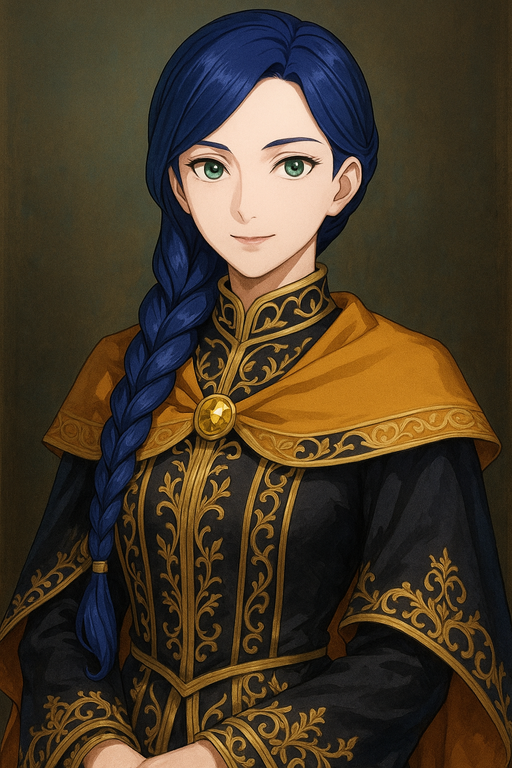
Georgine as a student

Clash of Fire and Wind

Georgine giving a blessing to the Knights of Ehrenfest

Rozemyne reading a book in the temple

Tiberius Defending Georgine during the Trombe
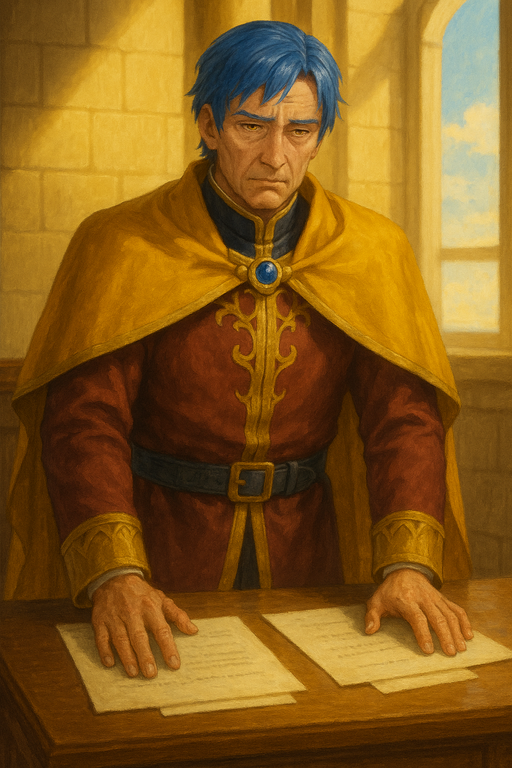
Adelbert agonizing over the duchy
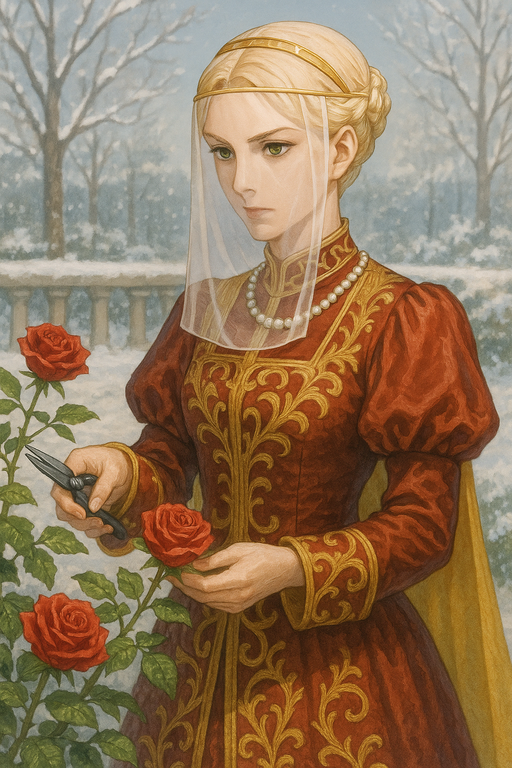
Veronica Pruning Rozes
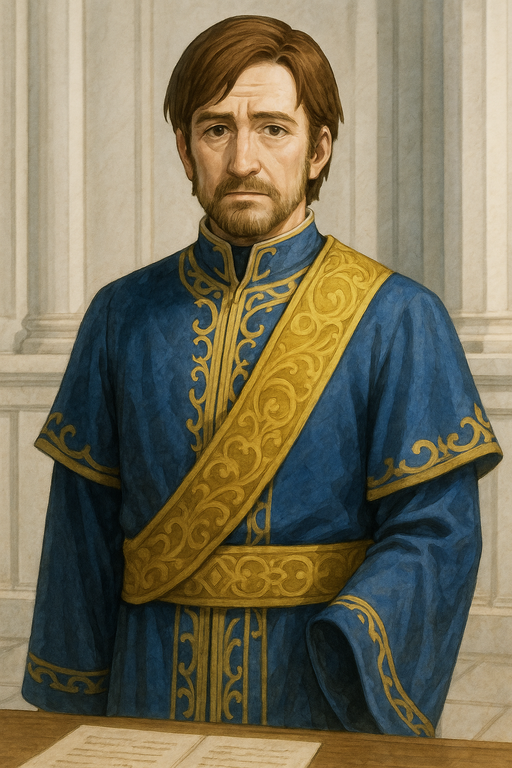
Volkhard in the Temple

Georgine and Isolde; the Thorn and the Serpent
Chapter 90: The Uncrowned Candidate - Epilogue - Rozemyne
Summary:
Rozemyne walks the temple one last time, reflecting on the work she shaped, the future she nudged into motion, and the one person she cannot bear to leave.
But even love cannot halt the inevitable.
At the end of the path waits a choice — and a light that will change everything.
Notes:
The Final Chapter of PART 1
5th and Final Chapter posted today
(See the end of the chapter for more notes.)
Chapter Text
Epilogue — Rozemyne’s Final Light
I wandered through the temple corridors, letting the quiet guide me. The air smelled faintly of incense and warmed stone, a mixture that had become the signature scent of this place. I could almost hear the faint hum of mana in the walls, the lingering echoes of every prayer, every spell cast here. It was strange, this familiarity—strange and aching at the same time. Each step I took felt heavier, as though the weight of the work we had done together pressed on my shoulders.
I started with the Orphanage wing. It had once been squalor, barely fit to shelter children, with crumbling walls and floors littered with broken furniture. The faint, musty stench of neglect had lingered here for years. Now, sunlight spilled through polished windows, bouncing across freshly painted walls, and the laughter of children moved through the rooms like a soft melody. Tables and benches had been replaced, shelves lined with books and toys, and mats for sleep neatly arranged in corners. The transformation was breathtaking.
I paused by a small group of children painting under the supervision of a gray-robed priest. They looked up briefly, then returned to their work, unaware of me. I allowed myself a small smile. This was what we had built together. I had shown Her small ways to direct attention, to cultivate loyalty and skill, to set the stage for these children to flourish. She had taken those hints and grown them into something far beyond what I could have imagined. And yet, even as pride warmed me, there was an ache beneath it all. I wanted nothing more than to stay. To linger in the laughter and the hum of life that She had nurtured here. But I knew it could not be.
From there, I drifted down to the Workshop. The corridor walls echoed faintly with the sound of hands at work, the scratch of tools on metal and wood, the faint buzz of mana flowing through carefully constructed feystones. Gray and green-robed priests moved diligently, their expressions focused, every motion precise. They were engaged in preparing materials—gold dust, feystones, small constructs—projects that She would someday use. Projects that, in some ways, were my own secret fingerprints on the future.
I paused at a table where a group of priests were carefully calibrating feystones, eyes bright with concentration. They didn’t notice me; they didn’t need to. They were alive with purpose, a purpose that had been seeded quietly, in whispered suggestions and subtle lessons, long before She even realized. I had shown Her the potential these commoners could embody, guided Her hand in allowing them to contribute, to shape the duchy from behind the scenes. And now, watching them, I realized how far we had come. Every subtle hint I had given Her—every small adjustment in plans, every suggestion for nurturing talent—had become part of the machinery of this place, humming quietly in readiness.
I lingered for a moment, tracing my fingers along a polished workbench. I remembered the long winter evenings, when I had whispered ideas for what could be done, when the temple lay quiet and only the faint glow of feystones lit the rooms. Back then, I had hoped She would listen, but had never been certain. Now I could see the proof, the undeniable signs that she had not only listened but understood.
The conference room came next. Noble-born blue priests moved with precise efficiency, arranging ledgers, completing paperwork, debating minor points with a seriousness I had never expected them to develop. The air was thick with the scent of parchment and ink, the faint hum of mana from enchanted quills barely noticeable but comforting. It was because of Her—because of the guidance and example I had nudged her toward—that even those born into privilege had been given purpose. They were no longer idle nobles; they were stewards of plans we had set in motion together.
I walked slowly, letting my fingers brush the polished edges of desks, feeling the weight of what had been done here, and the weight of what would one day be done through this place. And still, I could feel it pulling at me: the impossibility of remaining. I wanted to linger in these halls forever, wanted to watch over Her as She walked the path I had paved. But I knew that my time here was ending. My mission—the careful orchestration of every small detail to protect and guide Her—was complete.
Even so, it tore at me. The idea of leaving this sanctuary, of leaving Her—even knowing She would flourish without me—was unbearable. My heart ached with a longing that had no words. I wanted to curl up among these walls, in the Orphanage, the Workshop, the conference room, and never leave. But I knew that if I did, it would not be right.
Every corner of this temple spoke of us. Not of me alone, and not of Her alone, but of the work we had done together, quietly, invisibly, to shape what the duchy would become. Every project, every child, every priest held a fragment of that story. And in each of those fragments, I left a piece of myself behind, knowing that it would grow in ways I could no longer control.
I exhaled softly, letting the sound echo in the quiet. My eyes traced the intricate patterns on the windows, the polished wood of the doors, the faint glow of mana from enchanted lamps. Everything here was alive with what we had done, and I felt it all pressing against my chest like a weight both heavy and beautiful. I lingered a moment longer, letting myself memorize every detail, every echo, every shimmer of light, so that when I left, a part of me would always remain.
Finally, I turned toward the High Bishop Chambers, drawing in a deep breath. My next steps would take me farther than I had ever intended to go. I felt a strange, sharp mix of dread and anticipation, knowing that what came next could not be stopped—and that my role here, as the silent hand behind Her rise, was at its end.
I walked the final stretch toward the High Bishop Chambers with measured steps, though my heart was anything but calm. Each footfall seemed to echo louder than it should, as if the temple itself knew what was coming, as if it were holding its breath with me. The quiet corridors were still, empty now except for the faint glow of mana from enchanted lamps along the walls. Even the air felt heavier, weighted with anticipation, memory, and grief.
The chambers were warm, familiar. I paused at the threshold, letting my gaze linger over the polished desk, the neatly arranged ledgers, and the faint, lingering scent of her presence. She had been here not long ago, bent over the work of the duchy and the temple, thinking and planning and moving the pieces of a grand chessboard I had helped her set in motion. My chest ached, as it always did when I remembered the small, fleeting moments of closeness we had shared—when she had laughed softly at a minor mishap, or glanced at me with that unspoken trust that had always made my heart swell.
Volkhard appeared quietly, placing a stack of completed paperwork on the desk. He looked at me curiously. “Young Lady Rozemyne…what are you doing here?”
I turned to him slowly, and my lips curved into a faint, wistful smile. “I’m…reminiscing,” I said. My voice was soft, almost fragile, but it carried a weight that made him hesitate. “I think I’ll go to the library now.”
He blinked, unsure, then shrugged gently. “If you wish. I will accompany you, I suppose.”
We walked together in silence, the temple’s quiet pressing around us. Every echo of our steps reminded me of the countless hours we had spent within these walls, the careful planning, the whispered lessons, the strategies set in motion long before She knew they would be needed. Each shadowed corner, each polished surface, spoke of Her, of the life She had built, of the future She now held firmly in her hands.
As the library doors swung open, the air shifted. It was colder here, but alive in a different way. The scent of old parchment and dust mingled with the faint warmth of mana from enchanted quills and shelves that stored knowledge gathered over centuries. I always loved the smell of ink and parchment. And then I felt it—Her. The certainty of her rise, the crown of responsibility she now carried, the moment when Adelbert had declared before the entire country that she was his successor. It was as if the entire temple, the entire world, was aligning to witness it. My mission was complete.
I stepped forward, leaving the books untouched, leaving the words unread. There was no need for study or observation anymore; everything had already been set in motion. I turned to face the statue of Mestionora, its polished eyes reflecting the soft glow of mana around the library. I lifted one leg, then both arms, folding them in the sacred prayer pose I had long practiced.
“Oh, Mighty King and Queen of the Eternal Skies,” I intoned softly, my voice carrying across the still room. “And Mighty Eternal Five that rule at their sides. May She be blessed.”
The words spilled from my lips with reverence, each syllable a pulse of light. Mana gathered, not from the temple alone, but from the years of guidance, from every hint and lesson I had left behind, from every devotion and whisper. My body began to glow softly, first in faint pulses, then in radiant light.
Volkhard stood frozen, his one hand gripping the doorframe for support in shock. He did not speak, did not move. He could feel the shift in the air, the power of a prayer made with purpose and completion, a prayer for someone who had grown beyond the hands that had shaped her.
The glow intensified. I felt my form lifting, dissolving, becoming one with the light, becoming threads of color that mirrored the blessing raining down upon her during the first day of the conference. I was no longer here, not in the temple, not in the halls, not in the world. I was scattered into light and prayer, a gift and a farewell, a silent sentinel leaving the stage I had helped construct.
And yet, in that dissolution, I smiled. She would thrive. She would rise. She would see every hope I had sown and turn it into something greater than I could have imagined. My final breath, my last thoughts, were of Her, and the unshakable certainty that she would never falter.
And then, as softly as the first morning light touches the temple steps, I was gone. The library was empty once more, save for the faint hum of enchanted quills and the lingering warmth of mana. The Mestionora statue gleamed in silence, bearing witness to the promise fulfilled, to the blessing given, and to the disappearance of the one who had shaped everything from the shadows.
The temple returned to silence, untouched and eternal, as if nothing had changed. Yet everything had. She would rise, She would lead, She would shape the world — and somewhere, unseen, I remained in that blessing, a quiet sentinel and a final whisper of hope.
Notes:
Thus ends PART 1 of my story, "The Thorned Candidate".
Thank you everyone for reading, commenting, sharing, and enjoying my story. I will continue this story in PART 2: "The Thorned Inheritance".
For everyone that has made it all the way here, please bookmark or subscribe to the series for all the updates from future Parts. There is A LOT of story left to tell for this weave.